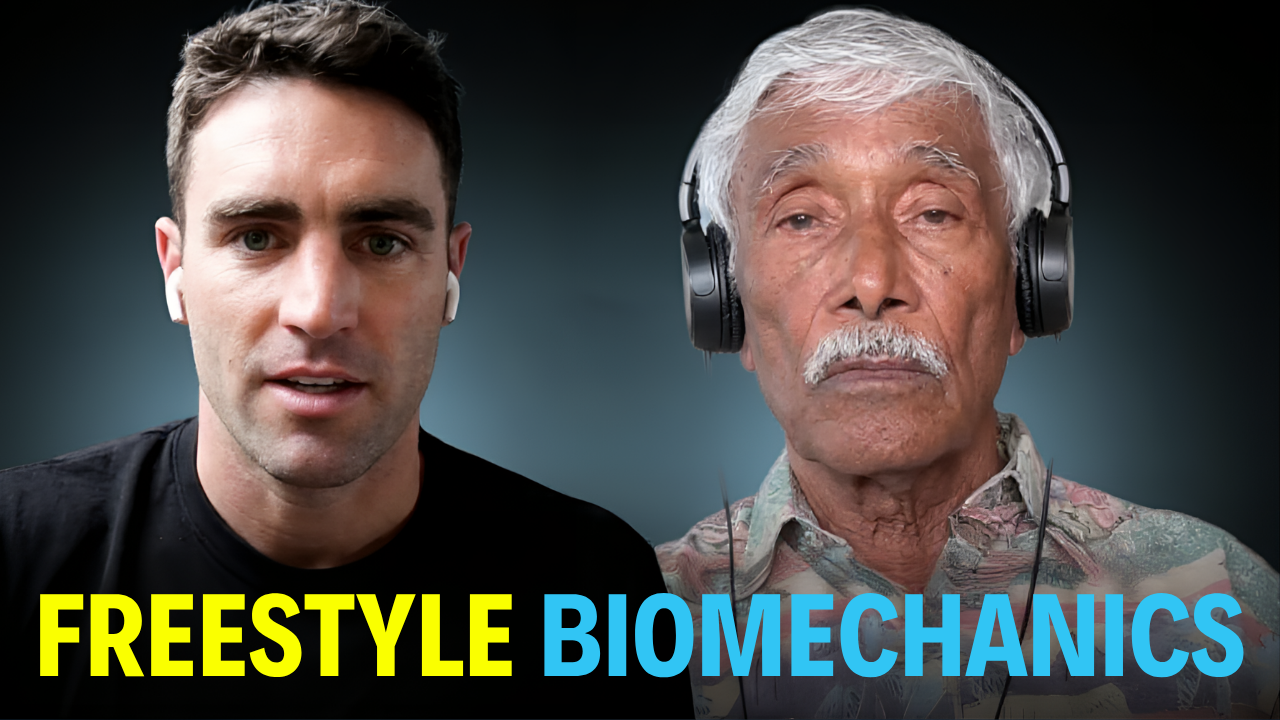








My guest today is Sam Laidlow who is considered one of the best triathletes in France today. He is born in the UK and was raised in French Pyrénées. Join us as Sam talks about his training, beliefs, and goals.
00:46 Working Hard And Working Smart
01:59 Dad As A Coach
03:39 Swimming 3X A Week
05:22 Big Part of Success In Swimming Is How Much You Enjoy It
06:06 There Is No One Way OF Swimming
08:18 Swimming With Stones
09:56 Strength Development
12:41 Go-To Sets
15:03 Should I Learn How To Flip Turn?
16:32 If You Don’t Use It, You Will Certainly Lose It
17:47 Spending Too Much Time Running And Biking
19:16 Main Goals
22:38 Best Time
23:42 This Is What I Want To Do
27:29 Contact Sam Laidlow
Sam Laidlow
Website
Facebook
Instagram
Sancture Sportifs
Join the 5 Day Catch Challenge:
Join the Effortless Swimming membership:
Transcript
Read the full transcript
Yeah, absolutely. Like it’s, I see it a lot too. Like quite often those junior swimmers who are champions for their in their age group at 12, 13, 14, if they’ve been pushed to, to get that, um, they often don’t continue on. And I think success in swimming is a big part is about how much you enjoy it and whether or not you want to, or you continue to do it as an, as an adult and as you, as you get older. Welcome to the effortless swimming podcast to show that help swimmers and triathletes love the water, become a better swimmer and live a better life. Here’s your host, Brenton Ford.
Welcome to the effortless swim podcast. My guest today is professional triathlete, Sam Laidlow. Welcome to the podcast, Sam.
Thanks a lot. It’s an honor. So, um, your first questions first, what are you doing beating guys like Jan Frodeno and Sebastian Kinlay in the swim? What’s it’s going on at such a young age of 22?
Uh, I’m just, I’m just working hard to be honest. Uh, yeah, there’s no, there’s no, well, working hard and smart. I think, yes, not, not just working hard. Um, I’ve been, I don’t, I don’t swim a lot compared to a lot of people. And I don’t, lots of people think I come from the swimming background, but I really don’t. Um, I came out my first national when I did my first national, like junior race, I came out 135th of the water out of like 145 people. Um, so yeah, it’s been a, it’s been a slow, but sure, sure progression. And yeah, I’m lucky to have a father who comes from a swimming background and his father, so my grandfather also comes from a swimming background. So I guess it does kind of run in the blood, but equally, um, no, I don’t, I’m not, I’m not swimming. I’ve always been in a triathlete. And that’s what we’ve also looked at is the specificity of, of our then, if you know what I mean, because it’s very different to swimming
a flat out 200 in the pool. So yeah. Yeah, exactly. That’s funny. My, um, my dad and my granddad were also swim coaches as well. And, um, yeah, just what a funny world it is. And, um, so your dad coaches you across all three disciplines. Is it? Yeah, he does. Yeah. Um, he was never, he never forced me into, into triathlon or even coaching me. So, um, I often went, I often went with whatever the school coach was or the facility I was in. And then it was only two and a half, three years ago that I came back um, and asked my dad to coach me basically. Um, and it was from that point on that my swimming really got stronger. Um, yeah. So I used, I used to swim like many of the short course athletes do kind of almost every day, let’s say five to six times a week, around four and four to five K every swim session. Um, and it didn’t, well, it’s only now in hindsight, but that didn’t work super well for me. Um, and since I moved back with my dad, um, it was kind of a
blessing in disguise really, but the pool was actually like a 45 minute drive away. So we would only go three times a week, but when we’d go, we’d make sure we did a proper swim, if you know what I mean. So there was kind of two years where we’d just swim three times a week, but it was three times six K. And, um, and that’s where I really saw my progression. Um, and yeah, I think lots of people, especially triathletes, promise that when you get in the pool every day, um, and then you’re on top of that swimming, sorry, you’re on top of that you’re biking and running and you don’t, you never really get in the water fresh. And I think for me, swimming is so technical that I don’t really see the point of swimming if you’re even remotely tired, if you know what I mean. Um, so that’s why making to just do in three sessions, but making sure I went into them, uh, fresh was worked a lot better for me. What about, um, now, how often are you again in the pool?
Yes, thanks. So three now during the summer, I swim three times in a pool, um, and once in the lake, uh, but the, the volume reduces a bit in the summer, uh, just because, uh, we have, I have less swim times. And also I try to focus a bit more on, on the bike and running. Um, but yeah, generally, I, I tend to, well, one of the, one of the benefits of swimming is it’s obviously lower impact. And so you can do a really hard strength session, you know, without it having a big effect on your body, which you have to be more careful for a, for a triathlete if you, if you’re doing that on the, on the bike and run. Um, but one of the, one of the things my dad’s always, always been really careful with the young ages, even if I didn’t swim a lot, he would always, um, pick up on, on technical aspects, if you know what I mean. Um, and really, really focused on that, even if I was swimming once a week, we’d rather me swim once a week
well than, than swimming three or four times a week with a terrible stroke, you know, I mean, that’s really where, where I felt my progression came along as soon as I started swimming more, I got to be a lot faster. Um, but I certainly think that’s, that’s an important point for the, for parents or to take into account is, is yeah, some, it’s sometimes it’s best for, for a kid to, to swim two or three times a week and be a healthy kid who enjoys swimming, you know, um, and he’s still got a massive room for improvement rather than, um, sticking in the pool, yeah, six, seven, eight times a week, which I’m sure, which I know happens already, uh, a very young age in certain, certain places. Yeah, absolutely. Like it’s, I see it a lot too, like quite often those junior swimmers who are champions for their, in their age group at 12, 13, 14, if they’ve been pushed to, to get there, um, they often don’t continue on.
And I think success in swimming is a big part is about how much you enjoy it and whether or not you want to, or you continue to do it as an, as an adult and as you, as you get older. Um, so I think that’s hugely important. And the technical side of it too, like with your, with your dad, like what, um, and it’s obviously made a big difference. I’ve seen some videos of your swimming. I’m going to put some stuff on YouTube, um, to sort of show people how you’re swimming, which is, it looks, looks great. Like what, um, and that’s obviously pays off too with the results that you’re getting in the, in the swim. So how did your dad help you work on those technical things?
Um, we’re, we’re big believers in doing a lot of, a lot of strength work and just, and then you kind of body naturally becomes more efficient. Um, we don’t, we don’t necessarily, uh, focus even with our athletes, um, that we coach because my dad coaches other athletes and I coach a few athletes also. Um, sometimes you do just have to kind of, uh, swim into your arms, fall off, and then let that adaptation period. I mean, lots of, lots of age group and stuff, kind of look for short core shortcuts. I find, and they think that sometimes just by magically, I don’t know, dropping their shoulder a little bit or doing, or I don’t know, twisting their hand this way or that way, we’ll make, we’ll make them swim five seconds, a hundred faster, which unfortunately is not the case, if you know what I mean. So technique is important, but, um, I do also kind of feel it comes naturally. And, um, you can relate that to, to running.
You see some, you see people running of all sorts of different strokes, uh, sorry, all sorts of different, um, forms. And so when you, when you, if you just tell, if you just get somebody to run every day a little bit more, if you know what I mean, eventually they do become very fast. And so every bit, we’re all different physiologically. So, uh, there’s no one way of swimming, if you know what I mean. There’s no point trying to copy Sun Yang, if you, if you, if you’re not Sun Yang, if you know what I mean. So yeah, it’s, um, I wouldn’t, what we really focus on, especially for open water, um, and this is why strength is important. It’s just, um, just having the strength to kind of keep the momentum of your arms turning, if you know what I mean, because when the water’s choppy or whatnot, there is, there isn’t much, you cut this, whether what, what you see in the pool where they have a nice glide and that suddenly becomes
less, less important, because if you do, if you do have a, like a dead point in your, in your stroke, then suddenly that the choppy water or whatever will, or the many waves will kind of push you back, if you know what I mean. So, although it’s not aesthetically super pleasing to watch, um, just kind of having that strength to be able to turn your arms around, and especially lots of our swims are with a wetsuit, and that also adds another, another restriction, if you know what I mean. So, one of the things we do a lot of is, um, swimming with stones. So, and that, I’ve found that’s a really good drill. So, we hold, well, I, I don’t have stones anymore, my dad actually, for Christmas, he made me some lead edits, that was my, my Christmas present, um, because the, what we wanted was as much weight as possible for a little grip, um, and it’s, it’s actually a really good tool for loads of reasons, um, one, you feel like, like, if your core
is not engaged, you just feel like you’re going to drown, um, two, obviously you’ve got less, um, less catch, so your cadence naturally has to be higher, uh, which is good for open water. And three, the kind of the, the pullback phase is obviously harder because you’ve got a weight in your hand, which kind of simulates the muscles you’d use in a wetsuit. So, uh, yeah, we found that’s, uh, to be a really good tool. And, uh, yeah, this is the first time I’m saying it, but it’s a, it’s a ladle of secret.
I, um, saw one of the videos, I think it was with your dad, um, just talking about some of the, the things that you, um, you focus on with the swimming. And, um, I was gonna, I was going to bring up, um, stones. And I’ve heard, um, a friend of mine, Enie Jones, who’s a swim coach, um, she makes the Enie billy, um, which you might have seen at the, the pull, um, the pool boys that a lot of triathletes will, um, will use. She’s, um, she’s talked about swimming with shells. So with these, I can’t remember the name of the type of shells, but basically like similar concept, but they’ll empty when you go across over the top of the water. Um, so it sort of speeds up that recovery and then they’ll fill up between them through. So very simple concept and, um, she’s a, she’s a big fan of those as well. And, um, so you’re talking about strength work, um, swimming with the stones. You’re talking pool boy and paddles as well. What sort of stuff are you doing
for strength development? Um, yeah. I think, uh, pool boy, pool boy is, is a good tool for, for triathletes and especially pro triathletes, I guess. Because as I said, often, often we already go into the water with some fatigue, if you know what I mean, um, and especially, especially like, so you know that you’re going to go into a race to generally fresh. So sometimes, sometimes, you know, with a pool, it’s just easier to hit them times, if you know what I mean. And your heart rate’s obviously a bit lower because you’re not kicking. Um, but then equally, I do find lots of age groupers sticking pool boy in far too much, if you know what I mean, because they can swim fine with a pool boy. So, and they just find it much easier. Um, so it’s certainly a balance. And then other, other strength, uh, or I find certainly doing a lot of I am, uh, is really good, uh, butterfly. I mean is especially for that for exactly what I was saying
before and not having a point in your strength, you know, I mean, a butterfly, you really just have to turn your arms around. Uh, and it does when you see the best guys, it does look like they kind of glide into the water like a dolphin. But if you do look at it properly, there isn’t really any moment where they’re not, uh, kind of even moving forward or catching the water. Uh, they don’t just stay at the front for ages, if you know what I mean, as soon as they’ve got the power to be able to just turn their arms around. And so, yeah, we do that. Then, um, then it’s just, yeah, just session. I mean, I always say it, but my like five, five K with my dad feels like eight K of any other, uh, swimmer. And we just, so we don’t do, we don’t do, we don’t do a lot of intensity necessarily. Um, but I’m, I don’t do a lot of intensity full stop. I mean, Ironman is like almost a hundred percent aerobic effort. You know what I mean? So there’s, there isn’t
much point in them. And yeah, I mean, nobody swimming faster than whatever 110 pace on, on them on Ironman. So if you can already do 50 meters in, in 30 seconds, which many people can, for instance, or even 35, which is 110, then you know that you’ve already got that, that speed we need to do is have the endurance and the strength to keep it up. If you know what I mean? So, uh, it’s not really about swimming fast. It’s just about having a strength to, to keep, keep that pace going, especially as I said before, like with the, with the wetsuit, it does bring an extra resistance. Um, but yeah, so mainly, mainly I am, uh, and then, and then just, yeah, I don’t know, just long, hard set if you know, I mean, not, not sets of loads of rest. We don’t, things that are just boring, you know, I mean, swimming, yeah, I mean, well, triathlon and an endurance sport in general is, is relatively, relatively boring. And sometimes you just have to accept to do
whatever it is. I don’t know, five times 800 or, you know, just, yeah, long, long sets to hurt your arms. Yeah. And what have you got a couple of go-to sets that you, that you’ll do on a pretty regular basis?
Um, so we had leading into the start of the season, this winter when we got a bit of a routine. We had two, two sessions that we do.
One was just a straight 3.8K swim, which, which the first time I did, I mean, I do a short warm-up and then I just do kind of a, a straight 3.8 tempo swim,
3.8 because that’s the, the Ironman, uh, swim distance and just kind of that’s, that’s what we decided to do. And the first time I did it, I was just like, bloody hell. I didn’t, I didn’t realize how hard it was if you know, I mean, to just swim continuously on that because
and Ironman, you often neglect to swim because like, you know, it’s only we only spend 45 minutes in the water and then we’ve got five hours of cycling and it’s the three hours on the run, if you know what I mean, or four hours and three hours, whatever. Um, so you often forget about the swim. And it was when I did this for the first time, um, this winter and I was like, bloody hell, it really is hard about it. And so then we did it. I was like, right, I want to do this every week, so until it becomes easy. And, uh, so yeah, I generally do that about 115, kind of 115 per 100 pace in a big pool in 50 meter. And then, uh, and then the second, the second key session is 40, 100s going on, like a very short rest and depending on depending on where I’m at with my fitness levels. Um, yeah, I can, I know that before, before Gran Canaria, where I came out in front of the yarn of the water, I knew I was in a good place because I did 40 100s
going on 115. So yeah. One course.
No, that was short course, actually. Yeah. It’s still pretty tiny for 40 100s. No, it is. Yeah. I was, I was, I was happy with that. Um, especially like, I mean, swimming like me doesn’t get much benefit from short course or long course because my turns and my push offs are terrible. But that, that is also something that is although, although, yeah, lots of traffic saving about returns aren’t important. It is, it’s still important. I mean, especially the push off is, is very good to teach your body to be streamlined in the, in the first place if you know what I mean. And if you start every, every lens with a bad position, then you’re not going to swim very streamlined if you know what I mean. So I do, I do, I’m still a, a big believer in, yeah, making, making them turns important. Yeah. And I get asked that a lot too. It’s like, do I, should I learn how to tumble turn or flip turn or can I just keep touching and turning around? But it’s like, well,
you’re going to be doing this for probably the next couple of years at least and
take a couple of sessions, but you’ll figure it out. And then your body will get used that feeling of being streamlined off the wall. And the more you can sort of familiarize yourself with that faster position, that faster feeling, you know, everything starts to move that way. So while it’s not important, it also is in, in some ways. So I think, yeah, certainly. Yeah. It’s, it’s worth, worth learning because it seems like a hard thing to do off the bat. But if you just get perhaps a little bit of coaching with it, you get the right advice, you can pick it up very quickly with the turn. Yeah. A lot, lots of things, especially people who come into swimming late and stuff, they just, their bodies never even been in that position, if you know what I mean. And the amount of times I’ve seen my dad, like what holding, he generally like, picks them up in the water, you know, and just like holds them like that. So they kind of realize kind of how
streamlined they need to be. Yeah. And, and then, oh yeah. And then it, yeah. So there’s, so I think mobility as well is something that people overlook. And even I probably should do more of it. But when you see, when you see some people’s mobility, if you know what I mean, no one, there’s no wonder, if you know what I mean, they can’t, they can’t bring their, bring their shoulder back, nice and elbow high, if you know what I mean, they can’t. So I often tell my athletes just to like, at least once a day, just get a towel, you know, and like, with your straight arms, push it, like bring it over and back over and try and get that, the grip on your towel a little bit, narrow every, every day, you know what I mean. And it takes like a minute of your day. Yeah. I’m a big believer in just doing at least a little bit of that stuff on a regular basis, because it’s just, it’s just like that sort of movement astrophys, you just lose it if you don’t,
if you don’t use it. And I found that when I wasn’t swimming for a couple of, couple of months last year, I was getting so stiff because I’ve swum since I was, I was a kid, like I would never miss, like, I would never miss a week in the pool. And then as of last year, couldn’t swim for a few months. And I just like, I did not have that range of motion that I had had for forever. And so if you don’t use it, you certainly lose it. And I’m a big fan of like the, like those hard rubber massage balls that even like, if you’re watching TV at night, just roll it out through like, yeah, between the shoulder blades in a couple of years. So good. And even just some basic stuff on the foam roller can help a lot too. And stuff with the towel. It’s because if you can’t, if you can’t get your arms up like here, we’d like trying to get them over comfortably in your recovery, or get some sort of catch. How do you, how do you find that you feel
through the shoulders and with your range, spending so much time on the bike and running? Is it, do you feel that impact? Yeah, certainly. The whole kind of just flexibility in general is a bit of chicken leg situation in triathlon because for swimming and cycling, you have to be very flexible.
But running, I’ve found that I even spent like two years doing yoga and stuff. And I felt, I felt a bit loose like when I was running kind of, which is not what you want in for running. You want to be quite springy and if often the best runners in the world, I mean, they have like really short tendons and they’re just like, just like a springy, you know, where for swimming and cycling, it’s the opposite. And I do, I do remember particularly on my old bike, where I used to have quite an extreme position on the,
and it used to really affect my swimming. It’s, you know, I mean, if we’ve just, if I’ve just spent 150K or whatever in a really like severe time trial position, and then you go swimming the next day or whatever, and you just, yeah, it’s just, you can’t, you can’t move your arms how they should. And now, I mean, that’s one of the other, I’m one of the guys who has really least what we call aero position in triathlon, but I’m just comfortable, you know, and it’s, one it’s good. I prefer it for racing, but equally in training, it means that I can, I can swim if you know what I mean, without it having, also I can bike without having too much impact on my swimming. Yeah. Yeah, it makes sense. And, and so going, going forwards, yeah, what have you, what are you, what are your main goals going forwards? You’ve got the, and also what, like what are those main things that you’re, you’re focused on? Because obviously the swims, of real strength,
how about the bike and the run, and what does the next couple of years, hopefully pan out for you?
Yeah, I mean, I’ve always, I’ve always wanted to keep my, my swimming up, even though, in certain races, it doesn’t necessarily have a big impact, but because my main goal is in the long-term, is like championship events. So let’s say Hawaii or, or like World, World, I’m a world long-distance triathlon championships.
As soon as you get to like a championship level, then there’s obviously lots of other good swimmers. And that’s when it’s important in our sport to, to be a good swimmer, but you get out in the first pack, although it’s not drafted, you still get a dynamic for the race with other guys. And you do get, still get an effect at 12 meters, which is a draft legal zone.
So, yeah, going forward, I mean, this year, certainly I would,
I’m just trying to be a bit more consistent in my racing. I used to be very, very good at peeking for one race.
And then having, then having a massive loss, you know what I mean? But as a professional, or want to be professional, a young professional eventful, call me, it’s difficult financially to do that. Especially like last year, when I prepare for one big money event race and then it got canceled, then it goes down the drain, if you know what I mean? So this year, I’m not, I haven’t yet reached like peak fitness. I’m just trying to stay a bit underneath that and just trying to, trying to be more consistent over the season, just enjoy racing. So the next goal is, is Ironman Bolton, where I’ll try and qualify, hopefully for Kona. And if I do qualify for Kona, I shouldn’t have probably be the, probably be the youngest pro there, which would be great. And if I don’t qualify, then I’ll likely do a flat Ironman to try and be the youngest person to go under eight hours. That would be, that’s my goal for this year. But certainly, swimming,
I’m at a phase where luckily, I don’t have to go to the pool every morning, which I know that some athletes do. And I’ve seen this and I actually got asked this in a recent PTO interview after my races. I got said, what tips can you give like the bad swimmers? Like they said, you did said Sam Long and Sanders and stuff. And so, and in my eyes, they swim too much. They go into the water too much, if you know what I mean, four triathletes anyway. And they talk about this, getting the feel for the water. But the problem is there, I get the feeling they’re swim sessions, they’re swim sessions and either one thing or the other, it’s never too hard to have an adaptation of it and recover. And yet it’s never too easy and that’s what I used to do before.
Yes, and they talk about having this feel for the water and being not fighting the water, but I’m not a big believer in that. It comes a point where you just have to swim to the extent where your arms drop off and then recover and then do that again.
So yeah, that’s the one tip I would give them or anybody else to do this. Yeah, that’s interesting. And so what have you, how close are you to that eight hours? What’s your best time?
When I was 20, so before COVID, two years ago I did 805 in Barcelona.
But to be honest, the race, I wanted to do it when I was 20, but I’d had lots of problems. I had a broken rib during the summer and it affected training quite a lot. I really had to rush my fitness right at the end. And also I was doing stupid things, like trying out low-carb diet and yeah, just anyway.
And honestly, I did 805, but I felt like I was running on one cylinder, if you know what I mean. So I knew I had it in me. And even now all I need is just a flat course. And I know I’ve got it in me. It’s just, it’s not necessarily a priority, if you know what I mean. Well, one with COVID, there hasn’t been that many flat courses. And yeah, so if the opportunity comes, then it comes. But I still think I’m not sure what the youngest person is to, I think he’s like 24, so I should be able to do this year. And I read, I was reading on your side as well, that like this was triathlon was like something that you really aspired to as a kid.
There’s not a whole lot of people where as a young kid they’re seeing triathlon, like on TV and that sort of thing, and going, that’s what I want to do. I’ve certainly heard a couple, but it’s not as much as you get like with the Australian rules football here or soccer or football over in the UK or France. Like it’s quite a unique one. So where did that sort of come from?
So my parents came out to move that to France, we were British originally moved that to France to set up triathlon training camp business. And so I just, I just grown up with seeing triathletes at home and everything. And from a very, very, very early age, I’d been watching Kona or not on TV and staying up late at night. So it’s obviously not in our time zone. And I was just like, right, I want to be, I want to be that guy, you know what I mean? So from a very early age, I wanted to win Kona and that’s always been my dream. And luckily enough, luckily enough, I’ve had like really supportive parents who also believed in that dream.
Actually, I left, I left home to go to like a triathlon training school, or sorry, like a more sport school where I could do triathlon. And so I left home quite early at 13. And I started going down the short course route just because opportunities came about. And in the short course, short course triathlon, there’s some really amazing swimmers, especially in, I was in, I was in, I was on the French Grand Prix series. And in my, in my team, we literally had like five guys who, who were all like around four minute, 400 meter swimmers, if you know what I mean? So they were certainly very rapid. And, and that kind of opened my eyes to, so that’s why it was good to go through the short course because Austin and Ironman, it’s, it’s neglected. But I think it’s come into a point where swimming is becoming more important, even though it’s in percentage terms, it’s like about 10% of the race, if not less.
You can still lose that race and then the 10% and the last, last time Kona went about 2019. It was the first time I’d seen any way that like the lead swim pack actually stayed away right to the end, if you know what I mean? And so that was good to see. And hopefully it will motivate a few more people to swim well. Because that’s, that’s all you need really. It’s just two or three or four guys to, to really,
like, they’re going to swim hard, if you know what I mean? And make the race hard. But it’s difficult because certain races, it, like the race I did last weekend, the national championships, it was, there was, there wasn’t much point in being a good swimmer because I mean, I came out with a minute lead. I was on my own and then, and then you’re on your own, if you know what I mean? And there’s a pack of 10 guys behind, a minute behind. So the chances of them catching you up are very likely. So, but then I know, I really know that when it’s a championship race, they won’t have that, they won’t have that opportunity. Yeah, it’s exactly right. They’ve, yeah, in some races, it’s like, you can have that minute, minute lead. But it’s like, I’m going to probably get caught anyway. But then when the time comes, you know, when you’ve got perhaps another two or three swimmers who are at that similar speed and you make that pack,
yeah, it’s going to be a different story. But yeah, my dream, my dream race would certainly be like to create an event that was like a three hour swim, a three hour bike, and a three hour run. That would be pretty cool. I’m not sure, I’m not sure financially it would, it would like be great because there’s not many age, but there’s like, I mean, swimming’s often their weakness. You’re not going to get them something 12 or 15K.
Just out of a, I think 3.8 will be enough for most people.
In terms of either getting in contact with you or finding you, what is the best place to do that?
So my name’s just Sam Laidlow on most of my Instagram, Facebook and all that. My website’s equally Sam Laidlow. And then, yeah, my parents try from training camp businesses called Sincture Sportif. And yeah, I truly believe that, yeah, my dad’s, like that’s one of the best swim coaches, I mean, in the world. I’ve seen him, not just the top end, but he’s gotten people through who couldn’t swim like 25 meters to easily do it in an Ironman, if you know what I mean. So, yeah, and he’s been in the business for so long. He used to swim for Great Britain and then, yeah, he stopped. He moved into triathlon because he like missed the Commonwealth Commonwealth Games by some stupid amount. I can’t remember if it was a tenth or whatever, it was a second and so it kind of, he was just a bit like, well, all this effort to not go, if you know what I mean. So, and at that period triathlon came along and yeah, he jumped into that and yeah, it wasn’t a bad decision.
Yeah, fantastic. Well, thanks for being a guest on the podcast, Sam, and all the best for what’s to come. I know you’re recovering at the moment from a full distance two weeks ago or a week and a half ago and a half distance the following week. So, yeah, I’m sure anything else will feel easy after that.
Yeah, let’s hope. Yeah, thanks, mate, all the best. All right, cheers, man.