







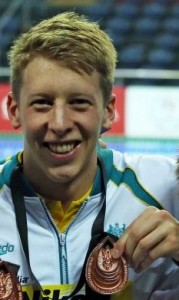
 In this episode of The Effortless Swimming Podcast, we have Travis Mahoney, he is an Australian Swim Team member. He started specialising in swimming at a later age of 16. He qualified for the 2014 Commonwealth Games where he placed 6th in the 400 IM. Now, he is training towards the 2016 Olympic Team.
In this podcast, we talk about:
– How Travis started swimming at a later age.
– What he does on his day-to-day training
– His approach to mindset, diet, stretching and rest
– His stroke and what he is doing to improve
02:30 – How Starting Late Can Motivate You
07:00 – Finding out what you are good at…
11:07 – Endorphine Rush Drowns The Pain
13:14 – My Glandular Fever Story
20:00 – Travis’ Meal Plan
21:30 – Practice, Focus and Switching Off
25:40 – Training in 4 Week Blocks
32:24 – The Saturday Anaconda
33:05 – That last 2 hours before bed…
37:52 – Travis’ New Breaststroke Technique
Catch up with Travis on Twitter and Instagram!
Transcript
Read the full transcript
Welcome to Effortless Swimming, the podcast for swimmers, triathletes and coaches. Join Australian swim coach Brenton Ford as he reveals the latest techniques and information to improve your swimming. Let’s dive right in. Welcome to the podcast. My name is Brenton Ford and today’s guest is Travis Mani, who’s an Australian swim team member. And on the podcast today, we talk about how Trav went from starting swimming at a later age. He only really started as a 15 year old and he played a lot of other sports. But as he got older, as he went from 16, 17, 18, he gradually specialised in swimming. And he’s now someone who’s made the Australian swim team qualified for the 2014 Commonwealth Games team and the 2012 World Short Course team. And he plays sixth in the 400am at the Com Games and he got seventh at the recent Pan Packs which were held here in Australia. And he’s now training towards the 2016 Olympic team looking to qualify there in a number of different events.
So on today’s podcast, we have a look at what he does on a day to day basis for training. We look at how he approaches mindset, diet, stretching, rest, how he incorporates all of that into a full training load. And we also go into some detail about what he thinks about with his stroke, how he looks to take the next step in his improvement. And some really good tips there for anyone who’s currently training on a regular basis and looking for that incremental improvement. Because Trav is someone who, as I said, he didn’t specialise in swimming as a younger kid, but he’s someone who’s stuck at it and he’s kept chipping away and he’s kept improving and there’s still a lot of room for improvement as you’ll find out in this podcast. So listen in, here we are talking about how Trav has continued to improve as someone who didn’t necessarily start at a young age. With you, I think you’re a perfect example of someone who’s just stuck at the sport.
I mean, you’re good as an age group, but you get kids who sort of stop at 16 or 17 and 18 and stop swimming then, but you’re someone who’s stuck around, you’re 25 now and you’ve gone on to make the Australian team. What do you see is the difference between you, someone who sticks at it, and those that just give it away at a younger age? Well, I think I came to it quite a bit later. When I was 15, I was still playing basketball five times a week, tennis twice a week and then swimming three times a week until I was 15 and a half. So I came to the sport quite late and I think that has helped me in terms of not losing that motivation and coming to it quite later had big improvements at that time and that sort of just spurred me on. Also, coming to sport quite late, I think I’ve been quite lucky. I haven’t had many injuries because I guess I’ve grown a little bit more as I’ve improved and maybe not as much pressure on my joints.
But yeah, I think I just have a determination to want to do better and I think that really helped me. Every time I didn’t quite make a team or I was really close to making a team, it just made me more motivated to get back in the pool, work harder and make it next time. I think that’s really what has helped me through the longevity and sticking in the sport. Yeah, that’s an interesting point. A lot of the research is pointing to kids or teenagers, they should be doing a lot of different sports and then as they start to get into adulthood, then to really start to specialise. And it sounds like that was really the key for you to stick around at the sport when you see a lot of kids who are 13, 14 and doing some really quick times there at the top of their field in the state or national. But then they just drop away because they’re either injury or they lose interest. But yeah, you decide to specialise a bit later on.
I mean, what made you choose to mean over Cricket or 40 or the other sports? I was never really into Cricket or 40. I was more basketball. I remember being like 10 years old and saying, oh, I want to play basketball for Australia and I want to play in the NBA. That was really my passion. Basketball, it just sort of, I loved every sport. Like if I had been, I was thinking about starting 40 at that same age as well, but I just don’t have any time to fit it in because I just, I love all sport and I think it’s good to, you know, I think it helps doing multiple sports. If you’re a swimmer, if you’re not doing any online sports, you might not be the best coordinated athlete. You really do need that coordination for swimming. I chose, it was really the one I enjoyed the most. And as I sort of dropped, I still play basketball for a little bit, but I dropped the tennis and I started increasing swimming and I saw great improvements in that and then that sort of spurred me on.
Just thinking maybe, maybe if I stick at it, I could, you know, make the most out of the swimming and then sort of drop the basketball off the next year completely and decide to focus on swimming. But even you talk about focusing on, like specialising, I didn’t really have a best stroke or a best event for years. I trained for the backstroke and the medley and the freestyle and did a bit of breaststroke and it ended up that the 400 medley was my best event, but I don’t think some kids these days will go, you know, they’re 15 and they’re saying, oh, I’m not going to be a sprint freestyle and you just don’t know physically what your best suited to when you’re 15 because you haven’t grown fully and you haven’t matured and, you know, you might be a good 400 freestyle or 200 backstroke or 100 backstroke or I think just doing everything is quite key because if you don’t do everything and you might miss your calling in terms of, like,
if you limit yourself to I’m a sprint freestyle or I’m a basketball player, you might miss out on something that you, you know, are naturally good at and can improve it. Yeah, we had Peter Marshall on the podcast, one of the first podcasts I did actually and he, I think it was a distance freestyle when he first started and then later on in his swimming career he ended up breaking the world short course 50 backstroke record and, you know, and he was used to doing big long kays in training and training for these longer events and then, you know, and if he’d just gone to specialising distance freestyle he would have missed out on that. So yeah, especially at a younger age you don’t want kids to ride off doing a certain stroke or distance and they should just play around and do a lot of different distances and events and as they grow and develop and get stronger they’ll probably find that they may change strokes
and, yeah, and excel at a different stroke and, I mean, now you’ve sort of, now you’ve chosen the 400 IM and the backstroke events is your main specialties. Do you see yourself changing those events from here on? Well, probably not, but I’ve started training for the 200 freestyle as well because that’s another event that me and my coach sat down and thought that it’s another good opportunity similar type of event and there’s opportunities to make the team in that as well because it’s a relay. I’d love to be able to make a relay and swim as a team but, yeah, I mean, 200 backstroke, 100 backstroke, I did 100 backstroke in America previously to a PB again so for the 400 medley, I mean, you have to train every stroke so you’re going to have some sort of training for any stroke, I guess but it’s more towards that medley now that 200, 400 medley, I would say my real main focus is and then to help for my 400 medley
I race the 200 backstroke and the 200 freestyle I think, well, my coach has looked at me doing a 200 breast or a 200 fly over this next season just for practice and to help with my 400 medley. I think 400 medley is probably the hardest event I reckon that and maybe the 1500 freestyle it’s probably the two hardest events I think in the pool it’s just, yeah, it’s just such hard work you get to the breaststroke and uses so much energy and you’re already tired from the fly in the back and I think just mentally it takes a lot of strength to do a good 400 IM what have you seen as the, I mean, your best 400 IM how have you felt during the race? Well, my best one was in the heat of the Commonwealth Games and I was, you know, I was understandably quite excited it was my first long-cost team I just tried to, I remember standing behind the blocks and being confident knowing that I’d done the work in the bank to be able to swim the time or the effort that I wanted
and I was just focusing on my race plan and it didn’t hurt, I mean, it hurt, they all hurt it doesn’t matter what stage of the season how hard you go, how easy you go they’re always going to hurt but it wasn’t that sort of paralyzing pain where it’s like you can’t think about anything else it was sort of just focused on the fly and working my backstroke because that’s my strength and then holding as much as I could in the breaststroke and then just bringing it home with everything if it was in the freestyle essentially but no doubt it is a hard event and if I could choose I wouldn’t choose the Four Hundred Medley to be my best event but it is my best event so I embrace it and do the best I can I’ve done a fifteen hundred since I was like ten so I’m sure that hurts a lot but for me that Four Hundred Medley is pretty painful Yeah, well one of the things you said about I mean your best four hundred I am not hurting the most
and I had a similar experience my best four hundred I am I think I was fourteen or fifteen at the time it was just paced it really well and then I felt pretty fresh going into the freestyle and could just really pick up the pace and build that last hundred freestyle and yeah at the end very tired, exhausted but it wasn’t hurting the whole way through whereas some other races it’s really hurt halfway through the backstroke so sometimes your fastest races feel the easiest but they’re the fastest and I think there’s something to be said about being able to relax throughout a race and that giving you your best performance do you find a similar sort of thing? Yeah, yeah and also not necessarily while you’re doing it might have hurt more but you get to the wall and if you see the time and you’re like yeah that’s a huge PV and you’re really excited and you get that endorphin rush and you’re just so happy I think that sort of drowns out a lot of the pain
and when you look back you think oh that didn’t actually hurt as much but if it had been a slower time you might have had a different opinion that rush of doing a PV drowns it out a fair bit but you can’t really think about how you’re feeling in terms of like if you’re in a warm up and I’ve had races where I’ve raced really well I’ve felt absolutely horrible in the warm up and thinking oh how am I ever going to swim this but obviously I turn myself around and think you know what’s going to be he’s going to be and then sometimes you’ll be in the warm up and you’ll be hitting really good race pace and you’ll be feeling really good and then you sort of you’ll get in the race and it just won’t happen and I think that’s key not getting caught up on how you’re feeling or feelings because in the end it doesn’t really matter until you race yeah and I think the same thing goes for training as well it doesn’t really matter how you’re feeling
in the warm up you can still have a really good main set and same thing for racing the warm up there means nothing how you feel because I mean I’m the same but a couple of my best races I’ve felt pretty sluggish in the warm up and then you come out and race really well so yeah you can’t pay attention to how you’re feeling in that warm up to how you’re going to race one of the one of the worst 400 Ims I did was I didn’t know it at the time but I had glandular fever and I went to race states thought I was pretty fit and I ended up going 30 seconds slower than my PB and I was getting overtaken by these guys so I should be well ahead of and I just I didn’t know what was going on and then I drove back to our apartment where we were staying and I was in my dad’s car and I was kind of like my mind wasn’t quite there my head was all groggy and I ended up running into a concrete pillar and scratching the side of his car and just kind of don’t know how that happened
and it turns out I had glandular fever so there was a bit of an excuse there but it just impacted most of me so much that day and I mean you’ve gone through glandular fever as well how did that knock you around? that was actually really hard because it was so it was 2011 October we went to Sierra Nevada to do training camp in Spain and we had a three-week camp there and I’ve been there it was so so hard like the hard work but it was really good like set new standards and really pushed myself and I got sick at the end of it and I thought it was just like a throat infection or something I felt quite sick it was probably two days before we flew out and I flew back home and had that sort of next week like off I couldn’t swim because I was sick and I also get back into it but I just didn’t get any better and I probably went for a few swims still feeling pretty sluggish and I went to the doctor and he’s like yeah did the blood test
he’s like yeah you got glandular fever and that was I don’t know it was just shattering for me because that was what six months out from 2012 Olympic trials and I’ve been building towards there with the fauna medley I’ve done lots of good PBs and I was thinking that it was a really good opportunity for me to try and make the team to spend sort of two to three months out of the water and then the next two months you know five sessions a week only for an hour not letting your heart get over 140 it was I don’t know about you but it drove me mad just because I wanted to be in the water and training but in the end I had to think about the future and you know it was pain then but you know gain later so you know it wasn’t to be but then after I got better I put some really really good work in the bank and ended up qualifying for my first team at the end of that year 2012 from Bull World Short Course so it was a positive end to the year
but you know it was really hard mentally and physically I was tired all the time but I think more and mentally and emotionally it was tougher for me because I felt like I missed an opportunity but you know Yeah especially leading into 2012 with all that work that you’ve done it was did you was there any point where you thought oh this is you know I’m going to give it away here you know I’ve done all this work and now I’ve just you know I can’t I’m obviously probably not going to make the team and I’ve got to spend all this time out of the water was there any point where you thought about giving it away there or did you? Oh no there was no point I thought about giving away I was too I’d been building and got so close and I just I wasn’t going to you know give up just there and not make a team or not get the best because I know I still haven’t got the best out of myself so it was more for intrinsic values I don’t know I’m quite competitive with myself
I just want to get the best out of myself and if I can do that I’ll be happy but yeah I wasn’t thinking about giving up I was still only 21 then so I’m 25 now so I still think I’ve got a lot of improvement left so Yeah absolutely and I think some of like the setbacks like that only make you hungry especially when you miss out on a on an opportunity where you feel like you could have had a really good chance Yeah definitely they just fuel the fire I’m just going to go through a couple of topics here and I just want you to talk briefly about each of them and what you do what you do around these so the first one is flexibility what sort of stuff do you do on a daily or weekly basis to work on flexibility So on a daily basis before every training I’ve got a little prehab circuit to go through just some internal and external shoulder rotations and I usually do a bit on my middle and lower back that’s usually if I get tired I get tired there
or on my shoulders and then throughout our gym and gym program so I have gym three times a week which is heavier on the weights and quite hard circuits and probably for an hour and an hour and 20 and then we have two core sessions a week which are more just core strength and flexibility work and we do they’re probably about 50 minutes each of me do two of those a week so it’s sort of it’s pretty full on and then just sort of physios I need maybe every two or three weeks I’m pretty light on the physio compared to some other athletes but I think it’s all individual and yeah that’s what I do for my flexibility and diet diet my diet’s pretty it’s pretty basic I just have to make I go and say the dietitian and I just have to ensure I’m getting enough enough of everything in it’s sort of not too restrictive I can have you know have some little treats every now and then but it’s sort of getting enough protein in so that I don’t lose weight
because I I’m six foot three and a half and I’m only 80 kilos so I’m quite slight and it’s trying to build that muscle in the gym and keep it on as well when we’re in heavy work in the pool so yeah it’s more about just getting obviously balanced diet and I take iron and vitamin C and zinc and visual oil and my supplements just take them every take the iron every couple of days and then the other ones mostly every day and it’s just sort of it’s pretty basic for me no magic beans or anything I think especially when you’re training at the level you are and doing the case you’re doing it it’s just about getting getting enough fuel in to recover for the next session and be able to get up for that next session and also like looking we’ve planned out the sessions and so like a Monday morning is a red session and so that’s like a really heavy session so I’m going to make sure I take my recovery protein so like high carb high protein protein check but then for like
also after gym sessions as well but then for like a Tuesday morning which is a bit a bit lighter not as heavy I won’t take that or I’ll take a protein only one that I don’t have the carbs in because I haven’t had a as bigger like a glycogen depletion depletion so yeah sort of planned out you know Monday morning Monday Arvo Wednesday Arvo Thursday Arvo Saturday morning are all like pretty heavy so I always make sure my recovery for that one do you find you stick to a pretty similar meal plan I mean personally I just for ease of just for I guess making things easy I try and have almost the same thing every day and you know it will change here and there but in terms of preparing food and buying food for the week I find it really easy just to stick to a very very similar meal plan each day would you find yourself doing a similar thing yeah it is pretty similar but I sort of I’ve changed it up a bit just in terms of like type of protein or like flavour
and stuff like that but there’s always the basis around I need to get this much carbs, this much protein and I ate a fair bit of chicken and steak yep
it’s a pretty mainstay well in cereal I just it’s not cereal it’s a big thing for me when now yeah when I was in school I mean I used to always eat weight big stuff after training and I think probably most most kids growing up you said wheat beaks would have a wheat beaks challenge how many wheat beaks can you eat in one sitting I think I got to I think it was 21 but for the rest of the day I I did not feel good I can tell you that you ever do anything like that I’d never I didn’t really wheat beaks were my favourite cereal I usually went like just right I always like do more grains and fruits but I don’t know I can I can probably do maybe 10 to 12 no more than that I hope that’s 21 is ridiculous yeah I think the most I could do is probably 8 now but just I don’t know growing up you just have so much of an appetite when you’re growing you can eat just eat truckloads yeah it’s it’s crazy how much 10 age boys can eat what about in terms of mindset and
visualisation is that incorporated into your training I don’t do much visualisation I’m sort of more more practical I think am I thinking like to practice that kind of thing I just focus on when I’m in training so if I’m doing paces I’m like this is the kind of pace I need to go for for a 400 or a 200 or something like that
I tend to think like when I’m away from the pool I usually just like switch off from swimming altogether so like I walk in the pool and then I’m putting all my attention into swimming for two and half hours but then when I leave that’s it I’m going to live my normal life and do some uni work and relax and and well watch other sport mostly I find myself watching ESPN and sports all the time just because I I like watching that competitive thing but if I’m away from the pool I’m away from the pool and I’m not thinking so much about swimming yeah I think that’s so important because I mean if the athletes who say you might go to the RIS or who have just swimming and there’s nothing else it’s just you know you swim you go home you eat sleep and then you think about training the next training session yeah it’s very hard to very hard to stay I think motivated when you’ve got that you really need those outside things whether it’s study or part-time work
or like you know it’s a part-time hobby or something like that just to take the mind off of training because it’s I mean it can be daunting having you know you’ve got a big hard session coming in the afternoon and if you’re thinking about that for the next five hours that’s just going to drain you before you even get there so if you can take your mind off with what you know with what watching sport or doing things outside of it it can make such a a difference then I mean are you are you studying at the moment what are you sort of yeah I’m studying part-time so just two subjects I actually did three subjects this semester but usually two subjects this semester and then I’ll do some other summer schools while I’m studying science education double degree so hopefully I’m going to teach biology and chemistry there to my two teaching methods so it keeps me busy enough and with the science I’ve got practicals I’ve got to go two to three hours
and listen to the lectures online which is pretty handy for being an athlete it’s like I don’t have to you know drive all the way into uni just listen to a lecture or I can just sit at home and watch it on my laptop yeah it’s good you can do that I mean time spent in the car to get to uni for sometimes lectures that aren’t that may not even be sort of worth your travelling for it can be a bit frustrating hmm I mean all of mine have been at 8 am for this semester most of them at 8 am this semester so I would have to leave training early to get there or if they’re at 9 am I’d have to go take all my food get ready go straight from training to uni it just wasn’t worth it if I could just listen to it online and get just as good a lesson yeah and I’m sort of similar in terms of food I mean like I’ll coach in the morning and then I’ll I’ll train and then I’ve got the luxury of being able to go home and have breakfast and lunch and dinner all at home without having to prepare
food and I find I’m able to eat a lot better that way when you can kind of have home as your base instead of having to get everything ready yeah I found that because I’m doing teaching I had teaching rounds so I had work experience I was like working full time for a week and going training straight to the school and then straight to training and then home and you know I was out of the house for sort of 30 hours and I would have to like spend an hour the night before making sure I’ve got my food for the whole month I’d be taking half a backpack full of food just for the day and it was yeah it definitely takes a lot of planning it’s a lot nicer not having to do that yeah yeah definitely with your taper so let’s say leading into Olympic trials or you know one of your main meets for the for the season how do you generally taper towards that so you usually we’re training in sort of you know four week blocks so we’ll do three weeks if like really hard work
and then we’ll have a general sort of I say recovery week it’s still still pretty hard but it’s just sort of we might just drop a little bit of the intensity off in the main sets so sort of three weeks out I’m different to others everyone has their own sort of individual in our squad everyone has their own individualised sort of taper plan for what events they do so the the first week so it’s a set that’s got three sets of 450s pace on 70 or something like that we might do you know three sets of it the first week and then two sets of it the second week and then just one set of it on that last week there’s a lot of stuff in it the volume will just decrease so it’s still just as intense as intense if not more intense but just the the volume of that hard work is lower but we still have a similar amount of kilometres so sometimes we it’s like so you just sort of getting rid of that high intensity work and sort of extending out that sort of LT1 high rate you know
sort of 140 150 that fitness but you’re sort of freshening up on that on those systems Yeah okay and is that something you’ve developed over the last couple of years to suit you or is it something that you sort of got your taper right pretty early on and that work stuck with it? Yeah I think Rowe sort of he’s he’s a pretty good coach and he’s been around for a long time so he knows what he’s doing and sort of early on we got it so yeah with your stroke and your technique what are some of the things that you think about in training like what are you looking to to feel I mean obviously you’re doing all four strokes so it’s going to be different between them but what are some of the main things you think about? The main things is sort of like early early catch so in my butterfly it’s all about sort of getting those hands down early and getting onto the water and doing good purchase for the butterfly and then for the backstroke sort of just making sure my technique is not too good
it’s pretty good at the backstroke so it’s sort of more about holding my rates in my training that’s what I really work on my rates for certain paces and the DPS as well so if I’m going you know 28 so I want to be going like 29 or 30 strokes for that 50 at a certain rate to relate to what my race pace is and the breaststroke we’ve been really working on lately that’s sort of been my major focus because that’s been my biggest weakness in the form of medley we’ve been working on again to start early early catch so sort of like as soon as I’m coming out I’m getting straight onto that next stroke like hand like thumbs down and then just straight onto that early pull to keep that momentum going keeps my hips up as well and then freestyle pretty much all about just holding my technique if I’m if I’m fresh and I can do my technique it’s good but then under fatigue I tend to lose my stroke and you know my breathing goes out and I can’t I’m not holding the water
as much so it’s pretty much so there’s a focus for each stroke which is just quite good I’m not never doing anything just for doing something it’s always got a focus yeah that’s good and I mean it sounds like you keep it pretty simple as well just one or two key points for each stroke yeah it’s important not to if you’re trying to fix three things or four things at once you’re gonna strike you just as you do one thing you’re gonna forget the other thing so you gotta sort of build through it and it’s been you know four or five years of work and different nuances of my technique and then it’s sort of making it better and making better and making better and also about the freestyle it’s always I can do perfect technique if I’m fresh no problem but it’s for the form of medley which I’m gonna by the time I hit the freestyle so I have to be working that technique under fatigue which is yeah and so you practice that in training with different sets yeah some sets
will set up so I have to I’m doing freestyle at pace when I’m feeling a similar kind of fatigue as a form of medley yeah that’s that’s good and what about some of the key like one or two key sets that that you’ll do for let’s say 400 I am yeah so we have we did this set on a Monday morning where we go so it’s four times through the set and so it’s 450
no yeah sorry 250 50 easy and then 450 easy no no sorry it’s changed it changes a bit I think I’ve got it right so it starts off so first set it goes
there’s like 2, 4, 6, 8 50s yeah and I think there’s 100 in between each and then at the end there’s a 400 and we do that four times so you go the four strokes so the first sets fly second sets back third sets breast fourth sets free and the last set the 400 is a 400 medley max yeah so and it’s all that all that all that pace right and is that what’s that on 70 seconds or so for the 50s sorry we haven’t done it in a while you’ve really pushed my way I think there might be 60 yep 60 seconds or maybe yeah it depends on strokes yeah yeah that’s a tough set yeah it’s I used to finish Monday morning and I would think about the next Monday morning and then it was a really tough we actually got it off Kazuki Hagi-no Ro got it off his coach and um yeah but he does it with 400 medley after every set at descents then what the four but we tried that and we just couldn’t couldn’t handle it so it’s it’s pretty tough and then another key set is probably
Saturday morning sometimes we do this thing called the anaconda and so it’s 850s four on 120 one on 110 one on 60 one on 50 so the rest comes down those last four and I do them like the first four like medley order flyback breast free flyback breast free and they’re all max cool and then we do I think 400 at LT1 which is like hard rate 150 so I’ll hold probably like 430 for those and then you do that three times that’s pretty tough that’s a tough one yeah I I used to always dread Monday mornings and Saturday mornings you’d like Sunday night I would just like I’d yeah the last two hours before bed you’d just kind of get yourself ready and yeah and just before you go to bed it’s like yeah it’s that’s all you can think about because you know you’re gonna have to hurt yourself and yeah just being a Monday morning you got the week ahead of you as well yeah it’s it’s challenging but I think like that sort of stuff just sets you up so well for for life you know you learn
how to well you’ve just learned so many skills from from planning to being able to get to push yourself get more out of yourself and and not be afraid to work harder things have you sort of found that in other aspects of your life yeah definitely it teaches you good work ethic and you know hard work from results and stuff you can see the hard work pays off and I think it’s key in life that you know if you work hard on things you you know you will see improvements you might not see immediate improvements but eventually you will improve and another thing on the on the weekly structure on that so I have like 400 medley set Monday morning and then Tuesday night we’ll do fly back and Thursday night we’ll do medley again so it’s sort of and there’s always focus sort of we go through so Tuesday Tuesday morning we’ll be backstroke pool and Wednesday I’ll be breaststroke kicking technique and so it’s sort of I have to touch on every stroke being a medley so it’s
the structure of the training is pretty key it’s sort of do we have enough sessions to fit in to work on everything in the week you have to plan it out pretty well yeah it sounds like it makes it pretty interesting for you and a bit like sort of resting your legs on a certain gym day or something it’s you get to work different aspects of your stroke so you’re not fatigued in the same place every single time yeah well actually gym’s been really difficult at the moment it’s because we’re not as heavy in the pool gym’s been really hard we’re doing a lot of work on our legs and pretty sore and tight yeah it’s I think I mean to get to sort of a place now like how many swim sessions are you doing a week we do nine swim sessions and then three gym and two core yeah so that’s I mean it’s such a big workload and that takes it takes years to build towards so someone couldn’t come from doing two swims a week to going straight to that kind of workout yeah you’d probably
get halfway through the week and you’d get sick or you just wouldn’t be able to move because you’d be so sore and tired exactly two a week yeah and I mean swimmers who are who are at your sort of level it’s even then it’s a little bit of a balance between rest and doing the work and always sort of very close to that that line and I mean at the moment you’re a little bit crook as well you got some got a bit of a cold was that just a bit of bad luck what do you feel like you maybe push yourself too hard the last couple of weeks I definitely think I was always right on the edge and sort of if you’re if you’re training really hard and you’re pushing yourself there’s any sort of virus going around you’re probably going to be susceptible to it but it’s a little bit bad luck but training has been definitely very difficult so I think sort of both factors in getting sick yeah yeah definitely and and just lastly where do you see your next phase of improvement coming from
what are you what are you sort of working on to to get to that that next little bit of improvement for your your events I definitely think that the breaststroke is such a big area for improvement for me I mean we’ve changed a bunch of technique stuff up and we’ve already seen improvements sort of sort of three weeks before US Nationals I was just up two months ago we’re sort of working on this new breaststroke technique probably three weeks before I left and went over there and raced and I went the quickest breaststroke split my two-in-a-manly and the quickest breaststroke split just holding my technique in a freestyle when I’m when I’m under under fatigue and I think the butterfly and the backstroke are still steadily improving and the backstroke sort of going sort of the same speed but with it’s maybe not as much effort to go that speed and then I can have more for that breaststroke and freestyle but yeah that’s definitely yeah a lot of room for improvement for me
I see and I’m looking forward to working at it so that the new breaststroke technique you worked on it for three weeks and then raced with that that change and already found an improvement yeah so so it was sort of more of a high stroke rate just keeping on my on my on my catch and I would hold it for sort of in the 50 I held it for sort of 30 meters and sorry in the 200 maybe I held it for sort of 30 meters and then I saw as I fatigue sort of went back to that technique and similar in the 100 it was sort of each 50 and that 100 mentally I would sort of hold that technique but then obviously as I was fatigued I haven’t done the work on it as much I would fall back to the bit slower so yeah sort of I knew what I was doing but I hadn’t done enough work on the conditioning of that to hold it through the whole 50 and the whole 100 yeah well that’s I mean I think it sounds like you reflect on your races and your stroke a lot and is that something that you and Rowan
do together quite often or is it just something that you find yourself doing automatically? Well if we see this like areas for improvement we’ll have a look and we’ll go over and once once you see something it’s sort of you know if someone tells you it’s sort of like you sort of I don’t know what they’re they’re talking about but then once you see like a replay or a footage of it you can see there you can understand where they’re coming from and really grasp what you have to do and what you have to change I think analysis is pretty key but in terms of analysing like heats to finals or semi-stefinals at Nationals I don’t really do much of that because it’s sort of I trust in but when we’re working on technique earlier I think it’s pretty key Yeah that’s that’s a good point I mean we I run a lot of freestyle clinics around the country and for the last I know maybe 12 months or so we’ve started doing video analysis at the start and then we look at it
and then we go through different aspects of the stroke to help people make the changes that they need to to swim faster and since adding the video analysis analysis where people can actually see what they’re doing wrong and what they need to change that’s when the light bulb goes off and it just makes such a difference actually seeing what you’re doing because I mean no matter how many times your coach might say ahead or whatever it is until you actually see it it doesn’t really quite sink in and and I think the same thing goes when when coach you know I mean what I try and do is convey what I’m seeing to them but really the the best way to do it is to record them with the iPad if you know if you’re at the pool and show them and then record them attempting to make that change and then show them again and sometimes I won’t even change that part of the stroke but it feels like they have so having that feedback where you can actually see what you’re doing
can make such a huge difference and it’s so easy to do these days with go pros and iPads and you know ten years ago didn’t have any of that sort of stuff and it was very difficult it was like having a phone on camera I mean a camera on your phone so yeah I mean everyone’s got smartphones so the camera’s high enough quality just to give you that visual cue I think it’s definitely key yeah absolutely and the same thing goes with YouTube there’s so much so much out there if there’s any like young swimmers or anything listen to this go on YouTube there are just thousands of videos on there on stroke technique and you can just even just people swim in their races and you can watch their race and see what they do and how they’re you know the best in the world yeah just just watch like the USA swimming do a really good job of putting up even like not even their nationals just like just smaller mates and they put up their races from there they put up some good
coach interviews and swim interviews and there’s yeah just so much available for you to look at and I think just watching the the different races and the technique that people use and their strategy and just kind of visualising yourself doing a similar sort of thing if it’s similar to what you should be swimming like can make a huge difference because if you haven’t quite got that ideal that ideal in your head it can make a big difference if you kind of know what you’re aiming for yeah definitely for anyone who wants to keep track of what you’re doing and follow you on social media where can they find you? I’m on Twitter and Instagram just Travis Marney so just my name and no numbers or underscores or anything actually my Twitter handle is Travis underscore Marney so get on there and not the biggest on social media but I’ll update every now and then and usually during race time and if I’ve got competitions on that’s sort of the busiest time I’ll yeah be in touch so
Good staff well thanks so much for being on the podcast it’s been really interesting hearing about your perspective on your swimming and some of the things that you’re doing during the week and in training and wish it all the best for the next couple of months as you’re leading to Olympic trials in March or April? It’s in April April awesome all the best and thanks again No worries thanks for having me it was a good chat Thanks for joining us on the effortless Swimming Podcast to get transcriptions bonus videos and to be the first to hear about new episodes go to SwimmingPodcast.com