







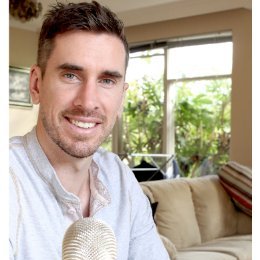
 Our guest in this episode of The Effortless Swimming Podcast is James O’Connor. He is a success and leadership coach at Elite Team Leadership where he works with a wide range of sports and athletes to help them improve their results in their chosen field. He is also host of the JocX podcast.
In this podcast we talked about:
- How to build the right culture and environment within your team
- How to drill down deep on what’s motivating you
- How to use your motivation to get better results
01:50 – James’ Story To Becoming a Success and Leadership Coach
04:19 – Vision, Value, Goals, Behaviors
10:07 – The Importance of Writing Down Your Vision
12:08 – An Idea of Reality
19:48 – What Makes a Good Coach
23:50 – Teach them in a language they understand.
28:00 – How to Produce High Performing Teams
31:07 – The Big Shift
32:40 – “Stick to your path and keep wearing your short shorts.”
To learn more about James’ work you can find his podcast here and visit his website: www.eliteteamleadership.com.au
Transcript
Read the full transcript
Welcome to Effortless Swimming, the podcast for swimmers, triathletes and coaches. Join Australian swim coach Brenton Ford as he reveals the latest techniques and information to improve your swimming. Let’s dive right in. Welcome to the Effortless Swimming Podcast. My name is Brenton Ford and if this is your first time listening, the Effortless Swimming Podcast is all about helping you become a better swimmer. If you’re an open water swimmer, a triathlete or a pool swimmer, this podcast is perfect for you as we feature a range of guests from professional triathletes to Olympic swimmers to experts in different fields such as mindset, leadership and strength and nutrition. And today’s episode is a little different than the last few that we’ve done which have been a lot on swimming technique and workouts and fitness. Today’s guest is James O’Connor who is from Elite Team Leadership. James has competed at a national level in two sports from running to equestrian
and he is now a team success and leadership coach and he works with a wide range of different sports and athletes to help them improve their results in their chosen field. And today’s podcast I really enjoyed doing because we talk about some stuff that we don’t normally talk about on the podcast. So we go into depth about how to build the right culture and the right sort of environment within your team or if you’re training on your own, how you can really drill down deep into what’s motivating you and what’s driving you and how you can use that to get better results in your swim. So here we are, let’s go to the conversation between myself and James and James has first started off with how he got started becoming a team success and leadership coach. I studied commerce and majoring in management and sport management at Deakin University there a few or a number of years back. Seven or eight years back I got through starting that
and I sort of got into working in the sporting industry and events and so forth and I sort of realised that I wanted to be at the high performance end and working with people to improve their performance rather than so much admin and management. So I ended up taking a course in coaching and doing an NLP neuro-linguistic programming course and really sort of focusing my energies into learning what the best in the world do from the best individuals to how they think and really with myself learn how to get the best out of others through asking the right questions and through different mindset techniques through what we learned through the courses and just the huge volume of materials that I’m consuming on a daily basis through audiobooks, to podcasts, to going, I regularly go to different other field seminars and events as they come through City here in Melbourne and travel outside of that as well and obviously the people I’m meeting as well.
So it all came to sort of building myself up in those sort of areas of coaching ability and then over the last sort of few years is really applying that to different athletes and teams and creating better performance through that which is all my business now called Elite Team Leadership it really focuses on helping teams develop sort of the behaviours and the actions that create the results that they’re really after and doing that on a consistent basis and that’s sort of what I’m focusing on and also obviously work with individual athletes as well and then business teams as well so that’s sort of the focus. So what do you think separates a club or a team who might go through this kind of stuff with you like the leadership and the team success strategy what separates teams who would go through that compared to those who may not have much of a focus you know I’m working together as a team and having the leadership drive
the team in the right direction? Yeah through the model we use it’s really sort of almost like a bit of a higher arch you know I like to think at the top of the list is the sort of teams vision for what they really want to be and then sort of second on the list is really having the values and the identity of the team and the third I’ll come back to that but on the behaviours and the actions that bring all that to life and it’s funny a lot of people who aren’t a coach or haven’t really looked into this sort of area really would think goals is the highest on the list and that’s the main thing you’ve got to set and I think we have this absolute obsession down the list a little bit and I’ll sort of explain that by if you look at the real high performance like the guys who you sort of look at them you have this guy like a favorite of Federer or LeBron James there’s real the best in the world and each year and year out
year and year out there just at the best and getting better in some most of the time and you think how do they do that and sustain their performance like they’ve achieved the goals like Federer basically won 17 slams and I think obviously LeBron James has got his NBA championships now and you sort of think well you think those guys would have tapered off a bit and backed off to achieve what they want but because most people look at that they think winning NBA championship would be the goal, the be-all and end-all LeBron in his head in some sort of way he’ll have a vision for what he wants to become and it’s probably most likely a simple little saying it’s probably the best player ever and that’s probably what his vision is it’s become the best player ever and through that with that being his vision he’ll have his values and identity backing that up and below that will be the goals and part of the goals will be to win a few NBA championships
so what I mean by that is he’s sustaining his performance at a high level and saying go to other teams is by having a vision that’s bigger than just a goal and I’ll give you an example actually now this is actually really relevant for you guys one of my friends is also a coach and he actually coached a high level swimmer as well he didn’t mention the name he sort of wanted to keep it for himself but he said he’d been to a world championship one of the best in the world and he came back and he got a bit of a slump because he did really well and achieved his goal at the world championships not sure exactly what it was but he did really well and he did a bit of a slump and he came back to my mates and said I really need help I really need to set another goal so I can go forward and chase that down and my mates and my coach said to him he said why would you want to do that because if you set another goal and just do the exact same process
you’re going to be in the exact same position positioning you are now in a real slump after you achieve it so what they did they really workshopped it and worked it out exactly what I’m talking about in terms of getting a vision for yourself and workshopped it to the point where they came up for him I think it was making him leave the sport sort of vision for that swim at the time now I don’t know who actually it was I’d love to know actually now who it was but that’s sort of what they workshopped and came to the point where I want you to leave when you think about that now and you think about yourself you think wow that’s sort of just you know Olympic World Championships all that sort of stuff is just a part of the process and you can sort of get an idea of the swimming that’s like you know the champion guys we have today you know in the last 10-15 years you know Hackett and Clemen Thorpe and all those sorts of guys
and Little Jones however I’m sure they’d have a similar sort of outcome and if they had the gold medal as a beyond end goal they wouldn’t be able to keep repeating their high performance on such a consistent level yeah absolutely and I mean you look at someone like Michael Phelps who most successful Olympian of all time and he retired and now he’s come back and he’s working towards Rio I mean he’s got to have a vision like that I mean he’s already an icon of the sport so you know it’s there’s obviously something bigger than that driving him but you can’t just if your goal is to win an Olympic gold medal and you achieve it as you’re saying it’s what’s next after that then you’re sort of done so you’ve got to have that wider vision really driving you and I mean I kind of use this every morning you know when I get up or when I sort of start work I’ve kind of got these things mapped out as well as you know what’s my sort of
what’s my bigger vision for what I want to do with my life and then what are some of the things that I identify myself as and what are the things that I do and I don’t do so what are some things that what are the sort of boundaries that I set myself and then I kind of have these three month or six month goals that I have kind of set out and look to achieve so I think just kind of breaking them down into that hierarchy of of achievement or success just makes it so much more tangible and easier to to see what’s really driving you and I know that if I if I haven’t sort of looked at those for a week I find that my motivation is down and I haven’t quite got the direction or the drive with the work that I’m doing so just referring to that as regularly as possible has been really helpful. I’m like I sort of with the guys I work with a lot too we do a lot of that as well even some silly simple things of writing affirmations and sort of put them on the back of your door
and read them before you go to bed and when you wake up first thing and the sort of things you sort of want to become see you know I’m going to be I am a really great person or whatever it is you know whatever you want to really become you sort of say it but getting down to your identity and values myself now sort of going to the point where I just have a few words and each day if I then your identity which is these words then your goals everything sort of takes care of itself so I have like things like I mean powering, courageous Cazen which is a Jeff and his word for constant never ending improvement a few other things and you just live those words your goals and your vision and everything sort of just you know comes to life I guess in a way too if you just simply do that so how would you recommend someone approach putting these things together for themselves so they might be a an age group triathlete who may have been doing the sport
a couple of years or an open water swimer who has been doing the sport for years and you know and wants to get better loves swimming and you know wants to grow as a swimmer how would you recommend that the average person go about putting this together and sort of find discovering what their vision is yeah for sure a little bit of a process through doing it sort of need a workshop a bit but to sort of really put into a few sentences for you basically you sort of you can ask yourself a simple question is if people you can start to you know where you are now sort of discovering your reality where you are now you ask yourself a simple question if your peer group or people outside had to describe you and had to use words to describe you as a swimmer what words would they use and you sort of write those down and then you can write down words for yourself how would you describe yourself right now what words would you use to describe yourself
in your swimming right now and you get those words down you sort of get an idea of your reality now this is a bit more workshop beads of this but give you an idea then you sort of look where you want to go so it’s all almost like setting the bridge to where you want to head to so then you ask the question how would you like to be perceived like how would you like people to perceive you as a swimmer and you might come up with words you know courageous determined persistent professional you know really technically sound or whatever those sorts of things and you might write those down and then you write a list of you know your own things down as well and that’s the sort of the beginning of it and then you can once you sort of come up with maybe half a dozen or even three words that you really want to live by and live and breathe day in day out and you think are going to be the values that you know really what you want to become
you can sort of you know again pop that on your back of your bedroom door and just sort of each night you’re really envising yourself doing those words and being those things each day and in your swimming and then the same thing in the morning really setting yourself up you know spending a couple minutes or 30 seconds even going over those words in your mind and just being that but that sort of then follows down to you sort of do that same process again with your behaviours and actions and that’s the sort of the fourth thing down the bottom I look at really you know what behaviours and actions are you doing now and then what do you need them to be what actions do you need to take every day and every session and every how do you need to behave and how do you need to act and model off to create the outcome or the vision that you want and that’s sort of in line and the key things to getting your vision your identity your goals
and your behaviours and actions on a daily basis all in a line so if you want to be a Olympic champion you’ve got to be like I said doing your 8 to 10 sessions or whatever it is per week and doing all the extras and whatever else it needs to be it’s really about making sure everything’s in alignment and if you’re just wanting to swim a local open water swimming race there might be just obviously you’re going to have different actions that need to back up those goals back up that vision for yourself and that’s sort of the key thing is making sure it’s in alignment yeah and I like what you said at the start of that was having a bunch of peers or your coach or people who are close to you to give you an honest evaluation of how they see you as an athlete and how much effort they see you putting in and training and doing the right things and eating right and all that sort of stuff because there’s usually always going to be a disconnect there
between what you think you’re doing and how other people see you and as hard as it might be to take sometimes that can really be the wake up call that you might need to go hang on a minute maybe I’m not giving everything I can and maybe I’m not doing some of the things that I should be doing so that honest evaluation can be hard to sort of stomach I think but actually knowing actually sort of seeing it from an outside view can make a huge difference and I mean we get this with we sort of see this when we’re coaching is that if I could just kind of project the image that I see when I’m standing on deck coaching someone we might be going through some technique work if I could just kind of project what I’m seeing them do and how I can see them fixing that that’s really half the battle is just kind of showing them where they are with their stroke and what the changes they need to make if they understand that that’s when they really start to
improve so I think that’s such an important thing in any sort of aspect of what you’re doing and something you want to get better at yeah that’s the point of call is really discovering your knowing where that is and definitely getting that feedback and I guess that’s sort of where people like myself sort of come in as sort of facilitating that process because I guess getting that honest feedback like you said from your peers at times especially when we’re working with teams and getting that sort of team and peer review of your what you’re doing and how you’re going about things and where your performance is at it is a sort of like going to the gym and doing weights for the first time like your muscles aren’t used to it your mind’s not used to getting that sort of honest feedback and it might be at first a little bit confronting but I guess you’ve got to set a guy like myself’s role is really to have an environment in that space
that it’s really objective it’s really just it’s definitely not personal anything like that it’s just purely for performance purely to help the individual and the team overall obviously to take it to the next level and that’s why you’re all there that’s why you’re working as hard as they are and that’s why your football club’s doing what you’re doing or our corporate team you’re working hard day in day out it’s all about performance and getting better so getting that honest feedback is a bit like using a muscle for the first time if you haven’t done it and you walk away you might feel a bit sore for the next couple of days and think oh that was pretty challenging but when you do it more often and week in week out it becomes a part of your culture and a part of just a regular thing that you’re happy to have honest conversations with your peer group about the performance and otherwise once they expect that and become sort of a regular thing
it’s definitely a more just a normal process I guess in inverted commas and just a process that everyone knows is aimed at getting the best out of everyone yeah and I mean sort of in your where you sort of work with AFL I mean you see I think probably AFL teams and those sorts of sports teams like NFL as well they are just so good at analysis and feedback like you know they’ll look at each game and look where they went well and went wrong and just that really sort of high level sport you see it a lot I mean when I was in I was in Tanya Purra over in Thailand last year running our how we camp there and the great British swim team were there and they I saw the coaches sit down with the athletes and just kind of go over there last couple of weeks of training how they’re feeling where they feel that they can improve and how the coaches saw them where they’re at at the moment so that regular feedback of where you’re at is really really valuable
and when it comes to coaching what do you see some of the traits of good coaches I mean there’s so many different coaching styles you look at AFL here and you’ve got like the you’ve got the Alistair Clarkson who just coached Hawthorne to their third premiership in a row and then you’ve got guys like the old Carlton coach Mick he’s quite a different coaching style you can kind of see the differences in the teams there and how they sort of how they feel out on field some with Carlton afraid to sort of speak their mind and afraid they’re going to get chastised for doing something wrong how do you what do you see among among good coaches has been the common traits yeah for sure like you said there’s such variation I guess between guys you know you look at AFL for example and look at the different ways to go about it from like an Al Clarkson to an old house but there definitely would be similarities between the two and obviously
you have to start as the communication between coach and players and the ability to understand that different individuals different aspirations have their own individual goals and I was actually listening to a press conference this week of John Warsaw who took over of Eston had coach and thought it was very good of him to talk about how he wants to sit down with each player and really talk about their own individual goals and then realizing that he wants to help them achieve their own individual goals whatever that is they can help him with winning the overall team goal winning a Premiership and I thought that was cool that they realized that there are individuals a part of a team but like individuals make up a team therefore you got to get each individual performing at the best to motivate different people you look at Hawthorne I can tell you now you couldn’t talk to a Brian Lake the same way you could talk to a Cyril Rioli
you can just gather from interviews that they’re different personalities and you’d have to approach them very differently and different things would motivate them but from a coaching standpoint obviously being able to communicate really well realizing that it’s really about empowering the players they’re the ones doing the actual work and really giving them the skills and the knowledge and confidence to perform in the state the peak state and just on that is really again realizing that people will reach their own peak state in different ways so with the team you got to make sure that your sort of different individuals a part of the team are going to be at their peak level therefore performing how you want them at the team to achieve your outcome, achieve your vision, achieve your goals on a regular basis more often than not yeah yeah absolutely and I see that every day just with my swim squad that I coach some swimmers you can
you can challenge them to let’s say we’re doing a set of like 850s or something and you’re on the last one and you want them to pull out a really good time with some swimmers you say alright what time are you going for and they might say 28 I bet you can’t do a 27 and that’s going to fire them up whereas some swimmers some swimmers I know I’ve got to just not really challenge them that way they’re just going to challenge themselves as long as they’re not putting the spotlight for example is a couple of the swimmers so different little strategies that you learn along the way just based on people’s personality types and what really drives them so they’re really things that I think take time to pick up and I mean with what you’re talking about there you just said based on the interviews that you see with like Brian Lake and Cyril Rioli that you can kind of tell what’s going to motivate them and how do you sort of find that
so what are some of the sort of different types of I guess motivation strategies that you might have with different athletes kind of what you’re talking about with Brian Lake and Cyril Rioli there what do you say to other people yeah for sure obviously when you sort of sit down with different team members and obviously I do a part of different squads I work with you sort of you really obviously first thing you’re looking to do as a coach from my end is really obviously building that rapport with the individual so that sort of starts really straight away with matching and mirroring in a way and talking and speaking in a language that they understand so you sort of if they’re talking a certain wire tonality you sort of really want to match that in a way you want to build rapport is that you know you sort of kind of long story short you sort of people hang out with people who are like them so you sort of see friendship groups and you notice everyone
is a similar people within that group because people like to hang out people who are similar and therefore as a coach you sort of relate to these people you sort of want to be able to talk in their language so if they’re using certain words and certain tonalities you definitely want to mimic and mirror and the way they’re sitting in the seat you know some guys might be crouched right down and squashed down the seat and you sort of want to do the same sort of to match and mirror and obviously not too obvious but what I’m sort of saying here is getting into that rapport and building that relationship it’s really asking the questions really sort of talking to them what you know definitely rather than just sort of guess you ask and ask what what are the things you’re hoping to get out of this in your past best performances what are you thinking about what are you saying to yourself what did you do in the lead up and using such things as
sort of replicating and modelling off you’ve done in the past and getting those performances so you’re sort of doing those types of things and looking at each individual and and really sort of I guess asking those questions is probably the key thing and not just guessing it’s a bit like you know in your business you sort of you test in your art and you know that splitting and all this sort of things rather than just guessing and thinking what you know what people want you sort of got to ask the question that’s sort of similar with the team and getting the best out of individuals is asking what’s motivating them and then sort of incorporating that into a team environment that you know you can work together and help them you know solve those problems and get them to where they need to go yeah yeah I totally agree and one thing you said there was just was just asking questions and I think a big part to improving is just asking
better questions and you know that’s when you really get to drill down to what people want and you know and what’s driving them and what their goals are and what they want to aspire to so yeah just asking questions and that’s one thing I love to do with my guys when they come in the morning it’s you know say hi you know how you’re feeling how you’re going you know what you’ve been up to and just getting to know your athletes if you’re a coach or you know if you’re an athlete just getting to know your fellow athletes and just kind of building the relationship that way so you can never ask too many questions so I think that’s really important and just lastly here how do you see athletes being able to kind of take leadership within a squad to help build that squad up because I know I’ve got a lot of listeners who train with either a triathlon squad or a swim squad or a bunch of mates and you know they might want to really
just kind of lead that squad and build it up so that the whole squad’s performing at a higher level so that they can lift their own performance what are some sort of strategies or methods that you have the clubs and athletes that you work with what sort of stuff to have them doing yeah definitely it sort of goes back to the first sort of what I was talking about and producing high performing teams and sometimes working with corporate and you know you can do this over a full day with a corporate team but it goes back to with your swimming team or group it really comes back to in a simple way is sort of identifying what this team is about again with those few words and your team can own this and they’re going to live by to own the vision of that have goals a part of that of your group so your group has goals and then from that the key thing probably really is to breathe life in the whole machine it makes it all come to life and become
tangible the actions behave is that your team that each individual swimmer is going to live and breathe by and they’re just non-negotiable they’re just things that you do day in day out and these actions are really thought out carefully that they’re an alignment vision for that particular team vision for life through these actions so therefore every team member takes leadership and empowers each person if they just do those five to ten non-negotiable activities day in day out whether it be you know rocking up to training ten minutes early it might be something simple as you know doing an extra push-up or a rep every time whatever you can decide what you need to do it’s a matter of living by those and and then from that back to earlier we’re talking about the feedback then the team you can have feedback sessions maybe once every month or so and go and look at each individual how they’re living by those behaviors and actions and giving that
honest and objective feedback and then the individual can go oh there’s a few different behaviors that I probably wasn’t doing 100% or doing really well I need to work on getting those right and therefore the team overall performance will improve and I guess the individuals within that become better leaders by you know really sort of almost challenging but having the honest feedback as well for members within their group and you know taking no matter with your most experienced person on the team or the youngest you still you know get your feedback take it on board and everyone you know opinion within that team is very highly valued and and you welcome the opportunity to get that feedback and take your performance to a new level and therefore the team to a new level. That’s good and I think one of the an example of that is I’ve seen it within swim clubs is you have some swim clubs who among the athletes there it’s yeah it might be
it can be like uncool to turn up early or it’s not cool to do your sort of activation exercises before training and the cool thing to do is just to be on your phone listen to music and just like hang by the side of the pool when you’re warming up for a competition and then you see other clubs the really successful clubs that the other swimmers are putting pressure on the swimmers who aren’t turning up on time and who are slacking off and trying to do these sort of cool things and hang up by the pool so I think when you can have that shift of having the status quo has been just lazy and trying to impress those around you by by acting like you don’t care to go into that kind of environment where everyone’s a high performer we’re going to get the most out of each other we’re going to perform well we’re going to do the right things when you can transition to that kind of culture and environment that’s when these big shifts really start to happen
with within a club and that sort of stuff takes time and you’ve really got to stay on top of of that as a coach and even as like as a leadership group but that’s when you really start to say that improvement in throughout the whole club Yeah for sure and I guess from an individual standpoint like you definitely can drive that and going against this like you said the status quo and if other team members if they’re not doing the actions that are going to help them perform well that doesn’t mean you just fall into that and definitely if you’re on the right side of the actions and the right side of the behavior and doing the proper things you know keep doing that I just flashed back to myself as a junior I didn’t set the war on fire but I sort of competed national level in distance running and I remember as a junior sort of you know copying with a flag from your mates in your high school because I’d wear the right proper running gear
you know you’re running short and those sorts of things and you can’t permit a flag but I knew forming a lot better obviously than those my high school mates was you know in the states and so forth but I think it you stick you know I knew I was doing the right things at the time to perform well and for the school athletic team and you know competitions and that I was performing a lot better than those other guys so soon as listening if you’re doing the right things keep doing it don’t follow what the people who you know sitting by said by the pool and looking through their Facebook it’s not productive yourself so definitely that’s where a leader sort of comes out and having the courage to continue and just stick to your path and and keep wearing those short shorts that’s so funny it had exactly the same thing in school with swimming that the very uncool thing to do at swimming school sports day was to wear your speedos so
you know you get kids who were really good swimmers but they’d give into that pressure and they’d wear like speedos but they’d have shorts over the top like some boardies or just some swim shorts over the top and yeah I mean there’s a lot of pressure in high school with that sort of stuff you know that it’s when you’re in high school that that stuff actually matters but you know as you get older you realize you don’t care what other people think and you don’t really care what you are what you look like or you’re doing things like that so it’s um yeah we had exactly the same thing but looking back at that the swimmers that used to you know tease the swimmers about wearing speedos if you look at them now most of them are they’re overweight or they’re not really doing that much with their life but if you can just stay true to stay true to yourself and you know don’t care about what they’re saying that’s um you know they’re the type of people who
really go on to achieve things later on in life yeah for sure and just on that there’s obviously not everyone’s going to be teasing you’re in a way for what you’re wearing or what you’re trying to achieve and the real importance of um you know the swimmers listening real importance of surrounding yourself with the right people and people who are encouraging you people who you’re looking up to who you want to emulate and really hang around those people and making an absolute must that you hang around with the right people I guess if you look from a business standpoint the old saying is your income is the average of the five closest people you hang around with so I think you can definitely apply that to the police life you really want to hang around with people who you want to be like and swim like in their case so you definitely make sure you’re not getting discouraged by people who are you know not saying positive things towards you
and definitely hanging around with the right people yep couldn’t agree more that’s awesome thanks for being on the podcast and just before we go where can people find out more about you where can people find your podcast yeah definitely we’ll jump on the podcast which you’re featuring on which I’m excited to release probably about this time when this one comes out but jockxpolcast you can just jump on iTunes and download that or you can go probably just go through my social media pages elite team leadership my business is called elite team leadership and same as the Instagram Facebook jump on there and you’ll find the podcast and crew that follow me and yeah thanks for joining us on the effortless swimming podcast to get transcriptions bonus videos and to be the first to hear about new episodes go to swimmingpodcast.com