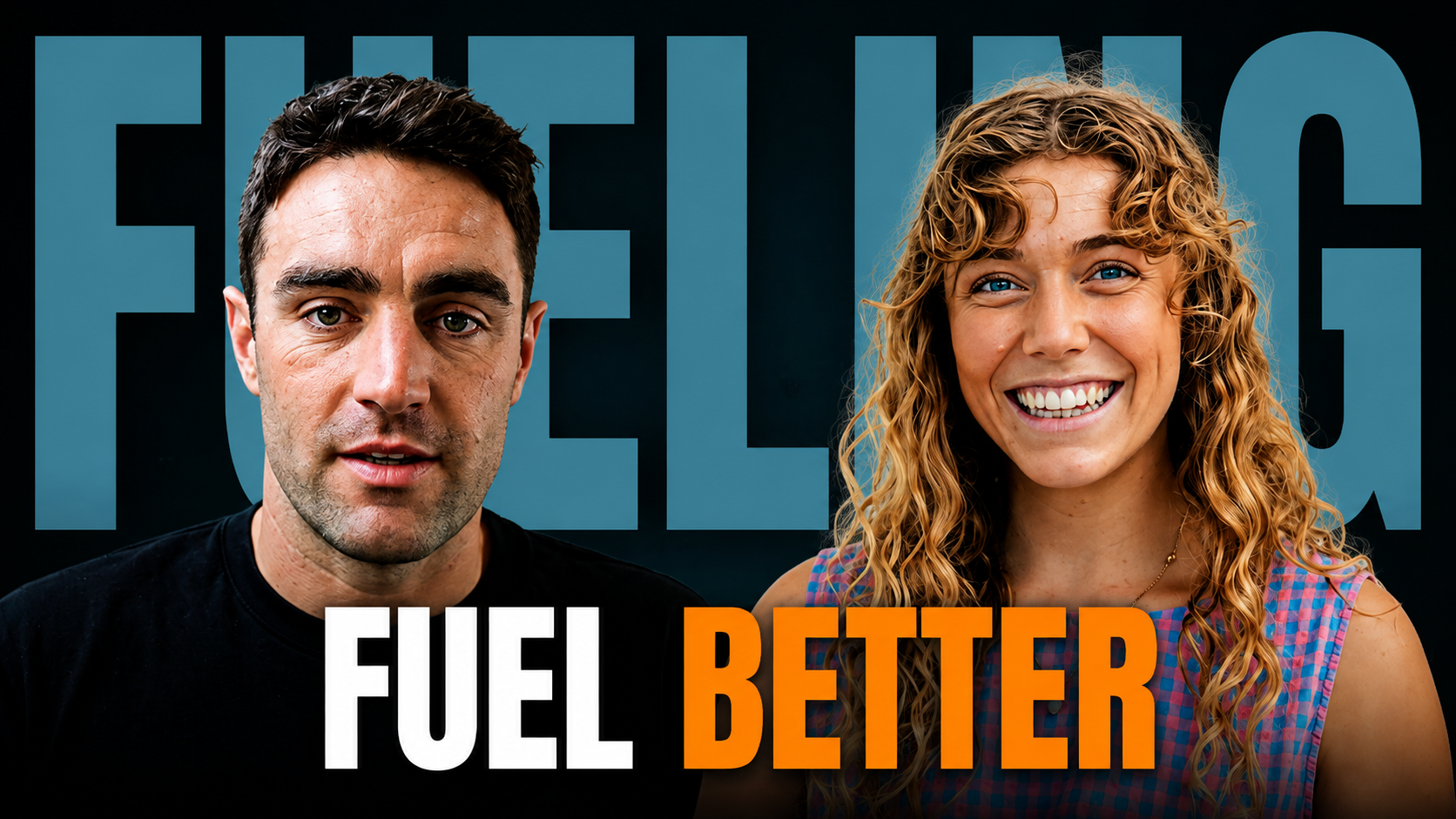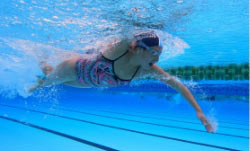








 In this podcast, we have Steph Saullo. Steph empowers people to learn how to make the best nutrition-based choices for themselves and their goals. Her professional and academic credentials include a master’s degree in food and nutrition and Registered Dietitian.
In this episode, Steph will share with us how you can get better performance in your swimming or triathlon by fuelling yourself better.
We’ll cover:
- fundamentals in nutrition that every athlete should know
- common misconceptions about food and nutrition
- case studies of athletes that Steph has worked with
- what types of athletes should get a personal plan from their nutritionist and why they should do it
- supplements and what type of athletes should take them
02:43 – What is Nutrient Timing
04:00 – The One Thing We Should Get Enough Of
04:15 – Truth About Protein
05:39 – Maximizing Muscle Protein Synthesis
12:05- When To Start Refuelling During Training
20:05 – How They Got Better Results When They Changed Their Diet
23:30 – The Missing Piece
26:00 – Coming from an outside source…
28:12 – Look at the labels
To learn more about Steph and her work visit www.rittersp.com/nutrition/effortless-swimming
Transcript
Read the full transcript
Welcome to Effortless Swimming, the podcast for swimmers, triathletes and coaches. Join Australian swim coach, Brenton Ford, as he reveals the latest techniques and information to improve your swimming. Let’s dive right in. Hi, Brenton Ford here. Welcome to the Effortless Swimming podcast. Before we get into today’s episode, we are currently locking in our 2016 freestyle clinics with underwater filming and video analysis. So if you are located overseas, if you’re not in Australia, if you’re in the US or in Europe, then send me an email and tell me where you’d like me to come for next year. So you can contact me at Brent at effortlesswimming.com. That’s B-R-E-N-T at effortlesswimming.com. Tell me which cities or countries you’d like me to come to and we can look at visiting you for our clinics next year. So we’ve run these clinics for the last couple of years all across Australia and they sell out very quickly.
And the reason being is that the swimmers and triathletes that come to them are getting really, really good results with their swimming. For example, we ran a clinic two days ago and the next day I got an email from that person saying that they went down to their local pool. We’re doing their normal swim set and their freestyle pace had increased by 20 seconds per 100. Now that’s not a typical result but you can see what can happen when you just have two or three things to focus on that are specific to your stroke and when it’s really clear with the video analysis and actually seeing what you look like underwater and above the water and knowing what you have to change and how you can go about it. So send me an email at Brent at effortlesswimming.com and let me know where you’d like me to visit next year in the US or across Europe. So today’s guest is Steph Solo. She’s a nutritionist and on today’s podcast we are talking about how you can get better performance in your swimming
or open water swimming or triathlon by fueling yourself better. So we cover the four to five fundamentals of sports nutrition that every athlete should know. We look at the common misconceptions about food and nutrition. We also talk about some case studies of athletes that Steph has worked with and some changes that they’ve made and seen a positive result because of it. And we also talk about what types of athletes should seek a personal plan from their nutritionist and why they would do it. And we also talk a little bit about supplements and what type of athletes should look into taking some sort of supplement. So here is Steph talking about the four to five fundamentals of sports nutrition that all athletes should know about.
I think number one is nutrient timing. And if people out there don’t know what nutrient timing is nutrient timing is approach to what you eat how much you eat and when you eat to sort of optimize performance. And I talk about nutrition nutrient timing a little bit because sports nutrition is an art and a science if you will. We base nutrition recommendations on scientific evidence but really when we put nutrition into practice it’s really an art. It’s about skill it’s about judgment regardless of how much science there is out there whatever principles we choose to apply to our routine take practice and require adaptation. So when we talk about nutrient timing it’s really about not only knowing what to do but practicing what you do if that makes sense. So that’s I think number one number two would be carbohydrate carbohydrate is by far the body’s preferred source of energy it’s most efficiently accessed and used.
And a lot of times athletes are not getting enough carbohydrate and I think carbohydrates have gotten a bad rap in the in the last few years. And there’s all sorts of theories and principles about what we should be eating when and I think there’s science to support both sides of the equation but carbohydrate is definitely what we need to get enough of. The third thing is protein and specifically I wanted to mention sarcopenia and if people out there don’t know what sarcopenia is sarcopenia is the age related loss of muscle and function and it’s really a progressive process. And it can take place very gradually let’s say three to eight percent reduction of lean muscle mass per decade after the age of 30 is sort of what happens if we’re not taking in enough quality protein and enough activity to sort of keep that muscle built right. So I think that’s a really fundamental piece of sports nutrition and just in general nutrition as well a lot of these concepts apply to not only just athletes but you know people who are athletes.
So with with that do you see it as if someone continues to to go to the gym or they continue to work out and they take in enough good proteins. Do they effectively slow slow the rate at which they lose that muscle mass or can they kind of put it you know put it off or it’s always going to go but at a slower rate. Exactly it’s it’s really about slowing it’s about slowing that muscle loss and maximizing muscle protein synthesis because we can still build muscle as we get older. So if we maximize the muscle protein synthesis the growing of that muscle and preserve what we have then and also slow the muscle loss then you know it’s sort of a win win. So does it need to be weight training to to be able to do that or you know exercise like swimming running you have a similar sort of impact or do you find that you really need to be doing some kind of strength training to you know to minimize the loss of that muscle mass.
Yeah good question so strength training but particularly you know any resistance training is going to help preserve that muscle tissue and help build that tissue so swimming definitely falls into the resistance category. Yeah okay great I’m sure my audience would be happy to to know about that. To know that they’re not they’re not wasting all their time and energy doing nothing. And I think maybe the last piece or maybe number four on the fundamentals of sports nutrition would be hydrating and really preventing dehydration. It’s it’s hard to some people it’s really hard to notice when they’re dehydrated and there are a lot of most of the time when we are thirsty we’re already dehydrated so we always say that thirst is on set too late and quenched too soon so it’s really about drinking enough fluid to prevent dehydration because sometimes it’s really that we didn’t we didn’t hydrate enough versus we didn’t fuel enough or it could be a combination of both but but water and fluid really play into the equation as well.
Yeah and I think that’s that’s one thing that like I know a lot of triathletes and quite a few who who won’t drink during a swim session because they say that well in an eye man you know I’m not going to be able to get a drink halfway through the swim but that’s a very old school approach I mean back I think it was you know the 80s the 90s they used to this swim coaches used to not let their swimmers drink because they thought it would make them tougher by not allowing them to hydrate throughout a session but you know we know now that you’ve really just got to be refueling and hydrating throughout the session to get the most out of that particular session so what do you what are your thoughts on not drinking through let’s say a 75 minute to 90 minute swim training session. No we definitely need to hydrate we need to hydrate during that time and it’s really individual because especially with swimming it’s really hard to notice that you sweat because you’re in the water and.
There are ways we can determine how much we are sweating mostly with you know what taking your weight. But it’s really important to notice that regardless of the fact that you’re in water you are in fact sweating and you have to recognize that you’re losing a lot of water when you’re sweating. So we need to replace that you know just a small decrease in a small amount of dehydration say 2% 2 to 3% can really have a tremendous impact on your performance. Yeah absolutely and you can you can always feel it when you are dehydrated and the same thing goes when you’re if you ever train in a really warm pool I mean back when I was training full time as a teenager there was a swimming pool that we used to train that was about 30 degrees celsius. So I don’t know what that is in Fahrenheit but it’s it’s probably 2 to 3 degrees warmer than than your average or your average competition pool and and you couldn’t take enough water into stay hydrated for that session.
So even if you had two or three bottles for that 90 minute session you’d finish that that training session and still just be so thirsty and it’d be very hard to maintain your times for that that whole set. And you know it’s just that it really does impact upon your performance and I know I coach a master’s squad and I think that’s probably the probably one of the main things that most people miss is just just not hydrating enough. You know if you’re not going through at least a bottle for you know a bottle an hour for a training session particularly a hard training session that I don’t think you’re really getting enough fluids into to be able to you know maintain and and get through that whole session. Performing well. Right and there’s a really easy way we can monitor how much water we’re getting if we’re not getting enough. One we can monitor our weight so if you know someone weighs themselves before they go into their training session and after.
If they have lost a couple pounds they lost water and they need to make sure they’re putting that back so for every pound of water that you lose during a training session you should be making sure you take in at least 16 to 20 ounces of water. Back during that training session so let’s in ounces 240 milliliters and then or yeah eight ounces is 240 milliliters and if if we also need to monitor our urine so if your urine is let’s say clear to light yellow that’s good. You don’t want it to be really dark and concentrated that means you’re not getting enough water so just those two simple tactics are really easy ways to monitor whether or not someone’s getting enough water. And do you recommend to your clients to have a certain amount of fluids after they wake up in the morning because I don’t you know be dehydrated a lot overnight and and when you weigh it’s it’s always quite quite dark in the morning so there’s a certain amount of fluids that you recommend your
clients take in. So I don’t necessarily navigate to a particularly number a particular number of amount of water but I do recommend that people start hydrating from the moment they wake up. Okay great and then in terms of swimming training sessions so someone’s training for 75 minutes. Would you suggest them to have anything other than water or you know have a bottle of say it was Gatorade and then a bottle of water or or can they get by on just water for a session that’s about 75 minutes to 90 minutes. 75 minutes to 90 minutes would probably require some additional sort of fuel. So generally speaking at that 45 minute to 60 minute point is when people need to start refueling. If your exercise session is only about an hour most people can get by with just water or maybe a sports drink. But after that that time period that 45 minute 60 minute period you really want to think about refueling with some carbohydrates so it could be in the form of a sports drink.
It could be as simple as you know those goose or some gummy bears or fruit snacks some fruit or a fruit leather it could be it has it doesn’t have to be a lot it can be 100 calories worth of something or you know 15 grams of carbohydrate which is really 60 calories of something. So it’s really not a lot and that should really get you through 75 minutes. Okay so around that the hour mark past hour markers when you need to think about taking something in other than water. Yeah and if you’re if your sessions only 75 minutes then maybe it’s better for you and it really depends on how that training session goes. Maybe it’s you know refueling at the halfway mark or the three quarters mark you know maybe it’s a different maybe it’s not at that 60 minute mark but it’s about giving yourself enough fuel so that you can get it through the end that tail end. Okay great and then with recovery after after a training session so what’s what sort of window do you recommend people to have to refuel by to take something in after a training session.
So immediately if you can is really the first recommendation and if you can’t do it immediately then really within 45 minutes to an hour is really that that prime window and you want to make sure you’re taking in some protein so it could be 10 to 20 grams of protein not a whole lot. And then you know mostly carbohydrate so double the amount of carbohydrate at least if not more carbohydrate to maximize recovery. And do if the sessions are different so let’s say you do one training session and it’s all it’s all just aerobic based it’s quite low heart rate and you’re not really going anything above a 70% effort. Would you refuel differently if you do that kind of session compared to a session where you’re doing some high intensity work so you might be doing 5050 sprints you know doing 15 to 20 of those where you’re really working above 90%. Would you change what how you refuel after a session depending on what kind of session it is.
So, in a general sense no it’s always going to be a little bit of protein and more carbohydrate, but the where it would become different is the amount so really how much does that person need and it’s all individual you know as this person taking in a lot of calories over the course of the day and can afford to consume more at that time, or is it you know where we have to maximize calories at this particular point in time because you’re, let’s say consuming less calories and you normally would maybe you’re trying to make weight for something whatever. And so it really depends on the individual with regards to the total amount calorie wise but in general it’s always going to be a little bit of protein with more carbohydrate. So just after you recommend people have let’s say after swimming in particular what what sort of yeah what sort of things would you recommend people have that’s that’s easy to bring along to the pool, keeping their bag and and get access to straight away after a swim session.
Yeah, so a peanut butter and jelly sandwich is a perfect thing to throw in a backpack and keep in your bag with a piece of fruit. Chocolate milk is a good one to carry around maybe you may if you have a refrigerator nearby nearby or if it hasn’t been on the refrigerator for a long time. Other sandwiches like turkey sandwich and another piece of fruit banana or something also really easy to bring along with you Greek yogurt and fruit. Those are pretty portable. Also, a lot of people carry on your shaker cups so maybe you take in some milk and throw in a whey protein or something and you can just shake it up right then and there even mix it with water but I would generally recommend you mix that protein with some sort of carbohydrate whether it’s milk that has some in it or some juice so that you can get in that carbohydrate or you just eat fruit on the side so that you get carbohydrate that way as well.
Those are all pretty portable options. Yeah, yep, they’re easy to take along with you. And I just want to talk about some of the common misconceptions that you hear about food and nutrition and you sort of bought one up earlier before in terms of the in terms of carbohydrates getting a bad wrap in the last year or two. What are some other common misconceptions that that you sort of hear? Yeah, I mean generally you could fill in the blank with that one. Carbohydrates are bad, fats are bad, protein is bad, protein we’re going to get. I mean you could fill in the blank with all of it but generally speaking all macronutrients fat protein carbohydrate are needed in the right amounts and there are some better choices than others but we need all of them so that would be number one. Another big misconception is that there’s a one size fits all approach to fueling and really it’s not that way at all. We are all human and it’s as simple and it’s as complex as we are human beings.
We’re very much learning more and more about how unique each of us really is. If you think about that you know the approach nutrition should just be like your approach to physically training and you don’t do that. Everyone doesn’t have the same physical training program so you have to think about it in the sense that nutrition is the same way like we’re not all going to be training the same way so we all shouldn’t be eating exactly the same way. Yeah and you can relate that back to Swamina as well. As you mentioned earlier that nutrition is partly art partly science and the same thing goes with Swamina when we run our freestyle clinics. Some people are going to respond better to different drills and to different styles of freestyle so there’s not just one way to swim freestyle. You can get a lot of different techniques and some that will work better for fathers and not so good for others. I think it’s really just about getting the right advice that’s right for you and figuring out along the way as well so you’ve got to just find out what works for you, what fits with what you’re doing during the day
and what your stomach can handle and how you respond to different types of food so yeah I think it’s like everything it’s very individual and I think there’s fundamentals for everything. I mean when we run our freestyle clinics we take people through each of the fundamentals of freestyle that no matter what type of stroke you’ve got you find them among all those different types of freestyle. But then it’s about figuring out the little details in between for that person. That’s exactly right. I mean you nailed it. There are fundamentals. We all want to eat more fruits and vegetables. We should be eating more fruits and vegetables and whole grains and lean protein and good fats and everyone should be doing that across the board. And those are the fundamentals of nutrition and those don’t really change. But what it comes down to being unique is in that nutrient timing and in those amounts and exactly what you said in what you can handle and what your stomach can handle what fits well with you.
Some people really don’t like and some people just don’t like certain things right so it really comes down to just those pieces. Yeah absolutely. And so I mean you’ve worked with a lot of athletes and people who aren’t athletes as well. So can you give me some examples of people you’ve worked with and they’ve made changes to their diet and got better results because of it. Because I mean a lot of people have different goals. It might be weight loss. It might be weight gain. It might be just looking to be able to recover better for the next session. So can you give me a few examples of people that you’ve worked with who have seen some good results with these I guess a personalized approach to their diet. Yeah so one woman comes to mind. I’ve worked with her a couple times. She’s in her 60s and she’s really just trying to keep an active lifestyle. She plays basketball. She plays softball. And just a few months ago maybe not even a few months ago she said that she had played possibly the best game she had ever played in years.
And really all it took really the only thing that we did was one incorporate more food and make it so that she knew when to be prepared what to keep with her at all times. What worked with her schedule and really reminding her that food was a crucial part of the puzzle. Because much of the time food was just sort of the I don’t really need it and I’m not thinking about it and I’m not prepared so I don’t have to worry about it. I don’t want to really grab something. It really was just all about like making it a priority again and that was really the only change we made. And she’s been playing great and she’s had great results. She feels energized and she’s she’s I mean she’s in her 60s and we all want to feel that way when we as we grow older right. Another another guy that I’ve worked with recently he’s mainly a cyclist and the when we when we sat down and talked about what he needed to do. He was really doing all the right things and that’s a common story with with athletes is you know they’re doing all the right things so what is it that we’re going to change to make you better.
And with him it was just incorporating nighttime snacks because he was getting up super early in the morning to get on his bike and he couldn’t eat enough in the morning to make to make his performance what he wanted it to be. So it was just about incorporating nighttime snacks so that he had a little bit more that night before to carry him into that night because we’re really I mean we’re still living when we’re sleeping so a lot of that energy is being utilized. And then you know when he got up in the morning he wasn’t as depleted and he could eat something like he you know normally did and it made a huge difference. Yeah that’s I really like that and I think when you focus on I guess when you get the right information about a certain part of your life and I’m just relating this back to back to swimming is like we ran some clinics on the weekend in Newcastle and Sydney here in Australia and one of the guys emailed me on Monday and he went to the clinic on Saturday and he said I went to the local
sea bars where he normally swims and he’s 100m times or 20 seconds quicker than what he’d normally do and it’s not rocket science what we teach it’s just really giving them the fundamentals and the basics of swimming and giving them two or three things to consider and think about and change with their stroke And when they do that it’s like everything just really starts to come together that they kind of find that missing piece of the puzzle and it sounds very much like what you’re talking about there with the two people that you spoke about is they just don’t quite know where they’re missing out with their diet. So you can kind of take that 30,000 foot view of things and say have you considered doing this and this and then they make those changes and it all starts to click. Right and you’re right it’s not rocket science and we’re not doing huge things here we’re making very small tweaks and that’s not the point like especially with my approach.
My approach is not to completely revamp what you’re doing. My approach is to go in and make small tweaks to the things that you’re already doing because then you know that you’re more likely to stick with it because if I hand you a piece of paper that has a completely different plan than what you’re used to you’re not going to follow it. You’re going to be like oh yeah this is great and then you’re going to follow it for one day and you’re going to be like I can’t do this this is not my life this is not my routine. So it’s really about taking a step back and making tweaks to the things you already do versus you know starting blank with a blank slate which is not sustainable. Yeah it’s just like changing a habit like if you’re trying to give up chocolate at night replace it with something sweet it might be fruit or something but it’s very hard to completely change everything that you’re doing.
Yeah I think those small tweaks and being able to keep similar if not the same sorts of habits but just making those minor tweaks is the easiest way to do it. What type of athletes should seek a personal plan like that from someone like yourself or a nutritionist? Any really any of them you know almost anyone could benefit from working with a nutritionist but really in general you know a nutritionist or a dietitian could really help create a personalized plan and do exactly what you just said. Take a big step back and look at it from you know 30,000 feet and say you know what is it that we can change that’s really small. And also he or she can help work through challenges and difficulties with you many times it’s really just about fine tuning and sometimes that’s not something you can do yourself. Yeah yeah that’s exactly it. I mean I think back to when I’ve changed my diet for the better it hasn’t come from me just kind of looking at what I’m eating.
It’s come from outside sources I might have been speaking to a friend or you know another triathlete or simmer and they’ve mentioned what they’re eating at certain times and I’ve played around with it and some things have worked and some things haven’t. But it’s always sort of come from an outside source so yeah getting someone else to kind of take a look at what you’re doing can be so helpful. You mentioned before we were on the call you mentioned about supplements and you get a lot of questions about what supplements people should have. What’s your approach to just taking supplements for most people? Yeah so I’m a very much a food first approach kind of person but you know sometimes supplements can help us in many different ways. A couple of them that I sort of you know keep in the bag of tricks if you will. Multivitamins are what I would call a great insurance plan so they they’re not going to they’re not going to be a magic pill.
They’re not going to take the place of proper rest recovery refueling. They’re not going to take the place of any of those things but what they can do is they can help to fill nutrient gaps that aren’t otherwise met through food. And sometimes athletes aren’t meeting recommended intake levels because maybe they’re consuming too few calories. Maybe they just you know they’re not eating enough circumstances or eating at enough times during the day to get in enough of their nutrients. So a multivitamins is a good insurance plan if you will. I just would caution people in general when it comes to supplements is to really look for when they’re buying them to look for third party tested and verified products and and you’ll see that on labels. A couple that we have here in the US and maybe in Australia too I’m not quite sure I should have looked that up before we got on this podcast. But the NSF certified for sport is a big one and also the USP or the US Pharmacopoeia verifies.
So if you look at the labels you can generally see third party verifications and I know that the the the rules and the regulations are different country to country. So you just want to make sure you know what you’re getting into. Yeah and you’ve got to be careful with if you get cheap supplements online from from companies that aren’t that well known they can. I know they’ve done a lot of tests with what’s actually in the supplements and half the time they haven’t got what they say they’ve got in them. And all they haven’t got the you know the right amount and they’ve got some other things in them. So you want to it’s I think it’s worth spending a little bit of extra money to know that you get in the right thing when it comes to supplements. Yeah I mean that third party third party verification really helps to ensure that there’s no cross contamination and that there you know that there there wasn’t any.
That there’s you know product ingredient safety especially if you are undergoing any sort of drug testing if you’re competing you really want to make sure that you’re not going to be involved in some cross contamination issue. Yeah because I mean a lot of the a lot of supplements are made in the same factories it’s they just for different companies and so you’ve yeah that’s right you’ve got to. Yeah you don’t want to it’s not worth the risk of being caught with something that you shouldn’t be using just yeah just for the sake of saving a few dollars. Yeah another another supplement that is helpful or can be helpful is whey protein and specifically whey protein isolate so we’ve got whey protein isolate we’ve got whey protein concentrate most of your whey proteins are a combination of. Of the two but your whey protein isolate is is generally digested and absorbed really quickly and it can be a good source of protein when when we might not be able to get enough through food and sometimes people struggle especially people that are eating a lot.
And require a lot of calories in general sometimes it’s just a very easy convenient versatile source of protein which is which is helpful. And you can carry it around in a little plastic baggy I mean it might look like drugs but it’s not carrying around a little plastic bag and throw it in your shaker cup and be on your way with your whey protein. I’ve always been careful that traveling overseas I train overseas I always just take the the powder in its normal little container rather than a plastic bag just to. Yeah I don’t want to avoid that that’s a good that’s a good tip you know when you’re traveling across borders you should make sure to keep it in the container that it comes in. Same thing with pills and tablets you know it’s just keep keep me in their original packaging and there’ll be less questions asked if if they pull you up. Exactly. And the other one that I just wanted to flag I get questions about sometimes is caffeine and caffeine can be really can provide a lot of positive results in the right doses some people are super sensitive to caffeine and it may cause jitteriness jittery you make.
Oh my goodness it may cause you to be jittery or have anxiety or. Yeah me I’ve had too much coffee. No. But some people react to it really well in the right doses. But again word of caution because again if you are undergoing drug testing caffeine is in some cases limited in concentration so you just want to check with whatever governing battery is you know overseeing where you’re competing and check with the you know the prohibited substance list and it will give you those those values of what what the concentration limits are. Good stuff and and for people who want to get in touch with you and. And you mentioned before on the call that you do online or virtual consult so if anyone’s looking to get a bit of a personalized plan and approach to their nutrition. If you’re a swimmer or triathlete then how can people get in touch with you and talk to you about that. Yeah they can visit us at Ritter Sports Performance so that’s Ritter SP.com backslash nutrition and they can get in touch with me that way.
Awesome and we had yeah we had one of your coworkers on we had Chris on talking about strength and conditioning. I think it was about two episodes ago and and he was excellent and I got quite a few emails from people talking about. Just yeah they’ve learned a lot from that podcast and they’ve gone away and added some things there. Strength training program just based on that podcast and I’m sure people will do the same from this one so Steph thank you so much for being on the podcast. And I’ll make sure I’ll link to to the website in the show notes and it’s been great having you on. Sure yeah I loved it thank you for having me. Thanks for joining us on the Effortless Swimming Podcast. To get transcriptions, bonus videos and to be the first to hear about new episodes go to swimmingpodcast.com.