








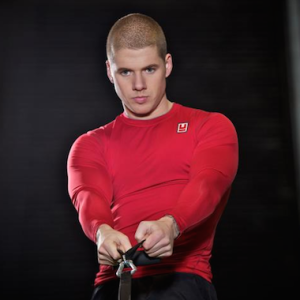
 Andy Anderson is the co-founder of Ultimate You Change Centres.
He is famous for the ‘9 in 6’ program. A program that aims to help people lose 9 kilos in 6 weeks. This program has a 90-95% success rate with his clients that do the program. Andy and Brenton discuss how swimmers and triathletes can use the same shifts in mindset and belief to become better athletes.
In this podcast:
- The magic of six weeks
- how to follow through on your biggest goals even when you don’t feel like it
- Andy’s favourite tools for lasting change
- mindset strategies for mental toughness (that actually work)
02:30 – Is fast change possible?
06:50 – How To Get People Uncover Their Vision
07:38 – Our Invisible Limitations
11:04 – The Question That Will Help You Gain Clarity with Your Vision
16:35 – Believe it’s going to work…
21:15 – On Pain and Pleasure
21:31 – What’s your BIG Why
32:22 – What Happens After 66 Days
33:40 – Embrace the uncomfortable.
41:29 – How Getting Good Nutrition Helps You Have a Great Day
To learn more about Andy’s work visit www.ultimateyou.com.au
Transcript
Read the full transcript
Welcome to Effortless Swimming, the podcast for swimmers, triathletes and coaches. Join Australian swim coach Brenton Ford as he reveals the latest techniques and information to improve your swimming. Let’s dive right in. Welcome to the Effortless Swimming Podcast. My name is Brenton Ford. Today’s guest is going to really fire you up. I’ve got Andy Anderson on the podcast and he is from Ultimate UChangeCenters. I’ve known Andy for the last couple of years. I met him when he first started up his change centres and I know the amount of work that he was putting in. I know the amount of stress and pressure that he was under to really make things happen. And now a few years later, things have really started to work for him. And in his change centres, he’s got one in Melbourne, one in Sydney. I know he’s booked out with a lot of the classes that they run and a lot of the programs that they do. And he’s got hundreds of people going through the centres on a daily basis.
And the reason I wanted Andy to come on is I wanted to talk about the magic of six weeks. So whether you’re doing swimming, whether you’re doing triathlon, any aspect of your life, you can really make a huge change by focusing intensely for six weeks. And Andy is probably best known for his nine in six program at the Ultimate UChangeCenters. And that’s a program that runs for six weeks with the target to lose nine kilos in six weeks. So even though it sounds like a lot of weight to lose in a very short period of time, Andy has a 1995% success rate with the clients that do the program. And we talk about how he gets people to follow through with it and follow the plan from the diet to the mindset to following the workouts. And I think a lot of that can come through into your swimming or triathlon is by using some of the tools that we talk about in this podcast, you can have a lot of success with your sport by using some of these mindset strategies
and having to think about some of these questions yourself. So that’s why I got Andy on the podcast is a very inspirational guy. He speaks with a lot of passion so much that there’s a little bit of swearing at the start. So just a heads up if you’ve got kids in the car, if you’re listening to this in the car, you may want to switch it off. But here’s Andy just talking about the nine in six program and how it came about and how he’s getting such great results with people who might not be coming from much of a background of sport or fitness to getting them to stick to such an intense training program. Cool, so the nine in six program came about via… I wanted to create fast change. I wanted something that would give people a head start. And I’ve been in the industry a long time. I’ve tried a bunch of different programs and challenges and things to really motivate people. And some worked, some didn’t. My first transformation challenge, you know, that success rate was 30%, 40%.
And the main reason why it was so shitty, I’m happy to call it shit. The reason why it was so shitty was people weren’t following through with the program. The commitment, they had the interested mindset, not the committed mindset if you know what I’m talking about. So the interested mindset is someone who’s going to do really well when it’s convenient, when it’s easy, when the weather’s right, when everything’s going their way. The committed mindset, they’re going to do great when it’s convenient, when it’s easy and when the weather’s right and all of that sort of stuff. But they’re going to really excel when it’s inconvenient, when it’s tough, when the weather isn’t that great, when things aren’t going their way. That’s the sort of commitment I was trying to get from people. And in the beginning, we weren’t getting that result. We’re getting a lot of interested mindset, interested people to start a journey.
But not many people were committed following through. And that was really concerning for me. So I ended up shutting down my old program. And I went back to the drawing board and I could really see the gaps. I could really see where people were going wrong. And the biggest one is definitely mindset. I mean, if anyone knows anything about ultimate youth, the core thing we do here is psychology and mindset. And we really change people’s perceptions about themselves, about training, about food, about life. And I needed a program that incorporated that a lot more. I needed a program that would give the support, but also pull people through the six weeks rather than having them push. Because again, most people, when they need to lose nine kilos or more, they’re at the stage where their willpower obviously isn’t working for them. Their push factor is struggling. They’re going to find it hard to actually push through two weeks.
I mean, that’s why they’re in the situation that they’re in. And I’ve been there, so I know. So I wanted to create something that would really pull them through the program. Something that they could create a compelling vision for their future. I find a lot of people, when they’re 10 kilos or more heavier, they’ve almost lost hope that they can be back to a healthy size, that they can really have the abs or the body or actually really love themselves again if they ever have before. So I wanted something where they could create a vision. They could really get back in tune with who they are. They could relearn the characteristics of success, which is delayed gratification, discipline, all those things that no matter what you want to be successful in, you need to grasp those concepts in a big way. And unfortunately, a lot of people are really detached from that because of such a consumer society and we all want immediate gratification.
And obviously, we get the results of that physically, mentally, emotionally. And also, I wanted a program that got an incredible fucking success rate. Am I allowed to swear on this, Brendan, or not? Yeah, well, it was too late already. So that’s fine. I can see your passion comes through every time that you speak. And we’ve been friends for a couple of years now. And I mean, when it comes to coaches, to trainers, to business owners, you’re right at the top there on my list when it comes to people who do things with a lot of passion. And I think that comes through when you swear. And that’s what you use to help get results. And I think it’s awesome. And one of the things you said about the change from the prior program that you’re running to the one you’re doing now was your incorporating mindset. And we had James O’Connor from Elite Team Leadership on a recent podcast. And he mentioned the same thing. It’s all about the vision.
So what are some of the strategies that you use to uncover people’s vision? And how do you get them to see it, to build it, and to believe in it? Yeah, so look, in the beginning, it’s not easy for everyone. And that’s the thing you’ve got to understand. Don’t beat yourself up if you don’t have a vision. Don’t hate on yourself if it takes a few weeks to create a vision because visions are powerful things. And it’s a beautiful thing once you actually grasp that and can tap into it. But initially it takes a bit of work. I think the people that have extraordinary visions, they’ve worked on it for years. But the first step in creating an extraordinary vision is, number one, going into a mindset or a space mentally and emotionally where you have no limitations. Because the biggest issue we face as humans is that we’re shackled down by invisible limitations that we’re putting on ourselves, right? Our limiting beliefs.
We’re socially conditioned to think a whole bunch of things. We constantly tell ourselves negative rubbish either externally or internally. Majority is internally, of course. And we’re sort of up against a lot unless we realize that we’re facing these things. So number one is you really have to let yourself be free of, I guess, the shackles of the limitations or limiting beliefs. There’s an awesome analogy around limiting beliefs. And in India, they raise elephants from babies, right? Have you ever been to India? No, no. Neither have I, but this is exactly what they do and research it. So anyway, they raise baby elephants. And to keep them nearby the owners, the village, whatever it is, they shackle them to big trees, of course, so they can’t go away. Now, of course, these baby elephants, they’re spirited. They’ve got no limitations. At that age, you’re just naive or you’re real, whatever. You don’t believe that anything can stop you.
So of course, they try to get away. They tug at the chain. They’re pulling away from the tree over and over again until their ankles bleed, until their soar, until eventually, after years of this conditioning, they give up. They give up on trying to pull. They have learned the lesson that their world is fixed, that they’re fixed to this pole. They’re fixed to this environment and that there’s no hope in trying to pull or outgrow that space. And as the elephant grows, it’s been so well conditioned that by the time that it’s five or six, the owners of these elephants, all they have to do is have a chain on their leg and attach it to a small twig on the ground, a small branch. And the elephant is so conditioned to this belief that its world is limited that it won’t even try to leave. And that analogy I think overflows into our world where we’re so conditioned to believe that we’re limited in so many different facets.
We’re limited in business. We’re limited with our bodies and our health. We’re limited with what we deserve in relationships, with money, with our careers, that eventually majority of society give up on believing they can be more, do more, want more, love more, all of these things. And for me, creating a vision is the first step to breaking those shackles, to breaking those chains and growing your comfort zone, growing your world, growing your reality into a space that is more than your past, more than what you currently believe it is. And in order to do that, you need to first mentally let go of any limitation. So I’ll give you a quick question that you should start with, because, again, I always say this to my clients, that the quality of your life will be determined by the quality of questions that you ask yourself on a daily basis. So if you ask yourself quality questions, you’re going to get some quality answers.
And in order to create a vision, this is the quality question you need to ask. So the question is, you know, if you knew you couldn’t fail, who would you be? What would you do? And what would you create? And I always start off any vision session or any thought process goal setting with that question, because if you can close your eyes, if you can just ask yourself that question, and don’t worry about money limitations. Don’t worry about time limitations. Don’t worry about genetic or hormonal limitations. Don’t worry about any BS. Just get back to that simple question. If you were Superman, superwoman, nothing could affect you. You know, what would you do? Who would you be? What would you create? And then write, pen to paper, tap into that, you know, internal you that true you and start writing down exactly what that would. That’s the first part. Yeah. And I mean, I’ve done that exercise myself. And I know just from doing that myself,
I know that those limitations still want to come into play, even though you’ve removed all boundaries. I do. Don’t limit yourself. But in the back of your mind, there’s this little voice saying, you know, what about this? What about that? You know, you can’t do that just because of where you live or, you know, how much money you earn, that sort of stuff. They want to creep back in. So I think creating this, creating a vision, it’s kind of like pushing a car. You know, it’s very hard at the start and believing in the vision, you know. But once you get it going, it just builds momentum and then it’s, you start to believe in it so much more. So it’s, yeah, it’s like, it’s like anything, you know, once you get going, once you start to have a few wins and successes and you see some of your vision coming true, then you really sort of build that up and you can believe in it 100%. Because, you know, some, I think some of the clients
who probably come through your doors, they might be really unhappy with where they are at the present time. But after a couple of weeks, you know, maybe two kilos, they’ve lost a couple of kilos. They’re feeling better. They can really see that, you know, they’ve nine kilos starting to come off. And then, you know, the last couple of weeks, they’ve built those habits and they, you know, it’s so much easier to, to get to the gym and do these workouts because they’ve, they’ve been able to change those habits and they believe in what they’re doing so much more. Exactly. And look, it starts with that belief factor. Like you said, in the beginning, it’s challenging because it’s unnatural. Why? Because we’ve been conditioned to limit ourselves our whole lives. We understand that this thought process is a muscle, just like any other muscle that you have. The more that you work it out, the stronger that it’s going to get.
And like I said, what separates the extraordinary people from the ordinary people is their ability to have faith and believe, right? I say this to people coming into our program initially. If you don’t believe that it is possible, if you haven’t seen a thousand about, you know, we’ve got thousands of before and after photos and videos of people that have had incredible results. And I say, if after seeing all of this, you know, seeing what we do, if you still don’t believe that you can do it, don’t even apply for our program because the first step is just trying to believe in yourself, trying to believe that it can be done because again, I’ve worked with thousands of people and it’s the people that don’t work hard at believing, don’t build the muscle around faith and belief. They’re the ones that drop off because our brains are evidence-finding machines and you’re going to try to find evidence to support any thought process
and justify any thought process you spend the most of time focusing on, right? So if you want to focus on why it’s not going to work, you’re going to find a trillion evidence points to support that. And if you want to focus on why it will work, then your brain will find all the evidence it needs to support that fact. So you need to make the choice around what you’re going to believe. And again, it’s a muscle that you need to build. Wherever you go, you will be there and your mindset will be there and your belief systems will be there. So if you’re going to work on anything in order to become extraordinary, it is build the muscle around mindset as much as you watch TV, as much as you go to the gym. I think that it’s crucial and it’s so important that this message gets out there. Yeah, absolutely. And I had a similar sort of situation with a swimmer who came to one of our clinics pretty recently up in Sydney. She had never been under 50 seconds for a 50 freestyle before
and she emailed me a week or two after the clinic and she said, I’m wrapped. I got under 50 seconds. I went 48 for the 50 and I just want to thank you so much. And I’m like, well, that’s awesome. You’re already hitting goals. And then I said, under 45 is the next goal. And she goes, oh, I’m not sure, but I’ll keep trying, keep trying. And then the next week she emails me and she said, I went 42. And I said, that’s awesome. Congratulations under 40 is the next goal. And then she said, oh, it’s going to take some time. But if you think I can do it, I’ll keep trying. And then it was two or three weeks later, she said, I think she went to 38. So she dropped her time down almost 13, 14 seconds from a couple of weeks ago. But she was just building that belief that she could actually swim at that sort of pace. And I mean, it helps to have the right things to focus on. And I know you teach those things in the nine and six
is about the diet, about what kind of training and workouts you need and the mindset. But once you’ve got those tools, belief is really what makes a difference between someone who hits those goals and someone who doesn’t. Most definitely. Exactly right. I mean, that’s the only way you’re going to forge a habit and ritual is if you have the belief that it’s going to work. And I think that there’s so many plans that do work out there. If someone wants to lose a bunch of weight, then they can come to you and you can give them a swimming program and an eating plan and they’ll lose weight. And if they want to lose weight, they can come to us and we do it in an exercise class atmosphere with mindset, nutrition and training. But the difference is that the people that have the belief to actually consistently stick to the programs, they’re the ones that get results, the ones that don’t believe it’s going to work and they’re not consistent.
Of course, nothing will ever work for them until they shift that mentality, shift that mindset. I want to bring it back a little bit to someone who might be looking at starting a program like yours. What sort of, I guess, what’s the trigger? What sort of triggers do you see people having to cause them to want to make that change? So someone might be, you know, have been eating poorly, not exercising for a couple of months or a couple of years and then they see maybe an ad about your program or they hear about it from a friend. What are some of the triggers that people go through to think, okay, I’m sick of where I’m at now, I want to make a change? Yeah, so look, it’s a, you know, we’re called ultimate you change centers, right? We’re not a gym, we’re not a fitness center. We’re a change center because we’re here to create, you know, positive change immediately. And when people come to us, want to do one of our programs
is because they want exactly that. They want change. And there’s a common thread between everyone that does the nine of six program and that’s, they’ve come to a crossroads where, you know, something isn’t right. Something isn’t, you know, they’re not happy with some aspect of their life, whether it’s their physical body, how they feel their confidence, their mindset, their energy, you know, it could be all of those things. But I think it comes down to this quote. I’ll say this quote often and it goes, you know, when the pain of staying the same is greater than the pain of change, change must happen. So when the pain of staying the same is too great, you know, it’s greater than the pain of change, then change is going to happen. So I think it really comes down to when people feel too much pain around a certain area and it could be all of those things. Like I said, energy, their physical body, how they feel in their relationships,
maybe their lack of relationships and they blame it on their health and their physical body, you know, they’re going to want to take action. You know, studies show that we’re two times more motivated by pain than pleasure, right? So unfortunately, you know, it sounds a bit depressing talking about, you know, pain and being motivated by that, but truly that’s what gets us moving in the beginning. The pain is what we try to move away from. So, you know, if people are feeling sick and tired of being sick and tired and low energy and being overweight and all those other things, then that is most definitely usually the reason why they’re going to want to create this change, lose weight and improve their lives. Yeah. And I’ve kind of found that myself is whenever I’ve had a break from swimming, it might be a couple of weeks off and then I go for a swim with someone and I’d normally beat them in training or, you know, I sort of know at pace
as I’m meant to be going. As soon as I see them, smash me in the water and, you know, I can’t keep up and I’m working really hard, that’s when that kind of light bulb goes off and it’s like, well, geez, I need to get back into it because, you know, you want to get back to what you’re used to. So that can be a really good trigger, especially for athletes, you know, people try athletes from as the kind of, yeah, athletes that we work with is, you know, you want to have that break after maybe a race for the season, but yeah, the thing that sort of sets them off and gets them back into training is when they can’t do what they know that they could do previously. And I know for a lot of parents as well, I coach parents with kids and the kids might be 8, 9, 10 years old and they’re starting to get close to the same speed as their parent and then, you know, we’ve got a lot of adults come in like, oh, geez, I need to stay ahead of
my son or daughter for at least the next couple of months and that can really get them back into a consistent training program. Well, that’s right. And I think honestly, you know, motivation, all motivation is is either you’re moving away from pain and towards pleasure. So you need to really tap into both facets, your pain around the area and also the pleasure moving forward, what that’s going to give you. So before anyone starts here, we always ask them, what’s your big why? What’s your big reason? In order to get into our programs, all of them are application only and all of them require you to, you know, dig deep emotionally and let us know exactly why you want to create this change. And the reason why I ask that is because I know that if you’re going to truly create change, you need to tap into both of those emotional facets, the pleasure and the pain. And if you’re not willing to dig that deep, I know you’re not going to dig that deep
in the training. And unfortunately, you most likely will fail along the way. And exactly that, we need to know what our pain is, build the list up, tap into it because when times get tough during any transformational phase or training or journey that you’re on, you know, it’s not going to be rainbows and lollipops the whole way, right? You know that there’s going to be ups and downs. There’s going to be challenges because that’s life. But it’s the people that are motivated. It’s the people that can tap into their big why, into their reasons. They’re the ones that are going to overcome any issues, boundaries or dips in the road in order to progress to their vision, to their truer self. And I think that’s a really important aspect to understand is that you need both the pain and the pleasure to motivate you in order to create success. Yeah. I mean, we do something similar with our Hell Week training program. So next week, myself and some other coaches.
What’s after that? Hell Week. Oh, yeah. That really sort of draws people in. I think anyone who loves to work hard, that really attracts that kind of person. So we’re off to Thailand next week for this week-long training camp. And that training program, the Hell Week, that was application only as well. And the reason we do that is because we only want to work with people who are going to want to be there and who are going to want to work hard for the week. I don’t want someone coming long and, you know, putting their, dipping their feet in, training hard for maybe a day or two. But as soon as it gets tough, that they want to sit out and, you know, have a Mai Tai by the beach and all that sort of stuff. And I mean, yeah, you know, we have fun and everything, but we only want to work with people who want to be there. And, you know, after you work with people who aren’t 100% committed, then that’s when, I know for myself that I kind of set the standard
of the kind of person I want to work with, someone who’s invested, someone who really wants to change, and someone who wants to learn. And the same thing goes with the clinics that we run, is we’ve now, you know, we used to take 24 people per clinic, but we dropped it down to 12, so we could work close with people. And, you know, to do that, we kind of had to bump up the price a little bit. But we get such a good quality of athlete, not in terms of, and it doesn’t mean about the pace of the athlete, but in terms of the people who come along, they really want to learn and they really want to change. And that’s why I think we get such great results, is because they kind of nominate themselves to come along and make that change. Yeah, I love that. And that’s what I love about you, Brenton, and what you do is that, you know, like me, you’re obsessed with a high standard, right? And not only a high standard in what you do professionally
with your programs, et cetera, but, you know, you expect a high standard from the people that you work with. And unless you do expect that high standard and push them through their limitations, et cetera, then you’re never going to help people reach their full potential. And I love hearing that you, you know, you’ve upped your game on that even more since we last spoke. And that’s what gets people incredible results. So good on you, man. That’s great. Yeah, thank you. After the six weeks, so you’ve got the 96 program, how do you get someone to continue to keep that momentum up and to work, to keep working towards their vision and set that next goal? So, I mean, the way I sort of look at it with, you know, with what we do, a lot of people have kind of almost like a 12 month training program towards their A-Race, whether that be an Ironman event or, you know, like a Rotnest Island Swim or might be Nationals. And so they’ve worked towards this for 12 months.
And then, you know, after that, they’re obviously going to take a break. But how do you keep someone going after they’ve finished those six weeks? For sure. I mean, what comes down to is resetting your goals, priorities and making sure that it’s in line with your vision. So, you know, as you transfer through the six weeks or any journey, no matter what you’re doing, you just need to always be looking at your goals, always going over your vision. And I always say this to the guys in the nine and six. You know, after the six weeks, that’s when the actual beginning is, right? That’s the real challenge because, you know, it means nothing to me. We have an incredible success rate between 90 to 95% every single round. And we consistently do that. But it’s after the six weeks, that’s the real challenge for everyone. And I say this, you know, bluntly that unless you have the intention to keep these results long term, make it a lifestyle change and shift,
then you’re going to revert back to old patterns, old behavior. People always ask me in the beginning, you know, oh, Andy, if I do your program, I lose weight, am I going to put it back on? I go, well, are you going to go back to doing the things that you’re doing right now? Francis, yes? Then hell yeah, you’re going to put it back on. This isn’t a quick fix. And, you know, creating this sort of lifestyle, it has to be a lifestyle change. You have to be dedicated to changing who you are and what you do every single day because clearly what you’re currently doing behavior-wise is getting you some results that you’re living with right now and you want to move away from in order to have the results that say, I have with my body or, you know, the hundreds of people that you’ll see in our gyms, et cetera have. Now you need to change your habits and rituals, your behavior every single day. And in order to do that at the end of the six weeks,
you need to stay committed to your overarching vision. But more importantly, you need to reset your smaller goals and milestones along the way. So you have something to work towards and something to look forward to. Now, in order to change your habits and rituals, Study Show takes about 66 days to really ingrain a habit and ritual for it to become second nature, right? So say this to everyone, you know, the program’s 41 days, six weeks. Now you’re not going to completely reprogram yourself in that amount of time. But if you stay consistent for another six weeks, then of course you’re going to create that habit and ritual that is second nature, but it takes consistency every day. It’s just like brushing your teeth or having a shower, right? We forget that once upon a time, having a shower and brushing your teeth was hard. That was difficult for everyone. And with consistency though, we learn to do it. Now, at the age of war right now,
I’m hoping that everyone listening leaves the house and they’re fully clothed, they brush their teeth, they have a shower, and they don’t even think about it, right? They don’t think about these things. And this is what health and fitness has to be like. This is what creating an awesome business has to be like. It has to be you making success habits and rituals, a daily gift, and it’s the second nature to you. Just like you with your swimming man and with your fitness, I see you train. You train really hard. And I know for you, if you don’t train and don’t eat right, then you feel weird, right? And it’s second nature for you to do those things. That’s why you clearly have good results in your business, your body, your health. I mean, it’s the same thing with me. So once upon a time, I was overweight and I had to learn these habits and rituals in order to create that change long term. And it does take longer than six weeks.
I’m not going to BS anyone and say, your whole life’s changed in this amount of time. But if you are consistent with the strategies, consistent more importantly with your thinking and mindset, then after 66 days, it’s going to be a whole lot easier for you to maintain. That’s where the second nature comes into it. So you need to just have those milestones after the six weeks. You need to make sure that if you’re really unmotivated, you need to chunk smaller. You need to chunk weekly or every three days. Set a goal for every three days and reward yourself. If you’ve stayed consistent with your clean eating and you’re training for three days, if you’re completely unmotivated, then go out and buy yourself a pair of Nikes. Celebrate with a massage. Celebrate with something because we need those little reward feedback loops in order to spur us on. Now, if you’re quite motivated, you may just need to chunk milestone goals
every three weeks or every six weeks. But whatever it is for you, make sure that you are setting these goals, changing up the style of training if you need to add a bit more variety into it. But it truly is all about staying consistent with the vision, chunking your goals, rewarding yourself consistently. Yeah. And I think once you get a good base of fitness behind you, you wake up and if you don’t exercise that day, you’re jumping out of your skin. You feel like you need to go and expel some energy. You need to go for a run. You need to lift some weights, whatever it might be. And I think once you get to that point, it’s so much easier to keep training because I mean, I’m kind of at that point now. I’m training for the Melbourne Ironman next year and I’m doing a lot of training. And if I don’t get at least one type of exercise done for the day, I find it hard to sleep at night because I’ve got all this energy that I need to get rid of.
Yeah, exactly right, man. I mean, it’s always just people need to understand that health and fitness is a learned behavior, right? It’s a learned behavior, which means it takes time to learn initially. You know, when you’re learning a language, when’s the most difficult time in the beginning? You know, when you’re learning anything, the most challenge you’re going to face is initially when you’re wrapping your brain, your emotions, your mindset, all of that around it. You know, there’s a great analogy about a rocket ship and the rocket ship is so heavy to get off the ground, right? It’s got its destination. It’s going to expend 80% of its energy in the initial takeoff, right? 80% of its energy goes into taking it, lifting itself off the ground, and then after it leaves the atmosphere, you know, that 20% is just used to glide it to its destination, to its vision. And it’s the same with anyone listening that wants to create change in their health and fitness
on any level, understand that 80% of your energy has to go into the initial stages of creating habit change and behavioral change within your mindset, emotional state and body. And after that, that’s when it gets a whole lot easier. After that 66 days, that’s when it’s not going to hurt as much. It’s going to be a whole lot easier to think around any issues that you have. It’s going to be easier to prep your food and show up for training. But just keep that number at the forefront of your mind 66 days so you know that there’s light at the end of the tunnel because often people get, you know, down on themselves and think that the doms will never end and that it’s always going to be challenging to cook food, etc. But truly, it’s a low behavior. So believe in that fact. Yeah, completely. And I think as well, once you make the connection between why you’re really exercising, I mean, I kind of see it as it’s not about losing the weight.
You know, your family doesn’t care if you do an extra set of, you know, dumbbell swings or do an extra set of chin ups. It’s about teaching yourself and training yourself to become a better person and someone who can stick with something and, you know, and work hard and learn new things. And that’s what it’s really about is becoming a better person so that when you go away from the gym or when you go, you know, go away from the pool that whatever you’ve done there, you know, it transitions into your everyday life. Yes, exactly. And this is that’s such a key point to remember and this is what I love about health and fitness. You know, the same rules apply to any area of success, right? Think about the businesses we run, Brenton, and everything we have to do every day, you know, we have to, you know, embrace the uncomfortable every day. We have to be consistent in all our actions. We have to delay immediate gratification in order
to progress with our vision in business, etc. And it’s the same with your health and fitness. It’s the same with your relationships. It’s the same with your finances. It’s the same with any facet of life. So every time you’re busting out a lap in the pool or doing another set in the gym or, you know, pushing yourself to prep your food, remember that you’re building your muscle around success and that same blueprint just has to be put over finances, business, career, relationships and use those same disciplines in order to create success in all the other areas as well. Now, to me, that’s massive value. So it’s not just, I’m not just thinking about the value I’m getting immediately with my body or health. To me, that’s overlapping like 10x value because of all the other facets of life. Yeah, that’s, that’s right. And I think you can look at how someone, how a person does one thing and you can pretty much translate that across
to any aspect of their life. And, you know, if you’re, if you see someone who might be a swimmer and they get out after, get out before the last set because they’re, you know, they’re tired and things are hurting where you see everyone else, you know, sticking at it, then you know that when things get tough in relationships or in their work, then they’re probably going to back out early. So you can really see, yeah, how someone acts in one aspect of life across everything else. So that’s why it’s so important to, you know, you can make sport, you can make fitness the area of your life where you start to make everything else change. And I think, I mean, you probably see that with the people that come to you is, you know, maybe they’re not, they might not be happy with most aspects of their life, but when they start to see these changes and build that success muscle in the gym, then, you know, then their relationships
and work and everything else gets better. Exactly. And I make that a focus for them. I make them understand that in the beginning because then they truly appreciate what they’re doing, right? Unless we can see how it’s impacting every facet and we review that with them and we help everyone on, I mean, ultimately, your chain centers isn’t just about your weight loss. It’s about, I mean, we coach everyone on every facet of life. And that’s why I think exactly what we’re talking about is so important because until you pay attention to how these things overflow into the other areas of life, you’re never going to truly appreciate it. And I think I’ve really seen this with you as well. I mean, we’ve known each other for quite a few years. And I knew you, I think I met you probably a bit after you started the first change center. So maybe six, 12 months after you’d opened it. And I know how much work and how much time
and, you know, getting the investment to start the gym that you put into it. And, you know, I know how tough it was the first couple of years, but now you’ve just, you’ve built that momentum and you’re having so much success with it. And that, you know, you see that kind of work ethic that’s translated into your fitness and how you work with people as well. So, you know, again, you can see that across all aspects of your life. Yeah, thank you. Yeah, and I completely agree. I mean, like I said, just, yeah, transfers into every facet. So, I mean, that’s the beauty about what we do, man. Yeah. Exactly. And just to finish off. So where can people find out about the 96 program? You know, where can they keep in touch with you and, you know, and ask you any questions if they’ve got them? What’s the best resources? So, of course, you can check us out online at our change center website, www.ultimateyou.com.au or if you’re interested in the 96 program,
go to nineandsix.com. And if you have any questions, you know, leave us an email. Also, check us out on Facebook, Facebook forward slash ultimate you. And, you know, we’d love to chat. We’re always here to help people. So no matter what the issue is, yeah, give us a yell and we’re here to help. Fantastic. And we’ll put those links in the show notes. And as we were saying before we started the call was, you know, I’ve got a couple of people that I know through Triathlon and Swimming who have actually been through the 96 program. And not anyone that I refer to, that they just either had friends who had done it or they’d seen it online and decided to jump in. So I think it’s awesome to see that you’re having such a wide reach with this program in Melbourne and also in Sydney as well. So it’s, you know, it’s really cool that you’re able to affect so many people and kind of have such a big network of people who have gone through the program now
and are having such amazing results. I mean, I look at the before and after photos that you post and they look like completely new people after six weeks. They lose the weight through their face, obviously the body and everything, but they just look so much happier, so much healthier. It’s incredible what you can achieve in six weeks. And I mean, I’ve seen the same thing with swimming. If someone comes in and they work hard for six weeks, you can really transform how they’re swimming, how they’re feeling just within those six weeks. And obviously you need to keep going after that, but I think six weeks is a really key period of time for someone to ramp up their fitness if they’ve got an event in six weeks time. You can really get back a lot of the fitness you may have had previously just by really focusing and working intensely for six weeks. Most definitely, man. And I mean, I’m super, super grateful for the people
that we attract to ultimate youth. We’ve got some incredible clients who just, oh man, the commitment’s insane. I’m proud of everyone and what they achieve here. But, you know, for everyone listening, just exactly what you said, man, it takes six weeks to get such a huge change physically, mentally, emotionally. And just remember that change doesn’t take a long time. It’s, you know, your decision to change, it takes a long time. Most people spend 10 years procrastinating over, should I lose weight? Should I start swimming? Should I start eating right? You know, the people that truly become extraordinary, you know, write their own stories, become the heroes of their own stories, are people that just stop procrastinating and take action and just realize that in as little as six weeks, everything can change. So you deserve it. You owe it to yourself to do that. So no matter what it is, you know, it doesn’t have to be nine or six.
It doesn’t have to be swimming. But just remember that even if it’s just you walking and eating right for six weeks, a whole lot could change in your life. One thing you shared would have been probably four or five weeks ago was just how you get, you have everyone on the program start their day with a green smoothie. And you put up a recipe for it. And I’ve been doing that for the last couple of weeks. And whether it be a green smoothie or like a banana protein powder, a different smoothie, but just starting my day right with the right fuel and nutrition, that’s made such a difference to not only my weight, but just how I feel for the rest of the day. Like I’m not hungry until 1 p.m. a lot of times, just because you start the day right. And I think just that alone can have such a big difference because if you’re starting your day with high sugar, cereal, or just pancakes with syrup and all this sort of stuff, then it’s very hard to feel good for the rest of the day
and to keep your nutrition on track because I think as soon as you kind of slip from that high standard of nutrition in the day, then it’s so easy to say, well, I’ve already eaten poorly, now I can have something bad. And I mean, I find that myself. As soon as I sleep in the day, then it usually goes downhill from there. But if I can keep that good nutrition going from the start and keep it going through till night, then I’m set, you know? Most definitely, yeah. Always start your day the right way, whether that be, again, not only just with your nutrition and food, but just starting your day right with your thinking, making sure that whatever you’re bringing into your mindset, it’s not negative crap. You know, don’t watch the news first thing in the morning unless you want to be depressed for most of the day. Eat right in the morning. Do exercise in the morning. And of course, you’re going to have a massive advantage
for the rest of the day. You’re going to start off right, and you’re 90% likely to follow through with that until the end of the day, of course. Yeah, absolutely. Any thanks again, mate. This has been fantastic. And I’m going to listen to this back again because every time I talk to you, I get motivated, get fired up and want to just work hard and work with passion. So I think you’re a huge inspiration to everyone, and especially the clients that you work with. What you’re doing is fantastic. So thanks again for being a part of the podcast. Awesome, man. Thanks so much. You were right. You’re killing it, dude. I love what you’re doing. And thanks to everyone for listening. Live with passion, guys. See you later. Thanks for joining us on the Effortless Swimming Podcast. To get transcriptions, bonus videos, and to be the first to hear about new episodes, go to swimmingpodcast.com.