







My guest today is John Hancock, the most recent person who successfully completed the Lake Taupo swim.
00:46 Lake Taupo
02:29 Deciding To Cross Lake Taupo and How Long is The Preparation
05:34 Is 2 Month Preparation Enough?
08:27 “As Long As You Can Keep Moving, You Will Get There”
09:53 Recovery
12:16 Thoughts While for 14 Hours
16:49 Positivity v.s. Dark Thoughts During The Swim
23:39 After The Swim
28:39 Swimming With Squad
John’s Swim Report
Freestyle Clinics Around Australia
Transcript
Read the full transcript
And he said, no, no, no. It’s completely the opposite. I want you swimming in a pool. I want you swimming with the pace clock I want you on times the whole time because people who swim open water all the time They get really lethargic and they just drop into this sort of zombie zone And the art of marathon swimming is about maintaining pace Welcome to the effortless swimming podcast to show that helps swimmers and triathletes love the water become a better swimmer and live a Better life. Here’s your host Brenton Ford
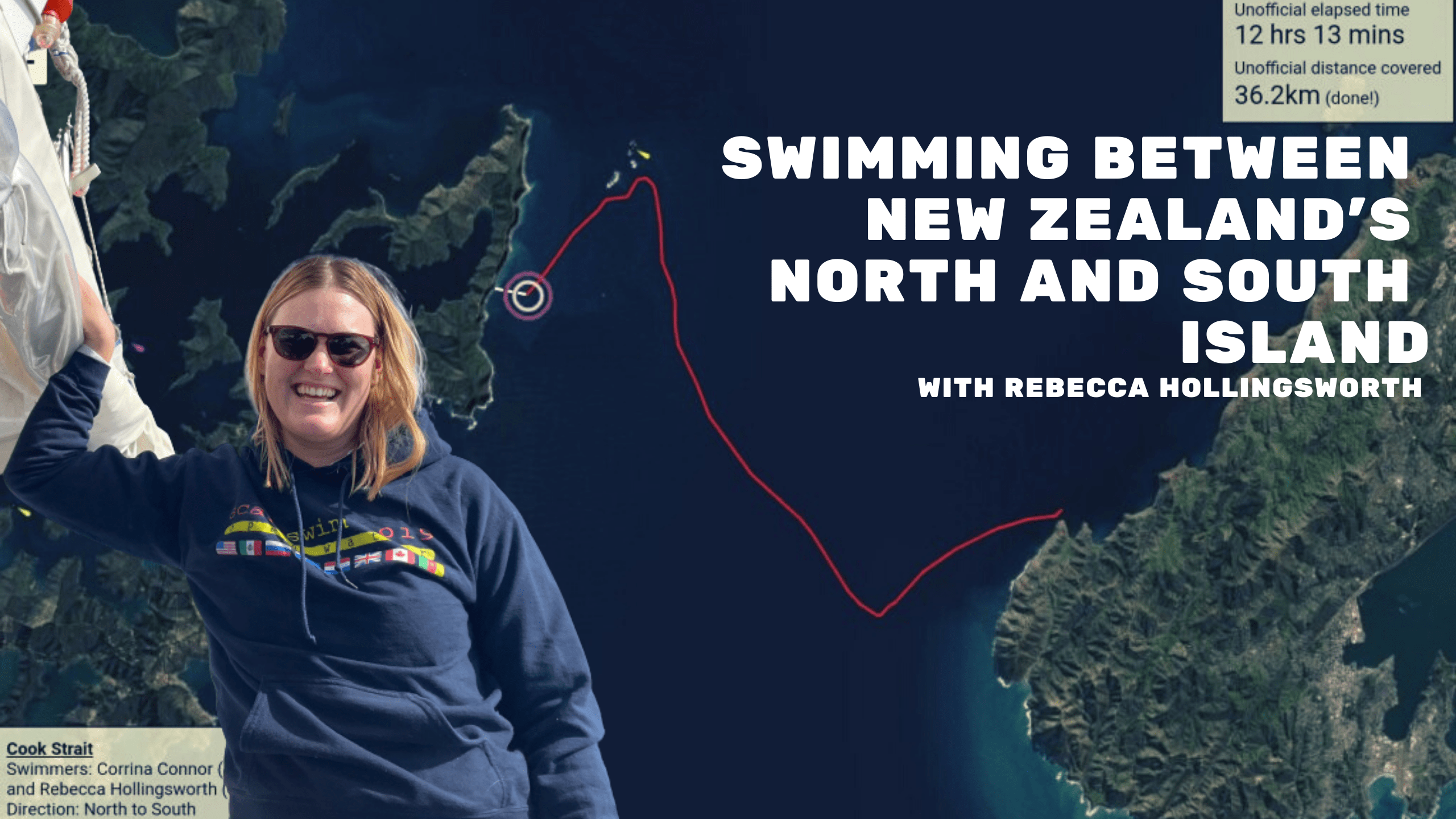
Welcome to episode number 171 of the effortless swim podcast. My guest today is the man himself, John Hancock who’s the most recent person to Successfully complete the Lake Taupo swim. So John first of all congratulations and welcome. Oh, cheers, Brent So for those that that haven’t heard of Lake Taupo and that this one that you’ve done Can you give a few details on what it is that you did last weekend? Yeah, so Taupo is the is the lake in the center of the North Island of New Zealand. So if you look at Look at map of New Zealand The North Island looks like a bagel and it’s got a big hole in the middle And it’s the cold era of an extinct extremely large volcano Which is it’s about 40 kilometers in diameter So the swim is the is the longest axis of the lake So it goes from the bottom sort of left hand corner to the top right hand corner Which is Taupo township Yeah, sort of holiday resort And it’s a it’s a freshwater swim around was it 21 22 degrees for you. You did it. Yeah, that’s right
so the lakes freshwater and I think when I did it it was just just under 20 degrees according to the You know monitoring thing, but I mean obviously it varies in different parts of the lake But but pretty warm really it’s the end of the New Zealand summer So the the lake sort of warm up very slowly through the summer. So even though The air’s starting to cool down a bit the lakes are still holding their temperature for another another three or four weeks and in terms of the swim, this is we’ve had a friend of yours Vicki Tate on the podcast as well who did the swim probably two years ago now every time is a little bit blurred, but it’s a it’s a amazing location and I’m guessing that swim and Cook straighter sort of tour the the main long-distance swims that you can do in New Zealand there and When was it that you decided to do the swim into to train for it and how long was that preparation for you?
Well, I mean I got the idea from Vicki actually So I looked her up for you Brent. So she was episode 116 in June 2018. That’s when you interviewed her Wow, they nearly three years ago. That’s incredible, huh? And I mean Vicki’s a really inspiring person because she hasn’t got a background as a competitive swimmer So she got into it as an adult having got very injured playing football And yet, you know, this is an amazing Achievement so it’s sort of been at the back of my mind and then last summer So February 2020 I crewed for a couple of friends mine and they did a tandem swim on the lake So this is extremely unusual So you takes two people who know each other very very well and can swim at exactly the same pace So they they did this tandem crossing and they swam stroke for stroke for 14 hours Across the lake. Yeah, so I was one of the feeders for that and it was pretty You know pretty inspiring really and I thought well, maybe I should be thinking about this a little bit more having previously thought
There’s no way I’d ever be able to do anything like that And then the opportunity really came about a month later because We’ll probably talk about Phil Rush who you’ve also had on the podcast before so Phil is the Legend ultramarathon swimmer who now prepares people to swim cook straight and support them on their crossings But during the summers when the tides aren’t right for cook straight He’ll help people get across Lake Topor and and usually his book is completely full of international swimmers You know the cook straight crossing in particular. It’s so famous now He has people coming from all over the world as part of this ocean seven. There are seven major
Marathon swims But of course this year in New Zealand’s borders have been closed all year. We still have closed borders So it’s not great for Phil’s business, but it does mean that he’s had a lot more time for New Zealand swimmers wanting to do things so we did vaguely talk about it last year, but it was
Sort of coming out of the winter when I realized that we couldn’t be going anywhere overseas anytime soon That I said to him. I was pretty keen to give it a go
but I was wife and I did a Did a big triathlon camp in the second half of last year So I was actually spent the whole of the second half last year cycling actually trying to get my cycling back up to snuff So I didn’t have very much time to to train for swimming So I didn’t really get stuck into it until the Christmas holidays to be honest when we were down down south in Lake Monica Um, and even that was a bit sporadic So I’d say I probably did it. I mean it did two two month block of really focused and intense training But coming off the back of a lot of endurance work, but not massive swimming volumes really
And and how’d you find you held up during the the swim so the swim took you 14 hours roughly and 40k swim and Did you so too much to swim people might think well, that’s that’s not a huge block of of swimming but obviously you had that that base there and you you’ve You’ve continued to swim for you know for a long time. Haven’t you like you’ve got You’ve got a lot of years behind you Yeah, yeah as a swimmer or as an athlete And so how did you go with that that two months of preparation? Do you feel like you could have done with more? It was it obviously got you through it. Um, what was that like for you during the yeah? Well, I When we got back from Christmas holidays, I had a sit down with Phil and I said what do I what do I need to do in order to Be ready for this Um, he said it’s easy. I just want you to do 350k weeks at which point I sort of That’s that’s great Yes, that’s like that’s a lot Um, and I thought that’s insane. I mean that’s like training for an iron man
volume Just swimming. Um, because if you think about it three k’s an hour Doing 50 k’s that’s 17 hours swimming a week plus getting to wherever you’re going and coming back. I mean that’s like a job Um, but I mean, you know what? It’s like doing iron man. You just need to be super organized You need to look at your calendar. You need to try and work out how to synchronize things
You know sort of Reduce the number of trips to go swimming So if you’re doing squad you need to try and back up and then do another hour afterwards to try and double the Distance that you’re doing or something like that um Did some massive massive swims at the weekend to to really try and put the volume up and I mean the thing Psychologically that made it for me was when we got to the end of that first week doing 50 k and I actually didn’t feel that bad You know my arms hadn’t fallen off and I was still managing to keep going I was still managing to swim sort of well rather than just sort of grovel through it Um, and then I had a rest day and then rolled into the next week and that week went well And then suddenly thought oh, I’ve only got one more week like this to go. Um Rolled into the third week and by the end of it. I was starting to feel much more Confident about my ability to do that um And interestingly, I’m just looking at the volumes
The week I did the topo swim, which is 40 k as you’ve said I only actually did 9 k in the week coming up to it just sort of trying to stay sharp So I actually did a lower volume that week than I have done in all these sort of big build-up weeks And I I do wonder a little bit of it. Well, I mean it feels quite sort of hard to task master But some of it was psychological. I think he was trying to Give me a challenge that I found a bit intimidating Put me in a position where I could be successful with that and then, you know It actually helps you recalibrate what doing something like a 40 k swim is like because I mean, I think people need to understand It’s nowhere near as difficult doing something like that than it is doing one of these big open water swims
Because obviously it’s a lake So although there are a couple of areas where there are currents due to Streams coming in and rivers coming out of it. They’re not that strong Whereas, you know, when you do one of the big ocean crossings like cook straight or furbo straight or something like that There are points where you’re battling against incredibly strong currents and tides And in some cases people never quite finish because they can’t swim fast enough to get over the tides But that’s that’s really not the case here. I mean as long as the vicki did so to me She said as long as you can keep moving you’ll get there, you know, it might take a while
Just got to keep on battling Yeah, it always reminds me of that The swimmer that phil had doing the cook straight and I can’t remember how long it was battling against the current but it was just It was for a very long time and then he ended up like missing the last like a rock or bit of land And just got swept past it and then because the current’s so strong You’re done. You can’t get back in and missed it by like 10 meters or something crazy. So I guess that’s a good thing about the the lake swim, but that said it’s certainly not an easy thing to do But amazing that you’re able to do it and in such a short space of times in terms of a training block It’s um, it’s quite impressive and how do shoulders hold up and what did you do for Like recovery and that sort of thing or was it just You felt good for that that three or four weeks leading into it. Yeah, yeah, um, I mean
I think when you were talking to vicki you talked about your first 10k when you were going into your rock Swim and how you were really wrecked after that and then you know On the time you’ve done a few more you sort of get used to it and it was very like that, you know, the the first 10k swim I did I thought oh god, I mean, you know, this is This is a red it’s a nobody done a quarter. How am I going to get used to it? But it’s amazing how quickly your body adapts. Um, yeah, and I suppose You know endurance space is pretty big. You know, I did six years doing Ironman quite seriously and you get very very used to tolerating Extremely high volumes of this very low level of effort or certainly low level of effort at my level of performance
So I mean I did I did have problems not problems, but I did, you know, my upper back got very very tight. Um I mean, I’ve always been quite obsessive about regular massage and I try to stretch not that well
But but it was particularly just building the volumes up quite gradually. So I sort of went from doing um, sort of 20 care week 25 30 35 And I think I didn’t have a rest week until I’d got up to 40 then I had one week off and then I had the three weeks at 50 um and There was one week where I’d got incredibly uncomfortable and I took um Anti-inflammatories to cope with it and uh, I was talking to Phil and I said oh, you know, how am I going to cope? You know, we’re doing something that’s so much longer and he said well The first thing we’re going to do is we’re going to stop taking anti-inflammatories when we’re training We want to punish the body now and we can worry about pain relief when we’re doing the swim So again, that was I mean partly physical, but I think it was partly mental that um, you know to have done all that volume Without taking any ibuprofen or anything like that and to know that Even if when you get in you feel incredibly tight and stiff after about 20 minutes half an hour
You do amazingly loosen up and you can swim properly You’re not swimming sort of lopsided or anything um But again to know that it does mean that when you’re actually doing the swim and things start hurting and niggling and stuff like that You know that you can swim through it. So long as you don’t over over overwork things and what about during the swim so 14 hours is a very long time to be you in the water and I know you’ve got the support crew there Feeding and everything but what was it liking your head across that 14 hours? What was it? What were your Thoughts as you were progressing through the swim. Yeah, I mean and
We did talk about this a lot beforehand. I mean, I’ve got quite a busy head as well So I think Phil was worried that that that would be the thing that would catch me out More than the the physical side of it. So I spent a lot of time practicing stuff Um, uh last year I did a hilarious swim in the lower south island which goes from A little township called tianao which is quite near
Milford Sound the famous Sort of tourist area and you swim across a lake For about an hour and then you swim down a river. So it’s 24k down a river at about 12 kilometers an hour So it’s the fastest. It’s the fastest 24k you’ll ever do And then you pop out at the end of the river and you think sweet. We’re there Um, and I think it’s about another 12k from the mouth of the river to the next township So that that 12k which took more than four hours I was already starting to deal with these demons of you know, what do you do? You know and just and I started retracing routes in my head. I found um I was pretending I was driving from where I live in wellington up to topo because uh, you know It’s a route. We do quite a lot and and and you’re just trying to step your way through it And um, I found that work really well And then I was talking to phil about this and he said oh, that’s interesting when I did my ultramarathon swimming when I was
Competitive, um, I used to retrace my dustbin route So phil used to be a dustbin collector in deniden and he had this route that he did which took about three hours So he’d retrace it and just kept each each dustbin along the way And he said but the trouble is it only takes three hours So if you’re doing a 14 hour swim, you need a lot of other things to think about so, um One of the you’d like this actually so one of the things I I did getting ready for this topo swim I was trying to think of other Things I could replay in my mind to give me something to focus on and take my mind off Sort of wandering thoughts. So I used I thought about places. I used to go running regularly where I knew the route um, and when I was a student in the uk, I had a couple of long runs that I used to do uh from University and I went to google maps and got down on to street view and I retraced them About two weeks before I did the swim
So I’d actually Revisualized everything and I’d forgotten quite a lot of the detail But on the day it was marvelous because it was all it was all still there. It’s incredible 30 years on You know it all comes flooding back um, and that that kept me going for hours and hours and hours but um Coach Brenton, you’ll be very pleased to know that the other thing I spent a lot of time thinking about was my swimming I was thinking quite a lot about my catch. I was thinking about not shutting the door at the back and
Closing possible hips and everything. Um, yeah, so I did I did think about technique quite a lot And I was sort of thinking about things coaches had said to me
In the past particularly we had one moment where I mean it was a perfect day really very very flat conditions but You start very early in the morning because it’s such a long day and generally the wind gets up in the afternoon so Normally Phil will start people at sort of three four o’clock in the morning We and it’s a bit of a trade-off between starting early enough that you finish early And starting so early that you get really cold because of course, you know before the sun gets up It’s that much colder. So we started at 4 30 because it was quite a cold night Um, and we were swimming along and it was all going quite well Forecast had been brilliant No wind some came up and then this amazing chop built up and I thought oh god, what’s going on here? This is going to be pretty grim if it’s like this for the next 10 hours Um, and it was uh, it was the morning breeze So this was the sun warming the side the the land on the side of the lake and you get this sort of offshore breeze
But it was just enough to break the water up And so that really really forced me to concentrate on technique just to try and stay you know Like a broom handle Really concentrate on my catch and everything and it’s incredible. How long you can concentrate on your stroke because you’ve you’ve always got another stroke to do and yeah That’s uh, that’s really interesting and um Were there any points through the race where you or through the race through the swim where you where you felt like You may not be able to do it or were you feeling pretty positive the whole way through because I remember With rot nests and I was starting to get hypothermia. So I think that was the main cause of me just really starting to You know hurt through it. Um, but I was just like I’ve got I had about I know Five six k’s to go and I was just like I wanted to get out and I had to tell myself that I was so lucky to be here and just like
Yeah, convinced myself uh that that I was Fortunate to be to be doing this thing as much as I was hating it So what were you like throughout the the swim in terms of your positivity or um dark thoughts where we’re with with that Oh pretty pretty positive Brent. I think um
I mean, I’m a very big believer in surrounding yourself with people who want you to be successful So I’ve spent the whole time building up, you know, I’ve got great people around me We’ve got a great community in Wellington of people um, so I hadn’t really had any
Negative people in my head Building up into it and you know what we were talking about earlier a field sort of making me do some preparation Which convinced me that I could do it physically Um, and and it and it is an easy swim, right? It’s not that, you know, awful things happened I mean there were there were two moments where I almost lost my balance So one of them was this moment where it got very choppy just after dawn And I hadn’t anticipated that and it sort of just caught me by surprise a bit Um, and I think if that had gone on for another sort of six or seven hours I think I would have found that quite hard and there was another moment when um, you You’re about 30 35 k into the swim and there’s a point It’s really the first feature that you’ve seen for about 15 kilometers And there’s actually quite a strong current coming off the point Which I remember from last year when I was crewing for these friends
But I completely forgotten about it and we were swimming along and I’d done all the maths in my head Of how long it was going to take to get there and nothing was happening And I was sort of thinking what’s going on And uh at one of the feeding stops. So I said, you know, I’m behind what’s sort of my technique gone wrong And Phil said no, no, this is the current you just got to Just gotta swim through it and then you’ll be fine really get on the other side of it And again, I think it was just the fact I hadn’t anticipated that so I’d almost got a little bit rose-tinted in the way I thought away through the swim Um, but in terms of the discomfort and the fatigue and you know, sort of The demons in your head and everything and when I think I prepared quite well for that So I mean it really wasn’t any point where I thought I wasn’t going to manage to do it um And I suppose again, that’s not unlike my Ironman races, you know, I mean I never did particularly well
But I was never really thinking I wasn’t going to finish. It was more a question of how how good a job I’d make of it
Yeah, yeah, that’s interesting. Well, that’s um, it’s really good to hear and you’re very um, you know When you talk about you make it sound like It’s this thing you just did on the the weekend and it’s uh, yeah Less of a deal than I think it really is but um, you know, I think that’s all part of your personality and your character and um, because I remember Well, and you’ll remember this too obviously is the uh, the frog challenge that we did
Run so this was I’m going to get my dates wrong here, but I’m going to say like 2016 maybe
Yeah
And yeah, so we did this this swim run race down I think it was rosebud it started from down in the Mornington Peninsula and um, it just It’s it it took all day long and it was ended up being Like 30 something k of running and nearly 10 k of well waiting through the water and a little bit of swimming because it was pretty low tight, I think um, but um, yeah just chipped away at it and yeah, eventually eventually got there in the end and um, yeah just always um, had a really positive about About the the race and and all of it and so yeah, just get on with the job and and go about it So I can see how that can translate to to the lake swim. So yeah That I remember that that race as well where I had to catch a flight to Perth Um And so we came in we finished and I had to get changed in five minutes and then head to the airport And I think I made my flight by about five minutes as well. So we timed it perfectly. We couldn’t have done any better
We were pioneers Brendan that was the that was the first swim run event in the southern hemisphere Because it’s like quite mainstream on this Brecker and all that stuff And I remember I posted something on facebook about swim run because I’ve just found out about it in You know all these people in northern europe and everything and I’ll say this sounds awesome But there’s nothing happening and you posted back to me and said, oh, no, this is a vent organizer in melbourne organizing something And so I wrote back to you and I said, great. What are you doing on december?
Let’s go Yeah, that was a lot of fun, but it was a long way, wasn’t it? But uh, yeah, I did another swim run race actually Oh, it was about three years ago in norway called rockman And uh, it was just so physically hard like, you know, because it must be the way norwegians think about things But I mean the running was just impossible. I mean you just couldn’t run unless you’re superman So we had this moment where we were running along and it’s like, okay Well, that’s an iron man finished and we’ve still got another three hours to go. So you just keep on trucking through it Yeah, it’s just it’s just the but you listen to some of these ultra Distance swimmers and you know what I did is absolutely nothing So, um, you know in the interview he did with you phil rush talks about doing these Two and three way crossings of the english channel Um, and he talks about them being lapsed. So you do one lap or two laps or whatever
But like was it last year or the year before where this incredible woman, sarah tombins Did a four-way crossing of the english channel and I think she was swimming for something like 60 hours I mean that makes yeah, that’s right. Yeah completely nothing So it’s just about how you approach these things Yeah, that’s right. It’s all about perspective, isn’t it? So But well, it’s um, oh, congratulations on on the swim. It’s uh, I think it’s a huge achievement and I’m sure you’re proud of what you’ve done and just add it to the the list of crazy events that you’ve you’ve done and um, I don’t I don’t want to ask what’s next because it’s probably going to just continue to um, you know progressively get harder and more challenging and and more out there, but um Is it you’re talking to um feel the other day, um, and we just we’re talking about this before the call was Talking about what it’s going to be like after the swim
And I think this is this happens with any sort of long-distance event or something that you train for for a long time Uh, is you’re going to have this big high and then you’re going to have Um, sorry, brand. I just lost my wi-fi there. I’ve got I’ve got talking to fill I’ve got talking to fill the other day and then I’m afraid I’m going to disappoint briefly No, that’s right. Um, so when you were talking to fill the other day about what’s going to happen after the swim So you’ve got this big high. Um, yep after the swim everyone wants to to talk to you about it and Um, and then afterwards it’s going to be this sort of quiet period And uh, can you talk a little bit about what feel was mentioning to you and um, what you’re sort of expecting? In the next few weeks So I said to him, you know, how do you recover and everything because I was thinking the whole physical recovery is probably quite hard Um, and he said no, you’ll be fine. Actually, and um, and he was right
I mean the day after the swim. I was incredibly stiff particularly in my um upper back and
Arms but actually within a day or two I was I was okay And I just about managed to swim with a little bit of discomfort Um, and then sort of late last week Um, I started getting incredibly tired. Uh, and it’s almost like the new body Breathing this big sigh of relief But Phil said to me so you’ll get through that and then your body will come right and you’ll feel right as rain And then you’ll crash mentally and what’s going on is that? You get loads of stimulus and feedback from everyone because everybody’s very excited by this and they want to know what you’ve done and everyone’s telling you Positive things and then that passes and then you sort of drop into this sort of black hole
Sort of no feedback. So you need to be ready for that. You need to make sure you’ve got stuff to
Sort of stimulate you and and and keep you pushing forward So that hasn’t happened to me yet I mean, I suppose that’s a bit like they talk about the sort of post iron man depression syndrome Don’t they that you know people have had this incredible run into iron man And it just occupies every waking minute and then you have this huge Stimulation of doing the event and after the event and then there’s sort of you know, nothing and you need to you need to replace it with something constructive Yeah, so I’m I’m gonna I suppose having done lots of things like that before I’m sort of ready ready for that. Keep keep busy Yeah Yeah, and I think I mean are you swimming with a squad as well over there or Yeah, this is like the effortless swimming podcast greatest hits my interview brenton because
We’ve talked about vicki and we’ve talked about phil People really should listen to phil’s interview actually if they want an idea of what ultra marathon swimming is all about You know this this man When I wrote my race report, I got some of his records wrong by 10 years. So phil, um, he’s in the right direction But
Um, no, no, it’s the opposite. So phil still holds the two and three way speed records for swimming the english channel And he’s held held held those records. I wrote 30 24 years. It’s 34 years. Those records have stood for Um, how old are you brenton? 33 Phil broke those records a year before you were born and no one’s got even close Um to them. So so phil has a squad of swimmers, um in wellington. We train on a sunday morning um, and You know, you talk to vicki about the number of people who’ve done this topo Swim, I think she said it was under 100. It’s actually 60 people have done it now with me Um, so so it’s quite an unusual thing to have done But I worked out that 10 of the 60 people who swam this swim swim with my squad. So it’s It’s a very distorted perspective of what’s normal in the world Yeah, so so phil has this sort of rather unique squad And then during the week I swim with gary hurring. So he’s another one of your effortless swimming fano
Who you’ve had on twice Actually, uh, when I was looking at all up. Um, yeah, it’s a gary x olympian. So gary was the uh, the national high performance coach For swimming new zealand. Um, and he went to the los angeles olympics himself. So he’s a super competitive pool swimmer
And uh, he’s he’s been great actually because I mean, I think you’d be the first to say he’s not an open water swimming guy That’s that’s phil’s gig. Um, but that’s the squad and so I mean, we didn’t really adapt anything I was doing But he and the team have been very supportive at helping me sort of integrate the squad swimming with With all the training I was doing around that And I actually found training with the squad was really helpful, um, I think when I was talking to phil about getting ready I’d sort of assumed that you just need to spend hours and hours and hours swimming in the harbour on your own Um, and he said no, no, no, it’s completely the opposite. I want you swimming in a pool I want you swimming with the pace clock. I want you on times the whole time Because people who swim open water all the time they get really lethargic and they just drop into this sort of zombie zone And the art of marathon swimming is about maintaining pace
And if you listen to the interview with phil that you did he talks it’s exactly the same language He talks about maintaining pace and for him I think it was very important because when you’re doing these crossings you need to be able to swim ahead of the tide So you’ve got to get over in however long it takes for the tide to turn Otherwise suddenly you discover that you’re fighting it before you’ve got to the other side So being able to start quickly and then keep it keep on going And actually squad swimming is really great for swimming quickly because you know you’ve got other people And you’ve got a coach barking at you and you’ve got gold times and you’ve got stuff like that So, I mean even though it sounds very non specific for doing something like that That was actually quite an important part of my of my build up. I’d say that swimming with the squads
Yeah, and it’s such a it’s such a good swimming community there in in Wellington and I think having that That squad and that support there afterwards as well Makes that transition to post-race so much easier to to do and yeah, it’s
It’s because you came to how weak was it the very first one. I was trying to think of this
Yeah, 15 and 16 I think it was And and since then had such a big contingent of Wellington swimmers come and do camps of all sorts and Developing a relationship with Phil and with with Gary’s been fantastic. So Got a yeah got a soft spot in my heart for for Wellington and yeah, just really Just just love that the group over there. So it’s a fantastic grid to be a part of
Yeah, they’ve all said they’re looking forward to you organizing some more camps in Tanyapura and Nusa and Hawaii So Gary was saying this morning tell Brenton he needs to get his finger out and organize the
Small problem is It’s real difficult to get him back into New Zealand when you’ve been overseas, but It’s it’s good here Yeah, same thing is I’m hoping they open this uh trans
Trans-Tasi border Which would be great. So yeah, I was I was playing to run a Nusa camp
In May, but I’m just like, oh, I don’t know like I don’t know if it’s going to be open and um, I I don’t really want to run it without the New Zealand border being opened because um, I think we’ll have a big contingent of Kiwis coming over and I’d like Yeah, Gary to come over and coach and that sort of thing too. So wait, so it happens But um, I’ll send my letter to my local MP and that will get tossed in the bin But I’ll feel like I’ve done my part at the very least so Thanks so much for coming on the podcast. John. It’s been great having you on and Yeah, congratulations. It’s it’s awesome to hear that you you did the swim I didn’t know your training for it. So when I saw that you posted I think two days before it This is this is how you can track me for the swim. It’s awesome. Let’s go It’s uh, that’s what you do it. So yeah, congratulations Oh, brilliant. Cheers Brent. Nice to see you again Thanks for listening to the effortless swimming podcast
If you’d like us to help you become a faster more efficient swimmer go to www.effortlesswimming.com