









There are so many different things you can do to get faster in your freestyle. In this episode, I’m gonna break down five proven ways that you can swim faster for less effort. Let’s get into it.
00:26 Point Your Toes Inwards (42% Faster)
2:07 Don’t Pat A Cat
3:19 Press On Your Chest To Bring The Hips Up
4:24 Reach And Extension
7:15 Increasing Your Distance Per Stroke
8:41 Accelerate Through Each Stroke
Get your Nanoclear goggles here and get 15% off from your first purchase. Code: PODCAST
https://shop.effortlessswimming.com/
Grab the freestyle checklist here:
https://effortlessswimming.com/freestyle-checklist/
Work with us (stroke analysis coaching):
https://effortlessswimming.com/es-training-and-membership-page/
Join a camp:
https://effortlessswimming.com/camps
5-Day Catch Challenge ➡ https://members.effortlessswimming.com/c/5daycatchchallenge/
The easiest way to improve your catch and shave 5 seconds off your 100m free.
5 Freestyle Fixes That Actually Work:
https://www.youtube.com/watch?v=Yv2Mcs7n0p8
Transcript
Read the full transcript
Welcome to the Effortless Swimming Podcast to show that help swimmers and triathletes love the water, become a better swimmer and live a better life. Here’s your host, Brenton Ford. There are so many different things you can do to get faster in your freestyle. In this video, I’m going to break down five proven ways that you can swim faster for less effort. Let’s get into it. Number one, there’s a big shift towards doing a lot of resistance training in the pool. Whether that be with a parachute, whether that be with weights and being able to swim and apply more power and build your strength that way. Now, the thing is there’s a lot of swimmers who are already doing that that don’t even know about it. This is the very common mistake that I see where people are pointing their toes to the bottom of the pool. They have found that you can actually increase your frontal drag by 42% when your toes are pointing to the bottom
of the pool instead of pointing behind you. So that small amount of surface area on the top of your foot, if that is facing the oncoming water as you’re swimming, that is like having a parachute out behind you. It creates a huge amount of drag. If you can point your toes and turn them slightly inwards, a little bit like pigeon toad, that’s going to reduce the drag and that is going to help you sit higher in the water overall. Because when your toes are pointing straight down, it increases a drag. It drops your hips and drops your legs. So you can generally improve your body position in a pretty big way by just pointing your toes. Now, the key to doing this well is you’ve got to keep your foot and your leg most relaxed. It should be this nice flick of the foot that happens at the bottom of the kick. If you’re very stiff and rigid while you’re pointing them, you’re probably going to cramp in your calf or in your foot
and it’s not going to be comfortable. So the trick is finding that sweet spot between pointing your toes but also keeping them relaxed and floppy and that’s what will allow you to be effective with that part of the stroke. So you can reduce a lot of drag by pointing your toes. And I had a swimmer email me last week who said he made this one change and he was already swimming three seconds faster, each hundred. The second one is don’t pat a cat. One of the really common things we see with people when they go through their catch in that first movement of the stroke, they do it like they’re patting a cat. They are moving their hand like this through the water where their fingers stay pointing forwards. A good catch, so that first part of the stroke, that will have you pointing your fingers down to the bottom of the pool. And the two things that I want swimmers to do when they’re going through their catches, point your fingers to the bottom of the pool
and bend or hinge at the elbow to set up a good catch position, which will explain in a different video which I’ll link to at the top of this one. Now, when you do that, you’re going to have a much bigger surface area and a much bigger paddle to push back against the water and that’s what moves you forwards. If your fingers remain pointing forwards through the catch, it doesn’t give you much propulsion at all. It’s primarily going to push your chest and your head up but probably drop the back half of your body. So you need to remember to point those fingers down to the bottom of the pool after you finish reaching forwards out in front. And I think it’s a really good cue to help you improve the catch. Tip the fingers, bend at the elbow. The third one, a lot of swimmers that we work with initially when they come to us, they have very low hips and very low legs and there’s a number of different ways to bring that up,
which I’ll link to a video above here. One of the key things though is making sure you hold and you press your body in the right way. Your lungs have air and that’s where your buoyancy comes from. So you can press on your chest. You can lean on that a little bit and use some core engagement and hip engagement to help bring the hips up. It’s a very subtle change in press of the chest to help bring the back half up. But that’s a really important way that can help manipulate your body so that the hips and the legs do rise in the water. So if you’ve got those three touch points of head, hips and heels at the surface then you’re going to be sitting very efficiently in the water but not a lot of people are doing that. So that’s a really quick win that it can take some time to get the balance of it and to get it right. But when you do that is going to make you so much faster for what’s going to be a lot less effort. Number four, quite often we’ll see people
when they’re coming over the top of the water in their recovery when they go to enter they think that they need to reach out and stretch out as far as they possibly can before they enter the water. The thing is for most swimmers and most elite swimmers they’re going to enter the water first with their fingers then they’re going to stretch out and reach forwards once they’re in the water. So the reach and extension should primarily happen in the water that last five or 10% should be in the water. So if you can learn to enter fingers first with your elbow up and then extend forwards in the water so you’re reaching to not a hundred percent of your capable reach where you go as far as you possibly can but you’re not far off it then that’s going to help you get this nice glide and momentum in the stroke especially if you’re swimming at a very sort of comfortable pace where you’re looking to swim at like a six or a seven
or eight out of 10 then if you can enter that way and extend in the water you’ll feel this momentum that you get when you come over the top of the water and you get to carry that momentum into the water and out in front and that’s where you see this really nice tempo that really good swimmers get where they’re going left arm, right arm, left arm, right arm as opposed to like a hamster in a wheel that’s just going the spinning where you’ll see that often happen when people come over and they reach out but they haven’t entered yet and then they’ve got nowhere to go so they pull straight through and it’s like this hamster in a wheel where you’re not really going anywhere so that’s why we like to teach people to typically enter fingers first with a slightly bent elbow and then straighten the arm underneath the surface of the water and if you’ve done our five day catch challenge that’s the very first thing that we work on
is that entry there and we’ve got several drills in that course that show you how to do that if you’re tired of your goggles fogging up mid swim and having to stop, spit or rinse them every couple of laps our brand new Nano Clear anti-fog goggles are going to make your day we’ve just released three new styles all with a wider field of view so they’re perfect for open water swimmers and triathletes each style comes with a different level of tint depending on where you swim my personal favorite the mirrored Nano Clear strike goggles they’re super clear, great visibility and they just feel fast what makes a difference is the Nano Clear technology it’s anti-fog that’s built into the lens not coated on top so at last dramatically longer than anything you’ve used before you get consistent clarity without the baby shampoo routine and we’re finally shipping locally from both Australia and the US which means faster delivery
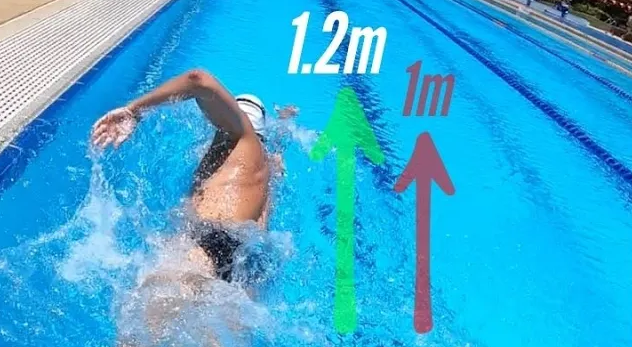
and free shipping on orders over $99 and because you’re listening here you can get 15% off your first order just use the code podcast at checkout check them out at shop.effortlesswimming.com and upgrade your swim with Nano Clear number five I was at my kids swim lesson yesterday and he was doing his lesson and in the other pool I was watching some of the lap swimmers go about their laps and one of the things that really stood out to me as I was watching most of these swimmers is that they were swimming very short and by short I mean when they would enter the water they would reach out but not reach out very far when they would push back they’d push back and come out before the hip so they weren’t pushing back very far either so they were swimming short swimming like they were two meters instead of two and a half meters if you go from fingers to toes so a really good way to increase your speed is to increase your distance per stroke
and one way to increase that is to enter the water reach out in front like you’re reaching for the wall in front of you and then pull through as opposed to enter reach up a little bit but move that arm down really quickly so it’s great to be long when we swim I like to think of freestyle as having a base or a start position and that start position is full extension on the side one arm is pressing back past the hip like you can see here that is a really good starting position and then you’d move over to the next stroke same thing that’s your start position if you can be long in that position you’re probably going to increase how far you travel with each stroke and that’s going to increase your speed now one more bonus thing is to accelerate through each stroke when it comes to swimming freestyle it should be slow to fast not all at the one speed so if you can learn to go through the first part of your stroke when you’re reaching forwards
and beginning your catch that part is relatively soft and relaxed then you’re going to gradually increase your speed and your power as you go through it and that means the hand in the arm should accelerate through the stroke again nothing crazy don’t need to go 0 to 100 but it should be this nice gradual buildup each stroke that you’re taking like you can see here and if you can get that sort of timing and rhythm with the movement of your hand and your arm then you’re going to feel that propulsion each stroke as opposed to if you’re just moving everything through at the same speed in the same time you’ll never really get that propulsion you’ll never really feel it and if you’d like to improve your swimming and work closer with me jump into our effortless swimming membership where I’m working with people in there who are triathletes open water swimmers and recreational swimmers to develop better freestyle technique and build their fitness
and build their overall efficiency in the stroke and we’ve got a step-by-step plan inside the effortless swimming membership to help you do just that thanks for watching see you next week thanks for listening to the effortless swimming podcast if you’d like us to help you become a faster more efficient swimmer go to www.effortlesswimming.com