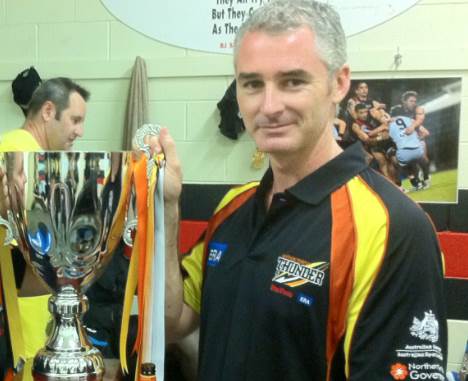









In this episode of The Effortless Swimming podcast, our guest is open water swimming legend, Philip Rush.
Philip Rush has completed ten crossings of the English Channel as well as triple crossing. He has the fastest record of two-way and three-way crossings of the English Channel. He has also done the Cook Strait eight times. He’s one of two people to complete a double crossing of the Cook Strait.
Right now, Philip coaches swimmers for the Cook Strait crossing over at New Zealand.
If you’d want to join our Hell Week camp in October 2015, applications are still open. Sign up here: effortlessswimming.com/hellweek
02:03 – I started at 14.
04:17 – It took 9 crossings to get the 3.
04:30 – Never halfway!
05:29 – How Teamwork Plays a Vital Role in Cook Strait Crossing
07:07 – Relax & Engage
08:10 – Time to Break Records
10:42 – How far can you go?
12:00 – The Moral About Endurance Opportunity
12:30 – Give it a go!
12:56 – Who knows what would have happened?
13:25 – The fine line between pushing somebody to fall off the edge and pushing them to get the best out of them.
14:57 – What if…?
15:38 – Difference Between Good & Really Good
16:49 – Control. Prepare. Succeed.
17:40 – The sooner I can get in, the sooner I can get out.
18:10 – Do the work.
19:10 – The Importance of Training The Body
21:22 – Hold your pace.
22:30 – How Philip Rush Can Get 99% The Best Out of You and Vice Versa
22:55 – Where’s Cook Strait?
23:56 – Cook Strait spells d.a.n.g.e.r.
26:20 – How Coaches Really Feel
28:10 – When hypothermia gets you…
29:09 – Profile of Philip Rush’s Students
32:37 – Everyday there’s something different.
Visit Philip’s website www.cookstraitswim.org.nz to get in touch with him.
Transcript
Read the full transcript
Welcome to Effortless Swimming, the podcast for swimmers, triathletes and coaches. Join Australian swim coach Bretton Ford as he reveals the latest techniques and information to improve your swimming. Let’s dive right in. Hi Bretton Ford here, welcome to the podcast today. My guest is Philip Rush who is an open water swimming legend and just wait until you hear about what he’s achieved. So first of all he’s completed 10 crossings of the English Channel. He has done a triple crossing, one of only three people do a triple crossing of the English Channel. And he’s actually been the fastest, he’s got the fastest two way and three way crossings of the channel. So just an amazing swimmer. He’s done the Cook Straight eight times, which is the piece of water between North Island and the South Island of New Zealand. And he’s one of only two people to complete a double crossing of the Cook Straight as well. And at the moment Philip takes people, he coaches people for the Cook Straight crossing over there in New Zealand.
And he’s just, from what I’ve heard, an amazing coach and an amazing swimmer in his own right. So really interesting stories in today’s podcast, listen in. We actually got introduced by a mutual friend John who, John came to our Hell Week camp in Thailand last year. And John’s actually coming back again in October. So if you want to come along to our Hell Week camp applications are still open. So you can go to effortlesswimming.com forward slash hell week and apply for that the Hell Week camp coming up in October. Here’s Philip talking about how he got into the type of swimming that he’s become famous for. I was always coming eighth or ninth in the 1500 and 400s and just never quite had the speed. I turned to marathon or open water swimming at that stage and we used to have a national event which was a 3K event. And started at that, started winning that at the age of 14. And it just grew to when I swam the English Channel three ways.
And you’re one of three people, is that right, to do the triple crossing of the English Channel? Yeah, correct. The first person to do it was John Erickson and he did it in 38 hours, 50 minutes or something. And we were fortunate enough to be second and managed to knock 10 hours off his, 10 or so hours off his record. And the third person is Alison Streeter and she did it in about 36, 37 hours, I think it was. But that took a long time to build into. It took years of training to actually be able to get your body to perform on the right day with the right tide, the right team and the right weather. Yeah, I mean, could you pick any day to go or did you have a certain window, like a week’s window, like some athletes have? I mean, going for the triple, was there any sort of different conditions that you’re allowed to sort of take on? We were fortunate. I had a good pilot and he’s still around, Mike Orem, who takes a good volume of the swimmers across.
It took four years to get the three-way and every year we went there, we were going to do it the three-ways. You know, it turned out there, the pommels thought we were already full of the proverbial, to be quite honest. In the first year, we managed to break the double crossing record, so it went from 18 and a half hours to we took an hour and a half off it. And then it sort of made them stand up and be aware that possibly we weren’t full of it and that we could actually do what we said we were going to do. I mean, my forte probably looking back on it is colder the better, longer the better. And that was where I really shone. But as I say, the first year we managed to do a double and in consequence years, it took nine crossings to get the three. You know, my coach would always, we would go out and we’d get one crossing done, we would never call it off no matter how rough it was. I’d always have to do one if we’re on the way back or we could call it then.
But I was never allowed to hop out halfway on the first lap. He would always just make me, as part of the mental training and physical training, make me go one way. And as I say, every time, every year we’d have another couple of goes, we might do a double, we might do one and three quarters. And eventually four years later, the day come, we’ve got the phone call at 10 to 7 at night saying, right, we’re leaving in an hour. I said, oh yeah, okay, let’s go. We had everything ready. So it became sort of a bit of a standard jugger. Well, here we go. We’ll be home for a pint and a breakfast in the morning sort of thing and we’ll have one crossing out of the way. Well, that day we hopped in, it was dead calm. And I’m talking dead calm like flat as a bath and hopped in and three quarters of the way over my coach. We had a bit of a team going to give you a full understanding. The pilot’s job was to pilot. My coach’s job was to keep me fed and alive.
My job was to swim. Now, if everybody in that team environment does their job and does their job well, you are successful. Now, halfway across on the first lap of the channel, we were sitting there and Tony leans over and we’re just having a quick feed. And he says, listen, he said, we’re possibly on to break the fastest ever crossing. And I sort of looked at him and said, you’re having me online. This was right through the night. So we’d swim right through the night. And we were on for about a seven and a half hour crossing, which would have been the fastest ever crossing. So anyway, he said, I don’t want you to go too hard. Remember, this is the first lap anyway. It’s very hard not to get excited. It’s something like that when the water’s calm. Everything’s obviously happening. Pick the pace up. We missed the record by five minutes. We went to 7.45 or something. 7.50 I think for the first lap. And just missed the record by eight minutes or something.
Once we got to the other side, we’d never stop and you’re allowed 10 minutes out of the water. We’d never do that. We’d reach land, clear land, get straight back out. And if you’re going to have something to eat, you do it once you got back out to the boat. Just as a mental thing, as soon as you plonk your butt on the beach and sort of look out at the world to see what’s going to happen. All of a sudden you put doubt in your mind. Do you really want to get wet for a bit longer? So it’s about being focused and keeping that mind relaxed and engaged. I was about just to give you some indication. I could hold five minutes, four hundreds, day in, day out. Maybe five, ten at night. I used to relax going to a sort of a trance at night when it was dark so that all of a sudden you’d be conserving energy. And then once morning came, bang, let’s get off again. So anyway, that first lap was the fastest ever male crossing of the channel.
Anyway, went back and we went 80 hours 15 for the next lap, which was the fastest ever crossing from France to England. And it gave us the fastest double crossing of 16 hours and 16 hours something. So, you know, things were unfolding. The day was dead flat. I was swimming well. My coach was performing the pilot years out. Two years out he told me what times I was going to do. Now we’d talked about breaking. He’d talked about breaking records all the way through. I’d sort of said, well, you know, crikey, that’s a big call to make that. Anyway, he’d worked on pace. He’d worked on, you know, my timings, consistent timings. Anyway, at this stage we’d broken three records in the channel. We turned around and his, the pilot’s theory was the last lap would take about 12 hours, 30 minutes. And now, you know, I was young and full of it. I sort of said to him, if we do two laps in 16, there’s no way the last lap is going to take 12 and a half hours.
You know, we’ll be going. He said, yeah, yeah, yeah. Anyway, as that day wore on, once again we turned and came back out, had our food, our sustenance. You know, back then that was things like baked potatoes and spaghetti. Small volumes of it every half hour. We didn’t have all these gels and electrolyte replacements. And God knows what you can buy off the shelf these days to keep you alive and keep you well hydrated and full of energy. So ours was a very coarse form of the same thing. Anyway, the day went on and I kept on seeing these lampposts. There’s lots of lampposts in the channel and lots of stuff. It seemed as if we’re going round in circles. Anyway, after about three hours bang, we were out into the tide. The last lap took us 12 hours, took us 12 hours, 20 minutes. Now, what I didn’t know was we were swimming round and round in circles to let the tide go through. Then we moved out into the channel, out into the force of the channel, which he took the 12 hours, 30 minutes.
Each lap, he was about five to 10 minutes off. So once again, he did his job. My coach did his job of keeping me alive and I was fortunate enough to wash up in France and still be alive and able to claim all the records. Now, probably, and I tell the story quite regularly to people and to younger kids. I sat on the beach. Now we sat there. The coach came over. He said, I’m not going to touch you. Well, that’s a nice way to bloody. He said, he was a hard bugger. He was a bomb and he coached some top New Zealand swimmers over the years. He said, how far back can you go? I said, there’s a whole lot of things dropped out of my mouth at that point. And I said, well, he said, I’m going for a walk. He said, I’m going to come back and then tell me. So anyway, I walked down the beach and remember, you’ve only got 10 minutes. Anyone sitting there thinking, oh, Jesus, they’ve given me a drink and we’re just sitting there.
And he came back and I said, well, I can go back halfway. I said, oh, OK. I said, I know I can go back halfway, at least halfway. The water is still dead flat. Take this and come on. Dead calm. Anyway, he throws the towel over me, drags me up and says, well, it’s better to be known for three good ones than the person that went three and a half. Now is where the problem becomes. I’m 51 years of age now. And as my years go on, I’m thinking, why did he not let me have a go? The third tide is a shitty tide, so to say. It doesn’t do what it’s supposed to. The next two tides would have been fine. If I could have got halfway, I might have been able to get to the finish. Who knows? Who knows? We never know. So the moral of the story is, if you have the slightest opportunity to achieve anything and any endurance, you keep going until you don’t have another breath left in your body. So if you were in the same situation as a coach today, you’d encourage…
I would now, in the same position, if I was coaching a swimmer to do the English Channel three ways, I would give them a good feed, tell them to have a good breath, ask them to get back out there and give it a go, because you don’t know. We might have caught a good tide. The weather stayed good for us, so that was one risk out of the way. I was still breathing and swimming relatively well. Obviously not as well as in the start, 28 hours later. My body was still all right. I was communicating. There was nothing that was majorly wrong. So who knows what would have. To this day, I don’t know how far I could have swam. But you’ve got to give it a go. You’ve got to try these things. And if you don’t succeed, and this is the fundamentals that I work with in Cook Straight, you will have given it 110% when you hop out of Cook Straight. There’s no soft option of getting out of Cook Straight. And these are things that I’ve learnt as we go.
As a coach, it’s a fine line from pushing somebody until they fall off the edge, but pushing them so you get the best out of them and get a result is what I’m sort of saying. I will regret that until the day I die now that I never gave it a go. You must try it and give it a go. It reminds me of, there’s this paragraph in a book that I read recently called Thinking Like a Freak. And one of the things they talk about is, with soccer penalty shootouts, you’re better off going or shooting straight at the keeper, because that’s your highest chance of scoring a goal, because they’re more likely to jump to the left or jump to the right. But the reason that most soccer players won’t kick it straight, instead they’ll go for the corner or off to the side, is because if they do kick it straight and by some chance the keeper stops it without having to move, it brings shame on them. They’re embarrassed for themselves and their country,
and they’re more afraid of looking bad and possibly failing that way, even though there’s a better chance of them scoring by kicking it straight. So it sounds like it’s a similar thing that he maybe didn’t want you to look bad, so to speak, by going three and a half laps of the… Oh, I understand now. I still understand why you did it. You know, we’d had an absolutely fantastic 28 hours. We’d smashed everything, you know, I made the front page of the London Times and all those sorts of things, but what if we’d done it four ways? Yeah, that’s right. And I don’t know, you know, if I got halfway across and passed out because I was bloody exhausted and then I could say, well, I can swim three and a half ways across the English. This is looking back on it. At the time it was the right decision, I slept all the way back on the boat and then I couldn’t sleep for a bloody near a week afterwards. I was wide awake, I was wide, you know, no matter how many points we had,
I still couldn’t sleep. But looking as you get older and start assessing what you’ve done in life, I sort of thought, hell, that was an opportunity there to be really good and instead of just good, you know what I mean? And I turned it down and it was never, you never do these endurance events for what it would look like or what it, you know, you’re challenging your body against the tide, you know, against the weather, the tide and, you know, what you can do. Yeah, well, I mean, first of all, it’s hard enough to stay up for 24 hours sometimes. You know, just staying awake. What did you leave it, around seven o’clock or eight o’clock at night and swum for 28 hours. And two nights out there. So, I mean, that is incredible. It’s like a friend of mine, Chloe McCuddle, who did the, who just finished the longest swim ever. It’s just the amount that people like you and Chloe can put their bodies through is just so far beyond what 99.9% of people can even conceive of.
I mean, most people haven’t gone nearly as far as what they, they think they can in terms of pushing their body. So it’s, it’s incredible. I, I’m still very much of the believer that, you know, if you can control what’s in your mind and you do the training, then you will succeed. You’ve got to do the training. There’s no soft option on that side. So you’ve got to do the training for endurance events and whether it’s swimming the channel, whether it’s, you know, an ultra iron man, all these bits and pieces. If you can control what’s going on through your mind and do the preparation and do your training, you will, as long as your body stays together, you will succeed. Was there any way along that, that third lap of the channel where you doubted whether you could make it? No, not, not, not when I, there was a lot of like being done and things like that. What we did, we kept the, my philosophy on, on, on swimming, so to say,
is the sooner I can get in there, the sooner I can get on with it, the sooner I can get out. So there was obviously the odd time where your mind was just bloody cranking and your body was just aching. But once again, it’s your mind saying, let me out of here. So you’ve got to control that, that, that small piece of anatomy on top of your head. And if you can control that, you can do absolutely anything you want. And what do you think it comes down to? Is it just? Training of the mind. Training of the body. Yes, you’ve got to do the work. I’m not, I’m not saying that I, yeah, you just hop in and swim bloody three Ks a day and that’ll do you. You’ll be able to, you’ll be able to swim in this channel three ways. You know, I was training 100 Ks a week. I was working out with a swim, a proper competitive swim squad. So my pace was always good. But also it took years of training my mind and body to be able to put up
with that sort of pain. So the first year, you know, we did a double, you know, the first time we did a double of cook straight. I was in absolute agony. I was bloody swimming along like a lame duck at the end. And, you know, that was 16 hours. You know, there’s no way I could have gone straight into the channel and done it three ways at that point. From there, we went from a 16 hour swim. We went up into the double crossing of Lake Taupo, which was a 22 hour swim. And we were training the body, you know, getting my technique right so that I wasn’t leaning out on shoulders and hatch up, you know, so that you’re not spend, you know, you’re minimizing the injuries that you’re getting. So you’re getting your technique right. And then you start building. That was probably the best part of eight or nine years from when I first started ultra distance stuff to when I actually swam the channel. Now my mind was we’d go through America and Canada racing.
Now we’d race in lakes and in the sea. You know, the smallest race was about eight hours. The longest race was 19 and a half hours. And we’d be racing it. So by the time I hit England, my brain was numb so that, bang, I could get into that routine of getting out there right, get on pace, get on pace, hold pace. That is why I was successful because I could hold pace for long periods of time which worked about the same pace as the tide. And cold didn’t affect me. You know, we could do, I think the longest we did was about 6,006 degrees and everybody else hopped out of the race with hypothermia and we swam for another hour and I was the winner. I didn’t finish the race either, but… Jesus. 6 degrees. It was pointless carrying on. But so those sorts of things build that mind and your confidence that, hey, you know, you’ve got to shut off the things. You’ve got to shut off. It’s easy when you’re training to think, oh, you know, such and such, we’re going out to do this.
I’m going to do this. If you’re doing a long swim in the pool, you know, I’m going to do this. And he owes me money from the other night and whatever else is going through your mind and then all of a sudden you think, oh, it must be half an hour by now. And it’s one or two minutes. It’s controlling what’s going on. Instead of thinking, right, I need to relax. I need to make sure I’ve got power on out in front. I need to make sure my elbows are up. Per lap. And then you just slowly keep doing that and you will slowly just go numb. And all of a sudden you’ll be thinking, Jesus, is that half an hour already? You know, you’re holding good pace as long as you’re not dropping the water, as long as you’re not losing feel of what you’re doing, you relax your mind and bang, bang, it goes, it goes. And if you can do that, you can master most things because it is your mind that lets you down. How do you get that same sort of buzz or feeling
or, yeah, I guess that same sort of buzz these days now that you’re not doing those sorts of swims? Or do you find that it’s not something that you really need now? Well, I take it out on other people now. People come to me and want to swim cop straight and I might not even have met them. We’d have a few e-mail, you know, we correspond by e-mail and I do things slightly differently. If you come to swim cop straight and bring your coach, well, he’ll be on the big boat. He won’t be beside you looking after you. I will deal with you wholly solely and 99% of the time we will get the best out of each other on the day and that’s what I get a real buzz out of getting people across cook straight. I hate failing, I hate failing and while you’re still breathing and those arms are still going over, we will still be swimming. Not your choice to get out of the water. Let’s talk about the cook straight. So for those that are maybe in the States
or Canada or something and don’t know what the cook straight is, it’s the piece of water between the north and South Island of New Zealand. I mean, for anyone who’s been to New Zealand, they know just how harsh and how rough the conditions can be there in New Zealand. I mean, I was there, what was it, probably five years ago and I was at a place called Raglands on the North Island there just at a surf spot and there was a guy who was surfing and he got caught in the rip there and he got taken so far out to sea that we couldn’t see him and it took the water patrol an hour and a half to find him in the middle of the ocean. That was my first experience of the ocean in New Zealand and I thought, jeez, you’ve really got to respect this place. It’s really something else and if you’re not 100% on with your thinking or if you don’t know what you’re doing you can get in a lot of trouble like this guy could have almost been in.
Cook straight itself, it’s 26 kilometers and a straight line. It’s like a funnel. I imagine that you’ve got all of part of the Pacific Ocean going through a small gap of 20 kilometers. Either way, it is very deep which causes the volume of current and tide that is going through there. The water temperature ranges on a good summer for a month we might get 18 degrees. We’re going out I’m actually taking the relay team out there tomorrow. I’ll probably have 16 to 17 degrees and very shortly it’ll drop to 13 degrees at the start of winter and that’s the end of the season. You’re going across Cook Straight as a swimmer. The tide runs through Cook Straight in England why it’s so difficult in England you’ve got all of Europe to land on to the channel here we’ve got about 10 kilometers and once you do that if you missed that this year we had a gentleman from America we went 16 and a half hours we had one rock left to get we missed that rock
we were 150 meters from shore we were swimming with one arm and we missed it and we were on our way we might as well kiss our ass goodbye the day’s over with we weren’t going to get back get across Cook Straight So we quite often he was semi-hypothermic and he’d blown his shoulder out but the opportunity was there we were so close and I say that and he said to me afterwards he said Philip he said you don’t know me but you have just got the best anybody has ever got out of me and the whole time I thought we were going to get there the tide was doing strange things but we were still getting closer and closer this is one o’clock in the morning there’s no street lights out there and I could see the shape of the rock as we were going past it I’d say a million miles in there but as we were going past it like nobody’s business it was finished he couldn’t do anything else and at that point we had to pull him out and say mate I’m so sorry
for the first time I thought you know we’ve I’ve flogged you you’ve given me everything and I can’t give you anything in return we just couldn’t get there and that’s one of the I mean the coaches feel just as much as the swimmers sometimes just without the without the exertion I think I mean when you see a swimmer that you’ve been coaching succeed and hit the goal that they’ve been working towards for X amount of years it’s you know you feel like you’ve accomplished that yourself and then same thing goes when they don’t achieve it just that disappointment that they’ve got and with someone like that I mean did he feel I mean obviously he would have loved to have made it but was he disappointed and is it something that he’d look at doing again next year or does he feel like he’s kind of accomplished what he wants to accomplish well he was I mean he was physically gaffed he was absolutely gaffed and you know hypothermia
is something you cook straight just because of the water temperatures and because of the wind that we get it’s very rarely we get a very calm day or a clear day with no wind and dead still conditions there’s always a breeze of some description you know that breeze that goes all day it just slowly works away it’s just swimming and you’re holding stroke rate etc etc it’s good you’re generating heat but as soon as you start slowing down stroke rate drops cool breeze on your back starts just wearing away wearing away wearing away we can do things with your stroke we can do things with what you’re eating but once hypothermia slowly sets in it’s a matter of time now then it’s a matter of holding it off with warm drinks and trying to encounter you know keep your stroke rate up and there are those little bits and pieces but at the end of the day once hypothermia has got you you’re only going one way you can’t come back from it
so it’s a matter of holding it off for as long as possible and hence we were at the point where his next stage was probably in the next 15 to 20 minutes he would have been unconscious so we couldn’t as I say we couldn’t have got any more out of him there was nothing there and that’s the way we I’m medically qualified to look after them so I have confidence in dealing with hypothermia which is the main that’s the main reason people don’t succeed is hypothermia and just not being able to finish what sort of where do people come from for those that sort of contact you to want to swim the cook straight what’s their background have they been swimming all their life and they want a new challenge I think you’ll find these days that we’ve got this I call it the next stage marathon running you know marathon running was so popular for so long and except people started hurting themselves with hips and all sorts now open water swimming
has become the marathon running into the 80s and everybody wants to do it and I I have to be quite harsh with people here at times I’ve got people that turn up I say look I swim two and a half kms an hour I said don’t waste your time you will not complete cook straight we need to be able to swim over three kilometers an hour and just from a wide range this new seven swims in the world which is the channel Irish sea to Gibraltar there’s one in Hawaii some in Japan has really set the world alike everybody wants to do them their long swims some of them are cold some of them have got jellyfish some of them have got sharks some of them have got this they’re warm some of them are cold so you know you’ve got a real wide range of people and you have to be a reasonable swimmer to do them but we’re still getting I still have people turning up saying oh you know I can do this I’ve done this and I’ve done that we get them out there and within half an hour
I’ll sort of say we’re going to be on our way home in three hours and sure enough they’re not moving fast enough we just get swept straight out of cook straight very very quickly hmm yeah right so how many people you’re taking across each year we’re looking about 12 we’re looking about 12 swims a year this day you know I actually spent the day yesterday answering emails if there’s anybody out there listening that’s waiting on an email I am coming to it
but you know we’re taking bookings now for 2018 so how long do people generally prepare for people prepare if they’re coming from nothing I’d like 12 to 18 months preparing what we have been doing is we’re building a place called Lake Taupo in New Zealand we take them across there first which is a 40.2k freshwater swim so that it gives them that endurance and gives them the confidence that they can get out there we end up finding out how the feeding works and all those sorts of things and then into cook straight the following year but it’s you know I do have people pull out and things like that you know you don’t know what’s happening in two years time but the other day I had a lady email which said I’m looking at swimming cook straight in 2020 and I did have to make the comment I’m not sure if I’m still going to be alive in 2000 but anyway that was sort of she’s coming out to do a tour of New Zealand she’s going to build in
she wants to be here in time to swim cook straight and do this so that’s great and if we can accommodate somebody to get them across cook straight the buzz we get of getting people across you know we’ve got a team that’s been together for a long time once again I’ve come from the swimming background of keeping the swimmer alive and the skippers they actually took most of my swims so they’ve been around a little while and they have vast experience of the tides and cook straight and you know every day is different every day the wind’s doing something a little different the tide’s doing something a little different the swimmer’s doing something different we never get the same swimmer twice but you know we have people come and try they’ve got within 150 to 200 meters of the shore and been out cold with hypothermia you know they’ll come back and have another go so the buzz that we get as a team is eventually getting them across it’s a very
very solemn trip home when we don’t succeed yeah I can only imagine I mean you know getting out there is an hour and a half boat trip and to either side where we start an hour and hour and 40 so it’s almost a long slow trip home yeah do you ever have does anyone ever once you actually show them what’s involved with it with the training and the cold water preparation does anyone sort of put their toes in and then go okay maybe this isn’t for me oh we don’t it’s a big investment it’s a bit especially if you come from overseas it’s a big investment and once we get here I’m very much getting a risk out the way you know if you’re and well if you’ve come to Wellington the swim cocks right you get here and you dip your toes in and you think oh that water is too cold or I don’t like the colour of it you know I think at that point we’ve got a head problem and you would have done the preparation because you would have done a couple of six
or 80 hour swims beforehand for me so that I know that what pace you’re going to be able to swim for the day so we can set the whole thing up and really at that time it’s just a matter of sitting down and talking about the problems of the world and working through it and possibly the next day we’re out in Cook Strait so if someone’s listening to this and they are thinking about swimming the Cook Strait how can they get in touch with you yeah there’s a website cookstraitswims.org.nz and there’s a whole lot of details we’ve got a question answer some questions you know people talk about sharks and what’s out there under me and you know I’m scared of this and I’m scared of that but just contact me I do get back in touch with you it is very popular I just about need a secretary these days to answer all the emails but it’s becoming very popular it’s very trendy we only get so many days a year that we can take swimmers and
and we only take so many swimmers because what we try to do is make it the best experience you’ve ever had it may not be you might not think that at the time but afterwards you’ll think if you go and do other swims well they did actually look after me yeah I mean anything you work that hard for and that long for like swimming the Cook Strait is just something that you would never forget I’m sure and the listeners to the podcast I mean we had Chloe probably two years ago and offered some people some sort of team some relay swims for the channel and she got flattered with emails so I’m sure you’ll get a few emails as well from the listeners to the podcast because it’s yeah I mean the people that listen to this there’s a lot of open water and cold water fanatics out there so I’ve got no doubt that they’ll get in contact with you no worries looking forward to hearing from you awesome well thanks for joining me on the podcast
and sharing those stories about your channel crossings and Cook Strait swims and anyone that looks at your bio with the number of swims you’ve done but also at the times you’ve done them in it’s incredible and when our mutual friend John sort of introduced just reading through what you’ve done I was amazed at how you’ve done it so that’s incredible and that’s before I mean they were sort of in the 1980s before the internet and before I guess there probably wasn’t as much information out there as there is today so that was I think it makes an even greater achievement yeah no it was pretty rough in those days we did have I must admit it was the food as I said were baked potatoes spaghetti and baked beans and you know the odd drink and things like that but we didn’t have the range of stuff you’ve got these days you know GPS’s we can hold a straight line these days you know we can keep a swimmer and we’ve got a big compass in the bottom of our boat
and the GPS checking them every 15 minutes to see what the tide’s doing and the days gone by would just be I’ll head for that rock over there and see what happens God how different it is today it’s for the best it’s for the best you know we get the better out of people the best time in there less worry about weather so and it’s a good result at the end of the day yeah that’s exactly right well awesome thanks again Phil and no doubt I’ll get you back on the podcast and talk more about this sort of stuff because it’s I find it really interesting I mean backgrounds pool swimming and competitive swimming not the long endurance open water swims but I just love to hear of stories from people like yourself who are into it and who have done really well because it’s it’s a completely different world to what I’m used to and I can really I really respect what you can do in the water but the only thing I’d say I would have much rather been a sprinter
40 seconds or 50 seconds for 100 meters it would have been all over and we could have got on with life not 28 hours that’s right it’s just like I mean that’s the argument and also in the squads is all the distance swimmers want to be sprinters because they’re in and out and done and they don’t have to train as much but not everyone’s gifted with those fast switch fibres and we weren’t all born sprinters so yeah some people have got to be distance swimmers thanks for joining us on the effortless swimming podcast to get transcriptions bonus videos and to be the first to hear about new episodes go to swimmingpodcast.com