







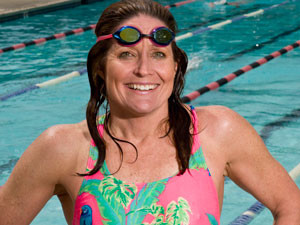
 This is the 3rd episode in this 3-part series of interviews with swim coach Eney Jones. In this episode we’ll talk all about racing and rhythm in your freestyle.
Let’s get into it!
00:45 – The Final Piece of The Puzzle
01:10 – On what Eney considers when looking for someone’s rhythm…
02:39 – Do a YouTube Search on Katie Ledecky
03:30 – Who Could Benefit From a Gallop in Their Stroke
04:38 – A Brilliant Alternative to Finis Tempo Trainer
07:10 – The Right Way, The Wrong Way and The Many Ways
10:37 – Easy Speed, Rhythm and the Power Phase
14:07 – Being Comfortable at threshold
19:49 – When Effortless is Hard Work
21:40 – Swimming nurtures you.
Listen to the first two episodes here:
Faster Swimming Series with Eney Jones – Cues (Part 1 of 3)
Faster Swimming Series with Eney Jones – Gear and Toys (Part 2 of 3)
Find out more about Eney Jones at EneyJones.com
Transcript
Read the full transcript
Welcome to Effortless Swimming, the podcast for swimmers, triathletes and coaches. Join Australian swim coach Brenton Ford as he reveals the latest techniques and information to improve your swimming. Let’s dive right in. Welcome back to the Effortless Swimming podcast. This is part three of a three part podcast series I’m doing with swim coach Jeannie Jones. The first episode was on cues and analogies for faster swimming. The second episode was on gear that we use for swimming. And the third one is all about racing and rhythm. So how to achieve better results in your triathlon or your swimming races. So here we go. Let’s get into it. This is Jeannie Jones from Boulder, Colorado. Racing and rhythm is really the, I guess the final piece of the puzzle once you’ve got your technique dialed in and you’re familiar with each part of your stroke. So this is probably the thing that takes the most time to get used to, I think.
What do you sort of look at when you’re looking at someone’s rhythm? What are you looking for? I’m trying to look at something that matches their somatotype. So if they’re smaller, they need a faster rhythm or cadence. If they’re bigger, it can be a little slower. I started to notice a trend of, and it was watching Katie Ledecky and getting her cadence, that she has a really nice gallop, which is the one side of her body is to a two count and the other arm to where she breathes is a one count. And then it allows you to surge and reach further because it’s almost off kilter a little bit. And I know there’s been some coaches here in the States that are writing the article saying, breathe bilatally, lie flat, you know, get rid of the limp. But actually in open water, it’s very, very, very helpful because it helps you ride the surge and actually engage. So if I see somebody with that, I actually try to enhance that.
And I’ll do that sometimes by putting a bigger paddle on their slower side and a smaller paddle on the side that they have a faster hand speed underneath and through the air. Because it actually is something that if they can tap into, they don’t have to be perfect, but it creates a rhythm for them that really works. Yeah, and that’s, if you can’t sort of visualize what we’re talking about here, just look up Katie Ledecky on YouTube and just have a look at some of her racing videos. And if you look at any open water, open water races like the US 10K National Final and things like that, you’ll see a lot of swimmers who have got that sort of gallop. The longer distance swimmers tend to have that gallop a bit more. And yeah, it basically just means that one side is either recovering or pulling through that little bit slower. So it’s almost like a sort of one sided type of stroke instead of the very symmetrical,
bilateral breathing type of stroke that you see swimmers doing. And do you tend to use what people are doing or do you sometimes try and, let’s say someone didn’t have that gallop in their stroke, but you think it could benefit them. Would you help, would you try and help them develop that or would you stick with what they’re doing and then try and make the most out of that, if that makes sense? I usually try. Well, going back to the gallop, the reason even horses gallop is it’s very easy recovery and momentum. There’s no effort bringing a hoof or a leg forward in a gallop and that’s why with longer distance it really works. But I do try to look at the swimmer and look for something they’re doing right. Like if they’re very flat swimmer and they like breathing both sides, we can work with that. But I do have to look at the size update that they are because there’s a lot of really small people that have been told distance for stroke
and they really need more tempo and a faster rhythm. And there’s also people that don’t connect to the trainer, the finise tempo trainer. So I’ll do a song list for them if with the tempo that they need to get in their head. But I do try to look because it’s not that one thing is better than the other thing. So many things will work but some things require so much more time and energy. And with some athletes, I don’t have four years of bilateral breathing in 10,000 a day. They have two years where they’re trying to make it in their career and they need the fastest and the easiest way possible. Sometimes it’s not learning something new, it’s actually enhancing what they’re doing that works. Yeah, that’s good. And I kind of fall in the same camp and especially with the breathing. So sometimes when we’ll have swimmers come to clinics, they’ll say, well, I’m breathing bilaterally because I read that you should do that.
And while I think it can be important to just develop a fairly even stroke when you’re training, at least breathing bilaterally every now and then. Breathing to the one side for a lot of people is a lot more comfortable when they’re racing and you get a bit more oxygen in that way as well. So don’t be afraid to breathe to the one side if that’s more comfortable for you and it helps you with your rhythm. So there’s no hard and fast rules with any of this stuff. It’s what works best for you. Well, and I do think if you’ve got points for prettiness for high elbows, for taking less breaths, then you’d want to do it. But I know I live in altitude and I want as much air as I can get. And if I incorporate the breathing into my rhythm, and that’s actually what the gallop does, your breathing side, you actually are faster on the recovery on that side. So it keeps your breathing a little more disciplined and a little more focused
even though you’re breathing every stroke. And that’s another thing that I really liked when we did the session at Swim Labs is you spoke about don’t be afraid to be messy. That’s one of the things that you tell your swimmers is don’t be afraid to create a bit of sort of splash on entry and not be really pretty with the strike because as you said, there’s no points for it. It’s about who gets from A to B the fastest way. So yeah, technique is important, but don’t try and have the perfect technique at the sacrifice of your speed. Exactly. And I think that’s confusing for some new people because they think there’s a right way and a wrong way. And actually there’s many ways, but some ways take longer than other ways. So you want to look at the time someone has what they want to achieve and how you can help them get there. And to me, I’m a huge believer in longevity. I saw a 90-year-old swim of 400 I.M. And by the end last weekend and by the end I was in tears
and I thought, you know, I wouldn’t say it was beautiful, but it was one of the most beautiful things I’ve ever seen. That’s awesome. Was that at U.S. Masses Nationals? Yeah, and it was just amazing because it’s just hard sometimes going back into a sport you’ve done, but you see somebody doing it for so long and you think that’s the whole point, to add enjoyment into your life and fitness. And even sometimes when you talked about being ready to race, you know, and people say they’re nervous, and I try to think of it as like two horses on a Roman gladiator, the stand-up chariots. There’s a white horse, which is your hopes and your dreams, and a black horse, which is your fears. And you really need to harness both of them and try to let them carry you. So if you’re not nervous, it’s not going to work. And if you’re not hopeful, it’s not going to work. So you really need to have that energy carry you forward.
Yeah, and I’ve heard the same somewhere, but I think it’s like if you’re not nervous before a race, then that’s when you should be worried. You want those nerves, at least a little bit of nerves, because that’s what’s going to fire up and that’s what makes you care about the race and the results. So you want those nerves and to be able to harness them is really the key. And something that I find can help a lot of swimmers is just their pacing at the start of a race, especially for a triathlon, anything over really an Olympic distance triathlon is with most of my athletes, I’ll get them to go for easy speed at the start. And this is a concept that’s used mostly in pool swimming and I’d say most pool swimmers are familiar with easy speed, but if you haven’t been in the sport before, it might be a new concept. And what easy speed is is where you’re looking to go out fast, but keeping the effort just down a few percent
so that your heart rate stays that little bit lower and you kind of go within yourself and just don’t allow the heart rate to really push out too high. So you’re trying to go for that speed, but it’s still feeling easy to you. And that’s what I try and get my half Ironman, my Ironman distance athletes to do, is to go out fast but make it feel easy and then settle into a rhythm that they know that they can maintain for the majority of the race there. So easy speed, it’s that dichotomy there, but when you get the feeling for it, it’s just a great way to pace a lot of your races at the start. Oh, I totally agree. And so I’ll do easy speed, rhythm, and then get into a power phase where they can actually start really pressing power once they’re relaxed. But going back to Katie Ledecky when Bruce Gemmell told her to relax last year, just during the 1500, she ended up breaking the world record, but she said she was just so relaxed.
So the dichotomy of easy speed is really hard for people, but when you think of even Yoda saying, there’s no such thing as, there’s do or do not, there’s no such thing as try, so you do it, but then you allow your heart rate and your breathing to relax, and that you can control. Yeah, yeah, that’s right. Now, I think one of the best ways to develop it is in training, when you’re doing some variable pace work, so let’s say you’re doing 6200s and you might be descending or building one to three, so three and six of the faster ones, and when you get to those faster ones, try to take out the first half or the first third at that easy speed where you can feel that your rating’s still up a bit, but you’re just holding back that little bit, but the speed’s still up there. So whenever you’ve got that harder or the higher intensity stuff in training, that can be a really good time to practice that easy speed. And also the rhythm as well,
so just finding that rhythm to settle into after you’ve gone through that easy speed phase. I also call that Chinese takeout. You know, where you do, you have to really go out and then settle. So the settling comes from breathing and intent and focusing on your autonomic nervous system and heart rate and letting it go, but not at the expense of the speed. So the mistake I see is people, when they try to relax, slow way down, and it can’t be that. You have to get the speed going and then relax into that speed. And I had a coach, Grant Giles, on the podcast recently, and one of the things he mentioned was that he feels that most age group triathletes don’t go hard enough in the swim. They just take it too easy, so they’re trying to keep it relaxed, but to the extent that they’re just sort of plotting along and their heart rate isn’t as high as it could be. And while you don’t want to completely burn yourself out on the swim,
the swim is where your heart rate can actually be that little bit higher compared to the bike or compared to the run, because it’s the shorter event and then you kind of get the time to recover a little bit on the bike. So for anyone listening, see how you go by taking out that swim just a little bit harder in your next race and see how you go and see if it does affect your bike and your run. Well, and to me sometimes I call it, it’s almost like getting through the threshold. We go, oh, it hurts and you back off and oh, it hurts and you back off, but once you get through the doorway or the threshold, it doesn’t hurt anymore. And getting yourself out fast in that good position is just very much worth it because that’s where the, it’s just you’re getting set up for your whole race. So we talked about it last podcast, but with the ITU triathletes, if they missed the first group, they might as well stop. Yeah, so it’s, yeah,
you’ve really got to be comfortable with going out at that threshold. And with my triathletes, we’ve been doing a lot of threshold work in training. So at least once a week, sometimes twice a week is for a main set, it’s just at threshold. So it’ll be anywhere from 1500 to, depending on the part of the season there, up to 3K at threshold, where we’ll break it down to what might be like 8, 400s or it could be 10, 200s or anything along those lines. So 10, 200s at 20 to 30 seconds rest, but it’s all at that threshold pace. And the threshold is hard and fast, but it’s sustainable. So to get comfortable with that feeling and that sort of effort, it’s not very comfortable at the start, but after a couple of weeks, the body adapts and it actually starts to enjoy that threshold pace where it can just really settle into it and then maintain it for as long as you need to. But it’s just about being comfortable and developing that through
doing that sort of stuff repeatedly. Yeah, no, I agree. And in terms of finding a comfortable rhythm, I think a lot of that can come from something that we’re talking about in the first podcast with the cues and analogies. But by making sure you keep the recovery relaxed, so when you’re recovering over the top of the water, the forearms and the hands should be quite loose and relaxed. You don’t want any tension through them. And if you do that and you also punch the monkey like we were talking about, where you get that drive and that purpose out the front when you’re entering in the water, I think that’s sort of half the battle for swimmers is keeping relaxed, punching the monkey out the front and using that to help develop the rhythm and building on that. Right, and I also call the hand thing hula hands because when you see a hula dancer, there’s space between the fingers. So rather than cup, just really relax your hands
so that you’re using all the surface area of your hands. Yeah, and Wayne Goldsmith, a friend of mine and a coach, he calls it soft hands as you’re pulling through. So soft hands basically means you’re keeping it firm, but it’s not tense and it’s not cup because it’s kind of wasted energy if you’ve got too much tension through the hands. And one of the things I think we spoke about on the very first podcast we did a couple of months ago was the dichotomies of swimming. And I think that’s probably good to touch on again for people who haven’t heard that before. So can you just talk a little bit about the dichotomies of swimming? There’s a lot of dichotomies in swimming and once you want to be active and relaxed at the same time, you want to be engaged, but then you want to let go. So there’s so many things that don’t feel like they work together because they’re either end of the spectrum, but swimming really does incorporate everything.
You know, you want to be aware, but then you also want to be back in the moment so that you’re enjoying it. So there’s so many dichotomies that come up. I find with, you know, rather than plow through, you want the grace and the movement through the water, but then you want the focus and the intensity and the strength and the power. So you end up engaging and then letting go and being strong and then also being, you know, not weak but very relaxed. You end up being, you know, kind of graceful but then very, very much committed and deliberate. So it really ends up incorporating everything. You can’t say that it’s, you know, to me swimming is so much like ballet where it looks very feminine and very lovely, but it’s really tough and it’s very hard and you have to be really strong to do it. And swimming is like that because it really involves both ends of the spectrum. That’s why I think it’s such a beautiful thing to watch
is when you’re watching a top swimer just glide up and down the pool and they make it look so easy, but you know deep down that it’s very hard work. Well, yeah, it’s like the name of your podcast. It’s effortless swimming. When you become so good and graceful at something, it looks effortless, but it’s really not. It’s taken years and it’s taken a lot of strength and it’s taken a lot of control, you know, and even a lot of different ways to do it. So it looks effortless, but it’s actually not. Yeah, absolutely. And when I was thinking about when I first started effortless swimming I thought well, what’s a name that kind of fits with what my beliefs are about swimming and it should be fast swimming, should be relaxed swimming and effortless swimming. So it doesn’t mean you’re just going to be floating up and down the pool with no sense of effort. It’s about getting to that stage where you’ve developed to the stage
where swimming can be effortless but fast, it does take a lot of hard work to do that. So it’s not just about that sort of Ladi Darland where you can just switch off completely. It’s about going through the process to reach that stage of effortless swimming. No, I think it’s a phenomenal name and it puts a lot of the right things in your head because you want to put effort in but you put in so much effort and research that then you don’t have to anymore and training anymore. So it’s kind of like the Thomas Jefferson saying or Seneca that preparation and opportunity is what luck is and that to me is what effortless is. If you put in the preparation and the training and then you have the opportunity, it’s actually effortless. I love it. Nanny, just some final words for someone who might be listening to this. What’s your philosophy on swimming? What is it that you most enjoy about it and what is it that draws you to swimming?
I think to me I find swimming very nurturing and relaxing and I love the longevity of it and I hope there’s so much beauty in it that I hope people end up experiencing it beyond their age group years, beyond their college years, beyond their triathlon years through their life because I really find it a source of great exercise, of camaraderie, of being able to travel and have conversations like this and there’s so much beauty in it and there’s so many ways that even swimming nurtures you and helps you enjoy who you are and what you want to do. You’re always able to set goals, to travel to great places, to meet wonderful people. So it’s just this amazing thing that the saddest thing I hear sometimes is, oh, I used to swim and I loved being at U.S. Masters Nationals last weekend. I didn’t have the best meet but so many of my friends from college are starting to come back and I love that because I think that we have a future
that’s longer than we know in swimming because it’s so much better than being on land or being on a bicycle. It’s just an amazing thing that can last your whole life. I’ve found a lot of my best friends have come from swimming because you go through the same journey together if you’re swimming in a squad and you share those early mornings together, those late nights and trips away to competitions as well. It really takes a swimmer or an athlete to really understand what it’s like being a swimmer or an athlete. I think we’re very lucky to have been brought up in the environment of swimming because it’s just such a great skill to have and I can’t imagine what it would be like to be around the water and not be confident and not be comfortable with it. To be at that place, it’s really great. As you said, the people that you meet through it, I travelled to the States a couple of weeks ago and we got to meet up in person
and I stayed with a few other people who I’d either met through the podcast or through the email newsletters that I’d put out. Just people who I’d met through here, they were so generous and warm and they took me in and we caught up and that was all just through swimming. It’s a very small world, I think, the swimming world, same with the triathlon world and to be a part of it, I think we’re just so lucky to be able to do that. Any thanks so much for being on this three-part podcast and anyone listening, where can I find out more about you and the things that you do? I have a website that’s www.eniejones.com or to purchase a buoy. It’s just www.eniebuoy.com or I’m in Boulder, Colorado and I’ll be at a lot of open water races and I hope to see everybody there. Awesome, and if anyone’s near Boulder, anywhere near Denver or Boulder or within a couple of hours drive, I’d highly recommend coming out to see because we did a session at the Swim Labs there
and I really enjoyed it and got a lot out of it. Exactly, and Swim Labs has a website as well too. It’s just www.swimlabs.com and it’s pretty amazing to put you in there and I really wanted to see you underwater and I just really was glad you came in there. It was great to have my stroke pulled apart because I’m always doing that at clinics and I do that with almost 100 swimmers every month and to have that done for me was actually really nice. I used to work with other people that it’s kind of good to get that same thing for yourself and I picked up a lot and there was one or two things there that I know I can work on to get quicker so it was just a real pleasure to be able to do that with you. So any thanks for being on the podcast and no doubt we’ll have you on again in the future and I really enjoyed it, so thanks again. Thank you!