







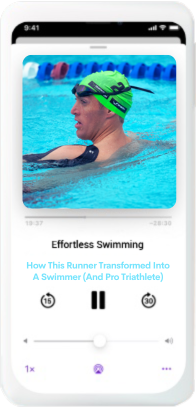
Matthew McElroy is a professional triathlete with 9 World Cup podiums and 1 World Triathlon podium. He was selected as an alternate for the Tokyo Olympics. With a background in cross country and track and field, Matthew had to work hard to develop his swim to get it to an elite level to compete with the best on the world stage. In this podcast, we’ll dive into how he radically transformed his swimming stroke over the last 10 years.
Follow Matt on Instagram
In this episode
- 00:00 Introduction
- 01:56 Swimming Background
- 05:45 Transitioning from Running to Swimming
- 11:25 Building Upper Body Strength and Progressing in Triathlon
- 17:32 Working on Speed and Underwater Techniques
- 23:49 Balancing Distance per Stroke and Cadence
- 28:04 Training Strategies for Improving Stroke Rate and Speed
- 32:33 Explaining Stroke Technique and Focus Areas
- 34:02 The Importance of Consistency in Swim Training
- 36:54 Why Video Analysis and Having a Coach Are a Must
- 41:18 The Power of Mindset: How it Impacts Your Performance
- 42:52 Overcoming Doubt: Harnessing the Power of Positive Thoughts in Racing
- 46:16 Superhero Posture: Boosting Confidence in Races
- 47:42 Situational Awareness in Open Water Swimming:
- 49:32 Handling Frustration in Open Water Races
- 51:19 Qualifying for the Paris Olympics
Links from this episode
- Change your technique and swim a smoother, easier freestyle with the Effortless Swimming membership
- Do you want to work with me personally to improve your technique? Join my swim technique coaching here
- Get 15% off our 8-week Faster Freestyle course by using the code 8week15
This podcast is brought to you by NanoClear — our own range of anti-fog swim goggles, designed by Effortless Swimming with the anti-fog treatment bonded into the lens itself (not sprayed on, so it doesn’t wear off after a few swims). Check out the NanoClear range here and use code PODCAST15 for 15% off.
Transcript
Read the full transcript
And that’s when I started noticing I started to get a lot more speed. And I went from probably like 10 to 15 to last out of the water. And I started like making jumps to like the middle of the pack. And I’m still working on it. Like I’m still like, if I have a bad swim, I might be that in the back. And if I have a better swim, I’m in the middle. So it’s a constant learning experience.
And the reason I asked this question is that one of the things that people seem to find difficult is to put in more effort and go fast at the same time. They feel like there’s that diminishing return of I’m going harder, but I’m actually getting slower and saying, OK, what’s happening here? Welcome to the Effortless Swimming Podcast to show that help swimmers and triathletes love the water, become a better swimmer and live a better life. Here’s your host, Brenton Ford.
Hello and welcome to today’s episode of the Effortless Swimming Podcast. I’m really excited to bring you this episode with professional triathlete Matthew McElroy. He has had nine World Cup podiums, one World Triathlon podium, and he was selected as an alternate for the Tokyo Olympics. And currently he’s in the process of qualifying for the Paris Olympics this year. Now, one of the reasons I really wanted to bring him on the podcast was he posted a video of his swimming progress from 2014 to 2023, a video that I saw fairly recently. And we’d been in contact the last couple of years. He’d sent me some of his videos to take a look and see what I thought. And to see his progression from 2014 to today, it is night and day. So I wanted to ask him, what did he do, particularly in the beginning of his career, to get to the point where he started off as a runner to then actually becoming someone who can mix it with some of the best
triathletes in the world when it comes to his swimming. So he talked about a couple of interesting strategies that his coaches had him do in the early days to help him develop better control and balance and catch as well. So I think you’ll really enjoy that, particularly if you’re in the early stages of your swimming journey. There’s some really good strategies here that some were new to me, some I’d heard before, and I think you’re really going to enjoy this one because it’s all well and good to see what the best athletes in the world are doing right now, but what did they do in the early days? What helped make them the swimmer that they are today will help make the triathlete they are today. So we look into that on this episode with Matthew McCallaroy. Let’s jump into it. All right, Matthew, welcome to the podcast. Yeah, thanks for having me. So you posted a video a couple of weeks back where you posted a
video of 2014, you had video of your swimming and to 2023. So in the course of nine years, your swimming dramatically changed and it wasn’t just by sheer luck and by thinking just about your technique, it came with a lot of hard work and a lot of swimming. So I want to dig into that today because we’ve been in contact over the last couple of years just about your swimming. And just watching that before and after, it’s such a huge improvement. And I think for anyone listening to this, to show them that you don’t need to have a swimming background necessarily to improve your swimming, but it does take a lot of hard work and a lot of focus to really get to a high level with your swimming where you can compete with the best in the world in triathlon. So that’s what I want to dig into today. So just to kick it off, what was your background in swimming? And I know you were a runner as a kid, but what kind of background
did you have in swimming? Yeah. So thanks for the introduction. Yeah. So my background was actually surfing. I searched competitively for about, I think I surfed competitively about like six years. So I started when I was like, I started surfing when I was six. I was always in the water, um, served in the NSSA, which is like, uh, for those that don’t know, it’s basically just young kids that surf competitions every weekend, you get in a bunch of heats and you try to make to the final and then win the final. And then I did junior life guard. So I’ve, I’ve always been in the water, but never like proper swimming technique or coaching. I was just swimming with my head up, you know, body surfing, not in a pool and not doing flip turns, just, just being in the water as a kid. But yeah, that’s, I guess that’s where I started. And, and then being a runner, that was it.
Did it feel like it was a foreign thing to go from having that running background to having to join a squad and, and start swimming laps in the pool and doing proper, proper sessions? Like was it, was that quite unusual and maybe a bit uncomfortable compared to, compared to the running trend that you were doing? Yeah. I mean, it’s completely different systems, right? Like, I guess the difference between running and swimming, right? It’s like running, you have as much air as you want by breathing. And then all of a sudden you’re in the pool and you’re hypoxic and you’re trying to hold your breath. So it’s a very different system. And also like the fact that it’s like full body, right? Versus running is very, I mean, you want to keep your, your upper body very relaxed. So, yeah, starting out as a runner, I basically went to Northern Arizona, a university where I ran in college and I got recruited by a bunch of different colleges at a high school in high school.
I was like second at Foot Locker Nationals, which is like the cross country national champs of, of high school. So I was recruited kind of anywhere I wanted to go. And then I was plagued with injuries during my college career. So I decided to pick up triathlon just as like a form of like cross training, starting to bike like three times a week, starting to swim a little bit, but I didn’t really have any guidance. I didn’t have any coaching to start. I was just getting in the pool, trying to do, I don’t know, anywhere from like 1,000 to 1,500. And that was like all out. Like I would just swim for 20 minutes straight, maybe, maybe do like, you know, 800 and just be gassed. So I started looking for help and, and I think the first swim test I did before I had any help, I did like a hundred and probably somewhere around like 140, like three yards. So what is that? Let’s just say like 130 for meters, long course meters.
That was like an all out hundred time trial. So I was extremely slow. What was your thought then when you went to 130? Did you feel like, man, I don’t know what I need to do to get faster? Or was it like, all right, I know I’m new to this. I know I can get a lot quicker and I know how. Like where, where was your head at when you started, started out? Yeah, I think, well, what attracted me like to triathlon? First of all, it was like USA triathlon at the time had like a development program, but they were kind of like promoting this idea that if you hit certain standards on the run and so on the bike that you could start getting paid full time and then race around the world. And so it kind of sounds like pretty interesting to me. I was like, okay, I could go like the pro running path and be a marathoner. But I’m kind of plagued with injuries at the moment, or I can go down this path where, you know, I’m probably the best guy in terms of running.
That’s, that’s signing up for this. So I heard about this reached out to like an international coach. And that’s when I got thrown in with like some of the best triplets in the world down in San Diego. But just even backtracking, like he said, like that 130, like I showed up to San Diego and got the doors blown off me. I didn’t even know how to flip turn. Like I didn’t know how to properly flip turn. And I just didn’t like, it was pretty eye opening when I jumped in the pool with a bunch of pro athletes and realized right then that. You had to be the minimum, I would say on this group, you had to be like a varsity high school swimmer was like the bare minimum. And were they welcoming in that group? Were they like, all right, we can see new, new to this. We’ll, yeah, we’ll help you lift that level and that standard of where you’re at. Or was it, did they sort of, you know, exclude you a bit from the, from the group and go, this guy’s no good.
Oh, not at all. I mean, like those are some of the best times of my life, man. Like just working super hard with those guys. Like I’ll, I’ll have the name drop, but had like Joe Malloy, Greg Billington, Eric Wagerstrom, Eric’s a big, you know, big name in the triathlon world right now, Manny Huerta. He was like a mentor of mine and all those guys have been to the Rio Olympics, except for Eric and they took me under their wing. And I think the biggest thing that helped me is like, I had a great coach at time, Paul Sousa, who took a very unique approach to someone at my ability. But what I did was I asked a lot of questions. I think that’s the one thing that you have to do with like better swimmers is like, ask them questions about like, what are you feeling in the water? Like, what are you doing differently? What drills are you working on? What are you thinking about? Right. Like how are you moving your body through the water?
What, what cues are you using to, to set your stroke up? So I asked questions every day, you know, what, whether it was swimming or just racing in general, those guys gave me all their little pro tips. And some of those guys are still my best friends and I talk to them all the time. And most of them are retired now, but I learned pretty quick. I would say, you know, after a year of swimming with this group, I remember pretty vividly, like being able to do an hour of swimming, like four to five thousand yards on the 115 base. So doing 100s, sending off 100, 200, 300s, being able to make the 115 send off, that was like a huge accomplishment for me. And yeah, I like, I sucked a lot up from those guys. Um, that, yeah, that first couple of years. You said the coach took a unique approach with you. What was that approach and what was different about it? Yeah. So I went from just kind of swimming on my own a couple of days a week.
You know, like I said, a thousand to 1500, I actually brought like a buoy. We started out basically swimming 40,000 yards a week, six days a week. We did double swims on Tuesday, Thursday. And then we use the Vossa trainer. Yeah. We had the Vossa trainer for 20 minutes on the second just before we did the double swim in the afternoon. And basically the concept was I’m a runner, right? Like I’m extremely skinny and I don’t have any lats. I don’t have that core stabilization that swimmers have. So we had to build that through what we call the, we would call a brute force, right, just getting the yardage in and using the Vossa, but also using the double pool buoy. So what we would do is we’d have two buoys, we put it together. You’d have a swim band like this, which is a flat tire from a bicycle, or you can use one of the fancy ones. And what we would do is we would tie it around and then put another buoy through there through the middle.
So you had two buoys together and then you had another fan that actually went up on this side that you could put your feet through. So you’d actually put your feet through the middle here. And so when you’re coming from a runner, right, with terrible position and your legs are like basically going towards the bottom of the pool and sinking, this sort of lifted your legs up and you’re swimming with your head like submerged into the water. And so it kind of gave me the awareness that like, I need to swim with my head submerged really deep. And so we did, he basically, after our first camp, I was still in college. He sent me back to NAU with a double pool buoy and I swam 5,000 yards every night, six days a week. And I still finished six and the 10k at NCAAs on the track. So I got three all Americans, still swimming five k a night, which for a runner is a lot at altitude. And a lot of that came from like, you could see kind of body
transformation, like I started to get the swimmers V, right? And my lats started to get really strong. So the double pool buoy was like the first thing that we implemented into that swim progression.
What did you notice aside from the obviously better body position? What did you notice in how you felt when you swam? And did you feel a difference through like that, that, that core control and that your balance in the water, did that start to become evident pretty quickly or was that something that just kind of developed without really noticing the difference? It was kind of like once I took the buoy out and almost put me in the right position, if that makes sense, because I did so many yards. I did like, you know, a year and a half with the double pool buoy and most my swims, as soon as I took it out, it’s almost like that was where I was stuck. And it was very, the stroke was very flat. There wasn’t a lot of rotation. It was very pull, pull focus. We, we started implementing like the two beat kick. You know, we’d like, I obsessed over Ledecky’s two beat kick. And the next thing you know, like I could swim in a chase pack
at the short course distance draft legal racing. So after, after a year, I want to say a year and a half, maybe two years.
So you, yeah. So you developed the strength first of all, and I think coming from that running background, like it just, it requires, you need that upper, upper body strength just to be able to maintain speed for those, those distances, like you just, there’s no shortcut to that. And even if you like don’t have a running background and maybe it’s in a, in a different sport, like swimming is just a different sort of strength really. Cause it’s just, it’s all overhead. And most people haven’t lifted their arms up above their head unless they’ve, you know, done pull ups or something recently, like we just, we’re not used to that position. So it takes time to, to develop that. It’s good to hear that the pool boy helped as well with the body position once you took it out. Cause I think the fear that a lot of people have is they can become too reliant from their pool boy, but you’re talking about obviously the double one down near the feet as well.
So like having it down, not between the legs yet. Yeah. And so that, that I think helps really develop that, that core control and stability, whereas if you do a lot of it with just one pool boy up, up high, then sometimes I think you can get a little bit lazy with the, with the core. So yeah, and there’s nothing wrong with using it, using a pool boy, but for those that aren’t watching this, but are listening to this, yeah, the double pool boys down, down near the feet and where the ankles are. So that’s interesting. So what was the next, the next step from there? So you built up that upper body strength, you started to get some, some fitness and some strength and you started with that, the two beat kick. Did you then progress on to other types of kick, a four beat or a six beat? How did that progress? Yeah. So in 2018, I left that group in San Diego with Paul Sousa and I started working with Ian O’Brien. And then we kind of like, I felt like I, I started
making steps and progressing to the point where I was like, felt pretty flat in the first 300 of their race, which in, in triathlon and the short course, like the first booty is everything. It’s a difference between, you know, you’re getting on the podium sometimes and you finishing 30th. And so get out speed, super critical. And I felt like as soon as I jumped in the water, I didn’t have, I didn’t have any speed. It was just one, one speed the whole time. So as soon as I went to that, my coach, you know, Ryan, he’s, he’s coached multiple Olympians, Taylor Knibb right now. He’s coaching Summer Cook, me. He’s got a pretty good pedigree of athletes. He started to say, Hey, we got to, we got to start kicking and you got to start driving from the hip. And some of the cues that he likes to use is like, you know, fast arm entry, good, good hinge of like the elbow, you know, to, to catch. And that’s when I started noticing I started to get a
lot more speed. And I went from probably like 10 to 15 to last out of a walk out of the water. And I started noticing like making jumps to like the middle of the pack. And I’m still working on it. Like I’m still like, if I have a bad swim, I might be that in the back. And if I have a better swim, I’m in the middle. So it’s a constant learning experience. But the next step was six-beat kick and really focusing on speed work. Six-beat kick, focusing on speed work. Yeah, gotcha. And is it like, I often have, I work with a lot of triathletes and quite often for the people that I’m coaching, sort of one-on-one with their technique, quite often I’ll get them to do fast 25s in their warm up of kick, just to start to develop the, the strength and that movement. And often I get a bit of pushback because it’s like, well, I’m not, I don’t need to use my legs when I’m, when I’m swimming, if I’ve got a wetsuit on and so on.
But the thing is like it with a, with an effective kick, if you can be effective with that downward kick, you’ll get a bit of propulsion from it, but it’s really just about helping drive the, the top end of the, of the body. And for you, especially doing the, the short course racing that you’re doing, you need that, that front end speed to get out with a pack. Cause those guys are quick, like they are, they are going hammer and tong that first couple hundred meters to, to make the pack. And like Ironman racing is obviously a little bit different, right? But you just need that, that front end speed and it’s very hard to do that with a, a two-beat kick. So you’ve got to, you’ve got to work on it and, and have that six-beat kick for when you, when you need it. And it might settle down a little bit through the race, but you know, I’ve got a friend who I’ve mentioned on this podcast before, but he like always sort of struggled with
his swim, but he just, he just worked on that first 200 meters, 200 meters of his, of his race. And he found that as long as he got out with those, that front group, he was always swimming the same pace for the rest of the race, but he wasn’t making that, that front pack at the start. And so he was always left behind. So he just worked on that front end speed. And he’s been right up there with the best guys in the world for half Ironman and full distance Ironman events now. So what sort of things did you do to develop your speed aside from the kicking, obviously? Yeah, like a lot of parachute work, just a lot of like dive starts, you know, working on, you know, good underwater because those, those sort of things matter. Like when you’re on a start line on pontoon versus like Ironman, you know, Ironman 70.3, I’ve done a couple, you’re, you’re sort of like, you know, there’s no pontoon. Sometimes there’s a beach running, but
most of the time you’re just kind of in open water treading. So, you know, underwaters and doing a good dolphin kick doesn’t matter. But when you’re on a pontoon and, and you’re doing a super sprint like we had in Hamburg, I mean, you want to get two really good dolphin kicks and get half a body length away from the guys who are left and right of you because you’re in these little boxes, right? You’re, you’re almost shoulder to shoulder, and you’re going to come up, you know, on top of them. So doing a lot of explosive like 50s, 25s, hundreds at the start of a threshold set. So we might add like two, we might do multiple rounds, like, like two fifties from a dive on two minutes, full gas, and then straight into eight by 100 threshold, right? Now getting into like a pace that, you know, we can hold for an hour or a 1500. But I do agree with you. Like you said, like, you know, working on that kick is going to be super important because you’re going
to need it in the beginning of a race. And then when you, when you slot in and you get on the right feet, then you turn it off, then you can turn it off, wait for the bike. But even an Ironman, like a, like I did Indian Wells, 7.3, then Canute, some of these really good swimmers, the Norwegians were there. And we had to get out really hard. I had to use that kick and then I turned it off as soon as I got into, you know, that fourth position. Yeah. And that’s what we had Kat Matthews on the podcast. And she said that after her bike accident, that the one upside from it was that she could only kick for quite a while. And that actually developed her kick to a point where it allowed her to swim faster. So she just ended up doing fast 25, sometimes within, sometimes without, as part of a warmup pretty much every session. And that just developed a kick to the point where it improved the rest of her, her swim. So it’s, I’ve heard it from quite
a few, quite a few athletes at that, at that level. So I think it’s worth doing. And I think it’s good to change the way you’re doing the kick. Like sometimes snorkel, kickboard, face down, OK, that’s great. But also kick on your back, kick on your side, work the kick in those different directions. Even vertical kicks are great one for that as well. And that can that can also just help develop the kick a bit better rather than just doing face down with a kickboard because you’ve got more more pressure down and then on the up kick there’s less water on top. So you’ve got less kind of resistance there. So you typically only end up working to kick in that one direction, not much in the upward direction. So that’s why I think the side kick or the vertical kick can be can be good to do as well. And you mentioned the parachute there, so that that resistance work can add a lot of add a lot of power to your stroke. And he’s saying that
with some of the best swimming sprinters in the world, like Cam McAvoy is really big on that resistance work in the water and it’s paying dividends for him. So he’s the fastest guy of a 50. Do you know, have you heard of Cam McAvoy? Or is it? You have yet. Yeah. So there’s a big, big push on that at the moment, which is which is really interesting to watch. So in terms of your swimming, what about technically, what about things to do with your stroke that have been a theme for the last couple of years? Yeah, we’ve also done like a lot of I am work. We tend to do that in a lot of our aerobic swims. So normally we set up the week with like two speed threshold swims that are normally on like Tuesday and then like change in speed, like a lot of negative split work. We’re sort of going from like an aerobic pace and then maybe you get down to threshold or even faster sometimes. And then just maybe some pulls and another thing we do is like
a 400 where we do a little more breath control where we do a breathe every three, breathe every four, breathe every five, breathe every six. And that gets extremely hard when you’re at altitude at 7000 feet, doing especially in short force like long course. You don’t have to flip, but I just go extremely lactic when you’re when you’re not breathing as much and you have to flip turn constantly every like 16 seconds. So and then there’s like the strength aspect, like getting with my coach, working on range of motion, doing a lot of dry land, you know, band work, making sure I warm up properly. I think that’s super underrated, right? Like getting on the pool that I can do in like five, 10 minutes every day of just like getting the body warmed up, you know, shoulder shoulder blades, you know, pecs, you name it, core just just waking the body up for the swim. The same goes for the run. Like he did the same for track sessions, doing drills.
So just a mixed bag of things. And I think I’ve noticed the most in just like really hitting quality. Like. I do that. I have the best swims when I focus less on doing a bunch of gray. I was just called the gray area like a paste that’s just sloppy. It’s junk yardage. And you’re you’re kind of having to work, but you’re not working super hard because you’re fatigued from the workout the day before. Like I just I just don’t I don’t think that’s useful because you end up just like getting tired for the next session. I’d rather do something with a little more purpose, more technique, changing speeds, you know, going maybe from really slow to really fast, working both ends of the spectrum. I just don’t find it useful to be in this middle ground. And I still want to continue to go like right now, I’m focused on kicking a lot and getting my kick strong because I’m a huge VO2 max type of guy. So I have like a VO2 max of 9192 that’s been tested.
And so for me to do a lot of anaerobic work, it’s extremely hard. That first 300 is going to be more challenging for someone like me versus someone who has that quit twitch, you know, I’m 31, someone who’s, you know, 24 that can swim to 240s for 300 yards, not meters. 300 yards is going to, you know, is going to be able to tap into that system a lot easier than I am. So I hope that helps your question. Now, that’s great. And what about feeling like you had more than one speed? How long do you feel like it took you to develop different days? I think it’s a it’s a mindset like it’s a it’s like a neuromuscular thing, like being able to tell your your mind and body connection, being able to be like, OK, I’m going to swim slow and just relax and finding these gears, right? And I guess, yeah, it is a technical aspect. There’s a side of like, you’re going to have different strokes for different speeds. You should, in my opinion, you
should have like six or seven different speeds, right? Maybe you would agree with that or not. You can have your slow pace where you’re just like totally dogging it. You just got in the pool and to like your max 25s where you’re not even you’re not even breathing, you know, head down and you’re wind milling. I think you should have that whole spectrum of speeds. And so you should train those and understand with the clock, right? Like your clock, the clock needs to be your best friend, understanding like, you know, what stroke is equal to what speed? Yeah, it shouldn’t be a surprise what you are touching the wall in when you’re doing that speed development work or a set, let’s say, where it might be three, two hundreds and you’re going easy, medium, fast, like you should have a pretty good idea of what you’re going to hit based on the effort that you you put into it. And look, maybe it’ll change by a second or two, depending on
how you’re feeling that day. But you should you should know what what that returns going to be for the effort that you put out. What do you feel like you do when you do change gears and you do start to go a little bit faster? And the reason I ask this question is that one of the things that people seem to find difficult is to put in more effort and go fast at the same time. There’s often they feel like there’s that diminishing return of I’m going harder, but I’m actually getting slower and think, OK, what’s what’s happening here? So I think it’s it can be helpful. And I like to ask this question of athletes like yourself. What do you feel like you do to when you do increase the effort or the pace? Just put it in your cap. I think those are and you want to hit your pace and you’re getting sloppy. You’re turning off mentally. You’re tired from the session before. For most athletes, you know, we’re all pretty tired most of the time.
So, you know, you lock in that tempo with the pacer and you just start like getting after it. And and the only thing you’re focused on is cadence. You’re not focused on anything else. Before we dive into the rest of today’s podcast episode, this episode is proudly brought to you by Form Smart Swim Goggles. They’ve been a long time sponsor of the podcast and they are my go to goggles when it comes to tracking my training sessions and being able to see what’s happening in real time through the goggles. And we know swimming is a highly technical sport, but without the guidance of a coach on deck, identifying and addressing technique flaws can be a challenge. They’ve recently added a new feature to the goggles. Head coach. And this addresses that problem head on. It gives them as improved access to their technique awareness, focus skill development and in app education and analysis. Head coach provides real time visual coaching via the form
smart swim goggles, augmented reality display. During and after a swim, head coach provides some as with technique feedback using two types of metrics, form score and head coach skills. Form score is a measurement of overall some efficiency ranging from zero to 100 defined by your pace and your stroke length. Head coach skills encompasses five key areas that will help you identify where to focus on improving with your efficiency. Head roll, head pitch, set pacing, interval pacing and breathing time to neutral. And after completing a session, you can check back in on the form app to track your progress. And head coach provides swimmers from beginner to expert with an unprecedented level of data driven guidance and understanding, enabling you to boost your performance and your speed. Get your pair of form smart swim goggles today. Click the link in our podcast description or use the code effortless on check out to get 15% off
your form smart swim goggles. Yeah, that makes sense, right? You can hold the same or a very similar distance per stroke. And all you’re doing is increasing your cadence. You’re gonna be swimming faster. Now, inevitably, as you as you start to rate up, your distance per stroke is going to shorten. But the goal is to try and maintain it as best as possible. But one of the things that I like to do is if I use the form goggles when I’m doing a training session, I’ll look back at the at the data. And if we’ve done a set where we’ve progressively gotten faster, if I’ve had a good session, my stroke rate will go from say a 60 if I’m going at a 60 60% effort, and then it will kind of go like 62 64 maybe 66 and then maybe 68 if I’m really starting to go for it over like a 200. But it’s like, there’s not a huge difference. It’s only an increase of about 12 13% in terms of stroke rate overall. But that’s enough to see an increase in the speed. I
think sometimes people have the thought that it’s going to be wildly different. Like it might be a 50 stroke rate all the way up to like a 70 or 75 stroke rate as they as they change speeds. But it’s going to be it’s just small little adjustments as you’re going. So it’s not that much of a change in changing cadence necessarily if you’re if you’re doing it well. Do you have a rough idea of what your your cadence is when you start to change space? Yeah, it’s been a while since since I used to one. I’m just going to say roughly like you said, like 6870. I have I’ve had some pretty good swims were actually raced with the the sensor in the cap. I don’t know if it’s legal, but they never stopped me. And I know I know my competitors are kind of looking around at me like what’s that noise? You know, nothing to say here. Yeah, but I do I do think that like you said, like on the other side of the spectrum, cadence is good. But I also think that like
doing a lot of DPS work and not necessarily like like doing long reps like it’s hard to do a 200 DPS, you know, and and hold good form but doing fifties just really strong DPS. You start to figure out like how you’re pulling water and being efficient. So there’s like the other side of the spectrum right where it’s like you focus on cadence, but you can also focus on like on DPS and and getting the benefits of that. And I think the first video I ever watched of you is like a DPS video where you like we’re doing hundreds with like a really low stroke rate and getting a lot of like pulling a lot of water.
Yeah, it’s it’s incredibly hard to do say even 10 fifties where you’re working on minimum stroke count. Like that’s that’s really tiring physically and I think mentally as well. But like it’s yeah, that’s that’s a different kind of challenge in itself, because just to be able to hold that hold that streamline and to be able to pull as much water as you as you’re trying to pull like it’s it’s hard work doing that. So it’s good to work on both ends of it and you can’t have one without the other. I we did a set this morning that was it was a bunch of fifties. We did one at minimum stroke count. And then the next one how to is power and when when I’m talking power, we just do it at an easy effort, but we’re just trying to hold as much water as possible through the stroke. And then the third one we go 25 fast 25 easy. And generally in that fast 25, like you’re feeling good because you’ve worked on the distance per stroke, you’ve worked on that
maximum power. And then you put it put it all together. And you’re generally swimming pretty well. So I think that those little changes and getting you to think about different parts of the stroke. It’s it’s a good way to just bring that feeling of how you should be swimming and just to try different different things. And it’s I had a coach and a friend of mine Clayton on the podcast recently. And one of the things that he talked about was just getting getting used to swimming without any tech, any equipment like just goggles clock on the wall and just being being able to tune into how you’re feeling. Because I think that can get lost pretty easily. And swimming is just so much about the feel of it. And you said that one of the questions that you asked the the other triathletes when you joined that that squad was what are you feeling when you’re when you’re swimming? Because I think that’s that’s such a good, good question, because
it’s like what what should I be be feeling as I’m swimming? It’s just feeling like hard work right now. But if you talk to the best swimmers like they’re probably feeling like they’re gliding a little bit on on one side and they’re not looking to rush that the catch like it’s it’s very much about how you’re you’re feeling. I’m curious to know what you feel for and like how you would explain your stroke to someone now if if an up and comma was to ask you about what you feel when you swim. I mean, my my stroke has really changed even in the last 24 hours to be honest, like I just swim session last night with a coach here and flag staff because I could tell like it it seems like every time every time I take an off season, I come back to swimming and I lose my stroke completely. I’m never taking off season from the pool ever again. I might take a couple days, but like I need to stay in the pool. And that’s from someone who like didn’t grow
up swimming. How would I explain to them? I would say like right now it’s very it’s very kick focused, very hip driven, less about, you know, less about like really muscling through the water with my arms, even though I’m engaging those lats and I’m getting a really good catch. And I’m trying to get one goggle on the water. I don’t know if that’s like I don’t know if that’s a good description of like what you’re asking, but those are some key things I think about and I would explain my my stroke as being right now. There’s not a there’s not a ton of glide compared to, you know, swimmer swimmers who are not doing triathlon because you don’t necessarily want a ton of glide. There’s maybe a little bit definitely focused on like early breathing, which which helps, you know, a little bit more glide. So that’s that’s kind of what I would tell someone. Hmm. It’s speaking of off seasons I took I was swimming probably the best I was one for years up to
Christmas. I did a hundred hundred set average one one 14, which is the best I’ve ever done by a couple of seconds. And I’m feeling good. It took 10 days off over Christmas and it just hasn’t come back yet. Like I feel like maybe this week I’m starting to get it, but that’s that’s a month. I’m going, oh man, that’s so frustrating because our our race season is now all of our races and stuff are happening now and swimming just it kind of fell apart with with 10 days off. So it’s just one of those things. You’ve got to stay in the water and there’s no there’s no getting around it, unfortunately. Yeah. Do you do you feel like getting video or having someone look at your stroke is kind of like pinpoint what’s going on with it is helpful because I know when I get like I always try to tell someone to take a video of me not too often because I think like you can get paranoid, right? But like once every three weeks, get a video of you
swimming, you know, a certain pace, probably not slow, but like maybe your threshold pace and then kind of break it down, you know, like what do you need to work on? I feel like that’s helpful. Oh, so helpful. I did a YouTube video going, comparing wearing a wetsuit to not wearing a wetsuit. So I had had someone there filming that. And I did a turn to time trial with a wetsuit and and without and then drafting. And that was hugely helpful because for me, I found that I like I was pushing back too far on each stroke. And so I just kind of was throwing at the timing. And so I after that I ended up just short in my stroke a bit at the at the back. And my times were coming down by like a second or two per hundred when I did that well. And then I also saw that my I just wasn’t holding water with my my left arm. It was kind of just rushing and my fingers were actually sort of they weren’t pointing down that pointing forwards a bit. So I just didn’t
have much propulsion with that left arm. And when I swam, when I was drafting next to the or behind the other swimmer, I could just see that he was holding the same amount of water on his left arm and his right arm. And my right arm was good, but my left arm I was just I was losing distance to him every time. So and to have that comparison and this guy is a really good swimmer to have that comparison. It’s like, man, there’s so many things I can do here. So it was it was hugely helpful and I don’t get video of myself enough. I’m too busy doing it for other people. But it’s yeah, as you said, it’s just so so helpful. And then I did a four hundred freestyle in a race a week back and they like sort of broadcast the event and they film it and broadcast it. I look back at my footage. I’m just like, yeah, OK, it’s I kind of lost all those things that I’d practiced, but I can see it there and I know what I need to to work on. So yeah, I think it’s
there’s nothing better than just seeing actually what you what you’re doing. Do you feel like you’ve gotten pretty good at analyzing your own stroke and seeing where you might be falling short? I think I think yes. But I also think I think it’s always good to have a second opinion, especially from someone who like you’re always going to get. Different answers from different people. I feel like, you know, everyone wants to break down everyone’s stroke and, you know, give them, you know, certain drills and some drills are better than than others. But I do think like having a coach is I mean, it’s like the most important thing in swimming. You have like having a good coach goes a long way. Yeah. But I was thinking about this in terms of like, I feel like my story is pretty
is pretty challenging to do for most people who are working nine to five, right? Like if the double fool going and start swimming 40k a week, I wanted to ask this to you. What what do you do with most people in my situation? Like most people can’t just swim, you know, eight times in six days and just dedicate their their life to swimming like me. And I almost think that maybe there’s an easier approach to getting how how good I am. But maybe not. Maybe I did take the right approach in the last nine years to get to the point where I am made hopefully front pack this this season. Yeah, I mean, everyone’s everyone’s different with their with their progression and where they’re they’re starting from. And I’m trying to think of examples of people at your level in triathlon who have had a similar sort of background who have who have done it shorter. And off the top of my head, well, you’re done in a short period of time. And off the top of my head,
I can’t think of anyone, not to say there isn’t anyone there. But like, I think especially as you like, you get to this certain point, right, where if you’re working towards the top of the pyramid, you get to this point and those little one percent improvements start to start to take just as much work as that 10 percent or that 15 percent improvement that you got five years ago. So I think it just takes time with it for someone who who doesn’t have the amount of time to dedicate to it like like you do. I mean, a couple of things that I’d have them do is trying to at least three sessions a week, if you can, two, two is going to take longer to to get there. And I think three is kind of the minimum that you’d want to do. Don’t fluff about at the pool, just like get in and and get the work done because you probably only have an hour. So if you’re taking too much rest and, you know, you’re only getting two K done in that in that hour,
it’s just it’s not going to be enough. So just make the most of the time that you have there and like and just make sure your sessions are at the right effort and intensity. So I think some people go too hard. Most people probably just go too easy with their with their training. And like like you said, like there’s no change in speed and it’s just like all at the one pace and just just too easy. So they’re not they’re not really developing their swimming as well as they could. So there’s some some things that come to mind. But yeah, I mean, each person’s journey is different. But yeah, I I know quite a few professional triathletes and just get into that sort of that very top of the pyramid. It can take several several years of just just refinement. There’s no silver bullet. I don’t think is there anyone that comes to mind for you that you’ve seen them sort of get to that that top like like ahead of me from like where I was.
Yeah, yeah. No, not at all. I don’t think there’s anyone that came to that started at my level of swimming that’s even been able to race at a WTS World Triathlon Series like level off the top of my head. Don’t I mean like even Alan Webb, I don’t know if you know that name. He was like a American mile record. I think he still has it outdoors. Ran for Nike. He went to the Olympics. Phenomenal athlete. He retired from running and then tried to pick up triathlon. I mean, he grew up swimming. He went sub three in the 300. When he was like 14. So I don’t he only did triathlon for a year. But yeah, just I’m always curious how like, you know, swimmers maybe got from like a level where I started to like getting either up to my level or past. And I always try to work on like mindset in terms of like how I view myself as a, you know, saying I’m a non swimmer. I like to think of myself as a good swimmer because I do think that plays into how you approach
a race. If you just have the confidence of like, oh, you know, I’m not a good swimmer. We’ll see how it goes. That’s no, that’s like you’ve already lost. So if I if I tell myself like I’m a good swimmer now, I’ll execute it. And I think I think it was promising like I only came out like 20, 20 something seconds down from the leader in our grand final in Spain last year. And I was pretty happy. I think that was like one of my best swims I’ve had in 1500 is like coming out 20 something seconds over 1500.
The mental side of it is is so big because I had a similar thing from my friend who was I was talking about before. He was doing some training with with Josh Anberger, who’s one of the best swimmers in Iron Man. And he’s like, man, I’m like, I’m keeping up with him in training, but I’m just getting smoked by him in the races. And then he started doing some training with him, started training in a similar way, developing his front end speed. And that gave him the confidence to go, look, you know what, I’m actually good enough to compete with these top boys in the swim. And I think that was a huge factor for him being able to get out there and compete with him. So it can’t be ignored, especially at the professional level, like it’s just very much about mindset because the fitness is pretty similar amongst amongst all the guys there. So yeah, it’s a huge part of it. Has there been a, you know, in a race where you have noticed that little voice
in your head, maybe saying, oh, I know, maybe maybe this race isn’t yours, or maybe it’s just time to take it easy here. And you’ve gone, OK, no, I’m not listening to that. And I’m going to I’m going to turn that around. Yeah, I mean, that happens every race, every race I get on the I get warmed up. I’m days out. I’ve traveled across the world. You know, Europe, Japan, sometimes in Australia. And there’s all this build up, right? All this hype. And there’s doubt all the time. But I think it’s how you like you take those negative thoughts and like refocus on on either positive thoughts or being present. And that’s what I always try to do. And I think the more you can be present, especially in the swim and those beginning stages in my in my sort of racing, the more important because you really need to be dialed in on your stroke. And then as soon as you get in your position, you can’t really move much. So yeah, just channeling
negative thoughts. I like to do a lot of like I try to do meditation every day. So like I only do like five minutes because I have like really bad ADHD. I’m kind of a tripper. So I like I like to sit down and do five minutes. And it’s really challenging for me, but it does pay off when I’m on the start line. And and I can stay very present for at least five minutes of that swim. But yeah, I think mine said super important. Like I look at someone like Lionel who I’m a huge fan of Lionel Sanders, right? He’s a big name in the sport. He’s constantly like trying to improve his swim. And that guy actually started as a better swimmer than I did. I’m not going to lie like if you look at a stroke from when he started, it blows the doors off my video on Instagram. And I think he’s built up this idea that like he needs to hit these times in the pool, which I do think he he needs to improve like pool swimming. But I can tell you right now
my open water to my pool swimming does not equate because my flip turns are terrible because I’m always tired and I just don’t care about them. I’m not very streamlined. I don’t do the dolphin kick most of the time. Like little technical things in a yard school that just like I don’t I don’t spend a lot of focus on and and he probably he probably would benefit from, you know, not focusing on like those technical aspects and getting too caught up in the times either. I know when I’m in like a world triathlon series shape to be able to come out in the middle of the pack. I know what times I got to hit up at altitude. They’re not impressive. I can I can drop some knowledge. But most people I know that are pro triathlete could hit these times. It’s about it’s about just being a savage on race day and getting the most out of yourself and not letting the hype and negative thoughts really get into your head so that your energy is wasted
by the time you jump in the water. And I do think swimming without energy is worse than any other sport. You know, swimming out like running without energy. You can kind of I don’t know. I feel like I can get away more with it and biking. You can definitely get away with a lot more of it. With a lot more fatigue like in the legs. You can kind of fake it. You can’t fake swimming when you’re tired. Yeah, it gets ugly quickly when you when you take. Yeah, we’ve all had those sessions before those those races. One of the things that try to do when I’m when I’m racing, especially open water or if you get the start line and triathlon, it’s just standing tall. Like think about Superhero posture and as silly as it sounds like there’s been proven that that can that that can actually have a positive effect on your your mentality and just standing there like you belong to like you belong there and you deserve to be there and you can compete
with these other guys or girls like it makes a huge difference. And I was chatting with within another pro triathlete and she was saying that like she has a tendency just to be a bit timid and a bit small on the line thinking like I don’t I don’t deserve to kind of match up with these other girls in the in the swim. But it’s like I’ve like I’ve seen your swim. I know how well you can swim like you’re just as just as good as them and can compete with them. It’s like you just need to have that that’s the leafing yourself that you can do it and that attitude of like no stuff you I’m going to be the assertive one. I’m going to be the aggressive one here and not aggressors when you’re going to be throwing punches or anything but like you you need to have that mentality of no this is mine and I’m going to I’m not going to be the victim here today. Like it’s I see that with a lot of a lot of people in the water in their races because they they don’t feel
that confident. But you just have to fake it a little bit and stand tall and just you know had that kind of mentality on the line. Absolutely. And and coming from a running background where the like my biggest event was like cross country that was like my bread and butter is like you had at cross country nationals you have 300 guys and you similar to triathlon you bottle neck 300 guys into a you know like 10 meter not even eight meter like course so you have to get out extremely hard and so like you’re kind of aware of what’s going around with you a lot more and running right. It’s it’s like OK you see this guy you left to your right you can look around in the open water you’re kind of most of time you’re in the dark like you most of time you can’t even see your hand past like two feet and so you have no idea really what’s going on so situational awareness and we could chat about that too is like situational awareness and understanding what’s going
on around you without losing technique and form by looking around is really important which you do not get you don’t have that sensation in cycling and running and it’s so bizarre coming from running where you’re so much more in control
because you don’t have anyone hitting you and then you go to swimming and triathlon all of a sudden you’re getting smacked around for the first three minutes until you hit the first movie and you train months you start getting smacked around you get pulled to the back negative thoughts start going it’s so easy to go down a dark hole that like that would not happen in running in my opinion because I always would get out hard it’s a very yeah I feel like it’s it’s important to practice if you can obviously in a group but you start I tend to get like very like when I first started to get hypoxic and I start to panic so it’s just what the experience and staying calm and meditation has helped a bunch yeah it’s it can make a huge difference and it makes me think of the race we did couple of weeks ago there’s the main open water swim here in where I live it’s called the Peer to Pub it’s 1.2 K swim we’re all in the start line and first one to 200 meters
everyone’s going for it swimming over the top of each other and there was this one guy that’s my right hand side who I didn’t know who it was at the time but I realized who it was at the end he’s about six foot four hundred plus kilos massive unit excellent ex Australian swimmer and I and like he’s he’s he’s got speed but doesn’t have the the endurance and so going the first 50 first hundred and then like after 100 meters I sort of see that he’s ahead on the right so I kind of make my way over jumping his feet and I’m like I reckon he’s starting to slow so I came up on his his inside under his hip and then I had another guy come in and they started to sort of sandwich me out and I’ve just got nothing over over this big unit next to me and he’s just sort of making his way across and I’m gonna like would you just get off me so I’m trying to like you know do I like throw an elbow do I like try and kick him off me like I felt like stopping
and just trying to get him off me because I had nowhere to go I was like hang on a second like just keep it cool keep going and just try and make your way out of it so I sort of just swam off to the right tried to move the other guy over a bit so I wasn’t getting sandwiched out and then within a 20 meters I sort of got away from him but it’s like you have to you kind of have to have that plan in place going on if I’m going to be swum over the top of or someone’s going to be hitting my legs it’s like alright I know I’m going to get annoyed I know it’s going to be hard but alright I’ve got a strategy to to get out of it and and just know that it’s going to happen and expect it and then choose your course of action yeah so but Matt this is this has been a great great episode what I really like to hear from you is you’ve thought a lot about each of these things with your swimming arc to me that kind of shows it’s like well it’s no surprise that you’ve
come from where you’re with your swimming to the point where you are now because you’ve you’ve put in the work you’ve you’ve thought a lot about your stroke and your tactics and what it’s going to require to to get to that top level so it’s it’s been great for you to share those things with with our listeners so thank you very much for that now I know next up for you number one goal is to qualify for the Paris Olympics can you talk a little bit about what’s required and what you’re looking to do there
yeah so what’s required is we I mean we have like I think about five months until Paris Olympics so it’s coming up we only have a couple more races left in our our circuit the first race is in March 8th Abu Dhabi so that’s a it’s a sprint so 750 20K and then a 5K run followed with the next day we’re going to do a relay then to qualify for the Olympics is going to be the auto qualification is in May in Japan and we have to finish top three to get an automatic selection and then if it doesn’t basically if you don’t auto qualify it comes down to the discretionary board and they have a discretionary list of like key markers you have to hit so then it kind of it comes down to like the NGB and it gets a little more political so my yeah my I wouldn’t say I’m like hyper focused on this because I’ve this has been my focus for the last two years the Olympic point system for short courses started you know a year and a half ago so I’ve been all in for
you know a long time and trying to chase this goal I just need to execute I need to be healthy last year was kind of not a great year I’m currently 16th in the Olympic ranking last year I was top 10 I think I was eighth when I finished the year so I just I was dealing with some back injuries from a bike fit issue we got that all cleared up last week and I’m looking forward to you know getting top three at Yokohama and then in Abu Dhabi being competitive at the front of the race I want to get to the front of the race and use my weapon use the run and feel good
yeah we’re looking forward to to following you over the next couple of months and wish you all the best for those races and I’m sure that listeners as well will be pretty keen to see you qualify so good luck for it all and thanks so much for being on the podcast it’s been great to have you on and I’m going to post that repost that video that you shared a couple of weeks back of your progression because I know people would be wanting to wanting to see it so I’ll repost that on our Instagram and yeah amazing to see it’s just it’s really nice to to watch you swimming how you’re swimming now so it’s a really nice stroke and I can see a channel Cade Ledecki there and in some of your strokes so good to good to see thanks so much Matt it’s yeah it’s been great yeah thanks for having me and I’m such a fan of the YouTube and the podcast this is an honor so I appreciate you yeah picking me for this this podcast ah thank you thanks for listening
to the effortless swimming podcast if you’d like us to help you become a faster more efficient swimmer go to www.effortlesswimming.com