







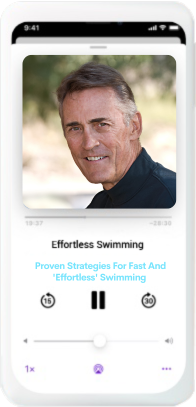
In today’s episode, triathlon coach and author Joe Friel returns to discuss swimming and open water techniques, as well as his latest edition of The Triathlete’s Training Bible. Joe addresses common challenges triathletes face when transitioning from pool to open water. He emphasizes the importance of patience in making lasting improvements and offers tips for pool training to enhance open water swimming skills. Tune in now!
The Triathlete’s Training Bible (5th Edition)
Related Podcast: Unlocking Speed: Mastering the PDLC Method for Triathlon Swimming with Joe Friel
In this episode
- 00:00 Introduction and Previous Episode Recap
- 2:56 Updates in the Book
- 4:42 Different Methods for Establishing Intensity Zones
- 8:49 The Role of Rest and Recovery in Athletic Performance
- 12:54 Debunking Swimming Myths: The Death Move That Kills Your Progress
- 16:05 The First Step to a Strong Catch
- 17:51 Reaching Over the Water in Open Water Swimming
- 22:50 How Open Water Swimmers Adapt to Rough Conditions
- 25:10 Teaching Open Water Swimming: The Three Key Words
- 26:40 Why Intervals Might Not Be Effective for Triathletes in the Pool
- 32:27 Importance of Focusing on Technique and Patience
- 36:18 Hardest Swim Workout Prescribed
- 40:34 Empowering Triathletes to Stick to Effective Swimming Methods
- 42:28 Most Memorable Triathlon Race
- 45:04 Golf as a Hobby and Lessons Learned
- 48:12 Problem-solving and Coaching Methodology
- 50:15 Triathletes Training Bible: A Must-Have Resource for Athletes
Links from this episode
- Training Plans
- The Craft of Coaching is by Joe Friel
- Change your technique and swim a smoother, easier freestyle with the Effortless Swimming membership
- Do you want to work with me personally to improve your technique? Join my swim technique coaching here
- Get 15% off our 8-week Faster Freestyle course by using the code 8week15
This podcast is brought to you by NanoClear — our own range of anti-fog swim goggles, designed by Effortless Swimming with the anti-fog treatment bonded into the lens itself (not sprayed on, so it doesn’t wear off after a few swims). Check out the NanoClear swimming goggles here and use code PODCAST15 for 15% off.
Transcript
Read the full transcript
once it was 25 swimmers out of 25, something like 20 of them did exactly the same thing, which is the biggest problem, biggest mistake you can make. And that’s what I call the death move now, because once you do it, you’re dead in the water, you’re not going to a place. Watch them swim, it’s something dawned on me that I’ve never dawned on me before. I don’t know why I caught it that day, but all of a sudden I saw that almost over did exactly the same thing, which is something I never talked to anybody. Welcome to the Effortless Swimming Podcast to show that helped swimmers and triathletes love the water, become a better swimmer and live a better life. Here’s your host, Brenton Ford. Hello and welcome to today’s episode of the Effortless Swimming Podcast. My guest today is none other than triathlon coach, author and legend of the sport, Joe Frill. He featured on an episode a couple of months ago where he talked about his PDLC method
to developing technique, and this was one of our most listened to episodes. So I wanted to get Joe back to talk about more about swimming and open water and triathlon, but also to talk a little bit about what he’s been studying over the last couple of years. He’s just released the latest edition of his triathlon training Bible and that came out less than a month ago, but it was originally written in 1997 and it’s been around the whole time because the information is still relevant but he’s updated it for the time. So we’re going to talk a bit about the changes and adjustments that he’s made to that book, plus we’re going to talk about the one thing that he’s seen triathletes do in the open water when it comes to changing their stroke from the pool to the open water and what he teaches his athletes. We also talk about what it takes to actually make changes stick and how patients can be one of the cornerstones of becoming a better triathlete and swimmer.
Plus we talk about what you can do in training to become a better open water swimmer as well. If you’ve only got access to the pool, what can you do in the pool to make yourself a better open water swimmer? So we talk about that and more on today’s episode. Now the audio cuts in and out at times. So if the audio is a little bit unclear, it comes back within 10 seconds or so. So apologies for that. I think the internet was a little bit slow on Joe’s side but it does come back pretty quick and I know you’re going to enjoy this episode. I really enjoyed talking to Joe. He’s a wealth of knowledge and I’ve learned a lot from listening to him and seeing what he teaches and how he approaches his coaching. So I’m sure you’re going to get a lot out of today’s episode. Let’s get stuck into it. Here’s the episode with triathlon legend, Joe Frill. My guest today is a returning guest, someone who we had on quite recently. It is Joe Frill.
Joe, welcome to the podcast. Hi Brenton, glad to be here. Thank you for asking me. I was talking to you before the podcast saying that your episode that you’re on before was our second most listened to episode because I think the HEDLC method that we talked about on that podcast really resonated with people. Got a lot of triathletes and open water students who listen and they really resonated with that. And obviously your experience and background in the sport has, you’ve got a vast depth of knowledge. So I think it was really popular among our listeners. So thank you for being on the podcast previously and if you haven’t listened to that, go back to that episode and listen because I think there are some really good technique tips amongst the other things that we talked about. I want to talk about some slightly different things on today’s episode because you’ve just recently updated a book that you wrote in originally in 1996 or 1997.
You said? That’s 1997, yeah. That’s it. On its fifth edition, I just want to jump into some of the updates that you’ve made with that book. So what is it that you’ve been studying the last couple of years that you’ve updated for this edition? Oh, I suppose the biggest change that made this book was to really open up more about ways to establish intensity zones. I left swimming the same. I’ve always felt that pretty well nailed down but it’s never really quite confident that I really had exactly what I wanted for running bike, for example, the other two sports in triathlon. And so I gave that a lot of thought and tried to make it more personalized so the athlete can pick a system they want to use like max heart rate or functional threshold heart rate or the same power sort of things. So this is kind of the way I tried to do it was to spend a little bit more allowing the athletes to choose what they want to do rather than tell them there’s only one way to do this
because quite honestly, the most variables, the most poorly-blind and hard-working you’ve coached enough isn’t as bad as far or the most new. And it’s not 100% right for everybody all the time.
I wouldn’t swear now that what I’ve just now written this book isn’t gonna be right for everybody but it’s a good starting place for people who want to figure it out themselves. They can have at least some place to begin the quest for what should my zones be when I’m working out. And what would factor into someone’s decision on which method that they choose? I’ll meet back up and give you an example. When I first came out with this zone system I used, I never got any complaints at all about swimming, matter of fact, which is interesting. That one, that’s yes been since the, like you mentioned in the late 90s, sometime when I wrote that came up with that system that has never heard anybody question it or ask about why, but running and cycling in intensity zones, especially heart rate, I’ve had a lot of, I wouldn’t call it pushback, a lot of questions on why. And one of the most common responses I got, it was common comments I got from people
was in heart rate. And it just seemed like the upper end of zone one was too hard. I heard that, I can’t tell you how many times, but I heard it many, many times from athletes that seemed like the upper end of zone one was just a little bit too hard. And so when they didn’t say that to me, I would always go back with, well, if you think that’s the case and change your zone, we’re not all built exactly the same way. So if it doesn’t fit you in that way, try something different, lower it, see what happens. I don’t know if anybody ever did it because they never get back to me and say, yeah, I figured it out. They never say that, but at least I tried to get them to do what they should do is to figure out a zone that works for them, a zone system that works for them. So that was the most common complaint I got. So what I tried to do with the most recent book, which just came out, is to give the athletes some options
on how to set their zones. For example, they could use max heart rate and then they could use percentages of max heart rate to come up with their zones. Or they could use functional threshold heart rate, which is involved in doing a test. For example, in cyclones or running 20-minute tests in which you find your average heart rate and the mathematics, which won’t go into you right now, but that’s another way of doing it. I can slowly do the book. And I’m not saying that those are perfect either because this is not perfection. This is simply trying to get as close as we can to what the athlete should be doing. And there are other ways too that I mentioned the book like using lactate analysis to determine your zones. That’s one that’s becoming quite popular right now, especially because of the Norwegian training methods that have been going around now for a couple of years. There’s a lot of people who are using lactate threshold
as a way of determining this. That’s another option I mentioned in the book. So you can use lactate to determine this. What I found though is that most people don’t want to get involved in fluctuating the finger frequently throughout the day to find out what their zones are. So most people don’t do it. They may have one test done and then they kind of accept that as being the gospel. But it probably needs to be rethought many, many times going forward because it’s unlikely that they’ll stay exactly the same over time. And there’s obviously a room for error to do the test like that. So I try to make it available to the athlete to find different ways of doing this. And I’ll find out when people start writing emails and telling me, hey, it doesn’t work because of this, that, or the other thing. They’re never afraid to tell me why.
It’s, part of it is like there’s, it’s kind of like swimming technique. There’s so many different ways you can get from one end of the pool to the other. And for each person, it’s going to be, it’s going to be different. You think of like a straight arm technique over the water, more bent over recovery. It’s like, there’s no right or wrong. It just depends on maybe the event you’re training for. It depends on what suits you best. So sometimes people get caught up in all the different things and then they end up not making a decision and then they’re just kind of in no man’s land. So I think half the battle is just pick one, go with it. And that’s going to get you probably 90, 95% of the way there on your journey to becoming a better triathlete or a better swimmer. Like just, just pick something, go for it, start the training and then you’re going to be well on your way as opposed to, you know, debating it for the next six months
and not doing, not doing anything. I mentioned in the book that turning zones are not, are not magic. You know, if you, you can go over, if you go over your turning zone by one or two beats per minute, for example, let’s talk about heart rate. Is that a problem? Probably not. You go eight or 10 beats over. Yeah, it’s probably a problem then. But you know, it’s like, this is, this is something that we’re doing is it’s clear cut. It’s got a lot of room for variation, a lot of room for individuality. So the effort needs to kind of be aware of what they’re experiencing when they’re using a heart rate monitor or a power meter or whatever it may be. And another thing that you cover in the book is heart rate variability. Can you share a practical example of how an athlete would use HRV in their daily training decisions? Yeah, I do. This is something, this has been around for a long time actually, but it’s only like, I suppose popular is the right word in athletics.
Is how do I know when to rest and how do I know when I’m ready to start turning again? To ease the answer to that question, which is what I’ve always used in the past, is that when it feels like it’s time to do it, it feels like it’s time to rest, rest. Feels like it’s time to start again, start again. But the problem athletes run into is they’re so highly motivated that they kind of second-guess themselves. Athletes sell them versus somebody and will sell them, sell themselves. I think I need to rest. That is extremely rare for an athlete to say that to themselves. Same thing with, I think I think I should rest longer. That’s one thing athlete will almost never say to themselves, I need to start running away and I’m losing too much fitness to get back and turning again. And so athletes tend to lose perspective on the importance of rest and recovery and performance. That’s critical to success in sport. And yet we don’t give it nearly enough attention
as athletes’ coaches do. Coaches seem to give it a lot more thought, a lot more determination. So in the first book I came up with a method I would help the athlete try to figure out when to take a rest break, ask questions. Let’s measure your heart rate first thing in the morning and see what it’s telling us. How does that heart rate compare with your normal range of resting heart rates? Is it high, for example? If it’s high, that’s a marker that says maybe you should take a rest day. Then there’s markers such as, how did you sleep last night? Well, I didn’t sleep very well. I lost, I was up, I was awake for a couple of hours. Okay, maybe that’s another marker that you should take from recovery time. As we start looking at, so I put together a list of markers like that, the idea being that the athlete could ask themselves these questions early in the morning, take measurements like HRV, like heart rate, like how they slept, their appetite,
how they feel, all kinds of things. And so that draw conclusion about if they should take a break from training, if it’s time to do that, or if they’re on the other end of the distance that they’ve been recovering for a few days and now it’s time to start back, get my rate to start again. So that’s what I was doing. And HRV kind of simplifies a lot of that. I wouldn’t say it’s perfect. I find with myself that there are times when it doesn’t blend in, doesn’t match what I’m feeling and what I discovered that day when I work out. But I think it’s a really good way of forcing you to think about it. If you get that marker up on HRV that says train easy today, don’t go hard or whatever it may be but based on the app you’re using, take it easy. That forces you to say to yourself, do I need to really take it easy? And hopefully you’re going to say to yourself, well, I need to think about that a little bit or let’s think about a few other things
to have to do with my recovery where I am right now. So that’s what HRV is all about, I think. I’d rather see you use that for that purpose than to make hardcore decisions just based on HRV. Good tool but not perfect.
Excellent. So the technology’s there, the data’s there but you’ve also just got to be aware of how you’re feeling, ask those other questions and not just rely on the tech side of things, right? Right, that’s exactly it. Now I want to shift gears a little bit here. What’s one swimming myth that you’ve encountered that you’d like to debunk once and for all? What’s something you hear regularly? If you can stop at one, there’s probably a few, right?
I’d say the one that screws up most triathletes. This was one that I was kind of suspected back in the early days in triathlon but I forgot what to hear, it was put it on a camp and I forgot where it was now. But at that camp we used the local pool which is an excellent pool and they happen to have an underwater observatory where coaches could go down and observe in the pool in the pool above, which was a, it wasn’t actually the open water pool itself. This was just a chamber within the pool so you can see with a, what do you call it? A stream of water coming at the swimmer. What’s the word for that? And the endless pool, we may not like the swims bar. Yeah, like an endless pool sort of thing. Yeah. And so the idea was you could have the athlete swim in that chamber, I’d call it, and you could observe what they were doing. And I had a group of campers, they’re triathletes. I don’t know how I had, how many 25 or 30 athletes, something like that.
So I went down in the first and second days I watched every athlete swim, let’s say it was 25 swimmers. Out of 25, something like 20 of them did exactly the same thing which is the biggest problem, biggest mistake you can make. And that’s what I call the death move now because once you do it, you’re dead in the water, you’re not going to a place. And that’s to reach out in front of you with your elbow below your hand. Soon as you get your elbow below your hand, there’s nothing you can absolutely do to push straight down the water, which doesn’t propel you forward whatsoever. And you don’t get a catch, what we typically call a catch, your hands about under your belly someplace. You wind up with a catch, which is about this long as a catch, instead of a catch, as long as your arm is. That’s the biggest mistake I see with triathletes. And so that’s the one I had to focus on the most. And that was the start of this whole process
I use in coaching athletes, which I referred to as PDLC. That was one of the things I had to really drill into athletes was you can’t, you cannot do that. Once you do that, you’re just not going to go forward. You’re just going to be still, you’re going to slow down the water until you finally get a catch. It’d be kind of like running with the stride. It’s about, you know, about that long. And that’s, that’s same idea. You wouldn’t go anyplace. You’d just be going really slow forward, but it’d be this tiny little step you’re taking and the same thing in swimming. You’ve got a short stroke. You’re not going forward. You’re just simply standing still until your hand is finally put to the place for you to catch. So you get me started, Joe, because that’s one of my favorite topics to talk about. Yeah. Get me catch. We had a guy, Lee Nugent. He’s a legendary Aussie swim coach and done a lot of work with some of the top swimmers
in Australia. And one of the things he mentioned on the podcast was that if your hand is higher than your elbow, you just cannot prepare yourself forwards. You’ve got no ability to catch. So, yeah, when you’re reaching forwards, that hand has got to get either to the same depth at the beginning of your elbow, but then you’ve eventually just got to get it down. And what a really common thing that I see with filming is that when you film someone from above, if they are crossing the sense line when they’re extending, it’s fairly common to see that elbow drop because I think it’s a more comfortable position for the shoulder to be in when they’re out in front and crossed over. So the elbow drops a bit there. And sometimes we just have to start with direction. You know, we call it swimming on train tracks just in that reach phase, but got to get that right first for a lot of people. And then it’s much easier to set the catch.
And I had a guy on Sunday just gone to the clinic who we just had to focus on the direction, get him straight, and then pretty quickly his catch began to improve because he had a good sense of the movement, but he was just crossing over and making it really hard for himself. So it’s such a big one. And when you look at the underwater footage from the side, if someone is either going in really deep as well, they’re not extending out. And you see their catches might be 15 centimetres of water that they’re sort of holding there. It’s like, you could triple that. You could quadruple that if you just get the right length and everything. So there’s so many little things that people can improve. And I was talking about this before we started the podcast. I think that’s why I’ve got a job is that swimming is a really hard thing to do. And there’s no end in sight to improvement. You can always improve with these little 1%ers.
And that’s what makes it fun. That’s what I love about coaching. It’s solving a puzzle. And to me, that’s a really enjoyable part of what I do.
Is there, can you share a moment or an experience in your career that’s really tested your resolve or your beliefs about swimming training?
Before we dive into the rest of today’s podcast episode, this episode is proudly brought to you by Form Smart Swim Goggles. They’ve been a long time sponsor of the podcast and they are my go-to goggles when it comes to tracking my training sessions and being able to see what’s happening in real time through the goggles. And we know swimming is a highly technical sport, but without the guidance of a coach on deck, identifying and addressing technique flaws can be a challenge. They’ve recently added a new feature to the goggles, Head Coach, and this addresses that problem head on. It gives them as improved access to their technique awareness, focus skill development, and in-app education and analysis. Head Coach provides real-time visual coaching via the Form Smart Swim Goggles augmented reality display. During and after a swim, Head Coach provides swimmers with technique feedback using two types of metrics, Form Score and Head Coach skills.
Form Score is a measurement of overall swim efficiency ranging from zero to 100, defined by your pace and your stroke length. Head Coach skills encompasses five key areas that will help you identify where to focus on improving with your efficiency. Head roll, head pitch, set pacing, interval pacing, and breathing time to neutral. And after completing a session, you can check back in on the Form app to track your progress. And Head Coach provides swimmers from beginner to expert with an unprecedented level of data-driven guidance and understanding, enabling you to boost your performance and your speed. Get your pair of Form Smart Swim Goggles today. Click the link in our podcast description or use the code effortless on checkout to get 15% off your Form Smart Swim Goggles. Oh yeah. Yeah, this goes back to the 90s. And I like to go to races. When I wasn’t racing, I would try to go watch races just to see what people are doing,
especially, I want to see what the pros were doing, the best in the sport. I want to see what they were doing, for example, the swim. So one year, there was an Ironman in Phoenix, which wasn’t too far away from where I lived at the time. It was only about a 30-minute drive from where I lived. And the race was in a canal. The swim was in a canal. So you could walk along the edge of the canal and you could stay right with the swimmers while they were swimming. And so I was very started and I watched the pros take off and so I’m walking around along the canal, watched them swim and something dawned on me that I’d never dawned on me before. I don’t know why I caught it that day, but all of a sudden I saw that almost all were doing exactly the same thing, which is something I never taught to anybody, which is to have their hand way above their, way above the water as they were reaching forward, as opposed to putting the hand in the water
somewhat close to their heads. They’re putting, their fingers were entering the water until the arm was fully extended. And so that kind of struck me. And so I went back and started toying around with it myself to see what was going on there. And I began to realize what they were doing, but what you really should be doing in open water swimming, which is to reach over the water, because the water is not smooth, it can be very, very rough. And so if you get your hand up high, that puts you in a position where you can grab more water and therefore have as what we talked about before, a catch because you grab more water by doing this. It also gets your hand in the right position. It gets your fingers below your elbow. When you do that, when you reach out with your arm fully extended above the water and it’s like one of the things I teach athletes to do is one of the girls I have them do when we’re learning this technique.
So I call it just a splash drill. It’s what they do is they reach out as far as they can as they’re swimming freestyle, they reach out as far as they can in the front and splash their hand down as hard as they can on the water so they can really feel the power of their hand hitting the water. And I want that to be as far away from their body as they can so they can even pull their head up if they want you to see where it is. So when they come into the water with their hands like that real hard. And so I chastise them. They don’t make it hard enough. They make it too pretty. They make it too smooth. I should really reach out and really smack that water so we know where your hand is at all times. I want to hear the water splashing. So I keep taking them through this over and over and over and over and finally they get the idea that they’ve got to really reach out there when they’re making this move. And so that was the first one.
The first things I ever learned was from watching pro triathletes and it caused me to think about what I was teaching them to my triathletes. So and there’s been many, many other events like that in my life also that was one of the first I recall which is really important.
And why do you think that the best of them is the pro triathletes? Why do you think they make that change compared to in the pool?
Yeah, well for one thing they don’t have rough water. The waters is obviously in a pool the water is not nearly as rough as it’s going to be if you’re swapping open the water like in the ocean especially that canal is pretty calm. So that wasn’t going to be an issue there but they were all still doing it anyway. They were all still reaching above their heads with a straight elbow basically almost a straight elbow and then reaching far out before they made contact with the water with their hand. And they all do that by the way still today when I watch the pro triathlon start I always watch for that and immediately you see it. In fact you look at pictures of the start of a pro race you’ll see the hands up high in the air you won’t see elbows high in the air you’ll see hands high in the air because they learn to do that in open water. You’re swimming in the ocean and there’s waves that you know really deep waves.
You know that’s the sort of thing that’s going to really mess you up if you’re trying to reach into it you get your hand above it you don’t have the water pushing back against you your hands in the air the air is not nearly as dense as the water is so you can reach over that wave and grab the water and pull yourself forward which is what we’re trying to do. And so I think that’s the reason why pro-traffice got into doing it. If it wasn’t for the open water swimming I don’t think it would be nearly as popular as it is if it was all pools I mean seeing there was many people doing that. And I think as well like that’s because when I look at most swimmers I think of myself as well doing this when I go from the pool to the open water my stroke rate comes up quite a bit especially if I’ve got a wet suit on. And I think part of that is you’re sitting higher so you can kind of get your stroke rate up higher as well but it’s that reach over the water
where you kind of throw the hand out there you get this momentum over the top and then there’s obviously less glide so you’re going to start the catch sooner and you can get the stroke rate up a bit quicker that way. I do find that people going from the pool to the open water they find that their times do suffer they do find that open water swimming a bit of a challenge. So I really like that tip is reach out further throw that hand forwards and then get a bigger catch get a bigger paddle and play around with that. One of the kind of got these three words that I use with people and I’m teaching them into swim open water it’s higher so sort of higher with the hand over the top faster and sometimes wider because people are trying to have this hand close to the body so higher, faster, wider and it’s interesting to hear you talk about what you noticed there because yeah that was my interpretation of it when I started teaching open water
or coaching open water swimming it was higher, wider, faster with the hand over the top so yeah I like that it’s nice to see it kind of come together there. I think you’re right I’ve seen athletes do also which is one of the things I had to try to correct is exactly what you mentioned which is to bring the hand up in this position before they put it in the water so it’s very close to the head I’ve always found that to be an ineffective way of getting a catch so that’s where I started going this idea of getting a little bit higher in the water over the water to reach out to grab the water as opposed to trying to do the next year head but I still see coaches teaching that it blows me away I’ll see somebody on YouTube or something on how to coach open water swimming and they’re teaching this movement of getting your elbow really high with your hand next to your head and then reach out under the water like you’re putting your hand into a sleeve
or reaching into the mailbox or something they typically call it and I find that to be a tremendous weight and energy to do it that way and you wind up with a very poor position also to grab the water as we’ve been talking about here and in terms of your sort of like coaching career has there been a specific instance where you’ve found that you’ve had to go against what you sort of mentioned one but go against what other people are teaching or just like you had something in mind where you thought, no, I think this is like this is how it needs to be done I’m going to teach or coach this way even though there was other people coaching in a different way
Yeah, there’s an endless list of things I honestly don’t know where to begin I just stick with swimming when I came up, you know when I started, I decided how I was gonna swim teach coaches, train the swimmers for triathlon one of the things I decided was that most athletes, most triathletes don’t need to be doing intervals in the pool it’s really a waste of time to do that they mostly just create a lot of bubbles around themselves and don’t go any place it’s they’re still slow and so I started working with the athlete to the idea that until they got to a fairly decent time in the pool all we were gonna work on was technique we’re just gonna work on, as I think I did in your last podcast, I talked about PDLC we’re just gonna work on those four things which if there’s probably one or two of these things that the athletes really weak on we’re gonna focus on that and it’s all we’re gonna work on in fact, I had them do the exactly the same
workouts all the time I’m sure that people get really tired of it but that’s part of the thing of trying to become good at something is to repeat it until you become so integrated to who you are as a swimmer as you don’t have to think about it anymore just as what you do and so I would have them
at your pool
and stay there for as long as they want don’t time it don’t say, I gotta go again in 10 seconds no, no stay there until you feel like you’re ready to go again in the meantime, take your mind off and let me think about something else I’m told to think about what I’m gonna do for supper tonight or what they’re doing at the job today or somebody to lay next to them and how they look swimming and whatever you wanna think about but for quite a long time several seconds, 20, 30, 40 seconds think about something else then begin to bring your mind back to stroking again the thing you’re working on begin to focus your memory on that and swim another 25 moderately fast working on just that one thing let’s do that until it becomes a habit then we’ll go to something else and work on it
athletes are all the same they all wanna go immediately to the end if I tell athletes in running the hardest workouts you could do would be to do five times three minutes with 90 second recoveries all done at your early capacity pace if I tell an athlete that that’s what they’ll do tomorrow they’ll go out and do five times 90 five times three minutes and so forth because the point is you don’t start out by doing the most difficult thing you start out by doing the most easy thing you start out by running 30 seconds at aerobic capacity with a minute and a half recovery and over the course of several weeks you build up to doing this five times three minutes that five times three minutes be very good when you finally do it but if you start out doing it it’s never going to improve it’s gonna be a piece of crap it’s gonna be worthless wait a waste of your time it’s the same thing in the pool if all you do is do intervals all day
the entire workout and you get done and you’re breathless and you think that was good I would say for the most part most triathletes, most age group triathletes did not accomplish anything in the pool all they did was made themselves tired they didn’t get any better they’re not gonna show me faster because of this workout today so let’s get to what’s holding you back what’s holding you back is your technique you’re not being held back by your aerobic capacity your stamina, your economy, your economy yes that’s because that’s a skill you’re not being held back these physiological things you typically think if you’re being held back just because you don’t have good technique
if I work you with a golfer I don’t have the golfer go out and play 18 holes every day and try to see if they can shoot below par what I have the golfer do is go to the driving range and work on hitting a ball let’s see if you can hit the ball squarely in the middle of the club face with your driver that’s a good starting place if we can get to that point then we can build on that and there’s other things we’re gonna do along the line to just try to get the ball to the middle of your club face there’s all kinds of things we can do to improve your strength, your swing it’s the same thing with swimming it’s a very, very technical sport it’s not the sort of thing you can do just off the top of your head even if you’ve done it a thousand times you may never get figured it out I know lots of golfers who’ve never figured out how to swing a golf club but they’ve been doing it for 20 years they haven’t figured it out yet because they’ve never really gotten down
to what is the basic element of the movement I have to make what is that movement and then practice that movement they wanna go right to the end in five times three minutes through the capacity everybody’s the same until you get out of that mindset until you get to the idea that I am gonna work on the most basic thing that helps me become a faster swimmer or a golfer I’m gonna do that one thing until I get it right then I go to the next thing nobody wants to do that but that’s what a coach should make you do yeah, I think becoming a good swimmer is just repeatedly doing a list of boring things it’s like, it’s very simple but it’s not easy but it’s just day in, day out repeating these things and allowing it to become habit and if I think back to all the swimmers that I’ve coached and when I see them later on the ones that have improved they’re the ones that have had the patience they’re just like, I’m not too concerned
with my times today I am just, I’m gonna focus on my stroke I’ll do these sets well but the times and so on I’m not too concerned because I know that six months, 12 months two years down the track that this is all going to pay off and I spoke about this concept that I heard from Simon Sinek I spoke about this a few weeks ago on the podcast where he’s got finite games and infinite games and finite games is like, all right you’re training for a particular race because there’s winners and losers and there’s a certain date that it happens but with infinite games it’s like marriage, you don’t win at marriage you know, it’s like the aim is to stay married so if you look at swimming as an infinite game where it’s like, there’s no end in sight it’s just something that I wanna continue to do and you’ve got that approach of just I wanna be the best swimmer that I can but there’s no end in sight I think that’s a really healthy way to approach it
where you’re not looking to rush things you’re just happy to be there and just keep working at it and I’ve found myself leaning a lot more towards that now I mean, I’m in my mid 30s but compared to when I was 18, 19, 20 I was very competitive and cared a lot about my results these days, not so much I just wanna be able to swim until I die and I just wanna keep improving as best as I can so I see it more as that infinite game now not to say you shouldn’t have those finite games where you’re training for a race and you wanna do well you’ve gotta have that obviously especially if you’re putting in all this time but I think it’s the approach that really can make the difference there That’s a very good point, I like that that’s finite and infinite I’ll keep that in mind because it kinda helps to explain this whole thing because you’re right, patience is the key especially in endurance sports if you’re not patient if you don’t really, if you’re unwilling
to work at it until you get it figured out and do it the right way then you’re really just wasting your time you’re just going out there and splashing a lot of water around and getting out of breath and getting out of the pool thinking you accomplished something but tomorrow you’re gonna be just as slow as you were the day before and six months from now you’ll be just as slow as you were before so you’ve gotta think this is a long range it’s something I’m gonna work on for a long time and in order to do that I need to know what it means I need to do right and that’s where having a coach is so important because a coach can see you if you don’t, you can’t see yourself all that well even with an underwater camera you can see it but most athletes, most swimmers most triathletes anyway are not sharp enough to be able to define what they’re exactly and they’re doing wrong it’s just they need to go faster is all they think
somehow they gotta go faster in the water just work harder is all they gotta do and that’s not the way you get there and if they can recognize some things that they’re doing wrong in the stroke sometimes it’s the things that won’t make much of a difference as well I’ve often seen because when we run clinics we’ve got six people there and I’ll sit down at each of them and I’ll go through their stroke with them and before I go through their stroke we’ll play through the video and I’ll ask them was there anything you could notice there sometimes people get like all the things and they have a really good sense of it because I think they’ve studied it and they’ve watched it a lot but then some other swimmers are looking at things that I’m not even really sort of noticing things that they could do better but it’s something that’s not gonna move the needle when it comes to their speed and their time so it does help to have someone
who knows what they’re doing speaking of coaches what’s the hardest set that you’ve ever prescribed hardest swim workout if prescribed someone? Oh gosh I’ll go way back on that probably I coached a couple of guys who were turning for the Olympics in Sydney by the way you’re I tend to guys, yeah but when there’s a spectator they’re amazing Yeah I had a couple of athletes in the U.S.
He was a great cyclist Idioka runner and so he had a couple of strikes against him already and I used to put him in the pool and try to work on things that would get him to the point that he could handle a higher intensities especially I tried to put him in the pool with somebody faster than him and the idea that he was just swimming in the other guys on his feet because that’s what he’s gonna have to do with the race because I was never gonna give him the point where he was gonna come out of the water first he was always gonna come out of the water mid-pack and if it wasn’t for having other swimmers around him he’s gonna come out of the water back of the pack he just wasn’t that good in the water so we had to spend a lot of time just working on stamina in this case stamina in the slipstream of a really good swimmer and so I would find somebody who like the other guy I coached you were they both lived in the same town
I put them together in the pool and after the warm up we’d do these long, long sets thousands where he had to hold the guy’s feet and I had the other guy try and told him to go as hard as he could every time so I knew he could do it try to drop him and so he would try to drop my less effective swimmer and he had to improve his stamina he had to be improved his ability to hang on even when it doesn’t feel good you know when you’re working hard and you’re taking yourself to your limit especially swimming in thousands with relatively short recoveries I don’t recall if the recoveries were now listed back in the 1998-99 period but that was the sort of thing that we had to work on for him was he just had to be able to hang with the fast swimmers and he did eventually improve he got better but he never got to be what I would call a good swimmer he was a better swimmer but he was not a good swimmer so that was the thing that he had to focus on the race
also he had to hold somebody’s feet in the water to make sure he was going he was keeping up with the race I love it there’s a surf Ironman swimmer that I or competitor that I know he’s sometimes strange with our group and he lives up in Queensland and occasionally they’ve had some of the British triathlon team training with him and he said when they were there there was this one swimmer in the group who wasn’t very strong in the open water and just didn’t have great skills out there and so what the coach had this surf Ironman competitor do was he said I just want you to be on top of this guy like for the next six weeks whenever you’re in the open water I want you to be right next to him make it uncomfortable for him when you’re going around the turns when you’re exiting the water when you’re when you’re starting just be on him and he didn’t go easy on him and he was just all over him and then after six weeks after that practice
he just got more comfortable with having other people around and really improved his swim and his open water racing so just practicing those things getting comfortable doing that makes such a big, big difference especially for people who are already a bit nervous in the water and a bit uncomfortable just training in those situations and it’s like if you’re afraid of something or you’re not comfortable with it we’ll just start small work your way up if you’re scared of the open water go at knee depth be two meters off the shore then you can start to increase it from there so there’s a strategy to improving in everything and often it just means start small like you’re talking about with a technique it’s like you don’t need to just pick one thing and start at the first thing maybe it’s posture and body position start there then build your way up it doesn’t have to be jumping out of planes straight away I agree that was one of the hardest things to do
and bring on a camp and I would have these triathletes for one week at the end of one week my goal, one of the goals I had for them was always to be a better swimmer even when they came to the camp and that was difficult to do because even though I was only teaching four things to them the challenge was they only had actually six days to absorb these things before they went back home again and so then I always gave them a pep talk at the end of the week you know you’ve been through all these things you now know what these four things are and that’s all I want you to work on don’t work on anything else when you get to the pool if you have a coach on deck and the coach says I don’t want you to have your hand above the water I want you to have your fingers in the water next to your head but they often teach this sort of thing so teach one if a coach says that to you and tells you to change your technique say yes ma’am I’ll do that
and then go right back to doing what I told you do not do that it’s going to make you a worse swimmer the idea was I want to drill into their heads that this was important that they’re going to get lots of feedback from people who they respect probably will tell them not to do this but I guarantee them that they did it they would get better but so they you know if I had them for six months I could make them all really good swimmers if I’ve got them for one week there’s no chance all I can do is just teach them something that they can do on their own then they can go back home for the next six months they can work on that thing and become better swimmers if they’re patient enough that which is the next big issue as we’ve already talked about if you think back to well basically since triathlon began if you could see a head-to-head race from anyone parent or past who would those two athletes be if they were to race at the Pona
Ironman World Championships anyone from past or present? Well that’s just already taken place Mark Allen Dave Scott in 1989 I was there for this as the I knew that’s going to be in it I can just fall and that’s in the heat it’s like 90 degrees and 90% humidity 90 degrees Fahrenheit and 90 humidity 90% and I recall these guys coming out of transition two on the run shoulder to shoulder and I can recall I was standing there in the heat and sweat was just pouring out of me just watching and they were running at the time probably at that point they were running about six to 630 pace per mile and translate that into kilometers but at fast pace for an Ironman they were pushing themselves pretty good and they were only like in the second mile when I saw them off the run and then I watched them throughout the race I kept driving at the various points on the course to get down to be able to watch them if they were doing in those days you could actually get closer
to the race than you can now and so I watched them all the way until they finally came to the last mile when finding Mark Allen dropped Dave Scott they’d been shoulder to shoulder for 25 miles 40 kilometers and here they are now they’re finally getting some gap between them and that to me that was the best race I’d ever been to in triathlon it wasn’t the fastest times ever but compared to today they’re running faster times today but the best race was those two guys and then the book came out several years later called Iron War and I read the book it’s an excellent book and it really tells that story extremely well about these guys were going through preparation for the race and on race day and so forth and it’s just a great story in fact that was 1989 and the other best race that ever occurred in endurance sports also happened in 1989 although it was a Tour de France and that was the race that came down to eight seconds between first and second
Greg LeMond and Peter LeRan Fignon and so I got to see the two best races that I’ve ever seen, never heard of had to see them both first hand it was just an amazing experience to be there for those races No wonder you got hooked on triathlon and endurance racing when you see that sort of stuff back then that’s awesome it is to wrap up Joe so outside of triathlon what’s something that you really enjoy doing a hobby or something that you take a lot of time thinking about or doing outside of triathlon
Yeah, most people don’t know this but I’ve been playing golf since about 1997 or 98 something like that and I’ve never gotten very good at it but there’s something about golf that kind of makes you come back to it every day you want to, but you think you can get better at it and yet somehow you’re just as miserable a day as you were the day before I’ve used this as a learning experience for myself so back in, even when I first started in the late 90s I hired a teacher to work with me at my golf club to work on my technique and over the years I’ve changed teachers I’ve had, I don’t know, eight, nine, ten teachers over the years and one thing I learned is two things what not to do I’m trying to teach a skill like golf or like swimming what not to do which is overwhelm the person there’s just too much information, too much data too much stuff filled their head with too many things they got to do and then all of a sudden they got to do it
like in golf your swing lasts about a second and a half and yet the instructors told you five things you got to do in a second and a half but you’re standing there trying to get all the stuff into your head get it all right and then you start your swing and immediately all those five things are gone and you just hit the ball again that was, I had one instructor like that the other instructors have all been much more deleterious about making sure we get the right thing worked on just as I do with swimmers so they take one thing which you see as the most basic thing and they would have me work on that thing over and over and over and over until I get it right then we move on to the second thing that’s the good instructors that’s good coaches is also good coaches don’t move on to the more advanced things until they get the most basic things taking care of it to the athlete really can make those moves correctly then we move on to the more advanced things
it’s not just movement and skills this also has to do with types of workouts you do five times three minutes for example as opposed to doing five times 30 seconds when you first start that sort of thing we start with the most basic thing we look our way up over time and you become a better athlete as you mentioned before before you’ve got to be patient to do that and so many athletes are not patient and unfortunately there are coaches and golf instructors out there who are not patient either they want the athlete to learn something immediately and know exactly what they’re supposed to be doing so that’s even though whenever I take another activity even ping pong wherever maybe somehow this always comes back to my head how can I get better at this and how can I take what I learn here back to my coaching with my athletes or maybe there’s always this crossover going on in my head that’s always kind of like been my engineering way of seeing
working with athletes we can engineers see it as fixing the problem that’s the same thing I say always see it as fixing the problem what is the problem you find the problem fix the problem that’s what I’ve always seen this and that’s how I’ve come up with my coaching methodology over the all the years is what’s the problem how do we fix it okay let’s do that yeah but you got to think that way if you don’t think that way you just start doing things randomly and nothing happens if there’s any good at all like the guy the golf instructor has you working on and you know five things on one swing yeah yeah exactly right I’ve found a very similar thing with with surfing which is probably the thing I do most outside of swimming and all the coaches and the videos and stuff that I’ve seen there’s only been one coach that’s really resonated with me and I was thinking about why is it why do I really get the concept when this guy talks about surfing
and number one he uses really good cues and analogies and so I’ve tried to integrate those more and more into the into my coaching because it helps me relate that some of the things like an example there is like when you get up on the the surfboard you want to be like a sprinter starting a race like you’re sort of in like this position sort of half crouched knees slightly bent and so I was like that’s easy to picture so when you get up you get into that position then another one he uses is this coffee cup analogy so your hand at the back is he says imagine you got a cup of coffee and you don’t want to spill that cup of coffee so you’re sort of holding that hand up and this is what provides it gives you the balance so when you’re when you’re turning when you’re sort of coming back like don’t spill that cup of coffee so and and again just really simple cue that within the three seconds or the four seconds you might be riding away
that’s like well all right coffee cup done I can do that so I think I’m similar I’d love to relate things back to how can I be a better coach how can I get my swimming concepts across to for the people that I’m coaching you just can’t turn off that brain it’s you just can’t turn off it’s it’s going to be like that for yeah for the for the rest of your life I think it’s but that’s a part of the fun right you bet I enjoyed it it’s fun Joel thanks so much for being on the podcast again I’ve really enjoyed this and I can’t wait to share this with our with our listeners so for those that are listening you’ve just released the fifth edition of the triathletes training Bible we’ll link to that in the show notes anything you’d like to say to finish up here oh well thank you very much first of all just for having me on board and I always enjoy talking to the people about sport I don’t care what the sport is if I know anything at all about it
which is on pretty limited golf is not my strength when it comes to talking but triathletes more in that area and and I enjoy talking about that so thanks for having me on I had a good time thank you very much thanks Jack
thanks for listening to the effortless swimming podcast if you’d like us to help you become a faster more efficient swimmer go to www.effortlesswimming.com