








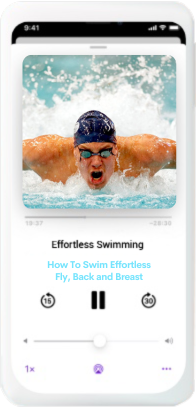
My guest today is Mr. Sam Ashby, a coach who has trained swimmers to national medals. In this episode, we will talk about the benefits of practicing different swimming strokes. It helps the body move differently and can aid in recovery and developing swimming skills. We will also discuss common mistakes that occur during clinics for butterfly, backstroke, and breaststroke.
33;53 Common Mistakes in Breaststroke: Maximizing Drag Reduction
Change your technique and swim smoother, easier freestyle in the Effortless Swimming membership:
https://effortlessswimming.com/training-and-membership-plans/?el=blog
In this episode
- 03:58 Swimming Background
- 10:00 Refining Your Knowledge
- 13:18 Visual Learning in Swim Clinics: An Advantage for Kids
- 15:04 What is The Key to Good Butterfly Stroke?
- 21:02 Improving Rhythm in Butterfly Stroke
- 26:26 Common Mistakes in Backstroke: Lifting the Head Too Much
- 38:19 How Simplicity Leads to Better Results
- 43:01 Simple Cues/tips for Mastering Breaststroke
Related Content:
The Transition From Athlete to Coach with Sam Ashby
The One About Preparation (with Australian team swimmer Sam Ashby)
Links from this episode
This podcast is brought to you by NanoClear — our own range of anti-fog swim goggles, designed by Effortless Swimming with the anti-fog treatment bonded into the lens itself (not sprayed on, so it doesn’t wear off after a few swims). Check out the NanoClear range here and use code PODCAST15 for 15% off.
Transcript
Read the full transcript
Welcome to the Effortless Swimming Podcast to show that help swimmers and triathletes love the water, become a better swimmer and live a better life. Here’s your host, Brenton Ford. Are you tired of feeling heavy, slow and short on confidence with your swimming? Are you frustrated with your progress in the water? Well, I’ve got the solution for you. Introducing the Effortless Swimming Membership, the only 100% online swimming program that uses five proven principles to increase your speed and endurance in the water by building on your existing technique. Whether you’re a beginner, a casual swimmer, or a competitive athlete or triathlete, the Effortless Swimming Membership program is designed to help you become a faster, more confident swimmer in any distance, no matter what your experience level is. Imagine swimming with these and feeling like you belong in the water, and finally breaking through those frustrating plateaus.
With my program, you’ll get access to the structured, bite-sized, on-demand lessons that you can follow at your own pace, right on your smartphone, tablet or computer. My coaching is built on five highly specific principles to help you achieve more speed and confidence in the water. And I simplify important technical concepts into easy to follow cues and clearly identify your next steps without overwhelming you with details. So what are you waiting for? Transform your swimming experience today and join the Effortless Swimming Membership program at effortlesswimming.com and start your journey towards becoming a faster, more confident swimmer today. It also includes the new fly back and breaststroke courses that I’ve filmed with our guest today, Sam Ashby. So check those out inside the Effortless Swimming Membership at effortlesswimming.com. Welcome to the Effortless Swimming Podcast. My guest today is Mr. Sam Ashby, the OG, and I’ll explain why in a second.
Hey, welcome to the podcast. Thanks, Brentie. Nice to be here. So the reason I called you the OG is because in 2008, we recorded our first, I recorded the first product that we ever released, which was a freestyle course called Mastering Freestyle. And you were the swimmer, you were the star in this course. And this is when you were back competing at a national level and you ended up making the Australian team. And yeah, you were there 2008, 15 years ago, I can’t believe how much time has flown. And what’s, I guess, happened in those 15 years is, well, you made the Australian team, which was, which was fantastic. You’ve also coached and had people achieve national medals. And now you’re coaching with us, you’re running our flyback and breast clinics. And you’ve, we’ve just finished filming our flyback and breast courses as well. So it’s great to have you on the team and, you know, and working together. And also just learning from, from you and your expertise, because you are a terrific
swimmer when you’re swimming competitively. And also a well experienced coach, very thoughtful coach. And I’ve enjoyed just watching you work with the swimmers at the clinics and helping them improve. And the feedback that I’ve got from a lot of their parents, especially in breast stroke, I think that’s like your real strength. Like you’ve had swimmers who have come to clinics and won national gold medals. They’ve meddled or finalled at state championships. And I think the results that you’ve got with a lot of those kids who have come to clinics have been unreal. So what I want to talk about on this clinic is flyback and breast. I know we talk mostly about freestyle because a lot of triathletes listen to this and open water swimmers listen to this, but it’s good to do other strokes. It’s good to do some backstroke to get the arms going in a different direction, the body moving differently. And you can certainly learn and develop feel for the water with the other strokes.
I think it’s useful as some recovery, useful as developing your swimming. So even if you’re not doing much of these other strokes, I want to have this as a really actionable podcast so that people can listen to this and take some key things away so that when they get to the pool next time, they’re a bit more comfortable, a bit more efficient swimming, these other three strokes. So that’s, that’s my goal on the podcast today. So after that long-winded intro, do you want to give a bit of a background on your swimming journey? Because we grew up together as kids. We were down in Gippsland for a couple of years swimming together. So that’s how we, we met and then you, you moved to Melbourne after that. So we’ve known each other for a very long time and you’ve had a long career in swimming competitively and coaching. So do you want to just go through that? Yeah, yeah, for sure. Yeah, first of all, it’s, I love working with you, mate.
It’s, it’s the best thing about swimming for me was always being part of a great team because you know, results come and go. You have good meets. You have not so good meets. You have good seasons. You have not so good seasons, but when you’ve got a really tight team around you, that makes a difference. That makes, makes the hard work fun. So yeah, being able to work with you on effortless swimming again is, is a pleasure going on. You know, they’re just the car rides we have or the flights or, you know, missing a flight and then being able to talk about it. So yeah, no, that’s good. And I just want to, ironically, like the first ever freestyle clinic or not clinic, sorry, but the product mastering freestyle. My butterfly was faster than my freestyle. So I have a faster 100 butterfly PB than I do a hundred freestyle PB. So I’m glad you’ve moved on from my freestyle. What was your hundred fly PB? 50 to one. 50 to one.
Yeah. 50 to one of the semifinals of the World Championships in Shanghai in 2011. What do you think you could do now? If I could break a minute, I’d have to put some effort into breaking a minute. But actually, like, so finish, I missed the Olympics in 2012. I had a sort of a pathway before missing, well, not before missing, but leading up to the competition was I make the World Olympic Games and continue swimming, or I missed the Olympic Games and I travel with my brother through Europe. And so I missed the games, but then had the consolation prize, you could say, of being able to travel with my brother and my best friend through Europe for eight months. So that was my consolation prize. But when I was away overseas, I got to have some really nice reflection on the sport and I still love the sport. I still love the people involved with the sport. I love the fact that it’s once you’re in the pool, you’re in next to nothing.
You’re practically naked aside from, you know, some bathing material in your goggles and cap and you earn respect and credit through being a good teammate and through working hard. Not who you are or what you’re wearing or what your job is. So I find the pool as a great equalizer. And so that’s a nice aspect of the sport that I love to be involved with. It doesn’t matter yet what background you’re from. Are you a good teammate? Can you train hard? They’re the two things that people like the most when you’re in the pool. So yeah, got into coaching, coached at MLC, had some really good success. I had a state squad and transitioned that into a national squad, then went over and worked with our good friend Ash Delaney, who’s now in Sunshine Coast, doing absolutely amazing things up there. So we coached together for two years. And again, working with your friends is just a ball. And then I moved down to Geelong and was the head coach of Geelong Swimming Club
for four years. And that was tough work, but it was really rewarding. Yeah, taking a squad of three national swimmers at the time up to a squad of 17 national swimmers and just the momentum that you get from that. And I couldn’t have done it without another coach, Lucky Wiracoti, who’s a very good friend and my sort of mentor and idol as well. So we used to kind of like what you and I do, we’d just, we’d go over to each other’s houses, we would banter, we would talk, we would plan. And then, yes, I had four good tough years of that. And then middle of last year, I finished up, unfortunately I was just a bit burnt out four o’clock, get up, most mornings, eight o’clock, get homes at night, working during the day, working on the weekend. And I didn’t wanna leave the sport disenchanted or not enjoying it or not being in love with it because I do love it, so I wanted to keep it that way. So finished up, not really knowing what I was gonna do.
And then obviously just conversations with you and myself and opportunities arise and here we are. Yeah, I was speaking to my dad about this too because he was your coach growing up like he was mine. And a second father and a mentor for sure. Love, love, Brian Ford, hi, Brian. So I’m sure he’s gonna listen to this as well. So I hope so. Hi, dad. And yeah, we were chatting when you resigned and you said, it’d be a great waste for you to not be in swimming still, just with your knowledge and experience. So it’s been awesome to have you being able to work with someone still. And I think like what we do with the technique clinics, we do the filming, do the analysis and it’s just a very intensive couple of hours where we’re working just on technique where you can have a big impact on someone and you can just deep dive into technique which is very hard to do with a squad of 15 to 20 swimmers and they’re primarily there for the workout.
So we run small group clinics, maximum six swimmers. So you can really have hopefully that impact on someone in those couple of hours that they can then take away and practice. And especially for a lot of the juniors that you’re coaching at these clinics, that can help just change the course of their stroke and their swimming, hopefully a couple of degrees and that can actually have big results down the track. And from what, in our conversations, you’re really enjoying that side of things, being able to just be there and have that impact and just using all of your experience that you’ve built up over time, that knowledge you’ve built up over time and even continuing to refine that, working with lots of different swimmers and things like that. Yeah, like refining, I think is a key word there, it’s having the opportunity to refine your knowledge because when you’re a head coach and when you’re in charge of a large group,
20 swimmers, 30 swimmers, 40 swimmers, that’s just managing, really. You’re just managing a group. You don’t get to, and when I say exploit, I don’t mean a negative exploit, I mean exploit like what you have. You don’t get to exploit your knowledge and I’m 100% a better coach now than what I was a year ago because like anything, if you get to really hone in on one aspect, if you think of a sport, let’s say swimming, you don’t just do underwater filming and technique, you do pace sets, you do weekly planning, you do macro, micro cycles and all those sorts of things. So it’s been a real pleasure to hone in on just technique and particularly underwater footage and refine what I know and find out what works. What’s the, cause I love, I love a, all coaches love progressions and you’re trying to just find what is the best or most efficient progression and where you can have the most impact. So it’s been a real joy for me
to come out of the sport and feeling like, oh, like I just didn’t feel, like I was just tired. So I didn’t feel like I could have that like impact and I’m a, I love being happy like everybody does. Like I like being a happy, joyous person. So to be able to now be back in the sport and be happy and exploit the knowledge and refine it at the same time has been a pleasure. And you were saying as well, like with the underwater filming that you’ve been doing at the clinics, you’re picking things up that you wouldn’t have seen above the water, things that you wouldn’t have picked up just watching it at normal speed. And it’s such an eye-opening thing, isn’t it? When you’re just going frame by frame through a video and it becomes really clear what the issue is for someone or the mistake that they’re making and you can then show it to that person and okay, yeah, that’s the issue. But it’s very hard to pick this stuff up
from the pool deck looking at 45 degrees in full speed. Yeah, yeah, yeah, 100%. And then having like, you might have like five seconds eyes on that person and then you’re like, you’ll die to the next person, you have five seconds eyes on them and then you’ll be like, hey, Bob, you’re dropping your elbow on your left arm, like keep a high elbow on that catch. But then like, yeah, don’t get the opportunity like you’re giving the information but then you don’t stay, you can’t like some coaches do and I guess that’s a difference but like you’re trying to give everybody something to work on but having the working with the clinics, you give them something, you show them what they’re doing and you show them and then you slowly build them up, you build their knowledge base to go, this is what it feels like when you’re dropping that elbow and this is what it feels like when you hold your elbow up higher or you know, whatever it is you’re working on
and then having that sequence of drills to go, okay, this is, because you can do, I love saying as sort of kids like, because mainly obviously with the form strokes, I’m just, I’m working mainly with the kids. Every now and then we have adults but it’s mainly with the kids and the adults are really good because they have a bit more awareness of their body but with the kids they need to be shown and guided a bit more with what it feels like to do things. So you can do the same drill or one drill can have six or seven different focuses depending on what you need to work on. It could be a timing thing, like let’s say single arm backstroke, you might need to work on your catch or maybe your catch is really good but the end of your stroke is a little bit slow so you can focus on like the push and release. So having that the drill sequence that we’ve been working on and I’ve been working on is really good because it’s like, all right, if you have this issue,
you can do this drill and focus on this area but then if you have another issue, you can still do the same drill but focus on this area and the kids having that one-on-one attention and having the visual of the underwater filming to go, ah, I get it now because in squat situations, you have your set and you’ve got to try to work within the set that the coach designs for everybody whereas with our clinics, it’s six people and you can stop and start and if you’re unsure, you can put your hand up and you can refer back to things and the pace is a little bit slower. Yeah, and it’s like a lot of times you’ll say terms if you’re in a squad, you’ll use terms as a coach that the kids might not fully grasp or actually understand what it is and what they need to do so it can take quite a bit of time to just go through that and have them actually understand it so I think that’s a big benefit of it as well and what I want to move into now is just
I want to touch on some common mistakes that you’ve seen across the board at clinics for fly back and breast because with the freestyle clinics that I’ve run for the last nine years or so, some very common themes do occur and that gives us a good way of understanding what most people are doing and giving them some direction on what to work on so let’s start with butterfly, what are you seeing there? I’ll keep it at two things for each stroke and sometimes I’m greedy though so I might try to fit a third thing in but so for butterfly, I would say it’s breathing for one
so either breathing too early so if like the swimmers are landing with their arms out the front, they’ll either lift their head first or they can sort of drop their arms down
and then lift their head out so then they change their body position and it’s too sharp so you want to like have a really flat like nice undulating fly but if you lift your head your elbows tend to drop down and the pressure instead of catching that way you end up pushing on the water down because your head is up
so the timing of the breath is really important so like keeping a neutral head position like catching or as you catch and apply the pressure back to push behind past your feet you tilt your chin forward to breathe although like they’re pulling on the water and then they’re lifting their head and trying to get their arms over at the same time so that would be like the most that’s the most impactful issue that I see with the butterfly technique and how are you changing that with them? So it’s identifying trying to identify where to take the breath and we’ll even go back from that it’s identifying that they or giving them the opportunity to feel what they’re doing so half the time they don’t even know that they’re lifting their head with most people it’s like they don’t actually know technically like why their timing’s out or what’s going wrong so trying to get them to go oh, I do notice that I lift my head and so that’s the first step
is always the recognition of what you’re actually doing I don’t like to try to change anything without them knowing why they need to change it or what it feels like what they’re doing why they’re consciously going oh yeah, my eyes are looking forward so my head’s up and then so from a drill point of view like doing butterfly pull through so like starting freestyle kick and it’s just a butterfly pull through and then they’ll recover underneath their body and then so do that to start with so they get the feeling you wanna catch first then press through and out the back okay and then where do you want the breath you wanna initiate like a breath between like as you’re catching to like maybe just when you’ve caught and you’re pressing underneath your body so between like initiating the catch and when your hands are underneath your bodies when you wanna initiate the breath
so just yeah, the butterfly pull through and then from there you can you might like work on single arm butterfly right and so like single arm butterfly a thousand different things to focus on but you can focus on your breath timing with just one arm so you’re not getting as fatigued having to do two arms so you can get more repetition in
This episode of the podcast is proudly brought to you by our sponsor Form Smart Swim Goggles they’re more than a pair of goggles meet the world’s most powerful swim platform see yourself improve with Form Smart Swim Goggles including a free one year membership when you purchase your goggles for only 249 US dollars they’ve currently changed up their offer where you can now get the goggles and you have one year membership included for free and if you’d like to continue with the membership going forwards it’s only 15 US dollars a month where you get access to their workouts training plans and custom workout builder we’ll always have access to the real time data in the goggles so you never lose access to that my favorite thing about the Form Goggles is having the instant feedback of what times you’re doing what stroke rate you’re doing and also the ability to see what your heart rate is because never before have we been able to have these
immediate feedback heads up display where it’s actually telling you what your intervals are so when I wear the goggles in training I like that I know my split for the first 50 and the 100 and the 150 so every single lap I’m getting that feedback on what my pace is and I find it’s such an important tool for being able to not only have different gears where you can switch between the different speeds that you wanna swim but it helps you develop those gears and it helps you intuitively know how fast you need to go before you’re going to blow up or before you’re going to go a little bit too hard so it helps you just get really good at judging your pace for when you do go to a race and even if you’re not wearing the goggles in a race it’s that intuition and that ability to develop your pacing that these goggles can really help with. To get your pair of Form Goggles and save 15% off use our link formswim.com forward slash effortless
or use the coupon effortless at checkout and that will get you 15% off your pair of goggles using our special link formswim.com forward slash effortless or the code effortless at checkout. And that’s the thing, it’s such a high strength stroke that requires a lot of strength, it’s very fatiguing. So just breaking it down with some drills and having that single focus with whatever drill it is is a great way to start to make that transition. So that’s a good one. So the breath timing with Butterfly, what’s the second one? Probably, oh there’s like, so some, this is probably gonna be a bit cheeky. So like maybe like people like coming in and like hitting their hands together and then like kind of maybe diving down into the water
and then like then almost taking like a breaststroke stroke out. So you kind of just wanna land shoulder width apart with your thumb slightly down. So then from that position, you can hook straight away whereas if you bash your hands together the point from there to there is almost dead space. There’s no, you don’t get much power unless you’re extremely flexible. Like I had the luxury of being flexible, not like I still am now I guess, but like for most people being able to put their arms up behind their head is quite difficult. So yeah, you just wanna land shoulder width apart. But like that’s, but I would say the rhythm, which is a really hard one to get. The rhythm and butterfly, the timing, I would say is probably of all the strokes the most difficult to get because it requires that strength. And because you can’t just do lap after lap of butterfly like you can with breaststroke or you can with free solar backstroke,
you just can’t get as many reps in. So trying to learn the rhythm of butterfly, which is like, and then like the flexibility, like there’s so many moving parts in the rhythm of butterfly, like kick when your hands enter, but you wanna have the flexibility to be able to like have your arm land behind your head rather than your arm falling in front of you and then kick when you exit and then using that kick to push the hand and throw the arm over. So then you’ll ask me, all right, Sam, how do you work on that? And that is probably the biggest challenge in the clinics is to,
and within half, let’s say within 40 minutes, try to get them used to, for those that struggle with the rhythm, how do we do it? Start off with the fly kick first because like the fly kick, they gotta wanna have like a nice, so like arms above head. You know how you do like a freestyle kick with your arms above the head? For the freestyle clinics? Similar thing for butterfly. So arms above head, just get the feeling of kicking from your chest and out your toes and trying to have a constant rhythmic kick rather than like a kick and then stop, kick and then stop. And then let’s go back to single arm. So you got you, and you’re gonna breathe to the side. So I like breathing to the side because it just makes, you wanna make the drill as easy as possible to have an impact for what you wanna focus on. So I don’t like doing single arm breathing to the front unless I want to focus on the breath timing because it’s quite difficult
swimming fly breathing to the front. So breathe to the side and then focus on the rhythm. So as you enter, you know, kick, glide, take the stroke, kick again. So like you’re getting the rhythm with one arm. Same drill, different focus. And the answer there is, it’s like progress through it. Don’t try and just swim and then try and get your rhythm, build it up from an easy starting position and then progress through there. And as I was putting together all of these drills that we filmed for the courses that we’ve got on our website now, it’s one of the things that I liked when I was going through the actual video is like the hand exit, like making sure that you’re, I can’t remember the terminology that you use but it was like about sort of pressing back but you’re just looking to like sweep the hands. I think clearing the hips. That’s a good one. Yeah, clearing the hips. So as the hands push back, you’re clearing the hips to help them come over
because people often, they either get a bit stuck there and then they can’t get their arms over or people are actually like really wide at the back of the stroke. And that is a strength thing but so many swimmers are doing their catch and then the exit is like 30 centimetres wide of the hips. Like there’s just no, there’s no power there and they’re not finishing far enough back. And obviously, yes, it requires strength but if you can clear the hips like you’re talking, it just helps transition into that nice recovery. And I see a similar thing in freestyle where people typically pushing back too far and they get stuck and their arms straight and they haven’t cleared the hips and then they have trouble getting over and the whole rhythm is out of. Yeah, and they’re kind of like muscle, like they have to like use instead of using that because it’s all about momentum, right? Rhythm and momentum, all strokes. So if you like, if you stop your momentum
or your rhythm by like pushing back and leaving your arms by your hips, you know, like you’ll then have to use your muscles to then pull your arm over. It doesn’t matter if it’s fly or free but if you’re using the momentum of pressing through and then pressing out the back and press and lift, that’s easy momentum to get the arm up. And then all you need to do is just have a light press, say for freestyle or fly. Fly, you wanna try to throw the arm over freestyle, like, you know, get it up nice and high and then just slide in through the entry. Yeah, energy conservation. And then now, so that’s butterfly. What about backstroke? Head position for sure, but in most people would know or at least heard of that but like for those that have it, like it’s a tricky stroke because you can’t see where you’re going. So people have a tendency to just lift their head up too much, so go on the side here, like lift up and they’re either looking down
at their toes or they’re looking at the lane rope or maybe they’re looking to see that who’s behind them. And it just will just drop their hips. Like, you know, if your head’s up, it’s like if you go watch the form stroke videos, we actually do one of the drills where lifting the head out of the water, kicking for half a lap and then kicking with like letting the head rest back and you see like visually perfect, like the hips as the head goes back, the hips just lift up. And you know, just like if your hips are in the water, okay, let’s say that’s the head and you’ve got your head up and your hips are down. You’re either carrying water on your hips and trying to move through the water or your body’s on an arc and like the water’s just like, you’re just pushing through too much water. Get the head down. The hips should come up a little bit. It’s also tied to how big your kick is as well, but like if you think like head back,
toes up to the surface, you’re generally gonna have a much better body position. And it’s essentially like the face that you just went out of the water, right? Like a lot of people have their ears out. You’ve got to cover the ears when you’re doing back. Yeah, well, yeah. Like think like the water’s like cutting down the side of your face. Like, yeah, like it’s kind of like slicing off your ears almost. That’s like a really good like position to be in. And I think a really sort of basic thing there is that a lot of people have goggles that don’t allow them to see peripherally enough when they’re swimming. And so they have to like look down to see where they’re going. And I’m talking from like experience as well. I’ve got different sets of goggles and some goggles I just can’t see where I’m going. So I either hit the lane rope or I’ve just got to have my head up. So if you get some goggles that do just allow that vision off to the sides,
like I love the Swedish goggles, which I don’t know, I don’t think they’re cool anymore, but I love the Swedish goggles. They’re always gonna be cool. Always. They’ll never not be cool. They’re like, yeah, I still buy them and I wear them quite a bit. But like they’re great for backstroke because they’re clear on the sides and you can just see where that lane rope is. So just get the right set of goggles if you do like backstroke and you can’t see where you’re going. Try something like the Swedish ones or there are some that do have a bit probably more comfortable for people. But that’s just, I think it’s something that’s not spoken about pretty much. No, yeah, good point. And I guess there’s like, you know, swimmers, if you’re growing up in squad swimming, you kind of just learn, like it’s just things that you pick up along the way. But yeah, Swedish goggles, it’s great because you can just like dart your eye to the side.
You don’t have to move your head at all. Just dart the eye, have a look at the lane rope. Yep, still there, have it crossed over. I’m not gonna hit someone in the head coming the other way and off you go. But it’s repetition as well. Like it’s an awkward stroke to do because you can’t see. But do you think like how comfortable, if you’re not comfortable doing backstroke, how often you’re doing backstroke because that’s a huge thing is how like the repetition, like if the more you do something, the more comfortable you become with it. So I think it, yeah, a lot of it has to do with how many laps of backstroke you’re doing compared to freestyle, like how comfortable you’re doing freestyle, very comfortable because you do so much of it and you get the bonus of seeing backstroke, can’t see what you’re doing and you don’t do not nearly as much to get comfortable with it.
And it’s a, I think it’s a really good stroke to help with your freestyle. Some of the reasons that we spoke about, like working the arms in another direction, but the catch is the same, but just on your back and you’re working your kick really well too. And you’re really working that, like, well, if it was freestyle, it’s up kick, but with backstroke, it’s like the down kick sort of thing. You’re working it in the other direction really nicely. And it’s just good for working on core strength and stability through there too, because backstroke requires good core strength to hold the hips up and the legs up and that translates really nicely into freestyle as well. So I think, yeah, if you can get more comfortable doing backstroke, it’s a great one to throw into the mix. Would you say another one, the common mistake that you see is, like the entry and recovery for people, like a bent arm coming through rather than a straight arm in line with the shoulder?
Yeah, for sure. Like, yeah, like, and it’s so easy. Like, let’s see if I can move this up. Like, for whatever reason, like, I guess it’s like, it actually takes a bit more effort to like kind of lock your arm or to have a straight arm. Like when you want it above your head, like to do that, you know, I’ve got to like kind of flex and work hard to hold that position. Whereas like, if I put my arm up above my head, like if you’re asking that you’ve got a question for the teacher in the classroom, you know, that probably feels, that for me, that feels comfortable right now. And for those listening, you’ve got a bent elbow, your hand sort of crossing your centerline up above your head. Absolutely. So like, you know, if you’re coming over and that’s, you know, but that’s not a very strong position to be in. When you’re swimming, you know, cutting across the other, other like, you know, my nose is the centerline, my arm and hand is above or across.
And then I’ve got to, I’ll have to like sweep out no strong catch until it’s past my body sort of thing. So trying to like, and you then, but it actually comes from the shoulders. So it’s like, I like thinking, like leading your back stroke through your shoulders. So like, say you finish a stroke off, pop the shoulder, let the arm, like follow the line of the shoulder. And then as you’re at your highest point, you want to sort of drop your shoulder into the water, the opposite shoulder is going to pop out of the water and just click, like sort of land your hand to the side of your ear. And that’s about, you know, that’s perfect, like perfect catch. I’m not even in the water, but that’s like, that works about right. So like lead the stroke through the shoulder, lengthen the arm, like, yeah, I’m a relaxed hand, but lengthen the arm as you’re coming over and then just slot, like, enter to the side of your ear.
Rather than like, yeah, just, it’s not intentionally lazy, but it’s just like, just a bit like when that, it’s just like, you don’t have that extra effort into like locking your arm out. And I think, well, first of all, it’s from people not knowing what they should be doing. And they think, well, like, I got to bring my arm over in freestyle, I have a bent elbow, so I’ll do the same thing in backstroke. So they come over that way, but it’s, yeah, it’s a slightly different recovery with that straighter arm elbows locked out a little bit and then, yeah, getting it over there. And if you can do that correctly, I find like it just makes your whole body and your stroke so much longer and straighter, because if you’re coming over with these bent arms, there’s a lot of wriggle going on and there’s a lot of side to side movement. Kind of like a disco. Yeah, it’s rare. Yeah, I can’t think of another analogy for what we want to do with the straight arms,
but we’ll have to come back on that one. Yeah, let me think about that one. Yeah, but that’s a big one that I see if I’m coaching backstroke. Let’s move on to breaststroke. This is your bread and butter, I think, when it comes to coaching. This is what you’re very good at helping people with. So what are some of these common breaststroke mistakes? Well, go like generic one common one that you ask is the kick. Is the breaststroke kick? And it comes from learn to swim. Not only, we could have a whole podcast about just teaching breaststroke at learn to swim level, but I’ll maybe say that for another time. I don’t know if too many people want to hear me yap on about breaststroke and learn to swim, but effectively, like when they teach breaststroke at the learn to swim level, like they kind of like get the, they teach the kids to get the heels up to their bum. So come back a little bit. So like, let’s pretend they’re the knees,
they’re the feet, hands of the feet, elbows of the knees. They’ll like get them to bring their knees out to the side and the heels up to their bottom. Then they’ll turn their feet out and then I’ll kick out and then around. Yeah, like a frog, frog kick. That’s exactly what I’m teaching, exactly. So that’s a coach’s nightmare, that is. So I, and I’m really actually, I’m real pleased with the how we do the breaststroke kick and it’s really effective and it’s like, you know, put them on the wall next to the wall, vertical kick and then go through the different stages of the breaststroke kick. So like heels up. Okay, just get used to heels up, heels up, relax. Heels up, relax. And then go, okay, what does it feel like when my heels are up, but my knees are still on my hips and then turning the toes out, and then as repetition, trying to get their brain to function down to their feet. Okay, knees are still in line with my hips,
turning the feet out. All right, then from that position, you know, I kick down. What does it feel like to kick down with your knees in line with your hips and your feet turned out and build them up? Build them up. So I like, it’s such an easy thing to do and it has such a positive impact with majority of the kids that we’re doing it with. Because they don’t know any different. And then the sad thing is that if they’re taught like that,
so then in the future, when they’re 14, 15, 16, they’re like, oh, I’m not a breaststroker. No, I can’t swim breaststroke because they can’t do the kick or they’re taught the kick wrong. Where it’s like, no, you can still swim breaststroke. Like this, so breaststroke is probably more about drag reduction than any other stroke. You’re trying to minimize the amount of drag you create. So if like, let’s say you’re a big, you know, strong person got really, you know, maybe you’re a butterfly and you’re really powerful, but you’ve got like this really wonky breaststroke kick. We’ll just do the smallest, tiniest kick that you can get away with. So literally like, come up, turn the feet, go back, but then just have a massive upper body stroke. Like that’s still breaststroke. You just to have a tiny kick and utilize your upper body. But then, yeah. And the way that you go through the kick at the start of the breaststroke course
or the clinics when you’re running them is, I can, when you look at it as like, that’s really basic. That’s really simple. Except how else are you gonna change your breaststroke kick if you don’t just break it down? Like you might be able to change it like that if you think about it, but why not just break it down into this easy way to learn it where you’re on the wall and you’re doing it in these sort of, you know, three or four progressions and just keep it really simple to get used to that movement. And yeah, like, and I think people when they’re watching the videos, they’ll be like, oh, this is like, this is really simple stuff. But if it was complicated, it’s harder to do, you’re less likely to get it right. But simple doesn’t mean ineffective in many cases. And I think you’ve, you knew this coming into it, but in the clinics, you’re starting to boil down what are the foundational things that someone needs to know
and what’s the simplest way to teach it to them. So they get it to click because, you know, if you give them six hours of backstroke drills to do or breaststroke drills to do, they’re not gonna do them all. They’re gonna get confused. So we need to keep it as simple as possible. And I think that’s why, like, the five day cat challenge that we’ve got, we’ve had more than 10,000 people do this five day course. And I think, and a lot of it’s come from word of mouth because it’s so simple the way that we teach it. And so if you can just keep things simple, I think that’s where you can get the best results but sometimes people will look it and go, oh, it’s too simple that it can’t work. Like it, or it’s not gonna do anything. Yeah, yeah. But it’s quite the opposite. No, I don’t wanna, kind of like, like, yeah, mastery in a way, right? Like you don’t want to, you’re paying, like you’re paying a professional to make it as simple
for you to understand to get the best result possible.
And I’m not saying we’re masters but like we have been in the sport for a long time. So, you know, there is an element of knowledge that we’ve developed over time. So yeah, like you said, simple doesn’t mean not effective. It’s probably the opposite. The most simple you can make it the most effective will be. And then like anything, it’s like then you put your own flair and style onto it. Like maybe like having your knees that close together is too much. It’s not effective for you but like you can move your knees out slightly wider. Like, and that’s where the element of bringing it back to the clinics that we run on the weekends is like the onus on you is to explore. Like, I can give you the answers. You can give them the answers, Brenton, but unless they’re connected with what their body’s doing and willing to try something different, it won’t be as effective. And it comes back to what I spoke about with the butterflies.
You got to recognize, like how do you change it? We got to recognize what you’re doing first. Like, and so you have to be the one like thinking about it and going, oh, this is what it feels like. Oh, this is what, and it feels different now. It feels worse, it feels better. But unless they’re engaged with it, you won’t, we don’t get as much impact. And to finish up here with the podcast, I want to leave people with a couple of key points that they could think about with each of these three strokes. So next time they’re at the pool, they, if they’re looking to do some breaststroke, what are some sort of simple takeaways or even cues perhaps that people could be thinking about next time they get in the pool? For each stroke? Yeah, for flyback and breast. Cool. One more, I’m going to, I know we’re at about a 40 minute mark for the podcast, but the other breaststroke, because I said I’d give two. So the other breaststroke thing that I see is just,
swim is not going wide, not using the outward sweep to move forward. So they might let their hands drift apart and then on that corner catch up here, move in. But like right from the get go, like the out sweep, you’re trying to like make a hole in the water and move through the hole, move through. So that’s the other thing. And that’s just sculling and identifying, okay, I can use my hands to move forward, even though I’m pressing out wide. So it’s more of like a, you’re saying it’s more of like a passive movement of the arms, but they’re not using it to move themselves forwards with it. Yeah, yeah. The upper body breaststroke stroke, the arm is like, I think of it like sailing. Like the boat wants to go that way, but the wind is going that way. So then how does the boat move forward if the wind’s going that way? Well, they’ve got a sail and the sail catches the wind and pushes the boat forward. So it’s same with the hands.
Just because you’re not planting out the front and pressing behind you, doesn’t mean you can’t move forward. You’ve just got to use, change the pitch of the hands. Like that’s probably a bit too much and that’s just sliding. So you want to play around with the pitch of your hand and then like move forward with the out sweep. So the good way I heard like, and I like that analogy of sailing. One that I heard that’s kind of related is, is it’s like a propeller. So propeller, if you think of like a steamboat, then it’s got this like a paddle steamer. It’s got these like flat things and it takes a lot of energy to sort of just move it around. So it’s very inefficient. Then you’ve got a propeller that’s got this sort of curved and it’s got the curved blades and that’s helping it move forwards. And it’s a similar thing with like your, your out sweep and your in sweep where it’s like you have this propeller blade to, if you’ve got the right angles,
that’s going to actually help you move forwards like that propeller blade. So similar, a similar concept. Like that articulation for sure. Like, and yeah. So yeah, there’s your breaststroke. So all right. So a few tips for each of the strokes.
Butterfly, use fins and do short, short bouts of butterflies. Try to like swim really, really good butterfly. And then as soon as you feel like your technique or your rhythm’s going out, stop.
Like it might, let’s say you’re doing like 25s, yards or meters, it doesn’t matter. You do 10, 25s, but you can only do about six strokes before you find your technique goes out of whack. We’ll do five really, really good strokes and then some easy freestyle to the wall. And then also single arm butterfly, lots and lots of single arm butterfly. Because you can do lots of it. You can do 800 meters of single arm butterfly without not nearly the same like energy expenditure. So that would be my two points. Backstroke would be, yeah, for sure playing around with your head position.
And yeah, do it wrong, practice doing it wrong and then practice doing it better and see how the body feels.
And then my, probably my secret trick that I’ve been absolutely loving is and thanks to Ryan Murphy, American Backstroke, a phenomenal, like what is like up there with like the best backstrokeers of all time. He’s like, he’s in the conversation. I remember listening to an interview or a podcast and he from memory does a lot of backstroke swimming with a pool boy between his groin, but he’s still kicking.
So like, you know, people think I’ll pool boy on, not out to kick. Whereas he’s like, nah, I still kick and I was going, what? Like, so yeah, it’s phenomenal too, because like a lot of people tend to have like too big of a backstroke kick. So it forces them to have a shorter, tighter backstroke kick which is really good. And it also just gives them that like, that lift of the hips in the water. So they’ve got like a perfect body position. And that’s one of the jokes you’ve gotten in the program too, Osso. Yeah, yeah, definitely. So that’s, yeah, that’s like one of the best things I’ve ever seen to help a few different aspects of backstroke. It’s such a good little trick. And I’m actually, I’ve got him on the podcast. I’m recording a podcast with him next week actually. Ooh, get him up over it please. I will, I’ll remember. Can I be a fan boy and just drop into the podcast and just say hi? Yeah, yeah, we can do an audience and everything.
Cool, cool. So there the two, yeah, backstroke is play with your head position. And if you find that your hips are dropping or you’ve got your kick is too big, whack a poor boy and then keep going. And also alternate. I know we’ve got to wrap this up and I apologize, but like alternate like two 25s backstroke swim with a poor boy, but then try to maintain the same technique and same body position and same kick intensity as you did when you did have the poor boy in. So you’re mixing and matching. Like it’s baby steps at a time, like that progression that I was talking about. Breaststroke, play around. Yeah, I would definitely like sculling. So like freestyle kick. If you use a snorkel, like front snorkel on and then play around with like trying to move forward with just the out sweep, like how far can you move forward?
And you don’t want to out sweep so your hands go behind your shoulders. You still want to have like how far can you get back with these headphones? Like so if that’s in line with your shoulders, you want to definitely go like twice as wide as your shoulders sort of thing. So how far can you move forward with just an out sweep like that? And like I quite often see a lot of breaststroke is very narrow. Like the hands aren’t going wider than their shoulders. So you’ve got to go wider than your shoulders. And then obviously the opposite of that where people are going too wide and the hands are sort of past their head. So there for those that are listening and not watching on YouTube, like your hands are not really going back at all there. It’s just the out sweep part of it. And yeah, just getting used to that turn out of the hand. And yeah, just getting used to that turn out of the hands to help. And yeah, what angle do you need
to help you move forwards there? What angle turn out of the hands? Because a lot of people do just slice. Their palms are down, they’re slicing out. And there’s no benefits to that whatsoever. So you’ve got to be that sale or that propeller with the hands to help initiate that movement forwards. Yeah. Well, the equivalent is like karate chopping the water if you’re swimming freestyle and trying to like karate chop to like you don’t. You have a flat hand like to capture that water. Like you don’t slide karate chop or slice down because you just go anywhere. Yeah. Yeah, exactly. So that and then just like a, again a really simple basic one is like grab your kickboard hold the kickboard at the back. So you’re not gripping on the top of the kickboard. You’re holding the kickboard at the back like a pencil grip. And then put your head down in the water and look at your breaststroke kick.
Look at it. Like what does it look like? Is your knees coming out way wider than your hips? Like, okay, then what does it feel like to keep your legs, you know your knees in line with your hips and visually look at it and go, okay, oh wow. Like my kicks actually pretty narrow. So that’s good. Or no, my knees are going out way too wide. I think, yeah, like looking and seeing what you’re doing gives you that it’s not it’s kind of like video, the video footage but just in real time. Yeah. And that visual feedback is very beneficial because most people don’t have the proprioception to know exactly what they’re, what’s going on there. So if you can just look down and we say this at freestyle clinics too, it’s like for this, this part of it if you’re not, if you’re still crossing over in freestyle, look forwards and just check. See if you are and see if you’ve corrected it. So you can do the wrong thing, you know, change your head position in the wrong way
but to check whether or not you’re doing something correctly. So I think that visual feedback is a great tool that people can use.
So Sammy, thank you very much for being on the podcast. It’s been great chatting and I really enjoyed working with you and those people that are listening that are members they will have seen your answering questions inside the membership and in our courses as well. So now they can put a proper face and voice to the, to the names. Yeah, shout out to the members. I really, funny enough, like yeah, not funny enough at all but like I enjoy actually like reading some of them are so insightful when like you just read them and go, wow, like you’d be a really good athlete to coach. Like, and that’s what like with, with adults you get you get a bit more inside, a bit more, what would you call it? Yeah, just like rep, rapport, yeah, rapport with, with, so I really enjoy like and then, and then having the feedback to say, oh, thanks that really worked quite well or I didn’t really understand what you’re talking about there, please explain again, Sam.
So yeah, shout out to the members who I’ve been in comms with. And yeah, no, thanks to have, I think the last time we did this, Brenton we were in a car driving back from a surf it would have been about 10 years ago now, maybe seven years ago. And I, I listened back and I was like, oh my gosh, Sam, like your speaking is shocking. Like I was, you’re so many, I was like, mm. And I was, I was quite embarrassed. So I’m quite pleased. I feel like I’ve done a better job at articulating myself this time around compared to after post surf, Sam. There’s nothing like listening back and hearing how you sound. I know I’ve listened back to, to podcasts and go, you’ve got to be better at that. Get rid of the arms, get rid of whatever, yeah, whatever else I’m doing. And there’s always room to improve but you’ve, you’re speaking, speaking well. I think you communicate well at clinics and that communication is a huge, a huge tool that you can use to help get your point across.
So I’ll have to listen back to that podcast, actually. That’ll be early phase. I started this about 10, 10 years ago before podcasts were cool. So yeah, it’s hopefully we’ve both gotten better in 10 years time. Yeah, yeah, I hope so. So we’ll leave it there and thanks very much for being on the podcast and I’ll get you back on. Again, you’re about to head off to, Europe and the US for some time over there and we’ll keep this rolling because I think we’ve got a lot to talk about. Oh, always, I look forward to the next one. Thanks for listening to the Effortless Swimming Podcast. If you’d like us to help you become a faster, more efficient swimmer, go to www.effortlesswimming.com.