







In today’s episode, I wanted to talk about the five common mistakes I’ve seen from around 6,500 analysis videos I did over the years. Tune in now!
01:34 Breath Timing
02:56 Having The Cue Of Pulling To The Breath
04:30 Over Rotation
05:34 Rocking Side To Side
08:13 Recovery
10:37 Deep Catch
12:40 Head Position
15:43 Slightly Higher Position In The Water
Change your technique and swim smoother, easier freestyle in the Effortless Swimming membership:
https://effortlessswimming.com/stroke-analysis-membership/
View our freestyle clinic schedule around Australia:
https://effortlessswimming.com/freestyle-stroke-correction-clinics/
5 Day Catch Challenge:
https://effortlessswimming.com/5-day-catch-challenge/
8-Week Faster Freestyle Course:
https://effortlessswimming.com/8-week-faster-freestyle-course/
Form Googles:
http://formswim.com/effortless
Transcript
Read the full transcript
Welcome to the Effortless Swimming podcast to show that help swimmers and triathletes love the water, become a better swimmer and live a better life. Here’s your host, Brenton Ford.
Hey, and welcome to this week’s episode of the Effortless Swimming podcast. Recently, I was in Tasmania doing a couple of group clinics. So around five clinics there with, on average, about 20 people per clinic, which is slightly different than the small group six person per clinic ones that we normally do. And out of that weekend, I ended up having about 70 videos to record of, you know, analysis videos for for people from those clinics. And it’s not the most that I’ve done in a in a week. I went to New Zealand in 2019. And we had around 200 swimmers do the clinics and the filming. So there’s quite a quite a bit of sort of follow up filming follow up analysis to do from the weekend. And I thought it’d be good to talk about what are some of those key takeaways or most common things that I saw in those 70 analysis videos from the weekend. And it’s not just from the weekend, you know, no matter if you’re
from Tasmania or from another part of Australia to the US. All right, these things are fairly consistent across the board. So I want to talk about the five most common mistakes that I saw or see made out of the six and a half thousand plus analysis videos that I’ve done over the years. Now from the from the weekend, one of the really one of the really important ones that kind of stood out was breath timing. Now there’s not quite a few people who were getting the breath too late in their stroke. And that really threw out the it threw out the timing of the rest of their stroke. So it would make it very hard to have a good catch in the right rotation and a whole bunch of other things when the breath timing is out. So what happens when the breath timing is out? Often someone will turn their head too late to the side and then bring their head back into the water after breath too late. Now what that looks like for people is, if you’re
bringing your head back in to the water too late, that means your eyes will be coming back down into the water. Usually when your catch arm is almost back at your hip. So you’ve kind of gone through your catching your pull on your arm in the water. But your face is still off to the side. You’ve got to bring your head back down or your eyes back down into the water along with your catch. So the latest you really want to be looking back down is when your hand is kind of passing under your shoulders at the latest. So it was just really common for people to to be getting that late. And you can see that there’s a lot of there’s a lot of like other things that come in because of that. So one of the things that I talked to them about implementing is having the cue of pull into the breath. So you should start to turn your head to the side when your hand is coming, like say one hand is coming underneath your shoulder.
That’s when you want to start to turn the head. So you pull into the breath. So you get your face out of the water nice and early, before that hand sort of exits, and then you can bring the head back in fairly quickly along with that opposite arm catch there. So we want to make sure we get the right breath timing. First of all, and those of you that have done the eight week course, our eight week faster freestyle course, I’m in the process of adding another segment to there to the to the first week, which is on breathing. I’m going to add another segment about breath timing and some drills that you can do to to get it. So that’s the the first thing is breath timing. Now another sort of part of that too is that some people were taking too long to actually turn their head to get the breath. So there’s a number of swimmers who as they turn their head to the side they took twice as long as they should actually get their
mouth out of the water. So they turn at the right time. But it was just like a long turn. They didn’t actually get their mouth out of the water until too late. So if you can be fairly quick, fairly snappy with the turn of your head, then you’re going to be able to get the breath quicker. So you got to make sure that the breath is is quick enough as well. The turn of the head is quick enough. So that’s the first one breath timing. Now the second thing that I saw was over rotation. I only had from memory one swimmer who was under rotating with their hips and their shoulders. So they were only going to about 25 degrees side to side from memory. We typically aim for I normally say 35 degrees, but it can be a bit more or a little bit less. But around that 35 degrees if we’re looking at front on how much should your shoulders rotate. Now with the over rotation, okay, it’s most common on your breathing side or
when you’re breathing. So we’d often see people will rotate to 70 or 80 degrees when they are taking a breath. And when that happens, they’ll typically have their arm drop down into the water. So I press down on the water, not get a very good catch. They’ll lose their kind of balance and stability there. And they find it really hard to get the breath because their arms really deep in the water. And then they’re sort of lifting their head up to try and get the face out because there’s nothing out in front to give them balance and stability. So over rotations most common on the breathing side, but it can happen on on either side. So you can either think of that is you want to be rocking side to side instead of rolling side to side. Or another way to think of your rotation is you don’t need to think of rotating side to side necessarily, think of rotating forwards. So when your hand enters the water, you’re reaching forwards, rotate
forwards, you’ll naturally get some rotation with it, but you’re unlikely to overdo it. And I got that from from Russell Mark from the he was the bio mech at USA swimming. So I really liked that queue. And then the rock versus roll one got from Carl and pipes that was a really good queue, I think to to use. So we don’t want to over rotate when we when we swim. So that was a really, really common one. And I mean, it happens, I think it happens a bit because people are told you need to rotate side to side, but it’s very easy to get carried carried away with it. So if you feel like at any point in your stroke that you’ve gone that little bit too far where you lose some balance in your stroke and maybe like that affects your cat or maybe your legs are spying out behind you because you’ve gone too far, then just dial it back a little bit to get the right amount of rotation. So if we if I’m filming someone they’re
swimming towards the camera, we’ll stop it at the furthest point of rotation and just measure how much their shoulders on the side compared to the surface of the water. And we want that to be about 35 degrees. This podcast is brought to you by form goggles, form and powers swimmers at every level to reach their goals, whether they want to get stronger, faster, swim further, or be more efficient. Get lap by lap motivation with real time metrics and workout instructions right in your goggles. And forms recently released form plans, which included progressive series of workouts to help you achieve your fitness skills or triathlon goals. You can follow along with the plan and your weekly swims will be automatically synced to your goggles. So you’ll swim through your workouts with real time metrics and workout instructions, all in your goggles. So it’s like having a coach right there with you. And I’ve had to look
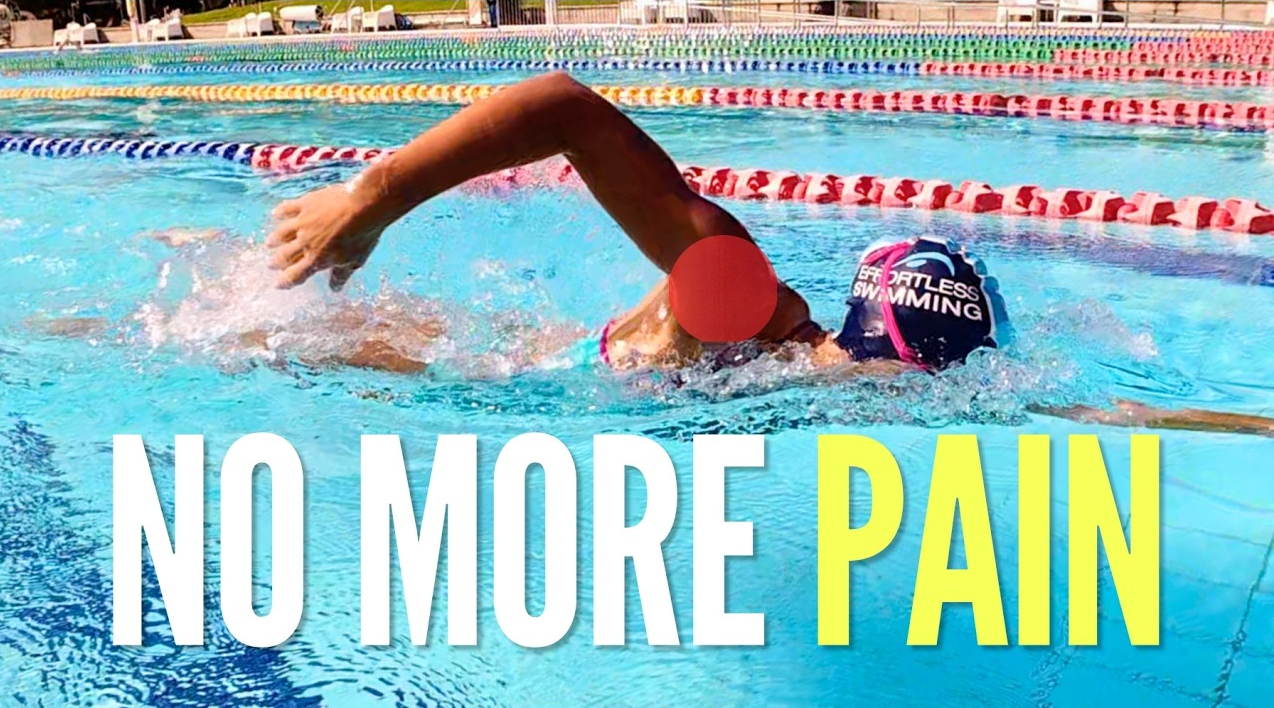
through these training plans. And I think they are excellent for people who want to train for certain triathlons or reach certain fitness goals. It will build on each week and a really good way to progress progressively build up your fitness. So if you’d like to follow along with some plans to help you reach your specific swimming goals, then check out formgoggles at formswim.com forward slash effortless. And this will give you $15 off your purchase of form goggles. So formswim.com forward slash effortless to get your pair of form goggles. Now the third one is the is the recovery. Now the recovery is when the arm comes over the water. And in the recovery, the most there’s two two main mistakes. But the most common one I saw was a low or a flat recovery. So when someone’s bringing the arm over the top of the water, their elbow, now if you’re if you’re watching them swim from the side, okay, they’re sort of
swimming past you. That would mean that their elbow, the point of it is pointing behind them as they’re coming through. So the elbows quite flat quite low to the water, where it should be pointing is mostly up to the sky up to the ceiling, not directly up, but up in that direction. So that’s what I’d consider a like a high elbow recovery, not where you need the elbow coming like all the arm coming over really high and your hand close to your body, you don’t want that. But you kind of want the elbow to be pointing mostly up to the sky in your recovery. So some people just coming over and they’re really low to the water. And the hand was kind of swinging, swinging in front of their elbow really early. And then when they entered, everything was quite low and quite flat, rather than having the elbow up a little bit, and the fingers going in first. So often we’d the way I’d sort of describe making that change to them would be, you
want to imagine that you’ve got a piece of string on your elbow, someone standing in front of you and they’re pulling that piece of string towards them. So piece of string on an elbow feel like the elbow is coming is the thing that’s causing the arm to come over the water, at least initially. That way, when you come over in your recovery, your hand can relax your forearm can relax a bit too. That to me is why it’s called recovery, because you want your hand and forearm to mostly relax over the top there. So the piece of string on an elbow is quite a good cue to help with that recovery part of it. Now, when someone makes that change, I’ve seen people go too far with it, where they end up coming really close to their body with their hand and they’re like doing some awkward and uncomfortable things with their with their arm or their shoulder, you don’t want that. So just find that sweet spot where it’s comfortable and sustainable. You come
over fairly quickly without putting any extra pressure on your shoulders. So that was the third one was recovery. Now, the fourth one was a deep catch. So a fairly straight, fairly deep catch arm where there’s not really any bend in the elbow. That was very common one and again, when I run clinics, normally it’s a really common one that we that we would see. Now, if you’ve been through the five day catch challenge, you’ll have a really good approach and step by step approach it, making some changes with it. The main thing that I sort of see there is that we just want to make sure we can get the elbow to bend a little bit while your arms in front of your shoulder. So once you’ve entered the water and you’ve reached forwards and you’ve rotated a bit, then we want to move into a position with the arm where we get a bit of bend at the elbow while the fingers point down. And for someone who’s fairly new to swimming, they just don’t have that
movement pattern necessarily takes a bit of practice to develop it and get comfortable bending at the elbow to get that what we consider a high elbow catch. So a good way to sort of practice it is with some drills or even just a basic drill like front skull and just make sure you’ve actually got the elbows bent and you’re not completely straight in the water there. But if you haven’t done the five-day catch challenge, it’s on our website, go and check it out. It costs ten dollars and the results of people have got from that have been amazing. So I’d recommend the catch challenge if you’re wanting to improve your catch. And the thing about it is to me that is the thing that’s worth getting good at. Yes, you want good body position and everything else, but particularly say if you’re a triathlete and you’d wear a wetsuit most races, well your body position is probably going to be taken care of. You’re probably going to be
pretty good with your posture because everything sort of sucked in with the wetsuit held together well. So you probably just need a good catch and pull and you need to find a good rhythm and momentum. So I think the catch is really worth developing. Now the fifth one is head position and I’d say it was probably even between the amount of swimmers who were looking too far forwards and those that were looking too far down. So I would the way I teach head position for most people is I think they’re best looking slightly forwards and that if you’re swimming in a pool that’s probably like as deep as you are, you might want to look about one meter in front of you or three feet in front of you in terms of the pool tires. So looking slightly forwards and you want to lengthen your neck like you’re extending through your spine and your neck. Not where you tense with your neck because you don’t want to be tense but just lengthening through it.
So you’re keeping quite long through the head, neck and spine and looking slightly forwards and that should put the top of your cap just out of the water, just above the water. That’s usually where we’d want to be in terms of head position. So I saw quite a few people either going too far forwards, so looking out and there we’ll see their chin come forwards and most of the time that would lead to this big arch through their lower back and when that happens it’s almost like their top half and their bottom half is disconnected, not working very well together. So yeah you’ll have some natural arch through your lower back if you’ve got the right sort of posture and head position but you don’t want too much but you get too much when you bring your chin and your eyes too far forwards. So we want to look about a meter down and then we had quite a few people who were looking too deep as well. They were looking straight down or
even like slightly behind them and their head was a couple of centimeters under the water. Now sometimes I find people do that because they feel like or they think that their head is the head position is the thing that determines where their legs are in the water or where their feet are and they think I’ve got to push my head down to bring my back half up but that’s not the case. It is to a certain extent you know some people will be looking too far forwards so they’ve got to change it to actually bring their feet up but your legs are more determined by your hips and your core. It’s connected to that it’s not connected to your head so you’ve it’s more determined by how you’re holding your core and your your hips. So yes head position can matter but less than some other things so you don’t want to push your head or bury your head in the water to be um to be swing well and if you if you saw the 100 freestyle the 100 freestyle world record by
David Popovich recently and you have a look at his stroke you’ll see that he’s like he’s bouncing in the water his head will come up quite high in the water then he’ll sort of go go down then he’ll come up and go down come up go down he’s riding pretty high he’s got quite a loping sort of freestyle there and if he was trying to swim with his head buried in the water where it didn’t leave the water apart from if he was taking a breath he’s going to have a hard time because water is 800 times denser 600 times denser than air and so if you’re trying to swim really low in the water well you’re going to be working a lot a lot harder so I think especially for open water swimmers and anyone who’s and triathletes if you’re wearing a wetsuit you probably want to go for that slightly higher position in the water because it’s going to be more efficient and it’s probably going to feel more comfortable for you so there’s no need to bury the head and be
completely submerged with it so yeah that’s that’s one of the other things we looked at with with head position so I just want to make sure you’re looking in the right position so they’re the five things that really stood out from the the last 70 videos that I or last 70 swimmers that I analyzed recently but across the board for the last six and a half thousand people these are really really common ones so breath timing pull into the breath so you can bring your head back down along with your catch
over rotation you want a rock side to side not roll three is recovery make sure that you recover over the water with what I’ve considered a bit of an elbow-led recovery relax the hand and forearm number four is you don’t do a deep catch or don’t be a not a straight arm catch so we do need a bit of bend in the elbow to get our high elbow position and then the last one is just head position making sure for most people they’re looking slightly forwards with the top of their cap out of the water rather than trying to bury their head deep and be fully submerged the whole time so I hope you enjoyed this episode if you’re looking to improve your swimming the best thing that I would suggest is our eight week faster freestyle course which is inside of our effort the swim membership we’ve had a lot of swimmers go through that and just over those eight weeks you’re going to improve each of these things that I’ve talked about
plus the other things that we tend to see when we do underwater filming with people so I’ll put a link to that in the show notes as well if you haven’t been through that yet so thanks very much for listening I’ll see you next week on another podcast episode