








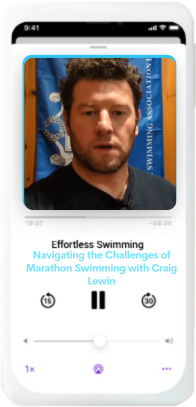
What does it really take to swim the English Channel or any marathon swim? My guest today, Craig Lewin, is a triple crown marathon swimmer and coach who’s helped athletes tackle some of the toughest swims on the planet. We talk about how to train for hours in cold, rough water. How to stay motivated over years of preparation and the mental tricks that can carry you through the tough times when you feel like quitting.
If you’ve ever wondered how ordinary people achieve extraordinary swims, this episode will show you how and if you’re already into long distance swimming. Myself and World Record Holder, Andy Donaldson will be running two long distance retreats next year. One in the Whitsunday is in June. And one in Tahiti in September.
So if you’d like to enhance your open water skills, learn from the best, and also have one of the best holidays of your life, this is a chance to join myself and Andy Donaldson on a long distance Swim retreat. I’ll include the link in the show notes below.
02:26 Starting Your Journey: The English Channel Swim
05:39 Training Plans for Long-Distance Swimmers
10:57 Maintaining Motivation Over Long Training Periods
16:11 Nutrition and Fueling for Endurance Swims
21:20 Acclimatization to Cold Water Swimming
27:50 Pacing Strategies for Long Distance Swimming
31:48 Overcoming Challenges in Training
36:41 Mental Strategies for Endurance Swimmers
39:11 Choosing Your First Marathon Swim
43:15 Addressing Fears: Sharks and Open Water Swimming
47:27 Safety Tips for New Open Water Swimmers
50:59 Upcoming Events and Resources for Swimmers
Join a camp:
https://effortlessswimming.com/camps/
Grab the freestyle checklist here:
https://effortlessswimming.com/freestyle-checklist/
Work with us (stroke analysis coaching):
https://effortlessswimming.com/es-training-and-membership-page/
Get in touch with Craig:
Website: swimbeyondthebreakers.com
Instagram:http://swimbeyondthebreakers.com/
Facebook:https://www.facebook.com/swimbeyondthebreakers
Coaching website: Liquidtri.com
Email: [email protected]
Message Craig on Instagram at @enduranceswim
https://www.swimbeyondthebreakers.com/2025-presentations
Transcript
Read the full transcript
Yeah, I mean, I think it depends on the swim, you know, but really boredom is probably the biggest one. Like, and you experience your training is like boredom. It’s it’s understanding. All right. I don’t feel great. I don’t want to swim anymore. I’m tired. I’m cranky. I’m hungry. Like you’re going to go through every emotion. You’re going to be irritable and it’s it’s perseverance. It’s great. It’s it’s dealing with that boredom. Welcome to the Effortless Swimming Podcast to show that help swimmers and triathletes love the water, become a better swimmer and live a better life. Here’s your host, Brenton Ford.
What does it really take to swim the English Channel or any marathon swim? My guest today, Craig Lewin is a triple crown marathon swimmer and coach who’s helped athletes tackle some of the toughest swims on the planet. We talk about how to train for hours in cold, rough water, how to stay motivated over years of preparation and the mental tricks that can carry you through the tough times when you feel like quitting. If you’ve ever wondered how ordinary people achieve extraordinary swims, this episode will show you how. And if you’re already into long distance swimming, myself and world record holder Andy Donaldson will be running two long distance retreats next year. One in the Witsunday is in June and one in Tahiti in September. So if you’d like to enhance your open water skills, learn from the best and also have one of the best holidays of your life. This is a chance to join myself and Andy Donaldson on a long distance swim retreat.
I’ll include the link in the show notes below. Craig, welcome back to the podcast. Thanks for joining me on another episode talking just before the podcast you mentioned that a lot of people had found out about you beyond the breakers conference and what you do in long distance swimming. So it’s cool to hear that a lot of people found out about you through this podcast, but also I’m really candy jumping to some of the topics that I think you probably get a lot of questions about when it comes to marathon swimming, some of those challenges that people are facing, the questions they’ve got in their mind. So I’d really love to cover those things on this episode. So welcome back to the podcast. Thank you so much for having me. I’m looking forward to the conversation. So let’s kick it off with someone who’s keen to swim the English Channel. It’s a fairly, I guess, common goal in marathon swimming where a lot of people will get
started with a big challenge and the English Channel is probably the most well known one. Where does someone start when they’re thinking about swimming the English Channel? Yeah, I mean, I think that is probably the most common email I get is I want to do the English Channel or I want to do it next year. And I think the big thing is education. A lot of what I do in the initial emails when I’m doing the back and forth is you need a pilot. So if you don’t have that pilot, you’re not doing this channel. They generally book two to three years out. So I always direct people to the Channel Swimming Association or the Channel Swimming and Pilots Federation for info on how to get on a list to book a pilot. And then those websites as well as my own, we have some good resources for walking people through the process of just getting signed up and really getting signed up is getting that boat captain, but even with finding the pilot,
there’s a whole positioning system around it that is important for people to understand because it’s not just, it’s usually four to five swimmers per swimmable tide and that position matters because person who has the first lot has the highest chance or probability of swimming and the person in the fifth slot is kind of a crapshoot depending on whether and how fast they get through the first four people. So, you know, the first first step is really just understanding the timelines behind the how long it will take just to get to the Channel and then after that it comes down to training and once you have the pilot, I’d like to say the training is the easy part, but even that’s not necessarily true. When you have two, three years, if you’re a newer swimmer even new to open water marathon swimming, that’s plenty of time to do the training to do the speed work to basically do everything to set yourself up for success.
So, you know, usually I like to do stepping stone swims. So if we have two years and they have no marathon swim experience or maybe a 10 K here they’re in warm water. I want to help them select swims that are, you know, working their way up that way. If they say they do a 15 mile or 25 K the year before the Channel and it’s cold or water and they’re like, that was way too much training and way too much swimming and I hate it. Then they’re not going to waste all that money
going through, you know, the English Channel and if they love it, then they know exactly what they’re setting for, you know, for year to year three of training and each year gets progressively bigger, but it doesn’t feel as far away because the previous year, if they are training for, you know, 25 K, well, we’re getting ready for a six to eight hour swim. And if they’re training for the channel, we only adding really four or five more hours to that. So they don’t feel like they’re going from no experience to 12 or 13 or 14 hours. They’re like, oh, I only have to go a few more hours of swimming and it feels a lot more achievable. But at the end of the day, it comes down to understanding the process behind getting a pilot and then once you have that pilot locked in, it is generally finding a coach or a mentor, someone who knows what they’re talking about. And after that, it’s coming up with a training plan, the nutrition plan and
just putting in the time and the effort.
And what does that look like in terms of a training plan? How much swimming would you recommend someone do each week as they’re building up to this swim? And obviously it’s going to be dependent on multiple factors, but what’s a general sort of plan look like for you? Yeah. So for me, the way I do it, it’s cycles, right? It’s like, it’s a triathlon. It’s like any long distance sport. You’re not just, you don’t have to go and swim 10 hours every Saturday. So for me and my athletes, it is more of a cycle where every four weeks will build on top of the previous four weeks. So we’ll do recovery week, speed week, build week, bulk week, bulk week is like the highest volume for the cycle. It’s where we do our long swims, but ultimately it’s, it’s, it’s more about the time than it is the distance. And I say that because if you’re planning your English channel swim, it’s 21 miles, but depending on how fast or slow you are, you may
nail it in 21, but realistically, you’re probably training for a 25 or 30 mile swim the way the currents work. So it’s really more about training to the time you think you’re going to be in, in a worst case scenario situation. And that’s, that’s, that’s how I train my athletes because I want them to be prepared for the worst. If they think they can do it in 10 or 11 or 12 hours based on their, you know, how fast they go. Maybe they get bad weather and it actually takes 15. I need them to be able to do it in 15. Like they need to be, keep, you know, be able to keep on going. So it really does depend, like you said on, you know, what’s your base leading into it? What’s your experience? What’s your speed? I think it’s anywhere at peak
between probably 12 and 20 ish hours of training in that very biggest cycle and then each cycle is working your way up to it. So you don’t go from, you know, 10 K of swimming to 50 K of swimming in a week, like overnight. It takes several months to build up to that safely and still get the speed work and still do all the things you need to do out of the water to stay healthy, to stay injury-free and, and, you know, make sure your body’s ready to get it done.
I listened to the, there’s a podcast called the exponential athlete and it had Bob Bowman on there and it was a great podcast listening to the differences between Michael Phelps and Leon Marchion and obviously like both swimming the same events, both incredible swimmers and two best in the world at those events, but such different people in such different approaches. But the thing that’s two things that you mentioned so far that Bob talked about was the first one being like preparing for the worst case situation. So it tells the story of a couple of years back. He accidentally stepped on Michael’s goggles and broke them before a race, turned to fly, I think. And he said, and Michael said, oh, my goggles were leaking during the race. I couldn’t see anything. He goes, well, yeah, how’d you know when the wall was coming up? He said, well, I just counted my strokes off every, off every wall. And so they always just prepare
for the worst case situation. Also in terms of visualization, like he said, Michael every day would visualize and he would run through every possible thing that could go wrong. So he was prepared no matter what hit him on race day. And the other thing there too is just eating an elephant one bite at a time. It’s just like just very gradual steps progressively building up and anything is achievable if you set this like a small enough initial goal. And for many people, I think that English channel might seem unattainable until they just start the process and they show themselves and prove to themselves that, okay, well, I can do 5Ks. I can do five miles in colder water. Okay. Well, maybe I can get to eight next time. It’s just that those small steps at a time and a two to three year window, which you’re likely going to have waiting on the pilots. Then you you’ve got enough time to be able to no matter where you’re at, you’ve got enough
time to to probably build up and be very well prepared for an English channel swim.
Yeah, no, it’s definitely true. I think the harder part is the motivation, how your goal is two years out, right? Like you’re an Olympian and it’s your job to swim. That’s not easy, but you know what you’re working towards and and I think for people who have lives and families and and jobs and this is like a hobby for them having that goal so far out. It is like you’re saying those small wins are important because that is what’s keeping people motivated and excited, you know, year after year until they actually finally get their opportunity to even get in the water. And even that is not a guarantee. You know, you get to the chick, you get to Dover and you’re riding the Dover coaster because you know what’s going on with weather and the captain calls you six hours before he says, All right, we’re going and then you get to the dock and he’s like, actually, we’re going in six more hours and go home and sleep and come back. And you know,
the weather can be bad. You can get pulled for a myriad of reasons and by keeping that motivation and that discipline for that long does take very committed serious athlete and finding those small wins helps you helps you get to that at least that start line if you will, which I actually call you know, if you get your chance to do the swim, that’s the victory lap. Hard parts, the training the same as itself is is just like the cherry on top. Yeah. How do you keep someone motivated if you’re coaching someone and they’re they’re struggling with that that motivation, they’re fatigued and they’re run down. Is there any thing that you come back to about the like the why why they sign up in the first place? Is there is a strategies that you’ve got when you you feel someone’s in a bit of a slump? Yeah, I mean, absolutely actually last year for the for beyond the breakers I spoke to Andy Donaldson and his I guess mentor and crew chief Jay
and that was a big big conversation we had was the why and understanding like reminding yourself why are you doing this? And when Andy would hit you know, tough patches and swims or training that was what Jay was you know, trying to bring him back to and I think the same thing holds true for me my athletes and anyone it’s it’s under going back to like well why are you doing this? Are you doing it for charity or doing it for yourself or are you doing it to prove something to yourself?
But at the end of the day there there needs to be that why it’s it’s too much time and effort being sacrificed and if it means nothing to you that you don’t get it done so for me it is reminding them like hey like you’re meant you’re supposed to feel like this it is okay to feel tired and run down you’re you’re a human and we might have to adjust training like their body may not be responding and sometimes all they need is like a week off and that’s not making a breaking training unless you’re doing it week after week after week sometimes it’s the best thing for you so you know, some of the strategies I’ll I’ll employ it’s it’s it’s going to be reminding them having them do journaling or reflecting on how far they’ve come I think something that we all lose sight of is where we started because I think social media does this I think we do this to ourselves as as people trying to achieve something really really cool and epic is
you only see what you have left you don’t see where you came from and you also don’t see who’s watching you and who you’re motivating by putting in this time and I think that’s a really important piece that does for me personally keeps me motivated is being reminded like yeah I’m not not Sarah Thomas I’m not doing a four-way channel crossing that’s probably not in the cards for me or some of these other epic swims that that go on like almost weekly it feels like but all I’m seeing is that so I almost feel bad about myself and and I think anyone going through channel training is probably seeing very similar things and thinking they don’t stack up so keeping that motivation of like well no you couldn’t even do a 10K three months ago and now you’re doing six hour swims no problem or you couldn’t even handle water that was you know 58 50 58 59 degrees Fahrenheit you three four months ago and now you’re doing all your swims in it
so I think it’s it’s reminding them like no you’re putting in the work you’re doing the right things like let’s just focus on the next long swim like you to be excited about your bulk weeks and your long swims because that’s that’s an area you haven’t been before think of all the things you’re going to learn we’re one step closer to that goal and and that’s really you know some of the tactics it’s it’s just keeping them achieving goals and staying excited about those goals it’s finding this if you’re two three years out having a swim to work toward every similar it is hard to just three years out be like I’m training for this so you need to have like those stepping stones swims and then yeah just remind like having them remind themselves like well why did you sign up why do you want to do this like what is fun about this because in training nothing’s really that fun about it you’re tired you cranky you’re hungry but when you remember
why you’re doing it it it does bring that motivation back into things that you know and you may have lost an event and that reminder is usually all it takes for a highly motivated person yeah and one small tip that I’ve I’ve seen so I had a friend training for the Capri Napoli swim and she just got some of the shocks open water headphones and that like that made a massive difference for her long distance swims because she was doing them pretty much all solo and it’s a long time in the water by yourself and just having some music in the background that you don’t like it’s not interfering with how you’re swimming because it just sits over is that made a massive difference for her and so I think even just something as simple as that can help get you through some of those boring times because I remember training for for Rotnest and it was just a lot of time in a 25 meter pool no one else is training for it. I was by myself
and it was just it was monotonous and so it’s just a grind getting through it and so if you’ve got something there to keep you a little bit more entertained that can that can help as well. Yeah, I did the same for my English channel training. The pool is just tough place for me when you’re doing five, six hour swims. So and I do the same thing I had I had a similar mp3 player for underwater and I was a little bit more harsh. I guess for me I was like, all right, if you get two hours in you get to wear it and listen to podcasts for half and basically use it as a reward to get through even the long swim. So I think it’s a really great tool to help you get through it. So it’s a great tip.
Now in terms of eating and fueling for long distance swimming, my feeling is that most people who you don’t come from that background they don’t understand the importance of fueling and how much they often need to be able to keep their energy levels through it through a swim and I say that from personal experience and I say that from seeing a lot of athletes that I’ve I’ve coached just under undersell the importance of fueling. So what should what should someone eat? How often should they be eating and what are some of the most common foods or energy sources that you see your athletes using? Yeah, I think we’ll figure out like as you know people listening to this the answer is it depends. It really depends on you know what you like as a swimmer and and what you’re training for you and hot water cold water, salty water, fresh water. So you know, I think generally I have a starting point for most athletes. I’m not a nutritionist.
I don’t claim to be I just take in it, you know anecdotal evidence for myself and and people I’ve learned from and trained and I found that you know starting at 30 minute intervals is a good starting point and basically you can increase or decrease from there depending on how your body responds. And I’m you know, I’m usually recommending somewhere around 300 calories an hour. So about 100, 150 per feed to start. Some people won’t eat as much. Some people will need more depending on stroke rates, sizes, water temperatures, but I generally find like that’s a pretty good starting point for for learning. And then some some people as they do their long swims and the whole purpose of the long swims is to figure out well, this is not only getting the body ready but is it is the nutrition plan working? Do I have to tweak? Do I bonk at a certain point? Do I hate a flavor at a certain point? So, you know, that’s where I’ll start.
And then in terms of foods, it’s it’s you know easily digestible foods. I think sports drinks, I think it’s more teens is a pretty popular one. Hammer nutrition. I’ve seen a lot with heat. I personally use gu roctane and carbo-carbo-pro. It’s basically I think Maxim. There’s a European version called Maxim and it’s like pure maltodextrous. It’s like eating a loaf of bread and in a bottle of water. No flavor. So it’s you know, it’s usually something that is heavily carb based and you can get down quickly. English Channel in particular and I think a handful of other swims getting the food down as quick for every, you know, 30 seconds or minute of of time you’re treading water. You’re getting pushed off. You know, you’re getting pushed by the currents in the wrong direction. So getting feeds and quickly is important. Getting that hydration and is important.
But that doesn’t work for everyone. So I think it is more about experimenting and that’s why having these long, you know, eight, eight, nine, 10, 12 month timelines where you can do these long swims every month and multiple long swims every month and you can test the different foods. So like the first month or two of long swims is just testing what you like. Does it settle well? Do you feel bloated? Do you feel like you’re bonking at the end of the swim? And I think people who do marathon swimming or new to it, they need to be observant of how they feel and write down what went well in the long swim and what didn’t and learn from it. So now I don’t always recommend solids, but I also know people who have been very successful doing English Channel eating jelly munchkins. So like there’s no, there’s no rules. It’s whatever works for your body, but I think it’s more, you need a methodical way to start and you need to be very observant of what you’re
doing, working with your coach and tweaking based on how your body responds. But when you’re two, three months out, you’re on those last long swims. Those can just be dress rehearsals for your A swim. Like you’re just literally, like you said earlier with visualization, you’re just doing the reps to beat it. And if you’re finding, hey, I’m so sick of this very flavor at hour 12, well, then maybe you, you have a similar fee type, but a different flavor. And these are only things you’re going to learn through experience. That one’s going to really be able to teach it to you because it is so personal and so dependent on you and what you need to get through your swims. But I think 30 to 30 minutes starting point, 200 to 300 calories an hour is where I start and then you increase or decrease, you know, from there, based on how you respond. Yeah, great, great starting point. And then you can adjust based on your own needs.
And you just, and you do find that, you know, maybe for three hours, you don’t mind this one flavor of jail or carbohydrate drink, but then you do start to get sick of it and that aftertaste and just the same thing again and again does. Yeah, you struggle to get it down sometime. So it’s, it is very, very personal. Now, in terms of dealing with the cold, I think this is one of the biggest issues that face people who are going to swim in the English Channel because as soon as body temperature drops too low, it can be challenging to bring it back up. There are ways to do it, but it’s, it’s going to be one of the biggest factors as part of your swim. So how do you approach this with people? How do you acclimatize them to the colder conditions? And do you look at weight at body fat percentage? Is that a factor as well? What are some of those things that you consider? Yeah, this is probably the thing that scares people the most
is probably the colds more than the distance. If you’re thinking this swim, English Channel and North Channel, there’s so many colder swims that I think people know about. There’s also a ton of hot swims that are totally different challenge and outside of my wheelhouse. But in terms of acclimation, nothing beats being in the cold water. Like the more you can train in like conditions is going to be how you acclimate. So I think the first step is, people need to educate themselves on like the signs and symptoms of hypothermia. Like if you don’t know what to look for, then you can, you might not push yourself hard enough or you might push yourself too far and put yourself at risk and that is completely preventable. So there’s a lot of different resources and articles out there
that at least educate you on like some of the warnings, signs and symptoms. Like if you get the claw, you know, that’s a common thing. People, their circulation,
their bloodstream gets colder, their hands kind of lose muscle, like the ability or fine motor motions to get like this claw. So it’s like, all right, well, I’m cold, but I’m not going to die yet. You get, you know, if you’re simmering in the water, that’s generally a pretty bad sign. If you are mentally just not coherent, that is like you need to get out immediately. So I think understanding these is really important. Once you have the education behind it, I think it’s pushing yourself to get out there. And I like when swimmers, they’ll swim down the season. So I’m in Massachusetts. It gets a little cold. I think the water temps get to like,
the cold that I’ve experienced was like 28 degrees Fahrenheit. So like negative something Celsius, I don’t know, negative five, negative 10. It’s really cold. So you’re not really doing more than most, most normal people like me have been doing more than a few minutes. Then you have like the ice somers who are freaks and they’re doing, you know, 40 minutes in that. But so we’ll swim down the season and then once it gets a little bit warmer, you swim up the season. So with a lot of my athletes, like especially in the New England area, like they put on the neoprene. Like I know it’s not our thing, but when it’s 35 degrees in the water and you can get an hour in, that is beneficial. And then as the water gets, you know, warms up, starts stripping neoprene down, but the more you’re in it, the easier it is to acclimate. I also have swimmers in Florida, Alabama, where like the water just doesn’t get colder than 70. So they have to travel.
They’ll travel around the country finding cold water and nothing really beats that, but there are cold plunges. And I think that is very beneficial tool. I did my channel swim during COVID. So I relied very heavily during my quarantine in England on literally just sitting in a cold bath. And I think the mistake people make is they think the coldest water possible is what they should be doing. When in reality it’s, you should fill your tub and let it sit at 55, 56 and sit in that as long as possible. Because that is more indicative of what you’re going to experience versus sitting in 35 for four or five minutes. That is not what you’re going to feel at hour 11 because if you did that, you’d be dead. So I think, you know, being cold as much as possible is incredibly helpful. Being advocated on signs and symptoms, but also listening to your body. Some days you get in and if you’re dehydrated, you can sleep well. Your body’s going to respond very differently
to cold attempts and you can’t let one bad swim get in your head. You can’t dwell on it and think, oh, I’ve never, I’m never going to get it. But really, I mean, getting in when it’s cold, getting in when you’re uncomfortable, building that time up over the several months. That is really where acclimation happens. And there’s some tough people who they don’t do anything and they just get in and can tough it out and it’s not a fun experience, but they do it.
But yeah, in terms of body weight, I think if you’re, you may, you know, if you’re low body fat percentage, you will likely need to gain five or 10 pounds. I think the average person is not necessarily going to have to do that. I think if they are doing the acclimation right, their body is going to adjust
because it’s a balance. If you gain 10 pounds, that’s 10 pounds more you’re pulling through the water and that’s going to affect your swimming. It’s going to affect your techniques and what if you gain too much weight too fast, it can cause shoulder injuries. It can cause different injuries because you’re now carrying a load differently. So I don’t generally tell people like gain weight unless they are an Olympic athlete. That’s like 4% body fat, in which case they have no chance. So I think that’s more of a, hey, I’m doing all the right stuff and I’m still having problems. At that point, maybe it’s a gain a couple pounds, but there’s no need to gain 20 or 30 pounds. Maybe it’s five, maybe it’s 10 max, but for England, I don’t think it’s required.
Maybe when you get to North Channel where it is much colder, packing on those pounds becomes a little bit more important. But as a beginner, it’s not something you’re generally going to have to do right out of the gate. Hey, real quick, in case you didn’t know, we run swimming camps around the world from the Maldives, Thailand, Japan, with Sundays, Galapagos Islands plus a bunch of new locations for next year. So if you’d like to join us at a future camp and improve your swimming and explore and experience some of the best locations to swim in the world, then go to effortlesswimming.com forward slash camps. We’ve got all the dates and locations listed there. A question I get all the time is I’m not that quick. Will this camp be suitable for me? We have a wide range of speeds and abilities come to the camps. So as long as you can swim a kilometer, there’s a very good chance that these camps will be suitable for you.
And if you’re not sure, just get in touch with us and we’ll make sure that we do find you a suitable camp. Thanks for listening. Let’s get back into the podcast.
Gotcha. Now, what about pacing? Such a long swim. Is that, does that come into consideration for the long distance swimming? It does.
I always tell like my summer’s and I was taught very similarly. It’s kind of like pool races too, right? You want to even split a negative split. You don’t want to go off fast and then completely die. I think this is an exaggerated version of that. If you go up too fast in hour one, you’re going to be hurt and come a lot, hour 11 in a real bad way. So a really aggressive pace up front is it can be very detrimental to swim. I have personal experience with that. I was competitive growing up and when I did my 20 bridges, it is very much, I mean, they have like a race component, but ultimately it’s everyone just trying to finish. And the second you put two people next to each other, they’re racing, whether they realize it or not. And I just didn’t swim my own day and I went out really hurt in the first two hours and it basically blew up the entire day. It took me like three or four hours just to feel normal again and recover from it.
So because it’s you’re using more energy than you used to in training. So now that impacts your fueling, you know, you’re changing the dynamics of the stroke. Maybe you’re doing things you didn’t normally do and now you have these weird pains that you don’t normally have. So it does become very important and I always tell, you know, my athletes like, what’s your goal? Most athletes are not going to break the English, you know, the world record for the English channel speed. Both are just trying to finish. And if that’s the case, it’s very easy to like get out there, take the first hour, just warm up, you’re not going to feel good. Like you’re going to be all over the place, especially if you’re, you know, going at one in the morning and it’s dark, you’re just trying to figure out, you know, how far the boat is, how to navigate in the waters, just the excitement of the day that’s finally here. So, you know, it’s that first hour,
just warm up, get to the first feed, feel good, get your feet under your belt, get to the next feed and then once you’re there, you’re in it and you’re really trying to get into that flow state more than you are trying to go in aggressive pace. So I always push for an even split or a negative split. If you’re feeling great, you know, the last hour of a swim, go to town. The problem with a swim like the English channel is that last mile could take you four hours if you get stuck in a bad current. And if you go out like a maniac in the first hour, you might not have the energy to finish, you know, a mile offshore. Like you’ve come this close to your goal, but because you made a decision very early on, you’re now not necessarily going to complete that goal when you’re as close to finishing as you possibly could be. But yeah, it’s more about that marathon swim pace, like just get in and feel good and, you know, build into the swim.
And that’s really the best advice I’ve gotten and I’ve found it to work really well with the majority of athletes I work with. And quite often when you back off the pace at the start, like you often have to go, I think, easier than what you think you need to go because even if you think you’re going, oh, this is, I can hold this all day, good chance of actually going that little bit too fast. And often you swim a lot better when you just relax. And like the feedback I get so often from people who I coach is that I like I went like in training, the first half of this set, I was just going really cruisey and I was hitting say 140 for example. And then I started to push it a bit more in the back end and I was going 145s even though I was trying harder. So often that more relaxed state that you’re in, you tend to swim faster. So it actually works in your advantage even more than just the energy conservation.
I mean, it’s really true. It’s you watch like the fastest athletes on the planet and they look like they’re more than 53 sellers. But, you know, those distance numbers, they look like they’re really putting any effort in and it’s impressive, I guess slow, it’s fast.
Yeah, yeah, absolutely. Now, what are some other challenges that you’ll want your swimmers to go through in training to be prepared for the big day? Yeah, I mean, I think it depends on the swim, you know, but really boredom is probably the biggest one. And you experience, your training is boredom. It’s understanding, all right, I don’t feel great. I don’t want to swim anymore. I’m tired, I’m cranky, I’m hungry. You’re going to go through every emotion. You’re going to be irritable and it’s perseverance, it’s grit, it’s dealing with that boredom. And I think techniques like what you talked about earlier with using the headphones, using those as a tool, not making them a crutch but using them as a tool to help you with the boredom. The biggest thing is it’s not assuming you’re going to get a glassy day. You could assume you’re going to get some waves, you’re going to get some wind, you’re going to get some chop,
things are going to go your way. And I usually encourage anyone who reaches out to me where they work with me or not that they go out in challenging conditions. Now, that doesn’t mean being moron and, you know, go out in massive swell during a hurricane. It means, yeah, if it’s raining, it’s swimmable, it’s safe, but it’s raining, it’s choppy, there’s a little more swell. Today you’d otherwise look at it and be like, I don’t want to do that. It’s the day you need to get out there because that could be the day you have the day of your swim. So I think dealing with that is incredibly important because when you’re, you know, 12 hours, 10, 11, 12 hours into a swim and you’re almost finished but then the wind picks up and you feel like you’re going nowhere and then the waves, they’re not big waves but it’s choppy which makes it really hard to find that rit, like that swimming rhythm makes you do different things to breathe,
like staying calm under that and making sure that the day of your event is not the first time you’re experiencing it is that’s really important. So I think those are two things swimming in the dark. If you are going to do Catalina, if you are going to do English panel, if you’re going to do any swim that’s going to take, you know, more than 14 hours, you’re likely swimming in the dark at some point. So understanding like, well, how does your body feel at night? Are you scared of something in the dark when everything is just blackness? Do you know how to navigate in the dark? Does your crew know how to communicate with you in the dark? These are all things that I think are challenges that may be faced and training is about tackling those challenges. So the day of the swim, there’s almost nothing new. Another, you know, technique like you mentioned earlier is visualization. You’re not going to be able to simulate
every single obstacle you’re going to find the day of your swim. So visualization is a great technique for getting reps in where it isn’t the first time. Yeah, maybe it’s the first time you’re physically experiencing it, but you’ve gone through exactly how you’re going to handle that situation when it does occur. Those are, you know, some of the bigger ones it’s the boredom. The doubt is tough. I think that goes back to the motivation of like, look at all the things you’ve done. Look at where we are now. And I think the thing that’s carried me through almost every swim and a lot of my swimmers, my first coach was Dan Simonelli. He’s, he runs the around-corn out of swim now, but he’s like, he’s the Catalina guy. He’s an English channel, a bunch of other swims. And he always said like, just because you feel bad now doesn’t mean you’re going to feel bad in a half hour. So just, just ride it up, just keep swimming. I think most athletes understand
like the difference between like, all right, I’m uncomfortable and this is career ending. And maybe you don’t ride out career ending, but if you’re like, all right, my shoulder kind of hurts, my neck kind of hurts. I’m uncomfortable. Things just feel terrible. You just got to make it to the next feet. Just make it like the 15 minutes and a half hour to the next feet, stretch, re-evaluate. And more often than not, the pains like that you feel at hour four, five or six, like, are gone randomly, you know, a couple hours later. So it’s, it’s just riding out and staying tough. And I think that is the hardest thing to teach and that’s what the importance of those long swims. You have to do the long swims because everyone’s different and everyone’s going to find different tools that motivate them. And as a coach myself, you know, you as well and others out there, it’s, it’s about providing athletes with different tools for them to try.
And ultimately they’re going to come up with their own kind of mixed match of tools that work for them. And, and that’s, that’s as a coach of the mentor and that’s what I’m trying to do is help them develop that marathon swim identity because that is what’s going to carry them through. I’m a different person now, my motivated differently as is most people. So I think that’s, that’s the main goal is you need to get uncomfortable so that you can learn the tools to get through it and that’s just going to carry you, you know, carry you through more often than not, both in the water and under the water. And you only realize that when you get to that, that point in your training session or in your, in your swim and speaking to Andy Donaldson said that when he was doing these, these longer swims, they weren’t allowed to say the word cold. It was, if he was starting to get cold, he’d say to his, to Jay, to his team,
he’d say it’s a little fresh in here. And so then they would have their strategies to help him warm up with some warm drinks and those sorts of things. So even just word play, you know, just making sure that you’re using the right words just to help you mentally and even some phrases I find can be useful. Like even thinking, all right, get to the next feed or like when you experience that discomfort and that, that really hard challenging time. So this is where everyone quits. So, you know, this is where I need to get through. And I remember doing the, the right nest swim and I was getting so cold in 17, 18 kilometers in with a few K to go. And I just, I kept telling myself, you’re so lucky to be here, you’re so lucky to be here. Like, you know, you could be anywhere else in the world but you’re so lucky to be here. And that got me through the last couple of Ks where I was starting to get a little bit hypothermic.
So whatever phrases, whatever words, whatever you tell yourself, it’s individual but it’s, it’s those little strategies and tools that you collect along the way that might help you complete a swim successfully rather than make it halfway across. Yeah, I mean, I think that’s the word play is so true. You start thinking about something, then you voice it and it becomes real. And then it just the cycle that consumes you where you’re not actually cold but you’ve said it so many times, you believe it. But yeah, I like what you just said. I used to do that with myself and with other athletes and remind them like you chose to do this. Like you’re lucky enough to do this. You’re physically able to do this. But at the end of the day, like you chose to do this. You chose to pay a ton of money to do this. So like, you know, just you’re lucky you get to do this. You have, you have a lifestyle that allows you to do really cool things.
So let’s make the best of it. You get one shot. So let’s go after it. And I think that does, that can be very motivating for people. And what about choosing someone’s first marathon swim? So what are, what are some common first swims that you see? We spoke about Ingers channel, obviously. But then how would you help someone navigate? Because there’s a lot of different swims out there, a lot of different months to choose, which is a mate, you know, which is a great problem to have. But how should someone decide on what to first do? Yeah, I mean, I think it depends on like what their ultimate goal is. Like is it a channel swim in three years or is it just to become, you know, a marathon swim or doing a 10K? And I think once you understand like what the goal is, you know, seeing people love the cold, some people want nothing to do with the cold. So I think the first swim is about getting a win. It should be challenging,
but it should be something they’re excited to do. And if someone is just dreading doing like, oh, I picked it because it’s the only one I knew and it’s freezing and it’s choppy and I want nothing to do with it. That’s going to be a visual experience and they’re never going to want to do another swim again. So I think the first one is about getting a win, getting one under your belt. And it’s like when you do your first triathlon, it’s a disaster. Like you get through it and you’re super proud. Most people don’t jump into an Ironman because they do their first sprint triathlon. And then they’re like, it takes them two hours or three hours, like, which, you know, that’s a sprint that can be a long time. And then they realize, oh, I made these 400 mistakes, but I had a great time. So now the next one, they fixed all the mistakes. Now, you know, they’re, they do it in an hour instead of two. So it’s the same thing.
It’s about having the good experience and wanting to come back. And when they want to come back, they can go for something bigger and bigger. But it’s really just understanding like what gets them excited, what’s a distance that gets them excited. And also what is a, given the timeframe that they’re giving you, if they’re saying I have three months and I don’t know how to swim, well, that’s going to be a very different swim than, oh yeah, there’s a pool swimmer. I’m just not super comfortable in open water, but I can swim, you know, a 5K or 10K easily. And I think from there, you can help them pick a distance that is reasonable, that’s achievable with some work, but also you’re not going to have to develop a ramp plan so fast that they’re going to get injured. So I think there’s a lot of different factors that go into it, but the number one is, what is exciting to them? What are they excited about? And what is their current starting skill set?
And can you get them to where they need to be for the swim that you pick? If you have someone who lives in Florida, they’ve never done a cold swim and they want to do some, you know, Boston light swim in 58 degree water, two months later,
maybe it’s doable, but it’s, you know, it’s not going to be a super fun experience necessarily versus, you know, doing alligator light, which is going to be, you know, four or five hours for them, but in warm water, in currents, it’s still a challenge and it can be done in the time period. So I think there’s a lot of things that hinge on it, but ultimately when I help people pick, I want them to have a success, not a failure on their first one. And I think when they have that, they get that bug and then they’re excited to do the bigger and bigger and bigger.
Yeah, that’s right. If you have, if you have that success initially, that’s where it can really start to build. It’s like going to the casino, winning that first hand, you know, that’s going to give you that, that bug and that feeling. One thing you said there was achievable with some work and what gets you excited. I think those two things really, really helped to give you that motivation to do what you need to do to do that successfully because you don’t want to be like, I could walk out the door and do that tomorrow. You probably want an event that’s like, well, actually I’m going to have to put in a little bit of work here because that’s what’s going to get you to the pool every week and do the training that you need to do. Yeah, absolutely. If you know it’s in the bag, you’re not going to treat it with the respect it deserves and who knows how it’s going to go for you.
You know, one of the other mental challenges we haven’t talked about, but I’m sure you get this question a lot, is what about sharks? And I think of my immediate family. They’re just, because I surf a lot down here and they’re always like, well, what about sharks? And I saw this on the news and but it just never really crosses my mind whatsoever because I’ve done it for 20 plus years. I’ve seen one shark out there, but I see a ton of, I see so much footage from even like Bondi where it surfers and swimmers and there’s sharks around same with, there’s a good Instagram account to Melibu artist who’s like, always like white sharks with swimmers and people. And so that’s actually helped me a lot to just kind of go, even if they are out there with me, I’m probably going to be okay. How do you sort of explain that to swimmers who are worried about that side of open waters for me? Yeah, I mean, it’s the common question.
Some places you’re less concerned and I think one it’s location-based like where you are, it’s probably much more sharky than where I swim. We get sharky in the center around the Cape and Nantucket, but attacks are pretty rare and I think one thing I do is I have my athletes, you know, learn about what they’re nervous about, learn about their waters are swimming and learn about shark behaviors. So, you know, at our event last year at the beyond the breakers, we had Dr. Greg Skomal who’s like a shark researcher and he focuses like on the Cape and New England area for the mass state fisheries. And he was explaining why shark attacks happen and not only how to prevent them because it’s usually more often than not a mistaken identity, but there are certain conditions that may or when, you know, are common to attacks. And I think when a swimmer understands this, then they can, I don’t want to say avoid it, but they can lower their chances and feel better
with by swimming in locations where those conditions are present. Like I don’t think I would personally swim where there’s, you know, thousands of seals and it’s literally what sharks want to eat. So if I’m swimming next to a seal, the shark doesn’t know the difference, but if I’m swimming where there’s no seals, there’s no food source, so the chances are less likely. So I think a lot of it, you know, comes down to education and, you know, like you’re saying, follow the Instagram accounts, like see where the sharks are. You can swim in other locations. They’re out there, it’s their home. They don’t really want to eat you. Like it’s usually mistaken identity. And I think when you understand the actual statistics, it does make the risk feel, you know, a bit lower. And, you know, focus on other things, partner strokes, think about technique. It’s the same with colds. Like, you know, if Andy’s saying, oh, it’s, you know, feeling a bit fresh
or, you know, whatever, whatever he’s saying, it’s think about something else. Don’t let the thought consume you. And, you know, you look at, I felt like, look at everyone else swimming where you’re swimming. None of them have been eaten or attacked yet. So I don’t think I would be too concerned with that. And, you know, if you’re looking for some peace of mind, there’s deterrent technologies like shark bands, which, you know, you can, you can wear and they actually help a lot with stingrays. So if there’s stingrays in where you live, can help with that as well dispersing them. But, you know, that can add peace of mind. Just getting it out of your head can be enough to keep you going. But I think education, understanding the true marine life in your area and finding places to swim where, you know, some of that is, is less, I guess, less in your face.
The, one other thing that helped me a lot to was the Ocean Ramsey documentary on Netflix. Have you seen that? I have, yeah. Yeah, that was, and I’m sure like a lot of it’s embellished to, you know, it’s, it’s Netflix, but that, like to me, that actually made a massive difference. Like to see this girl go out and swim with these huge sharks and this great white and like it was incredible. So that kind of put my mind at ease even, even more, just watching that. So I’d recommend anyone is afraid of sharks, like check that out. I feel like it would help. Absolutely. But again, just learn the behaviors and then you, you know, you know when, where, what to do and I think you’ll feel a lot more confident. Yeah, yeah, absolutely. Now to wrap it up, what about some ways that people can train safely in open water if this is a new thing for them? Because I know a lot of people, they have that fear of the open water. They feel like once I’m out there,
like I mean, if I get in trouble, then that’s going to be the end of me. So how can people, how can people ease their way into it and do this thing safely? Yeah, I think there’s some really easy safety tips. And again, not an expert, but one of my biggest ones is I never recommend swimming alone, even regardless of your ability. Sometimes it’s not feasible, but especially if you’re newer, like even if you don’t have someone in the water with you, someone on land is spotting you can save your life. It can be the difference. So I always recommend having someone spotting or swimming with the body, never really doing it alone is, it’s probably one of my biggest ones. Don’t, like just because you’re going into open water, I think you don’t have to go straight out. Well, I think a lot of people go in and they’re like, I’m going to swim out to sea. I never recommend doing that. Like I think a great way to do it is you don’t even have to be
over your head is just get into water that is swimmable. So maybe it’s waist deep, maybe it’s chest deep and you see the bottom and swim parallel to shore if it’s safe to do. So obviously if there’s huge, huge swells, breakers, you know, get past them or try to swim in a location that doesn’t have them. But really it’s swim in a situation, put yourself in a situation where you’re swimming parallel and if you have an emergency, you can literally just stand up or you can take two or three strokes and just stand up. So you want to fight that ego of, oh, well, all these, all these other swimmers are going out to sea. Let them, you’re not quite there yet, but you’ll get there. Personally, I would swim parallel to shore because you don’t know what’s going to happen and it’s just easier to have a good exit plan. So, you know, start there where you see it and then you can go deeper and deeper as you see fit, but you can get, you know, hundreds of miles of swimming
going parallel to shore. You don’t need to go to sea. And then in terms of gear, I always recommend a brightly colored swim cap and then a tow float, whatever brand you like, a brightly colored tow float. It makes your spotter on land easier. It makes it easier to see for the spotter on land. It makes boat traffic can see you a lot better. So water crafts, surfers, it’s just making yourself more visible to avoid problems. They’re not designed to safety devices, but if you get into a pinch, you can always throw your arm over it for a second, regain composure and then get going. So I think those are a couple, you know, pretty easy safety tips for someone who’s newer to open water. And then if you can summon a beach of the lifeguard, that’s great. We don’t have a ton of them in my neck of the woods. So, but when you do, if you’re newer to it, go up to the lifeguard and say, hey, you know, I’m newer to this. I’m going to go for a swim.
If you don’t mind just like keeping an eye on me. And even that, then now they know to look for you and you’re probably going to be fine if you’re doing all of these things. But if you’re not, you have eyes on you and someone can get to you quickly. And I think that is the most important thing for anyone starting open water swimming. It’s more about having a good experience and building a healthy relationship with the water and not thinking you can beat Mother Nature because it would win just about every time. So, you know, those are, those are some of the easy safety, you know, pieces of advice that I tried to, to give to newer swimmers. And so far we’ve had a pretty good track record.
Awesome. And if those are listening, yeah, if you’ve made it this far, you’re probably interested in or already doing some sort of long distance swimming or open water swimming. You’ve got an event coming up in November, beyond the breakers. I want to talk a little bit about that and who it’s for and what you’ll be covering. Yeah, sure. So, yeah, November 8th, we are doing a conference in right outside Boston, Mass. And we have a lot of different speakers coming. The premise of the conference is open water specific. So it’s not for anyone level. We have a ton of great speakers coming and we were talking about everything open water. So a lot of what we covered today, it’s safety tips. It is the strength training to be on daily coming to talk about the strength training you can be doing and actually providing a routine for people to, you know, to see like, these are the exercises I need to be adding in for successful open water swims.
We have Lenny Kraselberg coming for a time Olympic gold medalist to kind of give us his, his journey and some of the lessons he’s learned as an elite swimmer that he’s been able to apply from his, you know, to his own life. We have Sarah Thomas coming. So really hitting a lot of the big open water swimmers and she has so many learnings from her swims. Then we have tons of local coaches coming as well and the goal of the day is to have everyone who attends walk away with actual items to help them improve no matter where they’re starting. So whether you are looking to, you know, just get into open water the first time if you’re looking to do your first 5K, 10K, mile marathon swim, you’ll walk away with the, the reputable resources that you can trust and go to when, you know, you’re ready to make that step and you’re looking for more information and the day of the event, it’s going to be an action packed day. We got 16 plus presentations over 20 speakers
and we’re going to have a lot of fun. So website swimbeyondthebreakers.com and we hope to see you there. Awesome. We’ll include the link in the description and anyone who wants to get in touch with you for your advice, your guidance, perhaps being coached for open water swimming, what’s the best way to get in touch with you directly? So my website’s liquidtry.com and my email, trygetenduronswimming.com email me, give me an Instagram, Facebook. I’m always happy to answer questions. I think information to help you have a good experience is something I’m always happy to share. So any of those will work. That’s fine. Fantastic. Well, Craig, great to have you back on. Thank you for sharing all of your knowledge and I think those questions will cover a lot of basis for someone who’s interested in getting into long distance swimming because I know when I first started doing some long swims I had no idea and I didn’t know what I didn’t know.
So I think we’ve covered a lot of things there. So thanks for being back on the podcast. Thank you for having me. Thanks for listening to the Effortless Swimming Podcast. If you’d like us to help you become a faster, more efficient swimmer, go to www.effortlesswimming.com.