








Recently, Australian swimmer Lani Pallister made history by becoming the third-fastest woman ever in the 1500-meter freestyle. In this episode, we’re diving into her stroke to see exactly what makes her technique so effective and what we can all learn from it.
00:25 2-Beat Kick
01:01 Head Position/ Breath Timing
02:26 Have The Head Turn In Time with the Shoulders
03:30 Catch Position
08:31 Kick Timing
10:01 Rotation
12:38 Recovery
Get your NanoClear swimming goggles here and get 15% off your first purchase with code PODCAST15.
Grab the freestyle checklist here:
https://effortlessswimming.com/freestyle-checklist/
Work with us (stroke analysis coaching):
https://effortlessswimming.com/es-training-and-membership-page/
Join a camp:
https://effortlessswimming.com/camps
Transform your freestyle in 33 minutes
Transcript
Read the full transcript
Welcome to the Effortless Swimming Podcast to show that help swimmers and triathletes love the water, become a better swimmer and live a better life. Here's your host, Brenton Ford.
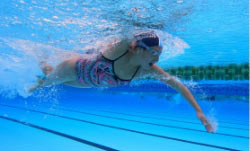
Australian swimmer Lani Palastar recently became the third fastest ever woman in the 1500 meter freestyle. Let's take a look at her stroke and break down what she does incredibly well. We can see from this front view that she uses a two beat kick, one kick per arm stroke. And you find a lot of distance swimmers like to go this two beat kick. It's much more efficient than a six beat kick much more sustainable over those longer distances. You can pick up your kick later in the event. A lot of swimmers like to finish the last 50 meters or sometimes last 100 meters with a six beat kick. But for those longer distances, a two beat kick is what a lot of swimmers prefer to do, especially those that are doing English channel and those sorts of marathon swims, two beats really popular. Now you'll notice with Lani as well, her head position is looking primarily down just slightly forwards. And what I really like here is her breath timing. One of the things that good swimmers do really well is they time their breath where as one hand is coming underneath the shoulder. So for her it's her left hand, she's pulling into the breath, her head turns nice and early there. And she gets her head off to the side as she's finishing that stroke. So the left hand is finishing, she's getting her breath. And the important part right here is that she returns her head with her catch. So her eyes are back down when this right arm completes the catch right here. The reason that's important, the reason we want
to get the eyes back down with the catch is you can get your catch a little bit easier when your head comes back in time. Because if your head stops the side and you're going through your catch, it takes away some of that power and control that you get in that position because of the position of your head. The second thing is from here, you're back into a more streamlined position. And then she can make sure that she's going through that propulsive part of the stroke that she can really drive herself through from there. So the way I like to teach it the way I like to think of it is pull into the breath. So you pull here to initiate that turn of the head. And then you return the eyes back down with the catch as you could see she does there. Now another thing to be mindful of there have the head turned in time at the shoulders. So we want the straight to be almost like a symphony. Everything's playing together in time with one another and turning the head in time with the shoulders and back with the shoulders is a really good way to do it. Now if we have a look at her greedy, you'll notice here she turns to the side to breathe. She looks primarily to the side here, part of that bottom goggles in the water. Now, only a part of it, she's not looking directly to the side that's slightly higher than that. And usually at that speed, she's swimming a 102 pace per 100 for this 1500 meter freestyle, which is incredibly quick. She has to turn that little bit further to be able to get that breath low. And you can see she's reaching around a little bit with her mouth, almost
like a sort of Popeye type breath. And then she returns it quite quickly as that hands coming back through. So that's really nicely done there. Now if we go back to this front one dude, let's have a look at a few other parts of the stroke. We can have a look at her entry position. So her right hand enters in line with her right shoulder, close to the center here. It doesn't cross that sense line, which is good. She extends forwards a little bit. Very quickly, she starts to bend at the elbow and point those fingers down. You can see what a great catch position. This is right here. Really good catch position. So one of the two things that we look for when you do the catches, we want to firstly reach forwards, but then point the fingers downwards. And you'll see the fingers point directly down. And the second thing is the elbow needs to bend or slide out to the side. If you don't get your elbow going out to the side, you can't get a high elbow catch position. A lot of a lot of consumers who make mistakes with that is they will pull through but the elbow stays narrow. You've got to get that going out to the side to get your catch. So if we look at that from the side view here, we'll see with with Lani on the side. So she reaches out and what we'll notice is fingers bow wrist, wrist bow elbow, which is where we want to be setting up the catch. Then we should point those fingers down, elbow slides out to the side and that creates our high elbow catch. So if we draw a line from the shoulder to the
fingers, you'll notice that the elbow is above that line. So that's a high elbow catch because she's got all this surface area here that she can use to press back on the water, which helps her move forwards, which is obviously the the goal. So really nice catch on that side and she presses back and you'll notice that the palm of the hand faces back behind her the whole way through. Now a mistake I see a lot is from about here, some people will let their hand turn in towards the body like they're slicing out the back and that means that their surface area of their paddle is about half or a third of what they used to have. So keep the palm always facing back from the time you've got your catch all the way back to there when you finish the stroke and she finishes the stroke near her upper thigh. So he hips there finishes near the upper thigh and releases and then comes back over the top of the water. On the right side, similar thing, you can see what a good catch that is there. That is extremely good catch. Now if you are tight and stiff through the shoulders, you may not be able to get that position like Lani's got because that requires quite good mobility and a lot of the adults that I work with don't have that same range of motion. But if you can get somewhere close to a high elbow catch meaning let's say your arm is this green line instead where your elbow is a little bit above that line, that would be more than enough. That is still going to give you a good paddle to work with and if you're extremely tight
through the shoulders, well at least we try and not drop the elbow. So work with him whatever you're comfortable doing there is a good thing to do. At Effortless Swimming, our mission is simple. Make swimming more enjoyable. Whether you're training for your next race, swimming for fitness or just love being in the water, we're here to help you swim faster, smoother and with more confidence. And one thing that can make or break a swim is your goggles. If you've ever struggled with foggy lenses mid session, you know how frustrating it can be. That's why we created the Effortless Swimming Hydro Clear Anti-Fog goggles for long lasting crystal clear vision. I've been using them myself and the difference is night and day and I'm not the only one. Deborah swam 36 kilometers down the Derwent River and the entire time her vision stayed crystal clear. No fog, no frustration, just an uninterrupted swim. So what makes a Hydro Clear goggles different? It's all in the technology. Unlike ordinary anti-fog coatings that wear off over time, Hydro Clear Super Hydrophilic technology is built into the lens material itself. Here's how it works. Instead of fog forming as tiny droplets, water spreads evenly across the lens, creating a thin film that prevents fog from even starting. And the result? Consistently clear vision, swim after swim. And the durability? Our lenses are CNAS certified. Tests show that even after 2000 rubs with a wet cloth under a 200 gram load, the lens stays fog-free. No gimmicks, just serious
performance that lasts. Using them is simple. Just wet the lenses before putting them on and you're set for a fog-free swim. Ready to see the difference yourself? Get 15% off your first pair of Hydro Clear anti-fog goggles with the code podcast at shop.effortlesswimming.com. That's 15% off your first pair of goggles with the code podcast at shop.effortlesswimming.com. We also have a 30-day money-back guarantee, so if you're not happy with the goggles for any reason, you can simply return them for a refund. Don't let foggy goggles ruin another swim. Try Hydro Clear today and experience clear vision from start to finish. Now the next thing is the kit timing. When should we time and coordinate our kicks with the rest of our stroke? Well what you'll see here is that when her left hand enters, which is it's entering there, you'll see that's when her right foot kicks down. So left hand entry, right foot kicking down, which is what we're after there. You'll notice on the other side as well, you'll see the right hand will enter the water there and her left foot kicks down. So right hand entry, left foot kicking down at the same time. So the opposite there, right hand entry, left foot kicking down. Now I've also explained that another way. I will sometimes explain that as kick and catch on the same side. So if we look at this side view here,
you'll see she gets the right catch there and this, so left catch and left foot going together. So that left catch and left foot go together there. It's the same thing because that's essentially when the right foot's kicking down. If we go to this one you'll see that her right, oops sorry, her right arm is catching. So right arm's catching, right leg is kicking down. So similar thing, just a different way of thinking about it. So it really just depends on what suits you best when we think of the timing of the kick and catch. Alright, so same thing but just different approaches to it. Now another thing we can can look at here as well is the rotation. Now good rotation, I see is being 30 to 40 degrees through the back of the shoulders with the surface of the water. So with the landing there, if we look through roughly through the back of her shoulder, she's about 30 degrees at her furthest point of rotation, so 30 degrees from that angle. If she were to go beyond that to 90 degrees, she's probably going to have a hard time getting a high elbow catch and it's probably going to limit her stroke rate as well because it takes a lot longer to go side to side if we're going too far. So 30 or 40 degrees, maximum rotation through the back of the shoulders with the surface of the water which you can see there. Now what you'll notice with her hips, her hips are rotated about the same. So if you're doing anything more than really like 50 meters sprint,
maybe 100, your hips, torso, shoulders, they should be rotating about the same amount. We want to work it together and keep them connected like you'll see here. So imagine that you're rotating around your spine, head stays still unless you're turning to breathe and you're rotating around that spine and that rotation, this is the important part, that rotation comes primarily from the reach and extension forwards. So don't figure out trying to twist under your side and roll onto your side. Good rotation will come from a good reach and extension forwards like you can see here and you'll see the hips shoulders going together. So she enters the water fingers first, extends forwards out in front, begins the catch, then she starts to rotate back onto the other side and just kick out the back here, helps her rotate onto that other side as well. Similar thing here, she enters on the right, extends forwards out in front and then kicks down and that helps her initiate that rotation back to the other side. So she's just so streamlined through here and there's no delay, there's no pause in her stroke. She's got a quite a high tempo, quite a high stroke rate and she can do that efficiently. Sometimes when people come to me and they've got a very low stroke rate, might be 45 strokes per minute, which is just too low for most people, they think, ah, if I increase my stroke rate, my heart rate's going to go up, which can certainly be the case until
you get efficient at it and get used to it. But often with a light kick or a two beat kick, then you can actually maintain a relatively high stroke rate for not too much effort, especially once you do get used to it. Let's have a look at the recovery of the stroke. The recover is when the arm comes over the top of the water. So you'll notice that Lani releases the water at the back here and when she pushes back, she's still got this little bit of bend remaining in her elbow. She's not pushing as far back as she can, locking that elbow out. If you do that, you're going to have a hard time getting over the water comfortably. So releases the water out the back, brings the arm over. See how this shoulder is out of the water. You've got to have enough rotation where the shoulder's out, then the arm can come over comfortably and this elbow's pointing up. So if you're thinking high elbow recovery means this, it's not the case. It means elbow pointing mostly out to the sky as you bring the arm through, but it can be out here. It doesn't, it shouldn't really be here. Let it be out to the side in a more comfortable position. And then as she comes through, she goes to enter there, fingertips first, and she slides the hand forwards into the water from there. Similar thing on this left side as well. And she does get that little bit more rotation here on that breathing side, which is pretty common as well. So you see that entry, fingers first, elbow slightly up, and she slides it forwards. So this is a really nice stroke that I think a lot of people can start to work towards, especially people who prefer that two-beat style of kick. Now you may notice in the front
view, it does look like she comes pretty close to that centre line, maybe crosses it slightly there, but she does correct very quickly. And it's in line with it. It's not crossing it necessarily. So I, yeah, I think that's, it's fine to be in that sort of range. And I've seen that with quite a few longer distance from us. You look at Gregorio Paltrenieri, he does a similar thing. Now not that we're trying to cross the centre line with our hand, but if we get close to it, that is okay. The time where it becomes not okay is if it's impacting your catch. If being across the centre is stopping you from getting into a high elbow catch, because it's staying there through the movement of the catch, that is not what we want. So then we'd look to come out a little bit wider to make sure it doesn't impact our catch. So I hope you've enjoyed this breakdown of Lani's stroke. If you would like to get our free style technique checklist, where I go through all these things in detail and what order you should focus on them in, click the link below and you can get that for free in your inbox today. Thanks for watching. If you want to see my full breakdown of free style technique with even more detail than this, click this video above. Thanks for listening to the Effortless Swimming Podcast. If you'd like us to help you become a faster, more efficient swimmer, go to www.effortlesswimming.com.