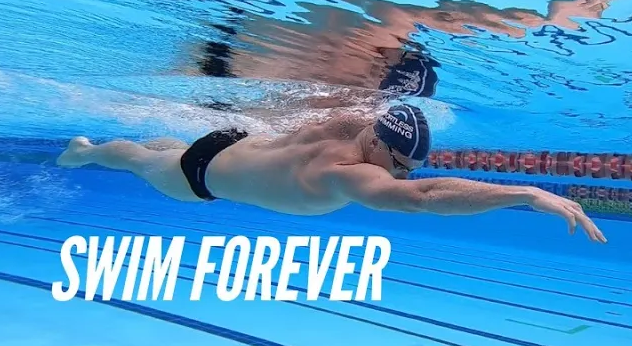








Sam Short recently went a 3:41 for his. 400 freestyle. Let’s take a look at what he does really well in his freestyle technique and he uses a galloping style of freestyle. So let’s take a look at this style and how this kind of technique might benefit you. And I think it can be a very effective way to swim open water for a lot of people because in the open water you’ve got a bit more buoyancy with the waves and the chop.
This sort of technique can go a long way, and you do see this with a lot of the good. Triathlon swimmers, and a lot of open water swimmers as well. So let’s take a look from the underwater shot to begin with.
00:50 Head Position (Shoulders Near The Cheeks)
1:48 Elbow-The Widest Part Of The Arm (Power Diamond)
3:26 Galloping Stroke
4:07 Timing
8:17 Catch
Get your NanoClear swimming goggles here and get 15% off your first purchase with code PODCAST15.
Grab the freestyle checklist here:
https://effortlessswimming.com/freestyle-checklist/
Work with us (stroke analysis coaching):
https://effortlessswimming.com/es-training-and-membership-page/
Join a camp:
https://effortlessswimming.com/camps
Watch on Youtube:
Transform your freestyle in 33 minutes:
Transcript
Read the full transcript
Welcome to the Effortless Swimming Podcast to show that help swimmers and triathletes love the water, become a better swimmer and live a better life. Here's your host, Brenton Ford.
Sam Short recently went a 341 for his 400 freestyle. Let's take a look at what he does really well in his freestyle technique. And he uses a galloping style of freestyle. So let's take a look at this style and how this kind of technique might benefit you. And I think it can be a very effective way to swim open water for a lot of people, because in the open water, you've got a bit more buoyancy with the waves and the chop. This sort of technique can go a long way. And you do see this with a lot of the good triathlon swimmers and a lot of open water swimmers as well. So let's take a look from the underwater shot to begin with. We've seen with Sam's head position. He looks pretty much straight down at this point. Now as he's reaching forwards with this arm, have a look at where his shoulder is. It's near his cheek. It's next to the side of his face. And we see that with good freestyles as they're extending forwards, they aren't going ear to ear to shoulder. They're going shoulder near the side of the face near the cheek, closing this gap a little bit in order to help them set up their catch. Now you don't necessarily need this shoulder to touch because that's probably going to be uncomfortable for you. But if it's near the side of the face, that can help you move the arm in a way to set up that high elbow. Because what happens at this point if you drop your shoulder is the elbow drops with it. And that means you've got to drop the elbow catch, which isn't very effective. So we see that with a good catch is the shoulder will stay near the side of the face near the
cheek as you go through that catch. Now you'll also see here that when he enters the water, he's in line with his shoulder, extends out, gets fingers below wrist, wrist below elbow, then points those fingers down, and the elbow comes out to the side here, where the elbow is the widest part of the arm. So if you look at your stroke, and your hand is the widest part of the arm, then you're in a weaker position than what you would be otherwise, because that is the position. Well, this is the position that allows you to use your lats, your back through your chest as well, through that movement of the catch and the pull. So it's common to see with all the good freestylers, they get to that position when their hand is moving under their shoulder. We call this the power diamond, right here. So the power diamond is the hands under the shoulder. It looks like half a diamond or a diamond if you've got both arms there. And we came up with a drill a couple years ago called the YMCA drill, which you can see here. And in that drill, we have some as kick for five seconds in four positions, those positions being the start of the catch, the high elbow position, and then the power diamond is the third one. And the exit is the fourth. Now it's a bit of a funny drill. And you might look a bit strange doing this at the pool. But we find a lot of swimmers do that drill. And then they've got a much better sense of where they should be through the stroke as they're swimming. And so they naturally start to move through these ideal positions in their stroke. So the three, the YMCA drill is a
bit of a strange one, but quite often do it at clinics. And a lot of people like to do that to help improve their catch and their pool. Now if you have a look above the water, this is that galloping stroke that you can see here. So Sam goes, he actually submerges himself under the water here. And then he lifts himself up and out of the water quite high over the top here. And then he comes over and goes back down very similar sort of stroke that you'd see with micro falps. He had a similar sort of style. And it just depends on what suits you best. If you look at Elijah Winton, next to him in this race, he stays pretty flat, he's pretty even, whereas this more galloping sort of stroke is what Sam prefers to do and works well for his style, how he's built and what he's developed over time. And it can be extremely effective. Now one thing that we see with this more galloping sort of free style is a difference in timing of the arms. So you notice on this side, his right hand enters the water, this hand is almost finishing the catch. So that enters this one's just finishing the catch. If we go to the next stroke, you'll see that he initiates this catch earlier, the right hand catch is going earlier. And when his left hand enters, which we have the best frame for that there, but you'll see that he's a lot further through the stroke. There we go. So his left hand has entered the water here. This arm is almost at his navel or his belly button
there. So he's a lot further through it. So the timing is actually quite different. One side is a bit more catch up. The other side is a little bit more sprint stroke. So it's a quicker on one side on the other. So that's what you see with that galloping stroke. So the side that you're breathing to is where you'll have a bit more catch up. The side that you're not breathing to is the one that will initiate that catch sooner. And that's where you get that lift through the stroke is just sort of driving yourself through, list you up a little bit higher through here. And he throws that other arm over the top of the water. And that's and then he also has to come down from there. So that's where he gets submerged under the water a little bit more. So this can be a good thing to practice in the open water, especially if you're going race pace, you can do this a lot easier, not so easy to do at slower paces. But if you are going faster, this is when you can start to work towards this sort of technique. Now it's not for everyone. It does require a relatively strong kick and effective kick. So if you're, if you much prefer like an easy two bit kick, and now you're swimming around sort of two minute pace, I wouldn't necessarily suggest a galloping sort of freestyle stroke necessarily, you're probably better off looking for that more even stroke. But just depends where you're at this can be a really effective way to swim at effortless swimming, our mission is simple, make swimming more enjoyable. Whether you're training for your next race, swimming for fitness or just love being in the
water, we're here to help you swim faster, smoother and with more confidence. And one thing that can make or break a swim is your goggles. If you've ever struggled with foggy lenses mid session, you know how frustrating it can be. That's why we created the effortless swimming hydro clear anti fog goggles for long lasting crystal clear vision. I've been using them myself. And the difference is night and day. I'm not the only one Deborah swam 36 kilometers down the Derwent River. And the entire time her vision stayed crystal clear. No fog, no frustration, just an uninterrupted swim. So what makes a hydro clear goggles different? It's all in the technology. Unlike ordinary anti fog coatings that wear off over time, hydro clear super hydrophilic technology is built into the lens material itself. Here's how it works. Instead of fog forming as tiny droplets, water spreads evenly across the lens, creating a thin film that prevents fog from even starting. And the result, consistently clear vision, swim after swim. And the durability, our lenses are CNAS certified. Test show that even after 2000 rubs with a wet cloth, under a 200 gram load, the lens stays fog free. No gimmicks just serious performance that last. Using them as simple. Just wet the lenses before putting them on, and you're set for a fog free swim. Ready to see the difference yourself. Get 15% off your first pair of hydro clear anti fog goggles with the code podcast at shop effortless swimming.com. That's
15% off your first pair of goggles with the code podcast at shop effortless swimming.com. We also have a 30 day money back guarantee. So if you're not happy with the goggles for any reason, you can simply return them for a refund. Don't let foggy goggles ruin another swim, try hydro clear today and experience clear vision from start to finish. Now if we have a look from the side under the water, you'll see his catch from this side view, we get fingers pointing down, elbow bending a bit there. And it's a good catch. It's nothing extreme or over the top, but it doesn't need to be anything crazy. He's still getting a big paddle. And you'll somewhat see it here is he's got that elbow bent a lot on that side. So the left arm in the water there gets a really good catch. But it's not like we're going from 90 degrees. So sometimes people think, the more extreme I can make my catch the better. It's not the case. It's what's comfortable, what's sustainable and what suits you best. And you can say it's still a very, very good catch from that position. So there's some of the main things that we can see in Sam's stroke. Hope you enjoyed this video. If you would like to get a full breakdown of freestyle technique, click this video above. Thanks for listening to the effortless swimming podcast. If you'd like us to help you become a faster, more efficient swimmer, go to www.effortlesswimming.com