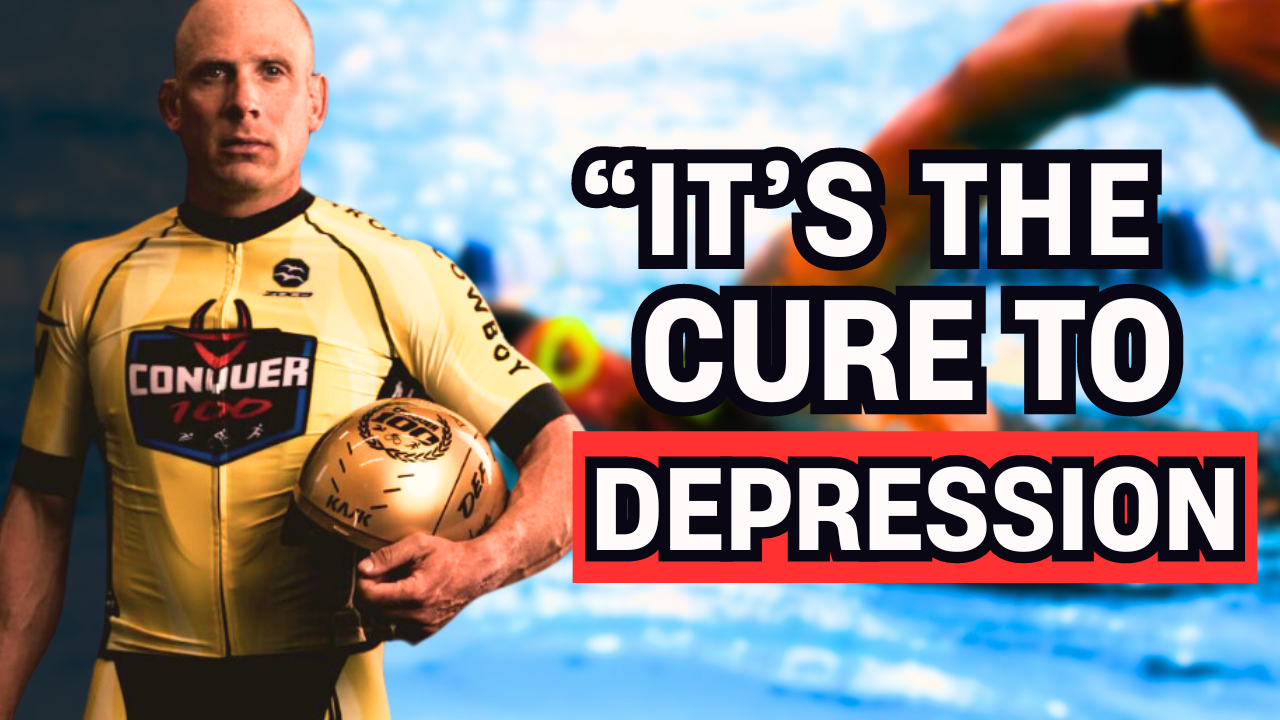








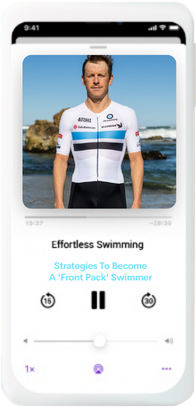
In today’s podcast episode, professional triathlete and coach Mitch Kibby shares his journey from having little swimming background as a child to becoming a front pack swimmer in the pro field. He is the head coach and founder of i4 Coaching and has worked with Effortless Swimming at our clinics and camps. Mitch discusses his strategies for improving swimming performance and offers valuable insights and tips for swimmers and triathletes looking to improve their skills. Tune in now!
In this episode
- 00:00 Introduction
- 02:39 Swimming Background
- 07:51 Long Journey to Success
- 11:01 Lessons Learned from Early Days of Training
- 16:55 Refining Coaching Cues
- 17:51 Tips from Elite Triathletes
- 23:36 Front End Speed Training
- 27:55 The Power of Training in Challenging Environments
- 29:22 Shorter Sets, Greater Gains
- 34:12 Improving Performance through Specific Training
- 36:15 The Value of Training Partners and Squad Training
- 39:12 The Hardest and Best Things About Being a Pro Triathlete
- 42:23 The Benefits of a Flexible Lifestyle
- 44:00 Transforming Negative Self-Talk into Positive Motivation
- 49:04 Maintaining Emotional Stability and Setting Realistic Goals
- 52:06 What’s next for Mitch Kibby?
Links from this episode
- Instagram”>Follow Mitch on Check out i4 Coaching here
- Change your technique and swim a smoother, easier freestyle with the Effortless Swimming membership
- Do you want to work with me personally to improve your technique? Join my swim technique coaching here
- Get 15% off our 8-week Faster Freestyle course by using the code 8week15
This podcast is brought to you by NanoClear — our own range of anti-fog swim goggles, designed by Effortless Swimming with the anti-fog treatment bonded into the lens itself (not sprayed on, so it doesn’t wear off after a few swims). Check out the NanoClear range here and use code PODCAST15 for 15% off.
Transcript
Read the full transcript
You’d always sort of been more of like a second pack sort of swimmer in triathlon. Typically, yeah, did like second pack, not quite making the front pack, but you made a change that that I found was really, really interesting. And without doing those sets that expose you, you’re really, you’re only going to find out on race day and often the answer is not what you want. So yeah, I think that was really good value. Welcome to the Effortless Swimming Podcast to show that help swimmers and triathletes love the water, become a better swimmer and live a better life. Here’s your host, Brenton Ford.
On today’s episode, we have professional triathlete, Mitch Kibbey. He’s coached our camps and our clinics, and he’s one of the best coaches when it comes to describing how things should feel and cues that swimmers can use to help those changes stick in their stroke. He’s a terrific coach and more than that, he’s an excellent athlete. He’s gone from essentially being a non swimmer as a kid to being able to compete at the top level in the front pack at a world championship level. So on today’s podcast episode, I asked Mitch, what did he do to get to that level? What would he recommend other swimmers and triathletes do to improve their swimming? And what are some of those things that you’ve used as a coach to help people improve their swimming? Welcome to the Effortless Swimming Podcast. My guest today is someone who I’ve tried to get on the podcast for years and years and years and he’s finally given in.
I’ve twisted his arm enough to get him on the podcast. It’s a good friend and fellow coach, I was about to call you Mitch Patterson. Mitch Kibbey, welcome to the podcast. Thanks, Brenton. Yeah, just a couple of feet tall and Mitch Patterson. But yeah, hopefully the same presence when you’re when you’re with me. Well, I love to tell the story of how we first met because it’s we’re all down at Elwood Beach with a what became a mutual friend. And we were down there going for an open water swim. And here we are thinking we decent swimmers. And then this young kid rocks up and he says, I would love to mind if I go for a swim with you guys. And here we are thinking, yeah, good luck keeping up with us, mate. And we go out for a swim and what do you know? We can’t drop you and we’re trying our hardest and we ended up swimming together. And from that, that day, it formed a friendship that’s lasted all the way up until today.
And that was probably that was probably a good 12 years ago. Do you reckon? Yeah. From that, we spent a bit of time coaching next to each other, your coaching power points. And I think I was filling in for tribal triathlon club at the time at MSAC. So after that swim, I was seeing you sort of once a week for a month period. And yeah, I think it’s about the really strong friendship since then. And you’ve been a pro triathlete for quite a while now. And I want to dig into that. Talk about your swimming background and what you’ve done to get your swim to the point where you’re able to mix it with the best triathletes in the world. So I want to talk about that, but also bring on your coaching experience because you’ve come along to a lot of the camps that we effortlessly have run. And you’ve run a lot of clinics as well for us, because when I saw you coaching next to me, what I’d noticed was that you had a really good way
of conveying your ideas and explaining some of the points, getting people to know what they need to feel for and what they should be aiming for. And that sort of coaching, I thought was like, this guy’s really good and he knows his stuff and he genuinely cares about the person that he’s talking to. So that’s, I think, what made me want to start to bring you into the stuff that we were doing, and it’s been a lot of fun having you on those camps and on those clinics and being able to coach together. So I want to draw on some of your coaching experience as well on today’s call. So just to kind of kick it off, what was your swimming background prior to doing triathlon? So I guess I’d classify myself as a footy club swimmer. So growing up, I played Australian rules, football and cricket. And I was as passionate about both those sports as anyone else. And I did very little swimming. And in fact, I only thought triathlon existed on TV at the Olympics.
And I used to love it when it’d come around. It’d be the marquee sport of my two week Olympic campaign. I just couldn’t wait to watch it. But I had very little to no exposure to it in Australia at home because I spent all my weekends in summer on the cricket field. So basically I did some swimming at school. I never had formal lessons or did any squad swimming outside. So I was very much just relied on my fitness as a as a runner to translate in the pool. And as many people know, it doesn’t cross over particularly well. I did a few sort of school carnivals and relays and things like that. But I would swim, yeah, probably at best three to four times a year. And it wasn’t until I finished school and I moved up to Noosa with a good friend of mine. The Noosa triathlon actually came past our doorstep and I went down and got talking to a guy who competed in it. I’d never know his name and probably, yeah, never going to see him again.
But thanks to him, he really lit a spark and showed me that triathlon is accessible to everyone. And, yeah, from from there, I went down to Rebelsport in Brisbane and I bought a triathlon suit and I was actually quite lucky because that day I remember I was tossing up between this old discounted eyeliner triathlon suit or a pair of skins, compression shorts and a compression t-shirt that was white. And I was going to go the white skins and the white t-shirt. But I reckon if I had bought that, not the eyeliner suit, I would have been one and done in the triathlon scene because it would have come across too well. But, yeah, anyway, I bought that suit. I bought a bike out of the trading post and I went down and did a couple of the Queensland triathlon series, the old Gatorade series up there. And, yeah, I was sort of instantly hooked on the sport. I loved it. I was side by side in life’s position out of the water
with another guy. But, yeah, my first race was a fairly traumatic swim. I looked up at the course. It was only 400 meters swim and I just thought I’d be able to give it a bit of energy and sort of come out with anyone else.
Mostly just because I felt like I wanted it more than anyone else, but I got sort of 50 to 100 meters in and realized that things were starting to get heavy and 400 meters was starting to feel like a long way around. So, yeah, I was pretty happy to get back on land that day and then really loved the rest of my first race, but found out I had quite a bit of work to do in the water after that. And basically my early years of swimming started just going down to the public pool. I think I’d get through about 1,000 to 1,200 meters. Give myself a bit of a pat on the back when I walked out and, yeah, sort of tried to do that about three times a week. It really wasn’t until I moved back to Melbourne to start university at the end of that year, so that was 2008, 2007, sorry, no, 2008. And I linked up with Andy Sleiman at Triathlon Club and he was really the first person that sort of showed me the way in swimming, taught me the sort of fundamental etiquette
and, yes, I spent the next couple of years training with that group and really putting a lot of time into learning swimming as I would have if I had have started in the squads when I was sort of 12 or 13. So probably always felt like I was a decade behind where I needed to be, but as a 19, 20 year old, I was pretty keen to make up that time as quickly as possible. Don’t you love how naive you were going into that first race? You look at, like, just, yeah, find a meters easy. I’m gonna, as long as I give a good effort, I’ll be coming out really well. And of course, you just, you absolutely smoke yourself and then you end up feeling with lactic acid and having a traumatic experience that could put you out of the water for a long time. But yeah, what I love about that is that you see someone like you where you are now, people just think, oh, they’ve always been a good swimmer. You know, they haven’t had to, like,
work that much for it. Where, matter of fact, it’s the complete opposite. Like, you’ve got, you started from hardly being able to swim at all to now where you are. And I know the amount of time and dedication and thought and effort that you’ve put into get where you are. So just nothing comes easier or comes quickly. It’s a long, long process. Looking back, how did you think at the time that it would take this long to kind of get to this point? No, not really. Like, I guess my asking my 20-year-old self how long it would take. And I think particularly at that time we had so many successful Australian athletes on the world stage. Like Emma Snowsill was winning gold medals. Brad Carterfout and Courtney Actonson were just always podium or top five at the World Triathlon races. And then of course, Greg Alexander and Chris McCormack what they had done in the Ironman races. So I guess as an Aussie I felt like that was gonna be my path too.
And it was just a matter of, yeah, a couple of years down the track I’d win a national title and then probably being conservative two or three years after that I should win my first world title. And then it’s just gonna be downhill with the wind from there. But I think I was always aware and willing to put the work in. And I think I always had a longer term view that for me I might develop a little slower than what some others had. And it might be a 10 or 15 year journey to where I wanted to go. And now I am 15 years down the track. And yeah, I feel like, yeah, there’s still plenty of years ahead of me to keep going down that path. But I guess my early experiences with swimming were really my biggest asset as a coach because when people do walk into an effort or swimming clinic or an offer coaching swim sessions, I can sort of look at them and get a read on how they’re feeling and sort of what their sort of mental
and emotional state is coming to the pool. And it’s one of the first things that I look for when I meet a new swimmer and having been there myself and have to sort of learn the hard way and manufacture the right thoughts to have around your swimming. I think it’s just helped me create a bit of a dialogue with that swimmer to soften the challenge for the day and just, first and foremost, get them enjoying what they’re doing and feeling like they can start to build some confidence from a pretty early, early part of their swim journey. What were some of those early things that you did to be able to get over that first hump or that first hurdle where it means a bit of a chore, it’s hard work and you don’t have much rhythm? What were some of those things that Andy worked on with you in the early days because I had another pro triathlete, Matthew McElroy on recently and when he was talking about the things that he did in the early days,
it’s quite different to what he’s doing now. He did a lot of swimming with double pool boy, band around the ankles, just working on that core control. And like these days, he doesn’t really do that at all but he had to do some different things initially to kind of get over that initial learning period. So I was curious what it is for you. Yeah, well, I guess back a step for that before I sort of really started going down that’s like the squad swimming path, I’ll actually give a shout out to one of my good mates, David Bardol. His dad, Albie had actually swum the English Channel and at the time that I was coming into it, they set up a little ice burgers group down in Melbourne. And one of my very first day from water swims in Melbourne, we met on Black Rock Beach at six AM and it was pitch black and I went down as Dave’s mate and sort of a guest of the group and they had a little circuit that they’d do a couple of times a week.
But when I was standing on the sand there, went to put my goggles on, my goggles snapped and Dave handed me his goggles and said, look, you take these, I don’t need them. I know this loop, I know where we’re going. And anyway, he took me out and he was a far better swimmer than I was. I’ll say at the time because I think I’ve got him covered now but I’ll never forget how patient he was with me. He waited with me while we went around the loop and basically just was just the perfect sort of introduction to open water swimming and made me love the sport because my first experience there was really positive. I got to hang out with my mate. It was, we got to watch the sunrise come up over the bay and you step out of the water and you’ve just had the day off to such a great start. So I think, yeah, that really lit a spark and gave me some passion for swimming. And I think I’ve never really lost it since then. A lot of people say that swimming’s just
their biggest chore in the week. But I’ve always looked at it like, it’s just such a luxury to be able to go to the pool and have a swim and understand what it is you’re doing and to be quite competent at it. So yeah, but it is difficult to remind yourself that sometimes when you’re tired and you just need to get it done. But I think I’ve always loved swimming and that’s been such a fortunate mindset to have. But then going through my sort of more formal swimming development, I think Andy really taught me that etiquette about sort of reading the pace clock and connecting a swim warmup, a maidset and a cool down and just sort of installing some gears in your swimming. And then I went on and swam with Mentone Grammar, Mentone Aquatic for probably three or four years. And that was when I was racing ITU triathlon and the swimmers at that squad were at a really good level. They trained really hard and we had a bunch of triathletes that came in.
And I would say that we just worked really hard in the pool for those few years. And there wasn’t many times where I walked away with petrol in the tank, but I think I learned how to suffer in those swims. And particularly with things like doing kick, I wasn’t a natural kicker and connecting the sort of top half and the bottom half of my stroke was really difficult. And if you threw me a kickboard, I’d pretty much go on the spot. But I think as a discipline thing for the swim squad, at one point we had to do 20, 50s of kick on the minute to start every session for the week. And I was basically getting to the point where I was touching on 59 or 60 seconds and going. So the first 20 minutes of the swim was pretty much all out kick for me. But in a short period after, I started to get competent and improve with the kick. And then when I would be swimming freestyle, I’d sort of be able to connect the top and bottom.
And that really just took the breaks off from my swim strike. And then, yeah, I guess that’s where just started to get an understanding of how different swim sets and intervals can impact your swimming level. So doing some overspeed stuff with long rests versus doing some threshold stuff with short rest and just getting a sense of the interplay and how to basically build an effective swim program. So yeah, that was probably through my early 20s that I started to grasp that. And then probably the biggest step in my swimming journey was when I had the opportunity to train with Darren Smith and his squad. I spent two years with Darren and that was really a swimming revolution for me. He pretty much stripped back everything I knew and he did. He gave me double pool boy and I spent a lot of time swimming with double pool boy and basically tried to… He treated me as a non-swimmer even though at that time I felt like I’d done
three or four years and I could be the sort of being thought pretty looking freestyle swimmer. But Darren said, no, Mitch, you’re never gonna be that swimmer. Let’s teach you about stroke rate and rating up and let’s get you fitter and getting you sitting on top of the water and learning how to basically create an effective catch and pull. So I think at that time, yeah, it really sort of transformed my learning on the swim. But again, one of the great assets for me as a coach from that time was I had to really think my way through and Darren really challenged me to think about what I was doing and to be able to actually make the changes that he wanted to see from pool deck. And I found it really hard. I found that really difficult to be able to do that. And in that time, that’s when I came up with a lot of these little cues or little sayings, I guess, that would basically just stop me from going mad in the water.
But I think that’s the dialogue that I can help share with some other swimmers. And I think I’ve been able to refine them to a way that I can make swimming make sense to many more people. Yeah, I find a lot of it comes from that personal experience, whether it be from your own swimming or you start working with people and then you start to develop these ideas. And in terms of where you’re at now, if you don’t mind sharing the story of a couple of months ago when you were training with a very good triathlon swimmer and what it sort of made you realize in terms of your ability in the water, because you’d always sort of been more of like a second pack sort of swimmer in triathlon. Typically, yeah, like second pack, not quite making the front pack, but you made a change that I found was really, really interesting. We talked about this on our Thailand cap. But if you don’t mind sharing that story because I found it super helpful and interesting.
Yeah, so just a couple of months before we were in Thailand, I spent a few days training with Josh Amberger. And I think that was sort of a bit of a second wind with the way that I was looking at swimming. And I’d been training up in Andorra at about 2,100 meters altitude in a pool up there. And it was pretty hard work. So swimming was, it was starting to become like every time you go to the pool, you’re sort of, yes, you’re not swimming on your terms and there weren’t many days where I was really able to sort of get out ahead. But I think that time gave me a little bit of fitness. But then during that trip, I went down and swam with Josh where he lives and trains with his wife Ash through the European summer. But I think it was really important to actually see the way that he approached swimming. And I probably in my mind, I’d always thought that these guys who had always been leading out the swims, it was because they were such good swimmers
when they were younger. And they didn’t need to, they no longer needed to train hard on their swim. So I guess even though for many years, I’ve been like a very good local swimmer, I guess on the start line, I always felt like I was at a bit of a disadvantage because the guys I was up against could just sort of condense their challenge during the training week to only two sports. But during that time, I actually saw how hard Josh worked in the water. And I was really impressed by the set that he was getting through and just the way he approached it. And probably one of the things I noticed is that it was really no fast swimming. Like he wouldn’t have long rest intervals and stand on the wall for a good portion of time. And I think at the time, he was a week and a bit away from an Ironman race. And just as I’d be thinking that, well, he’ll be sort of starting to rest up and really look after himself, but it was quite the opposite.
He was doing some really solid swim sets. And even on the bike and the run, he was sort of continuing to work really hard. So I was really impressed by the way he was training and just his sort of endeavor to keep his swimming as an asset. And I sort of sat down and reflected on the back of that. And just sort of compared some of the sets that I’ve been doing in my own swim program. And some of the things that I felt had created a quite an immediate difference for me on the back of that. And there was a lot more mixed pace swimming, a lot more short arrest. And it was probably just a fair bit more specific to an actual race day swim. Whereas for a number of years, I’d sort of felt like I could show myself in training that my swimming was at the top level or at my top level. And I’d get through sets that I felt would be, would be the requirement to swim in the front pack. But it was always just a little different.
And I’d just never feel quite settled in the group. And I probably found myself in that position where I was either the mid or back half of the lead group or I’d be behind the split and be effectively towing the chase group. And I always felt like I was probably swimming at a better level or if I was swimming with the same guys in the pool, typically I’d be the one leading the lane and or sort of feeling like I was well controlled in the set that we’d come to the open water. And it just, I felt like it just didn’t suit me. But yeah, since then I had made a few changes and I started to be a little more sort of polarized with my speeds during longer continuous reps and I would reduce the rest time. And I think I just got a really good response from it. And it really allowed me to sort of bridge that gap from what was typically happening around the three or 400 meter mark in the swim where I’d be really bubbling up with lactate
and starting to feel like my pace would be decaying from the get out speed. And it would be that moment that I’d be coming under pressure in the race. And I think I was just able to start to condition myself a little more to be able to absorb that first 300 meters and then settle at a pace that I felt like was more the pace that I could just roll out time after time in the pool, but not able to do it after an aggressive start in a race, which ultimately means it doesn’t matter what you do in the pool. It’s what you do on race day that counts. And so yeah, that was just a really valuable few days that just triggered some thinking. And yeah, since then, I’ve had really some of the best swims of my career. And yeah, been able to put myself in a position where I’ve actually had a little bit of get out speed. And it just creates a totally different experience in a big pack when you’re not getting sort of stuck in the mallet a little bit further back.
And what’s an example set that you would do now just to help train that front end speed? So it could be something like doing 200 reps, but rather than just doing them at a sort of even pace and coming in, just say I’m in the pool, maybe it’s five, 200s on three minutes. I’d probably swim, swim them between 235, 238,
and I’d just typically roll through. My first split would be almost identical to the second split, but instead I’d sort of flipped out a little bit and I’d go 25 fast, 25 easy for that rep. And perhaps the time might be even slightly slower, but it would give me that change of pace. So you’re sort of injecting a little bit of lactate into the system. You’re absorbing it without falling off completely. And then you’re just repeating that. And it actually, it’s a fairly different stimulus to the rep, but I think it just, it gives you that sense of gears and control. And it probably just, importantly, it shows you when too much is too much. So if your aggressive pace is unsustainable, you’re really gonna feel it, particularly in the last sort of 50 or 100 of that 200 rep. So it’s sort of giving you a really good hold on what your top end change of pace should be. Yeah, gotcha. And there’s another set that I remember you talked about,
maybe one that you did with Josh that I thought was quite good was something like 150, quite strong, almost like front end speed of a race. And then maybe 350, just moderate. And then another 150 strong and then 250 recovery and like keep working your way down. Is that, was that another set that you were doing? Yeah, we did a set that day. It was effectively like VO2 efforts in the pool, but rather than take your long rest recovery and let the lactate accumulate or clear while you’re standing on the wall, it was pretty much instant rolling straight into the aerobic recovery. And again, just swimming with that lactate in your system, which is probably a set for many years that I would avoid just because of how awful they feel. But I was probably doing variations of that, but I’d always probably crafted in a way that was more favorable to how you’d prefer to feel rather than actually the reality of how you do feel.
So yeah, a set like that, maybe for a bit of context, the pool that Josh and Ash swim in when they’re in Adora, it’s a little bit cross between, to me, it feels like a two lane snippet of the ocean in perhaps the middle of Ash Strait in the disco with it’s got this sort of neon blue light. And it’s quite unsettling the first time you jump in. And I remember Josh saying that he struggles to comprehend the times that some of the other pros swim because he never seems to be rewarded with those times in the pool that he swims in. And it didn’t take me long to realize why because it just felt like fairly tough going in there. But yeah, once I’d been in there for a couple of swims, I sort of got to enjoy it. I was probably pretty keen to head up the mountain and go back to my 2100 meters for an easier swim. But yeah, I think doing sets like that in a pool like that were really like, we’d sort of roar up to full intensity pretty quickly.
And that day I was definitely creating a bit of lactate in the system. And then it was probably another thing that I noticed that the gap between myself and Josh wasn’t necessarily in that first 150 meters when we’re swimming hard. It was in that 350 or 450 that we’re swimming off that his aerobic level or his ability to clear the lactate was far better than what mine was. And that was also just another great opportunity to sort of swim with someone who’s really the benchmark of the sport and just to see how you compare. And without doing those sets that expose you, you’re only gonna find out on race day and often the answer’s not what you want. So yeah, I think that was really good value. It makes you appreciate being in a good pool like yeah. There’s, you can become a world champion in almost any environment, any pool you swim in, you can still mix it with the best even if it’s maybe a hot pool, it’s humid, but it does, it’s a lot easier in a nice outdoor
50 meter pool if you’ve got the option. But we grew up swimming in a 25 meter pool, a four lane 25 meter pool, right next to a railway track. It was, couldn’t be more than five meters away from where the pool was. And if a train ever came through, you’d feel the whole thing shaking. And it was a good 29, 30 degrees in the water and we’d be doing like our sprint sets there like just back end speed, back end speed. And we would come out just so, well, sweating, but like you’re in the pool but it was, we were just exhausted after those sessions. But my dad who was my coach would always drill it into us. He’s like, none of the other kids are doing this. Like, this makes you guys tough. Like, this is what’s gonna help on race day. And it’s like, if you can just drill that into your mindset that the harder it is right now, the easier it’s gonna be on race day, the better off you’re going to be. And just going back to some of those.
Oh, sorry, I was just gonna say that must explain why you ripped my arms off in Thailand when we were doing some swim sets over there and the heat you were born for. It’s easy when you’ve got one sport to train with. Yeah, that’s for fun. Just go back to some sets that are good to just help kind of clear the lactate and be able to keep your composure when you’ve got some of that fatigue and that lactate. We’ve been doing a few sets like on our Wednesdays we do speed work and we’ll often do like some all out fast 50s straight into some breath control. So I think we did from memory it was maybe like two 50s fast on the minute. And then we’re going like, I think it’s six 50s on the minute breathing every three on the first lap. And then we go five, seven, nine, 11. So that might be five. So yeah, and just as you get towards that nine, that 11 it becomes really hard. Even if you’re going easy it becomes really hard to hit that breath control.
But if you can just learn to relax, keep your length and to be able to hold your breath for that long. I find that that helps immensely when it comes to those threshold sets and those other sets. Like it’s just that combining the like the aerobic capacity of being able to do it and being able to keep your stroke under control keep your composure. Like that’s a really powerful combination to have those two, but it’s really uncomfortable even though you’re not going hard. And we did a set in Thailand that Sam ran where it was like 25 and a 50 sprint. Then we had to do, I think it was either stroke count in the recovery or trying to hold the stroke count. And it was so hard even though it wasn’t a long set but you can really get a lot out of those shorter sets if you do them, how they meant to be done.
Before we dive into the rest of today’s podcast episode this episode is proudly brought to you by Form Smart Swim Goggles. They’ve been a long time sponsor of the podcast and they are my go-to goggles when it comes to tracking my training sessions and being able to see what’s happening in real time through the goggles. And we know swimming is a highly technical sport but without the guidance of a coach on deck identifying and addressing technique flaws can be a challenge. They’ve recently added a new feature to the goggles, Head Coach, and this addresses that problem head on. It gives swimmers improved access to their technique awareness, focus skill development, and in-app education and analysis. Head Coach provides real-time visual coaching via the Form Smart Swim Goggles augmented reality display. During and after a swim, Head Coach provides swimmers with technique feedback using two types of metrics, Form Score and Head Coach skills.
Form Score is a measurement of overall swim efficiency ranging from zero to 100 defined by your pace and your stroke length. Head Coach skills encompasses five key areas that will help you identify where to focus on improving with your efficiency. Head roll, head pitch, set pacing, interval pacing, and breathing time to neutral. And after completing a session you can check back in on the Form app to track your progress. And Head Coach provides swimmers from beginner to expert with an unprecedented level of data-driven guidance and understanding, enabling you to boost your performance and your speed. Get your pair of Form Smart Swim Goggles today. Click the link in our podcast description or use the code effortless on checkout to get 15% off your Form Smart Swim Goggles. Yeah, absolutely. And that’s probably another potential trap that I’ve had swimming a lot in the public lanes by myself over the years is I would,
my tendency is to look at the job for the swimming is to just accumulate volume and I’d look to do a sort of 4K set and towards the back end put full-boy paddles on and just feel good about getting through some distance and often a set like that where you’d be doing some really challenging and then combining it with some more stuff that has the sort of skill, the breath challenge to it that, yeah, you just, you tend not to do that short of harder stuff because when you go back and look at your sort of swim volumes for the week, it’s gonna look better to do an hour worth of swimming and get through 4K than to do 40 minutes worth of swimming and get through 2K. And yeah, I think if you can really identify those things that you need for your swimming and get yourself to the pool, I think that’s when you can really start to see some improvement that comes and it’s what gets anyone back to the pool when you can start to see your times come down
or you sort of handle on what the objective is improve, then yeah, you’re gonna be keen to get back and that’s probably above all, swimming’s gotta be something that is sustainable over a long period of time to keep getting the results and so yeah, it’s well worth identifying those things that it’s like a gap analysis for your own swimming. Yeah, the things that have stood out to me, just doing this podcast really when I’ve had guests on like yourself is that what you do in training should be specific to the events that you’re training for. So if you’re a pool swimmer doing 400 meters, well that training should be specific to that. If you’re a triathlete, your training’s gonna be fairly, fairly different. It’s a different thing that you’re trying to achieve and you’ve got the open water skills and all of that as well. So the thing I’ve noticed there is the best athletes in their sport are very specific with their training
and the other thing is too is that things don’t come quickly or easily and usually the athletes that are happy to just put the work in without being too worried when they see those results, they’re just chipping away, chipping away and just doing the work. Well, they’re the ones who look up and might be 12 months later, might be 18 months later, maybe five years later and now they’re at that point that they would have liked to have been at when they, if they’re setting their goals, but they just put their head down and just day in, day out, they practice the things that they had to practice and they weren’t looking to get results quickly. And because basically it’s not gonna change what you’re actually doing. It’s like as long as you do the day in, day out stuff, well, you’re probably gonna get to that target that you set yourself because it really just comes down to the habits that you get yourself into and that consistency over a very long period of time.
And there’s ways to fast track it by working on your technique and making sure you’re doing the right things. But ultimately there’s no short cutting the time it takes to get really good at something. And I think it’s all about just being able to see those improvements at least eventually or feel those improvements and just see that light at the end of the tunnel because when you first start swimming, you’re gonna suck at it, but the good thing there as well, the improvement is gonna be quite large initially. And then if you can get, if you can really just enjoy that part of it, then you’re going to probably enjoy the swimming because you’re enjoying seeing that improvement over time. Yeah, and that’s really the luxury that a lot of swim clubs have, isn’t it? With swim squads, it’s you get a group of young kids or even for the adult amateur swimmers, you get a group together and that friendship that is formed for the swimmers
standing at the wall, waiting for the next traumatic set to be served up, it’s such a strong bond. And yeah, I think there’s just so much value in having some mates that you can link up with at the pool. And yeah, like a great example is, I’ve spent a number of years training with Callie Stubbins at Haleabree Aquatic, which is now a Cheltenham Amner Swimming Club, but she’s done such a great job with that squad. And over the last five years, I’ve really noticed some of those kids just come on and really find their best swimming. But I think that the best thing was the culture, while Callie was building that culture, just among the group, it was okay to fail some days. And I think it was just a credit to the people that were in the water, that they supported each other well enough and you could always recognize when someone was not on a good day. And that’s something that being in the lane with these guys, I always really appreciated
because I’m someone who always wants to see a good day. And if I’d have a bad day at training, I’m always really hard on myself. But just through these training with these guys who are half my age, I realized that it was okay to have a good day and it really changes the pressure that you put on yourself going to the pool. So yeah, I can’t sort of speak highly enough for the value of either having a squad or a partner that can keep you accountable. And it’s certainly not all the time. I think it’s well worth spending a good amount of time at the pool by yourself. But if you can have someone to help get you through those more challenging days, then it’s just gonna make you enjoy your time in the water a hell of a lot more. Yeah, definitely. I think there’s power to having both, especially as a triathlete where you get the hard work of a squad and that camaraderie and you push harder and then also just the peace and quiet,
the calmer waters of maybe a lane to yourself or just doing a session on your own where you can just relax and enjoy being in the water. I’ve talked about that quite a bit on this podcast having both can really help. And I know we’ve done some good sessions when we used to live closer to each other than we do now, but that was a lot of fun training together, especially in the open water. It is much more enjoyable going out with a group if you can in the open water. I don’t know if I’ve ever done an open water swim by myself, not a proper one anyway. Yeah, well, we’re not gonna recommend it, but yeah, sometimes it needs to be done. Yeah, that’s right. Now just shifting gears a little bit. What would you say is the hardest thing about being a pro triathlete and the best thing about it? I think the hardest thing is really just enduring the years that it takes to get good basically. And I think some people have a much faster trajectory
than others, but certainly my path has been about finding a way to stay in the sport. And yeah, I really can’t tell you the amount of life lessons that I’ve learned just as a byproduct purely of trying to sustain a life as a pro athlete. And I guess it’s going through the roller coaster of sort of health and injury, the sort of financial side of being able to stay in the sport and then also just the competition side of things where you’re sort of having some really great days that show you that your goals and aspirations are right on the horizon. And then some other days where you feel like you’re just right back at square one. But I think just sort of having the sort of resilience to stay in the sport, it’s certainly the hardest thing. And I don’t think it gets that much easier over the years because there’s always another thing that comes out that makes that that is an equally sort of challenging moment in your career.
But I think the thing that allows you to get through them better than what you did in the past is purely just the experience that you’ve had. You’ve faced a similar situation before and that’s given you the tools to be able to move on to the next moment and perhaps just flatten out that roller coaster. And I think for me, particularly, I look at my career now and it’s just, it’s a much smoother ride than what it was when I was first starting out. And yeah, probably got to know myself a lot better over those years and realizing that having a rest day or a couple of rest days in a row is exactly what I need to bounce back. And I’m actually seeing, I really respond well to those couple of days off where initially I’d be so reluctant to take a day off and I dragged myself out at 8 p.m. at night to get a session done just so I didn’t have to say it was a rest day. And there was no question it was the wrong thing to do.
But yeah, I just felt like I owed it to myself. It’s like, come on, you want to be in this sport, you want to say you’re a pro triathlete, we’ll go and go and get it done.
But yeah, just being able to be a little bit more responsible with that has certainly helped. But no, it’s a huge credit to the athletes who have built a career for themselves. And yeah, it’s something that when you stand on the start line, you just can’t help but respect the guys who you don’t know what they’ve gone through since the last time that you saw them on the beach at the last event, which could have been three months ago, but everyone has their own way of getting through to the next race. And yeah, I think that’s where it’s just nice to respect whatever one’s had to do to be standing there competing again on the day. But the best thing, and it’s probably something that we’ve spoken about in the past is really it’s having control of your own lifestyle. And fortunately, my work as a coach with our four coaching, I am able to manage my workload in a way that allows me to get my training done. And yeah, it’s being able to wake up
and choose the time the alarm goes off and choose what I’m having for breakfast and where I’m eating that is quite precious to me. And yeah, fortunately, I’ve been able to escape the non-defied lifestyle for most of my life so far. And yeah, I think that’s something that I really treasure. So yeah, hopefully things keep going well and I can keep living this lifestyle for a few years more yet. So you can choose whether it’s the Nutri-Grain or the Rice Bubbles in the morning. That’s it.
Yeah, I’ve probably had to go a bit steady on the Nutri-Grain. I think I hit it pretty hard for my teenage years. So yeah, I’m trying not to relapse on that. Sounds like me and Weepix with Honey on top go through half a jar of honey in the morning and about a dozen Weepix. But I know we’ve sort of spoken about that quite a lot. And I think in terms of being able to be a pro triathlete, it’d be very hard to do with a typical nine to five job. And just having that ability to build the coaching business, work with a great bunch of people. And I know you’re really close with a lot of the people that you coach. They’ve been with you for years and years and years. And for good reason, you keep a really small group of people that you coach. Yeah, and you build that relationship because you want to get the best out of them. And it’s been great to watch your journey over the last dozen years or so that I’ve known you.
And it’s not done yet as well. And I know that’s why you’re holding off on coming on the podcast, because you said, look, my journey is not done. But I wanted to get you on just to share your experience up to now and to talk about what’s worked for you and what’s worked for people that you’ve coached, because I think you’re a great asset to other triathletes who want to not only improve their swing, but become better athletes. What about in terms of the mental side of things? You’ve got a really, I think you tend to, you really sort of skew in that area when you’re looking at helping someone. It’s not just about you need to do more of this type of training or whatever. It’s very much the mental side of things. What makes you so interested in that side of someone’s racing and training? Yeah, I guess I have sort of somewhat specialized in that personality profiling aspect of an athlete. And I think it’s because I’ve just seen how valuable
and how necessary it has been for me. I think the voices inside for me speak very loudly and just getting to know the messages that they’re sort of sharing and how to sort of manicure them. So they’re sending the right messages at the right times. I think he’s really important. And it’s just such a fundamental part of foot for any athlete and any person for that matter is just to be able to sort of control your mindset. And I just really had some great breakthroughs working with the mentor of mine, Aaron Montague, who he was able to sort of explain to me that the voices that I’m sharing with myself, that they’re not necessarily speaking in the way that I thought they were. And I guess an example of that is I would always think that your ego, which is the voice inside as it would talk to me, I would say it’s my best friend. It’s the thing that’s gonna take me to the next level. It’s the thing that’s gonna sort of sustain me in the sport
and it’s sort of me and the little voice inside. And as long as I listen to it, it’ll be fine. But through my time with Aaron, I guess we really uncovered the tone of some of those messages and often they would be negative things and they would be coming from a place of responsibility and discipline. And it would really change the way that I looked at what I was trying to do. So I wouldn’t be going for a swim because I wanted to or I’d be going for a swim because I had to and it was the right thing to do. And that’s something that I could pick up a lot in athletes that I meet. And yeah, just being able to sort of change the messages or the way that you approach that, it means you’re still gonna arrive at the pool, but you can arrive at the pool on your terms and sort of do something with freedom versus do something with sort of the stress and the negative tension that so often we carry around with us from day to day.
And yeah, I think that was certainly a real breakthrough moment for me. And I think it also came at a time where I was learning that that was really necessary for myself as a person. And that was around the time that both of us lost one of our closest mates, Ryan Burke, who I actually set up I Thought Coaching with. He unfortunately passed away in 2017 and it was just a few months prior that I was exposed to this stuff for the first time. And I always feel that having that at the time, it really helped me sort of navigate that path and to be able to sort of sustain the business that we had and stay in the role as a coach, I needed to be able to help myself first. The lessons that I got from there have been really significant. And yeah, in the more recent years, I’ve sort of been able to start to use them as an asset rather than on a more defensive side. But yeah, I think it’s so significant for athletes to be aware of the tendencies they have
and the sort of changes in their behavior and their moods and how that can impact their lead up to a race and their sort of sustainability as an athlete because we see a lot of people that come in and they wanna really take it on and do everything in the first three months. And if it doesn’t happen, they disappear and we lose them to the sport. So I guess a lot of my work when we’re starting with a new athlete is to try and identify where they fit on the continuum and to be able to sort of set goals for them and be able to identify a little bit of a timeline that’s more appropriate to where they’re coming from. And then I guess it’s really just become a sort of passion and a whole way of mind to be able to drip feed that through the programs that are right and the training that we do and try and encourage someone to be in the middle of a session and just having an awareness of where their thoughts go or where there may be opportunities for them
to continually improve. And yeah, I think it’s something that I’d love to pursue maybe on another level when I’m not racing anymore, but yeah, for now I really enjoy just continuing to learn about myself. I actually hosted a mindset talk a few years ago and one of the questions that I had at the end of it was along the lines of, so now that you know all this, you don’t have any problems yourself or you’ve sort of got it solved and like, how does that happen? And I guess it sort of shocked me because yeah, you can come across as an expert, but it is really so difficult to, it’s just not possible to always be in a good place. And even when you know the best response to a situation, it’s still really difficult to actually walk those steps through that path to be able to get back to level playing field. So it was sort of, yeah, it was a bit of a moment where it sort of shocked me and it really reminded me that, yeah, no one’s invincible.
And I think it’s definitely to the whole coaching community, it’s something that a lot of coaches have trouble with is just keeping their own sort of emotional stability. And yeah, I think part on the back to all the coaches out there who absorb so much for their athletes and are able to continually turn up day after day. It’s like being a swimming technique coach. Like people might think, well, like my technique must be perfect because I do all this content and I’ve done it like all this coaching for a very long time, but it’s just as much of a challenge for me as it is for the other person to refine their technique and swim well every time. And it still requires the work. If I’m swimming two or three times a week, I’m just not gonna be swimming as well as if I’m swimming four or five times a week and doing the right sessions for the right event and that kind of thing. So it’s anyone who says that they’re happy all the time
or whatever, like perfect all the time, they’re lying and it doesn’t mean you’re going to master it every single time. So it’s, but it is like, that’s what I’m certainly what I’ve noticed even watching you coaching at our camps and things like that. You’re just able to develop those relationships and see where people are coming from and then maybe helps steer them in a better direction. So yeah, I find it a real asset to the way that you coach, which I haven’t seen in a lot of other coaches that I’ve come across. So that’s why I think it’s quite a unique part of your own coaching. That’s just been such a great part of being involved in the effort of swimming clinics and camps over the years as well as that we just get to meet so many new people that come through the doors. And it’s always fascinated me that someone else turns up to the clinic they’ve been in swimming and triathlon for three or four years and yet you’ve never met them.
Yeah, sort of feel like after a number of years you would know everyone and have met everyone. But yeah, as a coach doing the work that we do we’re just so fortunate to come across so many different people, which gives us that experience of being able to learn from each of those people as well. Yeah, absolutely. And just to wrap things up in what’s exciting you for the next sort of six to 12 months what are you most looking forward to? So on the back of Ironman 70.3 Tasmania last weekend I qualified for the 70.3 World Champs in Taupo, New Zealand in December this year. So that was sort of part one of the season goals ticked off which was a great relief.
And initially I wasn’t super motivated to get back to the 70.3 World Champs but I had such a good experience at the Worlds last year and I performed well on that big stage and I felt like I was close to a huge performance but I sort of settled for a strong performance and yeah, going back to 70.3 Worlds this year I think you get a thirst for racing on the big days and yeah, I feel like I’m really looking forward to that opportunity but the next couple of months I’m gonna turn the focus to the Ironman distance I’ll most likely be at Ironman Australia in May and Cairns Ironman in June as two opportunities to qualify for Hawaii in October which it’s still in my eyes the holy grail of the sport and I’ve never put foot on the big island even though I have coached a bunch of athletes to race there but yeah, I’m pretty motivated to try and get to Hawaii this year particularly now that it’s just on alternating years
so I still feel I haven’t quite cracked the code over the Ironman distance so yeah, I’m motivated to learn some lessons in the next couple of months and be able to turn up to Port Macquarie and deliver a really good day. Sounds good, well I’m looking forward there to watching you race it and it’s great to see you get the spot for the half Ironman Worlds especially being so close to home as well and yeah, it’s been great just watching your journey over the last that decade or so and it’s just been a pleasure having you on our camps and running our clinics and like we hadn’t seen each other for a long time when we caught up in Thailand hadn’t seen each other for ages but it was like I only saw you yesterday so yeah, wishing you all the best for the next couple of months with the racing and thanks for finally giving in and jumping on a podcast and sharing some of your story, it’s not finished yet but yeah, thank you very much for that.
Thanks very much, cheers Falcon. Thanks for listening to the Effortless Swimming Podcast. If you’d like us to help you become a faster more efficient swimmer, go to www.effortlesswimming.com.