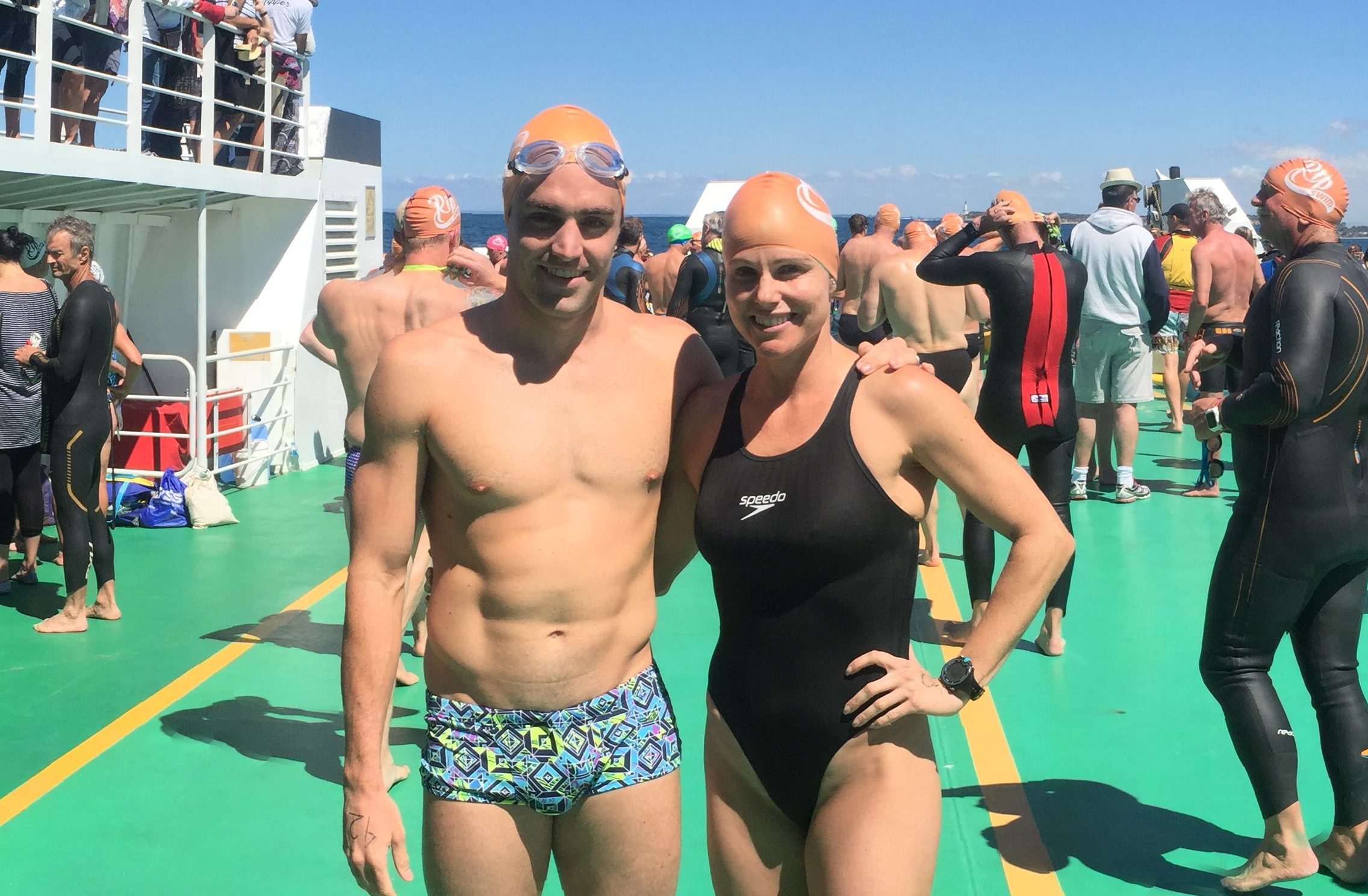









Gary Hurring is a former Olympic swimmer and coach from New Zealand who has been featured on our podcast previously in episode #90called “How to Change your Technique from an Olympic Coaches Perspective”. Gary and I are running a swim camp in Hawaii in March for swimmers, triathletes and open water swimmers to improve their technique, speed and endurance in the water.
On this episode we discuss:
- How the smallest changes in training can provide big results
- Why ‘weekend warriors’ have the same swim faults as elite swimmers, only more pronounced
- The use of training equipment, what to avoid and what to use more of…
- Why immersive swim camps can be the catalyst for change in your swimming
Learn more about the Hawaii Swim Camp on March 20-26, 2018 with Brenton Ford and Gary Hurring:
https://effortlessswimming.com/hawaii-swim-camp
Transcript
Read the full transcript
Welcome to episode number 107 of the Effort the Swimming podcast. My guest today is someone who featured on episode number 90. And this was one of our most listened to episodes that we’ve ever done. And my guest is Gary Haring. He’s a former Olympic swimmer and coach from New Zealand. And Gary and I got introduced to each other through mutual friends that we knew through swimming. And I really like Gary’s approach to swimming and to coaching and the way he goes about it. And I learned a lot on the episode that we did together. One of the most, I guess, one of the things that people have brought up to me the most out of that episode is the pit of discomfort. The idea that you’re going to have to go through some uncomfortable feelings in order to make changes to your stroke. It doesn’t matter if you are a new swimmer or if you’re an elite high performance swimmer. Everyone will go through that pit of discomfort.
And I think that idea resonated with people a lot. So that’s probably been one of the biggest things that I took away from that podcast. And I know a lot of other people have. So if you haven’t listened to it yet, go back to episode number 90. And it’s called How to Change Your Technique from an Olympic Coach’s Perspective. Gary and I are running a swim camp in Hawaii at the end of March. And it’s going to be for a small group of swimmers, maximum of 12 swimmers. And we’ve still got a couple of spots left for this camp. What we’re doing at the camp, it’s five days. The mornings are all about underwater filming, analysis, and a technical focus. So that’s basically where you’re going to be learning some different things with your freestyle with your swimming. The afternoon is all about applying what we learned in the morning and applying it to your swim stroke and being able to do that under pressure, whether you’re swimming easy, moderate or fast.
And then it’s going to be about making those changes that we’re working on with your technique, making them automatic. And the reason why I’ve kept it to a really small group of 12 swimmers is because I want, basically want to get really good results for the people who come along. I haven’t run a camp like this before. We run the Hellwicks swim camp each year in October. And that booked up really quickly. It booked up within an hour. And I’ve got a long waiting list for that. So I wanted to add another camp that was available and open to people somewhere else in the world. So swimmers from different countries could come along. And I wanted to cap it at 12 swimmers so that we can really just work closely with people for those five days. So if you would like to improve your swimming with the end result of swimming faster, swimming easier, and being able to do it for longer, and hopefully really enjoying your swimming by the end of it.
And I’m sure you will. Then go to effortwithswimming.com, click on the Clinics and Camps link, and there’ll be more details about the Hawaii camp there. And that’s going to be March 20 to 26. So if you’re really wanting to make a difference in your swimming, I can’t think of a better way or a better camp that’s going to help you with that. All right, let’s get into it. Welcome to the Effortless Swimming Podcast to show that help swimmers and triathletes love the water, become a better swimmer, and live a better life. Here’s your host, Brenton Ford. So you’re on, I just looked back, it was June that we had the last podcast together. And it was one of the most listened to podcasts that I’ve done before. And I think, well, I think for two reasons. One, I’ve got a lot of friends and a lot of people that have come to Howe Week and camps from New Zealand. So there’s that big contingency in Wellington. But also I think the topics that you spoke about
really resonated with a lot of people. One of the things that we spoke about was the pit of discomfort, where basically the uncomfortable feelings that you need to go through to make changes in your stroke. And that along with quite a few other things that I think resonated a lot with people who are in the thick of things trying to make improvements to their swimming and get better. And I mean, your background is obviously coaching and swimming at a very high level. And now you’re working a lot more with athletes who are sort of your more everyday swimmer, people who are doing it for sort of fun and fitness and still competition, but not at that very high end at the moment. So what are some of those differences that you’ve seen between those sorts of athletes that you’re working with at the moment compared to the very top end of swimmers?
Yeah, that’s a good question, slightly difficult. I, you know, the faults that I see technically
are much more exaggerated. You know, obviously the elite level swimmers have fine-tuned a lot about their techniques and their biomechanics in the pool
over many, many, many years. And so the quite often things stand out a lot more to me in my eyes as a coach on pool deck. And quite often you can see an elite level swimmer
doing something very, very well. And you sort of gloss over and the small faults sometimes don’t really stand out unless you’re really looking hard for them. But quite often with your general everyday swimmer you’ll see things that are often very much the same things but in a much more exaggerated format or form. And I actually really like that because, and I used to really like that when I was working with elite swimmers as well because you could actually see the things a lot more with your average swimmer and then be able to take those same concepts in with your elite swimmers and work on them on a much more fine-tuning manner.
But yeah, I guess to me that the general faults you see in swimmers are the same over and over again.
And there’s a range of them and they vary and they morph and change and in different formats they come out in different ways. But in general, I’m not sure if you’d experience the same thing but you do tend to find very, very similar faults. And most of my technical work is based around reduction of drag and as human beings we all sort of create drag forces in the same way. And so it’s either that or it’s the enhancement of the leverage that you can gain through correct propulsion through your biomechanics. So those are the sort of two target areas, reducing drag and increasing leverage and propulsion.
And so I do find that there’s a lot of similarities really between that and quite often the high-performance swimmers are a little bit more hard work mentally at times. So it’s quite often that it’s your average general swimmer that you’re getting a few times a week or three or four times a week are very, very keen and interested and focused on what they’re doing. The elite level swimmers can be the same too but because you’re seeing them 10 times a week they can tend to have a fair bit of familiarity
and take you for granted at times and things like that. So there is a refreshing mental side to coaching the average everyday swimmer. Yeah, that’s interesting. I’ve found the same thing actually. I used to coach a squad for I think it was eight years and especially if you’re kind of repeating the same points again and again,
sometimes that effect can be lost and it can tend to fade into the background a little bit with swimmers, especially if they say they’re there to get fit primarily as opposed to focus on their technique. But when you see swimmers less often and there’s a few swimmers that I see every couple of months or so that the impact I find is a lot greater and so they’re more willing to take that back. Take the information or take the drills, take it back to their own training and practice it and focus on it a lot because the impact of seeing you less is a lot more profound for them. In terms of reduction of drag, I’ve got the same approach. It’s number one, we just wanna reduce your drag and number two, it’s increased propulsion after that and it’s a really simple way to think about swimming but it’s a good way to go about it because swimming can be so complicated sometimes when we overthink things. But if we think of it in terms of those two categories,
I mean, the drills and the focus points and the things that we’re looking at, they can really all be put into one of those two categories. And it is very, some of those things that we wanna change in athletes, they’re really pronounced in the newer swimmers or the swimmers that aren’t quite as quick and it’s really fine tuning with the elite guys and I’ve recorded some very quick swimmers before some sort of national level swimmers and I’ve really got to slow down the video a lot and I’ve got to kind of look over it a few times more often than not to really figure out where we can make changes in their technique because some of them are very, very technically good and it’s not even the 1%, it’s even less than that it feels like that there’s some things that they’re just doing so well that you’ve really got to get into the nitty-gritty and be very particular with it to improve their technique. And what do you sort of see with progression
in the season? So I mean, with the elite guys, you progress throughout the season, you obviously build up in terms of volume, you probably change the focus, change the type of training. Do you do much of that with swimmers? You’re more everyday swimmer. And I don’t actually, to be quite honest, I mean, the periodization that we used to use was quite complex with Olympic level swimmers and I would generally put out quite a convoluted season plan
which I would adjust from season to season depending on success or not and try new things.
What I work with mainly my adult squad swimmers now is because of the constraints of the time that they’re coming in, what we’re doing at the moment is running three, one and a quarter hour sessions a week. They’re all morning squads. So it’s generally a Monday, Wednesday, Friday.
And because of the recovery factor, after you’ve generally got a Tuesday to recover and you’re ready to come back on a Wednesday,
it’ll be slightly different. I do do certain things with periodization through the season where we do potentially a little bit more technical work and then building up towards their main competition phases. We’ll do a little bit more distance work but because it’s really only three, one and a quarter hour sessions a week, I try and add some technique work, some a little bit of aerobic work and some speed work to all of those sessions. And I just think that that’s just good training. It keeps people sharp neurologically if they’re doing some speed work. I like to try and do technical stuff with speed because I believe that if you’re training a technique
and trying to consolidate it into habit, one of the best ways of being able to do that is through shorter distances of speed and without putting yourself under too much duress and so that you’ve actually got enough time to rest and recover and repeat the patterns that you’re trying to change in your technique. So we’ll regularly do some speed work, we’ll regularly do some aerobic training. I always try and make my sessions interesting and varied by putting in some drills and some little bit of pull work or band only swimming and try and get them kicking. That is one of the differences I do notice between elite swimmers and the general adult swimmers is the kicking ability is not nearly as good. So we do try and encourage a little bit of kick work and focusing on the drive that the kick can create to help the power of the stroke generally. It doesn’t necessarily have to be the propulsion from the kick, but a nice strong kick with good timing
can help the purchase that the feet get to help initiate the body roll and the power generated through the hips and shoulders. So yeah, I guess coming back to your original question, there’s not a whole lot of periodization which I’m currently working with, but that’s mainly based around the system and the amount of time that I’m working with these athletes.
As opposed to working with someone for the whole year when you’re doing two hours a day of pull work and two hours in the morning and two hours at night, there has to really be a whole lot of thought on how much recovery you’ve got, what your micro cycles are like through the week, what your meso cycles are like through the season and even your macro cycles looking long term, building up to Olympics and areas like that. Yeah, it’s kind of what I’ve seen a lot of is really at the top level that there’s quite a bit of focus on the periodization and it can get very particular with the amount of K’s and the type of work and the volume, but then kind of below that, it’s really, I don’t see a massive benefit in it for some of us who are doing a couple sessions a week, especially most adults, I think if they get the most important parts right, so number one is get enough sleep, eat well, train regularly and have the right focus with your technique
and doing some of the right stuff in training like you were talking about with some base aerobic work, some speed work, that’s really gonna get you most of the results that you need if you get that stuff right, but if you get too technical and you may, I’m very, I like to get things as simple as possible, I’m not someone to get too sort of deep with the really technical stuff in terms of mapping out a season and working on the micro and macro cycles, that’s not what I, that’s not kind of what suits me best, so I’m similar in that way where working with most adults, let’s get the majority of it right and that’s probably a little bit too specific for most people and the way I’ve sort of adjusted my thinking with that with adults is for some of us who are doing training for some longer events, I’ve been training for the rottenness swim which is a couple of weeks away now and that the only sort of periodization I’ve done
with that has just been making sure I’m hitting my volume, hitting my kilometers each week and inside of that, you know, there’s not too, I don’t get too specific with things, it’s really just been about getting the case up and still making sure there’s sort of one long swim a week, one over distance swim at speed once every two or three weeks and breaking it down that way, but it’s very simple and for me, that’s worked well and I don’t want to put too much pressure on making sure I hit the right session every single day because I just, for me, I’ve found that difficult so it’s just really keeping it as simple as possible, keeping it enjoyable and making sure I do the most important things right and then I know the results will come. Sure, yeah, that sounds really good. What about sort of stuff that you’re using in training with Gira using fins, snorkels, paddles, how are you using it with the adult squad? Yeah, we haven’t introduced snorkels with the group
because they’re out there in an additional cost but I do like snorkels, I think they’re a great tool, just for the fact that they teach swimmers
to keep their head still and allow their bodies to do the rolling and I find so many technical faults coming through the breathing pattern. So in practicing just swimming and holding your head in one position, quite often you can start to repeat, get some repetition without the faults that are coming from the breathing and I like that it’s a nice way of mixing up your training, do a bit of snorkel work and a bit without and practicing that way. Also, I like snorkels just for the little bit of breath control that you sort of need to learn to use them properly and it teaches deep breathing. So we might look at going more into that in the future. We do a little bit of pull work but I prefer to do band only. So I’ll go out and chop up some inner tire and inner tubes every now and then and just make sure that the swimmers are all able to do laps with just a band on because I believe that that helps to really force high hip levels.
It’s sort of a little bit of an evolutionary thing. If you don’t swim with high hips, you’re just gonna sink and it’s just a horrible thing. So having to do sets with just a band only, I believe sort of as a forced way of teaching body position in the water. I like paddles, paddles are good variation. So we keep it fairly simple with that. We do a reasonable amount with fins and again, the fin work is a little bit more variety but I do believe that fins do encourage people to kick because they can feel the propulsion they’re getting from their feet and from the kicking. So by working with flippers that hopefully some of that transfers over to normal swimming. Yeah, I like that and I don’t know if you’ve seen, you probably had the DMC fins. I mean, I recommend them to everyone that I come across. Some of them won’t mention the brand but one of the most popular brands, they make some very average fins. They’re rock solid, they’ve got no flexing them
and they’re very uncomfortable. But the DMC fins are the ones that I recommend to all of my swimmers and they’re only about $55, $60 or so but they’ve got good propulsion, they’re the shorter fins so they don’t muck up your tempo too much and they’re really good for teaching to use your legs a bit better. And with the bands, a lot of people come to me and they struggle swimming with the band because they just cannot get their legs up. What are some of the things that you will say to those swimmers or you get them to do to try and help bring their feet up and their hips up a bit if they have trouble doing that with the band on? Yeah, it’s a good question.
I’ll try and work a combination of things with them and oftentimes it’s along the lines of sort of pressing the chest down, holding the core strong, pressing the chest and really trying to get that balance
to shift from potentially around the chest area to down further into the lower abs of the stroke. Oftentimes it’s swimmers that don’t have a very good tricep extension at the back end of their stroke will struggle as well. So I’ll encourage a longer push through the back of the stroke because that will keep pressure in and lift coming from that area which is where the hips are starting to drop in the water. So a longer stroke at the back. Generally anyone that’s struggling with it, I will reduce any sort of repetition we’re doing, allow them to maybe do one link for every other person’s too,
you know, really sort of drop it down because sometimes it’s just a matter of making sure you’re fresh enough and it does get harder as you get tired. So, but we will also do some just some general body balance floating drills in the water. So just learning how to float sometimes and that can be a very successful way of just helping people shift their balance in the water.
Those are probably the main things that otherwise I’ll be looking at just little areas of that particular person’s stroke. It may be their head positions too high. They may not be catching the water deeply or something other than that. Yeah, there’s a lot of different causes isn’t there? And I like what you mentioned about the tricep extension. This is something that I’ve seen sort of more and more is when swimmers, they get the underwater footage of their stroke from the side and I’ve seen a lot lately in the membership where I do this for people all over the world and they end up pulling through quite deep so they’re pulling through with a straight arm then at the back of their stroke instead of having the forearm and the hand pressing back past the hip they’re coming from so deep that they end up pressing up towards the hip and that upwards pressure with the forearm and the hand ends up pushing their hips down
and for them they can’t figure out why their legs are sitting so low when they’ve got the right head position and most other things are looking generally pretty good I’ve seen that to be a big cause of that from swimmers that basically they’re just too deep and they’re pushing up towards the surface instead of pressing back behind them and it often leads to a lacking extension or reach out in front and it just makes them swim quite short so there’s a lot of different things that cause it and that’s a big one that I don’t think a lot of people consider too much if they’re self-coaching or sort of analyzing their own stroke because it’s not one of those things that I guess is maybe as easy to see or as easy to notice if you just swing on your own Yeah, the other little area in there that I’ll see is and I’m sure you see it as well is that somebody might be rotating their hand so that their little finger is exiting first
at the finish of their freestyle so and you’ll see a little finger coming upwards in the air rather than pushing the water back towards their feet so again that’s a variation of what you’re talking about is the direction of push that they’re actually the way that they’re pushing towards their feet instead of sort of sliding their hands upwards and exiting early Yeah, where they sort of slice out the back and they just don’t get much from it That’s right, yeah You’ve been away on camps with your elite swimmers and probably I’d say being a swimmer yourself so I mean we’ve got a camp coming up at the end of March in Hawaii where it’d be you and I and we’re gonna work with a small group of swimmers too basically do a lot of underwater filming and technique work in the morning and then in the afternoon we’re gonna put all of that stuff into practice we’ll go through a bit of a session but it’s really just about locking in
making those things automatic and so we’ve got this five day camp coming up at the end of March and what I mean the camps that you would have done with the elite guys and probably as yourself they’re a little bit different to the ones that we’re gonna be running in March but can you talk a bit about what the purpose of those camps were for the elite guys and when you’d go away as a swimmer? Yeah, a lot of it depended on the stage of the season of the camp and we would generally break that down into
was either sort of a staging camp type of situation where you were really focusing on specificity in what I say is a staging camp I mean a camp that’s in a lead up to a Commonwealth Games or an Olympics or a World Champ so you’re really going from that camp into the competition and they were usually three or four weeks out from competition so there would often be a lot of specifically hard work coupled with some very specific rest and recovery and technical work so that they could recover but really hit those hard sessions very, very well oftentimes quite high volume depending upon what events the swimmers did and then going into a taper so it was quite a real reduction of the volume and a whole lot of specificity on pacing and time and really trying to get as specific as possible the speed that you want for the event but the other camps we would do would be often very sort of broad, big based doing a lot of volume or a lot of
if they were sprinters a lot of hard training a lot of speed work, lactate training and so on just and again depending on what stage of the season if it was early in the season it would often be quite aerobic and technically specific so yeah a lot of it was based around
when those camps were and whether they were just an overload camp or whether they were a much more specific in their nature yeah I went away on a couple of those as a swimmer and just absolutely loved those camps because you do, well for me at least it was training with other swimmers that I hadn’t swum with before because often it would be a bunch of swimmers from different clubs and being in a different location changing the environment it kind of helps just get you out of your normal routine your normal habit and I guess the effort that I was able to put in on those training camps was a lot more and you kind of can commit to really just putting in every session because you know you’re only there for a week or two weeks and you can commit to doing that and that changing environment it kind of makes it a little bit special to where you don’t mind doing some really solid Ks really solid volume while you’re there
so I really enjoyed those types of training camps and then kind of off the back of that and off the back of a camp that I used to do each year with a bunch of friends we’d go up to North Queensland and we’d go away for a week, we’d stay up there and basically just do a big training camp up there I really enjoyed it that was some of the best fun I had as a swimmer hanging out with some friends and just training hard and off the back of that I came up with Hell Week which I’ve run for four years now and I’m getting a lot of the people that you know they’ve come back one, two, three times to that camp and it’s become really popular and I’ve got a big waiting list for the 2018 camp and so that’s been going really well and I’ve really enjoyed that and so what I wanted to do is put together a similar style camp without as much hard training and just focus it primarily on improving your swimming becoming better technically
more proficient in the water becoming making it a lot easier and so that the swimmers can basically go for longer at a faster pace and just really enjoy their swimming so that’s what the Hawaii camp is about and it’s a five day camp 10 sessions across the five days so it is a lot of swimming but not a lot of that is going to be at too high of an intensity that you can’t back up the next day but I think and what I’ve seen with Hell Week is just that change in environment small group of people I mean we’re only taking a maximum of 12 students that’s a really small group and that and constantly refining your stroke over the course of five days with underwater filming and analysis I’m really looking forward to this camp and just seeing the results that come out of it and having that in Hawaii and you’ve got some connections over in Hawaii and that’s kind of how we’re able to set this up which was awesome and I mean what’s your connection with the coaches
and some of the guys over in Hawaii? Yeah, well I went to the University of Hawaii and I was fortunate enough to land a scholarship to go there, a swimming scholarship for four years so it was a really great experience I got to know a team of guys that we became very close and it was a pretty neat experience because we would often be traveling all around the US and competing and we would generally do sort of between three and five big road trips where we would go all around America and the states and compete against different universities
and then come back to do our training in the islands and so several of my close teammates have now become quite prominent coaches themselves within Hawaii and I’ve got a couple of good friends that are based at the Oahu Training Facility that we’re gonna have the camp at and they’re coaching there now Joe LeLikas and Joe’s brother Tom is also coaching at another swim club over there I’ve got one of our other teammates is coaching on Maui now so it’s really interesting that there’s a whole range of us that are going through there I had good connections at the University of Hawaii until just recently and I know that they’ve changed coaches there so I don’t know who the new coaches at UH anymore but I’ve definitely got some good connections with other coaches on the islands Yeah, that’s exciting I can’t wait to go over there I haven’t been there before but just, yeah, it looks like such a beautiful place and there’s open water, there’s surf, there’s good pools
looks like good food and a nice climate which I can’t wait so, yeah, it should be a lot of fun and for anyone listening and you want to get more details on the camp just go to effortlesswimming.com and there’s a clinics and camps link at the top and you can find out more about the Hawaii swim camp and it’s not long now it’s only five or six weeks until we go so it should be a lot of fun and one of the other reasons why I wanted to bring you along to the camp was, well, obviously the podcast I got a lot out of that podcast and talking with you and we’ve got a lot of mutual friends and a lot of them said that, oh, you should chat to Gary you and he seem to have a lot in common in the way that you coach and you teach and I realized that once we did the first podcast and, yeah, and really enjoyed chatting so I’m looking forward to being able to coach together with a group of people, it’s going to be a lot of fun.
Yeah, likewise and I’m really looking forward to coaching with you because I agree from our conversations and from what others have said that we do have very similar styles so I think we’re going to have a very good symbiosis there happening, it’ll be great and I’m really looking forward to learning from you as well. Fantastic, well, thank you very much for being on the podcast and well, I guess when I’ll see you will be in Hawaii in a few weeks time so thanks again, Gary, enjoyed it. Okay, great, thanks, Brenton.
Thanks for listening to the Effortless Swimming Podcast. If you’d like us to help you become a faster, more efficient swimmer, go to www.effortlesswimming.com.