








In today’s episode we’re looking at Core Principle Number 2. This principle is all about minimizing drag. Here are the three things that we covered on this principle.
01:46 Proud Posture
05:06 Taut Core
9:00 Effective Kick
The 5 Core Principles Of Fast Freestyle:
https://effortlessswimming.com/5-core-principles-of-fast-freestyle/
Join the 5 Day Catch Challenge:
Join the Effortless Swimming membership:
Effortless Swimming Freestyle Clinic
Transcript
Read the full transcript
Welcome to the Effortless Swimming Podcast to show that help swimmers and triathletes love the water, become a better swimmer and live a better life. Here’s your host, Brenton Ford.
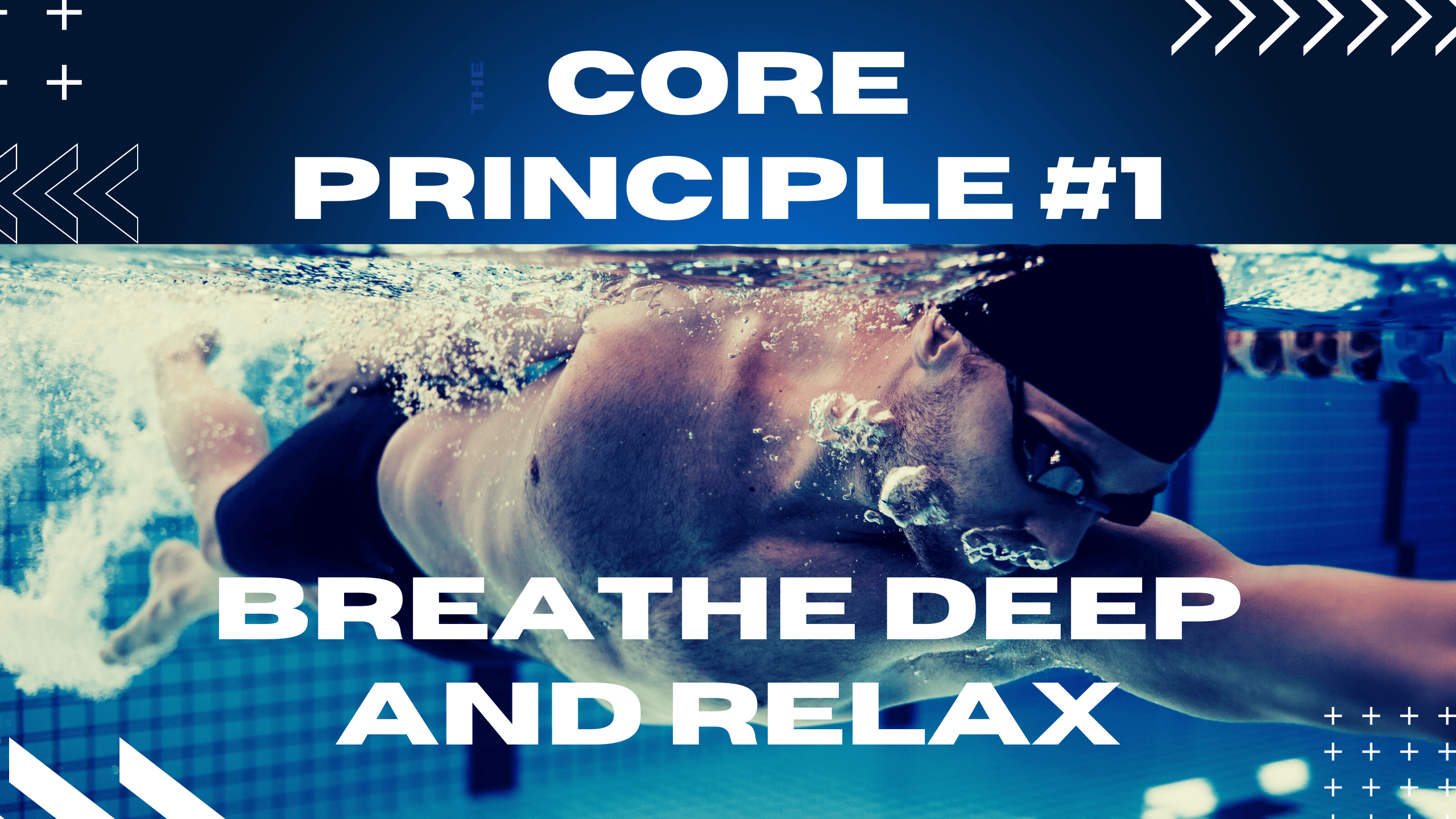
Welcome to this episode of the Effortless Swimming podcast. Today’s episode, we’re looking at core principle number two, which is find your balance. So a couple of years ago, we came up with the five core principles of fast freestyle, and this was a bit of a structure on how we analyze freestyle and how we like to teach it. And following this sort of structure gives you a bit of a roadmap on ways you can sort of check what you need to work on with your stroke, and it doesn’t always sort of follow this pathway for everyone, but it does give you a pretty good guide of those things that you want to have in place first, like an order of operations. Now last week, we looked at the first principle, which is breathe deep and relax. And there we basically just looked at making sure you’re breathing correctly, you stay relaxed as you do it because you move so much better, and you can, you can swim so much easier when you are relaxed and when you’re breathing
comfortably. Now in the second principle, find your balance. This is all about minimizing drag. So the two ways you can generally swim faster is to minimize or reduce your drag and increase propulsion. So put simply, it’s those two things, adjusting those two things, it’s going to make you a faster swimmer. And if you were, let’s say you had the best catch in the world, and you were the fittest person in the world, but your hips and legs were dropping down a long way, it would be so hard to overcome that drag that gets created there, that wouldn’t matter that you had the best catch and that you were super fit, because you’re going to be quite limited with the speed that you can swim at because of that poor body position with the amount of drag that gets created there. So really the, you know, the most important thing we’ve got to do first and foremost is look to minimize drag. So when it comes to finding your balance, we want to
have our head, hips and heels near the surface. So when I’m coaching there, the three things that I want to see at the surface or near the surface and basically just being horizontal in the water. Now, the three things that we sort of like to cover here in this principle is number one, proud posture. Number two, a taut core and number three, an effective kick. So with the first one, a proud posture, we really need to have this in place first to help us be horizontal and be balanced in the water. Because if you’ve got poor posture, and we mentioned this briefly last week, but with poor posture, think of that as rounded and hunched over, then you’re not going to breathe very easily and you’re not going to sort of be in a very strong position to go through your catch and through your pull. So we need to have good posture. And so I would picture that as someone standing tall, so they’re long through their spine, they’ve
got their chest out or chest forward, or you could think of that as like a lifted sternum and they keep their neck long. So almost like a sort of soldier standing tall or any Jones would say it’s like a superhero or Superman posture. That’s how you want to be in the water. And the other factor there is you need to make sure you’re looking in the right direction. So a lot of people get taught to look straight down when they swim. But I find sometimes this can cause people to bury their heads too deep. So with majority of people that we coach, we want to have them have the top of the head just out of the water. And the eye is looking about one or two meters in front of them. So a head position looking at a maximum about 45 degrees forwards there. So not directly forwards, we’d consider that 90 degrees if you’re looking straight out in front of where you’re going. So 45 degrees is about half that. Now there’s nothing wrong with looking straight
down, but just make sure you’re not burying the head too deep. But I think for the majority of adults, they should be looking slightly forwards. Because when we look from the side, if I’m analyzing someone’s stroke and we look at their overall sort of posture, we want to see this kind of continual line. If we look at the like their spine, we want to see this sort of it’s not a straight line, but it’s like a gradually rising. If we start from the hips or the tailbone, it should be just a gradually rising line as we go through their upper chest, up to their shoulders and then up to their head. We don’t want to have this sort of big kink in the back of the neck when the eye is looking too far forwards. Or conversely, we don’t want to have this sort of nice, slowly rising line through the spine and then it goes down when we’re looking at their head or the neck because they’re looking too far down. So this very gradually rising line, if
we’re looking side on at someone swimming. So that’s the first thing is proud posture. Now the other thing there is when we do it, make sure that you’re not really stiff and tense with it. So when I go through the clinics with people and we’re working on the posture, sometimes people, they go a little bit too upright and a little bit too stiff. And that means that they don’t move as well. So in swimming, the key to moving well is to relax. So with your posture, get in a good posture, but don’t go really rigid or don’t try and overdo it too much because it’s going to impact how well you move. Now the second one is a taut core. And this is something that is a little bit sometimes harder to show because it’s all happening internally and it’s not as easy to sort of see when we’re looking at it. But the way I would sort of picture this, it’s like you’re lightly bracing your stomach. So if someone was going to just give
you a light hit in the stomach, a light punch in the stomach, you’d just, you’d brace your core lightly. That’s kind of how we want to hold our core when we’re swimming. Now the other thing we’ve got to do as part of that is we’ve got to squeeze our, or squeeze, like engage your glutes, you’ve got to switch those on a little bit. So it’s kind of like you’re squeezing your butt cheeks together very lightly. And that will keep the midsection of your body quite straight and quite taut. And the best way that I sort of heard this described was you want to swim from the inside out. And what they mean and what that means is inside out, meaning like your core and your hips, that’s the center. And if you’ve got a little bit of, a little bit of tautness or a little bit of tension through there, then you can connect everything up, your extremities, your legs, your arms, everything can get connected through that midsection. But if that’s loose and if that’s
like a wet noodle and it moves around everywhere and there’s no form to it, then you’re not going to be very well connected through the stroke and things are going to be acting independently. So we need to make sure we get this taut, this taut core. So that’s that’s the second one. And it can feel like a bit of a challenge if you’re not there yet, but with enough practice and sort of focus on it, generally we find it takes a couple of sessions to really get that happening. But even recently, like I’ve had a lot of swimmers who I’ve worked on this with inside our stroke analysis membership and and it’s improved their body position significantly, especially the engaging the glutes, switching those on a little bit.
A quick note from our sponsor.
This episode of the podcast is sponsored by Form Swim Goggles. With these goggles, you don’t have to look at the pace clock anymore, or be one of those swimmers in the pool always grabbing for their watch. With Form Smart Swim Goggles, you can see all of your key metrics while you’re swimming distance, pace, stroke rate, they’ve got it all. And the swim data is displayed on the Google lens and you can customize the display to see the metrics that you want to. And I was worried that it was going to be distracting, but you can literally see through the display, the metrics are always there, but you have to choose to focus on them. It’s really impressive. And it makes hitting intervals or any kind of specific training much more manageable and achievable. And the goggles track it all. It’s automated. So from the time you start your session to the end of the swim, you don’t have to press any buttons in between. It automatically tracks
everything. Form also works with a bunch of the best pro athletes out there, including Lionel Sanders, Sarah Crowley, Hannah Wells and the Olympic champion Usama Malouli to name a few.
These form goggles are for all types of swimming too. One pair of goggles and you can use them in the pool, the open water. You can use them in swim spars and endless pools too. So the same pair of goggles can be used in all of these different environments. The battery life is incredible too. One hour charge is 16 hours of swimming time battery life. And you can have the display on either your right or your left eye. The goggles themselves come with anti fog solution that’s used in dive masks. So it’s great in terms of quality and there’s a protective case with a nifty drainage solution. So after you swim, you can store them safely. And while the goggles connect to the form swim app on your smartphone too, they will sync with the format and they can review all of the details of your swim. And you can see what other swimmers are up to in the form swim community as well. I’m a big fan of these goggles. I was really impressed when I used
them and I use them for a vast majority of the sessions that I’m currently doing. To find out more about the form swim goggles, go to form swim dot com and you can use our coupon code effortless at check out and save $15 off your order. Back to the podcast.
Now the last one here is just an effective kick. So depending on like what type of swimmer you are, depending on what you’re training for, your kick might not be about getting propulsion. It might be more about balance and timing. Now, if you’ve got a good kick, you’ve got nice sort of loose ankles and you can point your toes really well, then you might be looking to get some propulsion from your kick or if you’re doing say shorter events. But if you like a lot of the adults that I teach and that I coach that maybe don’t come from a swimming background and they might be doing triathlon or open water swimming, wearing a wetsuit. Look, you’re probably not going to get a huge amount from your kick. So what we need to do there is make sure we’ve got an effective kick. So there’s a couple factors that we or a couple of things we want to get in place to make the kick effective. And so first of all, we don’t want to slow you down.
And one of those things that can slow you down is having your toes pointed to the bottom of the pool because that’s going to increase the drag. The drag is created by your foot. So we generally want to keep the toes pointed mostly behind you within within reason. Depending on what your ankle mobility is is like. The other thing is we want to make sure that the the kick is reasonably reasonably small. So I like to picture. Imagine you’ve got a bucket at home, just like a typical bucket that you’d have in the garden, something twice that size, roughly. That’s roughly the size that your kick should stay in. So if you think about kicking in the bucket, that’s about the size of how big your kick should be. Because if you let your legs come much wider than that, then you’re going to be increasing your drag. And that’s going to to slow you down. So keep the kick relatively, relatively small, not tiny, but relatively small. Now, the other thing is that we
obviously want the heels to break the surface every couple of kicks. But the one that
the one that I find can really make a difference to people is we want to make sure that we’re kicking from the hips and not the knees. And you might have heard this before, but the difference there is if you’re kicking from the knees, it’s kind of like you’re running or like you’re riding a bike in the water. There’s just a whole lot of bend coming from the knees. And particularly on the upward kick, right? So that’s when the foot is coming upwards towards the surface of the water. If that’s happening, all from a bend in the knee and not from a lifting lifting a leg from the from the hip or from your like your glute, then you’re probably kicking mostly from the knees. So you need to make sure on some of the upward kicks that the legs coming up somewhat straight being lifted from the hip or from the from your glute. And if you look at this slowly, we’ve got some footage inside our membership in this in the corporates will number two
videos where we go into a bit more detail with this where you’ll see that the leg with a good kick, the leg will come up almost straight on some upward kicks lifting from the from the hip. And then on the downward kick, that’s where the knee will bend. And with that bend in the knee, it flicks the foot down. And that’s where you get this nice little flick of the foot. And you get that little bit of propulsion. So how you kick can certainly make a difference with not only your body position, but just making sure that it doesn’t that you’re not slowing yourself down with with how you’re kicking there. Now, there’s obviously things like a two and a four and a six beat kick. We don’t normally worry about that or look at that yet. We keep that to corporates will number number five, because it is a little bit more of an advanced technique to try and change your the type of kick that you’re using. So first and foremost, we just want to
make sure that we’ve got an effective kick. And so inside of our membership in the five core principles training, there’s a couple of drills that we use, like hand behind back drill to help with posture. We use the front kick rotation drill just to work on keeping that core sort of taught and switched on and keeping that together as you rotate side to side. And then we’ve got a couple of kicking drills with with fins on. We’re working like kicking front on your back on your left on your right. So in multiple directions to develop your kick, and then just a little bit of swimming to work on keeping the posture in place and keeping the core switched on and that the glutes switched on. So and with that in place, you typically find that you can do pretty well with your balance in the water. Now there are some other things that will sort of factor in there if you are still sinking after that, including sort of how you’re breathing or how
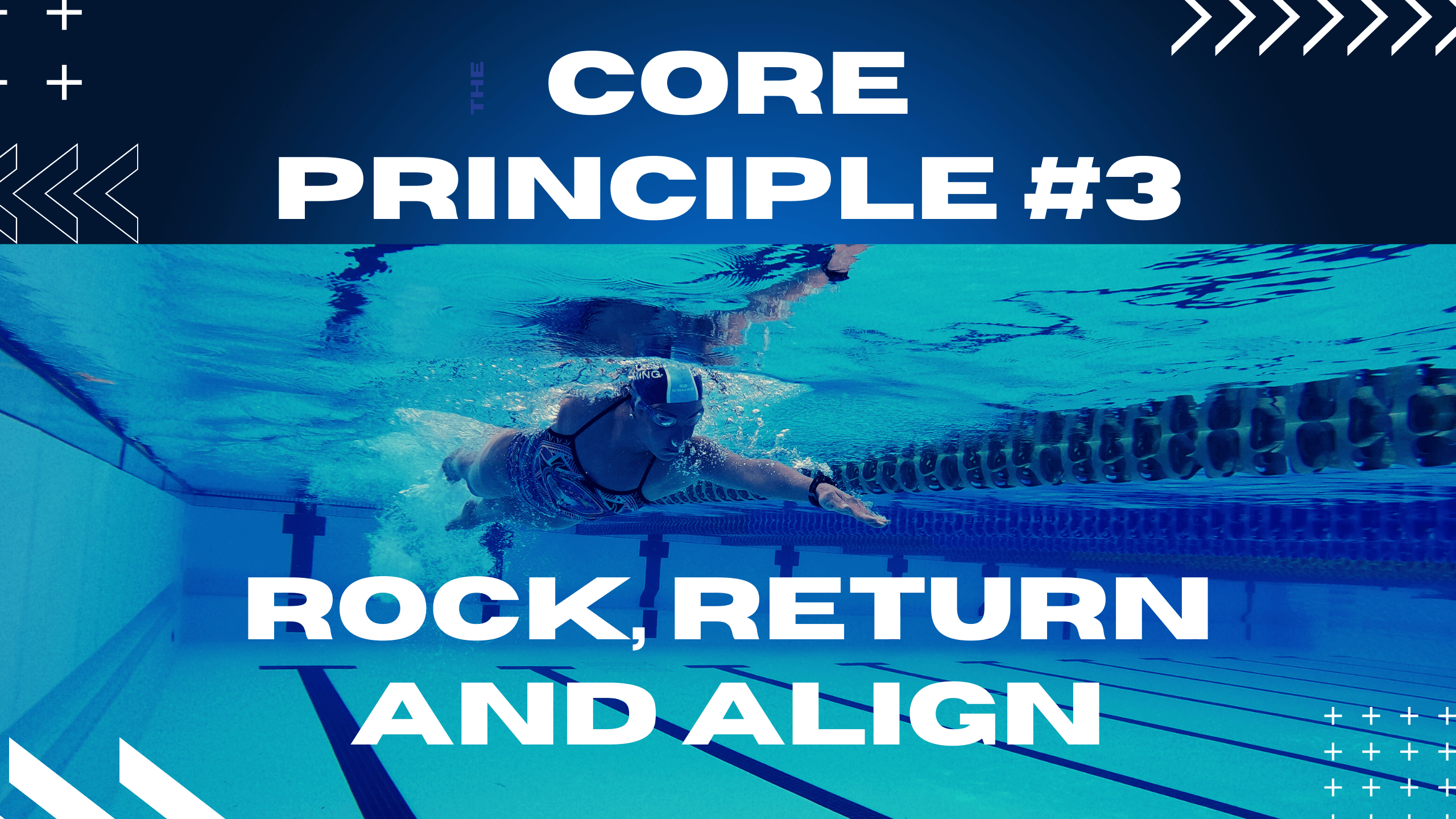
you’re going through the catch in the pool. But this can sort of set you up really well. And so in the next couple of principles, we start to work on those those other things. So I’ll be back in another few days with the next episode on core principle number three. And if you didn’t enjoy this and you are looking for a bit more detail and a plan to follow to develop this, then you can check out the effortless swimming membership. That’s where we’ve got all of this in detail with the drills and the suggested warm up that you could do as part of your session to start to make these changes in your stroke. So I hope you enjoyed this core principle number two, find your balance. I’ll see in another couple of days with the next episode.
Thanks for listening to the effortless swimming podcast. If you’d like us to help you become a faster, more efficient swimmer, go to www.effortlesswimming.com.