








Today, we are talking about the third core principle of Fast freestyle which is Rock, Return And Align.
00:36 Rock v.s. Rolling
02:15 Return
03:24 Correct Entry
06:08 Align
Join the 5 Day Catch Challenge:
Join the Effortless Swimming membership:
Effortless Swimming Freestyle Clinic
Transcript
Read the full transcript
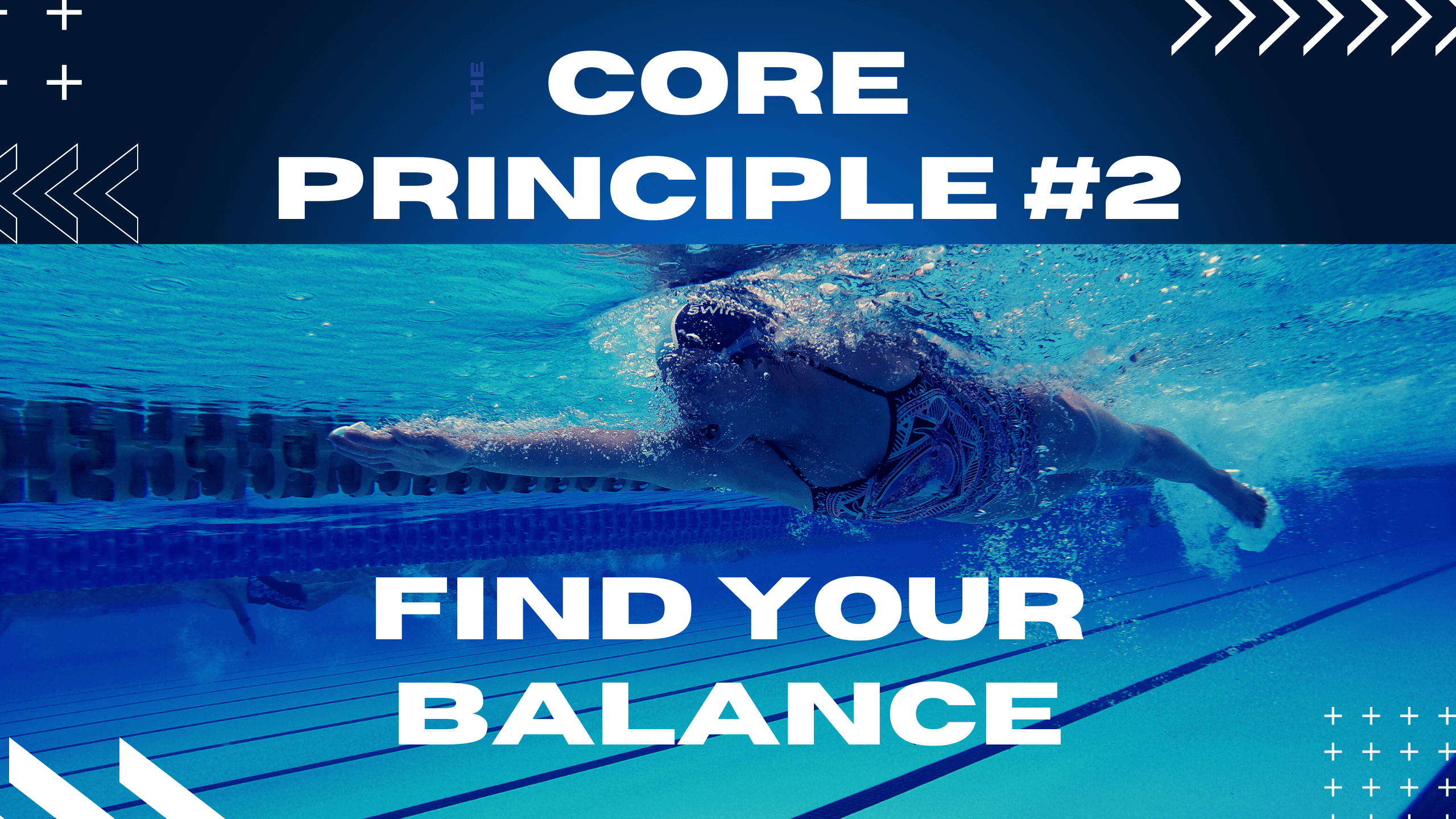
Welcome to the Effortless Swimming Podcast to show that help swimmers and triathletes love the water, become a better swimmer and live a better life. Here’s your host, Brenton Ford. Welcome to this episode of the Effortless Swimming Podcast. Today we are talking about the five core principles of fast freestyle, which is a concept that I came up with a couple of years ago to give a bit of structure on how we like to analyze and then develop freestyle technique. And the last two episodes we’ve looked at core principle number one and core principle number two, which is breathe deep and relax and then finding your balance. Now core principle number three, which we’re going to get into today is rock, return and align. So I’ll explain what I mean by those three terms. So rock means we want to rock side to side instead of rolling side to side. So a lot of times people think that they should roll or rotate up to 90 degrees like
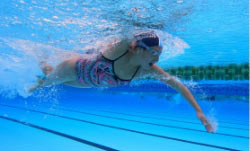
all the way on their side when they’re swimming freestyle, but it’s just simply not the case. When you look at elite swimmers, they’re really just rocking gently side to side. Typically if you measure it front on, the most they’ll rotate through their shoulders is about 30 to 40 degrees at a maximum. Now there are exceptions. There are some swimmers that will rotate a little bit more than that, but it’s generally in that range and typically it’s about 35 degrees, give or take a little bit. So you don’t need to roll all the way onto your side. And if you do, you’re probably slowing yourself down because if you were to rotate to 90 degrees completely on your side, it’s going to take you a lot longer to get back to the other side. So it’s going to reduce your stroke rate. It’s going to make it hard to get the rating up to a place where you probably want it to be. The other thing with that too is that all the way on your side, it’s very hard
to get a good catch because it can put your shoulder in a position where it’s quite difficult to get a high elbow catch, which is one of the important parts of the stroke that we want to develop. So when you do only rock to 30 to say 40 degrees, then it’s much easier to get a better catch with that. So that’s the rock part of the rock return and align. Now the return part of this is the recovery over the top of the water. And the reason we’ve named it return instead of recovery is because we want to be a little bit purposeful with that arm coming back over the top of the water. Because if we’re too lazy with it, if there’s no purpose to it, if it’s just a little bit of a passenger along the way, then you’re missing out on an important part of the stroke. So when you do come over the top of the water, you’ve got basically you’ve got that momentum of the arm swinging forwards and you’ve got gravity working for you.
So if you can bring the arm over and return it out in front of you in a way where there’s that little bit of purpose to it, you’re going to get full use of the momentum and the gravity and you’re going to get this nice drive into the water where you can then reach out and extend and get that little bit of drive when the hand enters and you’re reaching forwards. Where the opposite of that would be if you’re just very, if you’re too slow with it and too gentle with the entry, then you’re going to miss out on those two things. So that’s why we’ve called it returning your arm over the water. Now the other factor there and something that we’ve really seen in our five day catch challenge that’s really made a big difference with people is that when you do return your arm over the water, we want to make sure that we enter correctly and the correct entry is it should be fingertips first. So the finger is the first thing to go in and the elbow is above the water.
So if we’re looking, let’s say side on above the water, if I was coaching and I was walking along the pool deck watching someone, the way I’d want to see their hand or their arm entering the water, it would be like a triangle, their arm would make a triangle. So the fingertips would be in first, the elbow would be slightly elevated and then that way when you enter with your fingers first and then you can just straighten the arm, two things will happen. One, you’re going to remove a lot of the bubbles as the hand then extends forwards in the water. The other thing that we often hear with a really nice entry is that we hear this little slap of the elbow, actually hear the elbow sort of slapping upon entry, whereas I used to think that you should spear the water. So the hand should, everything should follow the fingertips in. So your hand, your wrist, your forearm, your elbow, I thought everything should sort
of spear in and follow it behind it, but that’s not really what happens. It’s actually just as long as we get that entry position right, then the arm will basically just straighten and you’ll hear that elbow slap down. And as I was saying earlier with the five day catch challenge, that’s the first thing that we work on. I’ve had so many people, more than pretty much any other part of that five day challenge, had so many people say this actually made a huge difference to my times and we’ve had people take two, three, four seconds off their 100 meter pace just by changing their entry. And I think the reason for that is a lot of people either entering too close to their head or too far out in front. And when they, when they do that, they collect a lot of air. They bring this air down with them into the water. And so they haven’t got much water to pull against. So it’s just like, it’s a lot of air bubbles basically as you’re going through
the pool. That’s the first thing that happens. And I think the second thing as well is sometimes they just will rush the catch. They won’t get that entry forwards where you’re actually reaching forwards in front of you before you start the catch. So they’re kind of shortening their stroke and they’re not quite getting that nice sort of glide or distance per stroke. But when they make that change, they get the entry right. Then that’s where we often find a big improvement in time. So I just wanted to mention that because we’ve seen so many people just have big results with that change. Now the last one, so we’ve got rock return and a line. Okay, rock we’ve talked about. Gentle rocking side to side, 30 to 40 degrees rotation through the shoulders at a maximum. The next one is return. So bring down over the top enter with a little bit of purpose. The third one is a line. And that means that when you’re reaching forwards,
so once the hand’s entered and you’re reaching forwards, we want to align the arm and the hand with the shoulder. Now you might have heard me talk about this before as swimming on train tracks. So whenever that hand enters in front of you and you’re reaching forwards, we want to follow the train tracks. So these imaginary train tracks in line with your shoulders. Now it doesn’t mean that when you pull through that you’re pulling straight through on the train tracks. We’re not referring to that. It’s just the reach forwards part of your stroke once the hand has entered the water. So we want to align with that. And the reason for that is if you do stay aligned there and your hand and your arm, it’s all in line with your shoulder when you’ve finished reaching forwards. If you look from above, you’re in such a long streamlined position that you’re gonna really minimize the drag that you’re gonna reduce the drag compared to if you were crossing over the center
or if you were too wide. So we see with really nice free styles that 90% of them are typically following these train tracks. Now, yeah, there’s some exceptions. You look at Paltranieri and look at a couple of other swimmers that do cross over, but the majority of them are straight. So that’s what we wanna aim for. So if you get those three things right, then that’s gonna set you up really well to then work on the next part of the stroke, which is the catch and the pull. But we really want to make sure we get in the right rotation. We’re coming over with that arm in the right way and then that we’re aligned out in front. Now inside the Effortless Swimming membership, we’ve got a couple of drills. We’ve got a recommended warmup for developing this part of the stroke and some of the drills that we do are side kick. So kick on side, usually wearing fins, I find is quite useful. Now this kick on side or side kick drill,
that’s a great one. It’s simple, but it really practices that what we call like the base position. So the base position of when you’re finished reaching forwards out in front. The other hand is by your side and you’re rotated to about, let’s say like 35 degrees on your side. So we do a little bit of that side kick drill and there’s a lot of nuance to that drill as well. Like in the video we talk about making sure you get your opposite shoulder out of the water because that’s how we need to be in order to get the arm to recover over properly. So we’ve got side kick drill. We’ve got kickboard press down drill, which is like a recovery drill just to make sure that you’re coming over the top of the water easily and relaxed. And then we’ve also got some front kick drill just to work on that alignment, that swimming on the train tracks. So that’s core principle number three. So I’ll put a link here or in the podcast where you’ll be able to see our five core principles
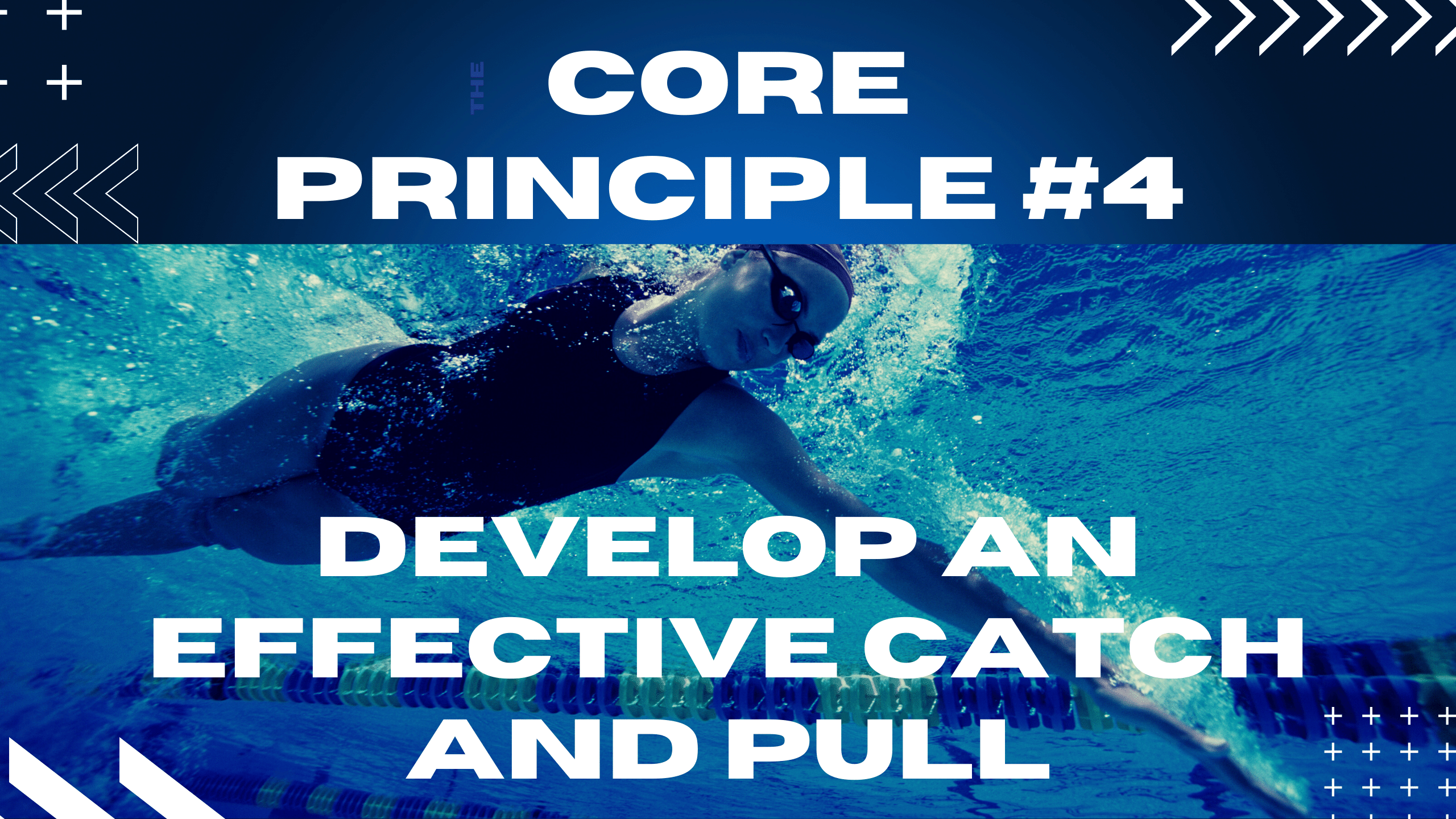
and get a little bit more details on them. And then if you’d like to get the videos and the drills and some structure to developing these, check out the Swing membership where we’ve got a lot more details with each of these things. So I hope you enjoyed this episode. I’ll be back very soon with core principle number four. Now we get to work on the really exciting stuff, which is the catch and the pull. This is the 80, 20 of the stroke, that 20% of the stroke that can make 80% of the difference. And this is where we see some really big improvements and big gains with increasing your propulsion, which is that other element of speed. So these first couple principles are really just about minimizing drag. The next one is about increasing propulsion. Thanks for listening to the Effortless Swimming podcast. If you’d like us to help you become a faster, more efficient swimmer, go to www.effortlesswimming.com.