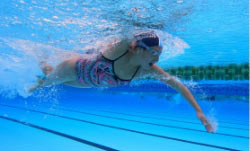








 Gary Barclay of TheSwimmingExpert.com is the author of Swimming for Parents – a book about how to best support your child in swimming. In this episode of The Effortless Swimming podcast Gary will talk about how to raise a champion swimmer.
Brenton Ford: Welcome to another episode of the Effortless Swimming podcast. Today’s guest is Gary Barclay – a friend of mine who is here in Melbourne as well. Gary Barclay is from TheSwimmingExpert.com and the reason why I wanted to get Gary on the call today was because he has written a book called Swimming for Parents. He has a lot of information about how to best support your child in swimming. This episode is about raising champion swimmers. Before we talk about champion swimmers my definition of a champion swimmer is a swimmer that enjoys swimmers and love to be around the sport and continue on past they’re 18 and as they get older as they love the sport.
Welcome to the call Gary.
Gary Barclay: Thanks very much Brenton.
Brenton Ford: We have been trying to put this podcast together for a little while now but our schedules haven’t worked out. We have finally got to do it and I guess one of the things that comes to mind when talking about helping parents support their kids is; one of the last thing you should give your kid is parental advice. Coming from your background I think you have such a good background in swimming that you can provide some helpful tips for parents to help their swimmers.
What qualifies you to help give this advice to parents?
Gary Barclay: Brenton, I swam for many years and observed my own parents and their support of me when I was swimming. I then began coaching and worked for about 12 years coaching junior swimmers particularly and age group swimmers and dealing with their parents. Working with their parents on a daily basis gave me a terrific insight to how parents feel about their children and their relationships between the parent and the coach and the parent and the swimmer themselves. I guess since then I have had two children of my own and been fortunate enough to watch both of them enjoy the sport of swimming and become competitive swimmers in their own right. They have both swum at a State level, they are only young at this stage and they are not doing a lot of training. It has been really interesting balancing that parent hat together with having been a former coach as well and watching what they’re doing in the water.
Gary’s book is available for purchase on his website. I highly recommend it to all swim parents.
Brenton Ford: You have worked with athletes from kids learning to swim all the way up to managing Olympic gold and silver medalist Brooke Hanson, Paralympic gold medalist Matt Cowdry and triathletes like Emma Carney. You have worked with athletes with all ability and I think it is interesting that you say it is interesting balancing the parenting hat and the coaching hat. Sometimes I think those lines can get a little bit blurred even if the parent isn’t a coach themselves. They want to help their kids so much that they feel like they should be stepping in and telling the coach what to do. What are your views on that?
Gary Barclay: That is exactly right Brent and it is an interesting conundrum for the parent because you see your child doing something and you are investing time and money and supporting them in their swimming. Sometimes if they are not listening to the coach or you think they should be swimming than what they are as a parent it can be quite easy to get involved and say some things to your children that may be not the right things to say at that time. One of the things that I encourage parents to do is to support the coach that is coaching their son or daughter and listen to what the coach is saying to them and reinforcing that. If they are talking to them about getting their early on race day so they can do a proper warm up, then as a parent doing everything you can to support your child to do that and getting them there that hour or one and a half hours before they race is a great example.
Brenton Ford: Definitely. It needs to be said that parents of swimmers are amazing because swimming is probably one of the most time intensive and energy intensive sports that you can put your kids into. It usually means early mornings, a lot of trainings per week and I can’t think of many other sports that require so much from the parent. If you are a parent of a swimmer you are doing an amazing job.
Gary Barclay: There is no doubt about that and I think the friendships that you make as a swimming parent as well is really important and is something that is very much underestimated. The swimmers are swimming with other boys and girls of a similar age and they make friendships quite easily; but it is also the parent that can make lifelong friendships with other parents who are in a similar situation to them. There are not a lot of parents out there getting up at 4.00, 4.15, 4.30 in the morning to take their child to swimming. When you have the opportunity to catch up with other parents who are in a similar situation as you, you can create lifelong friendships and really bond together and share the ups and downs that is the sport of swimming.
Brenton Ford: As a swimmer you form such good friendships with the people that you train with because you go through these hard training sessions together and early mornings and you get a really strong bond that way. You are among similar people who have the same sort of work ethic and standards as you. Same goes for the parents you won’t find that all parents are willing to get up that early for their kids and do those sorts of things. It is a great way to meet people who are very similar to you and you can make great friendships that way. It is a really good and point and probably not something talked about when it comes to parenting a swimmer.
Gary Barclay: I think for both the parent and the swimmer the friendships that you make in the sport they are the memories that you hold for the rest of your life. I know through my experience of swimming and I swam in swimming squads from the age of 7 or 8 through to 22-23. It was interesting when it came to my wedding I would say that about 40% of the guests were swimmers who I had swum with through the ages of 11 through to 22; many of them for that entire period. The bond that swimmers get it is one of the major benefits of taking part in a sport like swimming are those friendships and growing up together and supporting each other later on as well.
Brenton Ford: It’s not just about the swimming it is about those friendships you create. Pretty much all of my best friends have come through swimming, it is a great sport for that.
I find that parents can play a huge role in the success of their kids swimming career, whether they go on to make state or nationals or an international team. In terms of successes they play a major role in how much their kids can enjoy swimming. What are your views on that, why do parents play such a huge role?
Gary Barclay: I think the support that parents provide, particularly in transporting their children to and from swimming training. The financial support, paying squad fees, buying equipment. Be careful what equipment you do buy in regards to racing suits; make sure they are allowed to be worn at the particular meets you are going to. I think the other support that is vital with the parent is supporting your child and loving your child regardless of performance. There are not many swimmers that go into a swim meet and don’t want to perform well. They all invariably try to a certain extent most of them to a high level. There are not many that do that.
Brenton Ford: I think is probably the difference between parents that are invested in the outcome of their kids swimming performance versus the process of it. I find that is one of the biggest things that can get younger swimmers down is when their parents are hard on them if they don’t perform well in a race. They put enough pressure on themselves most of the time but if someone else is saying why did you swim so slow, that little bit extra is what can tip them over the edge to make them not enjoy the sport.
Gary Barclay: That’s right. I will give you an example; when a swimmer hops into the car after they have gone to a competition and they haven’t done well sometimes it is better off leaving it to the coach to give them the feedback rather than as a parent giving them feedback that you would probably really like to give them. Just supporting them in that way is really important too.
Brenton Ford: My parents were fantastic when I was growing up with swimming, they provided everything I needed from food, transport and all that stuff but they never put the hard word on me when I had a bad race. If I had a good race they would congratulate me and tell me how amazing the race was and make me feel good about it. That is the most that you can do as a parent is have that supportive role and then leave the feedback and everything else up to the coach.
Gary Barclay: Very much so. I think with younger swimmers parents also have an opportunity to help them develop independence. By saying that when you are a young swimmer and you go to swim meet and you have to go to a marshalling room or a call room or to report for your race. Often the parents can’t go with you, so as a parent you need to trust your son or daughter that they are going to do the right thing, go to the right place, often their coach will take them down there. I guess an extension of that is that when it comes to race time as a parent you are sitting in the grandstand and there is nothing that you can do to help your son or daughter when they are standing behind the block. It is one of the wonderful things about swimming is that when you dive into the pool no-one can affect your performance. You swim up and down the black line and each child has an equal opportunity to swim as well as they can. As a parent sitting in a grandstand that can be quite nerve racking watching your child on show in front of potentially 200, 500 even 1000 people. It is a really interesting experience to go through as a parent and how you handle that as a parent internally as well.
Brenton Ford: I get emailed a couple of times each month from parents who haven’t seen improvement in their kids for maybe 6-12 months or their kid has been overtaken by their friends in the pool. I am interested to get your take on that, what sort of advice would you give to parents who have seen their kids not improve for a number of time or have been overtaken by their friends.
Gary Barclay: There is no doubt Brenton that every child develops at a different rate. Sometimes you will see races where it might be a 12 and under race where you have children who are well developed swimming in normally the middle lanes versus some children who may be not as well developed but better technically in swimming. One of the great things about swimming is the roller coaster ride that swimmers go on where there may be big improvements in one year and maybe not as big the next year. Then following year they might have a huge improvement and the following year they may not improve at all. A lot of their improvement in the younger years is around their body development and how quickly their muscles develop and their bones grow. If a swimmer doesn’t improve as quickly as they would like or as their parents would like sometimes that is just part of being involved in the sport. Maybe their body is not letting them progress as quickly as they would like to. Particularly as they mature their body shape changes and you can go from a young girl swimming to a mature female swimming with a totally different body shape and bone density. Results may go backwards for a little bit before they go forwards again. There are a whole lot of different reasons why athletes develop at different rates and why we as parents need to really support the kids through whatever stage they are at in their development and improvement.
Brenton Ford: It happens from when the kids are 10, 11 or 12 they might have a bit of a plateau where they aren’t improving and it happens all the way up to 18, 19 and older. For example a friend of mine he was an average swimmer during his teenage years and he took a year off swimming, came back and trained really hard for a year and went onto make a national open final. His body just needed that time to develop and his mindset as well. It is always an up and down type of thing with swimming. It doesn’t matter if you have a bad year if you train the next year you might find that you improve a lot. It is all about letting the body take time to grow and the mind grow and you can’t be to unhappy about a bad year as hard as that is your body is always changing.
Gary Barclay: That’s exactly right. I know that the closest experience I have ever had was actually myself when I was swimming. I can remember being 14 years old and swimming times as a 13 year old that would have gone close to winning medals as a 14 year old. Then when I went along to the Australian Aged Championships as a 14 year old I didn’t make a final. I was ranked in the top 3 or 4 but I had a 6 month period where I not only didn’t improve but actually went backwards. I was very fortunate to have a coach and parents who quite understood at the time. I have no doubt my parents were quite confused why you could swim so fast one year and go backwards the next year, but my body had grown it was a different shape a different size. I weighed about 10kg more so I had to take that extra 10kg through the water. I also hadn’t developed the power in my muscles to be able to do that. The following year I took off and smashed my PB’s in everything and yet I probably didn’t train as well in that following year because of school commitments. Still the body was ready to go and I kept at it and you keep moving forward.
Brenton Ford: Another thing to note, say your child is training for the nationals and they swim really well in the lead up at states and then at nationals they might swim slower. That same situation might be happening to them or they might have not had a great taper leading up to the event. They might not have had the ideal rest, they might have just miss timed it a bit. That is another thing that can affect swimmers performance. It is such a fragile type of thing when you are training a lot and to get the right amount of rest leading up to a big competition. There are so many different factors that impact how you swim that you really can’t put it all down to that one performance. You have to look at it from a long term view.
Gary Barclay: Very much so. I think that all the way through a swimming career parents are just going to need to support their child. If their child loves swimming and loves the friends that they have at swimming and it is keeping them healthy, it is teaching them so many different skills. We all look at swimming and swimming performance is the key aspect that we are looking at there are so many other life skills that our children are learning at the same time as they go through the sport. I think it is important to keep that in the back of your mind particularly at times when swimmers aren’t competing as well or training as well as they used to or that you think they could. It is all these other life skills that they are learning; the independence and time management. Learning how to win and how to lose and doing so with grace and supporting each other. Working with your team mates there is so much more to the sport of swimming than performance. If you son or daughter doesn’t perform well over a small period of time, as a parent keep in the back of your mind all these other things that your child is being exposed to.
Brenton Ford: That is something I hear a lot; my dad’s a coach and the majority of swimmers that I speak to say that the number one thing that they learnt from swimming wasn’t how to swim. Of course they learnt how to swim but it was the life skills that they learnt going through those teenage years when they were swimming. About the things you mentioned; the work ethic and time management and all those sorts of skills. That has to be my number one things of learning from the sport are those types of things and not just the ability to swim.
Gary Barclay: Very much so. Another really big one and one that we probably don’t use in our own lives as much as we should as parents of children who swim. That is around goal setting; quite often coaches and parents but normally coaches will work with the swimmers on goal setting and on setting little short term and medium term goals in an effort to reach some longer term goals. It is something that we can do as parents as well, actually set ourselves some goals. It may even be that instead of sitting there watching our child train that you go off and go for a walk. Twice a week you might walk for 45 minutes and set yourself a goal of doing that. One of the best times to shop these days is in the mornings. If your child is swimming between 5am & 7am in the morning you might at 6am go to the local supermarket if it is open and do the weekly shopping. Then you drop past and pick them up at 7am and you’re on your way home and you have set yourself some goals of using your time wisely and looking after yourself.
Brenton Ford: That way you can make the most of having to get up that early and improve yourself while your kids are doing the same thing in their swimming. That’s a great point you can really use your time effectively when you get up that early anyway.
One of my favourite things that I have got from swimming, I really can’t sleep in. I just love to get up early and get started and get things done early in the day. I know it is not the same for everyone; as swimmers you are tired throughout the whole day and you do enjoy your naps and you do enjoy your sleep. I do think that getting up at 4.15am most mornings means that now I can’t stand getting up past 8am when I get a sleep in. I just want to get up and get things going.
Gary Barclay: Very much so Brenton. That is one of the experiences that swimming families go through is once a child starts swimming in the morning sessions and yes it can be quite hard at first. They really enjoy bonding with their fellow team mates when they arrive at 5am, 5.30am and the fact that there are other people there of the same age and a similar ability. They get to do something very special in training is quite unique in the sport of swimming.
Brenton Ford: Definitely. If people want to find out more about how they can help support their kids I highly recommend that they read your book Swimming for Parents; it is available as a hard copy, it is also available as an ebook is that right?
Gary Barclay: Yes that’s correct.
Brenton Ford: Even if you are overseas and you would just like to read it on the computer you can get it that way. You can head to SwimmingforParents.com similar to what I do on the EffortlessSwimming.com website I provide weekly tips you do the same. Slightly targeted towards age group swimmers and parents on TheSwimmingExpert.com website.
I highly recommend going to both those sites and checking them out if you would like to know more. Gary thank-you so much for being on the call I am sure the feedback for this will be fantastic. I have got a lot from it and it is always good talking to you about this stuff.
Gary Barclay: Thanks very much Brenton, my pleasure.
Transcript
Read the full transcript
Welcome to Effortless Swimming, the podcast for swimmers, triathletes and coaches. Joy Australian swim coach Brenton Ford as he reveals the latest techniques and information to improve his swimming. Let’s dive right in. Welcome to another episode of the Effortless Swimming podcast. Today’s guest is Gary Barclay, a friend of mine who is here in Melbourne as well. Gary is from theswingexpert.com and the reason why I wanted to get Gary on the call today was because Gary has written a book called Swimming for Parents and he’s got a lot of information about how to best support your child in swimming. So this episode is about the one about raising champion swimmers. Before we talk about champion swimmers, my definition of a champion swimmer is a swimmer that enjoys swimming and they love to be around the sport and they continue on past their 18 and when they get older they love the sport. So welcome to the call Gary.
Thanks very much Brenton. So we’ve been trying to sort of put this podcast together for a little while now but now our schedules haven’t sort of worked out but now we’ve finally got to do it. And I guess one of the things that sort of comes to mind when talking about helping parents support their kids is probably one of the last things you should give is parental advice. But for coming from your background, I think you’ve got such a good background in swimming that you can sort of provide some helpful tips for parents to help their swimmers. So to say, what sort of qualifies you to help give this advice for parents? Yeah, Brenton, for many, well I swam for many years and observed my own parents and their support of me when I was swimming. I then began coaching and worked for about 12 years coaching junior swimmers, particularly an age group swimmers and dealing with their parents and working with their parents on a daily basis provided me with a terrific insight
into how parents feel about their children and their relationships between the parent and the coach and the parent and the swimmer themselves. And I guess since then I’ve had two children of my own and I’ve been fortunate enough to watch both of them enjoy the sport of swimming and become competitive swimmers in their own right. And they’ve both swam at a state level. They’re only young at this stage and they’re not doing a lot of training but it’s been really interesting balancing that parent hat together with having been a former coach as well and watching what they’re doing in the water. And you’ve worked with athletes from kids who learned to swim all the way up to you’ve managed Olympic gold and silver medalist Brooke Hanson, Paralympic gold medalist Matt Cowdery and triathletes like Emma Carney. So you’ve worked with athletes with all abilities and I think it’s interesting how you say that it’s interesting balancing the parenting hat and the coaching hat because sometimes I think those lines can get a little bit blurred
even if the parent isn’t a coach themselves but they really want to help their kids so much that they feel like they should be stepping in and maybe telling the coach what to do. What are your sort of views on that? Yeah, that’s exactly right Brenton and you know it’s an interesting conundrum for the parent because you see your child doing something and you’re investing time and money and supporting them in their swimming and sometimes if they’re not listening to the coach or if you think they should be swimming better than what they are as a parent it can be quite easy to get involved and say some things to your children that maybe aren’t the right things to say at that time. One of the things that I encourage parents to do is to support the coach that is coaching their son or daughter and to listen to what the coach is saying to them and reinforcing that. So if they’re talking to them about getting there early on race day so they can do a proper warm up then as a parent doing everything you can to support your child to do that and getting them there that hour or one and a half hours before they race is a great example.
Yeah definitely and I think that initially said that parents of swimmers are amazing because swimming is probably one of the most time-intensive and energy-intensive sports that you can put your swimmers into. I put your kids into because it usually means early mornings, it means a lot of trainings per week and I can’t think of many other sports that require so much from the parent so if you’re a parent of a swimmer you’re doing an amazing job. Yeah there’s no doubt about that and I think the friendships that you make as a swimming parent as well are really important something that are very much underestimated. Our swimmers or the swimmers are swimming with other boys and girls of a similar age and they make friendships quite easily but it’s also the parents who can make lifelong friendships with other parents who are in a similar situation to them. So there’s not a lot of parents out there getting up at 4 o’clock, 4.15, 4.30 in the morning to take their child to swimming and when you have the opportunity to catch up with other parents who are in a similar situation as you you can create lifelong friendships
and really bond together and share through the ups and downs that is the sport of swimming. Yeah that’s absolutely right. I mean as a swimmer you form such good friendships with the people that you’re trained with because you go through these hard training sessions together and you go through these early mornings and you get a really strong bond that way and you’re among similar people who have got the same sort of work ethic and standards as you and the same goes for the parents because you won’t find that all parents are willing to get up that early for their kids and do those sorts of things. So it’s a great way to meet people who are very similar to you and you can make great friendships that way so it’s a really good point. It’s probably something that’s not talked about too much when it comes to actually parenting. I actually think for both the parent and the swimmer the friendships that you make in the sport they’re the memories that you hold for the rest of your life and I know through my experience of swimming and I swim in swimming
swimming squads from the age of 7 or 8 through to about 22, 23 and it was interesting when it came to my wedding I would say that 40% of the guests were swimmers who I’d swam with through the ages of 11 through to about 22 and many of them for that entire period and the bond that swimmers get and it’s one of the major benefits of taking part in a sport like swimming is those friendships and growing up together and supporting each other later on as well. Yeah that’s right. It’s not just about the swimming it is about those friendships that you create and pretty much all of my best friends have come through swimming so it’s such a great sport for that. I find that parents can play a huge role in the success of their kid’s swimming career whether they go on to make states or nationals or an international team. In terms of success they play a huge role in how much their kids can enjoy swimming so what are your sort of views on that? Why do parents play such a huge role?
I think the support that parents provide particularly in transporting their children to and from swimming training, the financial support, paying squad fees, buying equipment. Be careful what equipment you do buy in regards to racing suits make sure they’re allowed to be worn at the particular meets you’re going at. I think the other support that’s vital with a parent is supporting your child and loving your child regardless of performance. There’s not many swimmers who go into a swim meet and don’t want to perform well like they all invariably try to a certain extent most of them to a high level so yeah there’s not many that do that. I think that’s probably the difference between parents that are invested in the outcome of their kid’s swimming performance versus the process of it. That’s probably one of the biggest things that can get younger swimmers down is when their parents are hard on them if they don’t perform well on a race because they put enough pressure on themselves most of the time.
If someone else is saying why did you swim so slow, that little bit extra is what can tip them over the edge to make them not enjoy the sport. Yeah, that’s right and I’ll give you an example. When a swimmer hops into the car after they’ve been to a competition and they haven’t done well, sometimes it’s better off leaving to the coach to give them the feedback rather than as a parent giving the feedback that you’d probably really like to give them. Just supporting them in that way is really important too. Yeah, definitely. I think my parents were fantastic when I was growing up with swimming. They provided everything I needed from food and transport and all that sort of stuff but they never put the hard word on me as to when I had a bad race. But if I had a good race, they congratulate me, they’d tell me how amazing the race was and just make me feel good about it. That’s sort of the most you can do as a parent is just have that supportive role and then leave the feedback and everything else up to the coach.
Yeah, very much so. I think with younger swimmers parents also have an opportunity to help them develop independence. And by saying that when you’re a young swimmer and you go to a swim meet and you have to go down to a marching room or a call room or to report for your race, then often the parents can’t go with you. So as a parent you need to trust your son or daughter that they’re going to do the right thing, go to the right place. Often their coach will take them down there. I guess an extension of that is when it comes to race time as a parent you’re sitting in the grandstand and there’s nothing that you can do to help your son or daughter when they’re standing behind the block. And it is one of the wonderful things about swimming is that when you dive into the pool, no one can affect your performance like you swim up and down the black line and each child has an equal opportunity to swim as well as they can.
But as a parent sitting in a grandstand that can be quite nerve-wracking watching your child on show in front of potentially 200, 500, even a thousand people. And it’s a really interesting experience to go through as a parent and how you handle that as a parent internally as well. Yep, definitely. Now I get emailed a couple of times each month from parents who haven’t seen improvement in their kids for maybe six or 12 months or their kid has been overtaken by their friends in the pool. And I’ve interested to get your take on that. What sort of advice would you give to parents who have seen their kid not improving for a period of time or been overtaken by their friends? Yeah, there’s no doubt, Brenton, that every child develops at a different rate. And sometimes you will see races where it might be a 12 and under race where you have children who are well-developed swimming in normally the middle lanes versus some other children who may be not as well-developed but may be better technically in swimming.
One of the great things about swimming is the rollercoaster ride that swimmers go on where there may be big improvements in one year and then maybe not as big the next year and then the following year they might have a huge improvement and the following year they may not improve at all. And a lot of their improvement in the younger years is around their body development and how quickly their muscles develop and their bones grow that way. It’s not always, you know, if a swimmer doesn’t improve as quickly as they would like or as their parents would like, sometimes that’s just part of being involved in the sport and maybe their body’s not letting them progress as quickly as they would like to. Particularly as they mature, the body shape changes and you can go from, for example, a young girl swimming to a mature female swimming with a totally different body shape, a totally different bone density and results may go backwards for a little bit before they go forwards again.
So there’s a whole lot of different reasons why athletes develop at different rates and why we as parents need to really support the kids through whatever stage they’re at in their development and improvement. Yeah, that’s right. And I mean, it happens from, you know, when the kids are 10, 11, 12, they might have a bit of a plateau where they’re not improving and it happens all the way up to, you know, sort of 18, 19 and older. Like, for example, a friend of mine, he was an average swimmer during his teenage years, but then he took a year off swimming and then he came back and he trained really hard for you and went on to make a national open final. You know, his body, you just needed that time to develop and he’s, I guess, his mindset as well. But, you know, it’s always an up and down type of thing with swimming. So it doesn’t matter if you have a bad year. If you train the next year, you might find that you improve a lot. So it’s all about the body takes time to grow, the mind takes time to grow.
And, you know, you just can’t, you know, be too unhappy about a bad year as hard as that is. Your body’s always changing. That’s exactly right. And I know, you know, the closest experience I’ve ever had to that was actually myself when I was swimming. And I can remember being 14 years old and swimming times as a 13 year old that would have gone close to winning medals as a 14 year old. And then when I went along to the Australian Age Championships as a 14 year old, I didn’t make a final. I was ranked in the top three or four, but I’d had a six month period where I not only didn’t improve but actually went backwards. And I was very fortunate to have a coach and parents who were quite understanding at the time. You know, I’ve got no doubt my parents were quite confused why you could swim so fast one year and then go backwards the next year. But my body had grown. It was a different shape, a different size. I weighed about 10 kilos more, so I had to take that extra 10 kilos through the water.
And I hadn’t developed the power in my muscles to be able to do that. And the following year I just took off and smashed my PBs in everything. And yet I probably didn’t train as well in that following year because of school commitments. But still, you know, the body was ready to go and I kept at it and you keep moving forward. And another thing to note too is that if, let’s say your child’s training for Nationals and they swim really well in the lead up at States and then at Nationals they might swim slow. So that same situation could be happening to them or they might just not have had a great taper leading up to the event. So they might not have had the ideal rest. They might have just missed timed it a bit. So that’s another thing that can affect swimmer’s performance because it’s such a fragile type of thing when you’re training a lot and to get the right amount of rest in lead up to a big competition.
So there’s so many different factors that impact on how you swim that you really can’t put it all down to that one performance. You have to look at it at the long term view. Very much so. And I think all the way through the swimming career, parents are just going to need to support their child. Like if their child loves swimming and loves the friends that they have at swimming, it’s keeping them healthy. It’s teaching them so many different skills. And now while we all look at swimming and swimming performance is the key aspect that we’re looking at. There’s so many other life skills that our children are learning at the same time as they go through the sport. And I think it’s important to keep that in the back of your mind, particularly at times when swimmers aren’t competing as well or training as well as they used to or as you think they could. It’s all these other life skills that they’re learning, the independence and the time management,
learning how to win and how to lose and doing so with grace and supporting each other, working with your teammates. There’s so much more to the sport of swimming than performance. And when these swimmers, you know, if your child or daughter doesn’t perform well over a small period of time, as a parent, keep in the back of your mind all these other things that your child’s been exposed to. Yeah, and that’s something I hear a lot from my dad’s a coach and he, and all the majority of swimmers that I speak to say that the number one thing that they learnt swimming wasn’t how to swim, of course they learnt how to swim, but it was the life skills that they learnt going through their teenage years when they were swimming and about the things you mentioned, the work ethic and the time management and all those sorts of skills. And I think that’s got to be my number one thing is learning from the sport is those types of things
and not just the ability to swim. Yeah, very much so. Another really big one and one that we probably don’t use in our own lives as much as we should as parents of children who swim and that’s around goal setting. Quite often, you know, coaches and parents, but normally the coaches will work with the swimmers on goal setting and on setting little short term and medium term goals in an effort to reach some longer term goals. And it’s something that we can do as parents as well is actually set ourselves some goals and it may even be that instead of sitting there watching our child train that you go off and go for a walk and twice a week you might walk for 45 minutes and set yourself a goal of doing that or in one of the best times to shop these days is in the mornings. If your child’s swimming between say five and seven in the morning, you might at six o’clock go up to the local supermarket if it’s open at that time
and do the weekly shopping. So you then drop past, pick them up at seven and you’re on your way home and you set yourself some goals of using your time really wisely and looking after yourself. Yeah, and that way you can make the most of having to get up that early and I guess improve yourself while your kids are doing the same thing in their swimming. So that’s a great point you can really use your time effectively when you get up that early anyway. And I think that’s something that one of my favourite things I think that I’ve got from swimming is that I really can’t sleep in. I just love to get up early and get started and get things done early in the day. And I know it’s not the same for everyone as soon as you’re tired throughout the whole day and you enjoy your naps and you do enjoy your sleep. But I think getting up at like four, I think it was quarter past four most mornings means that now I just can’t stand getting up past eight o’clock when I’ve got to sleeping
just because I just want to get up and get things going. Yeah, very much so, Brent. And I think, you know, it’s one of the experience that swimming families go through is once a child starts swimming in the morning sessions and yes, it can be quite hard at first but they really enjoy bonding with their fellow teammates when they arrive at five o’clock, five thirty, four o’clock, sorry, maybe not four o’clock, but quarter to five in the morning. And you know, the fact that there’s other people there of the same age as them and a similar ability and they get to do something very special in training is quite unique in the sport of swimming. Definitely. Now, we’ve got to wrap this up but if people want to find out more about how they can help support their kids, I highly recommend that they read your book Swimming for Parents. It’s available as a hard copy. It’s also available as an e-book, is that right? Yep, that’s correct.
So even if you are overseas and you would just like to read it on the computer then you can get it that way. So you can head to SwimmingParents.com or .au. Yeah, SwimmingForParents.com. So it’s got the word four in the middle, F-O-R. And they can also, if they want just more information, so similar to what I do on my effortless swimming.com website, I provide weekly tips, you do the same thing, slightly targeted more towards age group swimmers and parents on the SwimmingExpert.com website. So I highly recommend going to both those sites and checking them out if you’d like to learn more. So Gary, thank you so much for being on the call. I’m sure the feedback for this will be fantastic. I know I’ve got a lot from it and it’s always good talking to you about this stuff. Alright, thanks very much, Brenton, my pleasure.