







Flexibility. Technique. Fitness. The list goes on…
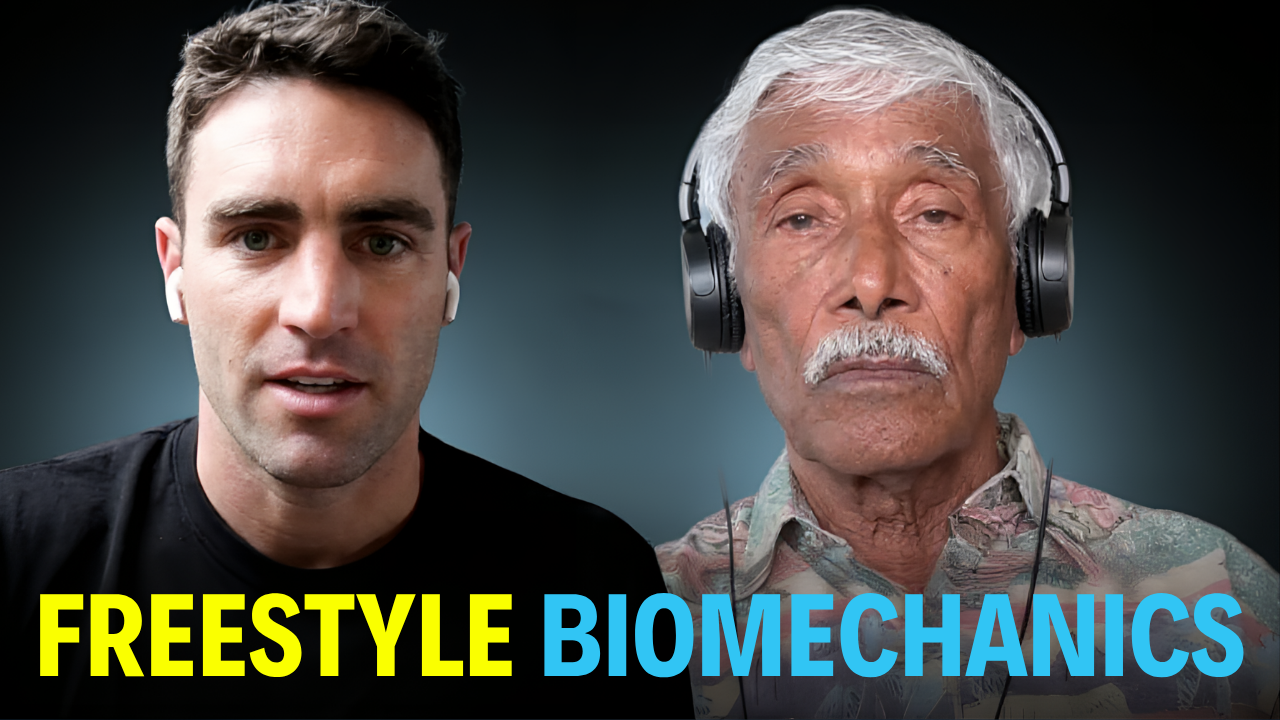
How do you know if you’re working on the ‘right’ things in your swimming? Join John Mullen from SwimmingScience.net and I on the latest podcast where we explore:
– John’s ‘needs analysis’ process and how he determines what to focus on with each swimmer
– Strategies for enhancing your mental game if you don’t have a sports psychologist
– Steps for improving your catch for adults without a swimming background
John Mullen studied Physical Therapy and received his Doctorate in Physical Therapy at USC. He is a renowned expert in strength and conditioning for swimming and rehabilitation.
To find out more about John and his work visit www.swimmingscience.net or www.trainingcor.com
Transcript
Read the full transcript
you know, triathletes and something where it’s such a training community. Train, train, train, train, train. You always feel like you’re behind or you got to add more training. But you know, the worst type of training is sitting at home injured or in the PT realm. Welcome to the Effortless Swimming podcast to show that help swimmers and triathletes love the water, become a better swimmer and live a better life. Here’s your host, Brenton Ford.
John, welcome to the Effortless Swimming podcast. Thanks for joining me. Yeah, thanks for having me. So I mean, your background, you grew up as a swimmer, then you’ve sort of moved into not so much swimming coaching, but working with a lot of athletes with strength and conditioning and a few other things. Can you give the people listening a little bit of your background and the type of people that you’ve worked with? Because you’ve got a lot of experience working with a lot of different levels of athletes. Yeah, definitely. So like you said, I grew up swimming my whole life. I was fortunate to swim in college in the States. And then after that went on to PT school where I did some research on swimming, particularly with lung capacities and injury prevention. And then since then started a strength and conditioning and physical therapy facility here in Santa Clara, where we’ve worked with, you know, I think now over 10 Olympic
swimmers, most notably, world record holder, Sun Yang was working with him and the Chinese team leading up to the last world championships. But also at our facility, we see a wide variety of, you know, the 12 year old swimmer that might have some shoulder pain or the master swimmer or triathlete just trying to improve their strength training or strength and injury prevention to get them through the next season.
And so and you travel around a lot working with different teams and with with with strengths and conditioning and a few other things. So what’s what’s your primary sort of what are you doing most at the moment?
You know, it really is kind of a mix right between just performance and strength training and physical therapy or preventative training. So I’ll be doing some soft tissue type of work with the teams I travel with and other ones I’ll be doing their full strength and conditioning programming. So kind of depends on what the team needs, what they already have in place and, you know, where I can fit in most suitably. And I know you do a lot of Q&As on on Facebook is Facebook live events. And I really like your approach where I met your similar to me where it’s about you need a lot of background on the person and there’s no one right response for everyone because it’s so individual with what might be causing their their pain or why their feet might be sinking. So what do you’d like to go through when it comes to a you call it a needs analysis when you start working with someone? What’s that needs analysis look like for you?
Yeah. So one, it depends if they’re coming in for an injury or they’re coming in for performance. You know, if they’re coming in for an injury, it just starts with a sit down where we’re just chatting about, you know, where exactly they’re having pain and the typical physical therapy approach where we’re learning about, you know, what things bother it. If it’s upsetting or disrupting their training at all and then, you know, obviously where our clinics are different, we do have that swimming background. We can get into the specific biomechanics if it’s, you know, painful on their initial catch of their stroke and things like that.
If it’s someone coming in for performance, we’ll be talking about injuries as well at the beginning because that can limit performance even if it’s a past injury. Then after that, we’ll be talking about areas that they feel like they could improve most on in their swimming. So just a subjective interview, talking to them about their opinions. Then after that, we get into what I call, you know, the daily little things that add up a lot which is nutrition, sleep, and then mindset and trying to ask them questions, try and get into their head, get into their daily routine to see if we can pick off some of the, you know, simple daily things to help out with improvement of performance. After that, we’re going to be putting them through a movement screen, one that we have pretty specific to the clinic, but it’s like you said, individualized to the swimmer. There is a lot of overlap between swimmer to swimmer, but obviously if you’re a triathlete that’s
coming in and you have a history of knee pain, then we’re going to be doing some more knee-based stuff versus if you’re just an age group swimmer with no history of any pain at all. But that’s how we get the whole process going. If the athlete has video, we utilize that and sometimes we’ll go to the pool and do some video analysis ourselves, but depends exactly their level or their at and what they’re looking for. And in terms of the movements, what are some of the basic dry land movements that you would expect or would like swimmers to be able to do, to be able to basically like good movement patterns? What are some of the basics that you’d see there? Yeah, so I mean first we’re always looking just at the main range of motion. So shoulder range of motion and lumbar spine range of motion. So we’ll have them just go through those and a lot of times swimmers will have shoulder pain just through full ranges of internal
rotation at the shoulder and other shoulder motion. So that gives us some clues that we need to work on that. Outside of that, if we were past just general range of motion, we’re looking at core stability, so we’ll be doing some things on the table. Lateral stability, where they’re doing things like planks and side planks and then as far as more general movements. It varies from person to person, but our most common ones are probably a pull-up, a push-up, a squat, a hip hinge, and a jump. And you know those are really nice basic ones that most people have some familiarity with, but gives us a lot of information on where they might be failing or how they’re going and approaching this movement to give us an idea of what we need to work on. Obviously the question most swimmers have and they should have is you know what’s this translation between on land and water and in all honesty it’s not great, but it gives us a lot of
ideas on how someone’s moving or what type of pain they’re having or where they might be having weakness and then we try to use that information based off of what we see in the pool to see if they’re both coinciding. If someone’s a you know a a triathlete and they are wiggling a lot in the water, their hips are moving side to side, then we do some of our side planks and lateral core stability test and they’re weak there as well. It gives us an idea that perhaps they don’t have the capabilities of general core stability on their sides to prevent that wiggle and it’s not necessarily a pure swimming biome mechanical issue. Yeah that’s interesting I mean I’ve worked similarly I work with a lot of different athletes and sometimes you can really you can you can pick what the the flaws that they might have or the the weaknesses or the instabilities a lot of times just by looking at them and the the way they come in and the way they carry
themselves and that can often translate into their technique in the pool and and you’re right with that crossover from you know what’s a crossover from this dry land test or this dry land exercise and how does that translate into the pool and I think being able to convey that and the importance of it and how it’s actually going to affect them when it comes to their swimming is really important because when I was growing up we do a lot of strength exercises we do some tests here and there. I never quite grasped what you know why are we doing this this stuff and how is it going to make me faster in the pool but I think being able to bridge that gap and explain why we’re doing these certain things gives them a lot a lot more motivation and reason to to do the programs that you said. Certainly and I think being able to communicate that thoroughly being able to individualize it appropriately really are key and it once again it’s just like you know if
you’re working with them in the pool you know you can build your hypothesis off the needs analysis provide an implementation but then you got to reassess say for example that summer that we’re maybe working on their lateral stability you know we provided some side planks and anti-rotational exercises and they improved on land but in the pool they’re still having that wiggle that’s occurring then we can say okay maybe this wasn’t what we thought but you have to be able to assess it on land and in the water work on it go back and assess it and then determine if you’ve made improvement and hopefully if you’ve made the correct assessment you have but it doesn’t always happen that you know that clean cutting that easily so sometimes you do have to go back to the drawing board or try something a little bit different. Yeah exactly I’ve found the same thing we do a lot of video analysis with people online and we often get them to send
videos in every two or three weeks depending at what stage they’re at but yeah and we look at it and go all right this is that these are the first this is the first one or two things that I want to focus on and I want you to try this and then send in another video two or three weeks later and if that’s corrected great if not then you might need to look at something at working on something else maybe another drill or a different aspect of the stroke to help make that change because it sometimes it is a little bit of trial and error no matter how much you how many different people you work with and how much experience you have it’s still about finding out what that individual athlete needs. Exactly you got it and and you’ve spoken a bit about on your Q&As about if you don’t have a sports psychologist what a couple of men’s link annotations that you can do as someone who you know if you’re on your own training and you don’t
have that kind of support so can you talk a little bit more about those and what you’d recommend for people? Yeah the most common one I give and it’s just for the person that has a tough time maybe getting through tough sets on their own or perhaps they’re just getting too anxious behind the blocks at a race or at the beginning of a triathlon they just you know have the nerves building up too much and it’s just a positive repeated saying or incantation so I the most common one I recommend is just coming up with three short positive sayings that are individual to the person can be silly can be you know super psych up whatever works for that individual and then what they’re going to be doing is just repeating that saying over and over in their head so for example I want to just be I’m strong I’m healthy and no one can stop me you just keep repeating that over and over during that stressful set where you feel you know like you’re you’re really
starting to hurt and those negative thoughts kind of start to merc into your brain a little bit or you could utilize this behind the block as a self pump up to help you or help provide you use stress to help decrease some of the the bad stress that might come in and provide some negative performance some aspects so those are the that’s the most common one I give but once again it can be goofy depending on the person could be you know I’m a superhero or you know I’ve worked so hard so it really depends on that person so it needs to be an individual saying to be most effective the one that I like to use if I’m halfway through a really tough set and it’s and I feel like I want to get out if I’m doing the set by myself I just say I just do the next the next repetition whatever it is a 200 or 400 I just just get through that and then if you want you can you can jump out but I just keep doing that each time and eventually get to the end
and I’ve made it through the set but when that doubt starts to creep in that’s what I find works best for me and I’ve found
those those sayings of those affirmations have worked really well for other people as well and just instead of getting to that negative loop cycle it’s it’s good just to be able to repeat those positive things and and that can be really useful and I also want to talk about what steps that you like to go through to help adults without a swimming background to develop a good catch or a high elbow catch and what are some of the the exercises some of the drills to go through for those people who may not necessarily have much feel for the water or much grasp around a high elbow catch yeah so you know if they were to be coming in we’d be checking shoulder internal rotation in a very similar position that they would be doing the catch see if they even have enough shoulder internal rotation most adults like it to the sport you know at an older age aren’t going to have even enough range of motion to get to the position that we want them to
in the pool so if that’s the case we’d be recommending them to either see a soft tissue specialist or to do some manual self myofast release or to self massage on the posterior rotator cuff particularly the infraspinatus and teres minor minor and that should help improve that shoulder range of motion to hopefully give them just the capability to achieve that range in the pool outside of that I really think it’s going to be a lot of practice in the pool you know as much as I love dryland and all that you can’t replicate really what you’re trying to do with the skill work out of the water in the pool out of the water so once we get them the enough range of motion on land then it’s getting to the pool practicing it doing video analysis working with a coach or another swimmer that can just help them learn and make sure that they’re doing it correctly yeah absolutely we when we run clinics one of the first things we
we go through with them is we kind of go through that catch motion outside of the pool and exactly what you mentioned it’s a lot of adults especially triathletes if they’re spending a lot of time on the bike they’re rounded through the shoulders or someone who’s sat at a desk for a number of years they’re so tight around the back of the shoulder so they can’t physically get into that ideal catch position so you know we look at that and then using some massage balls and foam rollers just to open up through the shoulders over the coming weeks and months but then when we go through the exercises and drills in the water one of the first drills that we do is what I call catch kick which is basically on your front one arms by the side the other arms out in front in the ideal catch position so the elbow is almost pointing forwards the hand the forearm is vertical and you’re just kicking with the arm out in front so kind of replicating or going
through that that movement if they were to have the ideal catch and it takes with most people takes two or three sets of feedback to say move your hand this way your fingertips are pointing off to the side get them down and just working with people to get them to to get the feel for that correct position because it’s such a foreign movement and that’s why it’s very hard to you can only talk about it so much you’ve really got to go in the water go through some trial and error and and get that feedback to be able to get a feel for it and then it’s just about repetition and practicing it and getting yourself used to to doing that so yeah that’s I’ve found exactly the the same thing yeah definitely and it’s one of those if you can’t do it on land if you don’t have the range on land there’s no way you’re going to be able to get in the water where you know you got all types of other stimuli and changes occurring so you got to get that range on land
and with the soft tissue the biggest error we see with people doing massage balls and foam rolls is they’re just not spending enough time on the right spots you know they’ll do oh 20 30 seconds here and there you know sometimes we’re recommending three bouts of five to 10 minutes a day for some people that are really tight so it just takes a while to deform and get more blood flow to some of these tissues to hopefully get the motions that are required and do you recommend when people are doing that do you recommend what level of
pain do you recommend they go to obviously not question yeah
how how much should they get stuck into it like it’s
yeah is it an individual thing or you know yeah yeah I think I think it is individual for just a general guide that we always start with people is you know if 10 if you’re laying on a massage ball the cross ball what whatever you have and it’s a 10 out of 10 pain that means you’re crying that’s obviously too much if you’re laying on the ball and you don’t feel anything you could fall asleep that’s a zero out of 10 we want to be in the four to six range so it’s you know moderate where you’re feeling it you can tell something’s happening but it’s not so much your person either my name or Brenton’s name or you’re crying on the ball
that’s a a good guide to go with and then what about shoulder injuries in adults what do you see is the most common cause of it what would you recommend for them to help prevent it or obviously treating it’s going to be individual but what do you often see when you’re working with those types of swimmers yeah usually it’s kind of like you were saying they have a desk position or they’re sitting or on their phone too much so they have rounded shoulders or they’re on their bike they’re they’re a cyclist or a runner traditionally then they’re getting in the pool so they’re already starting in the water with not enough shoulder range of motion they get in there they’re trying to do too much volume and they’re doing incorrect technique so those are the three main contributors I’d say out of water position throughout the day poor technique in the water and then too much volume at the beginning with that poor technique so those are the main things I see
with masters or triathletes that are leading to shoulder injuries and you know to to help that out I always say you know find someone to either record yourself in the pool or coach to work with yourself to make sure that you are getting the right technique keep working on postures out of the water whether it’s you know daily shoulder hygiene as we call it here just having the shoulders back not letting those shoulders round forward or going and finding a physio or a physical therapist maybe do a postural assessment maybe prevent the pain or any pain from coming up or to start nipping in the butt early on if it does approach you yeah one of the mistakes I’ve made in the past now a lot of athletes I’ve seen have done the same thing is it’s you get a bit of a
a bit of a niggle in the shoulder and you go out it’ll be fine I’ll swim through it and you don’t actually you don’t look at
trying to get on top of it early on and then it just gets worse and gets worse and gets worse and I mean I did this I did this last week I was I was in the car during Christmas we were driving a lot back and forth from family and beach and all that sort of stuff and when I’m sitting in the car for a couple of hours I get really tight through the the hips the glutes my shoulders as well and then I did a I did a strength session just a very easy one but it was the first time I’d done much strength work for a while and halfway through it I kind of tweaked my tweaked my back and now I’m sort of back to doing two K’s a session compared to to four to six and just stupid little things like that it’s you know and I you know if I was coaching someone I’d you know I’d say don’t don’t go hard with any strength work kept it very basic and but then yeah I’m going to do it myself so it’s yeah I can see how it’s how it happens but it’s it’s really just about
being smart about it and certainly yeah and it’s easy to to have the hindsight it’s and well don’t feel bad happens to all of us I’d do the same thing sometimes it’s always easier to give advice sometimes than to take advice but I I couldn’t agree more with you where if it’s something small I’d rather have an athlete miss a day than miss a week later on or rather I miss a week then obviously miss a month or so on and so forth so we want to make sure we are nipping these little things early on and I think just our mindset especially in you know triathletes and swimming where it’s such a training community train train train train train you always feel like you’re behind or you got to add more training but you know the the worst type of training is sitting at home injured or in the PT realm so we have to make sure you are staying as healthy as you can realize there is time there’s always time so don’t try to overdo it or push through these little
nickels as you called it too too much yeah absolutely and you’ve worked with a number of olympic swimmers a lot of guys in the Chinese team are there any traits or habits things that they do that stood out to you when you’re working with them you know I’d say the most common thing I’m seeing with the olympians that I’m working with is having just a you know a nice team around them I’m seeing it more and more where it’s a you know massage therapist a chiropractor a physio
biomechanist a swim coach and these are really the things that I’m seeing more and more just these elite athletes surrounding themselves with more and more people to help them out along the journey because as we’re learning more and more it’s such a multi factorial system you can’t just have you know one person take you all the way there so being able to you know fill your your you know we’ll call it your bucket of your team with all these different experts and people that can help you with something that I’m seeing more and more elite athletes have as far as you know what the olympians have within them internally
one a great feel for the water and some of them or most of them I haven’t worked with at a young age so it’s hard to say whether that was just something that they were able to pick up really early on or something that they developed you know I think most of them at that level they you know they’re the kid that they get in the water and boom they’re falling into early vertical form at the age of five without much feedback and things like that so it’s just that you know I don’t always like to use this term because people get fixated on it but that amazing feel for the water I think a lot of these olympians are really born with yeah it’s it’s just another level of feel for the water isn’t it with athletes at that level here
when I’ve been at the pool watching watching olympians or national representatives swim it’s just you know you think about like if you’re swimming a sub 60 100 freestyle that’s at least 10 seconds slower than those those type guys and just think well that is that is so that’s a big jump from there to there and they just really take it to another level and it’s just beautiful to watch it really is and you know these olympians you know when you watch them practice it’s you know they they put these times up in practice you know so it’s not like oh they just hop on the block and it happens you know they are in practice going you know 23 50 meter frees from a push and things like this where it’s just like wow it’s really amazing and like he said it’s they’re their skill in the water their biomechanics you know they’re not flawless that’s the one thing about swimming we still have tons of room for improvement but compared to the average Joe you know their ability
to find water with that catch have a nice sturdy hand and I have air pockets and bubbles form around their hand it really is a beautiful thing to see absolutely and I work with a lot of swimmers who are sort of around the two minute to two 15 range per 100 so triathletes that sort of thing and it’s great working with them because they will often feel like they’re stuck there and they’re wondering how can I possibly get quicker like I just I’ve been trying for the last year or two and I’m just stuck here but there is so much room for improvement there’s so much opportunity there and different things you can work on to get down to 150 140 and so on that it’s it’s a lot of fun helping them make those gains and just be able to see what that progression could look like for them when they feel like they feel like they a little bit helpless with that sort of thing and then you’re at the other end where you’ve got the Olympians you’ve got the elites
swimmers where they’re looking to knock off 0.1, 0.2 and they’ll be happy so it’s
it’s a different game and I think it’s you’ve got to get very detailed when it comes to the really pointy end of the field but where you’re working with more amateur athletes or new swimmers there’s there’s so many different things and it’s about all right what do we actually want to focus on here because we could look at a dozen different different aspects of their training certainly in it but it’s still as tricky you know on any realm whether you have the you know triathlete with 30 things to try to improve on or the Olympics somewhere that has you know six things to try to improve on trying to determine what’s that you know biggest area for improvement and then how to you know get it fixed is that’s a fun part yeah yeah exactly right I know you’ve got to to go soon so for anyone listening to this what are some of the services you offer how can people get in touch with you and
find out when you’re doing your your facebook live events you do it put out a lot of content which I appreciate so where can people find out more about the stuff that you’re doing yeah definitely so if anyone’s in the you know we’re based in Santa Clara California here in my practice so if you are you know in the area or looking for online remote services for dry land consultations strength training consultations physio consultations www.trainingcore but it’s just cor with noe.com is the best way to find us there or info at training core once again noe at the end of core.com for something specific stuff my run a website called swimmingscience.net and you can find us on facebook and twitter where we’re putting out a lot of our content on those realms as well so those are the best ways to find us online or get in touch with us if you have any specific questions or needs fantastic and if you listen to this we’ll put all the links up on effortwithsuming.com
and John I appreciate you spending some time with me and sharing your experience and yeah keep doing what you’re doing I really appreciate everything that you’re putting out there and yeah I love talking to people like yourself because you’ve got the experience you sound like you love to learn you love to work with swimmers and help people get better so yeah thank you very much hey sure thing had a had a pleasure and I hope you guys got some value out of this and to everyone out there just keep swimming there’s always some room for improvement just don’t give up thanks for listening to the effortless swimming podcast if you’d like us to help you become a faster more efficient swimmer go to www.effortlesswimming.com