







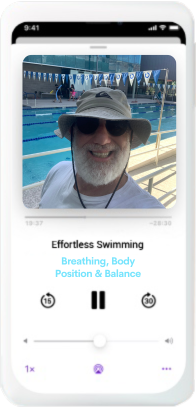
In today’s episode, we dive into a conversation with Frank Sole, the author of ‘The Five “B” Method to a Successful Triathlon Swim.’ We discuss Frank’s evolution as a coach since writing the book, his key lessons for new athletes, and the importance of terminology in training and team dynamics. Frank also shares insights on leveraging breathing techniques for improved performance in the water, drawing from his training with a world-renowned expert. Tune in now!
1: 01:11 Lessons Learned from Coaching Older Athletes
Related content: The Five ‘B’ Method To A Succesful Triathlon Swim with Frank Sole
In this episode
- 00:00 Introduction
- 02:01 Challenges and Rewards of Coaching Retired Athletes
- 05:47 Elevating Your Swimming Sessions
- 09:59 Empowering Athletes Through Coaching: Building Trust and Value
- 16:04 The Science and Art of Mental Strength in Sports
- 20:21 Overcoming Setbacks and Staying Committed to Swim Training
- 22:21 The Power of Developing Good Habits
- 25:42 Breath Control and Body Position
- 30:33 Breath Work for Athletes: Building Lung Capacity and Endurance
- 36:47 Back to Basics: The Fundamental Role of Breathing in Coaching
- 43:09 Enhancing Swimming Skills through Play and Exploration
- 46:46 Swimming Without a Watch: Embracing the Feel of the Water
- 51:12 Embracing the Suck and Enjoying the Journey
- 55:40 Finding Creative Ways to Convey Instructions to Athletes
- 57:47 Celebrating Progress: Recognizing Improvements in Swimming
- 1:02:47 Get in touch with Frank Sole!
Links from this episode
- Amazon.”>Get the book The Five “B” Method to a Successful Triathlon Swim on Visit Frank’s website for coaching
- Change your technique and swim a smoother, easier freestyle with the Effortless Swimming membership
- Do you want to work with me personally to improve your technique? Join my swim technique coaching here
- Get 15% off our 8-week Faster Freestyle course by using the code 8week15
This podcast is brought to you by NanoClear — our own range of anti-fog swim goggles, designed by Effortless Swimming with the anti-fog treatment bonded into the lens itself (not sprayed on, so it doesn’t wear off after a few swims). Check out the NanoClear range here and use code PODCAST15 for 15% off.
Transcript
Read the full transcript
I’m a true believer in breathing and breathing right outside of the water will prep you for a better swim in the water. I jumped in the water at Alcatraz 54 degrees and you come up after you jump off that boat and you just, I mean, it just you feel like your lungs are being crushed. So what are you going to do there? That is brilliantly stated and it was something I learned quite a while ago and I tell athletes, they said, you know, my confidence is low. And I said, here’s the thing, you have to get in the pool and show yourself you can do it. Then your confidence comes. You don’t get confidence first, you get in, do and start to build that confidence. Welcome to the Effortless Swimming Podcast to show that help swimmers and triathletes love the water, become a better swimmer and live a better life. Here’s your host, Brenton Ford. Frank Soul is the author of the 5B Method to a Successful Triathlon Swim.
We talked about that on a previous episode with Frank and on today’s episode I asked what would you add or change to that book now that you’ve had a few more years of coaching since writing it. I asked him what would be one lesson that he would instill in new athletes who joined his squad. I also asked him about the difference between training and workouts and squad versus team because Frank believes that the terminology that you use can have a big impact on the way that people approach their swimming. We also talk about how people can use their breathing to their advantage as opposed to struggling with their breathing and feel like it’s something that lets them down because over the last couple of years, Frank has done some training with the world’s leading expert in breathing and he’s used that with his athletes to help them become more comfortable, more controlled in the water. So we talk about that as well.
Let’s jump into today’s episode with Frank Soul. Frank, I want to welcome you back to the podcast and I know you’ve had a lot going on in the last two and a half years. Yeah, Brenton, it’s good to be back with you, but I’ve been a big fan of your of you and effortless swimming and it’s been a busy two years. The last time you and I talked, I was living in Scottsdale, Arizona, a master swim coach, triathlon coach, and we have, my wife and I have relocated to Florida, the great state of Florida, a place called the villages. And I am now the head master coach of a large squad here, about 110 athletes. Uniquely, they’re all over 55 years old because it is a retirement village, but don’t don’t challenge them with that. These guys and these gals are there to work. So it’s been a busy two years, my friend. Good to see you again. Yeah, I can imagine it’s the good thing about that is you can be very specific with the workouts that you’re doing because you’ve got a group who
sounds like they’re all fairly, fairly similar. You’re not working with 20 year olds and 60 year olds. You can be pretty targeted with it. And I think back to when I used to coach a master squad, what I loved about that was you’re almost like this chess, this, you know, you’ve got this chess board and you’re playing these different pieces and you’re making these, these moves as you go. And I really love the, I loved having that, that team that scored together where you’re working towards states and nationals and you’ve, you’ve got these athletes and you can see them improving their times and their technique and just that day in, day out working with them. It’s, I’ve got a lot of lifelong friends through that, that my time as a coach there and it was, it was a lot of fun. So I can only imagine what you’re, what you’re going through now being back on deck with a master’s group. Yeah, it’s, it’s fun. And we just got done doing a meet a couple of weeks ago in Clearwater.
And in April, we have the senior games. And again, you know, our, our vision is the senior games, a bunch of these old people running around, but I challenge a man, you got to go see a seniors game. I mean, from everything from archery to softball to pickle ball to you, David, and, but swimming is really the premier highlight of the senior games and we get athletes who are senior masters from all over the state and from out of state, who will come to swim at the villages because we put on such a high quality meet there representing the senior game. So you’re right. It’s writing these workouts. It’s, it’s funny. I’m constantly writing, I have my work out and I’ll have a second piece of paper and I’m constantly making notes because what I’m working on with the workout we did to this morning, for example, I want to make sure I’m building for next week in preparation for the senior game. So we’re going away.
We’re kind of matriculating now from kind of LSD swimming because we’ve just been lengthening it out a little bit. Now we’re getting very specific, right? A little bit more sprint stuff, a little bit more rest. And I’m writing notes and starting to write workouts. So they’re going, oh, he’s thinking, you know, so that is the fun part working with these, these incredibly gifted eight type athletes who are retired, but don’t let them know that as athletes. They are there to compete, my friend. Yeah. That just means they’ve got more time to train and more time to work out and everything. So it’s, it’s, I still hope, you know, yeah.
I still three, four, I’m still in the water three, four days a week. I go, and I guess I’m going to have to get in one of these beats with these guys and compete with them. You know, I mean, they’re, you know, they’re pushing me to do that. So it’s fun. It’s fun. Yeah. Yeah. It’s a great, I got an email early this week from someone who’s over in Doha doing the masters, the masters events over there. And he said, I wanted to thank you because he’s come to a camp and I’ve done some analysis with him. I want to thanks for your help over the last couple of years. He won the three K in the 80 to 84 age group. And I swam with him on this camp that we did here in Australia. He’s motoring along like, I, unbelievable. And looking at his technique improvement over the last 18 months, where he’s just, we’ve worked on two or three main things is improved that, you know, in his 80s, there’s no, there’s no stopping when it comes to this sport.
Like swimming is such a great sport that you can do forever. And I want to be swing till the day I die. That’s wouldn’t mind to go out that way. I think that’s a good idea. It’s funny. That’s kind of like a joke. A couple, a couple of the athletes going, not a bad way to go. I got a 81 year old gentleman on the team. He swam collegially in college, right? Swam collegial and some of the smoothest technique you ever seen in your life. It is, he looks just pardoned upon. He looks effortless. He just moves and slides through the water and replaced hip, has some hard issues. So he doesn’t do the entire workout. But the point is the band shows up. He gets involved. He’s actively involved. And when I need to take a video of that kind of stroke, he’s the video I take, said, look at the way he, look, look at his spear in the water. Look at that anchored hand right there. Look at the snap of that hip. That’s what you want to emulate right there.
Oh, he makes it look so effortless. Yeah, that’s the idea, right? That’s my philosophy. Anyhow, I know there are a lot of coaches who don’t care about effortless and all that there. It’s all about production, but I truly believe that, like, I think that you and I have talked before on this is that balance, buoyancy, body position are critical. I mean, you want to swim like a speedboat and you’re a tugboat and you’re big and strong, you’re just a tugboat with a big engine and you could wish all you want to be a speedboat. But until you start acting and putting your body in a hydrodynamic position, it’s going to be a struggle for you. And I think your last email that you just sent out like that, doing 100 yards, the things that were for the body mechanic, biomechanics with the arm, lifting your head to breathe, all those, those innocuous details will, will either make you a great swimmer or will hold you back.
And as I wrote in my book, I believe, and I opened up the first chapter is I truly believe if you want to swim, everybody has the ability to become great at this. I’m not talking Olympic Michael Phelps grade, but we all have the ability to become really, really good at this and take our swimming to the next level. If we are willing to be diligent, mindful and deliberate in our swimming. And that’s what I’ve shared with you before. That’s why I don’t like to call workouts, workouts. I call them training sessions. I’ll go to an athlete. What’s your focus today? Well, you told me about my hip rotation. Okay. So what are we going to work on? I need to rotate to my non-breathing side. Shouldn’t I be breathing to the other side? We’re not going to get into that right now. You could still get that hip around, right? We deal with the topic at hand and then I could get an athlete to think that way. I’ll even tell them sometimes, man, I want you to get out of
the water more mentally tired than physically tired today. I want you to think about what you’re doing, not overthinking it, but I want you to be aware that your swimming flat or your kick is way too wide or your feet are in dorsiflexion versus planter flexion. So those are the things that I absolutely still love to do. I love and study technique every day, my friend, whether I’m watching a video from you or some other competitor coach that you and I probably know about or going to a book, an article, whatever. I can learn each and every day to make me a better coach because I believe I owe that to my athletes value, value, value, because that’s why they come to people like you and I, my friend. And I think swimmers can tell whether or not you’re in that state of continuing to want to get better and learn and you’re interested in continuing to pick up different ways to coach in different cues compared to if you’re just, you’re on your way out and you’re just not
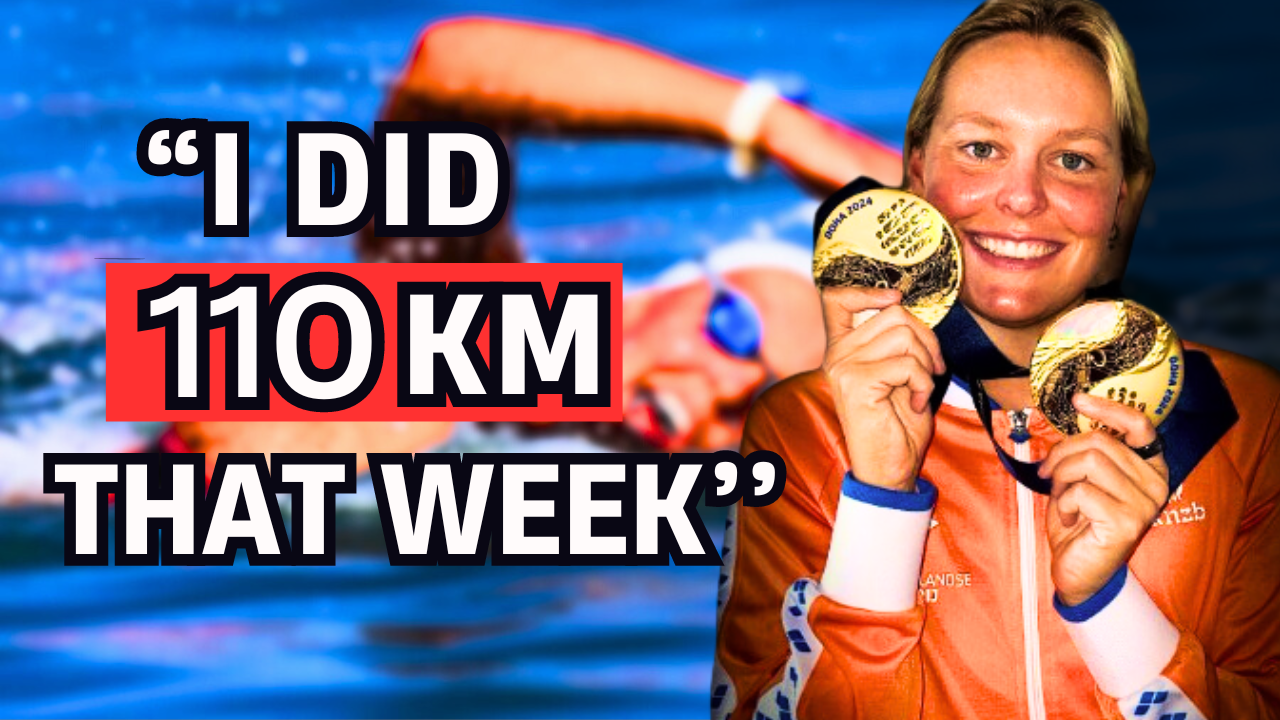
interested anymore. I’ve, I’ve seen coaches, I’ve, I’ve swam under coaches like that. And you can just tell, they’re just not, they’re not mentally there where they just don’t really care for the athletes. And one of the things that I picked up last week. So I had Sharon Van Rivendale on the podcast who won the five and 10k at the world champs recently talking to her. It’s, it was so interesting to hear about what she’s doing in, in training. So they do big miles. They do 70 to 80 kilometers on average, but they’ve gone up to 110 kilometers a few weeks out from, from world champs. So they’re doing these, these big distances. And I was asking her, like, how do you get through those kinds of Ks without being injured with, you know, without being completely stuffed. And like a lot of it’s just zone two swimming. It’s just very sort of comfortable swimming. But she said, when I’m doing that, I’m working on like big, big
distance per stroke. I’m really highly focused on my technique. And I’ve got a lot of body awareness, every single stroke that I’m taking. So it’s, it’s about like for her, she said, even though it’s zone two, I’m, I’m pretty fatigued from that because, you know, I’m holding a lot of water. I’m mentally concentrating, but physically can get through it. But it’s just, yeah, mentally it’s a, it’s a bit of a strain to think about it. Yeah. And that’s what I, I try to convey to whether it’s any of my triathletes or I’m coaching any of my master swimmers and I’ve got some endurance swimmers. I’ve got an athlete right now. We are getting ready for Catalina Island, August 19th. Last summer, 29 mile. Oh, excuse me. Last summer was the 21 miles in Lake Tahoe. The summer before that was the Manhattan Island swim, 29 miles. He’s done swimming around the keys three times. This was a guy five years, six years ago, I got him in the water.
He swam across the pool. I was doing an assessment on it. He swam across the pool, swam to the other side, grabbed on the wall and was holding church and you know what holding church means. Oh my God, sweet Lord Jesus. He just, you know, so I let him hold church for a minute. And, but this is a guy who was determined, determined to become an open water swimmer. And the goal is Catalina Island is obviously a cold water swim to get him ready for the English Channel. And he told me in somebody words, you know, he’s going to feel like a failure if he doesn’t get to the English Channel. I said, Anthony, my friend, you got to resume second to none as a open water swimmer, CEO of a company, father of two children, a wife and all other responsibilities and you’re still getting it done. So it is a mindset. If you say you can do this, you can do this. If you say you can’t, you can’t and you’re right. Sometimes I find zone two swimming to be more taxing than, you know,
just letting it fly at zone three, zone four, banging out 25s, 50s, 75s, 125s. You have to think about what you’re doing. Am I driving my hips? Am I staying staying focused on my two beat kick? What’s my hand position like? Am I staying long and anchored? Because as an open water swimmer, it’s so completely different than my sprinters. I don’t even like them in swimming in the same length to lanes next to each other because they’re going to affect each other. You know, I got gals getting ready for the 500 knees are getting ready for 50s, I don’t want them next to each other because guess what? The 500 people want to do. They want to swim like the 50s, right? And it’s a different animal, right? Swimming, but apples and oranges in many cases. I’ll explain to an athlete because I’m trying to get you ready for something different than 50 freestyle. I am getting you ready for the 500. Can we hold our pace through the first 100?
Can you hold the pace through the second 100, 300, 400, and then at the last 100, can we push and really start to make some headway for that last 100? So bottom line is it really is, like you said, it’s chess pieces moving your athletes, me moving your thinking around as a coach and moving your training around. And yes, it’s okay for coaches to go on deck and saying, you know what? I’m going to change this workout on the fly because I know I wrote it out in a certain way, but I’m seeing things today that makes me want to change this up and it’s okay to do that. So I tell young coaches, don’t beat yourself up when you do that. Because that coach going, Oh my God, I did that. And does that make me a bad coach? No, that makes you a an inspired coach. You saw something they weren’t getting. So you want to do some drill work and then start to build off of that. And then just went back and got what you can get done for that particular session.
So to me, I think as a coach, you’ve got to be flexible. You better be reading and studying this stuff every day because there’s all kinds of nuances that are coming out again, looking into people like yourselves and some great coaches out there. And then take that expertise on the deck and let athletes know you’re my best interest. I am here to serve you and give you the value you deserve. And I think at that point, you’re going to have a lot of people who are more than happy and willing to listen to what you are trying to convey to them. And it’s also important that it’s coaches. It’s OK to say, I don’t know right now how to handle this. Give me a day, we’re going to see how to fix this all by shoulder coach. Well, you know, I’m not a physio and I’m not a P.T. as we call him here in the States, right? But let me do some research and see we, you know, maybe your recovery is off a little bit and you’re pinching that nerve, whatever.
Maybe we can come out a little wider and that recover. We don’t have to have that classic high elbow recovery that looks like in the book. It’s a great guideline, but maybe not serving your best interest because of mobility, flexibility, stability, agility, all of those things. So as coaches, we’re put in that position to have to make those decisions on the fly and answer that question directly is to give that value to these athletes and know that we are engaged with them and we’re not checked out. They see us, they know we’re there and they’re going to feel our energy for the day, whether you’re working one on one, doing a zoom call. And in my case, I had 27 athletes and part of my squad in the water today and probably have 35 for another pool tomorrow. So it’s all good stuff. Yeah, good stuff. And that’s that’s all part of the the science and art that we’re talking about prior to the podcast. So there’s there’s a science behind it in terms of your physiology
and we’ve got to change it, train these energy systems. And we’ve got to do a certain amount of repetitions to make these things a habit. But then everyone is human. And so the outside of it is how do we how do we get ourselves or get another person to to do the work that’s required or to mentally develop that strength to be able to finish a race strong or not question themselves halfway through a session or or through a through a race. And one of the things that Sharon mentioned was that she like battles battles with that that mental side of things, because in the past she had gotten second by point one of a second just on the touch at the end. And so yeah, it’s easy to to doubt yourself. And yeah, apparently the best open water swimmer in the world. She’s has those doubts. But then what she what she did was did the work that was required to give her the confidence going into race day thinking, yeah, I’m like, I’m feeling like I’m going to win.
I’m not going to tell people that, but I’m feeling like I’m going to win because I know that 110 kilometer week that I did like no one else is doing that. And I knew that I got through that really well. And I felt felt really strong. I’ve got this confidence from it. So oftentimes and one thing that a guy, Alex Samozzi, it mentions is like, if you just if you just do the work, if you do what’s required, you’re going to get the confidence. Yeah, you’re going to you’re going to have that motivation because you’ve you’ve seen you’ve proved to yourself that you can get it through that through doing the work through doing the thing that is brilliantly stated. And it was something I learned quite a while ago. And I tell athletes, they said, you know, my confidence is low. And I said, here’s the thing. You have to get in the pool and show yourself you can do it. Then your confidence comes. You don’t get confidence first.
You get in, do and start to build that confidence, teaching an adult how to do flip turns that was tough enough with an agile young kid. And now you’re teaching an adult who may have, you know, some agility problems or mobility problems. And I will always tell athletes, get in the water and do the work. Okay, you are holding two minutes per hundred for 25 yards. We have a base. We know where we know where you’re at right now. We know where you’re at. We know what we need to do. Here’s what I need you to do. Stay focused on the process, trust the process, show up each workout and embrace the process. And if the laws of fixes really do apply, well, you’re going to be down to 145. You’re going to be down to 143, 142.5, 139, back up to 142. And I’ve seen that happen with so many of my athletes, average triathletes swimming 135s who are now banging out one 10s, one 12s per hundred. But it took time to get them there, right?
It didn’t happen overnight, right? It’s not like a TV show that we used to have here in the States called I dream a genie and snap your fingers and it happens. You got to show up, embrace the process, trust the process. And again, physics will do what it’s designed to do. It will reward you accordingly for your hard work. You still may come in second like Sharon did, right? And your point is well taken there. You got one of the world’s best, one of the female world best. She is, in my opinion, one of the best in the world who’s ever done it. And she still has doubts about her ability because she came in second. So what does that say for people like you and myself? We’re going to struggle with that. You’ve got to find a way. Surround yourself with a squad that believes you knew. Find coaching staff that believes you in you. Stay away from all the negative people. Oh, why? Why are you doing this? You shouldn’t be doing.
Yes, you should be doing it. You’re in the pool and you’re showing up four days a week to do your workouts. You know what? I’m just simply saying God is stamped on your heart, your purpose and your passion. Get your butt in the water and swim. And I will. I will tell brand new swimmers like that. And they look at me like overwhelmed, going, I believe in you. Now, just get in the water and just do what you can do today. And don’t worry about it. Don’t worry about the. You know, what’s that old saying? Focus on your lane, man. Just focus on your lane. Just don’t get it done. So I think those those elements are the the necessary pillars to become a really good triathlon swimmer, a US master swimmer and an open water swimmer. You’ve got to have those pillars. You’ve got to build your confidence through the hard work, believe in the process, paying attention to nutrition, paying attention to your height, hydration,
your mobility work, your if I didn’t say that, your nutritionals, all of those things are absolutely critical. Do we slip? Do we go out and have pizza and cheesecake and a beer? Of course, we’re all human. But how do we respond the very next day? I missed the workout. How do I respond? My butt is in the water for warm up. The next warm up even earlier, I will tell you with my squad right now, we won’t start till the top of the hour. I will walk on deck 15 minutes before technically we start to work out. And virtually every swimmer who’s going to show up for the day is already swimming back and forth. I won’t give them the workout so they’re swimming the work and all what they needed to do about five minutes before I hand out the workouts. Time out. Here’s what we’re going to work on. Any instructions are necessary, and then we get right into the workout. And that is rewarding as a coach to see that. And that’s how you build confidence.
You want to build confidence? Get there early. Do the necessary work. Believe in yourself. Others can do it. I can do this at whatever level, man, whatever level. Yeah, you can’t you can’t steer a parked car. You’ve got to be doing something. You can’t just be there reading or studying about how do I do a flip turn? You just can’t study that for six months. Just getting there. Try it and let’s see what you let’s see what you’re doing. Then we’ll start to refine it. Like I’ve I’ve had a few people want help with flip turns and like, all right, let’s just let’s just see what you’re currently doing. They’re like, oh, no, like, no, just show me what you’re doing. And then we can work from work from there. So you just get moving. And the other thing about it, too, is like many things in life, there’s so many things that go into it, whether it be parenting, whether it be running a business or your work or swimming.
So swimming, we’ve got we’ve got the technical side of things. We’ve got the workouts. We’ve got our recovery, mobility, strength. There’s a lot of stuff that goes into it. And I think the best way to try and do all those things that keep it simple so you’re not feeling like you’re not doing enough or you’re not finding that you’re slipping with some of the things. It’s like, just develop develop good habits. And for me, it’s like, well, Monday, Wednesday, Friday, they’re the mornings that I swim five, 30 to seven o’clock. I’m I’m in with the squad that I’m setting the programs for. Jim, all right, I do that on the same days. And I’ve got my set workout food for after the training session every time. It’s the same thing. I’ve got this protein bar that I throw in my bag. And that keeps it nice and simple. Bags by the front door, got my towel, got my bathers there. And it’s all just packed the the night before.
So developing these habits that you can just get into a groove. It’s like a river. It just you develop these these pathways where it just it just flows and you don’t have to think about it. It’s the same thing with those habits. If you can get into some really good habits, you’ll look back in six months, 12 months time and you’ll go, wow, I’ve come a long way and you haven’t had to think too much about it because you’ve just become this person who does all these different things. And that’s what’s helped you to to improve. So I think it’s really just about trying to automate some of those things where it’s just in the calendar, you do it week in, week out. And then you just got to stick with it. And so means one of those things that if you don’t quit, if you just keep working at it, you’re more than likely going to improve. Absolutely. And the term I use is a term called stacking habits. You just you you identified it absolutely perfect there.
Stacking habits, a habit I swim three days a week. My bag is packed the night before I’ve got a bar or a protein drink in my water bottle. That’s all ready to go. There’s my towels there. My goggles are there. I don’t have to worry about that. All my swim caps, anything and everything I need. So all those habits are stacked and we know I don’t care if it’s 20. They say 21 days, 66 days, 120 days. If you are mindful, saying tomorrow’s swim day, I am not going to bed until I put my stuff in the car. It took me a whole lot of times of missing stuff, but I do not forget anything anymore because it’s always in the car of the night before and we use golf carts down here. Like I said, you go Google the village, everybody’s got a golf cart. And I’m just going up to pull the pole in my golf cart. But stacking habits, that’s half the paddle right there. You just need like Woody Allen said what 90 percent of it’s just shown up
10 percent, man, get in the water and do what you need to do. And it again, if laws of physics are really 100 absolute, you have no other recourse to get better. We’re not talking about, you know, breaking double zero. But man, if you’re swimming two minutes and you always wanted to break 130, you just keep showing up. It’s going to happen. It’s going to happen. It has to happen. So, you know, I’m an optimist. I truly am. I really believe in in my athletes. Again, you see the ones who are there and they’re putting in the effort, it could take some time. But the bottom line is what we’re looking for is the athlete to show up and the improvement will start to gradually happen. So I agree with you. And thinking back to the book that you wrote a couple of years back, is there anything you change or add or, you know, tweak a bit from that book having had experience over the last couple of years since writing?
Yeah, that’s a great question. And I’m sure any writer who’s written a book would say, I would change this or change that. One of the things that I’ve done since the last time you’ve talked, I’ve got certified as a breath coach and you may be aware of the group Oxygen Advantage Patrick Patrick. You know, yeah, I got certified through him. And I’m working with these these athletes on deck because as I wrote in the book, if you cannot demonstrate good breathing practices on deck, there’s a strong probability. You’re not going to be able to do it in the water because I’m sure you hear it all the time is, oh, my God, I can’t breathe. Well, tell me what you’re doing. Or if I go underwater with a camera and do a video stroke analysis. And what I undoubtedly what I’ll see is they’re holding the breath, right? And the simple rule is I’m inhaling or exhaling, you know, and I’m not one. I don’t care if you breathe exhaling out of your nose out of your mouth.
I just need you to get that carbon dioxide out so you could take some oxygen in and especially up on water swimmers, right? Breathing every stroke. Why? Because the only source of fuel while you’re swimming is oxygen. So if I’m not getting into a steady breath, so I give a lot of my athletes dry land exercises to do, not Wim Hof, you know, like, you know, breathing in, sitting in a vat of ice cold water, nothing wrong with that. I have, I have a cold plunge in my own backyard. But the fact of the matter is, is that I get them to the point where they can train the body to tolerate higher levels of carbon dioxide. You and I both know watching the Olympics no less than 20 years so ago, they would jump in all they would off the blocks, 50 free style, maybe one, two, three breaths. There’s no breast now. These these athletes are being taught and trained to be able to tolerate that carbon dioxide level, not necessarily working with less oxygen,
higher levels of carbon dioxide and still overcome the amygdala in the brain saying, you need to breathe. That’s what I’m working with athletes. Now that’s one thing that I would change the, I think everything else balance, buoyancy, body position. I am nutsy about it. If you are not me maintaining a balanced body and you are not swimming on top of that water and you’ve got drop tips, you’re over kicking. It’s over, man. It’s over. You’re going to use so much energy. So I get people to slow down to speed up, right? The old Navy, Navy SEAL term, slow, smooth, smooth becomes fast. Slow, smooth, smooth becomes fast. Slow, smooth, smooth becomes fast. Slow it down. Let’s get the let’s get the length down. Let’s get the stroke length down. Then we’ll worry about the stroke rate. So many newer swimmers, they want to swim fast. There they got the stroke rate going up, but they got no stroke length. They’re not going anywhere.
It’s like like a old Charlie Chaplin movie. He’s running into mud and he’s not going anywhere. So the reality is I work on stroke length early on, then slowly start to increase their stroke rate. And that’s where we start to see the magic happen. All of a sudden, their time start to drop, but I need them to buy into the process, believe in the process. So the only thing I get in the change in that book is the whole thing on breathing. I’m a true believer in breathing and breathing right outside of the water. We’ll prep you for a better swim in the water. Jumping, I don’t know. I guess that same year that you and I did our last one, I jumped in the water at Alcatraz 54 degrees and you come up after you jump off that boat and you just
I mean, it just you feel like your lungs are being crushed. So what are you going to do there? You better learn to control that breathing and get that carbon dioxide out. And I was having a conversation with myself stroking. Nope, you’re not exhaling. Get it out. Nope, exhale, man. Get off. That was good. Do that again. Nope, that was not good enough. Exhale stronger, take a nice strong, strong breath of air in. You got yourself into rhythm. Next thing you know, you’re moving through the water. So those are the things that I’m really, really focusing on. Early on with new swimmers is the breathing piece, body position, biomechanics, I’ll do with less. I know you and I talk specifically head position. I want that head down. I want that temple leaning into the water. If I could tell them to lean that temple in the water, create that natural trough, all of a sudden it comes together. They have to have a little bit of trust that that air is going to be there.
It’s not always there, but they got to trust that, right? I tell new swimmers, you’re not baptized unless you gulp some water every once in a while. So I’m sure you I’m sure you know what that’s all about, right? Yeah, that’s right. And look, worst thing, worst case, if you take some water in, you can stand up, get rid of it. Let’s go again. You know, just just have the confidence to breathe low and we’ll just start to we’ll start to get used to it. Absolutely. Yeah, I know someone listening to this who’s who’s struggling with their breathing is going to be thinking, well, what how do you increase your ability to tolerate a higher level of shield and dioxide? Yeah, how do you start to do that?
Before we dive into the rest of today’s podcast episode, this episode is proudly brought to you by Form Smart Swim Goggles. They’ve been a long time sponsor of the podcast and they are my go to goggles when it comes to tracking my training sessions and being able to see what’s happening in real time through the goggles. And we know swimming is a highly technical sport, but without the guidance of a coach on deck, identifying and addressing technique flaws can be a challenge. They’ve recently added a new feature to the goggles, head coach. And this addresses that problem head on. It gives them as improved access to their technique awareness, focus skill development and in app education and analysis. Head coach provides real time visual coaching via the Form Smart Swim Goggles augmented reality display. During and after a swim, head coach provides swimmers with technique feedback using two types of metrics,
form score and head coach skills. Form score is a measurement of overall swim efficiency ranging from zero to 100 defined by your pace and your stroke length. Head coach skills encompasses five key areas that will help you identify where to focus on improving with your efficiency. Head roll, head pitch, set pacing, interval pacing and breathing time to neutral. And after completing a session, you can check back in on the form app to track your progress and head coach provides swimmers from beginner to expert with an unprecedented level of data driven guidance and understanding, enabling you to boost your performance and your speed. Get your pair of Form Smart Swim Goggles today. Click the link in our podcast description or use the code Effortless on Checkout to get 15% off your Form Smart Swim Goggles. Well, one of the exercises I will do is I will have the athlete lay down on their bed or on the floor, preferably laying down
because I don’t want anybody sitting or standing and they feel like they’re dizzy or whatever. But I’ll lay them down and I will have them breathe in and out of their nose for 20 times. So one cycle in and out, in and out. And at the end of the 20th cycle, they will exhale out and pinch off their nose and hold it as long as they can on the exhale, not on the inhale. So they’ll take their breath. I’ll do it out of my mouth as you demonstrate. So they will take that breath of air in, pinch off their nose, hold it as long as you possibly can. I’ve had people say to me, I’m going to pass out. You will let go of your nose before you pass out. It doesn’t happen. I have an athlete. She’s 51, 52, three time Ironman athlete. She now can hold her breath on her exhale for two minutes and 45 seconds. Two minutes of 45 seconds. First time through and I’ll have them cycle through that three times. So the first time may only be a few seconds.
Second time considerably longer. Third time should always be the longest, 99 out of 100 times. It will be. And I will ask them to do that. I will include that right in their workouts for the week. Monday, Wednesday, Friday, we’re going to do this breath work. Also, what I will ask them to do is the classic bobbing drill. Right, you know where I’m going with that bob up and down in the water. Uncharacteristic, what I’ve seen other coaches do, I always want them to do it in the shallow end because I want about three, four feet of water. They go down their butt, hits the bottom of the pool. They’re exhaling out the entire time. A very quick, decisive breath of air in. I want to see masses of amounts of bubbles the entire time they go underwater till the time they break the surface. I want them exhaling out. So what we’re also doing is working and expanding their lungs. And let’s see this little device, expand the lung.
I don’t know if you’ve ever seen one of these. It’s called an expanded lung. A lot of my athletes will use this. You simply put it in your mouth. You can dial it off where it’s a little tough to breathe through. And what it will start to do is open up the lung capacity. Your lungs have 11 muscles, 12 muscles on each one. And those let muscles go into therapy like anything else. If we don’t force those muscles to move because we’ve had not asked them to, now it’s going to be very restrictive. So we use one of these little devices like this. And yeah, they have ones now with apps. And, you know, it can give you all the bells and whistles. But I’m like you used keep it simple, right? The kiss principle by one of these, I will use this before I get into the water from time to time. I will do the bobbing drill, do the breath hole drill. OK, I’m averaging about two minutes and change at 69 years old. I can do that.
So I’ve gotten to my best was, I think at 221. So and I’ve kind of leveled out at two minutes. But I still do that every two or three days, just for my lunch. That would be the one thing I would change is working their ability to breathe in and out of the water. The average adult, we breathe anywhere from 13 to 15 breaths per minute. According to some of the top breathing experts in the world, we should be anywhere from five to eight breaths per minute. So I worked I worked real hard at that to be somewhere between five to seven breaths per minute, because I check it from time to time. I don’t walk around all the time thinking about it. But it is something that I’m quite aware of. And it has helped me in so many respects as an athlete, just remaining calm and keeping my heart rate low. And it will affect your HRV, your heart rate variability. Also, another aspect of what I will work with some of my triathletes.
I’m a big believer in heart rate variability as good feedback. It’s another tool in the toolbox, right? That’s all I said. So you had Joe Friel on the podcast a couple of episodes back and he talked about HRV and how he started to integrate that with his coaching as well. And he said the same thing. It’s like it’s not the bail and end all, but it’s certainly something just to help guide us in the right direction. What I like about that breathing side of things is it’s very fundamental, very basic, it’s very essential. And it’s always good to go back to those fundamentals. I took my kids to a new swimming swim lessons program because basically the local swim club here, they’ve got a learner swim school and just talking to the president of that club, he said, look, we set up this learner swim school to just be really on top of their technique and make sure they progress the right way. And I wasn’t stoked with what they’re currently getting at their
old learn to swim stuff. And so they had their first lesson last night and I go there and I’m watching it for the first couple of minutes. And they’ve kind of gone like kids have gone down a level compared to where they were in the other one because they had an assessment and the teacher looked at them and said, I look free. They’re free styles, good. They’re backstrikes, good. But they’re still making like these couple of mistakes. So we want to get that right first. And as they’re going through their lesson, they’re going through some really basic stuff to start with, like my young ones in there kind of blowing bubbles and all this sort of sort of thing. And inside of me, I’m going, they’re better than this. They’re more advanced than this. Like, come on, like, all right, this I’m already thinking, all right, I’ve got to take them out of here. And I was like, hang on a minute. All right, let the let the lesson progress, let them go through the whole thing.
They’ve eventually built up to full freestyle and everything. And but I’m thinking, OK, well, if I like me with coaching, right, I take my summers through breathing exercises, making sure they’re breathing low and all these really simple things. And these are maybe people who have swum for years. These are these are adults. And maybe they want some some really cutting edge stuff. But it’s like, no, it all comes down to basics. And if they don’t do that well, then they’re going to be stuck at a certain point. So I let the lesson play out, really pleased with the progression. Already saw some improvement in my in my kids, they’re five and seven. And but I just had to remind myself, it’s OK to go back to the basics. But I can see it from a like a parent’s perspective, who may not have the same experience with this kind of thing, where they might look at their kids and go, like, this is ridiculous. Like he was further along before that.
But yeah, it’s always just no matter where you’re at, it’s always just about fundamentals. Like I can’t stress us enough, it’s basics. We go back to the basics, a couple of my athletes had not the best swims at Clearwater, so we simply go back to the basics. We know what we need to work on. Let’s just go back to it, right? We really have two options. What I’m going to do, quit, but I didn’t do well. So I’m going to quit, right? I’m going to take my basketball, I’m going to go home. I didn’t make the foul shot. So nobody gets to play. Bottom line is you just got to go back. And that’s where I do believe where the uniqueness of an athlete who can learn to let go of their ego, right? Because we all have an ego and it’s there to protect us. But if we can just humble ourselves and if the coach simply says, I want you to do breathing drills, he or she’s the coach, I’m going to do breathing drills. And believe it or not, before the last two years,
I was very blessed to be doing Jiu Jitsu at 67, 68, 69 years old in Arizona. And unfortunately, where I’m living right now, there is no place local. It’s very disappointing because I learned a lot. But I will tell you, I watched brown belts, black belts, do some of the most basic mundane wax on, wax off things. And they stress that in Jiu Jitsu. The their claim of fame is the difference between a white belt and black belt.
One word time, that’s all it is time. You’ll get there if you stay focused on the fundamentals and they would always take us through the same basic fundamentals. And your mind can get a hold of you, say, oh, come on, man, we’re doing the, you know, the catch up drill or three touch or fingertip drag drill. We’ve done these drills. I know how to do these drills. Good, then you shouldn’t have any problem getting them done, should you? You know, although we say to an athlete, you know, I’d like to do the 12 by 12. We’ll do the 12 by 12 switch with three strokes in between. But those drills, in many cases, because you and I work with a lot of adult swimmers, those drills, I tell athletes by design are to show you where your imbalances are. We all have asymmetrical imbalances. You may have better rotation to the left to the right. You have flexibility in your, your left shoulder. You don’t have it in the right.
At least we now know what we need to work on. So I will always use this term, just entertain me and do the flipping drills. Will you please just entertain me? So your point is well taken. We got to always go back to basics because if we don’t master the basics, how in the world are you going to master the, the fine art of butterfly, freestyle, backstroke or breaststroke, right? Any one of those four strokes, you got the basics. You understand the basics. You embrace the basics. Man, you’ve got the foundation for great swimming there. So I’ve always seen people who are not afraid to step back three steps. They’re the ones who seem to progress more equally and quicker up the, up the scale than the ones who were trying to fight it. Right. You get into water and bang out fifties and you wonder why you can’t swim a 500 under 10 minutes. Well, you’re swimming fifties. That’s not the basics. We need to build the basics for it.
If I can get an athlete to understand that it’s up to me also as a coach to make sure I’m trying to convey the message. Whether they embrace the message is going to be ultimately up to the athlete, but it’s us as coaches to make sure we’re articulating what we want to get them to understand and to give them the arena to expand and become better at. If that makes sense. So, yeah, 10 years from now, 15 years from now, I’m going to be, I’m going to be watching the, the Olympic trials for the team. Australia and your kids are going to be there and you’re going to, you and I are going to laugh at this, going, it all started with blowing, learning how to blow bubbles again, you know what I mean? So I think it was, I had the privilege of having a wonderful conversation with Gary Hall senior at an ASCA conference one time, American Swim Coaches Association. And I remember him mentioning one thing that the kids who came from
that environment, who played sharks and minnows, Marco Polo, who dove underwater for the rings and for the quarters. Those were the ones who went on to become really good, great swimmers, even up to the Olympic levels, because they had a real feel, a real kind of static awareness of what their body was doing in an environment. And if I can get an adult to understand and feel that environment, right? I mean, you know, feeling that water on the forearm, right? I mean, years ago before meets, I don’t know what you guys did in Australia, but I remember doing a master meet years ago. And we all used to carry a small piece of fine grit sandpaper that we would just rub our, you know, you would see athletes do this to heat their hands up, but we would just rub our fingertips a little bit. What did that do? It excited the nerves. You felt the water better, right? You see athletes working their hands all over the starting blocks is to create
feel the creating their exciting their nerves. So they’re feeling the water better. So, you know, little tricks we used to do, right? I mean, you know, so whether it worked or not, I’m not so sure, but we all used to carry a little piece of same paper around with us. I’d love to hear from some of your listeners and if any anybody’s ever heard of that before or has done that before. So, you know, yeah. It’s the first time I’ve heard of it, but I like it. I don’t know if I’ll be carrying sandpaper with me, but it’s, you know, and we all have these little things that we do prior to a race.
Like I asked my parents if they taught us to swim and they and my dad said, not really like we just went to the pool a lot because he played water polo and he swam and you guys just kind of played and and figured it out. I don’t know when I started squad training. I think it was probably well, maybe seven, eight, nine, somewhere in that sort of age bracket. But it was, you know, we just were at the pool all the time. And so I’ve taken that on board with my kids thinking, all right, well, yeah, we’ll get him in some lessons. We want them doing that. But more than anything, I want them to love the water. I want them to see it as an environment where they can have fun and they can play. And we’re always at the, we’re always at the beach or in the pool and they’re diving under, they’re ducking under waves. And like just, just having fun with it. And I think as adults, we forget to play sometimes. Like I, I play, I feel like my playtime is out in the surf
and at the beach for me, I get a lot of enjoyment from that. And then I went to the pool yesterday for the first time in forever where I didn’t swim with the squad. I just went by myself during the middle of the day because it was sunny and I’m like, yeah, all right, I want to get some, get some sun. And I think I did about 800 or 900 metres, but it was just a bit of play, like long, easy swimming, breaststroke, one pool, two kicks, just like the stuff that if I didn’t want to work hard, but I just wanted to enjoy that feeling of being in the water. It’s that stuff I do. And it’s, and for me, like as a swimmer, primarily a pool swimmer, I, I’ve sort of feared away from that a bit because I’m mostly doing open water these days. So it’s just more about getting the workout done and getting that fitness up. But especially when it comes to pool swimmer, I think just loving that feeling of being in the water, building up the feeling on your hands and forearms
and just playing a bit, you know, slowing things down and not being in a rush to get from one side to the other. I think that is where you can really excel, especially as a, especially as a pool swimmer. Yeah. And one of the things I will do with a lot of my triathletes from time to time, I will challenge them to do a swim. Let’s say, okay, we’re going to knock out four by four hundreds. I want you to do this workout without a, without a watch on, without a watch. Maybe your wife can come and just, I don’t want you to know your times, right? Because we’re, we’re, we’re literally, my garments are, I’ve got my garment here somewhere, but we’re literally dictated by the garment, right? Or the time X or whatever, whatever piece you’re wearing, we’re dictated by that. I want you to swim by feel. I want you to feel the water on your forearms. I remember years ago, we talked about the, the, the concept of, you know, you,
as your hand goes in, you trap the, you, you trap the water under your armpit, you wrap the water and you unwrap it. Now that, those are terms 40, 50 years ago, we used to use, right? The old term was purchasing water. We use catch water, right? I’m going to catch water now. The catch phase, their early vertical form, we used to call it purchasing. It was called purchasing water. You would purchase the water. Then they’d said, let’s wrap, trap the water under your armpit. Do I feel it? Wrap the water and unwrap it in the back end. To me that has a more of a fluidity to versus reach, catch, pull and push. Cause guess what they want to do? Reach, catch, they want to pull like the ripping a bandaid off. One, two, two, pull and push. And you will know that as we start to pull harder than we’re capable, we’re elevating our dragon resistance, exponentially dragon resistance goes up. You, me, Michael Phelps, anybody else,
your resistance goes up. So if your body’s not in line properly, you’re pulling too hard, you’re using a whole lot more oxygen. Hence you’re going to be exhausted going, I just don’t know what I’m doing wrong. Well, you know, my job is saying, well, where do we start? You know, let me tell you what you’re doing wrong. Let’s slow it down. Let’s just go swim. Don’t care what your times are. And triathletes, you know, if it isn’t, if it isn’t documented, you didn’t do it, you know? But what am I going to tell my coach? Tell you coach, you’re working with a technique coach. And we’re working on techniques, specifically those type of things. So when I can get an athlete to get in the water and swim without a watch and swim by feel and just awareness of what the body is doing in an environment like water, they’re going to feel and learn a lot more about what they’re capable of doing. How long do you feel in the water?
Do you feel like you’re, if I’m six, one, do I feel like I’m swimming six, three, six, four? I have an athlete, an Ironman athlete, two years ago, the guy was six, four, six, five. He swam like he was five, 11. Maybe it’s just, you know, short stroke. He was coming out short. The arms are coming out way too far.
Learning to feel what the body should do, right? I mean, there’s that old Luke Skywalker when Obi-Wan puts the mask over him and puts the shield over him. And he’s got to block the lightning bolts or whatever that’s coming on him. So trust your feelings. Swimming is no different, man. Trust how your body’s moving through the medium of water. Then let’s put the watch back on and start worrying about what your times are. I understand. I want my athletes to do that, but I’ll throw that at them every once in a while and ask them at that point. That’s where the breathing comes in. Take a deep breath. It’s going to be okay. Slow down to breathing. You’re going to be fine. No watch on, okay? People are going to actually think you’re a real swimmer because you don’t have a watch on. And that’s the fun part about it, is be able to joke with them and say things like that without being insulting, but make them just have a little fun with it.
But again, if you can get somebody who can really feel the water, every part of it, and sometimes there’s days I get out of the water and it felt magnificent. I could feel like every hair on my forearm was engaged as I was wrapping the water. Thumb off the thigh. I can feel the snap of the hip. I could feel the water between my toes as I’m snapping down. And other times it’s elusive like Bigfoot. You know it’s out there, but you just don’t know where it’s at. But those days, you just got to let those days go because you know if you had good days, the good days will start to outnumber the bad days. But are you willing to stay at it long enough to have the good days outnumber the bad days? That’s the critical thing as a lot of triathletes, adult swimmers. Are they patient enough through the process? We keep going back to that concept of process and being impatient through it, my friends. You’re going to suck at anything that you are new to.
There’s no stopping it. You’re going to suck for a period of time. And then the amount of times that you suck at that thing is going to become less the more you do it. So just be prepared for that sucking because it’s going to happen. Well, you know, we use the term in the States. Embrace the suck. Embrace the suck. You know you’re going to suck at it. Embrace it. Just accept it. It’s going to happen. God, I suck at this. I’ve never done butterfly. Well, embrace it, man. So we start to do the drills. We start to do the one arm drill. We do the oscillating drills and putting a mono fin on them or oversize the swim fins on them. But just embrace the suck. If you can get past the suck and don’t worry, don’t care what people think of it. Nobody’s looking at it. They’re so worried what you’re thinking about them. They’re nobody’s looking at you. They’re all in their other lanes struggling to just to get from one end to the other end.
Just do what you need to do. You’re going to be fine. So because I can get a lot of the brand new master swimmers who are coming into our program, they have to try out. They have to be able to swim 250 yards and at least demonstrate one alternate stroke that they can at least do it marginally well. After that, I can do whatever I need to do. And they’ll show up that first day going, you’re just going to put me in the slowest lane, right? And nobody’s going to, you’re going to be fine. Just again, deep breath if they’re in, exhale out. Now get into water and swim. Have some fun. And that’s the first thing I’ll tell them. Just have fun at this. My God, if you wanted another job, you can go get a second job. This is not a job. This should be a sense of enjoyment and passion. Clearly you’re here because somewhere along the line, you said to yourself, I’ve got to get this done in my life. I want to learn how to swim.
And we have a lot of adult learn how to swim programs. So a lot of them will go do that first before they come try out for the masters. And they feel better prepared to be able to come and do that swim test and then show up. And then I said six months from now, you and I’ll be laughing at this. Don’t remember, you were the newbie on deck, you know? And now you’re just getting the workouts done and just getting better and better and better at this. So, and Brenton, you know, as well as I do, there is no destination in swimming. You don’t meet, you don’t reach a final destination. It’s a journey. It’s a journey. Every time you get into water, hopefully you’re learning something and you’re feeling something. You have a great swim. You have a crappy swim. I just didn’t know this, blah, blah, my hands, my fingers. I didn’t realize I was swimming my fingers this wide. I shouldn’t be like this, but I should be more neutral.
I did know that. So you embrace the journey. We embrace the suck, embrace the journey and know that each and every time you’re just working on this. I got a, one of my gals, 81 years old genie is we spent easily 15 minutes at the end of practice today working on her, on her turns off the wall. You know, just get around quicker, get around quicker, get around on the walls. I tell all my athletes on the walls, on the walls, on the walls, on the walls, starts, turns and finishes between the flags. You swim head to head. Who comes in and off that wall is going to, you master those walls on the walls, on the walls, on the walls. I cannot convey that. Every workout of government, some distance off these walls, you’re more than capable to do that. So, you know, those are the things I try to convey. It’s not like I, we’ve gone over a lot here, probably an hour plus. I don’t feed them with a fire hose, but I go there and I’ll just say,
here’s a focus today. I send out a newsletter every Sunday night to my squad. I let them know what we’re going to be working on the next week. Make sure you got your fins, because we are going to do a whole lot of kicking. No, you won’t need a kickboard, but you will need your fins. We’re going to be working some long distance swims, some 400s, 200s. Then we’re going to break down into some 50 fast and then back up to 400, because I’m going to ask them to transition that feel of swimming fast into the 400. Right. I just, again, feeling going into the 400. So they know what’s going on and they’re prepared. So I don’t need to stay much about it on deck. So I’m not feeding on a fire hose. We’re talking about this and that. They know what we’re working on. And I hold true to that because I want them to know when they’re showing up Monday morning to swim that they know exactly. They don’t know the workout yet, but they have a pretty good idea.
This is going to be a little bit of a suffer fest today, because we’re going to be doing a lot of kicking. So, and I try not to disappoint them that respect, you know.
But it is the ability to communicate to your athlete, excuse me, specifically what you’re trying to convey to them. And if it isn’t getting around, you just, as an ex-high school teacher, you got to find a different way of saying it. Okay. I’ve tried to three-touch drill. He’s just not getting it. He’s still win-milling. How about if I put a piece of PVC in his hands? Oh, we could try that. Okay. Now we got to get the hands a little deeper. Good. Let’s spend about 15, 20 minutes working on that. You know, I had an athlete. We did that like a 50. She did it one under the pool. The other ended a pool. I haven’t swung a PVC getting that, that wide track entry. I want those fingertips down, hands a little lower than the elbow. And she went back and forth a couple of times. She goes, oh my God, this is so good. What are we going to work on now? Work on, I’ll see you in about 30 minutes. You’re going to do that for about 30 minutes, you know,
because I’m trying to convey that I’m trying to, I want them to reestablish new neural muscular memory, right? Habits are habits. It’s just neurons firing. You’re going to find out, as the kids get older, we had our daughter who was a swimmer, swim right through college. And you would tell her every day, honey, you can’t leave your book bag by the front door, put it in your room. Well, she did exactly what we asked her to do. She would drop it over to the threshold of her bedroom and there it was. But after a while, it became habit for her. That’s a habit, right? I’m going to put it actually in the room. But habits take time. So you’re building new neural muscular memory and it could take, what’s that, the book, the thought, the 10,000 hour rule. We hope it happens in sooner than that, but you’re going to understand it takes that, it could take that much time of deliberate practice. As you said, Sharon did, she get in swim zone two,
but very, very deliberate about what she was doing in the water. That’s how you make a change. Yeah, absolutely. That reminds me of when I was coaching a master’s squad, whenever we’re going through a hard set where they’re getting times, one of the questions I had the most success with when I was coaching them was, what can you do to find a second in this hundred? What can you, like, where can you get faster? Can it be off the start? Maybe you need to, you know, take an extra kick. Maybe you need to go in and out of the wall faster off the turn. Maybe you just work on holding that, you know, the catch a little bit longer at the front. Like, what can you, where can you find that time? And that gets some thinking. And I know when, because I think my dad was,
like, posed a question like that when we were training, because he was my coach. And I remember always thinking, like, thinking through, I’m on the wall, you know, there’s 10 seconds to go, thinking, all right, where can I find an extra half second or a second here? And when I thought about it, you know, usually I’d work the underwater a bit better, I’d hit the turn a bit better, and maybe just not breathe five meters out from the flags. And that way, you know, telling them what to do there, they have to figure it out on their own and come up with their own solutions. And I think it’s, you know, that’s, that’s when they really take the ownership of those changes or those things that they need to make. And I just wrote that down. And every Sunday in my newsletter, I addressed something and you’re going to be, I’m going to have to probably email it to you because I’m going to write a small, where can I find a second?
Because they’re all, you know, as adult swimmers, I would, one of the, about three weeks ago I stood and I took a chair and I put it right to the left of the flags, you know, far end wall. So I’m past the flags and I’m going to sit here and watch. And out of probably 15 swimmers, not one of them made it to the flags before they took a breath. And I’m just sitting there rubbing my temples in my head like this going, oh, sweet Lord, we got to get, we got to get some distance off the wall. Yesterday at practice, I put the chair there again and I sat there and I was like, wow, what a difference. What a difference. Half a body length past the wall, a body length past the wall, under the flags, not one athlete took a breath in that five, five yard zone, not one athlete. And it took three weeks to get it. But I had to get up off the chair, walk all the way to the other pole ground. Guys, I need, I need, you cannot push off top of the water
and you’re going to create all the strength. You need to get down and oh, by the way, you need to kick the legs a little bit too. You know, so conveying these messages, but I like your concept is they now, as coaches, if we’ve done our job, they have the ability to self coach themselves. And I asked them to do that. You hear me in the back of your head. You’ve had enough coaches. You know what to do. How do I get distance off that wall? Stream line, fast turns. We used to call it dynamite off a mountain, right? Or if I take a tennis ball, and I would throw it easy off the wall, it comes off easy. I throw it hard, it comes off hard. I need you to be the fast tennis ball off the wall. And I sat there yesterday at practice and I was just blown away how well the walls have gotten. And I made a point at the end of practice, I said, I cannot begin to tell you how proud I am of you, right? At least 55, 65, 71-year-old women and men
and telling them a 69-year-old guy is proud of him. And I think it would be, I think it would be sad if I didn’t share this one last story with you. The biggest challenge, I had an athlete of mine back in Arizona call me and go, how’s it going? I said, it’s going fantastic. What’s the difference between coaching athletes there and coaching athletes here? I said there’s two big challenges because everybody’s over 55 years old. The two suggestions that were made to me was, I write the workouts, I put them in a plastic sleeve so they’re in front of each lane. Can I make the font of the workouts bigger from say 12 up to 60 to 18? Because nobody’s got their glasses on. And number two, can you talk a little bit louder down at this end of the lane? And I still laugh so hard at that.
Once they hear and know what they need to do, they will kick some butt, man, and it’s funny. So I increased the font from 12 to 16 and I make sure that I walk back and forth a little bit and we do have a headset that comes over to PA. But I have a very loud voice. But it was just, we know we have one athlete who down here wears hearing aids. So I could hear one of the athletes going, he just said.
But it’s funny, I’m not making fun of him, but it’s something I’m proud of that despite the idea they can’t see and the hearing may not be like it was in their 20s, 30s, 40s, and 50s. They’re still crushing it. So it’s been fun, my friend. So it’s been fun. I love it. That is classic. Frank, on that note, thank you so much for being on the podcast again. Where’s the best place for people to purchase your book? Or, yeah, I know you’ve got a new book coming out, hopefully at the end of the year. But where’s the best place for people to get your book? Right on Amazon, Amazon.com. And Amazon and purchase the book right there. And they type in Frank Saul, the book will come up. And as you said, I appreciate that the 5B method to a successful triathlon swim. It’s a long, lengthy title, but I felt compelled to use that. And my website is SoulSwimSolutions. If anybody ever has any questions, I would love to be able to help people
and answer any questions that I can. So I would like to say this has been a real joy to be back with you again after two and a half years. And when I see you on Instagram, I feel like I’m looking at a friend and communicating with a comrade and fellow coach. So I appreciate that. Likewise. Thanks so much, Frank. Yeah, you too, Brent. Good to stay well. And hopefully we’ll do this again real soon, my friend. Yeah, that’d be good. You take care. Bye-bye. Thanks for listening to the Effortless Swimming Podcast. If you’d like us to help you become a faster, more efficient swimmer, go to www.effortlesswimming.com.