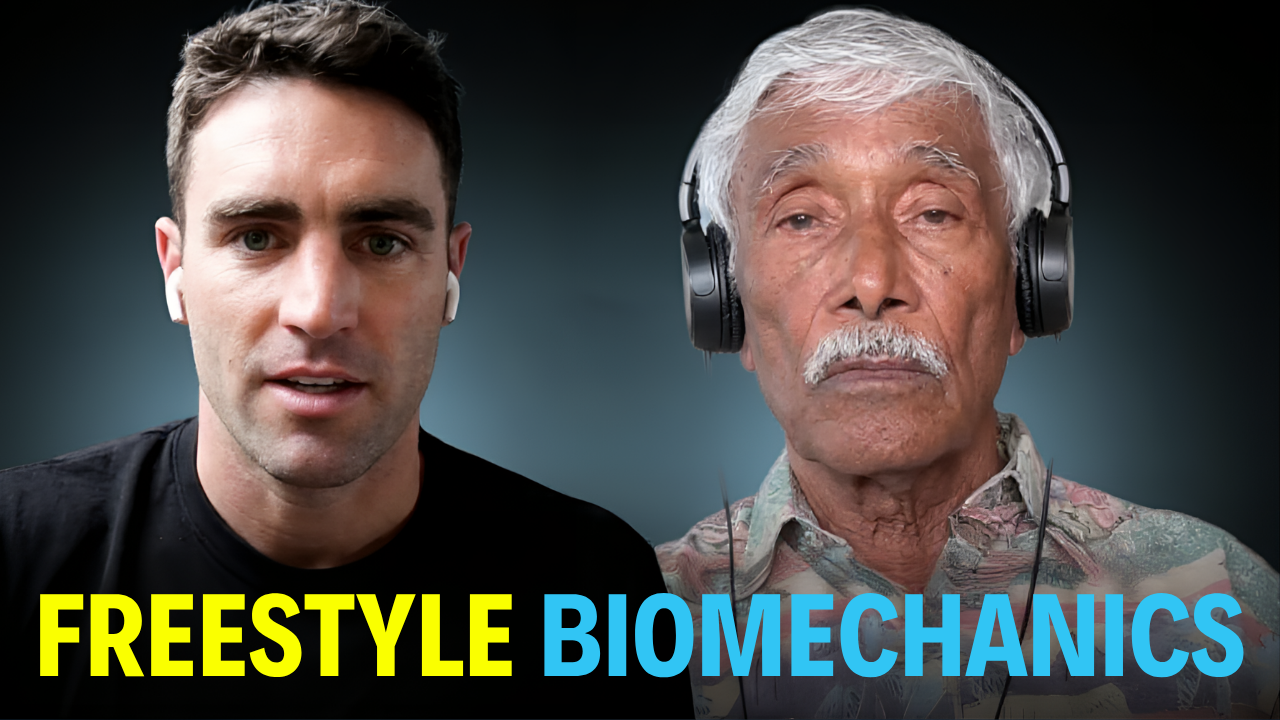








 David Samuelsohn is coach and founder of Westchester Masters Club in Larchmont, New York. David wrote a great article called Lose the Limp for a More Powerful Freestyle and in this podcast we’ll talk about that and:
- how to make adjustments in your breathing and rotation to get more power from your stroke
- the key principle he includes in every work out
- the common freestyle errors and how he corrects them
- plus more…
01:13 – What I Learned from The Olympics
02:00 – What is The Freestyle Limp?
03:20 – David’s Theory About “Natural Feel For The Water”
06:50 – The last 50…
09:40 – David’s Favorite Set
14:35 – “In order to swim fast, you have to swim fast.”
16:30 – Most Common Freestyle Error
19:44 – Different body types, different strokes…
23:30 – Is it worth pushing on?
23:40 – The Importance of Stress Management
Learn more about David and his work by visiting his Westchester Masters Swimming Association’s Facebook page here… and you can send him a message or email him directly at timeguy(@)gmail.com
Transcript
Read the full transcript
Welcome to Effortless Swimming, the podcast for swimmers, triathletes and coaches. Join Australian swim coach Brenton Ford as he reveals the latest techniques and information to improve your swimming. Let’s dive right in. Hi Brenton Ford here, welcome to the Effortless Swimming podcast. My guest today is Dave Samuelson. He is the coach and founder of the Westchester Masters Club in Larchmont, New York. Dave and I had chat about losing the limp in freestyle. And the way I came across Dave was actually through an article he wrote on the US Masters website, which was titled Losing the Limp. And a really interesting discussion about how you can make some adjustments to your breathing stroke and your rotation to get more power from your stroke. And it’s something I completely agree with and a really interesting talk there. We also discussed some of his favourite main sets and some key principles that he makes sure he includes every workout.
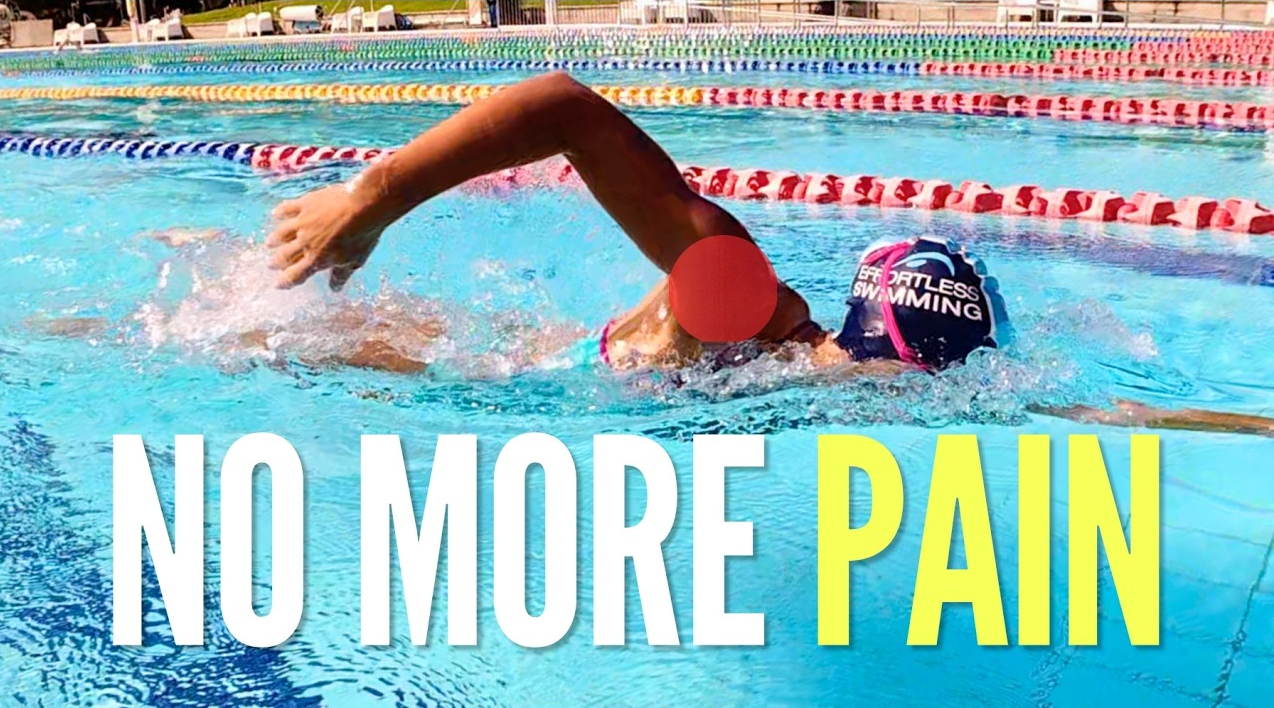
We chatted about some common freestyle areas that he sees and how he goes about correcting them. And we also discussed a few other things as well. So let’s get into it. This is Dave Samuelson talking about losing the limp. Well, one thing we learned from the Olympic is that breathing is in, it is back. Everybody in the hundreds were breathing every stroke other than the walls of course. And I think breathing to just one side is coming back in a big way. And what you find when a swimming freestyle breathes to one side is they lift their shoulder on their breath side. And then because they’re trying to crank it out, they don’t let their shoulder roll back down all the way. So they’re kind of swimming, we won’t say a 45 degree angle, but they’re lifting their breathing side shoulder higher than they’re lifting their opposite side shoulder. So what happens is you get one nice high elbow and a nice breath, and then the other arm kind of claws over the top of the water.
And to repair that, and that’s what I call the freestyle limp, where you’re kind of leaning to one side more than you are to the other side. And to repair that, we’ve asked our swimmers that when they come down out of their breath that they glide a little bit longer and give that shoulder a little bit more time to roll into the PowerPoint position, right, where you’re pulling not just with your little shoulder muscles, but you’ve got your shoulder down a little bit and you’re able to engage your pecs and your lats. At the same time, as your shoulders are connected, the opposite side shoulder gets to roll up a little bit higher and so you can have a relaxed, ballistic recovery on the other side as well instead of that low claw that we see with people that do have the limp. What’s interesting is if you watch some of these superstars, and I’ll speak of it from my biased American standpoint, if you look at Katie Rodecki, she has that long glide after her breath.
If you look at Michael Phelps, you know, he really took off on everybody at the end of that IM. It was so exciting, but he was gliding off of his breath and you could see that a lot of coaches call it the gallop and I guess that the gallop is the cure for the limp, but you’re seeing that more and more. We’ve been working on it and I think among my swimmers, they’ve gotten a lot out of it. I think it’s worked very well for them. You know how people talk about how elite swimmers have a natural feel for the water? Have you heard of that? I think that the feel that they have for the water is not so much, you know, they’re pulling and they’re kicking and all that, but how they hide themselves from the water and avoid, you know, the G-forces of all the resistance it builds up and also how they develop power and torque in the water. And I don’t think anybody taught these, you know, Michael Phelps or I hate to be a name-dropper,
Katie Rodecki, how to do this gallop. I think that it emerged naturally from them because they found that that’s what’s giving them the most power through the water. And, you know, most coaching is reverse engineering. You say, wow, that guy’s really fast. Let’s look at him underwater and throw a most stroboscopic photography and see why he’s faster than everybody else. Well, of course, I started with Johnny Weismiller who was always, you know, kind of scape alligators and he swam his head up out of the water and for decades swimmers were taught to swim with a water level with their eyebrows like Johnny Weismiller. And, you know, eventually if you realized that maybe he could have been faster if he tried it another way. So, you know, we’re looking at, we’re looking at, you know, these swimmers and saying, you know, we’ve got to try this gallop and I don’t know whether that’s the right thing for everybody
but I know that if you have that freestyle look as I’ve described it, described it. And the gallop is the answer and it seems to be something you’re seeing more and more because people are teaching that I just think, you know, good swimmers are coming to that on their own. Yeah, that’s something that a friend of mine who I’ve had on the podcast before, Amy Jones, she teaches that to a lot of her triathletes because she feels that she teaches the gallop because she feels like it’s a good way to help someone who may not be a natural swimmer. It helps them get their stroke rate and their cadence up and it can allow them to still swim relatively fast without having that great feel for the water that you see the natural swimmers having. So, especially when you’re in the open water, you generally need that slightly faster stroke rate. The galloping type of freestyle is really, really useful and when you look at those great distance swimmers with the decky and pelatrini
with the winner of the 1500, they’ve got very similar strokes because it’s just so efficient. It doesn’t really require a really strong kick. Well, you do want a good kick, it doesn’t require as strong a kick there. Yeah, and we used to urge swimmers to alternate breathe and I think, you know, the elite coaches in the world that you watch, you know, stand on the sidelines, I think that they’re getting away from that. I don’t think you need to alternate breathe anymore. I just don’t think that that’s what’s helping people at the end of their race, you know, by getting fewer breaths, I don’t think that helps you at the end of your race. No, no. I think every stroke is back. Yeah, and a lot of times, you know, if you’re heading towards the end of a race in that last 50, it’s a lot of times it’s who’s got the most energy to bring home that last 50 and that comes from making sure you’re breathing enough. So, I mean, what we tell to our swimmers is that it’s good to breathe every, you know,
every third stroke or every fifth stroke occasionally in training just to keep it even. But if you’re racing and going fast, yeah, breathe to the one side, there’s nothing wrong with it. Just go with whatever suits you best. And it’s probably one of the main questions I get from newer swimmers is they will be breathing every three strokes because they’ve heard that that’s what they should be doing and they’ll do that in a race. But they’re just coming out of the water so tired and fatigued because they’re not able to get enough air in. So, it’s something that needs to change in terms of education with swimmers. Yeah, open water swimming is, by definition, distance swimming. And the more, you know, the better your rhythm, you know, the better you’re going to be and the more oxygen that you can get, the better you’re going to be. Even with pool swimmers, if you’re swimming 100 or 200 or something like that,
we teach pre-breathing before you even get up on the blocks, get some extra oxygen and then get into your pattern right away. You know, when you first dive in the water in a race, you feel like a million bucks. Oh, I don’t need to breathe. I’ll just keep my head down because I feel very comfortable. Or even if I turn my head to breathe, I’m not really breathing very well. So, we’re teaching that the time to breathe is as soon as you can and exhale really hard even though you don’t think you need a breath. It pays off at the end of the race and it really does. It makes a big difference. Absolutely. And do you coach a master’s squad? And I’m just curious as to what are some of your favorite main sets, your favorite workouts to do with those guys? Because I know most coaches tend to have sort of a bag of two or three or four main sets that they like to resort to. So, do you have a couple of those that you can share with us?
Well, the answer is no. I don’t. And, honestly, I try to almost never repeat sets in a workout. You know, there’s always a different way to do things. One thing that I do try to do is I always try to give people something to think about. So, even if we’re doing, you know, 10-100s, which frankly we do that from time to time, there’s always something different to think about, whether it’s, you know, talking about the extra long glide or getting the eyes straight down or getting the fingertips straight down, getting the neck up, getting the core, you know, sucked in a little bit, you know, trying to think about something. The one thing that you can swim to exhaustion, but you can’t sink to exhaustion, you can just get lazy. So, but to be honest, there are some sets that we do return to and, you know, one of the sets that I like is a butterfly set and I like butterfly to look like butterfly. And if you start to get tired, A, it’s really not fly.
It’s something else and it’s not pretty. And B, it’s not training you how to swim butterfly. So, we always try to swim butterfly fast. And to do that, we do short repeats. So, we’ll do a set of, you know, four 25-yard sprints. You know, most of the poles in the U.S. are 25 yards or 25 meters. So, we’ll do four 25s and then they’ll get a lap of easy swimming. And then they’ll do three and they’ll get a lap of easy swimming and then they’ll do two and then a lap of easy swimming. But each lap is just 25 yards. And as each one of the latter gets shorter, you feel like they can let themselves go a little quicker. And by the end of the set, they’re moving pretty fast. You know, and very often, you know, we’ll start with one and then two and then three and then four and then as we come back down, four, three, two, we’ll go up to five if I’m in a grouchy mood. And then as we come back down, you feel better and better
as you come down because the rungs are shorter and people swimming really well. And we had, you know, that’s a set that one lady who is 44, she won the 200 fly at Nationals this year and that’s a 44-year-old. So she’s really thinking she’s going to do some great things next year, you know, and she changes age groups. But she never swam slow. There was never anything ugly. There was never any moth stroke. It was always butterfly. And that’s so important, especially for masters swimmers who are training for 50, 100, 200, and even 400, is those shorter reps with a little bit of rest in between but keeping the quality of the technique up, the quality of the stroke up, and most importantly, I let him use fins once in a while too. What’s that, sorry? I let him use short fins also because that, you know, gets him going faster, still one horsepower. So it gets him going faster and, you know, to feel the water coming at you faster
is very instructive if you’re going to race. I’ll tell you another set that I’m famous for and I’m starting, because I’m getting famous for it, starting to lose its efficacy. I call them zinger sets and we’ll do a hard set, you know, like, you know, we’ll do 10, 200s. And then they’ll get the cool down, the figure, the set’s over, and I say, well, okay, you’re all comfortable now, we’re going to do one more for time. And then sometimes there’ll be two more, sometimes there’ll even be a third. And by the end, I’m roundly hated. You want to be that as a couch though sometimes? No, it’s all in fun. It’s all in fun. And you know what, if they didn’t want to do it, they wouldn’t do it. It’s not like age group swimmers who are a lot of kids are there just because mom drops them off. These are people that, you know, they’re there because they want to be there and they’re very, very competitive. You know, the better swimmers are very, very competitive
and they know who’s fast at what. And you know what, if you beat me, I’m really happy because you really pushed me. And if I beat you, you’re really happy because together we pushed ourselves. So it works out better for everybody. And as a swimmer, I think back to when I was training a lot, I really liked those sets where the surprise, surprise 50, surprise 100 at the end, the things you aren’t expecting because then it gets you out of your comfort zone and you’ve got to perform on the spot. And at the time you might hate it because you’re already tired from the main set. But afterwards, you know, you feel that reward of having to take in that next step there. So it’s at the time it might not be as enjoyable, but afterwards it really, it’s really worth it. So as a coach, it’s good to throw those sorts of things in. You’re right. In the showers after one of those sets, everybody is very excited. Workouts over and they just really, really push themselves.
And they’re all saying, oh, I’m more tired than you. I’m more tired than the other guy. And everybody’s really, really excited that they just got one of those under their belts. Yeah, absolutely. They were nice when you first hear about it, but it’s nice when it’s over. And you mentioned they lose the efficacy because you do them regularly enough and… I think they start to get wary. So I gotta lay off until a little while before I hit them with that again. You did the same thing. Yeah, yeah. But I think, you know, in order to swim fast, you need to swim fast. There’s no way around that. And you can’t just, you know, whatever you practice, that’s what you’re going to get good at. And if you practice some of the workout speeds all the time, you’re not going to win anything. I think one of the positive things to come out of the, I guess the rising popularity of the ultra short race pace training is the need for race pace sets.
So where you’ve got the shorter distances, it’s high reps with a bit of rest in between, but you are going at race pace. And while I don’t think doing just that is necessary, it’s really, really important to include that into your training somewhere in the week where you are going at race pace. You’re saying it exactly right. If that’s all you’re going to do, I don’t think that in the long run it’s going to help you. You know, you might be fast for a little while, but I don’t think you’re going to improve much. You still need to have that base. There has to be, you know, long arc sets, and there has to be high speed sets. There’s got to be a balance. And that’s the one word that has so many meanings, is balance. Yeah, that’s exactly right. And you speak to a lot of the top coaches these days, and they’re of the same mindset that it’s really, really good to include, but it’s not everything. It’s almost like any sort of craze that comes out
while it will have some very valid points. You don’t want to go all in or all to that side because that’s not the way to do it with anything. It is about that balance, and there’s more than one way to do something. Yeah. And with your coaching, what are some of the common freestyle areas that you see, aside from the losing the limp that we sort of spoke about? What other things do you see the majority of some is doing and how do you go about correcting them? The most common freestyle error is thinking that your freestyle is just fine and doesn’t need to improve at all. That’s the worst freestyle error. To honestly answer your question beyond that, again, it comes back to balance. There’s front to back balance. What is your head position? Every new swimmer that comes to me, I do this silly little drill I call a snorkel drill where I make them put their hands to their sides and push off the side of the pool as slowly as they can,
and then they lift and lower their head while they hold their breath, and they see what happens to their body position as a result of where their head position is. So if you push off the pool gently, you don’t want to get any speed, you just want to not just be floating still. If you look straight down with your eyes and two-thirds of your head is submerged, you find that not only your hips float up, but your legs float up, and all of a sudden you’re swimming downhill. As soon as you lift your head, even an inch, and you could try this, even an inch, one second later, your hips drop. So if you picture a swimmer that’s trying to swim horizontal to the surface of the water, parallel to the surface of the water, if they lift their head, all of a sudden their hips are going to drop and they’re going to lose cohesion in their kick. So we teach eyes down, neck up, and try to swim and feel like a surfboard. Be the surfboard.
You want to be in an almost perfect straight line. The less friction you can create at the surface where most friction occurs is going to be better for you. And your side-to-side balance, whether it’s for freestyle, it’s the freestyle limp, or if it’s an uneven kick, which is usually, often coaches will say, well, your kick is wrong. It’s not always that the kick is wrong. It’s sometimes that the hips are in the wrong place or the head is in the wrong place, and it can’t kick. So if your head’s in the right place, it’ll push your hips in the right place, and you can get a six-feet kick or what I prefer to call more descriptively is a one, two, three kick. So for every right arm, there’s three kicks, and every left arm, there’s three kicks, and you just got to keep it going and going and going. Now, of course, that’s all been dashed to hell with one, two, three kick on one side and then a one kick on the other side.
And it’s disturbing me because I can’t quite figure it out. But she’s an anomaly. But she’s a good anomaly. Yeah, that’s right. So I got to watch that a little bit more and see if I can figure out how that works. Yeah, she’s… it’s actually good to see those exceptions in the water because it gives you something to really think about and you try and understand what it is they’re doing, how it’s making them faster, and whether it’s something that is worth teaching to your athletes. Yeah. And what you’re saying… Yeah, different body types, you know, make for different kinds of strokes. If you’ve ever tried to breathe every stroking butterfly, I find it really hard to do. But Michael Phelps does it. He must be doing something, right? He’s been doing it his whole life. I can’t do it. But they say he’s got, you know, a very long torso as opposed to, well, I won’t say he has short legs, but he has normal legs and a very, very long torso,
and that’s why he can get away with that. But I wouldn’t, you know, if I ever tried that, I’m just the opposite of short torso, longer legs, and if I tried to breathe every stroke, I would look like that ugly thing that we don’t want our flyers to look like. That’s what makes coaching interesting is it’s such an individual thing when it comes to technique. No one’s the same, and it’s exciting to be able to work with the individuals and give them a different plan of going about their stroke because different body type, different experience and different strength and a lot of things to factor in. And we run a lot of freestyle clinics here in Australia and we keep our groups really small because we want to give that individual feedback. No. Sometimes it takes a long time to study somebody before you’re really ready to give them any suggestions. You know, you watch somebody swim and you state, God, there’s something wrong
and I can’t put my finger on it. And they just say, you know, let me just keep watching because I don’t want to tell somebody something that’s, you know, that I’m guessing at or, you know, it’s kind of rote or, you know, you’ve got to do this because everybody says you’ve got to do this. I want to see what’s happening with them. And sometimes I don’t get it right away and it takes some study. You know, watch somebody swim for a while. Yeah, that’s interesting. I’ve found the same thing because we do, at those clinics we do a lot of underwater filming and we’ll film them from a lot of different angles and it may not be until the third angle we actually pick it up and you can actually see what thing is causing an error. So it does require quite a close study of them. And one of the things you mentioned earlier was about the head position and body position and trying to be like a surfboard. Sometimes the most basic and fundamental things
can be the hardest in some way. What I love seeing about really great swim is just their posture line and balance in the water. It’s just a really nice thing to watch when they’ve got that dialed in. And it’s very basic. It’s almost like the foundation of a house. That’s what you want in place before you build up the rest of the stroke. You take a lot of time to build that up so they can maintain it when they’re racing and hold it for an entire session. I often wonder whether you should be swimming at all when you’re so tired you can’t swim right because what are you practicing and what are you getting good at? When people start to fall apart it’s… Yeah, that’s right. Again I think back to when I was training nine or ten times a week and there were some sessions where things would start to get pretty messy and it just doesn’t develop good habits. It develops grit and the ability to really push yourself but in terms of technique
it’s not what you want to be practicing. So I think there’s that fine line that you’ve got to almost judge yourself whether it’s worth pushing on for the fitness benefit but when that stroke really starts to fall apart take a break and then get back into it but there’s no point training with really poor technique because that’s what’s going to come out in a race when you get tired. I also like the idea of stress management where if you’re something and it’s starting to fall apart do something else. Work on something else. If your stroke is losing its cohesiveness getting into some hard drills like a head high sculling or put some things on it do along a sharp inset. Work on stuff where your cohesiveness is not as important but you can still get cardiovascular and muscular work in. So there’s always something different that you can do and we try to rotate the stresses around on a regular basis. I’d like to say that’s the perfect world
but if you’re the guy that only comes Monday, Wednesday, and Friday and Monday, Wednesday, and Friday is the day that we work on one thing in particular you’re not getting the stress release of the other stuff that we do on Tuesday, Thursday, and Saturday. So master something is different than age group something where people are actually there for whatever 12 workouts a week. Yeah. But I like to do long sets with long things where you’re basically working underwater you’re going very fast and you’re doing your best to like I say hide from the water. The faster you go the more you can tell that you’re not quite streamlined and so I think things are important for that but also if you’re doing a lot of say you do a butterfly kick set with long things, no board you’re taking three kicks underwater before you come up for a breath but by the time you get on the long set of that your oxygen is gone and your legs have really taken a beating
so you don’t want to do that for a couple more days maybe the next day you’ll do a pull set and then a different stroke on the next day so that at least some part of you is always fresh. Yeah, yeah exactly right and that’s why I mean when you are doing 12 sessions a week like a lot of the age group is they they’ve got their week planned out and you can see Monday mornings generally like long aerobic work and then they’ve got their race pace work and then drills and kicking skills and stuff like that because it’s almost like going to the gym if you’re working your arms your shoulders really hard one day it’s very hard to back that up the next day so it is good to spread it out. Yeah I agree Dave Workin you’re coaching down in New York can you talk a little bit about the group that you’re coaching and how people can get in touch with you? Well I’m Masters Swimming Association and I think what’s on there now is a bunch of pictures from the open water swim
that we ran just this past Sunday it was a 2,000 meter open water swim from the beach in New Rochelle which is right next to where we train regularly in March month I have an email address which is TimeGuy P-I-M-E-G-U-Y at gmail.com that I use mostly for swimming
the best way is probably to message me on Facebook because that’s pretty universal. Yeah fantastic so if anyone’s near Larch month and looking for a Masters squad to join then go and check out Dave’s squad there and get in touch with them through Facebook and we’ll put all those links up on the website as well so if you listen to the podcast There’s also USMS has places to swim site and we’ll list it on there as well you put the zip code in and you come up with us. Fantastic Dave thanks for being on the podcast and really enjoyed talking coaching with you and talking about swimming It’s fun and thank you for having great questions and I agree with most of this stuff that you say too. Yeah well it’s nice to think that all the way across I mean obviously I’m in Australia you’re over in the States and I mean swimming and triathlon it’s all a very, it’s quite a small world once you get into it and I just love talking to other coaches
seeing what methods they use to help swimmers improve and the things that I really like I like to incorporate into my own coaching and never want to stop learning to appreciate your time and all the best for the rest of the summer Alright well thanks for the YouTube button