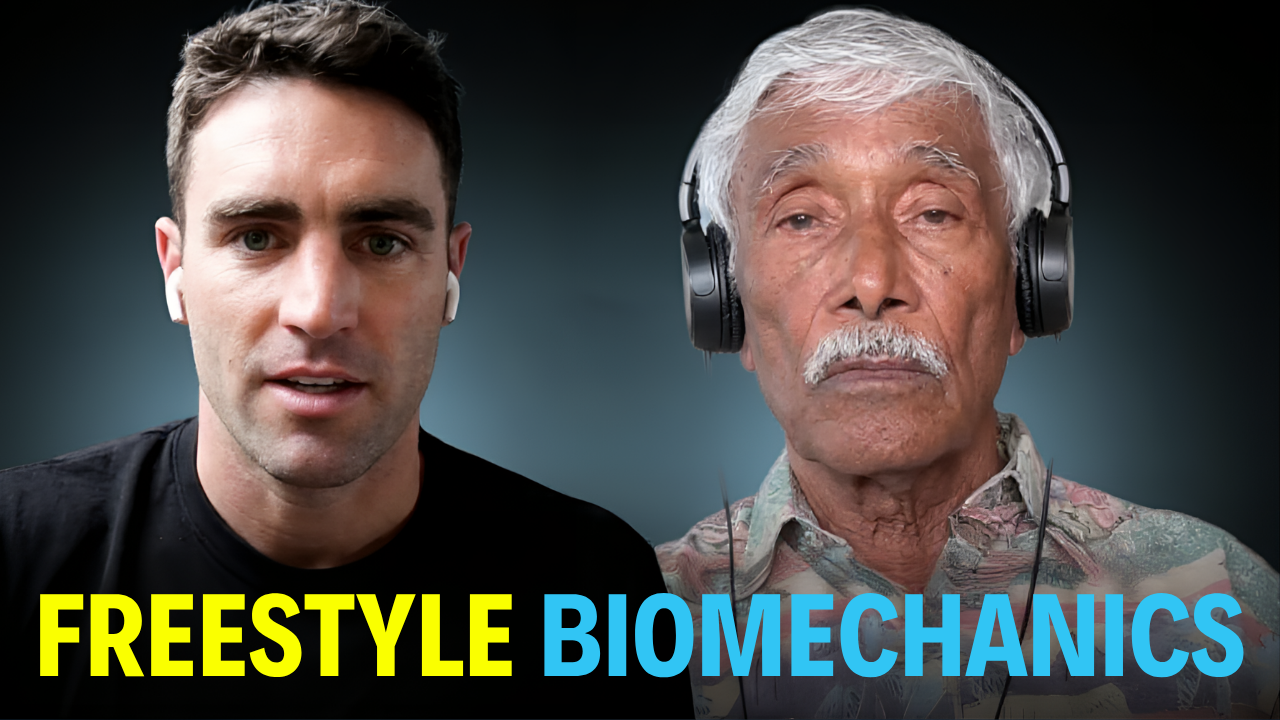








 Eric Neilsen is a multisport coach and consultant who works with athletes of all abilities from novice to professional, by providing personalised services that empower clients to achieve their full athletic potential.
Eric shares how he quit his corporate career to become a full-time coach and how he uses the ABC’s of optimal health and training to change the lives of his athletes.
01:11 – The Shift from Corporate to Health and Wellness
08:45 – The Different Ways to Swim Fast
14:30 – The Nice Transfer of Momentum and Energy
15:00 – The Water Polo Drill
25:44 – Working with Kids and How They are Sponges
31:00 – A Different Level of “Buy-in”
37:50 – Snorkel and Rhythm
43:15 – A is for Adequate Sleep
43:49 – B is for Balanced Nutrition
44:45 – C is for Consistency in Exercise
To learn more about Eric and his work, visit www.coachericneilsen.com
Transcript
Read the full transcript
Welcome to Effortless Swimming, the podcast for swimmers, triathletes and coaches. Join Australian swim coach, Brenton Ford, as he reveals the latest techniques and information to improve your swimming. Let’s dive right in. Welcome to the Effortless Swimming podcast. My guest today is Eric Nielsen, and Eric came recommended from one of our last guests, Carlin Pipes, who is on the podcast. Eric, welcome to the podcast. Yes, thank you. Thank you so much for inviting me, and I should say good morning down in Australia. Yeah, we finally got to every time that I have a guest on from overseas, we somehow managed to get the time wrong, or we managed to have to set a second date. So for whatever reason, it just happens. But I’m glad we could actually catch up and do this podcast because after reading through a lot of the articles that you’ve written and based on recommendations from Carlin, I’m excited to explore some of these topics with you.
And I mean, you started, you’re a triathlon coach, and you didn’t originally start as a triathlon coach. So can you let people know basically what you did start off after college and how you got into triathlon coaching? Yeah, sure. After upon graduating university, I was in the corporate world for a year and realized that that wasn’t my true calling. I was, I’d become active in triathlon and college here in the States in the mid 80s and in sport in general, between triathlon and master swimming. And I just after a year in the corporate world, I figured, you know, I’m just, I’m young. I’m just me taking care of myself if I’m going to make a career change now is the time to do it. So I was fortunate enough to be able to start coaching a master’s group in San Diego, California back in 1991. And that began my shift from the corporate to more of the health and wellness field, and I’ve never looked back since.
Do you think it’s something you would have done later in life? Had you not, you know, been young first year out of college, I guess it’s a lot easier to make those changes, but could you see yourself making that change say five years ago? Yeah, I mean, if I hadn’t, I would say I’m definitely in my calling, coaching and working with adult athletes as well as youth from time to time. It’s such a rewarding, it’s such a rewarding job for sure. I’ve really found my niche. I’m so lucky. I think it’s such a hard thing to do is make a big change, like a career change, and especially if it’s, it might be something to call to, but, you know, making that leap can be very daunting, and it may not pay as well as if you’re working in corporate America or Wall Street, whatever it might be, but, you know, if you look back on the last 10, 20 years and you’re not fulfilled with what you’re doing, then, you know, you think, well, does the money really matter? It’s more about that fulfilment that you get from doing the job.
And I think as a coach myself, I just get, I really look forward to working closer with people and helping them get more out of themselves. And, you know, the money really doesn’t play a huge part of that. It’s just so fulfilling compared to, you know, some other jobs I’ve had, I’d say, yeah, it’s just that it’s very fulfilling. Yeah, there’s just, you know, and working with the adult athlete, you know, it has its own challenges for sure. You know, as adults, the biggest thing I’ve noticed between that and kids as adults, we know pain and we know fear and the consequences of those. You know, the young athlete, they’re kind of still feeling those things out. But, yeah, it’s, you know, whether you start when you’re in your 20s or I have some people that finally find exercise in their 60s, it’s never too late to start. So, you know, working with the adult master’s age athlete is just, it’s never dull.
It’s never the same. That’s for sure. Yeah, and that’s a huge, you know, when people start later in life, I’ve run a lot of swimming clinics and quite often I’ll have people who have only started swimming in the last year and they might be 50-odd years old, but they fall in love with it and they get addicted to the feeling of having a good session or just a really enjoyable swim. And they kind of wake up to that feeling and they can’t believe that it’s something that they’ve only just discovered at 50 years of age. And I really enjoy working with adults for that reason, just helping them discover how enjoyable swimming or exercise can be. And, you know, when you have someone who’s so new to the sport as an adult, there’s a lot for them to learn. And if you can just help them understand the fundamentals and the basics and help them build from there, then they really start to make those discoveries themselves.
So, kind of on that topic, what’s your process of working with an athlete who comes to you? So, someone who might have been in the sport for a while, but they’re new to having you as the coach, what sort of things would you look at with them and what sort of things would you look to plan out? Yeah, for example, you know, so often, and you’ve probably seen this, you have an athlete that’s, you know, phenomenal and has a great cardio base on land, whether it be cycling or running or any land-based activity, but you put them in the pool and in 25 meters, they’re absolutely just spent, you know. So, you know, right off the bat, you know, you have to, you know, I prefer to look at what’s an athlete doing with their air. You know, how are they breathing, you know, and what’s their level of comfort in the water? It’s surprising how many adults have just a fear for water, forget trying to actually swim, but just a fear of the water.
So, right off the bat, I want to see, are they comfortable in their environment and what’s their relationship with breathing? Because oftentimes, if an athlete’s too worried about air, it really doesn’t matter what kind of coach you are. It’s hard to work on technique for them because they’re too worried about their next breath. So, really identifying that right up front is huge, and then from there, we can start, you know, building on the various skill sets and looking at, you know, looking at big ticket items that, you know, cause a swimmer to maybe not swim as well as they can. Yeah, absolutely. And sometimes I like to also explore, like, what are their beliefs about swimming? So, once you’ve got the breathing under control, you can get them relaxed. A lot of times, let’s say someone swam for two years, they might have these fundamental beliefs of what you should be doing in a stroke. For example, a lot of times, people will think that they need to reach as far forward as possible when they’re swimming.
And while you do need that reach, if you’re overreaching before you actually enter the water, a lot of times they’re pressing down at the front, which is causing them to basically have no catch or pull. So, just some sort of fundamental beliefs like that can be causing them to just not get the most out of their stroke. So, if I’m doing a video analysis with someone and it looks like they might be reaching too far forward or their, like, stroke rate’s really slow because they think they need to swim like how they picture a traditional swimmer like Eanthorpe sort of stroke, then it’s about asking them what their beliefs are with that and then, you know, showing them that there is a different way. And so, I mean, you work with a lot of triathletes as well. So, do you look at what they’ve done in the past in terms of their training and then look at a different way of going forward? So, how do you sort of look at that?
Yeah, that’s a great question. And there’s definitely different ways to swim fast. You know, you got to look at body type. Are you dealing with a tall, long, lanky? Are we dealing short, a little more compact? You know, athlete, generally speaking, men have a little more upper body strength than women. You know, so generally speaking, we find men don’t have to have quite the turnover of a female athlete, all things being equal to, you know, move at relatively similar speeds. So, you know, we’ll see a higher turnover with female athletes sometime. Not to say that men don’t need to work on turnover, but that’s one thing we definitely see. And then, you know, it’s, I think it’s important you kind of identify what the athlete’s limiters are. You know, once we’re past breathing, you know, look at the biomechanics. You know, what are they doing up top? Are they crossing centerline is a big, that’s a biggie.
You know, for sure, I’d say regardless of gender, people have a tendency to want to have their hands go across their bodies. And we’ve all seen people move down the pool. They look somewhat serpentine or snake-like. So that’s an easy tell, you know, with that. And then, you know, with the master’s athlete, in particular the triathlete, some of them come to the sport and they just don’t have their upper body range of motion through their shoulder girdles. So, to have them try to emulate, say, a Thorpe type stroke or a Phelps type stroke where those, those summers have some, you know, some amazing range of motion. You know, for an adult athlete, that’s just unrealistic. So you might have to make some slight modifications in terms of whilst, you know, trying to get a high elbow and catch the water. They might have to wait a little longer in the stroke until they’re, whatever their range of motion allows
before they can, you know, apply the proper force to accelerate through the stroke. So you got to look at the body type and what’s currently available for them and then try to design or give them stroke tips to help them achieve the best results given, you know, cure and level fitness and, I’d say, you know, biomechanical limitations. That’s what we see. And then, you know, with the aging master’s athlete, if they haven’t been as active, you know, things just have to change. You have to make some stroke modifications, you know, for sure, you know, within that. And you mentioned turnover and especially for female athletes, that’s a big one. A lot of times, yeah, the athletes that I work with at clinics, their turnover is too slow. And it will take a number of months for them to sometimes build that up and get comfortable with it. But it’s just it’s really free speed. There are a lot of times if, you know, if your stroke rate is under 60 strokes a minute,
then my rule of thumb is no one should be under 60 strokes a minute when they’re racing. But most people should be relatively higher than that. So what are some of your strategies to help athletes get comfortable with a faster turnover and get them get them sort of finding that balance of stroke length and stroke rate? Yeah, no, great question. It’s, you know, I do one of the drills we do. We just call them crazy eights. And it’s just you push off the wall and you go eight strokes as fast as you can. And you’re not overly concerned with best biomechanical form. You’re just trying to get the athlete to, you know, break down some of those neuromuscular barriers and just get them to move their fast in their arms as fast as possible for eight strokes. And it’s it’s it’s easy to do in the sense of from a mental standpoint, anybody, oh, I can do eight strokes fast, right? You know, so you start with that, but you’re absolutely right.
You know, with I call it, you see some summers that what I call a mono speed pull. So like from start to finish, there’s no change in in hand speed or any kind of acceleration in the stroke at all. It’s just kind of one, one continuous, not monotonous speed. So the crazy eights I find not only help the turnover just breaking down those pathways of just physical turnover, but they help the athlete learn to generate some hand speed. I do those a lot is secondary warm up sets or parts of main sets. That’s one thing for sure. You know, kind of, you know, from the multi sport athlete, you put it in the language you understand if they’ve probably done over spin on the bike, right? To just teach the legs to move efficiently. We have to teach some of those same types of things in the water. So then when you settle into your normal stroke rate, it feels you’re not limited by it by any means. So that’s probably one of my favorite drills for that.
That’s an inch. That’s a really good point you brought up about the mono speed. So the constant hand speed of newer swimmers. And that’s something that really can limit someone from finding a good rhythm in their stroke and finding that point where swimming becomes a lot easier. So for those listening, what we kind of mean by that is, you know, the hand is going to travel quicker over the top in the recovery. And then as you’re sort of reaching forward and just about to start the catch, it’s going to be a little bit slower. And then you’re going to sort of build the exhalation once you’re going through your catch and pull. Whereas the swimmers who tend to be on the sort of slower side of things, it’s just they’ve got no change in speed with that hand. It’s just constantly ticking over. So one of the really key things that I try and get my swimmers to do is make sure that they enter their hand with a bit of force and purpose out in front
because that’s when you get that nice transfer of momentum and energy from over the top in the recovery and driving that in front of the shoulder and into the water. And that’s a big difference you see from the fastest swimmers to the slow swimmers is they get that nice transfer of momentum and energy by driving the hand in with a bit of force as opposed to being really soft and gentle out the front. It reminds me of another drill we do. You watch water polo players swim and you just head up water polo drill for a few strokes. It builds on what you said about an aggressive or I say an assertive hand entry. Just swim with your head up. You have to be assertive getting your hand in and get in the water. And you have to be assertive with the acceleration of the hand through the pull. Otherwise your head can’t stay up. So that’s another great drill just to help an athlete learn some of those skills. And you know, mono speed, I think a lot of its strength related.
You know, if you have an athlete male or female that doesn’t have a lot of upper body strength, maybe take, you know, someone that comes into sport into the water with a run background. You know, oftentimes runners don’t have a lot of upper body strength regardless of gender. So they just they don’t have the strength to accelerate the hands, you know, through the stroke and through the recovery. Sometimes, you know, I get the athletes, you know, we’re talking more, you know, the distance per stroke thing. And you see that’s where they lose speed. They get to the little pause or the moment up top in the stroke. But that sometimes correlates with the opposite opposing hand and arm kind of pausing at the back, which is what you don’t want. You want to, you know, carry that momentum through and around back up to the front. So that that can be a hang up for some people. But, you know, and you’re seeing like with ITU races and Olympic races.
I mean, those athletes, they are male and female. They are ticking those arms over. No one’s got a long, lopie stroke because it’s open water. It’s different than a pool stroke for sure. Yeah. I mean, their stroke rate, so many of them are up around 80 plus strokes a minute. Some of them up around the 90s. And that’s for an Olympic distance race. And while that’s not going to be possible for people who haven’t swum that much and haven’t got the experience, but, you know, if you look at that and you go, well, okay, if these guys are doing 90 strokes a minute, then I shouldn’t be down at 50. It’s just, it’s too slow. And I mean, there are exceptions to the fast turnover. If you look at the 10K marathon, some of the Olympics, one of the guys who was leading Jared Port, the Aussie guy, he was out in front for the first eight or nine Ks. He has quite a slow turnover, but he’s just got a lot of upper body strength.
And his stroke was suited to that slower rating. But, you know, that’s really an exception. A lot of the other guys, the pure swimmers, I mean, yeah, they still had a faster rating. And if you watch them at the end, did you see that race, the 10K marathon swim? No, I heard about it though, quite the race. Oh, it was awesome. And there was a good dozen guys going for, you know, the last 400 meters, a good dozen guys going together. And their turnover was up around 90 to 100 strokes a minute towards the end there for the last couple hundred meters where they just had to ramp it up. So, yeah, even as a pure swimmer, those guys know how to get their stroke rates up. Another thing you mentioned before was with strength. I mean, we, I’ve worked with an athlete who is looking to get a medal in the Paragames. And he’s, one of his big things is he’s strong on the bike, strong in the run, but he’s never been a great swimmer.
And one of the coaches he’s been working with is a guy, Johnny Van Wis. He’s done the arch to arch triathlon. He holds the world record for that over in England and France. And he, what he got him to do was swim with Poor Boy for every session because this triathlete’s races are all in a wetsuit. So he said every session I want you to swim with a Poor Boy. And that’s just brought his strength right up. So the last six to 12 months, his swim times have come down pretty significantly as a result of just using a Poor Boy and building up strength that way. So for a lot of people who do have that run background or they don’t have the upper body strength, sometimes that’s what you need to do is just build it by taking the legs out of it, especially if you’re racing with a wetsuit because it simulates that pretty well when you’re wearing a Poor Boy. Oh yeah, no doubt. It’s use a buoy and then as the athlete gains some strength
he had a little bit of paddles. So you got more load and then you can throw an ankle strap on. And that can be a telling sign of the course unengaged because they start wiggling all around the place when you put the ankle strap on. But yeah, for sure pulling, you got to overload the muscles. I’d say, you know, it once a week for sure for pretty much any athlete, somebody that maybe has some more skill or maybe is getting more than three touches a week could even benefit from a second session where it’s just designed to increase muscular force and recruiting more muscles for sure for the pulling. And you know, triathlon, let’s face it, if it’s wetsuit legal it’s with, you know, the pool is about the closest you can get to it and your body’s floating like a cork. I tell my stronger guys just grip it and rip it, you know, and turn it over as best you can. But yeah, I think athletes definitely can benefit from pulling sets
as long up into the distance of the race, you know, whether it be Olympic or a half. Ironman distance, you know, easy to pull sets of working up to 2K or 2400, you know, 2.4K. I mean, I wouldn’t recommend anybody pulling an Ironman length kind of set that might be a bit much. But I think most athletes can easily progress to 1,500 or 2,000, you know, pulling just a little bit of time and, you know, work up with the buoy and then maybe add some paddles or blend, maybe go, you know, 6 or 800 with the buoy on and then maybe do a little bit of paddles and, you know, mix it up for sure. But I think at least once a week a good strong pull set has a lot of merit. Yeah, absolutely. And if you don’t love swimming, if you’re a triathlete, you don’t love swimming, but you do like swimming with a pool boy or paddles on, you know, if that gets you to the pool, go for it, you know. That’s, I hear that a lot, is I don’t enjoy the swim as a triathlete,
but they can swim all day with a pool boy and they really do start to enjoy it with that. So there’s nothing wrong with using that, especially if it gets you to the pool to do your sessions. And I find as well that the type of paddle you’ve got is important. I see a lot of swimmers with either paddles that have got too much bend or curvature in them. So some of the finnish paddles are okay, but I like just the simple plain flat ones, whether it’s finger paddles or the full hand ones. The brand that I love is Engine, which is an Australian swim band brand. They’ve got some really good paddles that I recommend to all my Australian athletes, but there are a lot of other good brands out there that just have the simple flat paddles, and that’s when you can really start to build strength because if they’ve got too much curvature, it can sometimes throw your stroke out a little bit, especially some of those like speedo curved ones
with the concave in them. I find they’re terrible for your shoulders and they just sort of change your stroke a little too much. So the simpler the better I think when it comes to paddles. Yeah, I would lean along some of those same lines and I guess for folks listening out there, when you put a pull buoy in, there’s three distinct things I think that help the athlete. Number one, and two of them are drag related. Number one, when the pull buoy is in, it tapers the body below the waist because now you’re having to squeeze the buoy so you have no drag from a horizontal standpoint. Number two, the buoy is going to float your bum up so now you’ve just reduced frontal drag if you have a better line in the water. And I think that the third part that I think people forget is larger muscles use more oxygen. So now you’ve taken your legs out of the equation. So now your bigger muscle groups are getting a little break
so you’ve got more oxygenated blood and the upper body and torso to propel yourself forward. So with the buoy, you really can create an upper body fatigue without the buoy that you might be limited by your wind because engaging the legs more, more fatigue, you’re not able to really max out the taxing in the upper body for sure. Especially if you’ve had a big weekend on the bike and running and your legs are heavy, it doesn’t matter who you are, I think your legs are going to sink a little bit more after a big weekend of training on the legs. So I mean, I started doing triathlons last season and I’d never done that much running or riding before and on Monday I’d get to the pool and my legs would just sit so much lower than what I was used to and I finally understood why triathletes love using a pool buoy because just legs are heavy and even with 20 odd years of swimming experience I still found that my stroke was affected by it.
So I found that interesting. You became a believer. That’s right. When I first started coaching, I was against a lot of use of the pool buoy and that’s just because I came from that swimming background and swimming with the pool buoy was cheating from what I was taught to believe but as you coach my athletes, you get more experience and you work with a different range of people. It became obvious that it’s actually a good thing to use. So I think as a coach you’ve got to be open to new ideas and then you test out those ideas with your athletes and if they work, stick with them, if they don’t, then you can leave them but there’s nothing worse than having a coach who’s clothes-minded to new ideas. So I think that’s why I love doing this podcast. I get to meet a lot of great coaches like yourself and the numerous other coaches I’ve had on. I get so many different ideas that I use with my athletes that way. So it’s good to be able to speak with so many different people
because they have a lot of different ideas and different ways to achieve things like you were talking about with the stroke rate and that sort of stuff. You wrote an article about working with kids and how you get them to buy into the work and the details of a session. Can you talk a little bit about that? Yeah, working with kids is great. Just before the podcast today, I come back from working with some middle school runners and that age bracket, 11, 12, up to about 14, they’re so moldable or pliable. They’re big sponges of learning and keeping it fun is huge because at that age, they still are kids. They want to play and I think one of the keys getting them to buy in is knowing that at some point in the practice, they’re going to get to be kids and get to play a little bit and have some fun within the session. And then the other part is getting them to do work but they don’t think they’re doing work through the play.
I do a series of games and skills and drills that are really working on some great motor skill movements but they’re playing a game so they think that they’re, oh, we get to play, we’re not really doing work but really they are doing the work. And in terms of the buy-in, I’m really fortunate with the group I work with that they’re so supportive of each other and we really try to strive, especially with RAB Grade 8 here, so they’re Grade 6, 7, 8. The 8th graders really taking a 6th grader under their wing and helping them in that first year when they made their transition from what we call elementary school to the middle school years and just helping them work on some of the drill sequences that we might do because when the kids get it from their peers, even though they might be a couple of years older age-wise, I think it even has more staying power maybe coming from the coaches and the volunteers that help out there
when it comes from their classmates. That’s when you see the buy-in. They’re really there helping each other achieve greatness within themselves and as a team. Yeah, absolutely. And with that sort of buddy system, when kids of that age, and even adults as well, but when kids of that age get to become the leader and the teacher, not only helps them learn more about the thing that they’re teaching, but just the confidence that comes from that and how that can work well for them later in life when they start working and when they start taking leadership roles in school and college and that sort of thing. Just being in that position where they’re looked up to and they feel like they’ve got a lot of responsibility and that’s what drives a lot of confidence and I see that from a lot of the best coaches of younger kids is they’re not afraid to do that buddy system and let the younger kids learn from the older kids and that creates a lot of buy-in from both ends there
because if you feel like you have a place in the team because you’re teaching some of the other students there, then it helps them stay involved and stay interested in the sport because not everyone’s going to be the fastest swimmer or the fastest triathlete, but if you feel like you have a place in the team and from teaching, that can help you stay in the sport for a lot longer. Yeah, no question.
I don’t know if you saw the chance to work with youth as well as adults, but I think the two really helped me coach the best because I’ll take Sam out of session and actually with the kids for a while and it’ll remind me of some things I could do with the adults and then vice-versa, some things I might be doing with the masters group, like maybe I’ll try this with the kids kind of thing, so for me, the two complement each other. I think it’s really helpful in that respect. Yeah. And the kids, they have so much, God, they got so much flipping energy. Oh my gosh. They just, they want to go, go, go, go, go. And another thing that helps them with the buy-in because you’ll see a young athlete in a lot of sports, they just go hard, they go until they blow and then they go from flat out full gas to walking or almost seems like stopping in a very short amount of time. I’ve seen the ones, at least with the cross-country running,
once they understand just learning how to pace their effort a little bit better, then they start to understand and then they feel it that first time where it’s like, I just go out a little bit easier. Man, I’m just a beast the rest of the way and I have a good strong finish. Boy, that really helps the buy-in there too once they understand a little bit of pacing. You never want to dull the blade, the speed blade, I mean, speed is everything. We always, endurance is easy to get as we just got to grow up, but the buy-in I think goes to a new level when they have that positive experience of just proper pacing, regardless of what maybe a place might be at the event, but I try to tell them learn how to pace and then, let’s say you’re running in 530Ks, but you paced it well, so if you know how to pace, then you get more fit. Pretty soon, you’ll pace a race really well and you’re running in 5 minute ks or 450K because you know how to pace
and then that they get so excited, almost addicted to pacing properly. Yeah. Yeah, that’s a great point. I do a lot of that with the triathletes that I coach, is just teaching them how to pace their swim. You can do step tests where it might be 7200s where you’re progressively getting faster. A simple one that I like to do is 12100s where we’ll go build one to four, so four, eight and 12, they’re the fastest ones, and you’ve got to take off 5 seconds each time and that can be a very hard thing for people to do, is go that first one very slow, let’s say it’s 140, and then they’ve got to take off 5 seconds each time, so they go 135, 130, and the last one’s 125, and we’ll repeat that another two times. Most times people will go out too fast, so they might go 130, and then they only drop 5 seconds across the four 100s. So just being able to teach them that kind of pace and have them understand the effort level required to hit those different paces
helps them so much in a race, because one of the biggest things I get when people come to our swimming clinics is they say, I’ve only got one pace. You know, we get them to do the 50 meters that we film them off to at race pace, and they always laugh and say, oh, it doesn’t really matter, I’ve only got one pace anyway, so just to teach them that pacing is so important for racing. Yeah, pacing is hard, you know, and still you’ve probably seen there’s still some athletes that can have good result where they kind of come out of the gate pretty hot, you know, they kind of take it from the front, then they’re able to settle and not fade. Some athletes can do that, you know, they’re just set up that way. Other athletes, it’s not good. They go out too fast and then it’s like all they do is just, you know, they just suffer and slow down. You know, and I think it’s so great you’ve had so many other people already on the podcast
and, you know, broadening, you know, your own coaching and philosophy. That’s what the good, I think honestly that’s what separates good coaches from great coaches. You know, what I would call a great coach has the ability to pull from their tool bag of whether it be antidotes verbally or teaching demonstrations to try to create the best environment for the athlete and set them up for the highest, you know, probability for success, you know, helping that athlete determine the right combination of stroke rate and stroke length, you know, for the desired distance, you know? I mean, it’s, I think we had a stint here possibly in the States where we got kind of maybe hung up too much with distance per stroke and, you know, yeah, I could take 12 strokes to get across the pool, but if it took you too long, the whole point to go as fast as you can, right? So find that best combination of sustainable stroke rate and length
that allows you to get from point A to point B the fastest for whatever the desired, you know, whatever the desired distance is, that really, that is the key. And that’s what I think being a coach is about is developing your, growing that tool kit that you can draw from. Yeah. Different things work with different swimmers and you might be working on stroke rate with someone and you might take them through an exercise and it may not click for them, but, you know, if you’ve got two or three out of the different ways to go about it with them, then you know that there’s a good chance at least one of those will work with them because people work differently, whether they’re visual learners or, you know, they prefer to be told something, whatever it might be, it’s everyone’s different. So as a coach, you want this really big tool kit to draw from. And that’s what I’ve found over the last, 10, 11 years I’ve been coaching
is I’ve got so much more confidence as a coach as I’ve grown that tool kit and I know that I’ve just spoken with so many coaches and I’ve been able to borrow so many things that they’ve taught me, that I know there’s a 99% chance I’ve got a solution for whatever they’re, the swimmers, you know, the problem they’re having. So that’s what I really think it’s about. And kind of on one of those things with tools is you wrote an article about using snorkels and how you go about using snorkels with your athletes. So what kind of things do you like to use the snorkels for in training? Well, a couple of things. You know, right after bat, number one, you know, breathing air is always readily available with the snorkel, assuming you’re not, the snorkel is like going underwater and you’ve got a good seal at the mouth, but so you take breathing or at least the need to turn one’s head to breathe, which can cause a similar to have some asymmetry
right off the bat. You know, breathing strokes are asymmetrical and oftentimes that’s where you see some really gross motor skill errors with an athlete. So just the snorkel alone allows for air to be available. So now the athlete can work on their stroke. You know, body position in line, you know, snorkel is fantastic for that and actually doing drills and things where you really kind of slow things down. You can just maintain a nice head and body position because you’ve got all the air you need and you can really break down the various components of the stroke, you know, with the snorkel and then, you know, you talked a little bit earlier about, you know, rhythm in a stroke, but when you don’t have to turn your head, you know, whether you’re, when you’re swimming, whether you’re shoulder driven or hip driven swimmer, you can find a rhythm, especially if you’re fortunate enough to swim in Australia where you guys have 50 meter pools
about every two blocks, it seems. You know, you can just, you can just get into a rhythm, you know, and I don’t know about you, but I’m sure a lot of athletes have been in a pool at a time and they’re like, ah, darn the walls here, I was just kind of finding my rhythm, you know, and so I think a snorkel is a really valuable tool for teaching rhythm and keeping the head quiet and still. You know, I mean, the head doesn’t really need to move a lot unless, you know, unless you’re breathing and turning to the side when you don’t have a snorkel and the head should stay relatively in line with the spine, pretty neutral, not wandering around a whole lot. You know, there’s different discussions about how much, you know, are you looking straight at the bottom, are you looking, you know, five degrees, 10 degrees forward, you know, whatever, I think that becomes more of a personal preference as long as it’s not compromising your shoulder range of motion
and or, you know, pushing the hips down, but I think snorkel training is fabulous. You know, I like the snorkel training with the band too, just snorkel in the band and going back to stroke turnover. I mean, you put an athlete with a snorkel on in a band and just have them do 25 meter reps and if they don’t get the turnover up, it’s game over pretty quick. So those two are a great combination for sure, but I think the slowing down, I like the snorkel for really actually going slow, slowing things down. It’s surprising how hard it is for athletes to hold a good body line when they’re actually moving slower. They’ve really got to have some good body awareness, you know, from top to bottom, otherwise they just can’t do it. I’ve had athletes do a set recently. I’ve been doing stuff where I challenge them to see how slow they can go across a 25-yard pool here and I’ve had some athletes go across 25 yards and swimming and taking over a minute,
but they’re just moving really, really, really slowly and just having to really be connected. It’s a neat little drill. You have them do a couple of 25s like that and swim a 25 afterwards and the analogy I’ve gotten is they’ll tell me they feel like they’ve got a girdle on across their torso because now they become so aware of all the musculature through the core in the torso area that when they go to swim they feel really connected. So I don’t know how much slow movement work you do with your athletes, but it might have, there might be some takeaways or some people that might be their aha moment. Yeah, that’s great. And as you mentioned, awareness of the body position and being connected through the core. One thing I really like about watching really good swimmers is their control through the whole line of the body. It’s just a really nice thing to watch. You can see the head, the hips and the heels all at the surface and great control
through the core and the trunk. And when we do some basic kicking drills on the front like a Superman kick, the best swimmers have got that control through there whereas with the slow swimmers there’s usually a bit too much of an arch through the back. The head looks forward and there’s a bit of, there’s not that long line through the neck. So one of the things that we like to work with our athletes on is in order to have that connection through the whole body you need to switch on your posture and to do that you need to have long neck and you’re sort of tucking that chin in. So we want a long line from the neck to the spine and keeping the lower back relatively flat. We don’t want a really big arch to it and that comes from that control through the girdle and that’s a really good exercise to get into practice. That is slow swimming because if you don’t have that switched on the legs are just going to sink. So yeah, that’s an excellent one.
You wrote another article about the ABCs of optimal health and training and I think this is a really good, simple way just to think about life and sport in general. So can you explain what the ABCs of optimal health and training are? Yeah, sure. I believe in that article I reference it as A is for adequate sleep, B for balanced nutrition and C for consistent exercise. Sleep, oh my gosh. It seems as we get so wound up sometimes that’s a big one for whether you’re an athlete or not. Sleep is so many things happen when we’re at rest. Oftentimes, if our sleep isn’t consistent it can really compromise your sport, your work, relationships. That’s just paramount. It’d be great if we could all live where we could not have to set an alarm to get up in the morning and let our bodies wake us up. So I guess if one ever has a moment to do that just do a little experiment. If it’s possible to set up some time where you don’t have any morning commitments
and then just allow your body to wake when it normally wakes generally your body will give yourself the amount of sleep you need. It’s tough though with the multi-sport world sometimes we’re really chasing time in our days. I’ll tell my athletes sometimes hey, shorten the workout if you’re getting behind in your sleep you’re going to get more from being a little more rested than you are from digging yourself into that hole. So sleep’s a biggie for sure. It’s nutrition. Pretty much there’s so many different ways one can choose to eat that’s why I think be for balance. Find your comfort foods the ones that you know that are going to nourish you well. There’s an old saying like 80-20 role if you can eat well meaning utilizing the junk and the processed up 80% of the time then 20% of the time you got a little bit of latitude kind of thing but you know just try to find the balance but nutrition is so personal but the balance is key
and then see for consistency and exercise just do something doesn’t have to be hard doesn’t have to be long but our bodies generally enjoy moving I don’t know about you but if I go a couple days where I’ve had little to no activity I’m not as happy as I would like to be sometimes it’s just you know clearing your head and getting out for a walk and getting out in nature but consistency and I think the consistency and exercise the word consistency obviously applies to nutrition and the sleep just trying to have some consistency and balance you know it’s a huge help and then everything else kind of if we could just do those three things think about it if a society as a culture we all bought into adequate sleep some balance nutrition and consistent exercise that’d be a pretty happy place to be I’d like to be a part of that culture Oh absolutely I think as well if one of those things starts to slip a lot of times the other aspects of it can slip too so
with the ABCs I mean adequate sleep nutrition consistent exercise and movement I mean I’ve got a a nine-week-old baby at the moment so for the last few weeks probably for the first four or five weeks he he was born my sleep was out the window and so I was really tired as a result I started eating a lot poorer just to kind of fill the fill the tiredness void and to try and get myself up and going and I just didn’t feel like exercising as a result of both of those so when one starts to go the other two can can slip so I think when it’s all happening you start to feel really good and I’ve found that the last couple weeks now he’s sleeping better and I’m eating so much better and I’m exercising once or twice a day again and just so much happier as a result of it so it’s such a good simple approach to things but I think if everyone could could get those three things going I think the overall happiness of the population would definitely increase
yeah I’m all in favor of the for those in the corporate world having a two hour lunch and sneaking either exercise or a power nap I love naps so my gosh you know with being a coach you get it some mornings you’re just you’re on the deck early and you know grabbing a power nap you know 10 or 15 minutes just a little you know a little lie down even if you can’t you know fall asleep you know just taking a moment just to have a little check out sometimes later in the day it’s a huge help a huge reset and you just kind of get up and let’s you’re ready to get going with the next bit and I just done some reading recently on some different types of sleep I think there was you know mono phasic and different where they were studying people that sleep you know two and three times a day and never big chunks but they routinely get blocks set out so I don’t know there might be there might be some more time time to look into researching sleep patterns
you know what works I I obviously don’t know how people do it they maybe have flip schedules or work nights that would just drive me bonkers that’d be very tough I think what the body you know if the body is telling you you’re tired you need a nap then I know personally before you know probably the last 12 months I’ve changed it if I’m tired I’ll try and have a nap if I can fit that in and I’ve got nothing pressing but before that it was replace it with a coffee or go and find something sugary and unhealthy to eat to get the blood sugar levels back up and get me awake and feeling good so I think you know obviously the healthier choice is take a 15 minute nap and you’ll feel a million times better after that as opposed to having that high and low of a coffee or a sugary treat right I would agree that 100% for people listening where can they find out more about your coaching services and where can they find you online through social media
yeah right so my website coacherrickneilsen.com
I’ve got I’m getting progressive I’ve got an instagram account now so it’s train smart race fast on instagram my twitter handle is I believe how was my I think it’s just Eric Nielsen because train smart race fast was one letter too long so my twitter handle is just Eric Nielsen and facebook page would be train smart race fast for those that are in the facebook world so those would be the three social media platforms plus the website and then my blog is on the website so I try to put up things from time to time I think are helpful and useful for people and it’s still a work in progress I mean I’ve been coaching 25 years swimmers and then going into multi sport athlete coaching and it’s I’m still learning I’ve been so fortunate I’m sure you as a viewer to have some mentors in the various sports and it’s just yeah I hope I never stop learning it’s there’s just so many different ways to get it done out there and we touched on really just
finding that right combination and recipe for that for each athlete you know that that’s that’s what’s going to help them reach their goals you know what works for one might work for another but there’s some other pieces you know we have to try to implement and but yeah I’m based here in Colorado in the USA town of loveland which is maybe 45 minutes from Denver or the Boulder area for those that might be familiar with Colorado geography had spent a number of years in on the big island of Hawaii in Kona right in Ironman headquarters there which is just fabulous and then before that in San Diego so I was really fortunate to live in some areas where there was a good depth of athletic and athleticism and just a lot of knowledgeable people so so grateful for the coaches I’ve mentored that have mentored me but also all the athletes I’ve had a chance to touch over the years that really has been my ongoing continuing education for sure
well you’ve been right in the the main hubs of triathlon there in Colorado and Kono and up in San Diego there so that’s that’s awesome and as you were saying it’s I mean it’s such a rabbit hole with learning about triathlon and swimming there’s just so much information so the more you do learn the more you realize you don’t know and that’s a good thing I think yeah it’s just when I first started coaching I probably thought I knew a lot more than I actually did know and and now 11 years into it I look back and go oh my god I can’t believe I just can’t believe there’s so much to it so it’s but that’s what makes it fun is that continual development continual learning because without that progress that’s when things start to get boring so thank you so much for being on the podcast I’ve really enjoyed chatting to you and I’ll provide those links on our website at effortlesswimming.com so for anyone who’s looking for Eric’s website I highly recommend
looking at the blog post there’s some really good articles especially on swimming there so Eric thanks so much for being on the podcast yeah my pleasure and one final note I think for those listening and particularly the beginner athlete one of the best ways a coach can help you is the coach can be kind of your filter like you mentioned the rabbit hole and so much information out there a coach can really help kind of maybe refine all the information that a new athlete is getting and kind of maybe make it a little more understandable for the new athlete in particular I think that’s one way coaches really help the beginner a lot is just kind of maybe narrow their scope of so much that they’re getting bombarded with oh yeah especially with triathlon I mean there’s you’re learning about three sports and if you don’t have a background in any of them it’s just oh my god what’s actually important here and that’s something I found when I started
last year with triathlons I knew something that was fine but then even just learning about the bike and riding and everything I thought oh my gosh it’s just so much to consider and then on race day nutrition and bring your bike pump and all this sort of stuff it was I made a checklist of everything and still then I missed out on a lot of things so yeah a coach will help you understand what do you really need to know about compared to the thousands of other things to consider are you going to find your way up to the 70.3 world is it up in Maluluba I think? yeah that’s this Sunday actually so I’m down in Melbourne which is about an hour and a half two hour flight from there so I won’t be won’t be going up but I’ve got a few friends who are racing and that sort of thing so I’m going to be tracking them closely have you got people there racing that you know yeah we’ve got three people here that swim in one of the masters groups
that are heading over or that should they’re there now racing so they’re looking forward to it yeah very much so yeah awesome it’d be great to go and watch it’s a beautiful part of the country up there especially near Nusa which is just about half an hour 45 minutes north yeah that’s just so I spent a couple weeks there geez back in oh five six years ago yeah just beautiful up that way oh my gosh yeah just a special part of the world I was actually looking at on one of our real estate websites in Australia I was like oh how much would it cost to actually live up there in Nusa because it’s just especially over our winter it’s a good temperature there’s surf there good places to swim and just really something special so I can’t say that happening in the next 12 months but it’s nice to dream anyway for sure thanks so much for having me on the show I really appreciate it and let me know if I could be a resource in the future for anything fantastic we’ll do
thanks for that Eric I appreciate it cheers thanks for joining us on the effortless swimming podcast to get transcriptions bonus videos and to be the first to hear about new episodes go to swimmingpodcast.com