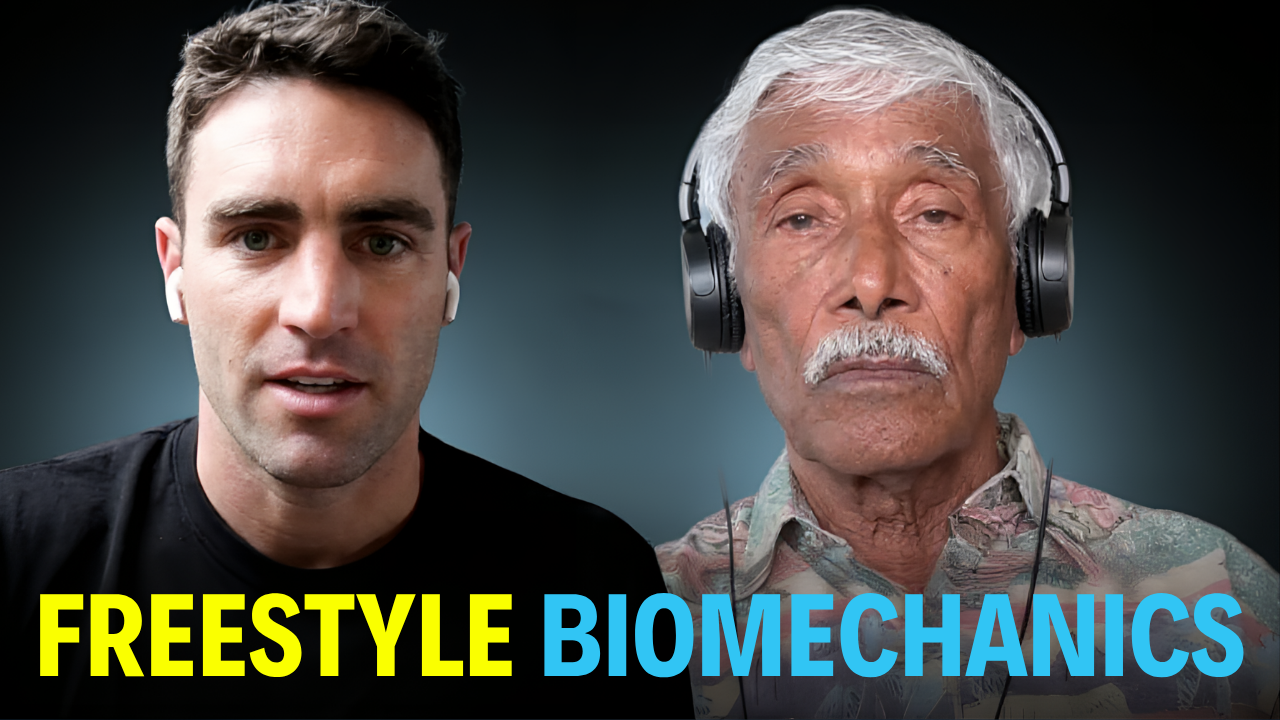








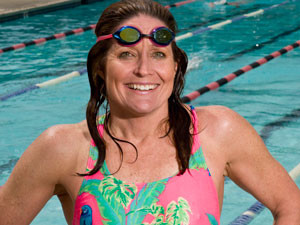
Eney Jones is a successful Master’s swimmer, open water swimmer and accomplished triathlete. She lives and works in Boulder, Colorado and has worked with many of the top triathletes to help them improve their swimming.
We talk with Eney about technique, posture, tempo, catch and pull, open water racing tips and awareness in the open water. This episode is one you shouldn’t miss!
 01:55 – You can’t win with the swim but you can lose with the swim.
02:29 – From high-level swimmer to swim coach
02:35 – Social media is amazing
03:09 – Oh my God! What happened to you?
05:13 – Easy speed
06:15 – Roger Bannister breaking the tape.
06:30 – Watch out for the boat!
07:05 – It’s kind of like golf.
07:31 – Reading the conditions…
08:20 – The Bow Propeller
09:00 – Got to give the squad a kick on the back.
09:35 – What’s the process do you go through when analyzing someone’s strokes?
10:05 – I am a big believer in fun and toys
10:55 – It helps them disconnect.
11:35 – Don’t be afraid of everything.
11:49 – It doesn’t have to be a monotonous drudgery…
12:20 – Mix it up!
12:35 – The chase is fun
14:40 – What is split tempo?
15:10 – Rage!
15:20 – Burmingham Feather
15:57 – Water, air, rocks and shells…
16:50 – The Long Anchoring Drill
17:21 – Business at the front, party at the back!
18:12 – The Superhero Posture
19:26 – The Number 1 Thing I Teach
19:42 – Breaking The Tape Mentality
20:39 – Open up through shoulders
20:53 – Hunched!
22:29 – Frozen.
23:24 – Foam rollers, massage balls and BakBalls
24:38 – Wetsuit, fins and paddles…
25:47 – Be aware. Disconnect. Reconnect.
26:42 – The future of wetsuits…
27:31 – No fear. Have fun.
28:30 – Some days a double, some days off…
30:09 – What’s special about your PullBouy?
40:10 – Longevity and Fountain of Youth
41:50 – Living your passion…
42:28 – The complete arsenal
43:33 – The future is going to be so much better…
Resources mentioned on this podcast
The Eney Buoy – www.eneybuoy.com
Eney’s website – http://eneyjones.com/
New Freestyle Clinic dates in Melbourne, Canberra, Sydney and Brisbane happening in the first quarter of 2015. Check it out here!
Transcript
Read the full transcript
Welcome to Effortless Swimming, the podcast for swimmers, triathletes and coaches. Join Australian swim coach, Brenton Ford, as he reveals the latest techniques and information to improve your swimming. Let’s dive right in. Welcome to today’s podcast. My guest today is Aenie Jones and she has a huge regimen of successful swimming. She’s not only a successful master swimmer, open water swimmer, as well as a very successful triathlete, particularly in the swim leg. She’s been the fastest female out of the water in the last six Hawaiian Ironman events that she’s done. But she’s also a coach in Boulder, Colorado, working with a lot of elite triathletes. So in this podcast today, we go into a lot about technique in terms of posture, tempo, catch and pull, as well as open water racing tips and awareness in the open water. Because open water swimming is not just about your technique or not just about your speed.
A lot of siding and skills go into it in order to be a successful open water swimmer. So we talk a lot about that too. And in today’s podcast, I’m sure you learned just as much as I did. And before we go into it, I just want to let you know that we’ve got some new freestyle clinic dates in Melbourne, Canberra, Sydney and Brisbane. So they’re happening first quarter of 2015. And we’ve also got two open water swimming trips. One in Down the Great Ocean Road, one in Sydney, which are also happening early 2015. So go to effortlesswimming.com to check those out. And let’s get into the podcast. Here is Eni Jones. We joined about halfway through the start of our conversation as I missed recording the first part. So let’s get straight into it. High level triathletes like Rini and Angela Neath. People that they really, the swim is not that important anymore. You don’t really get, when I raced, you’d get like a $2,500 swim cream in St. Croix.
They don’t really have that. I mean, you can’t win with the swim, but you can lose with the swim. And what I try to do is work with people to manipulate their body position through posture in swimming so they can have the easiest, fastest swim possible to get to their signature event. So my coaching has kind of gone full circle from being, you know, an athlete, a high level swimmer, triathlete to coach, teacher, educator. And that’s kind of how I got into it. And then meeting people like the Grimsies and yourself and the social media, where there’s so much out there that’s even really good, that sometimes the dialogues are amazing. And I realize people are saying different things or all have a thought that I just think, oh my gosh, I have to ask Trent about this. And one of the articles with Trent was, came about seeing him the week after he broke the English Channel record and he had a cut on his ankle.
And I said, oh my God, what happened to you? And he said, oh, it’s from my two beat crossover kick. You know, and that’s rarely taught anymore. Like in, you know, I love Gary Hall, but he writes in Triathlete Magazine about a six beat kick. And yeah, you’ll have a great body position. But for a triathlon, it’s really not the best kick for an easy body position. So when I saw, you know, Trent’s ankle all cut up, I was so excited because, you know, there’s, there’s so many things that, you know, we’re teaching different swimmers and we’ve experienced ourselves and you just want to share that knowledge. Yeah, that’s, that’s exactly right. That’s kind of how I came into it. I mean, I had similar sort of background. I grew up some instance. I was really young. Like I was in the pool at sort of four or five and did reasonably well at some, at National AIDS Championships in the pool with sort of 2, 400 IM and 400 freestyle.
And then went to university and then just started coaching. And it was completely different going from being able to swim, then going to try and teach that to other people who might not necessarily come from 10, 12 years of swimming, who might have just started one or two years ago and then trying to translate that into, you know, how can you help this person become a good swimmer? Because it’s not, you’ve got, you’ve got to explain a lot differently than what you might explain it to someone who’s got the experience there. So particularly working with triathletes who have only maybe been swimming for two or three years and they haven’t quite got it to click yet. It was, it was a, you know, it took a couple of years for me to get my head around learning how to explain things to them that they would understand and what really gets them the results. Like there’s a lot of sort of 1% things that you can talk about,
but for a lot of triathletes, you know, it’s just the main things like temper and body position and head position and that sort of thing that, that really gets them to be good swimmers, not necessarily the fastest swimmers, but it gets them, so they’re not, they’re not losing too much time on the swim. Great. Yeah. No, I call it easy speed. And some of the things I’ve come up with, I’ve actually trademarked because, you know, when I was swimming, I saw some conch shells in the Bahamas and I was mad because someone had cut into them and they were really little, but I thought, oh, I can make some salt dishes, you know, and I’ll swim them back to the boat. And they were filling up underneath and then draining through the air and I thought, oh my gosh, this is what I’ve been trying to teach. I’ve been trying to teach split tempo that people can change their recovery, you know, but keep underneath really deliberate.
So, you know, I’ve had some things where, you know, now I’m working with people on what I call transference, where they’re so phenomenal in another sport, but it’s not transferring. But there are certain things that will transfer. The next video I’m working on right now is all about body position and to even have people think about Roger Bannister breaking the tape, not only opens their diaphragm but lifts their chest, usually gets their catch wider so they’re in their lats, you know, and then to me, I’m really into safety and open water and you can’t swim like you can in a pool with your head down and your chest down and, you know, digging like a little burrowing animal because there’s boats and jet skis and fish and people and you really have to have a heightened awareness like I call, you know, running to the subway. You don’t want to have your backpack opened and your shoes untied. You have to really have a heightened awareness in open water.
So I try to teach heightened awareness, safety, and really easy speed and body position and try to relate to something that they know. But they are dealing with two different elements and they haven’t thought about that water and air and they haven’t thought about changing their stroke depending on the course. So it’s kind of like golf where, you know, if it’s flat, sure you can swim head down, totally flat, never look up like you’re in a pool, but if it’s rough and there’s a current going in and out, you know, you need to study, you know, all the, everything that’s going on. Yeah, especially in open water swimming. I mean, you can save so much time just by deciding correctly and swimming straight and reading the currents if there’s a push anyway because, you know, you just see the number of swimmers that go off course and end up swimming an extra 20% on top of maybe a one or two kilometer or one mile race.
It’s, you know, you can save so much time that way. So just being able to read the conditions and sighting every five, six, seven strokes and making sure that you’re keeping on course, it’s something that might not take that much time to be able to do well, but if you, you know, rather than trying to focus on this one aspect of your stroke and working for a couple of months to really get it right, it’s kind of an easy win. That way is that being able to swim straight. Oh, and definitely and being really aware of, you know, what’s going on. I’ve been in races where someone has, you know, swam into a bow propeller or, you know, just to really be aware of everything, you know, that’s going on and even, you know, the people and the, that are around you, you can’t totally, you can’t totally shut down and relax in open water. I mean, yes, you can relax and you need to relax, but you also have that split of really need to take everything in.
Yeah, you can’t, you can’t switch off like you might be able to on the run or, or even the bike. I mean, even this morning, I just got back from, from squad coaching and had the guys do some, some kick on their back and the amount of the number of crashes we had from them not going, not keeping in the left side of the lane here in Australia. You know, it’s just people just kind of being too relaxed with it. And as you said, not being aware. So it’s, it’s a really big thing, especially in open water swimming. Now I’m curious to ask what’s your sort of process that you go through when analyzing someone’s stroke. So if you’re doing a one-on-one lesson and you might be doing some video feedback, what sort of process do you go through when you’re looking at what someone should do to take that next step? I try to find first what somebody does really well. Like I looked at Rini and somebody who’s running a 252 after a 2.4 and 112 mile ride should not be running
like she’s running. She’s not into what I call that transference and that tempo. And there’s a few things with triathletes. There’s usually very, very low body awareness. So I’m a big believer in fun and toys. I have my own buoy which you can fill up. You can keep it empty. You can take it in open water and drink from it. You can fill the bottom container which opens your psoas a little bit because triathletes are so tight, you know, from running and riding forward that they never open their psoas pack. They never have an up kick or their soles usually coming up. So sometimes I even have people pull with fins on. I’m a big believer in snorkeling only because the audible breath sound, the ujjayi breathing really relaxes them. It lifts their chest and their neck. It actually gives them a sense of relaxing, even just listening to the sound of their breath. And it also helps people disconnect. Many, many triathletes,
when their left arm comes forward, if they breathe right, say for instance they’re doing water polo head up, they turn their head just because even though their head’s out of the water, they’re used to turning their head when they breathe. So a lot of times, you know, it’s different for each person, but I look at what they’re doing right, and then I try to disconnect with what they’re doing wrong because sometimes the connection is something they need to get away from. Like when their stroke gets longer, they’re going to be breathing in a different place so they need to use a snorkel and they’re not turning their head where they used to turn their head. And also have people not be afraid of easy speed, to not be afraid of everything, of history, of learning and having fun, because it doesn’t have to be this monotonous, you know, dredgery that people go through. Yeah, I completely agree. One of the ways I kind of like to mix it up is,
I mean, in the pool we’ll do some open water drills. We might do some pack swimming because we don’t really get that much of a chance to do open water swimming here in Melbourne where I am, I mean, in summer, the water’s not too bad, but we do our coach and masters group with a couple of triathletes in it and so we try and sort of mix it up by keeping it fun in the pool and whether that’s just doing the open water skills or whether that’s just sort of mixing up training. So we do these things called chases where the person, one person will wear fins, another person will not wear fins and the person without fins will start at 10 metre mark and the other person will push off from the wall and the aim is to try and catch them for that 50 and we’ll go through somewhere between sort of 10 and 12 of those so they’ve got to use that easy speed. You can’t go max on the first one, you’ve got to be able to maintain a fast pace
and you’re just going to blow up. So sort of just keeping it interesting in training rather than just doing 10, 400s every set, it’s good to sort of change it up. Well, and that’s also really what happens in a race is you look up and there’s a pack you want to be with or you need to access your speed so I think what you’re doing is really great and it’s fun and when I coach masters, I do drills like having one person on each leg, you’re pulling so in the front it’s about a catch, a committed catch in power and in the back it’s breathing, kicking and composure and not having control. So I think mixing it up as fun as possible is really important and I even, you might appreciate this being an IM or even I have triathletes that don’t want to learn other strokes but butterfly is so good for your catch, backstroke is so good for your lifted sternum, a fourth and fifth finger entry, breaststroke is so great to open your psoas,
lift your chest and get your, being able to scoop with your forearms which there’s not really a better way to teach it than to do other strokes. Absolutely and it’s, I mean, most sort of triathletes will tend to do a little bit of backstroke and butterfly even if it’s with fins on, but just that awareness of what your body’s doing in the water and your catching everything in those other strokes, it’s a good way to learn something and improve your freestyle. Something I wanted to talk about with you as well that you’ve coined is split tempo. So just a method for, I guess, swimming better in open water and dealing with chops. So could you talk a little bit about split tempo? So split tempo is a couple things when you’re running and riding, you know what your cadence is, you know your tempo, but in water you’re dealing with two different elements and water’s 800 times denser than the air so it’s easier to be faster through the air.
So to be able to split your tempo in the stroke I found is really important and it’s important when there’s a few things going on which is one is called rage where water’s going in one direction and the wind is going in another direction where maybe you want your recovery lower. Another thing that I do try to teach sometimes is called the Birmingham Feather and this is from a great Australian coach named Paul Birmingham and he found so many shoulder injuries were not from underneath the water where you want your elbow higher than your wrist and you want to use your forearms but they were from the recovery where in the States we teach this high elbow recovery and there’s no points for prettiness here so actually a wider, flatter recovery almost like an oar is super less stressful on your shoulders when you’re in a wetsuit so split tempo is actually learning to deal with water and air differently so I’ll use things like rocks and shells
where you’re holding them in your hands to get into your forearms and even biscuits and sand dollars where they drain through the air so you can think about being faster through the air and much more deliberate and powerful through the back of your stroke. And so using that let’s say someone is swimming in open water and it’s quite choppy with that split tempo the way I like to sort of think of it is you’re transitioning from so the pressure and the catch out the front and then transitioning from that right arm and then into the left arm so you’re trying to keep that I guess that anchor point out the front there just where you’re starting to get pressure on your hand in the catch and that’s a good way to stabilise you when it’s getting pushed in all different directions. I call that the long anchoring drill where you’re actually entering in the front reaching and driving and pressing and finishing in the back so it’s the opposite of catch up
one arms forward and down and the other is finishing thinking of that as a long anchoring drill which is really good to do when it’s rough and you’re having trouble holding your line and just sighting. And I’ve heard you I was watching your open water video before which was really good and one of the things you spoke about was business out the front party at the back and even in pool swimming circles some of the there’s a few elite swimmers down in Melbourne and their coaches talk about the very same thing is out the front you want it to be nice and clean not too much disturbance with the water but out the back that’s where you can really drive the stroke you can work the kick if you’re a pool swimmer but the main thing is you want to make sure it’s clean out the front because that’s where you can really start to drive the stroke and keep pressure on the water and then just push it all back past your hip and driving your kick.
Exactly I had a little bit of trouble with that with some of the kids I was coaching when they didn’t know what a mullet was business in the front party in the back but I got them to do that so my next video I’m working on posture and I call it superhero posture and often I say to some of my clients well have you ever seen a superhero take off and they say oh yeah I have and I’m thinking really but then we’re in Boulder so maybe we have but with the right arm really stretched and reached all the way that cross connection to the left foot you know through the torso but then it’s almost like the superhero dropping the cell phone because when he starts to fly he’s reaching for that cell phone and really getting that you know hand down with the reach. Yeah I like that and I’ve spoken about it in a similar sort of way is that if I’m talking about postural say to people have you if you ever remember parents measuring how tall you were growing
when you’re a kid you’d be up against the wall and your chest to be at your shoulders would be back trying to get every little extra centimeter and it’s a similar sort of posture that you’re looking for with your body when you’re swimming freestyle is you know you don’t want to be hunched over and forward it’s about trying to be nice and tall and you know opening up through your through your core there and that’s that’s when you can really start to sit comfortably in the water. Oh and I’m what you just said that to me is the number one thing that I try to teach because you know not only does it open your diaphragm it lifts your chest I mean even Eddie Merck’s would teach people to ride to hinge at the hips so that they could actually breathe but if you watch the old videos of Roger Bannister you know break I call it breaking the tape mentality where you know you’re actually just what you said stretched through the
chest you know and and lifted because you know not only that it’s a really it gets you out of your traps and I get so many you know triathletes that are just swimming with traps and shoulders and I say you know that works for a while but there’s so much more strength you can access because it at a certain time you’re going to be limited with how fast you can go with the way you’re swimming. Yeah and I mean particularly with triathletes of the last couple of months I’ve really had a big focus on just getting them to become more flexible through their shoulders, their traps, their rhomboids and just getting them to open up through their upper spine because you know if you’re in aero position for a couple of hours a day when you’re riding, if you’re at a desk in the car just so used to being hunched over so just getting them to open up through their shoulders it allows them to have that recovery that’s a lot a lot easier
and access that easy speed rather than trying to sort of bash and crash their way through the stroke in that hunched position and over the last two or three weeks one of the guys that I coach he’s just been stuck at the same time and he hasn’t been able to make that break to the front pack with his swimming and the last couple of weeks I’ve just had him stretching before and after each session and just doing a streamline stretch on the wall but rather than being streamlined just hands shoulder with the part and then just leaning into it and opening up through the spine and this morning he had his best session that he’s probably ever had with me by doing that just by being a little bit more flexible and we’ve just adjusted his he was crossing over but now he’s managed to enter in front of his shoulder in front of his ear and for the first time he’s actually managing to hold some water rather than just spinning the wheels
so particularly with triathletes I’ve really had a big focus on just getting them to become a lot more mobile and flexible and it’s made a big difference I think that’s huge not only in the upper thoracic and the rhomboids I was working with a little girl and she said you know I watched a video and all the swimmers at nationals were spinning their arms forward she said but Michael Phelps was crossing in the front and crossing in the back and she goes I really see what you’re saying there because that’s opening more movement and that’s why rowing is such a good dry land for swimming there’s some great products out there like IntelliSkin which is it’s almost like a jog bra if you break your collarbone it pulls your shoulders back but you’re right we spend so much time on the computer driving riding you know hunched over so that you end up becoming frozen in that position so first I work with that and then I end up going down to
their psoas because that’s the only muscle that connects your core to the lower body so you know in order to get them to actually get some sort of up kick and some kind of pour involved yeah and you can feel that I mean of the last couple of months you know if I spend too much time in the car driving to and from the pool or whatever and the psoas tightens up then when you’re in the water you can really feel that lack of connection through the hips and the core and especially with your kick it’s really hard to get much power from that at all so just being a little bit looser through there can make a huge difference as well and I mean I’ve got a big emphasis on using the foam rollers the massage balls and there’s another little tool that one of the guys that I coach developed called Backballs it’s BAK balls and it’s kind of like two tennis balls taped together but it’s made from rubber and it’s a little bit harder something that you can use to
massage along your spine and that goes all the way down yeah so it’s kind of it just fits along those sort of muscles along your spine and you can just roll on it on your back and you want to start quite gentle you want to be very gentle with it at the start but you know once you loosen up through there you can really dig in and it’s a good way to open up that thoracic spine there and I use myself before and after every session and the difference that it makes is just huge and and I think one of the final things I’ll do is I manipulate body position in a set like people always go a kick set a pole set a swim set and what I try to do is really mix it up like within a set kick pole swim so when you’re pulling you have this great body position but then if you swim immediately afterward your body tries to find that other things I’ll do is I’ll have them bring their wetsuits to the pool and use fins and paddles or a fiddle faddle
with their wetsuit like the opposite fin to the opposite paddle because sometimes they’ll put on a wetsuit and they start swimming like they’ve had an epidural from the waist down they just float and dig again so to actually teach them to use their full body yeah that’s really good I like that I mean what suggestions do you have to people when it comes to swimming with and without a wetsuit do you advise them to make any changes to their technique or their recovery or anything like that well with the long sleeve wetsuit I do teach the Birmingham feather because even though wetsuits are so much better than they used to be having a really high elbow recovery is just it’s a little more uncomfortable with the long sleeve wetsuit I do like people sometimes they’re making the wetsuit shorts and I even like them to bring
those to work out sometimes because it just draws awareness to that part of the body so the first thing I try to do is get to people to be aware of what they’re doing and then disconnect and then reconnect you know to be able to find power that they’re they’re not using so and also sometimes people’s wetsuits don’t fit very well and they don’t even really know that they’re shutting themselves down because it’s not the right wetsuit for them yeah it definitely pays to have someone fit you properly if you’re going into a store and getting fitted out and I think it’s even worth no matter how much or how little you sort of swimming in open water it can be really worthwhile getting a good wetsuit paying the extra $200-300 and getting a better wetsuit with more flexibility through the shoulders and one that doesn’t chafe and things like that because for that little bit extra it can just make you a whole lot more enjoyable oh definitely and there’s some phenomenal
things coming out one of the things I used to make I called them aqua armor and I put them on my arm kind of like arm warmers for jellyfish and some of the wetsuit companies are making them for swimming and they’re good because they don’t chafe you under your arms and they don’t limit shoulder mobility you know so they’re it looks like an arm warmer but it’s made out of neoprene yeah that’s I mean chafe can stop you pretty quickly from swimming two days in a row if you’re open water oh and mobility too limits your mobility so I think you’ve hit on a couple things one is to you know not have any fear and also to really have some fun it really doesn’t have to be you know I know it’s the first of the year and everyone’s doing 100 hundreds but I’d much rather have people have fun and go fast and get out when they lose their form then do what I call a head bangers ball just going going going yeah and just being sustainable with your training I mean
you know I think 100-100 is a good challenge set just something to like a willpower set but if you’re doing that on the first of January and then you don’t swim for a week because you’re too tired it’s just sort of sending the wrong message so you just want to make sure that your training is sustainable and you’re not you’re not blowing up every every third day fourth day where it means you’ve got to recover for you know 48 hours or something like that and I think you’re right I think mentally no mentally I think it’s really strong and empowering to do something like that but I’m also a big believer in fun and mixing it up so some days I like people going a double and then the next day having a day off so that they’re fresh because I find there’s a lot of medium going on where people feel good on their easy day and so then they swim more but then on their hard day they’re tired so then they back off so rather than have every day become a
medium day you know that’s where it’s super important I think to do you know to do the 100-100 sometimes but then take a day off and then some days do a double some days just a single and really mix it up make an IM day have a kick day you know have not a pull day but also I do like pulling not pulling pulling not pulling and totally mixing it up so that people because it’s easy for people to get bored I think in the pool yeah yeah definitely I mean without sort of four squad sessions a week one of them is sort of a longer aerobic session one speed one’s skills and technique and another one’s well it just depends on the fourth one but yeah you’re right you know if you’re doing all aerobic sessions for the week or you’re just doing the one stroke or you’re just doing pull it gets a bit tedious and you want to be tested in other ways in the pool as well and with your with your pool boy that you’ve created can you talk a little bit about that
and what makes the pool boy that you’ve created so different to the other ones because I’m quite curious about it I’ll just send you one I actually in when I was swimming the Swedish swimmers used to take these plastic things that they’d put on kids backs and tie them together and I always wanted one and so when I initially when I made them they are they’re blow molded so you could fill you know there’d be a at the end you just put a cap on the end and then it kind of went away I started getting into other things but the reason it’s the best buoy out there is I still have mine from 20 years ago so it probably needs some planned obsolescence I mean it lasts a long time because it’s a blow molded plastic but I like it because I grew up in Florida and in Florida the styrofoam buoys get really disgusting from the sun and the chlorine so I used to have rashes on my thighs just from the buoys so this is not only it’s a cleaner more durable
buoy and when it’s empty it’s super fast because it gets you in a race position it’s higher it’s like being in salt water or a wet suit and then you have some options like you can fill both capsules which is really hard and combine it with a band or I personally I like my bottom the capsule facing down with some water in it because I am so tight from sitting and riding and running that just to get that my sew has to be stretched a little and open up and have that weight in the bottom I start using my lower abdomen and my core a little more swimming so what happened was when it first came out I did it by myself and then a couple years ago some friends of mine in Dallas decided to bring it back because they had all had it and for triathletes it does some great things it really gets them not afraid of the times because then they’re going a faster time in the pool it also gets their tempo a little faster you know and I told you I even bring mine sometimes
in open water and put my drink in it because I get really thirsty in salt water so I can just bring my drink out there and use it so it’s durability longevity to be able to adapt and change it from off season to mid season to hard to race pace to tapering it’s actually a pretty nice tool to have and for people who haven’t seen it it’s kind of like I guess should say two big bottles together that you can fill but designed a lot better than that obviously and among triathletes or at least among my friends there’s a big in terms of pool boy there’s a big not a status thing but the bigger the pool boy the better and they don’t really make them like they used to when it comes to pool boys they make these crappy little ones that might last two or three years to provide that much buoyancy so I think to have something that you can change the buoyancy with something that’s going to last it’s good to bring that back and have something that can really lift you up at the hips
and simulate swimming with the wetsuit and get you down to those faster times and be able to increase your tempo with a pool boy because I think a lot of open water swimmers they need that strength training that you can do with a pool boy or pool boy in paddles so to be able to lift yourself up and do that is a really good thing because it’s very hard to find a good pool boy these days and sometimes I don’t know how it is in Australia but sometimes here we have this mentality where like harder is better and really there’s nothing wrong with going faster and making it easier and so many of the people that have my buoy travel with it Rini has one and I was surprised she’ll take it to Hawaii with her but when she’s training in the pool that’s the exact cadence she uses all of Ciri Lindley’s athletes are required to buy buoy Jerry Rodriguez his athletes at tower 26 are very into the buoy Ben Hoffman who was second this year and Kona uses that buoy
so it’s almost become the savior legs like why make it harder than it needs to be because it’s just been a great tool to have and so not only does it teach you a lot of things but it just makes swimming a little more enjoyable yeah you’re exactly right and I mean I’m guilty of coming from the swimming coach approach I guess and thinking the lesser you use of a pool buoy the better but as I come to understand and learn more about open water swimming and triathlon swimming and just training in general a pool buoy is a really good tool especially for building strength so and if you talk to a lot of elite triathletes they’re doing so much of their session with a pool buoy and paddles and band as well that it’s silly to ignore it and I mean I’m just filming a new triathlon swimming day-to-day with Clayton Fatale and Annabel Luxford and they were talking about their training and so much of it is with those toys yeah and both I met both of them actually
in Boulder this summer one of the things that I made that I was calling the Clayton was a really heavy paddle you know that came down but they it’s nice to see what people are doing because they don’t use their arms and their lats and the other discipline so it is nice to use actually paddles and buoy and get a good arm lat workout yeah definitely especially if someone’s working full time and they’re an age group triathlete and they might be able to squeeze in 2-3 sessions a week then you want to get the most out of it and you’re probably better off just getting a good arm workout than legs for some of it right and it mimics the position you’re going to be in when you’re raced because so many of the races I do are saltwater or wetsuit so when I’m pulling I have about the same cadence with my arms the same split tempo the same body position that I have with a buoy so I pull a lot and it’s so good for open water swimming and another thing
I wanted to ask you about was let’s say someone’s come in and they’ve got a slower tempo than they really need what are some of your sort of strategies that you use to get them to increase their tempo and be comfortable with it and then use that in a race one of the things is music if they’re connected to music when Brian Godel broke the world record I think it was in the early 80’s he had radar love in his head but if people have any music with Angela Nath I even had her sleeping with the tempo trainer because to actually get used to that rhythm to that sound that you need one of my favorite things to do is actually sit during Ceri Lindley’s group workout when they’re going fast write down each person’s tempo and then use a workout with the tempo trainer where people have to change the tempo and they’ll have to go Jody Swallow’s tempo or Rini’s tempo or Didi’s and people are just so shocked thinking really no this is how I swim
and I’m like no swimming is like golf the more clubs you have the more different strokes you can learn the better you can be so you don’t want to get attached to this is how I do it yeah you’ve got to get used to getting out of your comfort zone with your stroke rate and it takes time it takes time to develop the strength for it and just being comfortable and making those small changes to the rest of your stroke to be able to cope with the fastest stroke rate but when you’re comfortable with it boy it can make a difference to your open water and if you’re watching someone let’s say they’re a 70 minute iron man’s swimmer and they’ve got a stroke rate of maybe 55 or 60 and you know they could go hold a stroke rate of 70 then you know when they are able to do it it’s kind of like free speed in that you don’t need to change anything else except for that tempo and it can make a big difference especially over a longer event
and even the split tempo even keeping the underneath the same but changing just the part in the air and people go well I never thought about changing my recovery and I will say well I’ll change it all the time depending on the size of the waves or you know what the current is like but to even change half of your stroke can be really really important and it’s hard because you know there’s so many sometimes I’m fighting and I’ve let go a little bit like I’ll see videos on the internet and I think oh gosh or I’ll listen to a coach and I’ll think well gosh that’ll work in a pool but after a while you’re totally you’re totally limited and I’m a big believer in longevity I think swimming is you can do after you stop riding your bike and after you can’t run anymore it’s something if you do it right you can do it your whole life and it’s it pretty much is the fountain of youth so to be able to learn different ways to swim and to enhance your swimming
is actually not only good for your racing but it’s good for just lifelong learning yeah and I see especially in the swimming world I mean young kids come into it and they train so hard for let’s say 4, 5, 6 years and they might hit 15 or 16 and they’ve had enough of swimming because it’s been the same thing for the last 6 years and they just get hammered into the ground but and let’s say they break national record at 16 I don’t really see that as being a successful swimmer because swimming is about wanting to do it for the rest of your life and not hating the sport so it’s really about enjoying it into your 20s, 30s, 40s and so on because it is such a great sport and such a great workout and you can meet a great group of people some of my best friends have come from swimming and if you’re getting up at 4, 5 in the morning and you’re sharing that with other people especially as you’re growing up or you might be working
full time and sharing those early workouts with people you really get that bonding connection that it’s very hard to find anywhere else Oh definitely and even through open water I mean not only the history but meeting some of the people I’ve met you know through these open water races it’s just an amazing way to live and to be able to live your passion and be inspired and enlightened by other people and even the fact that we’re having this conversation on two different hemispheres dealing with teaching and what we’re seeing I find it absolutely remarkable Yeah and it’s, we’re very lucky in that way that we can I guess make a living from something that we love and something such as swimming and I think as well just with how the internet is these days with podcasts with YouTube and blogs and everything like that being able to learn from other coaches and seeing what strategies they use and how they think about things is a really good way to have a
complete arsenal of weapons or tools that you can use and pull out with different swimmers because no swim is the same and no technique is the same and it requires an individual approach to helping someone get to where they want to go to so it’s so good being able to draw on your experience and the athletes that you’ve worked with and seeing what’s helped them improve their swimming so we’re very lucky to be living in the edge that we are I think Oh I mean amazingly so I still I still get inspired from the past because I think of some of my heroes going to Australia and you know even having freestyle starting as the Australian crawl and there’s just so much I mean not only is there so much history but there’s so much going on in the present that we can tap into all around in the world and it’s going to make the future so much better because the access to information is just amazing Yeah absolutely and I see it even in when the suits came out for
swimming in sort of 2008-2009 when nearly all the world records were broken at the world champs and but these days a lot of those suit records have been broken because they’re reverted back to better technique and looking at the biomechanics of swimming so it might be at the very pointy end of the field or pointy end of what’s possible but still seeing that push just through science and discovery and things like that it’s just pretty awesome to watch Oh absolutely So where can people find out more about you, read some of your articles get your pool boy, what’s the best point of contact for people listening to this? The buoy can be you can find it on www.eenibooey.com I have it’s on my website there also I write a lot for iVigor which he does a lot of different things across the board if you ever are in Boulder I’m at RallySport and I do a lot of open water around the world so if you just google my name there’s usually a link that will
come up and hopefully you know you run into people soon and that’s been the greatest thing about you know not only open water events taking off almost beyond triathlons is that you end up just seeing people and meeting people all around the world so and with the internet and social media that’s another way as well just Eenie Jones on Facebook or Twitter Awesome well thanks so much for joining me on the podcast and I know I’ve had a great time chatting with you and hearing your strategy for improving swimming and you’ve also got an open water video available too which I just finished watching so I highly recommend people go and check that out too I have another one coming out this next week and it’s on it’s on posture and more dry land stuff so I will ship that to you as well Thank you so much and I’ll get you back on for another podcast because this has been really fun Yeah my pleasure happy holidays Thanks for joining us on the effortless
swimming podcast. To get transcriptions bonus videos and to be the first to hear about new episodes go to SwimmingPodcast.com