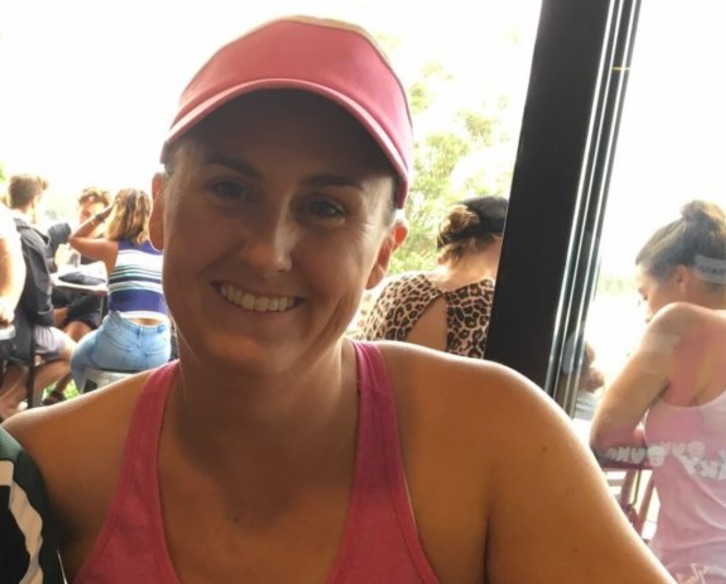









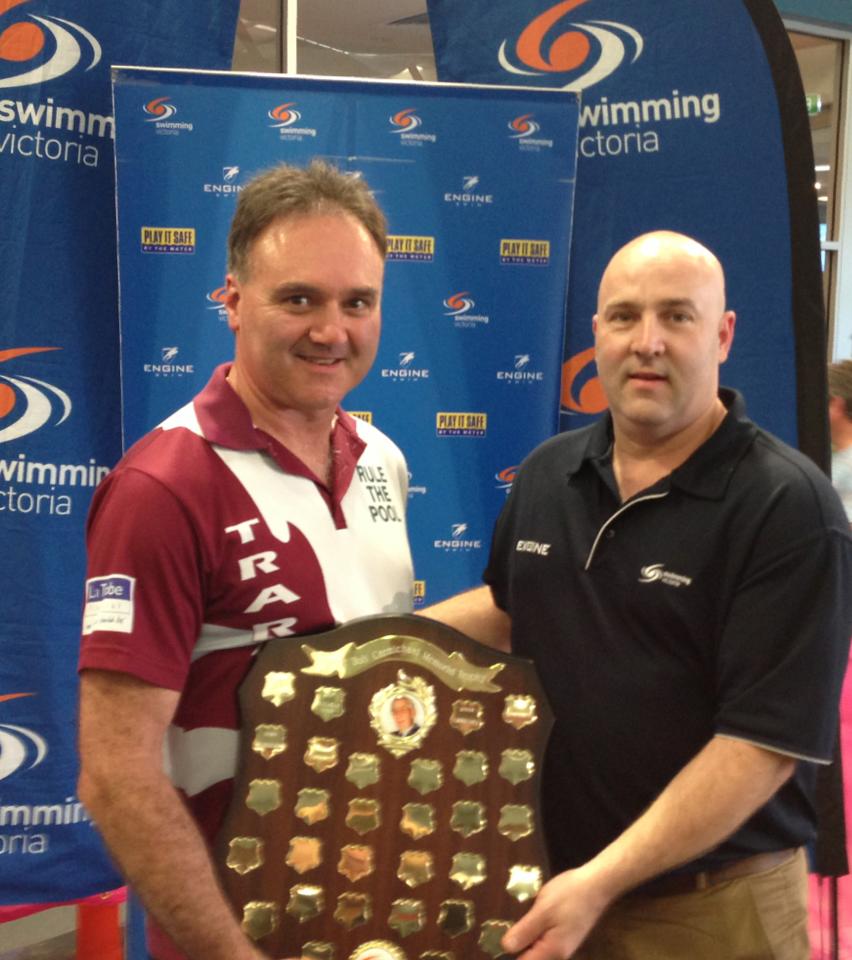
 Swimming coach Brian Ford has been Head Coach of the Traralgon Swimming Club since 1997. More importantly, he is my dad!
Not only is he an accomplished swimmer and coach who has had athletes go on to make Olympic and National teams, he is one of the best developers of people, culture and discipline.
If you want to learn about the importance of discipline, enthusiasm and being a people person, listen in as my dad shares his life lessons and expertise as a seasoned swimming coach.
04:58 – Meet Brian Ford
07:50 – Why reputation is important.
08:55 – When to Draw The Line Between Being a Coach and Being a Parent
16:00 – Micromanaging vs Delegating
22:41 – Basic Principles in Dealing with People
30:45 – On Being Careful with Who You Hang Out With
33:30 – “Every opportunity is an opportunity to give as much as you can.”
35:30 – This is the way I am as a coach…
38:17 – Why It’s Okay to Coach with a Lot of Enthusiasm
40:20 – To Care or Not to Care?
Applications are now open for Hell Week. To learn more about this, visit effortlessswimming.com/hellweek
Transcript
Read the full transcript
Welcome to the Effortless Swimming Podcast to show that help swimmers and triathletes love the water, become a better swimmer and live a better life. Here’s your host, Brenton Ford. Welcome to the Effortless Swimming Podcast. Before we get into today’s episode, I want to let you know that applications are now open for Hell Week. This is a week-long camp that we run every year on the island of Phuket in Thailand. And if you’ve never heard about Hell Week before, it’s a camp where we do two swims a day. You do strength and conditioning training. We do underwater filming and video analysis on your stroke a number of times throughout the camp. We also do goal-setting, mindset training. Plus, there’s a whole lot of free time to explore the island, relax, sit by the pool, sit by the beach, whatever you’d like to do. This is the fourth year that we run the camp and we’ve got two weeks this year. So October 14th to the 21st is when we’ve got the first week.
And the second week that camp is the 21st to the 28th. Now this is a camp where we have a lot of triathletes, open water swimmers, pool swimmers and people who swim for purely enjoyment. They come along and they get to improve as a swimmer. So while there’s certainly some challenging training and some challenging workouts that we do throughout the week, the biggest thing that people come away with from what they said last year was just the things that they learnt. So each session that we do has a purpose and with all of the different types of sessions that we do from the strength and conditioning to the mindset, to all the other stuff, it’s about becoming a well-rounded swimmer because improving as an athlete is more than just your technique. There’s a lot more to it. So if you want to go on a holiday where you get to go somewhere and have a purpose, so rather than just sitting by the beach for a whole week,
you’ll actually come away feeling fitter, you’ll have enjoyed yourself a lot more. You will have met a lot of like-minded people and just had a really good time on a holiday where you get to work hard and not feel bad about all the food that you’re eating. Everything we provide at the camp, there’s three meals a day. You’ve got breakfast, lunch and dinner all provided at the amazing restaurant that’s at the resort there. So you don’t need to worry about any of your meals. Everything else is taken care of. The pool is just a one-minute walk away from the accommodation there and it’s going to be an amazing week. So if you’d like more details on the camp and you could like to apply, go to effortlesswimming.com forward slash howl week. Now today’s episode is a very special one to me. I’ve got my dad on the podcast and my dad’s been my coach since I was a young kid and for me, one of the biggest takeaways from the episode from this podcast was
seeing where, how he came upon all of the sort of life lessons that he taught me as his kid and as a swimmer under him. Where they sort of came about and his reasoning behind them. Because I mean, my dad’s an amazing coach in his own right. He’s had swimmers who have gone on to make Australian teams and Olympic teams. But I think more importantly than that, one of the main things he’s known for is being a great developer of people. For example, when he’s got the young kids that he coaches, he sets a record straight from the start and lets them know what’s expected of them. And he teaches them what they need to do to be a successful person. Whether it’s from how they should say hello, goodbye, using people’s names, being a good listener, gaining confidence through willing to put yourself out there. I think that’s probably the thing he’s best known for and he does a great job of. So for me, I think one of the biggest things I learnt from this episode
was how he’s gone on to be such a great people person and how he’s gone on to instill that into other people. So here’s my dad’s name is Brian Ford and I hope you enjoy this episode. I know I certainly did. Alright, so welcome to the podcast. Thank you, Brenton. It’s a pleasure. I think I’ve been doing the podcast for maybe four years now, if not more, maybe even five years and I haven’t got you on the podcast even though you’re probably the main reason why I’m a coach myself. So it’s good to finally get you on. Well, it’s good to have been amongst all those great people you’ve been talking to. I’ve been listening to all those podcasts and you’ve had some really, really interesting people on there. So I’d say I’m honoured Brenton that you want to talk to me. Always a pleasure. So just for the audience listening, can you give me a bit of background about when you started coaching and how long you’ve been doing it for
and all the different things that you’ve done as a swimming coach? Brent, I probably started too late in coaching. I mean, I did a lot of, I guess, coaching in my 20s after I finished uni but that was just, I really didn’t know what I was doing. The club needed a coach. It was a small swimming club, needed a coach. I helped out and I really was just flying by the seat of my pants and some things worked and some things didn’t. Then obviously I was still swimming then so I really enjoyed my swimming and swimming masters and did all that stuff as well. But I guess it all really changed when my father, grandfather passed away in 1996 and he was coaching you when he was coaching his sister Courtney, his daughter Courtney and you were only seven and she was nine at the time or 10. And I thought, well, like anyone, I don’t think there was anyone good enough to coach you guys around the Gippsland area. So I said, I put my hand up and I just stopped all the things I did
which was water polo and my own swimming and I did all, I stopped all that and I said, well, I’ll be a coach and I’ll start coaching the two of you and the squad that you were in. And that all developed obviously towards the Terrogan swimming club and here we are 29 years later and everyone was saying that I’d give up coaching when you guys stopped really competitive swimming or becoming national swimmers but it’s something which is a real passion and something which I really enjoy doing. So I started when I was, I really started proper coaching. I was 38 years of age which I wish I’d probably started 20 years before that but it’s been a great ride the last 21 years and that’s really the main reason. If your grandfather hadn’t passed away we probably wouldn’t be here today and maybe you wouldn’t be doing what you’re doing today either. So it’s been a great ride. Well, I sort of got started in a similar manner was when I went to uni
and I just needed a part-time job and then started coaching at Melbourne University and realised that I really enjoyed it and got to meet a lot of great people and just kind of let on from there. I just don’t really know where things are going to lead and I guess you just follow what you tend to enjoy the most and what you’re good at and I think that’s how I’ve gotten to where I am now where I’m able to do this full-time and I think that’s why, I mean you’ve got such a good reputation among not only other coaches but also swimmers. The amount of people who I’ve met in Melbourne who have said that they would love to be coached by you, obviously it’s two hours away from Melbourne but they would join the Trug and Swing Club in an instant if it was more accessible to them because of you coaching there. So I think that sort of reputation is something that I really aspire to as a coach myself Some people say they ask me, was it hard having you a dad as a coach?
For me I didn’t find it hard at all I think I probably preferred it to having someone else as a coach because we didn’t really talk much about swimming once we got home there was the occasional talk but you weren’t on my case about you didn’t try hard enough in training you didn’t perform here, there was none of that and that’s why I think it was really easy having you as my coach. Well I think the funny thing there is Brent we talk about fathers and mothers coaching their parents sorry, coaching their children and look I remember one particular moment when I first started coaching you and you want to do the best and you want to do everything correctly and I remember saying to you at one stage am I picking on you because I just felt like I was just too much on your case and I remember you came back to me at 10 or 11 and said yes and I thought okay I’ve just got to adjust I’ve got to adjust the way I’m coaching
because as much as you want to be a parent you also want to be a good coach so I thought well let’s keep coaching at the pool let’s keep swimming at the pool let’s get in the car and let’s not have the car ride home anything like that where you talk about swimming that’s the last thing I’m going to talk about so let’s talk about other things being music or sport or school or whatever it is so I made a conscious decision then to keep swimming and being a parent separate so hopefully that work you say you’re telling me it’s work so sometimes you look back and go perhaps I could have been a better coach for you and Courtney but if you’re saying that now I think we did the best we could and I think it was pretty successful you’re still in it and Courtney is obviously still in it as well with the swimming so I guess it’s worked to a good extent I reckon I don’t remember that conversation obviously it was a long time ago
and I was quite young then but I just remember after that and yeah I think I see so many kids especially start to not enjoy their swimming when that’s all they talk about with their parents at home and their parents on their case about not swimming well or your times haven’t improved whatever it is that’s where I see kids just not enjoy because what’s the point if you’re just always being told that you’re not doing well enough or you’re not trying hard enough when you might be doing that so I think that separation and just letting the kids do their thing at training and then just have a break from it and just have that mental break as well that’s when it’s easier to enjoy it well when I have talks with the parents at swimming and I don’t do it like every talk but maybe once a year you say to the parents look don’t give the kids the car right home and that’s when unfortunately some parents will sit there and watch their children train
and watch everything that they do they probably shouldn’t but as they get older I guess they move away but it might be after a swim meet and the child hasn’t performed well and the swimmer itself is going to talk to the coach and the coach will do enough analysis but they don’t need more in the car on the car right home from their parents and that’s where I guess the lines become blurred where the parents try and still be coaches as well and they want to know everything and that’s very hard it’s very difficult being a parent I mean that’s like a test too because you do you do live your life a little bit through your children and that’s nothing wrong with that but trying to find the line not to step over it and make sure your kids are still enjoying it and they get respected for the great wins they have and they still love for the types of losses that they have so it’s pretty challenging as a parent but that’s the fine line
because as you say if you push too hard the kids will just resent it and they’ll drop out of the sport and this is one of the weaknesses we have in swimming trying to keep these kids in the sport past the age of 15 and 16 I guess it’s another topic but it starts a lot from what the culture is in the family and how the swimmers are treated by both the parents and the coaches I think back to when the state champs if I’d done a good swim then I’d speak to you as the coach and we’d have a bit of a debrief about how the race went and just say congratulations all that sort of stuff I’d go up to the stands mum was there and she’d say great job well done but then if I didn’t have a good race we again it’d be the same process we would just talk about how the race went what we could have done differently and that’s it you leave it at that and then I’d go upstairs and say mum and she would she wouldn’t keep on my case about it she’d just be
how was that I’m not very good and that’s not good to hear I hope the next one goes better and that’s it so I wasn’t afraid to go upstairs and just have to face mum so I think that I never felt if I’d done a poor race I’d only let myself down and it wasn’t I wasn’t afraid to go up to the stands and face mum with that you haven’t let the family down it’s not like that you’re lucky you’ve got a good mother there I mean Michelle obviously is well experienced as being a coach in her own right of young children and learned to swim and she I guess she knows the best she doesn’t love you for your swimming she loves you for who you are she’s always been like that so you’ve been very lucky to have a really good mother there as well who could draw the lines as well so yeah the proof is now what you’re doing is you’re in the sport you’re loving it you love what you’re doing and we’re really chuffed about where this has led you and where it’s going
so it’s awesome I think one of the things you’ve brought up before with letting the coaches do their job and just sort of leaving it at that is giving responsibility to others and that’s something that I see you do very well I think back to when we started doing strength and conditioning I think I would have been probably 12 and so this is really early on before very few clubs or coaches were doing strength and conditioning with their swimmers and we started doing that in the squad it was very basic we’re doing a circuit around the pool with some dumbbells and some sit ups and that sort of thing compared to what the kids do today it’s probably on a level 1 instead of a level 10 but that was more than what anyone else was doing and then eventually you met a guy called Sam Fenton who became a strength and conditioning coach for the club and you gave him that responsibility of looking after that and you don’t you’ve given him some guidance
and things like that but you’ve never stepped in and tried to take control of the strength and conditioning you’ve given that to him and I see that you’ve done that with other coaches too who’ve joined the club so I think just being able to hand off the responsibility of different roles of your sort of coaches and swimmers it takes a lot for someone to just completely give that up because sometimes there can be ego involved there can be just wanting to micromanage people but I think you do a really good job of giving that up so where does that come from for you? Well I you used the word I was going to use micromanage I mean when I first started that’s what I tried to do I tried to micromanage everything and that’s where I guess I did the swimming did the strength and conditioning did everything tried to manage everything no wonder I was exhausted so it’s a case like you you learn from the other activities you get involved in
obviously I’ve worked in corporates for a long time and I thought let’s apply the corporate principles that I’ve learnt and let’s put them into the swimming coaching and the corporate principles you’ve got to delegate some of your work you’ve got to give responsibility to others otherwise people around you won’t grow and that’s what I thought I’ve got to do the same thing here if we’re going to grow anything be it the swimming club or the program I need to bring people in and I’ve got to let them take responsibility now Sam Fenton watched our strength and conditioning program I’ve never met the guy I think he sat and watched one day and he had the audacity the audacity to come up to me and say I don’t like what you’re doing with your strength and conditioning program and I said that’s fine can you do better and he said yes and the rest is history and here he is still nearly 15 years later part of the club and so and I trust him in completely
so it’s just look I don’t mind people criticising what you do they’re prepared to help out and challenge me and give me a better way to do it and I take what they say and then more than happy to deal with people and the same with the coaches we bring on board so we’ve had not too many coaches come from outside the program into the program we’ve got one now Dean Gooch again he’s a he hasn’t been part of the Shrogan family over the years but he’s come in and trust him entirely because he’s just got the right values but all the other coaches have been developed through the club and I’ve either coached them or they’ve well they’re going to stop their swimming which is one of course and he’s very successful coach so I guess it’s a case where I mean it’s easy to say yeah look I’ll just bring them in and let them go well I do want to make sure they’re the right fit with the right culture and the right mindset and values and if I’m convinced of that
then I’m more than happy to let them write their own programs run their own squad and I’ll just monitor it and they can bounce off me for ideas or any concerns they have so I guess it’s it’s just practice and look at my age if I don’t if I don’t get it by now there’s something wrong so but it’s been it’s a lot of fun it’s a lot of fun watching young people like young people coaching watching them grow and develop and become terrific coaches in their own right it’s been a great ride I think that applies to the swimmers as well that you have in the squad you know in the warm up so for most sessions I know the swimmers will do a dry land warm up and there’s the swimmers know what it is and they’ve got to you know someone will will lead the warm up and these are sometimes a 9, 10 year old kid to a leading a group of 15 other kids through the warm up and you know just giving the responsibility even to really young people they’re not these kids are smart
they pick up on things very quickly and they want to take on that responsibility and they want to lead a group like that so they’re different than I’ve seen many other clubs and squads well I guess I learnt that from Sam I mean I I guess I haven’t really seen it until Sam brought it in and he he’s all about young people bringing young people out who don’t get in the voice I mean there’s a lot of young kids out there who don’t get the opportunity to lead and they’re very good leaders in their own ways put their hand up and want to lead so he’s all about others sharing the lead and taking on the session and running the program and once the kids have confidence and they know that they can do that and they don’t get put down or they don’t get talked over then it works really well and Sam’s been outstanding at that night and look we can do let’s start we’re supposed to be at 9.30 if something’s happening no coach there whatever it is may be they just get their warm up done
and off they go and it’s nothing better to watch a young group of people take responsibility for themselves and get their warm up done it’s all coaches should aspire to otherwise if the coach needs to be there for the program and if the program kicks on while no one’s watching well you’re doing something right so I’ll take my hats off to Sam Fenton for that one yeah that’s good I mean I saw that attitude last week we had a brother and sister from the swimming club who came along to one of our clinics and we had to demonstrate a drill and the young girl should put her hands straight up and this is in a group of adults and kids and she was the youngest one there but she put her hand up to demonstrate this drill and just didn’t hold back didn’t have any fear whereas everyone else wouldn’t dare to put their hand up to sort of do this in front of a group of people there so that sort of attitude pays off a lot not only in that swimming environment but outside of the swimming environment
in school and a big difference between the kids who have gone through that sort of thing with sport and particularly through the Trouble Swimming Club and how that plays out in their life outside of it because they’re not afraid to be seen and be heard put their hand up introduce themselves to people like just saying hello and goodbye just the basics like that don’t get taught in school and there’s not even a lot of clubs the basics like like that and it makes a huge difference to how you can progress in work especially later on in life well particularly I mean look it’s I know who you’re referring to there the young girl Olivia and her brother I mean they came to the club and they were very quite shy young kids and look we’re going to allude to this anyhow I mean when a young person comes into the program or any program I take over they’ve got to learn some basic skills and some basic life skills and the first thing they’ve got to learn is to come in and say hello to me
I mean just use my name and I’ll use your name it’s very very simple and then everyone we open the lines of communication and just look me in the eye get your hands out of your pockets stand up tall don’t be afraid I’ve got a number of very simple people principles number one is say hello say goodbye when they leave they’ve got to say goodbye give me a high five and say goodbye all the time say please if you want something say thank you when you get it if you make a mistake just say look you’re sorry don’t cover things up nothing worse than that and the most important one is use my name because the name is the most is the most powerful part of a person’s being and you know you’re given a name you should be proud of it your parents gave you that name so use my name when you want something so another things like look when I talk as a coach you make sure you listen very hard and when you talk as a swimmer I’ll listen to you even harder these are just
basic principles of dealing with people and around that sort of those sort of principles and you get kids to lead in that environment you know that everyone is treated the same they’re all everyone’s on that same base they have to have the same values have to have the same principles we operate on the culture and the culture then is set and then when you go outside somewhere else usually you don’t get that sort of strict culture out there so we’ve got Olivia coming along saying oh can I someone here that’s what she naturally does I want to lead I want to be part of this so to her to put a hand up that makes me very proud to hear that so it’s and it can start from a very young age get confidence in kids from a very young age and they’ll be awesome adults when they turn into adults yeah absolutely and that kind of ties into the next thing I wanted to talk about which is not letting things slip past you so I think of two scenarios that I know of
in the club one was best my best mate he he was I think we were about to start a new set and he he’d sworn at one of the other kids because he’d drawn in his sheet of paper or something and the whole group heard it and you tell the story but yeah so one was when good friend of my Andrew he swore and the other one is when a couple in the squad had a bit of a spat in front of the group because they were sort of having to go at each other so I’ll let you tell the story but I think just the two really good examples of why you need to pull people up on things and not let them slip past because that’s when the culture can start to drift so yeah the first one was with Andy yeah Andrew was an unfortunate one where he let out the big swear word and it’s one of those moments where everyone just went quiet when he said it it was unfortunate there that happens but that was a bit sad for him and the other one was just two drama queens having a male and female having a bit of a go
in front of each other in front of the group now whatever it is it’s fine these sort of things happen that happens but because these have people who say you’re not allowed to do this you’ve got to use this you’ve got to use that but the hard part is for anyone is to follow it through so that point having these are the values that we have in the club and then the first thing the children see is oh you don’t follow that through you want people to say hello but you don’t say hello back or you don’t want people to use their name but you don’t use people’s names yourself because kids will catch on really quickly you’re always asked the person is in the mail room so it’s like anything if you want to know what’s going on in the program don’t ask the coach ask the swimmers the swimmers know exactly what the culture should be so if the swimmers know that they’re going to get pulled up for this or they’re going to get applauded for that well then that’s why
you’re going to get your culture done so there’s no point having a set of principles and values unless you are willing to let it go is the moment they’ll pick up a weakness and they’ll go we can now do this can we oh that’s alright and before you know it spreads and one of your values is out the door very very quickly so look it’s I think it’s a lot easier getting a set of principles in place the hard part is keeping them in there and that’s always the challenge and the moment I let that sort of thing go Brent is the moment I give up coaching if I couldn’t be bothered with that anymore it’s standards that you have and you’ve just got to you’ve got to keep reinforcing them otherwise that’s where it falls down and in both situations you had them apologise in front of the the group and it’s I mean probably Andy was I don’t know 13 at the time maybe and the other kids are a bit older maybe 17 but just making them apologise to the group and explaining
why and actually having them do it where they’re genuinely apologising is a very big thing to own up to that and face the group and I mean how did you how did you find the
the relationship among the squad members after they had to do that? I look just like anything I mean I can think of instances where people have been now we’ve called a team meeting and it’s a certain time and people have just strolled in thinking that they can just come in any time they want to and have them apologise now in front of the group now it’s always a bit awkward it’s always a bit sort of you know and they may not like you for whatever but look if they’re going to be worth anything as employees of the future or perhaps even people who run businesses they’ll get it and I know I’ve had so many kids when they got older go look I hated that when you did that to me but now I get it and I understand why you did it in my own working career now so it’s pretty it’s not an easy thing to do and no one likes it no one likes when you’re being sort of selected out that’s doing something wrong and you’ve got to apologise in front of the group but come on
it’s tough enough it’s not the hardest thing in the world you’ve got to do and it’ll either be a better person for it or you just won’t really won’t be much as a person as you grow up but look I’ve never had an instance there where someone has gone backwards because I’ve highlighted something that they could have improved soon as a pretty resilient sort of people and that’s why we all want to employ them because they are resilient they’re tough and these sorts of things make them tougher and that’s why they’re such good employees such good people yeah that’s right there’s a lot of I mean I think that’s when it pays off sometimes not straight away they might this is stupid that I’ve got to apologise whatever but the lesson that they learn is you know that pays off down the track and I think back to I don’t know how old I was maybe ten or eleven and I don’t know if you probably remember this too is we had two kids around from the who lived in our court
they came around to our pool and we went for a swim in the backyard and one of them had taken a crap in the pool and we’d gone I hadn’t seen it happen I don’t know when it happened but so we come out of the pool we’d covered up and you saw it and then you called me in you said do you know who did this and I didn’t and you said well you go and get those you go and get the other two kids around and I want to have a chat to them and find out who did it and at the time I was mortified that I had to bring them back for that because it was well it was it was embarrassing and from a sort of social perspective as a what a ten or eleven year old it was but so I went round to their houses got them back and then had a word to them and I don’t think anyone owned up to it but just that when that happened I think for me it made me realise you’ve got to be
careful about who you hang out with and who your friends are because that’s a reflection on you as well and I think like as I said at the time I couldn’t believe you were making me do it but now however many years later it’s a big like I don’t if there’s people who I don’t want to hang around with or be friends with because they don’t fit with my my values and the way I like to be then I just don’t I don’t spend time with them and I think a lot of that comes back to that lesson absolutely no look it’s I do remember that situation your mother wasn’t very happy with that because she had to teach in that pool so you know she was more in the pool in that pool than I was but it’s it’s right and you know you make your determination if your friends are going to do that to you and let you down because it was really it was your pool or your parents pool they’re not really respecting what’s been given to them so you know you make your choices about who you want to
go yeah it definitely has the the next thing I want to talk about is coaching with passion so you did talk about about coaching with passion at one of the recent coaching conferences in Melbourne and I’ve had a few people who were there and came up to me and said they really enjoyed that talk and it was their their favourite talk of the of the weekend can you talk a little bit about the probably some of the main points that you mentioned in that talk because I went along to it and I I really enjoyed it and I think for me I I’m sort of the more analytical nature sort of more more numbers based so it’s easy for me to just be focused on the set and the workout and not coming across across with much sort of passion in my in the way I speak in the way I present things because it’s not necessarily my the way I normally do things it’s not my nature the talk that you do I’ve been trying to you know come from come from the
the just the coaching with more passion and delivering in that sort of way because I think it’s a much better way to get across to people so yeah are you able to talk about some of those points from that talk yeah well I mean I I guess it’s a case I do it this way because I was a late starter in coaching I always think to myself how much time I’ve got left in this caper and I’d like to think I’ll be around for many more years to come but I always look at every opportunity is an opportunity to give as much as you can now I always remember things that other coaches said to me Bill Sweetman who’s obviously a legend in coaching he made he sticks in my mind when he said you should go into you go into a training session for example in the morning you get there at five o’clock in the morning and the kids are just they’re down they look tired whatever and you are bouncing because you’re a coach you know you should be bouncing off the walls and getting these kids up
and pushing them around and challenging them and doing the best they can and when the session finishes at seven or seven thirty you are absolutely spent and you’ve got nothing left and all the kids are bouncing off the walls and you’re transferring your energy and your knowledge and your enthusiasm and you set yourself up you set yourself up with your mindset your mindset is I’m going to go there and I’m going to give it really my best my best efforts here as far as my energy is concerned now you’ve got to read the situation as well you can’t go in there thrusting up and get everyone jumping out of this because it doesn’t work that way coaching this morning and the kids are trained last night and so on and they take a bit of time to warm up and you don’t want to be so full on jealousy I don’t need this right now you’ve got to be you’ve got to analyse your squad but ultimately the point is the values that we have we say hello in the morning you know
we respect each other we listen to the program you do all those basic things you go through the session I need quality in this part of the program and I’ll encourage you I’ll be yelling at you I’ll be really pushing you to get there they know that’s going to occur so you it’s a mindset that you take and you’ve got to you’ve got to convey that to your swimmers but again it’s built up over a period of time then knowing you and if they don’t if you just go if I went in there to a brand new program I would spend probably my first 10 minutes and go this is the way I am as a coach just so you know because if I go into a program and they’re with a quiet coach and I go this is not my style I’m going to be yelling at you I’m going to be using your name I’m going to be encouraging you I’m going to tell you what to do I’m not going to be happy with this I’m going to be happy with that I’m going to be going to a platform wherever you wherever you go
and it’s you as a coach that sets the the benchmark in each program that you go to and each session that you take but what I see as far as you know general swimming coaching is concerned is I think a lot of a lot of young coaches particularly they feel like they can’t express themselves and they should because they should get out there and B you’re allowed to be loud You’re allowed to have lots of energy, you’re allowed to be over the top and it can be over the top with too much enthusiasm. What’s wrong with that? I always remember a particular school teacher in sail when I played water polo, going to the sail on my early days, and he was playing water polo in his fifties. And I thought, oh my God, you are so passionate, you are brilliant. I just love the way. You’re always energetic, you’re always full of life and full of energy. And I thought, that’s the way I’m going to be. And I thought, and as I get older, I’m 58 now, as I get older, I’m not going to pull
away from that. And I want to convey that to young people, to say, young coaches particularly, to say, it’s okay, it’s okay to get up there and bounce off walls and transfer your enthusiasm to other people. Because if you don’t, who’s going to do it? Who’s going to convey that life is a pretty good life you’re leading. You guys can stand, you can talk, you can walk, you can move around. The hardest thing you’re doing here is exerting a lot of energy and pushing yourself hard in the pool. That’s pretty good. That’s the hardest thing you’ll do all day, it’s a pretty good life you’ve got. So let’s have a bit of fun doing this. Let’s try and get something out of this. Let’s achieve something for the morning and let’s try and give you some feedback where you leave here feeling really good about yourself because you’ve done something that your non-simming friends aren’t doing. They’re probably still in bed resting while you’re here making yourself a better swimmer
and a better person. So I just love that part of swimming and I love that part of just getting up and mixing with young people because I really don’t care anymore whether or not people think I’m over the top or not because I can read a situation really well and I reckon I can mellow myself if I need to and I can get full on enthusiastic if I need to as well. So I guess I’m a very lucky part of my life where I can read a group situation really well. But again, I’d like to convey to other coaches and get them to understand that it’s okay to coach with a lot of enthusiasm and energy and passion and all. You can do all that stuff. Don’t back away from that because it’s so much more fun. Yeah, I definitely agree. I think back to when I first started I was probably similar to a lot of the younger coaches that you’re referring to there and just not coaching with a whole lot of passion and for me I think it was a small part of it was probably worrying about what other people
think of you and as I’ve gotten that little bit older I’m almost 30 now and I think having my son Sam as well has changed me quite a bit where I just don’t care what other people think because you’re not going to please everyone and for me as long as I do the best that I can do and just give as much as I can to that person or that group then I don’t really care what other people will say after that. So as long as you’re doing the best you can that’s all you can really do. So that’s I completely relate on that level and having worked with a lot of people now you’re not going to make everyone happy but as long as you just do as well as you can. For sure Brent I think Brent the key there is as you say you do care in one way because if you didn’t get it right well people wouldn’t come to you but the point is what you’re doing is becoming very successful and it’s becoming Australia wide and if I wasn’t successful
people wouldn’t be coming to me either if I want my beliefs and my values and the way I coach wasn’t working well I wouldn’t have a squad there so people will speak with their feet if they don’t like what you’re doing they won’t show up if they like what you’re doing they’ll turn up and they’ll keep coming and you’ll get support from your parents and your swimmers and other people around you so you know it’s always you continually learning so I know against we say we you know we don’t care what other people think we do but we’re getting it we we’re not caring about how much energy we’re conveying we’re not doing anything wrong all we’re doing is getting a lot of enthusiasm and perhaps more than what the normal lifestyle is all about and I don’t think there’s anything wrong with that at all and look I did my level one course at the very late age with a guy called Wayne Laws and Wayne’s you know back back 20 odd years ago 20 20 my 23 24 years ago man he was he was wonderfully
over the top I just I love the way he coached and and that’s I mean that’s where you get it from and I thought the way he coached was really really really good it was just and that’s what I’m going to coach like that as well was lots of lots of energy and and you know five stopwatches in one hand and busy and I know that’s why the top programs in Australia work there’s a lot of energy I mean you look at St Peter’s West and I know there’s a lot of energy on pool deck there they’re the best programs they’re big programs people pumping up and down and it’s it’s just the the best programs to be in for a young a young child and that’s I guess what I want to see is assuming the program where I wish I was in that program if I was 14 I’d love to be in this program that’s what I always think so that’s I want to I want to get that out there what would a 14-year-old think of the program that I’m giving them right now and because I wish
I was in that program and I was 14 so it’s um yeah you’re right though because it just you know you’re getting the 30 as you say Brent don’t hold back because it’s um it goes really quickly all this stuff and you know what you’re doing is successful and the more enthusiasm you’re going to bring to it it will become so successful you’ll you’ll continue to employ more and more coaches around Australia thank you very much well um it’s been really good to have you on the podcast and uh just probably talking about some things which um of seeing you do over the last 30 years but never really spoken about them in this sort of format I guess so it’s um yeah good to good to hear you talk about them in in that way and as I said at the start I didn’t I wasn’t going to become a swim coach when I finished school I didn’t really know what I was going to do um but the I think a lot of the things that you used to teach and do has rubbed
off on me and I think I’m very similar especially people who know you if they saw me coaching or presenting we’re very very similar um and I think that’s a good thing so I’ve been very lucky to have um well have you and and mum uh I think just sort of raise me and teach me the things and the standards that um that you’d like to to have and and hold because um I’ve been able to take on board bought a lot of it so um thank you and thanks for being on the podcast it’s been good to share these things. It’s been a pleasure Brent and uh remember you’re not even 30 I started at a very much older age than you and uh you’ve you know eight years away from my first out of coaching you’ve already got eight years experience under your belt so it’s and be amazing that’s why these young coaches you come through like yourself it’s how good are you going to be in another 10 years another 20 years thereafter so good luck with it all Brent I certainly envy you that’s for sure thank you very much thanks
for listening to the effortless swimming podcast if you’d like us to help you become a faster more efficient swimmer go to www.effortlesswimming.com