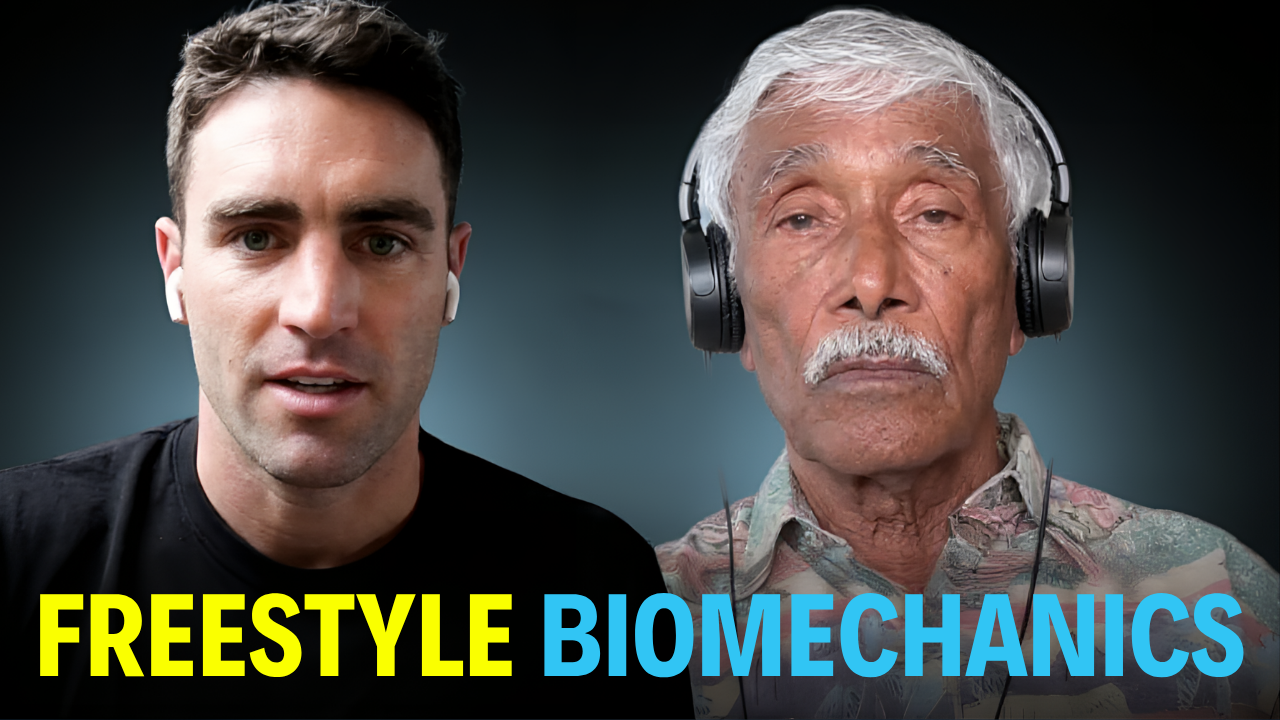








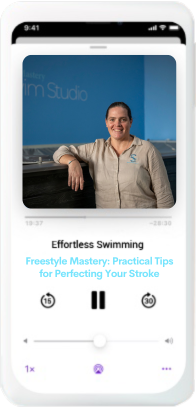
Join us on this episode as we sit down with Tracey Baumann, the co-founder of SwimMastery and author of ‘The Swim Mastery Way’. With over 20 years of teaching and coaching experience, Tracy has worked with swimmers of all levels, from beginners to English Channel swimmers. In this podcast, Tracey shares her expert insights and cues from her book, offering valuable tips to help you become a faster and more efficient swimmer.
exchange and calmness
Website: https://www.swimmastery.online/tracey-baumann
Instagram: https://www.instagram.com/swimmastery/?hl=en
Facebook: https://www.facebook.com/officialswimmastery
In this episode
- 00:15 Introduction and Background
- 04:01 Breath Management and Overcoming Fear
- 09:18 Teaching Swimmers to Breathe Using Their Diaphragm: Challenges and Solutions
- 12:18 How Often Should You Breathe?
- 18:20 The Role of Bones and Joints in Achieving Proper Body Position
- 21:58 Exploring the Relationship Between Hip Flexors and Body Position in Water
- 26:04 Teaching Effective Kicking Techniques
- 28:00 Over-Rotation and Losing Position: Common 33:35 The Trident Analogy
- 35:16 Shoulders and Scapula Mechanics in Swimming: Debunking Common Misconceptions
- 38:33 Tapping into Natural Joint Mechanics for a Better Catch
- 42:44 Developing a Sensory Connection to the Water
- 47:11 The Power of Tactile Feedback in Swim Coaching
- 48:56 The Physics Behind a Correct Arm Recovery
- 55:00 Get in touch with Tracey!
Buy the book here and save 10% using the discount code SWIM10:
https://inhousebookstore.com.au/products/the-swim-mastery-way?_pos=1&_sid=f59356e26&_ss=r
Links from this episode
- Change your technique and swim a smoother, easier freestyle with the Effortless Swimming membership
- Do you want to work with me personally to improve your technique? Join my swim technique coaching here
- View our freestyle clinic schedule around Australia
- Get 15% off our 8-week Faster Freestyle course by using the code 8week15
This podcast is brought to you by NanoClear — our own range of anti-fog swim goggles, designed by Effortless Swimming with the anti-fog treatment bonded into the lens itself (not sprayed on, so it doesn’t wear off after a few swims). Check out the NanoClear range here and use code PODCAST15 for 15% off.
Transcript
Read the full transcript
I personally believe it’s the only way that someone can continue to improve their swimming, is if they can really tune into that proprioception, that ability to know where they are in time and space in the water and to be able to feel both the inside of their body and the outside and the effect that the elements, whether it’s the air or the water, is having on their skin. Stay over rotate. Everything goes. The legs will go. We will never get it. If you’re over rotated, you can never get a catch. So really having that honed in and that amount of rotation honed in will really, really help the swimmers maintain that connected, long body position.
Tracy Bowman is a swim coach and co-founder of Swim Mastery. She’s also authored and written a book called The Swim Mastery Way. On today’s episode, I’ve got Tracy on here to talk about some of the things that she’s mentioned and written about in her book that can help you become a faster and more efficient swimmer. I think she’s got some really good insights and cues and takes on different parts of the stroke. And I think for anyone who is an adult who maybe didn’t learn to swim as a child, that there’s some very good takeaways from this podcast. Even if you did learn to swim as a kid, I know that you’re going to learn a lot from this episode that I did with Tracy Bowman. Let’s get into it. Welcome to the Effortless Swimming podcast. My guest today is Tracy Bowman. Tracy, you have a long history in swimming and we got in touch recently. We got introduced by someone who we both mutually know. And you actually, and I was sent your book as well and I’ve been going through that and
there’s some really, really good things to talk about from your book because I’ve picked up a lot from reading it. And I’d love to share some of those things on the podcast today because most of the lists of my podcast, they’re either triathletes, open water swimmers or recreational swimmers and they’re people who just want to get better. They love to focus on their stroke. And I think you’ve got some really good approaches to be able to improve. So that’s why I wanted to get you on a podcast today to share some of those things. So welcome to the podcast. Thanks very much. Looking forward to chatting with you today. Tell me about where your journey as a swim coach started and what got you interested in teaching swimming? Yeah, well, I think it’s probably like many people. I actually started off as a swimmer myself. So I was a competitive swimmer from probably about the age of five in Harari Zimbabwe and ended up competing my whole school career and then ended up
doing some triathlon. And it kind of just snowballed from there and started doing a little bit of teaching and just felt absolutely fell in love with being able to pass on knowledge. And basically, I think it started off that I just really like to tell people how to do things and explain how to do things. And it just was like, oh, I take my love for swimming and I get my love to tell people what to do and how to do things. And it kind of just evolved from there. Yeah. And 28 years later, here I am still doing it. And who would you say is your the people who you tend to work best with or who you really like to work with? Like what sort of swimmers are they? Where are they in their swim journey? I obviously work with lots of different people, right? But who would you say is your sort of specialty? Yeah, it’s a really difficult question for me to answer because I love working with all types of swimmers. I have a secret love for working with competitive
swimmers. And I was able to go to the Brisbane trials a couple of weeks ago. And I was just like, Oh, I love this world. And so I’ve done I do love love that. Well, however, probably the marathon swimming, the open water swimming world has become sort of my niche market. People wanting to, you know, swim for longer and better and stay safe and injury free and just, you know, be able to swim for longevity, learn great technique and do things they never thought they could ever do before. Yeah, it’s fantastic. And like I think about who I can help the most. I think it’s like your tri athletes who are maybe that two minute mark to 145 and they want to get get beyond that. And but it’s like, yeah, you love working with all different kinds of people because they challenge you in different ways. There’s different things that they’re looking to get out of it. And it can be enjoyable in a lot of different ways.
So in terms of someone who is looking to get into the pool, often one of those things is there’s a lot of fear of either open water or just being in the water and not getting tired. Like there’s that first element they need to get over. And I’m sure you’ve dealt with this a lot with people is how does someone go from being short of breath and being fearful and panicking to then just being someone who gets comfortable in the water? What are some of those barriers that they need to overcome? And then how can they approach it? And what causes them to tire so quickly and become pain? Yeah, lots of great questions in there. And I think it all comes down to the fact that we are terrestrial mammals, the fact that we are actually not designed to be in water, we’re not designed to survive in water. So before we even start, we have that natural survival instinct that’s saying, get me out of here. And all the bells and whistles
are singing and the alarm bells are saying, what are you doing? So there’s an element of having to calm that natural instinct to not put your face in water to begin with. And I like to really use what we call air exchange breath management as a way to really start working with people. And it literally doesn’t matter who comes to me. I tend to work with air management with everyone first. So really teaching people about how to breathe in with the diaphragm, not taking thoracic breaths, making sure that the breaths are quiet and calm, exhaling out through the nose and just teaching them air exchange mechanics really serves two purposes. One, it calms their breathing and gets them having that better exchange of the gaseous exchange in the lungs. But what it also does is it calms the nervous system. And once you can calm the nervous system, then you can start really working with the client, because until
that point, they’re shut down and not listening. So once we’ve got to that point, then we would start working on the actual stroke skills that will be needed for getting them in. But I often find that once they’ve started working on the air management, that they start to feel so much more comfortable in the water right from the get-go. Mm-hmm. Yeah, it’s such a fundamental thing to get right. And even for, let’s say, a more elitist, someone who’s got a lot more experience, even just learning how to manage a breath can make a huge difference. I recently did a session with a free diving coach. And one of the things that, probably one of the main things I’ve taken away from it is that he encouraged me every time at the wall in between a set, I might have 20 seconds rest. He’s just like, as soon as you can, just return back to nasal breathing. Feel like low first, and then you can sort of feel like the rest from there. But since I’ve been doing that for the last couple of weeks,
I’ve been able to just hold slightly faster times through sessions, and I’m not getting as tired as quickly. So he’s like, all right, you might be tired at the end of an interval, but just get rid of that carbon dioxide, just sort of blow it off, and then just return to nasal breathing as soon as you can. And to me, that’s been a massive hack in just being able to swim faster for longer. And I’ve swam for a long time, and I guess I sort of knew it was better, but I never really thought about it. But since I’ve been doing it, it’s made a huge, huge difference. So just breathing properly can go a long, long way for people of all abilities. And I think that what’s fascinating about what you just said is that you have been swimming for a long time, and you’re a really, really competent swimmer. And for everyone who’s listening to really realize that it doesn’t matter how long you’ve been swimming, that really coming back to
just the fundamentals of breath management can really help you. And something that we as humans don’t think about too much, because we wake up in the morning, and I don’t think we spend a single second throughout the day of thinking about breathing. So it’s quite a hard one for people to kind of get their heads around. But I think it makes such a huge difference in people swimming. Yeah, absolutely. And even sometimes with people, we’ll get them to just practice that they’re floating to start with, where we might get them to float in a ball, and we get them to take a big breath in, and then tuck into a ball and just see how they float in the water. But occasionally, I’ll get swimmers who, we wanted to take a big breath in, but they only take a very shallow breath in, and then they’re almost sinking in the water. Whereas everyone, if they’re taking a deep enough breath, they get enough air in, they’re going to float. But to me, that just shows that they’re breathing very shallow. They’re
using their upper lungs, they’re not filling up using their diaphragm. And that in itself, you can kind of see those faults that they’ve already got established there. Yeah. And the differences as well is in the body position when you’re taking the air into the thoracic cavity, so into the upper lungs, the whole weight distribution theory and the center of mass is different because the air is higher up, so there’s more weight behind it. So the whole way that the swimmer actually sits in the water changes, depending on whether they’re taking a diaphragmatic or a thoracic breath. So actually taking that diaphragmatic breath gives them a better body position in the water as well as all the other benefits. There’s so many benefits. And also it puts the ribcage into a better position for the scapulae to work with the arm mechanics and stuff. So there’s so many things that just a simple intake of air can actually do. I could talk for hours about it if they’re exciting.
Just on that topic, so once you teach them how to breathe using their diaphragm, one of the I guess one of the challenges that we then have is when someone’s swimming normally, they don’t have the same amount of time to breathe like if we’re just kind of slowly breathing in, breathing out on land. So how do you then make that transition from teach them to breathe using their diaphragm to then having them swim and breathe in a similar way because it’s all happening a lot quicker. Yeah. Yeah, it’s another really great question. I think that the important thing is to help the swimmers to realize how little they need to inhale. You know, you typically don’t know, you’ve probably experienced this so many times in your career where you hear, you can hear people breathing. So you can hear them go, you know, and they take that really big deep, what they perceive to be deep, which actually means thoracic and actually
high in the chest and breath, and they overfill. And, you know, I say to people when you take that deep breath, actually all anyone ever wants to do after that is just let it out. Whereas if you explain, if we explain to the swimmers that they’re taking much less air than they think they need, because as you just said, they are doing it more often, then they can just take that really quick diaphragmatic inhale that’s really quiet. And then they as soon as they put their face in the water, they start to exhale out through the nose. And then as they go for the air, they do a bigger exhale just before they inhale so that they have that circulation of air happening. And they don’t kind of get filled up and then get to the end of 50 meters and go, oh, I need to just stop and get rid of all this carbon dioxide. That’s really important that they learn the cycle of inhale, pop, pop, pop, we call it just like little just a bubble, bubble, bubble out and then exhale. And then the inhale
almost just happens, the diaphragm creates a vacuum and they just as soon as you exhale, the diaphragm will just almost suck the air in for them. And it’s, it’s the amount of air that they take in that actually makes them be able to do it for, you know, across the channel, for example, and not just be able to do it to 50 meters. I love that point. You can sometimes hear people breathing and it’s can just be so forced when you hear someone who’s really struggling for it, you hear them forcing it in, you hear them forcing it out, you can hear them, you know, breathing out really loudly and it just doesn’t need to be that much, that much in and out like I picture it as though someone’s just going for a stroll down the street. It’s like you don’t see them breathing excessively in and out. You can have a breathing a similar way when you’re swimming. And in terms of that exhale, it’s like a, that doesn’t need to be overly forceful either.
It’s like blowing out a couple of candles and that’s it. You’re blowing out the whole birthday cake. It’s, yeah, you know. Exactly. Like that. And then in terms of how often someone should breathe, what’s your, what’s your perspective there? Should people be breathing two, three, more than that? And what’s appropriate for different situations? Yes. So it’s the question that we get a lot. I’m sure you get it a lot. I get it a lot. Everybody wants to know how often shall we breathe? The reality around it is a lot of, the answer is going to depend on tempo. So the slowest someone is the tempo, the slower tempo someone is swimming, obviously the more often we’re going to want them to breathe. But if you look at it, and I’ve said for years, my advice has always been breathe every two, but breathe every two equally on both sides. So, you know, I always say to my swimmers, pick a breathing wall and always just breathe to that wall. So you know,
you’re practicing both sides equally, you’re getting air every second stroke. And it’s been really fascinating to watch the elite swimmers over the years. So we’ve been saying this for reasons, I don’t know, 2010. And now we look at the elite swimmers, and it went through a period where just the men, the elite men, the Olympians were breathing every two. And but quite a few of the women were still breathing every three. And now, you know, I said I went to the Brisbane trials a couple of weeks ago and pretty, pretty much, and there’s always, there’s always anomalies and people outside the box, obviously, but pretty much across, across the whole afternoon that I was there, every single one of them were breathing pretty much every two. So I always say if they’re breathing every two, there must be a really good reason to breathe every two. And the reality around it is the difference between breathing every two and every three is, is something between you get
13 breaths per minute breathing every three and somewhere but over 20 breaths per minute breathing every two. And our muscles need oxygen to work. So we just kind of do the maths around it. And we want to give our muscles what they need. And we want to stay oxygenated and we want to keep that going. So I always suggest breathe every two, but equally to break both sides. So I never condone just learning one side, because obviously they create an asymmetry in the stroke. What do you suggest? Very, very similar, very similar. I mean, there’s just such a hesitation for a lot of people to breathe every two because they have learned somewhere that that’s wrong. And yeah, and it’s just breathing too, too much. But I mean, I put like, I think of my own swimming personally, like if I’m, I can breathe every three or maybe every four, if I’m going at 70% or lower, I’ve got to be going pretty, pretty comfortable to hold it. Anything above that, I’m going to really struggle to hold that
over longer distances. And yeah, and so it’s just yeah, breathing every two, there’s nothing, nothing wrong with it. And yeah, you can even mix it up like you can mix it up within a lap, you can mix it up within a session if you if you want to. And so if you’re in a 50 meter pool, I don’t mind if you go maybe every two off the wall, then maybe you do a couple threes if you want, then you can go to back to two as you go into the wall and then hit your turn and repeat. But it’s the turn takes a bit out of you. So you do, you often either have that too. And you look somewhere like the 400, 800, 1500 meters from us, they will breathe, even they’ll go left, right into the wall, right. Yeah, into the wall. And even sometimes off it as well.
Exactly. So yeah. And like there’s I think the women’s 400 short course record, I think it’s the Chinese, she was breathing the I think the last three strokes into the wall, and then maybe even the first two strokes off the wall. So everyone. Yeah. So it’s just to show, right, that we need oxygen. And I think I think the fear around it is that a lot of people are learning freestyle technique. And that’s, you know, we’re focusing on freestyle here is, and they learn great freestyle technique, but their breathing always gets in the way. So they try and avoid it because they want to stay streamlined. It slows them down. They don’t like it. It doesn’t feel great. And my advice to everyone is the more you practice doing it, the less uncomfortable it’s going to feel. So do it more, not less. And make your breath fit into your stroke. So there’s no difference between your freestyle stroke with breathing or without breathing. And then you
can breathe as many times as you need, because it doesn’t interrupt your, your rhythm, your stroke, your technique, your pattern and so on. Yeah, very true. There’s only, there’s only so far you can swim before you’re going to have to need to breathe, breathe regularly. So yeah, if it’s, if you’re breathing, stuffing up your stroke at the moment, then, you know, just, if you can figure out why that is, and then trying to make it so your breathing just fits in with it, like you mentioned, then long term, that’s a much better plan than trying to avoid it. I do like, and I think I was reading this in your book is, you know, it can be good to, if you’re doing 25, for example, maybe you push off the wall and you do your first six strokes or seven strokes where you’re not breathing, just so you can focus on your technique. And that’s why we use snorkel occasionally, just to be able to focus on the stroke and
take the breathing out of it. So there, you know, there’s times where it is appropriate to breathe, to breathe less, but just in a general sense, I think every two is the way to go for most people. Yeah, for swimming, when we’re practicing technique, I actually take breathing out of the equation all together. And I get them just to practice the technique without breathing. And then we put breathing in and, and sit it together. So we kind of take the stroke along and put breathing in with the stroke technique rather than having a separate breathing stroke, because it’s such that the brain just will learn much quicker if it can just kind of get on with it and doesn’t have to take the brain away to survival every, you know, every second or third stroke. So yeah, absolutely. We do a similar thing in clinics with quite a bit of snorkel use so that they can just focus on the task at hand or they can focus on maybe what their arms are doing or their rotation and the breathing
will come, will come separately. Now, in terms of body positions, obviously a big one and the next thing we want to go on to there and just learning how to hold the body and how to let the water support the body as well. So what, what sort of things or cues do you find it really useful for helping someone learn how to use the water to support them? Yeah, so I think that the, the biggest hurdle for swimmers is our human body makeup. It’s a massive hurdle for freestyle swimming because we have such a big hinge at the hip area and we’re horizontal and we’re lying on our gravity and it’s pulling us down and, you know, everyone’s fighting to keep those legs up behind them. So what they typically do is they’ll pop on a pull buoy or a buoyancy shorts and they’ll keep the legs up that way. And obviously when they then come to do their race or their event, you can’t have them and it becomes, it becomes a little bit of a battle of wills.
So what, what we try and do is we try and teach them how to connect their legs to their torso so that they have one long vessel rather than a vessel that breaks in half. So I, I equate it to sort of like Lego pieces. So they have a Lego piece for their legs and a Lego piece for their torso and then we find the connecting piece so that the, you know, everything works, works as one. And so what we want to do is we want to make sure that the pelvis is in the right position. So I talk a lot about bones and I never talk about muscles. I talk about putting bones and joints into the correct position and the muscles are attached to the bone. So it’s great when you put the, move the bone, all the muscles around it are going to do their thing and it’ll we’ll get more muscles hopefully involved because they’re all attached. So what we want to do is we want to create length through the body. So I work a lot with analogy. So a lot of my cues
are, are getting people to think about doing something and moving, moving bones and joints into certain directions to create connections. So my favorite cue, I think that, that I use to do this is I get them to imagine that they’ve got a book on their head to, to set the correct head position. And then I have them just imagine that they are taking that book away from their feet and sort of getting air in between each one of their vertebrae in between their hip bones and stuff and just really putting space between that. And what they tend to find is that all the muscles around the core area, recognizing that the core is all the way around and huge. It’s, it’s not just made up of abs, which many people think. And that then sets this beautiful long sort of head to feet line that then allows the water to support it because it’s one unit rather than lots of moving parts. And obviously the moving parts get in the way and the one unit just
sits beautifully in the water. And then you add the breath into the right place within that unit. And you have a much better idea of balance. And then obviously we go, we go on from there. So that’s where we start. Yeah, that’s great. I was just doing analysis before this call of a swimmer who there, there was very little connection from the top half to the bottom half. There was kind of screwing, screwing across like that. And, and that’s why it’s always great. I think just to start with how you holding your body and how you’re thinking of that. And it’s very easy to go skip over that and go, let’s, let’s focus on the kick. Let’s focus on the arms. But if this isn’t, if this isn’t together, if that’s not one unit, then nothing’s going to connect up very well. And you’re going to be working, working very hard against yourself.
What about in terms of a lot of people that I work with do have tight hip flexes? Obviously that can impede things, but do you think it can stop someone from being able to get into these positions and hold them? So I think the, my question would be is why do they have tight hip flexes? And are the, are the hip flexes tight on land or are they just presenting as tight in the water? Because often what happens when someone goes horizontal in water, because they, you know, probably subconsciously know that they have to keep their legs up, it often makes them try and try and keep their legs up. And it actually anterior tilts, tilts their pelvis, which then will shorten the hip flexes, which then makes it harder for them to connect into leg mechanics for an effective, for an effective, what we call flutter. So that would be my first question. So my question then would be, let’s see what movement they’ve got on land with, you know, getting that length from, from their head away from their
feet and then seeing what they can do with their pelvis and just see if they can tap into length through the hip flexes on land and then give them the cues in the water to, to maintain that length. And as soon as they feel that comfort level that they will most probably let go of their hip flexes because they’re not trying to keep their legs up. So I think it’s about how we talk about it. The legs will stay up if we change the relationship between center of mass and center of buoyancy by putting the body into the right position, including, including the arms. And that then releases the legs to do what they need to. If that’s not in place, then the legs are kind of then, like you said earlier on, they’re trying to stabilize and get in the way and that will shorten the hip flexes. I’m not sure that answers your question, but I think it’s, we work from the inside out. So if we get that inside, then the outside will react differently. If we don’t get the inside, the outside will
continually be stabilizing and shorten the hip flexes as an example. Yeah, good. That, that makes a lot of sense because I, you know, so we often use the, the cue or we think about the head’s relationship to the, the legs and we want to make sure the head’s not too high because that can obviously drop the, the hips. But sometimes we see people bury the head and then they, you know, we talk about just lean on the chest or press that in because we need to use that to support us. But again, sometimes people can just try and they lean down too much here and it causes the hips to bend. And then they’re kind of sticking their bum out of the water, but they’ve, they’ve broken that, that line halfway through their body. So I see, they’re, they’re, they’re pelvis in that point as, as they have anterior tilted them and they just collapse. That, that’s interesting, you know, to say, yeah. And it’s, I see it as almost trusting. It’s like, you’ve just got to trust that if you hold the body
as you’ve explained there, that you will actually float better and sit better in the water rather than, yeah, trying to, to do too much of those other, other couple of things. So I think in a way it can be a bit counter, counterintuitive because people are trying to get their hips up. So they stick their bum out, but then they, they broke that chain. And it has the opposite effect. So a really good thing to do is give the body something to do in the direction of travel and in the direction that the joints want to move. So, so what we do is, as we send the swim off, I say to them, send your, your head or your books or, you know, where they, where I’ve told them their book is their head away from their feet forward. Then what that does is it creates the length in the body that they are feeling when they’re doing the standing rehearsal on land and then moving and sending the joints away from each other.
And it keeps the, keeps the connection, but it also keeps them thinking about movement rather than static because statically, they’re never going to stay balanced in water. They have to do it with movement because of physics, right? So it’s an interesting thing to observe by telling someone to, to move their, their head away from their feet and noticing how much easier they can maintain that connection through the body and therefore then their position in the water. And then as you’re introducing the, the kick after you’ve sort of introduced that, that body position, how they, they hold it. What are some, some cues or, or things that you’ve learned along your years of coaching on maybe how not to teach it or, you know, good ways to, to explain it, to, to get people to kick effectively and have that flatter, as you mentioned earlier. Yeah. So, so the first thing I do is I call it a slaughter because we want the,
the swimmer to tap into the, the hip flexors, the glutes, the abs, the obliques, all, all, all, all of those muscles rather than just their quads and hamstrings. As soon as they tap into quads and hamstrings and they’re trying to think about moving their feet, then that’s going to anterior tilt the pelvis and they’re going to collapse and lose, and lose their legs. So we, we talk about using the flutter and I talked to them about imagining that their whole leg is, is, is one unit and that they want to flutter with the whole, the whole unit. So I get them to really focus on moving the thigh bones. I just keep the language simple. I mean, we could go into all the actual names of bones and stuff, but I want people to know what we’re talking about. So I just say move the thighs behind the body line, front of the body line at quite a quick tempo. And what happens is it then uses the bigger muscle groups and it helps them to use the whole
leg for their flutter rather than bending at the knee. And that helps them keep that length in the hip flexor and the connection to the torso while they’re doing the flutter.
Good. So you’re talking about, well, you’re getting them to use that upper part of their leg. And then if they just go back and forth from the, from the pelvis, then, then that’s naturally going to create that bit of a flutter as opposed to maybe thinking that they’re the feet. So you’re starting at that point closer to the, to the middle of the body really. So the middle of the body. Yeah. Yeah, good. And then, and then with, with rotation, trying to get someone to maintain that, that position, but doing it as they’re going side to side, what sort of, what sort of things are you seeing people want to do that might be causing them to either rotate too far or lose their position and then how do you sort of bring them back and get them to, to hold that position as they go left to right. This podcast is proudly sponsored by Form Smart Swim Goggles. Form have recently released their new Gen 2 version of the product, which includes an integrated heart rate
monitor, as well as a swim straight digital compass for open water navigation. They’ve also updated the eye seal. So they’ve got a new proprietary eye seal that accommodate a wider variety of facial structures and they ensure for a more comfortable and secure fit. I’ve been testing these new goggles for the last couple of months. And I’m a huge fan of the new heart rate monitor. This is the first time that I’ve been able to see my heart rate in real time when I’m swimming. And that’s allowed me to adjust my effort and my output based on my training zones. So if you’re a triathlete or someone who wants to make sure that they’re not going too hard or too easy within a session, this is a really good way to do it. You can see your heart rate in the top corner of the goggles. So it’s always there right in front of you. And that can make sure that you are actually training in the right zone, where I find a lot of swimmers do go either too hard or too easy.
So this has been a real revelation for me in terms of the effort that I’m actually putting in when I’m going at certain speeds and certain paces. So if you’d like to grab yourself a copy of the new Gen 2 version of the Form Smart Swim Goggles, go to formswim.com forward slash effortless to get yourself a pair of the new Gen 2 goggles. If you’d like to get the Gen 1 goggles, you can save 10% going through that link at formswim.com forward slash effortless. Yeah, so it’s such an interesting question. I did a Mastery Monday and we do every Monday we do a Mastery Monday. I did Mastery Monday this week on the streamline position. And I think that the first question I ask everybody is where do they think they should be rotating to? And often when I say to someone, so I’ll say to my students or something, I say to them, if I were to put you on the floor in your streamline position, in your rotated position,
what parts of your body are going to be making contact with the floor? And 99 times out of 100, they show me the side of their body. Nine times out of 100. So already I’m now inside their brain knowing that every single stroke they do, they’re going to end up on their side over rotated. So the first thing that I do is I have to change what their brain thinks they should be doing versus what we need them to be doing because we don’t want to go up on our side because A, it takes too long and B, when I go up on my side, I’m just going to sink like a knife through butter. So we want to get the rotational angle by talking to the brain about how far we should go. So we talk about what parts of the body are going to actually make contact with the ground when I’m in my rotated position and it changes the whole way they think about it. Because as soon as they over rotate, everything goes as the legs will go, we will never get it. If you’re
over rotated, you can never get a catch. So really having that honed in and that amount of rotation honed in will really, really help the swimmers maintain that connected long body position. And then the flutter just becomes something that just fits into it and is a diagonal movement, depending on whether they’re in their left streamline or their right streamline, they’re always fluttering in the same direction as the rest of the body. That’s a great way of doing it. And where I guess you’d see someone, if they were lying on the floor on their side with the correct rotation, it’s like it’s kind of through the front here. Correct. Like it’s not on the very edge there. It’s their pecs, pecs front to hip bone and front side to thigh. Yeah. Yeah. Yeah. And then the way I sort of see that working for people is that whenever we do a side kick drill, sometimes we’ll use like a little on core kickboard, just a mini kickboard, put the hand on top just to press down there.
And the swimmers that hold that position really well, they’ve got the opposite shoulder out of the water. And those would be the contact points. And the other two sides of that is people will either be very flat and there’s no rotation and they think they’re rotating. And then the other people are just twisted on their side and they’re way too far. And usually when we, because we do the analysis first, we’ll see them. Usually how they swim is how they’re going to do this side kick drill. And yeah. And so my suggestion to them is, yeah, exactly. And if you can make this change in the drill and get the feel for what you need to be doing here, that’s probably going to be the first step at actually making changes to your swim stroke. So just be aware that any things that aren’t ideal in your video, that’s going to come out in the drill. So just be mindful of that and see if you can get into that better position when we do these drills.
I think the really good thing about Streamline as well is what’s happening to the head position because as soon as you over rotate, you cannot maintain what I call the non-negotiable hull of your boat. If you like middle, middle prong of your trident, whatever you want to call it, but as soon as you over rotate, the head will go offline. And if that head is offline, then the swimmer is not going to swim in a straight line. It’s physically impossible. So it’s a really, it’s another good sort of indicator or feedback loop is, is my head, am I having to strain to still see the bottom of the pool or is my head going offline or one side or the other. And can you explain the trident in a bit more detail because this is again a good cue or a good kind of analogy for people to use, I think. Yeah. So I sort of have the idea that from the top of the head all the way down to the feet and coming out through the top of the head is kind of the middle prong of a trident.
I just say to everyone that it’s a trident that’s parallel, that’s got parallel prongs, not the typical one you see on the cartoon because otherwise we’re going to have people swimming all over the show. So they’re parallel. And then the other two prongs of the trident, so the base of the prongs come across the shoulder line. And the other two prongs actually come out through the middle of the scaps. So yes, they do end up, they start at the scaps and end up out through, I always say the middle finger. But and the middle prong is the one that’s got the whole pole all the way down to the floor. So it’s a really good way to make people really understand that if that middle one isn’t there, the other two can’t be there because there would be no trident because there would be no middle pole. And so then we have a queue that gets people to really think about going middle and right, middle and left, middle and right, middle and left.
So they’ve always got that parallel going on. And it’s always happening from the middle line and the scaps out through the through the middle finger rather than thinking of the streamline as left and right on its own. So that’s where the trident analogy came in. I have some really crazy analogies. The crazier, the more memorable. So that’s not a bad thing in my books. Yes, that’s what I say. And just with the talking about the the scaps, so a common misconception that I that I get from people is that the thing they ask is, should I keep my shoulders down and back the whole time when I’m when I’m swimming? And the answers obviously like do not do that. And you can see if someone is doing that because they swim very short and they’re not getting any any form of catch. So what what’s the relationship between good, good length in the stroke, good reach and also the catch in how that ties into how your scapula is moving? Yes, another really great question.
And it always comes back to what are the rest of the joints doing? So we can talk about scaps. But when we talk about scaps, we have to think about the relationship between the scap that slides up and down the rib cage, the rib cage, the effect that that has on both the pelvis and the skull and obviously all other three and 60 joints in the body. So what I always say is that yes, we want the scap to be sending this forward, we want to have this beautiful ability to slide that scap along the rib cage. And the only way that we can do that is if our middle trident is in place. So soon as I think about putting my shoulders down and back, if you were to just do it now, just feel what happens to your rib cage, it pops the rib cage as soon as that happens, it affects what my my head is doing. So my my ability to tap into the scapula mechanics lies in my ability to maintain my middle trident. Once I can do that, then I can tap into the the scapula and I can use that to get a length. I
like to use the word length that goes as far as I can keep my middle trident because as soon as I go too far, it pops my rib cage. And I lose my middle trident. So there’s a there’s a sweet spot and it’s the same for every it’s it’s the same sweet spot for everybody it might look different for everyone depending on their mechanics, but everyone can find it because if I reach, then now I’ve pulled everything I’ve lost everything. And if I push it down, then I it affects my skull because now my rib cages has popped. So it’s the relationship between all the joints that allows me to tap into those great scap mechanics and shoulder girdle mechanics to get that amazing catch. That’s that’s a great way to explain it because often we’ll see people will sometimes be rounded and hunched through there. And you just cannot you just can’t let that shoulder move in the right way if they’re hunched like here. And again, I did an analysis just
before we jumped on the call where some lady was saying, Oh, look, I just feel like I’m not getting as much strength or power through my catch here. I can feel my lights working in the in the gym when I do this catch and it just feels really weak when I’m swimming. And we have looked at her position, her head she was burying her head so she was just too deep below the surface hunched over. And so she wasn’t reaching well and wasn’t catching very well at all. And so she just wasn’t tapping into those stronger back and shoulder muscles and back through that that movement. So you’ve got to always start from your right you’ve got to start from the head on head on down, keep that there. And then you can start to get those other things right. So now going through the through the catch, a lot of coaches will explain things differently, use different analogies. What are some ones that you found to be really
useful and helpful for then explaining that part of the stroke? Yeah, it’s always the first question, how many people have come to you? And they’ve said, Oh, do you know what, I’ve got this swimming thing, I’m really I can swim, you know, I’m really good at that. But what I really want to know about is how to catch. And you’re like, Yeah, I’m not going to tell you that just yet, because we need to build up the middle first in order for the extremities to work. And what’s so exciting. And I was talking about it just this morning, I’m in the middle of running an advanced coach training course for some coaches. And I was talking to them today. And I was talking to them about the progression of catch and how we how we teachers. And I said, I can’t even remember the last time that I ever used this progression because we don’t need to, because when you set up the middle and you work from the middle out, and you put the joints into the correct position, and you allow the joints to
move and you give the correct use and you give direction of energy and momentum, then what happens is the body taps into its natural ability to catch and hold. If I put my body into a correct streamline position, and then I want to think about holding, it’s going to create the position as a byproduct of setting it setting up the correct joint mechanics. So it’s a really tricky question for me to answer because I often don’t teach it because it often just happens. So what I often do is I tap into getting people to feel the water and feel sensation so they can tap into their natural joint mechanics more, but that only works if I’ve set up the streamline position and the middle trident position correctly first. If I was to teach it kind of step by step, like I was talking to the coaches about this morning on the coach training course, I’m going to get them into their streamline position. I’m going to get them
really connected with their scaps and I’m going to teach them how to fold and imagine folding and holding on a rung of the ladder or over a ball or a concrete slab or something and teach the swimmer about the fact that the catching side is stationary and that the body is going to move past it and that they’re never bringing this back ever. They’re just holding on and moving along and holding on and moving along and so on and so on and so on. So that tends to be how I tackle catch. A lot of good points there. So one thing you mentioned was the fold and hold. So I think that’s a reading that in your book. That’s a good way to think about what needs to happen at the elbow because really common thing is people lock the elbow out and they’re very straight through that part of the stroke and they just don’t hold much water at all when they do that. So folding the elbow and then the hold part is we’re not looking to muscle to
pull our hand through the water. We need to hold it and think about that anchoring and just moving the body past it and I think that’s a good reminder either a good reminder for people or a good thing for them to know that what’s moving forwards is your body but with the ideal catch your arm is not going to move. Now it’s obviously going to move but we don’t want it to. That’s what we’re working towards is just having it stay in that same position. So getting as little slippage through the water as possible and then I think that takes a lot of the pressure off people trying to pull themselves through and if they relax more then they can hold a better position. Hold more, yeah. Because otherwise if they’re trying to be too forceful with that first part of the stroke they end up compromising their position because you just don’t move as well if you’re tense and muscling it. Correct yeah it’s and the synchronization goes so then it just throws the whole stroke out the next stroke
then they just become they lip they end up limping when they try and pull themselves along like I call it limping. And what about having people tune into their either the sound of their swimming or how they feel in the water because I think building up that body awareness for people can go a really long way but it’s just something that there’s a lot of sensations happening when you’re new to new to swimming and so it’s not easy to do that but what’s your what’s your guidance for a lot of people in terms of developing that feel and the body awareness and those sorts of things. Yeah so I personally believe it’s the only way that someone can continue to improve their swimming is if they can they can really tune into that proprioception that ability to know where they are in time and space in the water and to be able to feel both the inside of their body and the the outside and the effect that the elements like whether it’s the air or the water
is having on their skin and the better they can become at that the better they can become as a swimmer because they they have more control because they have more awareness. So I start building that awareness if we we do the same drill that you do with with the breathing and right from that position there I’m getting them to tune into so when I get them to take in a nice diaphragmatic breath and they slope in the ball I get them to start one of the things I’ll get them to do is start to feel where they can feel the water on their back and where they can feel air on their back and then I get them to just bubble out and just get them to feel what changes what’s cold cold and wet what’s warm and dry you know cold and dry warm and wet and that starts to really build in the awareness of tapping into the elements and then when we start doing some of the cues like send your head away from your feet I’ll get them to tune
into different parts of their body and tell me how it feels different and if they can’t tell me how it feels different then what I’ll get them to do is I’ll get them to do it how they did it before so i.e. let’s say like you were saying trying to keep their bum up and they anterior took their pelvis and then I get them to send their head away from their feet and then they get the contrast between the two feelings and the two sensations and that allows them to then tap into the feeling and give me some words so with my clients if they we carry on until they can give me a word because if they can’t give me a word they can’t take it away if they can’t tap into the sensation they can’t go and practice it they’re just practicing random stuff so it’s a really important part of of of what we do and it annoys some people because they’re like I don’t know how it feels I’m like here we’re gonna find out and we’ll
just discover it together so yeah but having them have to stop and and think about it is what it’s really the only way to actually have them build that that awareness and and something that’s worked really well for me in the in the clinics we run is after certain sections in the the clinic I’ll get them to stop and I’ll I’ll ask more we focused on these three things okay one of these is probably more relevant based on your video let’s say it’s head position how does that feel when you make that change and what change did you make and share that with that person in your in your language and then they get that because if you just go through an hour and a half of swimming and they haven’t stopped to actually digest it and talk about it they’ll unlikely to remember very much of it and so one of the best things that I I learned I actually went to a course where the the guy was he taught teachers how to teach
and one of the things I learned from him was was this it’s like all right if you’re going through a lot of information get people to stop get them to chat about it and then they actually retain that a lot better and actually learn things a lot better and I find that really useful is yeah stop ask some questions get them to articulate it and then it really helps them go from that feeling to verbalization puts it into the brain so but yeah that’s really really great that you do that in your in your clinics they’re ready to take it away one of the things you mentioned when we jumped on a call a couple of weeks back was having the tactical getting people to change things like it can be great to have them tactically sort of you know feel feel things so if you’re if you’re having trouble making a change to stroke how can you have that person you know be more tactile with the thing that they’re trying to to change so could you talk a little bit about
that yeah so tactile feedback is is I think the most powerful that that and video analysis are the two most most powerful tools I think we could we could ever have as as swim coaches so what when I’m coaching I’m always in the pool with the swimmer and I’ve always got my hands on either their fingernails or their scalp or you know they’re the top of the head or in their oxy oxy put just just here at the base of the skull or you know all all over the show and even when they’re doing the standing rehearsals because our touch sensation is so powerful and it’s like we can give messages directly to the body and we can bypass the swimmer’s brain by by using our hands and we can also pass on that information to the swimmers I think you know in in my book often I’ve got on some of the the rehearsals is you know for example when I say to people you you know find the bottom of your scapulas I’ll just get them to take their
thumb behind their back and just by doing that it kind of pops the bottom of the pops the scap out and they can feel the bottom of the scap and then I say use the bottom of the scap there and then just squeeze your fingernails and then just have the thought that that that place that you touched on the scap and the sensation of just squeezing the finger the actual just the nails it seems really weird but it really works and just send that to to the ceiling puts the body into exactly the correct position that we want to to be put in and and I don’t even have to think about the brain because I’ve touched the parts of the body and I’ve connected the scap to the fingernails and made it one year and I’m just using this as a as an example so it’s a really powerful tool to use tactile feedback both on your swimmers but even for your swimmers to use on on themselves yeah that’s great I really I really like that one and another good cue that you used was in the book about I think you
called it opening the gate that for that for the recovery so something that that’s very common that I see is we have this thought of a high elbow recovery and quite often that means when people come out of the water they bring their arm out very high right alongside the body and in this really awkward and uncomfortable position for the shoulder and then it makes then it kind of stuffs them up over the top of the water and it makes it hard to then keep their balance and keep their trident as you’d say and it can really throw a lot of things out and like generally I generally I would be thinking the recovery doesn’t matter that much but if it’s ruining other parts of the stroke and causing you to lose your alignment then it does matter so yeah it matters to a certain extent so could you talk a little bit about that that recovery and that cue and and how you teach how you should come over the top of the water yeah so I could speak
for hours on recovery because I think that it’s probably one of the most important parts of the stroke because when we think about just from the fifth a physics point of view as soon as we take any body part out of the water it instantly becomes 10 times heavier than it just was in the water so we can then understand why the recovery has such a huge effect on the body position under the water because we’re in an unstable environment we’re on an unstable medium so if I lift something up here and I’m on an unstable medium here then there’s going to be a whole lot of stabilizing going on under the water to to counterbalance whatever I’m doing with my my arm above the water so it makes it then really important to make sure what’s happening above the water it’s going according to plan so that I don’t have to stabilize under the water because I always will it’s the third law of motion right so it’s really really important a from a shoulder safety
point of view which you know is probably one of the things that I’m not just shoulder safety but injury prevention per se like it’s very attached to making sure that swimmers are swimming safely and they aren’t putting themselves into compromising positions that they could get injured from but also from a physics point of view that they have to create this arm recovery that’s wide and and safe so that they’re working within the frontal plane of the shoulder and they keep that shoulder joint really safe and they can tap into larger muscle groups as soon as they take it behind them they the shoulder joint gets stuck in that in the shoulder girdle and then they have to do some kind of weird thing to clear it to get to get the the the hang forwards so it’s always an interesting thing because we talk we hear a lot about people wanting to create a high elbow arm recovery the reality around it is when we create a a correct arm recovery it should
just be a dead straight line from this shoulder to this elbow the thing that’s making it look like it’s a high elbow recovery is my rotation but actually the arm recovery is just a straight line so having them think about one of the cues we use open the gate is really having them think about taking the inside of the elbow out away from the rib cage so that they can keep this joint safe but also so they can use the arm recovery a bit like a stabiliser wheel on a bicycle because it’s happening low and wide and that then creates less need for stability in this unstable medium in your streamline side so that’s kind of the thought and then we can maintain the middle and left trident if you like while we are opening the gate or and recovering this arm on this side as well as that we’re also shifting weight and sending weight in the direction of travel so it gives us kind of free speed and helps us tap into tap into that rather than sending
weight behind us which obviously is going to upset that that center of mass as well that’s that’s good i i’ve used some similar sort of cues i’ve talked about i just i’ve i have called it an open recovery compared to a closed recovery where we’re thinking like closed armpit we want we need open up or underarms water need to open underarms under the water at the front as well in in terms of the like the momentum that you get over the water your arm weighs i don’t know a couple of kilos and then when you’re swinging it around over the top you can really get good good momentum over the water and carry that through it’s that free free speed and when you see someone who’s not getting it who throwing themselves off balance and they’re coming way behind their body like you really notice it and it just it does impact how well they flow in the water so yeah it is if you get it if you get it right you notice a big a big difference and i’ve i’ve tried to turn that thought of a
high elbow recovery into like the point that’s high it’s like i think if the elbow is pointing mostly to the sky as you come through in that that middle part okay that’s that’s what i’d think of as a high a classic high elbow recovery but yeah certainly not coming literally high over the water with it yeah i think that’s where people get get thrown off and yeah there’s a lot of good footage and photos from you know Olympic trials whether it’s the american ones the australian ones and if you look at some of those footages yeah the shoulders the arm or so the upper arm that is it’s pretty much straight over the top and when we look at the footage of a lot of swimmers sometimes they’ve got these weird angles going on you gotta not surprise you haven’t you know you haven’t had some shoulder issues and quite often they have and you can show them exactly why that’s that’s happening yeah it’s so great if we can spend time just helping people
minimize shoulder injury and swimming then that’s a that’s a good day for me yeah too much injury and swimming yeah and it’s thousands and thousands of repetitions and um force being put in the wrong in these in these awkward positions as well so yeah there’s a there’s a lot of things that when you slow it down and you look at it it’s very obvious why people have shoulder issues in in swimming so it’s not yeah it’s not usually a surprise when you actually look at the stroke so well Tracey this has been excellent i think we could go on all day and i’ll love to get you back on the love to get you back on a podcast because i love learning from from coaches like yourself who are there in day in day out you’ve worked on this stuff and thought about this stuff a lot and to actually put together a book on all of this and you have to know your stuff back the front so for those of the listening we’ll put the links and and i think you’re going to let us know about
a discount code as well in the show notes so if anyone would love to to grab Tracey’s book the swim mastery way you can do that we’ll put that in the in the links but where else can people follow you and find out more about what you’re doing Tracey yeah so swimmastery.online is our website and then we have Instagram and Facebook which are called just swim mastery and then yeah i’ve organized a discount for all of your followers for the for the book and get it on amazon but there’s also another site and i’m just going to quickly look it up because i can’t remember the name of it called thereallygoodbookshop.com.au and we will give you a 10 discount code that you can put in there if you if you want to go on to on to that website well i think you’ll be able to send links out yeah we’ll put that in the show notes so Tracey thanks very much and i’m looking forward to getting back on i love chatting about this stuff because that’s what i
think about every day so and i love just love getting different ideas and different cues and perspectives on things so i really appreciate your time thank you my absolute pleasure thank you for having me thanks for listening to the effortless swimming podcast if you’d like us to help you become a faster more efficient swimmer go to www.effortlesswimming.com