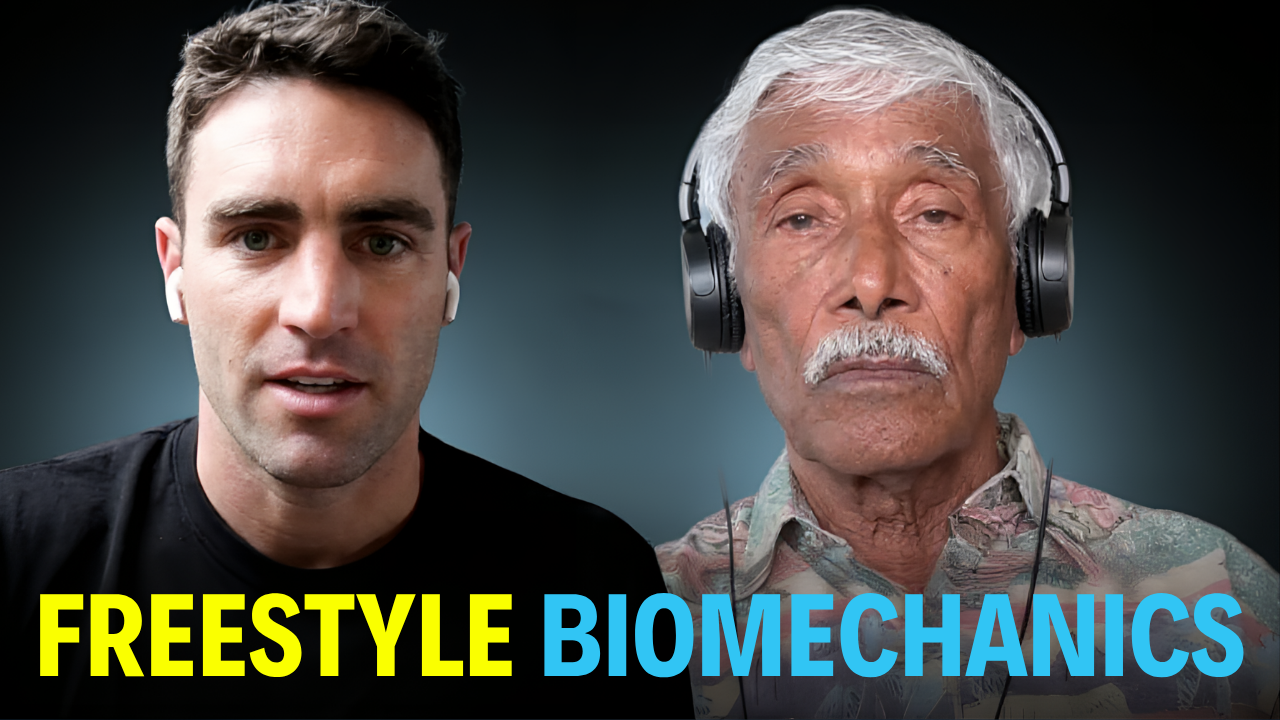








My guest today is Simon Hearn, who is a professional triathlete whom I’ve known for a couple of years now. He turned pro in the last two years and I want to get him in the podcast to talk about that journey and a little bit about his journey in swimming.
01:49 Start Of Triathlon Journey
03:35 Turning Pro
05:54 Impostor Syndrome
08:16 Placing 4th On A Full Distance Ironman
09:27 Swimming Background
14:16 Training Surges
16:42 Prescribed Pace
18:23 The Gap Between Effort Levels – Developing Gears In Between
26:02 As A Physio
30:44 Mobility And Stability Work
37:37 Being Conscious In The Water
39:29 Motivation
41:35 Begin To Be Comfortable Being Uncomfortable
Join the 5 Day Catch Challenge:
Join the Effortless Swimming membership:
Effortless Swimming Freestyle Clinic
Transcript
Read the full transcript
it’s good just to like give yourself at least a couple of laps where you’re just going way outside anything that feels like that feels acceptable with your stroke and just sort of see what happens with it because I mean I know personally like I’m very yeah it’s I always want to go back to what I’m used to so you’ve really got to kind of be comfortable getting uncomfortable with um with those sorts of changes. Welcome to the Effortless Swimming Podcast to show that help swimmers and triathletes love the water become a better swimmer and live a better life. Here’s your host Brenton Ford. Welcome to the Effortless Swimming Podcast and my guest today is professional triathlete Simon Hearn. Simon welcome to the podcast. Thanks Brent thanks for having me on. Well we’ve been friends for I was just trying to think about I’m thinking maybe 2012 but I don’t even know if that’s that’s right um yeah it’s something like that I guess
introduced from other friends isn’t it yeah do we meet yeah so introduced through um through other other friends and sort of met through that triathlon scene and um since then or then you were sort of just doing triathlons it’s something that you kind of just started out doing um and in the last what it maybe two years or so um have turned pro and um and really just starting to make your way up in the in the ranks and so I wanted to get you on the podcast to um to talk about that journey and also to talk about your journey with your swimming because I think that’s something um that I’ve obviously watched along the way and um and have seen what you’ve done to really become a front pack swimmer from not necessarily having a swimming background as a as a kid so I think that’s a that’d be a good thing to talk about and explore what you’ve done to um to get to that stage so for um your triathlon journey when did you start doing triathlon
yeah so I I did my first triathlon with you know borrowed wetsuits and my little road bike and stuff back at the end of year 10 it’s also I must have been probably 16 or 17 years of age and then I enjoyed it and it was one of those things I finished and I’d been riding my bike a bit and running I hadn’t done a whole lot of swimming um but I finished it and I was like oh that was fun like I feel like I could almost do it again like I actually didn’t push myself too hard because it’s my first one and I wanted to just finish um and then and then I focused I really just wanted to focus on school because I knew I wanted to be a physiotherapist and I knew that was going to be getting to so I just ran um through year 11 and year 12 um and then and then first year union I had more time um and I um a duathlon I think back in in Melbourne one of the duathlon races um through at the time well it’s now hall tri club but it was extreme tri club at the
time I did one of their like introductory courses to learn a little bit more about transition and all that kind of stuff um did a duathlon and really enjoyed it and um then I thought wow if I’m going to compete with these guys a little bit at the front of the race eventually I’m probably going to need to get a time trial bike um and then I got the time trial bike so this would have been oh I think probably 2012 like you said probably is when I was really started to to get into it um and then yeah I just I just got into training and enjoyed the training and kind of had a few age group triathlon coaches along the way um and then started taking a lot more seriously probably for three or four years ago um and I was a I was a little bit lost um I wanted to I was kind of winning my age group um and thought maybe racing professionally was kind of the next step um for me and and then I found through some googling and stuff I found that my now
coach um and has been my coach for the last few years David Tilbury Davis um and he’s currently advising guys like Lionel Sanders and he’s just recently started with Bart Arnott’s and David McNamee and my training buddy on the Sunshine Coast here Lockie Kieran um and and the reason why I contacted David was I knew he was someone who um knew what it took to race at the the professional level I didn’t want to I didn’t want to go into the professional ranks if I was going to be just racing on my own um and that comes back to what you said is it’s a big thing in the swim I didn’t want to be coming out of the water on my own um and then essentially doing an age group individual time trial but racing in the professional field I wanted to make sure ready um and so David and I um started working together just before Cairns I think it would have been 2018 which was um one of my last age group races um and then I did
Sunshine Coating Point 3 and that was my last age group race and then I I started doing some open races up here in Queensland um and then my first professional race really probably would have been Sunshine Coast 70 Point 3 in 2019 and I managed to get third I think Brad and Kerry won that day and Steve McCann got second um and I think by that time I I was I was very nervous being my first true professional race at an Ironman um but but I think David instilled a bit of confidence in me um and I’ve done a few of those open races so I knew I had a rough idea of what the level would be and I knew that I’d gotten my swim to a level where I would probably be in a pack out of the water which was my main goal I wanted to be in the race so but yeah so and so you had some um when you turned pro was there any sort of feeling of that imposter syndrome where it’s like oh I don’t know if I should be here or is that something that
you know you made the decision to become a pro because you felt like you belong there I know um definitely definitely had that imposter syndrome one of my first races was um um in Huskison uh two years ago now it would have been and and Craig Alexander won that day and even Joe Skip from the UK he was training in news at the time and he came down to Husky to do the race and there’s definitely that sense of imposter syndrome where I was like oh you know there was excitement for sure because um because I was you know achieving all of mine to race at that level but there’s also that sense of like oh I don’t know if I’m ready for this and and I think coming from where I did in in age group triathlon I’ve always slowly progressed like I started off in the the middle of my age group somewhere and slowly worked my way towards winning my age group and then you know competing in some open races and then trying to win open races and I think
the same thing with the field is that’s where I wanted to be I wanted to you know get get myself somewhere in the middle being the race learn what that’s all about and work my way from there and I mean yeah there’s definitely that sense of imposter syndrome because you look you know I looked up those guys those are the guys that you know I’ve got Crowey’s book and looking at what training sessions he was doing and you know that kind of stuff so yeah yeah I don’t think that ever that uh you’d be you’d be hard pressed to find someone who doesn’t feel feel that coming especially coming into the professional level um yeah no matter what sport you’re in I think everyone’s going to have a sense of it and whether it be with work with work or um and I had that you know when I started coaching tours like who is why who am I to give any advice like why would someone listen to me and I still yeah I still feel a little bit of that that today it’s
like it doesn’t really ever leave you know I think unless you’re someone like uh Michael Phelps who’s he’s got a lot of gold uh Olympic medals to his his name it’s like I think a lot of people tend to um to have it and it’s just part of the uh the human condition and when you got your most recent event in Cairns where you placed um fourth effort you know that’s your best result of the full distance I man has that instilled a bit more confidence in in what you can do?
Yeah I think I think this year um a few of my results and my um progression in the professional field has given me um more confidence and a better sense that um you know I’m I’m doing the right things and I’m progressing the way I want to I want to be progressing um so yeah Cairns definitely Cairns definitely helped with that and a few races um at Husky the national long course champs that was another good race he um and even even races like um Hell of the West against guys like Tim Reed and Steve McKenna who you know the top Australian guys um you know rubbing shoulders with them a bit and and and um just having races like that where I don’t feel completely out of my depth um has definitely given me a lot more confidence moving forward yeah. And what about your let’s talk about your swimming so what was your background as a say junior or teenager in in swimming in the pool uh because I don’t think I’ve ever sort of
heard what that what that was yeah I don’t think we’ve ever talked about this um no I was I wasn’t a good um I wasn’t a really good athlete in any sense as a kid I wasn’t bad I was and I always enjoyed sport um and you know I remember going to going to swimming at you know 6 a.m. the school with my dad a few times a week um because I had seen I wanted to try and make the swim team but I made a swim team um but I enjoyed training and um probably you know maybe if I was in a swim squad as a kid maybe I would have done a little bit but but I was just swimming a few laps with dad before school you know so it wasn’t really shit or anything like that so I did a bit of that and I could I could swim okay but so nowhere near I know I swim swim squad now and I see these kids and they’re incredible um but I didn’t have a big background in it at all and then
I picked it up again um probably um really when I started try a bit more seriously like first year uni when I had a bit more time and obviously I knew how to swim freestyle and everything um but I’d have I didn’t have any kind of anything to go off and I remember being things just trying to hit just trying to slowly work my way towards swimming 130 for 100 in a 25 meter pool so I definitely started from you know uh reasonably low level swimmer without hits of experience and then gradually worked my way towards getting faster and fitter and a big thing of that um to be honest with you was working with you um and constantly annoying you and sending you videos and saying you know what I got to work on next friend what’s what’s my next so yeah well it’s and I’m thinking back to the very first video that um I don’t know if I took it or or um Hannah uh took it but um yeah just sort of thinking of your your strike then and and I mean
it’s really just been a a matter of refining kind of what you are doing to make it a bit more efficient and and effective and now I think you like you’ve got a really nice looking stroke especially not having come from that swimming background and it’s obviously working for you because I mean what’s what do you do at cans what would you swim time at cans um so I was in like the front group in in cans the main group um so I think there was Josh and Berger and Max Newman out of the water ahead of the main group I think they did um 46 minutes something like that and then excuse me um our main group so I’m 47 48 minutes something like that um yeah and I was I was I got stuck at the first can a little bit behind a few guys to work my way up so the the start of the swim for me was quite quite difficult um but I worked my way back on to Philips’s feet and and that’s something that um I do train a lot of is
having the ability to kind of surge at a faster pace and then recover a solid aerobic pace which you definitely need for um professional triathlon thing um because you know guys can sometimes accelerate around cans or um for example in the in the cans on um swim on the second lap of the swim we hit um all the age group swimmers and there was a distinct time Mike lost Tim Reid’s feet um and he had to surge through the middle of kind of age group is to get back on to the group so be ready to kind of to surge with him and and stay on his feet to then get back on to the group so yeah it’s um it’s been it’s been a process and I think the regular field and feedback that I’ve gotten from you has just been away from me to go okay for the next few months this is what I’m working um as well as you know training and getting fitter but when I’m training in the water being conscious of okay what’s you know for example last time we caught up
was really my realm just not catching as much water as my left um and and needing to dive that hand um deeper so that I can actually get that elbow up higher and and get a good pull and catch so yeah yeah and it’s I think it’s like those two things go together the technical side of it and you’re obviously you’re putting the work in in the pool which is um which you really need to um to do especially at the level that you’re competing at and how how do you train the those surges that you need to have what what sort of stuff you’re doing in training to a layer to surge and then bring that heart right back down I think um um it’s it’s common out of things like I swim um with the mountain creek swim squad here three days a week and we swim most of the time in our 45 two hours so it’s a it’s a fairly big session and and we’ll do quite often we’ll do like descending so you’re you’re slowly building into the set so you might do you know
you know four four hundreds three or four three hundreds two hundreds one hundreds and then you’re you’re trying to descend each one so the time you finish that 400 quite hard you’ve then got to go back to a 300 and try and keep it a fairly solid aerobic page like that and then my coach David gives us gives me sessions to do um like one specific one that we’ll often do before races is um ascend 800 600 400 200 and out of the thousand is um the first 250 meters is hard race start and then the 800 is 200 600 is 150 and then you’re and then you’re coming back off that race pace into a like a really high high end aerobic pace um just like the start of a races and then um and then recovering in between the 1008 for a minute so you start slowly building up lactate but then you’re learning to still hit a fast pace and come back and recover which I think
and and it doesn’t happen straight away when I first started doing that set with David it would kill me um and then slowly as we’ve kind of worked together over the last three years it’s gotten better and better and my paces have gotten faster and I’m able to hold a much higher pace for that for that effort and do you find now that you’ve got a pretty good sense of what you what time you’re going to do when you come in on the wall have you got a pretty good yeah yeah definitely definitely a lot better than I used to um I’d say for sure and and I think that probably comes with being able to dwell in that perceived effort as well um and I notice when I get fit I can keep you know I can keep the same perceived effort but swim you know two or three seconds per hundred foot and I did you know three or four months ago and is that what your a lot of your sessions pardon me are based off is that um would he would he write the sessions
as um you know perceived effort you know seven out of ten or is it more based off pace where’s it normally fit for most of your sessions um so with david shins um a lot of it is um a prescribed pace so um for example the session that the locky kieran and I did before and there’s quite a bit was um 4k broken up so we could break the 4k however we wanted but we had to hold um one 16 per 100 or below um and then so slowly as I got fit I would try and do more longer repetitions
with less recovery um but david wanted us to finish um making sure that we’d finished the 4k at a pretty solid effort so so we would finish we would always finish with some 100s of 50 years of short recovery and they might end up being a bit faster 116 in the end as we got fitter and fitter um whereas for swim squad we just we just went back to um I don’t know if you’re probably you’d be familiar with the a1 a2 a3 at so kind of like a1 being like an easy aerobic pace a2 being moderate and a3 being a fairly solid aerobic pace and then at like aerobic threshold so we’ve just gone gone back to that model but I always match that up with perceived effort um as well and it depends on how tired I am from the other triathlons that I’ve been doing
and one of the things that I’ve found a lot of uh swimmers that that I work with they’ve often been in triathlon or in swimming for only a couple of years and they are surprised or they think that the gap should be a lot bigger between the different sort of effort levels so often people say oh my max effort 100 is let’s say it’s 130 and my sort of aerobic level is 150 for example and they want to bring that 150 down to 130 they’re like why isn’t it closer to that 130 well it’s like you know for me like if I’ve gone all out 100 I might be a little bit under 60 under a minute from a push but um I could probably hold about 150s from a um you know if I’m just sort of sitting at that aerobic threshold so it’s like yeah there’s going to be a gap between those two effort levels and it’s really about developing those gears in between and it’s not much of a difference like if you look at the elite 5k or 10k swimmers there’s like a two second
difference between like um them sitting comfortably and then sort of really pushing it like it’s very minor and um having people be able to adjust their effort level um for those different paces is a real skill that takes time to to develop yeah uh for sure I think I think the the fitter I’ve gotten the gap has gotten smaller and smaller um like for example probably three years ago before I started with David and it’s probably reflected in my training like I’d probably tend to go towards more like if I’m swimming easy I’m swimming really easy and then if I’m swimming hard I mean like you know 500s like all out with a decent amount of rest and then I think I think what’s happened with swim squad and David’s um swims around that is um I’ve done a lot more of that more um higher aerobic swimming and threshold type swimming which is really brought in the kind of the zones a lot closer which like kind of what you’ve said there um which I think is
what you what you need for our sports um you’re going to need to be able to go out quite hard but then you need out a kind of settling at that higher end pace because if you’ve only swum you know 110 pace and then your easy pace is at 130 and you can’t hold us a space in the middle there you’re probably not going to be able to swim a good you know 2k 4k swim in a race yeah that’s exactly right it’s it’s all about uh being able to sit at that pace for longer periods of time and like you’re training the the body to be able to to do it and uh I had a girl she came to a clinic it’s probably last year now but um she said her her um her times she’d taken off like there’s 10 or 12 seconds per 100 but she wasn’t able to sustain it for more than like three of them and so what I said to her was all right so just try and go from like six seconds quicker than what you were when you first came to a clinic instead of 12 and just you know just train that effort level
that you can sustain it at because while you might be your top speed might be 12 seconds quicker the you know your aerobic threshold is not going to be 12 seconds so just um you’ve got to back it off a little bit and so um I think those just sets where you’re repeating repeating repeating that same sort of those times uh is is what you need and then over time that that pace will eventually come down with the uh with the work yeah and I think it’s it’s kind of surprising sometimes if you do that repetition work where you you know for example for you if you’re sitting at 115 and you’re swimming 115 20 or 30 of them off 120 or 125 for example so a very solid set um and then you know you do that for a couple of weeks or a couple of months of that similar type training you probably find your top end and your capacity to swim a 100 is quite good as well like you know a max effort because you’ve just been able to increase the economy and be able to
increase your engine so which has kind of helped everything um as well so and and it depends on obviously um sprinters in swimming and and in running for example they’re training quite differently to the long distance um runners or swimmers so you have to it’s specific to your sport and what event you’ve got and what’s your goal what your goal is too yeah that’s right I’ve actually been experimenting or playing around with the the form goggles recently so they um they sent me some of the the goggles and I’ve always been a bit old school again against technology um I’m not a fan of wearing a watch in in the pool because I kind of like to be in the moment and just use the stop clock to get my time I’ve been using the form goggles for my longer swims the sprint mines I don’t I don’t like to wear them but for anything that’s got a bit of distance in it I’ve I’ve really been enjoying it because it’s pretty amazing to have that instant
feedback of your split for each 50 you can see what your your pace is and you can see what what your pace is for the effort output now I or the effort level and I think I’d be able to I can judge that stuff well because I’ve swam for a long time and so I don’t think I need the goggles to tell me what pace I’m going at but it’s been really interesting to actually just see those small no those small changes in the times like uh you go for that first 50 and if I’m just sort of sitting in around um you know at an aerobic pace it’s like 37 mid every single time then you pick it up that little bit 36 nine like it’s it’s really consistent so that feedback I think can be really good for someone who might not have their gears dialed in just yet and they’re not sure of um the relationship between effort level and time so I’m actually a big fan of the um the form goggles and I never thought I’d uh say that about a sort of piece of technology in the
water but um they’re actually um really really good have you tried them yeah I tried them um but it would be interesting um it would be interesting to try them and and it would be an interesting experiment say you know for me for example if I’m trying to work on that right hand catching and I could swim to get that instant feedback I could try and swim at 70 not worrying too much about what my right hand’s doing to swing and I could do a hundred and see what I come in on and then and then try and work on the hand pulling and catching a lot better like we talked about and then get that instant feedback so I think if you do it for that specific purpose that could be could be really interesting and try and match it up with the different cues that you’ve been given and try and work on that specifically yeah that’s it that’s a really good example of how you could use them and often when I’m working with someone and we’re not sure whether this
might be the right change for their their stroke you know if we’re like if we look at them and there’s something that we should change but it’s like well it might it might improve you it might make you faster but it might not because there’s there’s a range of what elitism is do and it’s and we want to sort of experiment with that so that’s kind of what I’ll suggest them it’s like in a set of say 10 100s do one with your current technique do your second hundred with that change and just see if there’s a difference in in time and so with that instant feedback I think that’d be a really good way to um way to do it and your um so your background as a physio has that changed or has that impacted on the way that you train on your recovery or avoiding getting injured like has that had an impact at all on where you’re at um so so when I did my first physio um I worked in private practice um for a company
Melbourne and and we they were very focused on swimming which was for me so we would often go really early to the to the pool um during specific times of the year and go and work with these are elite swimmers um and we would go and do like pre-screening for them and um I think for me it was to see like we use specific tests and I think I’ve seen you use some of this stuff in in swimming videos where you’re talking about um the abduction external rotation test you know bringing the arms up ahead with the person on the table so we did a lot of that we did a lot of tests of like external rotation strength internal rotation strength thoracic rotation so I think having that background I’m quite aware um if I’m getting tight or weak in a certain area so I do do fairly regular strength and continuing stability work I don’t do anything I’ve done periods of heavy lifting in the gym but I don’t need that anymore um I think
I’m just more at a point where um David and I work more on like core and stability things I can do at home like with a kettlebell and um so it doesn’t make you super sore and tired so you can still hit your main triathlon training but I think having that background has made me aware of the importance of mobility but it was interesting working with the swimmers because you would often see and I didn’t I wasn’t super aware of how good they were say in their squad but you could sometimes see this it was like a range of swimmers and you could often see people who really mobile but often end up getting injured because they didn’t have enough stability and then you could see people who were more stable and stiff but didn’t necessarily have the mobility they needed to say get a really good cat um in their freestyle or or whatever um so I think what we would prescribe for someone who is um really mobile not so stable was more
stability work obviously and strengthening um and they tend to be the people who prefer stretching because they’re good at it um and then and then the you know the less mobile people but kind of stronger people um more stable people we would tend to describe more um you know phone rolling and light stretching and that kind of thing um so I’m aware I’m highly aware of the importance of that for swimming and I I don’t I don’t implement a whole lot of stretching I’ll be honest um but I do do a fed mobility and uh and a fed and quite a lot of stability work to try and stay strong which is important not just for swimming but for running and biking as well
and it’s interesting though because I distinctly remember you saying once when you were training for your Ironman did Ironman New Zealand wasn’t it and I distinctly remember you saying that spend that time on the TT bike took off quite a bit of your swimming um because the the kind of restrictions in mobility that gave you through your pecs and your back a thing from being in that kind of hunched over position so I’m aware of that and I do try and stretch out my pecs and my thoracic spine a bit but um yeah it’s hard when you’re doing all the other training as well yeah that’s right yeah I just remember and I’ve actually forgotten about that so I’m glad you um reminded me never to get back on a TT bike again um but I’ve kept that since I’m in New Zealand so it’s been five years it’s um you know I do yeah I do recall just like it was probably from memory about two seconds um two to three seconds per hundred
it slowed me down until I got back on top of that mobility work and it didn’t need to be a lot but yeah I just tend to be a bit more rounded I didn’t have that range above my head and my recovery was getting yeah it was a little bit hard to get over the top of the water and it’s just from spending all that time and you know hunched over position which I wasn’t wasn’t used to it I was just used to having swimmers flexibility and um yeah and so I had to get back on top of it so what does that mobility work and stability work look like for you what does that involve um so typically it can be anywhere from like 20 minutes to 45 minutes um like for example today after this recording I’ve got like a core and kettlebell workout but I’ll be doing like some kettlebell swings some squats some probably some lunges in there um as well as some just stuff like on a on a map um doing um things an exercise ball like planks and um roll
outs and things like that so so yeah just on stability probably more than mobility um but um so I try and do that probably anywhere from two to four days a week depending on what kind of cycle of training and block we’re in yeah yeah fantastic and I’ve found it doesn’t take a whole lot of that kind of work to have it to make a difference it’s um and it’s it’s often noticeable within the first like two or three weeks if you get going from doing nothing to at least a a little bit of it and I found this over like COVID last year I was doing maybe three strength sessions a week from down from zero to three a week because I was sort of taking a local swim club through some zoom sessions and I was doing it with them and then when I eventually got to get back in the water I felt really good and I didn’t lose that much fitness as a result because I maintained that strength I didn’t lose much um didn’t lose much speed I did lose the the fitness
it took me a while to get that back but yeah I think it’s um it’s really important but it’s uh easy for that to let that go by the wayside for those that um that aren’t sort of doing this as their profession because it can be hard to to fit it in so I think even like five or 10 minutes at night or before training can just make a a big difference and I often recommend five minutes at their bands before training or um you know some stretching at night like it’s the small things um can really can really help for people yeah that’s perfect I think it’s just something if you can get it in your routine like like you said before swimming doing you know you know you’ve got your three stretches that you need because you you ride the day before you do your swim squad the next morning so you do your pecs and your lats and and your thoracic rotation for example and that’s just part of part of your routine and um I think it’s like anything with with training or with being successful at any
it’s far better to be consistent over a long period of time than it is to do one or two one or two fantastic sessions that take 90 minutes but you don’t do it you know for three months after that because you can’t be bothered doing a 90 minute and then and that’s why I think David often prescribes just small things that um that I do before running or that I do you know on a an e-day I might do like today like a 45 minute core routine um that doesn’t doesn’t tax me much but it gets like you know the next day you can feel your hamstrings working when you’re riding or you can feel it’s working when you’re running um so you know you’ve worked those muscles a little bit but you’re not really sore and tired um so you can still have good quality in your other training which you know it’s the priority really yeah that’s right I think that’s the secret to getting people to to do things is give them either one thing or or make it really short
and it’s just like all right just just try this and that’s why you know when people do clinics with us or I’m working with them online I don’t want them to go like go go to the pool an extra session per week if you’re already going three times a week because it’s probably not going to happen they’re probably not going to be able to fit it in around family and work and stuff so we tell them we get them to just add a couple of drills they’re warm up when they’re at the pool and that’s it and and then they actually do it yeah and then they actually might have those improvements so it’s like just give people a small a small amount to do and then if they want to do more they will but um yeah yeah yeah that’s perfect and and that’s like of getting that by and like when I was in private practice as a physio you know one of the things I learned really early on was I only give someone you know one or two exercises max three exercises because
you know if they’ve got a sore knee tendon or whatever it is if you give them 10 exercises they’re not going to do it and and then you’re not going to get any improvements so you’re not going to get a bind in the reprocess and then they’re not going to see the benefit so um because they’re not doing it and and I’m guilty of that too like I’ve I’ve been to a podiatrist for my foot before all he said to do was roll it with a golf ball and I think I did it for two days and then forgot about it so so I know myself like you just have to make things super easy operated into a routine um and then then you can start seeing the improvements yeah yeah especially as a physio anytime I’ve gone to the physio I I don’t know if I’ve actually done the exercises that they’ve described like maybe maybe once like I’ve I think I’ve gone there with the the expectation of I’m going here and this is just going to fix it
and I don’t need to do anything outside of it and like I know that’s not the case but it’s just sometimes it’s just uh yeah it’s it’s just what we what we’re um just used to used to doing so like it’s just so easy to not do it yeah for sure and and it was hard as a therapist because I you can’t see some people come in thinking that you’re going to be able to fix them straight away and I think um what I’d do was and I think most people with therapists would try and do is put the emphasis back on them and like you know this is what you need to get yourself better um I’m I’m going to help you guide you through it but you know you’ve got to do the work and and that’s the same with like bringing you back to swimming for example like someone can come to your um session yes and you give them the great feedback you need you know your head position needs to be a little bit lower you need to um rotate a little bit more I try um and these are two or
three drills you need to do but if they don’t go and do those drills and they don’t focus on the changes they won’t see the improvement um so at the end of the day it comes back to being onto the individual I think I think that’s what’s helped my swimming a lot is I’m um I played a lot of different sports as a kid and I think being able to concentrate and having consciousness within the water so like over a time I really would would focus on those one to two cues that you gave me and then we would film again and go oh like you know my head position hasn’t changed okay I need to go back and work out again and and really work like focus on that and then okay that’s fixed now okay what’s next what have we got to work on next so I think being conscious in the water which is hard sometimes with triathlon if you um if you’re really tired from a run you did in the morning um or or whatever it is it’s hard sometimes and sometimes you go through the motions
but I think if you can get in the water more often than not really focused on trying to improve a specific aspect of your swimming you’re going to get a lot more out of it and and improve a lot faster yeah yeah that’s um that’s a big one because when someone hasn’t had any coaching or they’re just they’ve gone to the pool they’ve thought okay I want to start swimming and they’re just trying to they’re figuring out on their own like it’s and it’s awesome that people do that and they get into the sport and I love to see it then I find that when they get something to just sort of focus in on that’s um hopefully specific to them as they have so much more enjoyment because they they know exactly kind of what they need to do and yeah it might take me a while to kind of figure that out but with that focus you can go through your sessions with a lot more intent and a lot more motivation because you’re like oh I know if I if I practice
this and I’m thinking about my hand um then then I’m going to be getting faster and I know that it’s the same for me like I haven’t been filmed for a while so I’m I’m sort of like I feel like I need something to to work on because it’s it’s been a while since I’ve done it um but every time that I have sort of filmed myself it’s really uh exciting to sort of have something to to do and see that opportunity ahead of okay maybe I can drop a couple seconds here from my hundred times so it’s um it’s a very motivating thing to uh to to have in front of you
yeah for sure and I think I think that’s where motivation for most people probably comes from isn’t it is seeing like a progression um seeing it improve um no one wants to you know go to the pool three days a week or whatever it is and then six months less would mean exactly the same speed as as they were before and then I think that’s that’s where that starts to come back to
the sessions they’re doing and and the consciousness they’re having in the water and the end they’re having in the water and are they actually and I know we’ve talked about this before during some of our sessions of like actually changing something in the water it has to feel really really different so I’m at swim squad like this morning and I’m trying to get my right arm to catch and pull better I have to feel a little bit uncomfortable with what that arm’s doing otherwise I know it’s probably not doing what it’s meant to be doing like I think last time we talked about keeping the arms straight um straighter in the catch and the pool which actually turns out to kind of keeping the elbow higher and in a better position um and that feels really strange because I’m used to kind of thinking about my elbow bending um but I know that if I want it to change it has to kind of feel it has to feel different because if it doesn’t feel different
I’m I’m not I’m not changing what I’m meant to be yeah and here we’re talking for those listening with um for you having to go that little bit deeper through the catch and we were saying that that you might need to feel like you’ve got a straight arm as you’re going through that that pull phase in order to exaggerate how deep you you feel you’re going and it’s um it’s just it’s amazing how big of a change you feel like you’re making but when you look at the video it’s such a such a minor change uh yeah yeah it’s um but that’s yeah that’s just that’s just part of that uh that awareness but I think people who have listened to this podcast who have seen the videos I I think a lot of them are aware of how much they probably need to to change it but they still probably don’t allow themselves to experiment to the point where they’re they’re really overdoing it like it’s just I think it’s um it’s good just to like give
yourself at least a couple of laps where you’re just going way outside anything that feels like that feels acceptable with your stroke and just sort of see what happens with it because I mean I know personally like I’m very yeah it’s I always want to go back to what I’m used to so you’ve really got to kind of be comfortable getting uncomfortable with um with those sorts of changes yeah yeah for sure 100 um and like slightly off topic but I think something else that helped with me quite a bit when I started with David um three years ago was um he encouraged a lot um less use of different toys and I think I think probably a lot of triathletes to give this is kind of going straight towards pool boy and pool boy and paddles um as a way to kind of keep your hips higher and swim aerobically it’s quite this feels as you can kind of go faster at a less kind of perceived effort um and we still do use pool boy and paddles
but more for specific purposes like he might put in um for me with pool boy and paddles to use them at a moderate pace but to really try and feel my lats firing for example so I’ve got a specific purpose and I feel I can feel that in the water and then it’ll be okay to head off and now swim you know 200 free trying to have that same sensation so you’re firing the right muscles that you should be firing um so I think and and for a lot of my main sets he doesn’t put in any any kind of toys as such or whatever you want to call them um and I think that’s helped my swimming quite a lot I used to use that a lot more as like a crutch and I’m tired I’ll just throw the pool boy in but then you’re truly practicing what you’re doing um in the race so that kind of can take away from your main like focus and fitness for the for the race um but obviously everything still has a has a purpose and we still do use them but a lot less
than I used to yeah yeah I think that’s it’s a really good thing to to do like you want to be able to swim well without any any equipment and gear the one caveat that I have about reduction in using tools is for for some people I’ve found that like let’s say age group triathletes they they hate swimming if they don’t have their floaty pants on like their broken shorts that it might be or they don’t have a pool boy in they hate going to the pool and so if they weren’t to use those they it’s probably not going to get them to the pool so in that case I say we’re like use it wear it if you love swimming um and that gets you to the pool and that makes you enjoy it then then go for it um yeah for sure for sure and I mean in your case where yeah you’ve you’ve got to get your swim um you’ve got to improve your your swim when you’re racing in the elite level it’s um yeah I mean you’re going to be going to the pool anyway
you’re going to um yeah you’re going to have to go without the the equipment so um yeah I think it’s a it’s a it’s a balance and it’s sort of case by case thing but I yeah a similar thing like I have encouraged a lot of people to wean themselves off the off the tools um but then I’ve also encouraged people to um use a bit more like for example I had someone email me this morning he’s struggling to make 25 meters um without fatiguing so um and I said and one of the things I said to him was just try using a pool boy least for a little bit to get some of that swim fitness and swim strength up so that when you do sort of take it out you’ve at least got some of that um that feeling of the water and you’ve got some of that that strength behind you um but then I’ve got to be mindful of right we don’t want him to be reliant on that stuff um and then not be able to take them take them away so yeah they’re they’re good um they can be good
to use but I mean I’m a similar thing when I was training for Ironman um I was doing probably one one main session a week which was just like my longer aerobic stuff it was just sort of strength based with pool boy or pool boy and paddles then after that the majority of it was um was swimming and I think that really helped when it came to the the race itself yeah and I think like you said it’s case by case I mean if you if if you need to use those things to get yourself born to swim well then absolutely do it I think just for me I think David identified that um for me to move forward I needed to do a quite a bit more swimming and my main sets about it um in order to progress and to I think it was a case of really trying to develop a better feel for the water and a better better catch which I needed to do um just swimming and just just swimming freestyle without with anything else um kind of holding me up in the water but but again yeah it is it is case by case for sure
and um in terms of how can people find out you are just prolific on Instagram uh you’re just non-stop I’m joking so um we sort of jaded out this um earlier but where can people find you one um yeah online and um find more of your journeys you’re going forward yeah so probably the best way is um my instagram’s um simon underscore hern h e a r n um and also have a website um simonhern.com and um we try and keep putting up you know my races and my race results um to keep people we’re interested updated um but yeah social media is definitely not my strong point um I’m I prefer to just in and be in the process but um yeah it is something I need to get better out for sure look a little bit less time training and racing a little bit more time posting I think that’s that’s the kick the real success will come from that
but no it’s it’s great um the seeing where you’ve started and where you’re at now and um you I think very thoughtful and considered in your approach to um your improvement and I think that’s given you a lot of patience in um and just putting in the work and knowing that those results will come so I’m just really excited about um what’s to come in the next couple of years for you and just really enjoyed watching your journey so thanks for being on the podcast and uh yeah wish you all the best thanks Brent thanks for having me on and um thank you for your support for for this coming year I really enjoyed it thanks mate cheers thanks for listening to the effortless swimming podcast if you’d like us to help you become a faster more efficient swimmer go to www.effortlesswimming.com