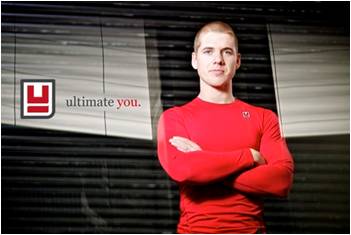








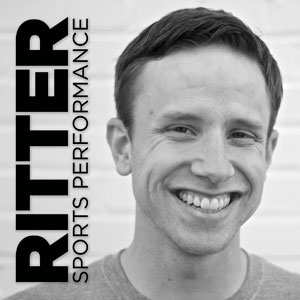
 In this episode of the Effortless Swimming Podcast, our guest is Performance Coach Chris Ritter.
He has worked with a wide range of athletes from youth, masters to Olympic gold medalists. He has worked closely with Cullen Jones – 2-time Olympic Gold Medalist and American World Record Holder.
In this podcast we talk about:
- specific exercises for master swimmers and triathletes
- how to improve your performance in the pool by using dry land training
- how to progress through different exercises if you don’t have a background in strength training
- how strength training can add power without the muscle bulk
01:32 – From the Summer Leagues to Becoming a Performance Coach
05:45 – The Edge in Strength Training
08:42 – Increasing Your Neuro-Muscular Activity
13:00 – How Much Strength Training Elite Athletes Do
15:24 – Being In The Zone…
20:50 – Strength Training & Ironman
27:18 – The Vertical Jump Test
27:40 – Strength Training: Practical VS Scientific
28:54 – Producing Power from The Core
33:20 – How To Overcome a Plateau with Your Strength
Gain access to Chris’ pull-up progression to go from hanging on the bar to pull-up master. This is one of the best exercises you can do for improving your swimming performance – www.rittersp.com/effortless-swimming
Transcript
Read the full transcript
Welcome to Effortless Swimming, the podcast for swimmers, tri-athletes and coaches. Join Australian swim coach Brenton Ford as he reveals the latest techniques and information to improve your swimming. Let’s dive right in. Hi Brenton Ford here, welcome to the Effortless Swimming Podcast. Today’s guest is performance coach Chris Ritter and he’s worked with a wide range of athletes from youth and age group swimmers to masters athletes and even Olympic gold medalists. He worked very closely with Cullen Jones, who’s a two times Olympic gold medalist and an American record holder. And on the podcast today, Chris and I chat about some specific exercises and things to consider if you’re a master swimmer or a triathlete and how to improve your performance in the pool by using dry land training and dry land strength exercises. And we also talk about how to go about it, how to progress through different exercises
if you may not have a big background in strength training. And we also talk about how strength training can be a good way to develop strength and power without adding on extra bulk as a swimmer, as a triathlete. You don’t want to be putting on unnecessary weight or muscle gain, but you want to have the power and the strength that comes with strength training. So we talk about how to do that and how it relates to swimming and triathlon performance. So listen in, here’s Chris talking about how he first got started as a performance coach and strength coach to some of the best swimmers in the world. Yeah, I swam growing up a lot, more what they call a summer leagues here. So just more teams that, you know, pop up in the summer and then kind of die off the rest of the year. And then slowly transition to year round swimming and just had a few coaches that really impacted me a lot swimming in college for a few years.
And I think probably the turning point was when I went to Nationals, it was before Phelps had broken the 400 IM world record, so way back in the day. I think he’d only had the 200 fly record at that time and went to the Nationals in Indianapolis. And at that time, you know, Tom Doan was like my idol. I just loved him. I loved his intensity, you know, winning the 400 IMs and back-to-back Olympics. And to watch Phelps break that record, I was just like, wow, it’s so impressive. And I actually met him and coach Bowman at that meet and just a couple other coaches too, just, you know, almost more of a fan at that point, you know, just talking to him, hey, how’d you get into the sport? And I think that really sparked it like, hey, I want to be a coach and I would love to, you know, help athletes get to that level. You know, I was okay, athlete, not, you know, anything high like that, but I enjoyed it. And I liked helping people and I thought that would be a perfect blend.
So I went to college, changed my major into exercise science and transferred out to a California swimming school, swam there for a year. And then after another year of swimming, I decided, hey, you know, I want to coach. So I got to jump into the sink full bore. So I actually stopped swimming competitively and started coaching while I was still in college. And at the same time, too, I got my personal training certificate. And I thought, I don’t even know why I thought at the time, but I just thought, I think this can help swimmers. I’m not exactly sure how, but I’m going to figure it out. And I’d never really had a lot of help in that realm growing up. And I was always a smaller kid and, you know, I was beating guys way bigger than me, but I think I could have been a lot better if I had a good athletic development program as a part of my swimming regimen as well. So just kind of started diving into that, helped out with my college team,
and then had the opportunity to move out to Charlotte when David Marsh started the Center of Excellence. And I basically just bought a plane ticket full out here and said, I want to be your strength coach and help your swimmers get stronger. And so we talked about it. And the next thing I know, I’m moving across the country. And that was just a wild ride. I got to work with a group of 13 or so athletes. I think we had about that for the Olympics in Beijing. And half of them were older than me. All of them were way better than I had ever been. So that was quite interesting. And we, you know, we put two guys on the Olympic team, both won gold. And Colin was a part of that historic relay where Lisak beat the French at the end. And I just, it was incredible to be a part of something like that and know that I had watched, you know, Colin come in. And some people didn’t even think he was going to make the Olympic team that year.
I know, you know, a lot of people thought, oh, yeah, he’s just kind of a one hit wonder. He broke a world record. I think it was even the short course world record a year or so ago. And, you know, he hadn’t done a lot in a long course. And people had kind of, I think not expected a lot of him. And he just came in and we worked with him and he worked with the rest of the group, pushed the group. And then, you know, he was part of the one of the guys that got on the team. And, you know, the rest is history, as they say. Wow, that’s awesome. One of the things you said earlier just about when you sort of, you were growing up and swimming and you didn’t really have much to work with in terms of a strength training program. I mean, I remember probably 15, 16 years ago when I sort of started training pretty full on and we just, we started to do some strength and conditioning but there wasn’t really any materials out there available for swim coaches to use.
We just kind of had to go by feel and by gut and just work it out. And I mean, I remember going around pool deck for 45 minutes before a training session, doing a bit of a circuit with some dumbbells and some sort of prone hold and just some really basic exercises but just kind of a rough introduction to strength training. But even that little bit of strength training gave us quite an edge over the teams that weren’t doing it. Oh yeah, yeah, absolutely. And I think that’s what’s frustrating and exciting at the same time for me is I think some coaches, they don’t do it because they don’t know where to start and it may seem overwhelming and they’re swim coach, right? I mean, they’re not into the strength and conditioning or the personal training or that aspect. But I think maybe like you, they intuitively know, hey, this could probably help but maybe I don’t know where to start. And so yeah, I think that especially just the whole field of athletic development
and sports reform is shifting a lot just in the past 10 years or so that I’ve been doing this. And I think we’re starting to be more distinctive than you lift weights to get big. And I think we’re breaking that stigma and that it doesn’t necessarily affect your size if you train right and if you do the right things and if you’re training for athletic power and athletic strength as opposed to when you stay lifting weights, immediately people are thinking and are absorbing or these big bodybuilding guys. And yeah, why would I ever want to do that? That’s not going to help me swim. Well, yeah, but if you do it correctly and bodybuilding is just a part of strength training. And I think people forget that strength training is this big umbrella and bodybuilding is a part of that umbrella. But athletic performance helping your endurance through strength training. Those are all things that fall under that umbrella of strength training.
Yeah. And that’s one of the things that I liked in your ebook that I was reading was basically talking about strength being created from a neurological level. Can you talk a bit more about that and how that kind of compares to like the bodybuilding type of training that you mentioned before? Yeah, that’s a perfect segue. Yeah, so strength is you can gain strength in two different ways. One is structural, which is like what most people think in bodybuilding. So structurally, your muscles get bigger, denser and that in and of itself because they’re more size, more crosshairs, they’re going to produce more force. But the other way that people don’t really realize and this is why you can get stronger after just one session is because there are tons of motor units in your muscle and your brain when it contracts a muscle does not always recruit all of the motor units or hardly ever does. And but when you do strength training, especially consistently,
it gets more and more coordinated and it learns to fire more and more of the motor units. And so that’s how you can actually gain strength without changing size at all. And a lot of that is more on the lower rep scheme in terms of higher, stronger efforts, but not as much volume. And unfortunately, I think most people go the volume route and so they kind of miss the neurological gains that they can’t get. But it’s all a process too. You want to make sure you have good technique and not just jump right into a really heavy movement. And so I think that’s where some coaches kind of get confused as, you know, where do I start? What do I do first? But yet you can definitely gain a whole lot of strength from just increasing your neuromuscular efficiency, what the brain is recruiting out of that muscle. Yeah, that’s that makes a lot of sense. There’s actually a TV program on here in Australia a couple of weeks ago.
It’s a program called Catalyst. And basically they’re talking about high intensity interval training and how the old concept of how much exercise you need was basically about three sessions a week of about 45 to 60 minutes of aerobic exercise. And now they’re saying you can get pretty similar gains, if not better, by doing just three workouts of basically two minutes of all that intensity. Yeah, just all out max effort. We break it down into four lots of 30 seconds with about four and a half minutes rest in between. And, you know, that’s not the be all and end all of the training. You don’t want to just do that. But for most people just to have that, you know, maximum effort of 30 seconds where by the end of it you can hardly talk. You’re so exhausted. Just kind of hitting that intensity can just, you know, can really help build build strength and that new neuro logical muscular efficiency that you’re talking about.
And I mean, I’ve kind of gotten my guys to start doing this in training. I’ve been doing it myself just with those really high intensity reps. And you can feel a difference after one session. Oh, yeah. And that goes back to why I think somers can gain so much from strength training is because most of the stuff you’re doing in the water is much more towards the endurance side of the spectrum. You know, even a 25 sprint, let’s say. Okay, that’s still, you know, it’s not like three or five seconds. You know, like on land would be classified as a power movement. That’s something that takes less than that. So even the sprint stuff in the pool is more towards the endurance side in the spectrum, just physiology wise. And so that’s why if you, you know, bring in this totally different stimulus in doing weight training, strength training of some form at higher efforts, the body is not used to it at all. And so when the body gets a new stimulus
that’s never been accustomed to before, you get a whole lot more response out of that and the body adapts to that a lot more than a response that’s used to day in and day out like you do in the pool. And so it’s just so different from what is happening in the pool. That’s why it really doesn’t take a lot to get a lot of gains from it. Yeah, absolutely. And the old model, and you might have been the same. It was used to a lot of kilometers, a lot of big, long sessions. And I mean, you could, you could keep going forever at that pace. And it made you very fit that way. But just trying to find that, you know, that extra level of speed. And, you know, and I was, you know, not very good at 50s and hundreds, 200s, I was good, but just because of that longer sort of stuff and not working different training zones, you know, you lose that. So I think some coaches these days are a lot smarter with their approach to training because they realize the benefit
of these, you know, more rest, higher intensity. You might do 10, 50s on five minutes, let’s say. And you just work in those, those different zones. And just, you know, it’s when you, when you ask me, you know, most swimmers are doing 50 to 100 meters with the occasional longer ones. But yeah, the old approach doesn’t really work these days. Yeah, yeah. And I think too, you’re, you’re hard pressed to keep kids in the sport long term, if that’s all you do as well, you know. And so then we get the other element of some variety in training and not just variety for the sake of variety, but this is real variety. If you add strength training into your program, you know, even on a personal level, you know, you could sometimes get bored looking at that black line all the time. Even if you’re the one deciding what sets you’re going to do maybe as a master swim or something like that. And so it’s just that a new stimulus can both mentally
and physically get a lot of results. Yeah, absolutely. Totally agree. And, you know, when we have swimmers join our online membership where they can get video analysis and that sort of thing. One of the things we always ask is, you know, are you doing any sort of strength training? And if they’re not, then that’s probably something that they’re missing out when you look at their, you know, their weekly workout as a whole. So how much you’ve worked with guys at a very elite level, how much strength training are they doing? So they lifted, we probably lifted hard three times a week for, and for the sprinters, especially we were even playing around with, we would lift for an hour or so. And then they would maybe get five, 10 minutes to get some food, hydrate, change into their suits. And then we would jump into the water and do a power session in the water. And maybe it wouldn’t be maybe more than 30 minutes. And so we were combining sessions like that a lot too,
especially for the sprinters. So maybe they would get in on the power tower or do some fast 25s all out from like a running dive or something like that and really trying to incorporate what we just did in the weight room, recruiting all this musculature, because there’s no way you can get close to the recruitment in the water that you can in the weight room, right? Because, I mean, even the best swimmers in the world, their catch isn’t that powerful if you measure it in pounds per square inch. And so now that they’re all lit up from being in the weight room, then we can make sure they’re putting that into the pool and using it and trying to transfer that power. Yeah, that’s good. And I mean, that’s what I’ve heard a lot of from top level squads as well is just doing the weight sessions and then having a quick break and going in for a short session and just trying to make that connection from the weight room into the pool because you want to,
no matter what you’re doing, whether it’s drills in the water or something similar, you want to make the connection from the purpose of that drill into your normal stroke. So, you know, backing it up with that session is really good. And another thing you said in your e-book was that when you’re training, you want to get inside of yourself. So I guess in terms of your mind, what you’re thinking about, but then when you go to compete, you want to get out of your way. Can you talk a bit more about that? Yeah, so I think some people can be great practice swimmers, right? And then you get to a meet and it’s just like, what happened, right? Like, where did that go? You were swimming so well in practice. I think especially even in the strength training, I’m very focused on technique and, you know, you need to do this perfectly. You need to think about it. But then when it’s time to race, it’s just flipping on autopilot if we’ve done
everything correctly and you just go have fun. You know, go beat the person next to you. You should not be thinking. That’s how you get in that flow state that athletes talk about a lot in the zone. And you can only get that way if you’re consciously making adjustments in practice. And thinking about all the little things. So then on meet day, on race day, you can show up and just switch it off. You know, you can’t just loaf through practice and not think about it and then think it’s all going to come together in the meet. It’s quite the opposite. You have to be overthinking it almost in practice and then going to the meet and being able to just get out of the way and go. And that’s, I think, where the athletes get the best results. And I think Cullen was a great example of that. The bigger the light’s got, it seemed like the bigger his performance could be. And I think that’s what, I think that can be learned on some level,
but you have to practice it in terms of being intentional first in practice and then being able to get out of the way when you step up on the blocks and race. Yeah, yeah, I like that. And I mean, you see the guys who perform really well at meets and especially big meets, those guys that can turn it on when it comes to an Olympic Games or national championships. They’re so exciting to watch. It’s just, you know, you can really see them. They just get that extra one or 2% that makes a difference and might get them that gold medal. And I mean, I’ve got, you know, I know people who train really hard, but as you said, they kind of get caught up in their own head when it comes to race time. They overthink it. They’re thinking about what their stroke’s doing. They’re thinking about what pace they should be going instead of just going out there having fun and just trying to kick ass. So it’s, yeah, you should be, I mean, when I’m coaching my squad,
occasionally, you know, if we’re doing a timed 100 or something, I ask them to picture themselves in the next big meet that they’ve got and just try and, you know, do the thinking there so that you can switch off when it does come to that race. And strength training too, I think, helps in that, especially females may always feel like they’re a little bit weaker or inferior in terms of, you know, physical strength is yes, new push-ups, pull-ups, stuff like that. Well, if you get a female just a little bit stronger, it’s amazing how their mind shifts a little bit. Their confidence raises. You know, they walk a little bit taller. And then their attitude behind the blocks on race day is even better because they know, hey, I’m strong. I’ve worked hard. I’ve proven, you know, I’ve increased my number of pull-ups or push-ups or I can hold bridges longer or things like that. And I think that’s where strength training can really help that mindset as well
when it comes to race day of not only being confident in the training and in the water, but just in yourself. And they’re like, hey, I’m strong. You know, like, I’m going to go out and I’m going to beat you because I’m stronger. Yeah. And I think a lot of that comes down to posture as well. I mean, you can see someone walking down the straight and just by the way that they’re walking, you can tell whether they’re confident or whether they’re physically strong. And yeah. And another thing you kind of mentioned in the book was that the injuries come a lot from poor posture and overuse. So you can talk a bit more about how you see the relationship between posture and swimming. Yeah. It’s just swimming is such a repetitive sport. You know, three of the four strokes are done in a prone position and all of them are using your lats dominantly in terms of, you know, in the catch and pulling. And so you get this interesting dynamic where the shoulder
is getting pulled forward because, you know, your chest is progressively getting tighter. But at the same time, your lats are tight too from all the pulling. And so it’s also pulling down. So if you think about your armpit there in the front, that’s the chest muscle. And then in the back is the lap. So both of those are producing tension on the shoulder and just continuing to round it forward and in the mid and upper back, especially, it just gets so weak because you never hit it when you’re swimming up and down the pool. And so that’s where strength change can really help because if you target the muscles that you don’t work in the pool, you’ll balance your body out and then prevent injuries because, you know, if we could take a survey of swimmers and, you know, raise your hand if you’ve been able to swim three to five years, no injuries. You know, how many people could really raise their hands? And I think you could automatically become a better swimmer
if you were just able to swim three to five years with no injuries. You know, think about how good coaches would be all of a sudden, right? If they didn’t have injured athletes to deal with because you added this element of strength training that just kept you in the water. And all you had to do was work the weak muscles that are never getting addressed in the pool. And so a lot of the programming I do isn’t so much to, you know, get you stronger or more powerful, but it’s just to balance it out a little bit because swimming is so towards one side in terms of how it’s pulling your body and how it’s shaping your body. So if you just do a little bit on the counteractive side to help keep your posture tall, that’s what can really make gains from strength training. And, you know, it’s not about mimicking the same exercise you do in the swimming. And it’s actually the opposite. You want to do the opposite things on land
that you’re doing in the pool to keep that posture and just the athleticism. Yeah, and I mean, I remember growing up training with people who are doing eight to ten sessions a week, nearly everyone goes through some sort of injury. You know, usually in the shoulders, but it can be, you know, it can be back or hip or whatever it is. But, and I work with a lot of Ironman athletes as well just with swimming coaching. And, you know, if you can get to an Ironman event without being injured, then you’re 90% of the way there. You know, that’s the main thing. So, and the best way to avoid it is through strength training. And I know with triathletes in particular, just doing some basic glute bridges can kind of even them out because they’re working so much, you know, on the front with their running and biking. So, you know, just some really basic exercises like that can be all they need to avoid injury. And as you said, the same thing with swimming is
you want to work those almost opposite muscles that you’re using in the pool just to balance yourself out. And can you talk a little bit about asymmetries with swimmers? I mean, we have physios do like a screening with our athletes and looking for those asymmetries and trying to correct them because that can really cause an injury if people aren’t balanced throughout their body. So, I mean, what do you see with the athletes that you’ve worked with when it comes to that? Yeah, I’d say most of the time you’re going to have tightness and restriction in the shoulders. So, can both shoulders move as they need to? And just a simple test you could do is, you know, take your right fist and place it in your mid-back and then take your left fist over the top of your head and can you touch or can you get within one fist of touching and then do the other side. And what you want to see is how similar are those two sides?
One, and then hopefully they’re close. And if they’re not close, you know that your shoulder’s pretty tight and pretty restricted. So, more often than not, you’re probably going to get an injury down the line just because your shoulder isn’t able to move in the range of motion it was meant to. And so, and a lot of that is driven by the bad posture that happens if all you do is swim. And so, I’d say the shoulder is the big thing. But also sometimes low back and hip. And I think that’s where if you have a little bit more core strength and stability that you can, you know, fort those injuries before they start. And, you know, sometimes they could just be simple things that you’re doing before you jump in the water. I personally am playing around a lot. I just started a master’s meet this past weekend down in Florida, the Rowdy Gaines meet. And I’m playing around with almost exclusively at meats warming up on land and maybe hopping in just
and doing a few laps just to feel the water sometimes. But warming up almost exclusively on land, whether it stretches or some kettlebell work or something else like that, just small and quick to fire up my body and get it ready to then go in and race. Yeah, yeah, perfect. And we see a lot of asymmetries with people through just breathing to one side in freestyle. I mean, we work with a lot of beginner to intermediate swimmers. And if you just breathe into the one side every two strokes, then it’s very hard to avoid whether, you know, having a tight neck or one shoulder and you can really see that impacting their stroke. And then, you know, and usually they’ll come to you with an injury six months down the track because they’re so in balance with it. So, you know, if you can be aware of that and either change a stroke to eliminate it or do those flexibility exercises or strength exercises, it can keep you in the water for longer.
And when it comes to starting a strength training program, another thing you mentioned was the use of testing. So how do you work with your athletes and track their progress as they get stronger? Yeah, so again, I’m looking at the whole picture and I want to build an athlete as opposed to build a swimmer. And then if I have a good athlete, that will be a better swimmer in the long run. And so a lot of just simple tests that I’ll do is a broad jump. So what’s your distance? You can jump. And with that, I’m looking for can they at least jump their height in, you know, whatever you’re measuring meters or feet. And so if they can’t, then you just need to work on strength period. You shouldn’t even be worried about plyometrics or power because they don’t even have a prerequisite level of strength here. So that’d be one. Then another is how many pull-ups can you do? And hopefully you can do at least some as a swimmer.
But I think you should at least be double digits, if not in the 20s as a swimmer. If not, again, you just need a prerequisite level of strength there on that. And actually for your listeners, I’ll put together a progression for pull-ups because I know that’s one of the biggest things is, you know, how do I go from zero pull-ups to one? And that’s just such a big, you know, jump sometimes. So I broke it up into a couple of exercises. And so at the end I think you’ll have a link in the show notes, but they’ll be able to get a resource I put together. You know, you can assess where you are and then figure out how you can get to doing multiple pull-ups on that. And then after pull-ups you also do push-ups. So I just do a simple one is how slow can you make five push-ups last? So I just time five push-ups as slow as possible. Hopefully you get close to a minute on that. It would be a good one for swimmers. Another one is how many squats you can do in 60 seconds.
So down to parallel. And again, I’m looking for about one a second on that. And then also a bridge test that I do where you’re down in your forearms or a plank, as some people call it. A plank to me is more on your hands, whereas a bridge is on your forearms. And so you’ll hold the bridge for a minute. After a minute is passed, you’ll raise one foot a few inches off the ground for 15 seconds. Then switch to the other foot for 15. Then put that foot down, raise one arm in front of you for 15. Put that down, then raise the other arm in front of you for 15. So now we’re at two minutes. Then if you can last another 30 seconds, you’ll go arm and opposite leg off the ground at the same time. Then arm and opposite leg off the ground. So if you get to two and a half minutes at the end of that test, I feel like your core is pretty good. If you can’t, then we just need to work back a little bit and develop just a base level of core strength for you.
Yeah, awesome. And I would just want to go back a bit. The first test that you mentioned was the… The broad jump. The broad jump. Yeah, so basically feet together, swing the arms back and then jump forward as far as you can. And if you can’t get your height, then you say… Yes. Yeah, then you’re saying there’s not enough just basic strength there to… Yeah, don’t even worry about doing jump supply metrics. You’re not ready yet. You’re probably going to do more harm than good because you don’t even have a prerequisite level of strength, I’d say. And do you use that test because it incorporates more than just your legs? You’ve got to engage your core and your hips and everything else to jump forward. Yeah, and honestly too, because it’s an easier test to implement, then maybe I would preference doing a vertical jump test instead. But most of times coaches aren’t going to have something where they can accurately measure a vertical jump.
And so I figure broad jump is the next easiest thing. Because sometimes I would rather choose the easier thing to implement than the quote-unquote more scientific or better thing if you can’t implement it as well, though. So what’s the point of it? If it’s a better test but you can’t implement it, that really doesn’t matter much to me. I would rather have things that are practical, especially I know a lot of coaches do it. They’re trying to do their dry land program on deck around starting blocks or bleachers or stuff like that. So sometimes something is better than nothing. So yeah, it’s just a simple test that anybody can do. You just get a tape measure out and go. Yeah, that’s good. I like that. Can you talk a bit about the posterior change? So what is it and why is it so important for swimming? Yeah, so that’s basically everything that you can’t see if you’re looking at yourself in a mirror. And unfortunately, most people will train everything they can see in the mirror
and not really pay attention to stuff they can’t see. It’s a common thing, right, especially for the guys. They’d rather work with the chest and the biceps. Yeah, I could see that. Yeah, let’s keep getting bigger. Well, they forget about the glutes and the hamstrings and all up the back and everything. So you might topple over with some of those guys. They get too big on the upper body but the legs are small. But the posterior chain, one, it’s just going to help with posture. So we talked about that with swimmers. Their shoulders rounding forward a lot. If you’re strengthening your posterior chain from head down toes, you’re going to be pulled up taller. And that’s obviously going to be a better streamlined position than a rounded posture. Also, you’re just in better position to produce power from your core, from the center of you out to your extremities. And I think a lot of swimmers forget that your core is where the power should start.
And it’s not just how fast you can move your arms or how fast you can move your legs. It’s how you transfer energy. And the core is what allows you to do that and a lot of it. And people forget that the hips in my mind is part of the core as well. So the core would be from the bottom of the hips all the way up to where the rib cage starts. So it’s not just, you know, the six packet abs we’re talking about. But it’s 360 degrees and it’s, you know, almost a, I would say, you know, a third of your body there. You know, so down below the hips up to the ribs. So that really is the foundation for power that you can produce from your extremities. And if your core is strong, then everything else will be better. And then just the glutes and the back of the legs as well. That’s just going to help so much with power off the blocks, power off the turns, and then again, helping to transfer the energy through the core.
And, you know, you can see that the strength of someone’s core when they’re swimming, you know, someone who tends to snake quite a bit, the hips are moving from side to side. You can just see how their power from their catch and pull just dissipates when they go to pull because they haven’t got that connection through the body. And I mean, do you feel like that’s a lack of coordination in the water or strength or both? Where do you see them kind of missing out there? Yeah, it could be a coordination thing. But I would think more often than not, it’s just they don’t know how to engage their core. And so a lot of times you may be able to do a lot of sit-ups, but can you engage your core? And how I describe that to people is brace around 360 like someone was going to punch you in the stomach. Can you make it tight or like if your car was stalled and you’re having to push your car up a hill, you know, like get tight all around 360.
So that’s level one, if people can even do that. Level two would then be can you hold that tightness, 360 and still talk and breathe. So like right now while we’re having this conversation, I’m tight 360 all around. If someone was going to punch me in the stomach, it wouldn’t move. I’m that tight. But I’ve developed that ability over time. And then when I go into the water, I can turn that on when I want. And that’s the first thing I’ll go to when I myself am trying to get faster is I’ll get tighter and more engaged in my middle. And so then I’m like a kayak going through the water instead of rubber raft. And so I think that’s that’s where it is is where you can do a lot of exercises. But if you’re not able to engage the muscles and turn them on from your brain in that coordination and especially, you know, people are breathing poorly, you know, nowadays, especially summers, they’ll use their chest a lot more to breathe
than your belly. And so they’re just, you know, in the middle, they’re all discombobulated. They don’t understand how to effectively engage that to have a platform to then produce a strong pull. Yeah, I think the engagement is probably the biggest thing, just that learning and it takes time. You know, it takes time to be able to stay tight, 360 and be able to talk and breathe and maintain that. Yeah, I mean, with a lot of the stuff that we do, we have summers attempted out of the water. So just getting used to that high elbow position, rotating the arm internally and as well as just the posture. I mean, when we run clinics, the first thing we talk about is breathing is making sure that you’re not holding your breath and you’re relaxed. But then after that, it’s all about posture is, can you maintain a tall posture? Just like you’re talking about where you can stay connected through your core. That’s where it all starts, because if you’re like a wet noodle
through your stomach, then it’s very hard to generate any sort of power or speed if that part of your body isn’t connected. So can you do it out of the water? And if you can, then go into the water and try and maintain that same sort of position. Yeah, exactly. And that’s where, you know, if you do a ton of pull-ups, but you’re not able to engage your core, well, it’s not going to show up in the water. You know, you have to have the core as the foundation to express that strength and power that you’re working on. And I think sometimes if people are doing dry land or strength training, maybe they’re worried about too much exercise and not about how does this fit together and so I can actually use it then in the water like that. And for guys that you’ve worked with who are guys and girls who you’ve worked with who, you know, elite some of us who are on the national team or close to and if they’ve hit a plateau with their strength,
how do you help them overcome that and push past it and continue to improve? That’s a good question. I would say most of the time people haven’t worked their strength long enough to hit that plateau, at least that I’ve seen. And if they do, then you just need to start changing the type of workouts more. And so this is where we get into periodization a little bit, which is just a fancy word for how you’re planning your workouts. And most of the time for beginners up until a point where you do see plateaus, you can just go a linear periodization where it’s, you know, we’re going to just do, you know, three sets of five reps or something like that. Well, if they start to get so that they can not really gain from that, then you’ll start to switch it up. And that’s what we did a lot with the elite guys before the Olympics is every day of those three days that we lifted in a week was completely different. So one was a power workout where everything was fast.
It wasn’t necessarily about the weight, but how fast they were moving the weight, where another day it was all about the weight. How much weight can you move? I don’t care if you’re moving it fast. I just want a lot of weight. And then there was a day in between, kind of in the middle of that. And so the more that you get experienced as a strength trainer or as an athlete, who strength trains, you need to change it up more often because it goes back to the body is going to get used to a stimulus the more often you give it. And then the whole other realm is then you work on power. Once you get to a point where you have sufficient strength is you have to develop that strength into speed and that’s through power. And so that’s where you may not be lifting close to your max on the lift, but it’s how fast can you move the bar or how fast can you get through that movement? Yeah, and we do something similar with just
our swim workouts is throughout the week, some of us might be doing four sessions and you just really mix it up. You might have a longer, slower swim, just at a 60% intensity. Then some of the guys doing open water. So it might be like an open water race pace set of about 2K but broken down into hundreds or 200s. Then another day of speed where you’re really pushing the intensity and just kind of blowing out past max. And then you might have a technique day where you might challenge them with some coordination drills or something similar. And just giving them a wide range of tools or experiences that they can draw from when it comes to a race. Whereas if all four sessions during the week have just been 3K aerobic main sets, they just don’t have that experience to be able to adapt and deal with different things when it comes to racing. Yeah, and that’s just where the coach has to know what level of athlete they’re dealing with
and sometimes changing too much is bad and sometimes not changing enough is bad. So that’s where you kind of have to be able to sense, okay, where is this athlete at and what do I need to adapt for them? Yeah, absolutely. And you’ve put together some really good videos on progressions of different exercises, whether that be the chin-ups or some core strength exercises for people and will provide the links in the show notes to those. So if you don’t have a strength training program, I highly recommend checking those out because they’re perfect for swimming and you’ve worked closely with Smiths for a long time and being a swimmer yourself, you know what works. So I think for anyone who’s not currently doing any strength training, you can fit it into 10 minutes a day, a couple of times a week. That’s better than doing nothing. So it’s a really important part of any weekly workout. So for people who want to learn more about you
or what you do and how they can increase their strength for better swimming, what’s the best place to go and what sort of resources have you got available for them? Yeah, well first they can come over to our website, RitterSP.com, R-I-T-T-E-R-S-P.com and that’s where you’ll find all the resources like the e-book that you read, Surge Strength, that AVEN has in the bonus there, that e-book, the actual entire program that I used for those guys up into the Beijing Olympics. So I even put that whole year’s worth of programming in that book and that’s just the bonus. And so were you able to get through the whole book, actually? I’ve read three quarters of it. I didn’t get a chance to finish the last bit yet. Yeah, but would you say pretty good stuff and they’re pretty packed full of information? Yeah, absolutely. I was kind of nodding my head in agreement with a lot of the stuff that’s in there and a lot of the stuff we talked about today
sort of came from that book because I wanted to just explore some of those topics a bit more and I really think it’s important for people to see if they haven’t got a lot of experience with strength training and swimming and especially for coaches who might be a bit hesitant to start that with their athletes because they’re not sure what to do. Yeah, so the e-book is a great place to start, the Surge Strength e-book and then from that then we also even offer online programs where I currently train master’s summers all over the world. And I would say my best case right now for success on that is I have a 57-year-old guy who just went faster than he did in the 100 fly than he was at 18 years old. So I feel like that’s pretty good testimony for what strength training can do for you. Absolutely. And the fact that he’s swimming even less. And the 100 fly is no joke. That’s not a sprint event. You’ve got to have some pretty good endurance for that too.
So it’s not just a 25 or 53. But yeah, we offer online programs for both teams and individuals. And then I keep a blog regular as well on the site. But yeah, Ritter SP is the main hub and then you can find all the social media outlets from there as well. Yeah, that’s awesome. And yeah, we’ll put those in the show notes. So just go to effortlesswim.com for all of those links. And Chris, thanks so much for being on the show. I’m definitely going to get you on again and we’ll explore some other topics. And I think this has been a really helpful call for particularly master’s summers because that’s what I primarily work with. And to see swimmers who are 40 plus, hitting PBs, like lifetime PBs. So once we’ve done with our 18-20, with the combination of strength training and some specific workouts, it’s possible for master’s swimmers and it’s pretty amazing to see them. And the reaction they get when they do hit those times,
it’s pretty awesome. Oh yeah, it’s awesome. And that’s what fuels me all the time is just helping people achieve things that they didn’t think was possible. And sometimes they think, oh well it’d be great if I could do that but I don’t really know if I can. And then it’s amazing what happens when you put together with a good coach and good program. And especially master’s summers, at some point you’re going to start to lose muscle mass every year unless you fight it. And so that’s where strength training even more so can help them in the pool because just swimming alone in an anti-gravity environment really isn’t going to help that decay of the muscle mass over the years. So I think it’s really the secret weapon for master’s swimmers as well. I think swimming is just a really good sport for adults as they get older. If you go to Masters Worlds or even Masters Nationals in the States or Australia, see how fit some of these
70, 80-year-olds are. It’s pretty incredible to see how healthy you can stay with a sport like swimming and doing strength training with it. It’s amazing. That’s one of the reasons why I love this sport too. Just at the last meet there, Rada Gaines, he still threw down an awesome time, him swimming the 50. And the heat before me when I stepped up to do the 50, a guy that was 70 went just a second slower than me. I was like, wow, I got out of my game here. It certainly humbles you, doesn’t it, as a younger person at a Masters meet? Yeah, it’s awesome. I think that’s why swimming is just so cool, is you can have all these ages and even different backgrounds. I’m training an athlete right now that didn’t even swim in college, but she wants to try to see how high she can get in the swimming world. Swimming is just such a great sport on so many levels for that. Absolutely. Chris, thanks again, and we’ll let no doubt talk soon.
All right, thanks, Brett. Thanks for joining us on the Effortless Swimming Podcast. www.effortlesswimmingpodcast.com