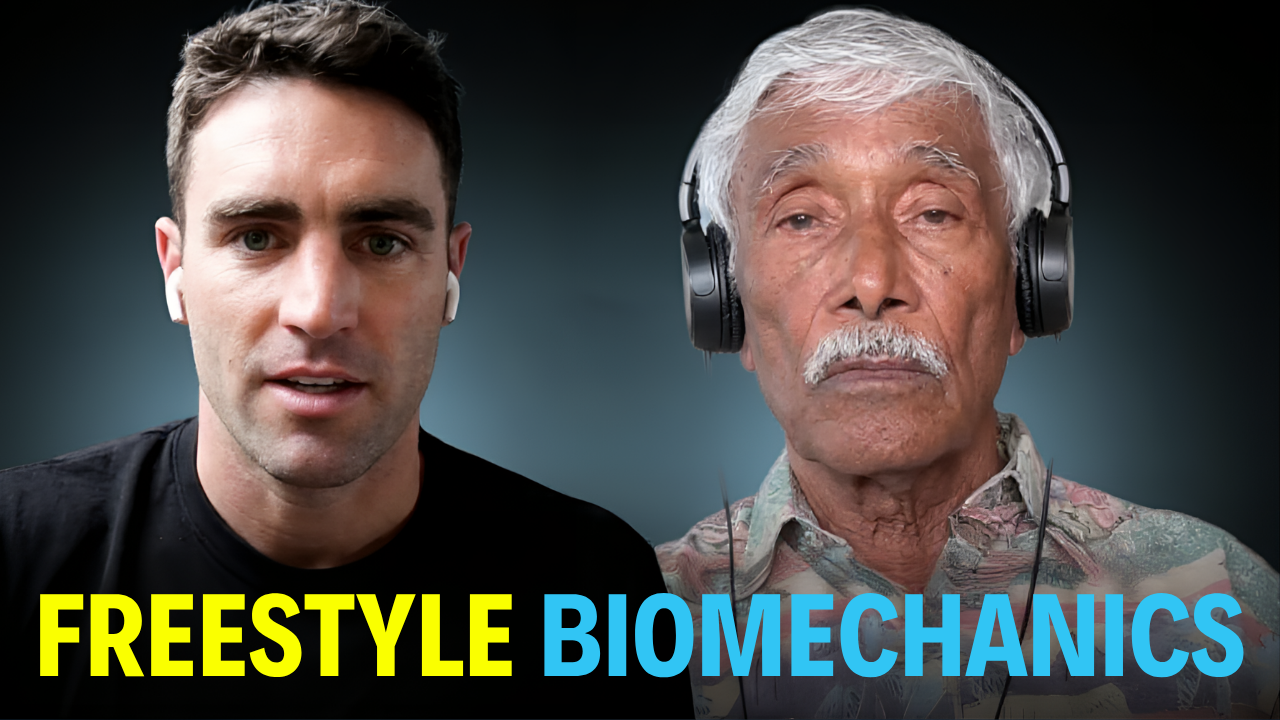








 Wayne Goldsmith is a thought leader in the swimming coaching community. We talk about Ultra Short Race Pace Training (developed by Brent Rushall) which is starting to become a more widely used training method. I came across an article about a young swimmer in the US called Michael Andrew who is breaking age group records and swimming very quick times for a 14-year-old. His training is solely ultra short race pace training. Listen in as we discuss the pros and cons of the method and where we see it taking the sport.
00:58 – What is Ultra Short Race Pace Training?
01:40 – Concept of Specificity
02:40 – Why do so much volume?
03:15 – H. V. O.
05:10 – More training targeted at T.R.P.
06:45 – Break out of the mold.
07:24 – “Changing what we believe works!”
08:23 – Everyone is looking for short-cut solutions
08:47 – Focus
09:30 – Big Corp VS Start-up
10:28 – The secret to success is to make sure that…
11:18 – My suspicion…
12:59 – Which types of athletes are suited to ultra short race pace training?
14:30 – The keyword – aerobic work.
14:59 – Swimming effortlessly is very important
16:16 – Cut it down to slow, easy, relax, smooth action in the water.
17:00 – Common sense
17:50 – Core of my program: flexibility, mobility, stability…
18:18 – When you are fatigued, rest.
19:15 – Sample set: 100 Freestyle: Break it down to 10 25s
20:30 – T.U.F. Training are for knuckleheads
22:00 – More control over performance.
23:00 – Confidence = Belief x Evidence
26:16 – What’s the right taper for each individual swimmer within a squad?
27:30 – What’s the downside?
29:00 – Less injury. More fun.
30:50 – How appropriate is it for master swimmers and senior triathletes?
34:35 – The faster you want to go the more relax you want to be.
35:20 – We need to have a CHAMPION!
Visit Wayne’s upcoming websites: www.wgaquatics.com and www.wgcoaching.com
Transcript
Read the full transcript
Welcome to Effortless Swimming, the podcast for swimmers, triathletes and coaches. Join Australian swim coach, Brenton Ford, as he reveals the latest techniques and information to improve your swimming. Let’s dive right in. Welcome to another episode of the Effortless Swimming podcast. Today’s guest is Wayne Goldsmith, who I’ve already had on the podcast twice, and I wanted to get Wayne back. What we want to talk about today is something which is called ultra short race pace training, which is something that which is starting to take off these days. And I came across an article yesterday about a young swimmer in the States called Michael Andrew, who is breaking some age group records swimming very quick times for a 14 year old. And he is focusing just on ultra short race pace training. So to talk about it with me today is Wayne. So welcome to the podcast. Good morning, Brenton. So let’s let’s just first start with what is ultra short race pace training.
You’ve been familiar with it for quite a few years and you’ve been sort of talking about how many swimming programs are doing too much distance and it needs to be more race specific. So what what exactly is ultra short race pace training? Well, it’s a really good question because I think the actual definition of high speed, ultra speed, race specific training. I think there’s a lot of different interpretations around it, depending on coaching, but it started to become a concept of real interest, maybe in the 80s and the 90s. When sports science was really flourishing in swimming and many other sports and people looked at the concept of specificity and specificity quite simply is you get what you train for. If you want to be a weight lifter, you lift weights. If you want to be a marathon runner, you run a long distances. And at the time, the popular concept around swimming we called speed to endurance.
And it was a very dominant philosophy where coaches around the world would do a lot of high volume training for weeks or even months at a time. And then a few weeks before a targeted competition would back right off, taper very, very hard almost to 50, 60% less of the main training volume, freshen the athletes up and they would sprint them and race them off that. And then when people started to really look at specificity as an important concept in sports science, the question said, well, hang on, if I’ve got an athlete who races 50 meters, 100 meters, 200 meters even, so they’re racing at distances well under two minutes. Why are they doing 50, 60, 70, 100 kilometers a week of very nonspecific training to get a training effect to sprint over 20 seconds to a minute and a half, two minutes. And some coaches really started to challenge that concept around why do so much volume and have no really all this link to the specific task of learning to sprint very quickly over a short distance.
In Australia, we had a guy called Bernie Wakefield. It was a great, great coach, great old grandfatherly type at a very, very smart cookie, very innovative, working out of the Chandler Aquatic Center in Brisbane. And he came up with a concept called HVO, high velocity over speed. And Bernie would include some short, high intensity training, some really speed development, some neural type training in every workout. But it wasn’t really specifically linked to what we call TRP, training target race pace. So he wasn’t really targeting the speed very specifically at a race. Not that long after that late 80s into the 90s, a guy called David Salo came along. Dave Salo, a United States coach, again, very smart guy, very innovative, became very controversial by saying, guys, I think we’re doing too much nonspecific work when 90% of swimming events are 200 meters and down. And he started to look very carefully at, should we be looking at sprinting athletes,
not just at high speed, but sprinting them over short distances with a specific target of swimming that time and at that pace in the next competition. And he was looking at speed very specifically at pace. But then he expanded it to be swimming that pace with very specific race mechanics, stroke count, stroke rate, breathing patterns. So he put a little bit more meat on the concept of high speed training. And where we are now, and something’s become very popular and specifically in reference to that article that you shared with me yesterday, the article that you’ve shared earlier on in the discussion, is Brent Rushall, who is an Australian, but has lived in San Diego for many, many years, works out of San Diego University, has really been promoting his concept around high speed, race specific training. Where he’s proposing that if we really focus on this specificity of training concept, if we really focus on specificity, then what swimmers need to be doing is more training targeted at achieving their TRP, their target race pace,
keeping workouts relatively short so they can maintain excellence in stroke technique, swimming skills and accurate pacing. So we’re training them to do the job that we want them to do. And you can imagine how controversial that this is in the world of swimming right now. Absolutely. I mean if you look at most age groups, swimming programs, a lot of them will be doing a lot more case than they probably sort of, you would think they need for the short distance events that they’re doing. And reading this article here about the young American swimmer, about Michael Andrew, he’s really the first swimmer or young swimmer who’s done just this ultra short race pace training. So I think a lot of programs incorporate some of this into their training where they’re going, say like a broken 200 in 25s trying to hit their race pace. They’ll do some of it, but then they’ll still do the long kilometers. They’ll still vary their pace.
Whereas this training’s really just focused on you’re either swimming at race pace or you’re swimming easy. You’re doing your recovery work. And this is the first case where we’ve seen someone who’s just doing this training rather than a little bit of it plus a lot of extra distance. So I think that this, having someone have success with this will see a lot more programs start to pick this up. I think it really takes a coach who has the balls to say, this is just what we’re going to do because they will get a lot of backlash from I think parents, even from swimmers, because it does break out of the mold that we see a lot of swimming programs in. It’s very hard to break that cycle and say we’re just going to change to ultra short race pace training. I think you’re right, Brendan, that it’s in some ways right now because the evidence is difficult to really quantify. There’s some very good evidence that Rushall has proposed.
But in terms of the evidence that really matters, which is results at the Olympic Games World Championships, major meets, the bulk of the evidence would still say swimming’s a tough game, a hard game, it’s about high volume training. Changing what we believe works, which is consistent hard training and adopting a very, very different direction, a different paradigm, is going to be a high risk approach for a lot of coaches. And I suspect a lot of what I would call the hard nose, very tough, very experienced senior coaches might play with this concept a little, but they’ll hang on to the core foundations and fundamentals of what they believe. The thing that excites me though, the thing that really excites me, there’ll be a large number of younger coaches coming through who have grown up with this, what I would call a more with less approach. If you only got to go to Google any day and have a look at some of the most popular articles about fitness,
which will say how to get great abs in 10 days by doing three sit ups a week, or there’ll be an article about how to lose 50 kilos with no effort in 10 days. Everyone’s looking for a shortcut solution to success. And in swimming, we’ve resisted this and said, well, no, no, no, it’s hard work twice a day, 10 sessions a week, 50 weeks a year is the only path. Now along comes somebody who’s saying, look, there’s some evidence that there’s another way of doing this. There’s an evidence that you can decrease volume, decrease yardage and focus on high speed training, race specific training and potentially get a better result. It’s going to make sense to a lot of people. And I suspect this would be a really hot debate at the swimming conferences and in the swimming magazines, swimming journals for several years to come. It’d be very, very interesting as you say, as a success story start to evolve and coaches are gutsy enough to say,
guys are going to tell you we’re doing this off 30 Ks a week or we’re doing this off this race specific training, how many will actually get up and start to share their ideas and share how they’re going about implementing a different way of doing things. And I think it a good comparison with who will actually take up this type of training. It’s kind of like a big corporation versus a small upstart business is you’ve got the guys who’ve got their programs, their elite athletes. It’s very risky for them to make this change to this kind of training because what they’re doing now works. There’s nothing to say that, you know, what they’re doing now isn’t getting great results if they’ve already got world championship swimmers, but to be able to help them take the next step, maybe they need to do this kind of training, but it’s probably going to be too risky for those kinds of programs already. So like you said, the younger coaches that have just taken on a group of swimmers,
they’re the ones who can really experiment with this kind of training and they can play around with it and without the backlash that established coaches and established programs would get if they changed to this kind of training. You look to your exactly right on this concept of risk that there’s an old phrase in swimming coaching, which is the secret to success is to make sure the average fitness of my guys is higher than the average fitness of your guys. So if I train harder, more often than your team, anytime we’re in battle, my chances of success might be slightly higher than yours and it’s been so easy to get a large group of age group kids in the pool. Part of I think is right control that the parents really love, but it’s been so easy to say, okay, guys, get in the water hour and a half, two hours, we’re going to knock off three to four Ks an hour swimming, not a lot of break and off they go.
And if I get my swimmers very, very fit from an endurance perspective, very aerobically fit and I freshen them up enough before a big meet and my fitness level, the average fitness level of my team is higher than yours. Looking in most battles, we will probably come out on top. What I suspect, what I suspect the big teams will do as the evidence starts to mount that this is an interesting way to go. I would suspect that they’ll look at some of the swimmers who maybe carry injuries, for example, or swimmers that regularly break down through overuse or through fatigue or excessive fatigue. They might look and say, look, why don’t we set up a test group like you would in any scientific environment? Why don’t we set up a test squad that implements and tries this different way of doing things, put some of these kids in that group or not responding to the high volume, high intensity traditional approach
and let’s see what happens. Let’s suck it and see. I would expect that the smarties who would never fear it have been a successful coach, I suspect the really smart guys won’t just turn their back on it. They go, let’s have a little bit of a look and they’ll develop a lane or a two lane program. So let’s have a look at this for a season, see what sort of results we get. And if it then starts to show that that’s the direction to go, then let’s start tweaking it in the main squad. But yeah, they’d be mad, I would think at this stage, just to abandon all their traditional practices and embrace this as the only way forward because we’ve seen so many other red herrings and so many other forced trails to follow in the past, but this certainly seems to be some intelligence around this. Yeah, and I think the athletes that would be best suited to it were kind of like you were saying, athletes who are injured or who are prone to injury from over training
and the athletes that maybe have not improved for the last couple of years and they’re on the edge of quitting the sport because they’re putting in the effort but they’re not seeing the improvements. I think those two types of athletes are the ones which are probably best suited to it because maybe they need something different and maybe they need less kilometers in the pool each week. So there are athletes who would really be suited to it and like you said, it’s silly for them to just completely throw away this idea and to have that test group you can really start to say is this all it’s talked about to be. The other thing I want to talk about is how would you go about coaching it? So let’s say you were taking a squad of teenagers between 13 and 16. If you were coaching right now with a sort of traditional training program would you change straight away to this? How would you go about it? Yeah, look it’s a good question. I think about it a lot and discuss it with some pretty good coaching minds.
One of the things I really passionately believe that we’ve all got to adopt in the sport is a very simplified way of looking at training zones and training paces. We’ve gone through this era where we’ve been promoting the sports science community and swimming has been promoting seven or eight training zones so that we’ve had this easy recovery pace and then aerobic one, aerobic two, threshold one, threshold two, VO2 max, high velocity overspeed. We’ve had all this really, really complex way of looking at it and I think if you cut through all of that, if you cut through it really the key work to me is the aerobic work just getting aerobic fitness learning to relax in the water and you and I have talked about this many, many times and we’re on very common ground on the need for easy swimming, relaxed swimming, soft hands, relaxed feet. We’re very much about effortless swimming and swimming easily, swimming comfortably
and I think that’s very important and then secondly this TRP, this target race pace or this race pace specific work. Even if you were banned and everything else I think if you said look I’m not going to do threshold work I’m not going to do overspeed work. I’m not going to do those 10, 15 meter sprints at any old speed just to get some sort of stimulation. I’m going to dump VO2 max type work. If you just said we’re going to do easy, relaxed, comfortable flowing type swimming and learning what it’s like to move through water easily, slowly and comfortably with race pace specific work but you know further Brent, not just race pace specific work but when you do race pace specific work including stroke mechanics, stroke rate, stroke count breathing that you want to replicate in the race. So that would be very much my approach. I’d say to coaches look to me this doesn’t mean we’re going to do 15 minute sessions
rub ourselves with a towel a few times and everything will be good. There’s still going to be a need to get to the pearl, stretch, do some course stability work build those foundations physically and mentally we know are so important still a need to work on excellence in technique, turns, dive starts, finishes all those things but specifically in physical preparation I strongly believe that if we just cut it down to long easy, relaxed, flowing, smooth action through the water combined with when we go we go at target race pace and one of the things that frustrates me in swimming and you see all the time is that coaches will do a test in January and say right this swimmer today in the first week of January swam a 400 time trial in 445 and then they base their pace work on that 445 for the rest of January, February and March. That doesn’t make any sense basing a future performance result on what you did in the past.
The really good common sense aspect of this principle is that I look at what I want to be swimming in 1 month, 2 months, 3 months, 12 months and I target my work and my pace work specifically around achieving a future result. I often describe it as being a little bit like having an exam coming up. So if I’ve got a maths exam coming up in March I don’t study for a maths exam that I already passed in December the previous year. I study the new stuff so that I’m ready and equipped to pass that maths exam in a few months time and that’s a fundamental concept in swimming is that the pace we’re swimming at and the stroke mechanics we use at that pace to be targeted at a specific date and a specific performance in the future. So that would be the core of my program. Flexibility, mobility, stability, building those fundamentals great technique, uncompromising approach to skills development is very important with walls in every situation
and then sticking primarily those 2 paces easy, relaxed, comfortable pace, race pace specific. Another thing with the ultra short race pace training that the focus is on is when you start to hit fatigue then you stop, you take more rest or you basically take more rest once you hit that point where you’re not hitting your race pace time. Swimmers no doubt used to swimming under fatigue it might come to Wednesday during the week, they’ve been smashed on Monday, Tuesday and they might have a recovery day on Wednesday, but by Wednesday they’re just completely tired and they’re not able to really hit their race pace times and usually your stroke and your technique will fall apart when you’re feeling this way but one of the focuses of this kind of training is that you shouldn’t be swimming at that speed when you are that fatigue because you’re training the wrong things and that’s also something that I like because I know that when you are feeling that way
it can’t be doing good for your technique because you are really reinforcing the wrong things and one of the other things was that so an example set with Michael Andrew this American kid, one of the sets that they do for the 100 freestyle is they break it down into 10-25s where for every 25 he’s trying to hit the 25 time he would be in his 100 free and he gets about 10 seconds rest in between those 25s so the basis behind some of the sets is they’re looking to go roughly 2.5 times the distance of the race and break it down into either 25s if you’re training for 100 50s if you’re training for a 200 or a 400 and you break it down into 100s if you’re training for a 1500 and you’re taking between 10 and 20 seconds rest between each of these swims so that’s the basis behind it and when they fail to hit the race specific time that’s when they stop the set and if you do hit your race specific time for that set you try and increase the speed
the next time you do the set so hopefully that makes sense there’s a bit more explanation on this article that I’ll link to in the podcast blog post but yeah what are your thoughts on swimming under fatigue? Yeah well there’s a great concept in swimming that we call tough training, TUF which stands for technique under fatigue and what we’ve traditionally done is we’ve yelled and screamed and conjoaled and thrown things at swimmers when they’ve got tired and said keep your elbows up, keep pushing through, keep kicking, keep your head down, we’ve tried to do that and just we’ve tried to force them that even though physiologically they’re high lactic acid, they’re neurally fatigued, they’re glycogen repletum, we’ve just stood at the side of the pool as a bunch of knucklehead coaches and yelled and said come on do this but quite often they’re just not physically capable of doing it and I think this approach to me makes a
lot more sense that there’s a great set I like which is a set that you do a little bit every week so say I’m going to try and swim 100 meters in one minute, let’s just keep it nice and easy for the math side and I’m going to try and even pace that, I’m a big believer in even pace or even negative splitting in most sides of swimming but just sticking with an even pace swim, let’s say if I’m going to try and swim 100 meters in one minute, well that’s 25 meters roughly in say 15 seconds allowing for the dive and that’s a second 25, so each of those segments in 15 seconds 15 to 30 seconds to 45 seconds to a minute and what we’ve done traditionally in the past is we’ve just gone you do 25 sprints, you do 50 sprints, you do 100 sprints and that’ll get you prepared, where this concept I think is very important is we can control stroke mechanics, speed, pace and we can give the athlete more control over performance, for example we might say to the athlete alright the key
is to swim 15 second pace per 25 but we also want to see a stroke count of this and a stroke rate of that and a breathing pattern of that and we want you to do it over 30 meters, when you can do it over 30 meters we’ll do it over 35 meters, we’ll do it over 40 meters there’s nothing wrong with doing 40 meter repeats, 60 meter repeats 65 meter repeats but saying to the swimmer we will stop the set when your stroke mechanics and your pace are not as they need to be to achieve your performance in your future competition and I think this is again where coaches will start to look at this concept and say the aim is not the swimmer mediocre 100 meters with poor technique inefficient breathing, inconsistent stroke rate, this is about giving the swimmers control, the other thing I love about this concept too Brenton is there’s a great phrase I like which says that confidence is belief times evidence, now if a swimmer really wants to have
confidence when they’re going in next competition and part of my training every day or several times over every week in a preparation is teaching them how to swim a specific pace with specific race mechanics and stroke mechanics, by the time they actually get to the meet they have unquestioned belief that they can do the task that they’ve set out to do, so this has got a little bit of a psychological emotional side for me too that gets me just as excited as the physical side that we could be preparing swimmers with confidence and real belief that they can do what we’re training them to do, in the past it’s been a little bit of a well yeah let’s get them as fit as we can do as much gym work as we can drop taper at the end and let’s hope for the best, I think this gives you more certainty and more confidence that the swimmers will actually perform on the day. I think there’s two negative things which come up for me when it comes to
doing the huge training then the drop taper just before a competition one or two weeks out and the first one is that you can go into the competition feeling very heavy if you’ve missed your taper if you’ve mistimed it by one or two days and that does not give you confidence at all you can feel how heavy you are and you can feel that this meet isn’t going to be a good one and the other thing is that you see a lot of swimmers get sick particularly world-class swimmers before the Olympics, before Com Games, it’s common for a lot of the swimmers to get sick because they’re just, I don’t know what it is with their immune system but they’re not used to the drop in work, the drop in parameters so their body just for some reason shuts down and says alright it’s time to recover and I don’t know, something happens to immune system so they get sick one week out, two weeks out before a big competition and then they’ve got to try and bounce back from that so I think this type of
training will reduce the chance of you getting sick before a big comp but it’ll also help you feel a lot fresher going into a competition and over the last few years when I’ve just been doing my own training and not training as much because I’m coaching more but going into a competition now where I haven’t been doing the big long sets I feel fresh a couple weeks out from the competition rather than being really heavy and sluggish and then trying to get that speed back I think that your comments are absolutely on the money Brennan, it’s almost been the lack of paper in some ways, people will say there’s a lot of science around tapering and there’s a guy from the Basque Country, a great physiologist who’s written a great book for human kinetics on tapering and he’s really looked and investigated the science around tapering but there’s still so many questions around what’s the right taper for each individual swimmer within a squad
and even Indigo will say that the jury is still out when you’ve got a large group of age groupers or large group of swimmers of different ages, different swimming backgrounds, different experiences, different recovery levels some at school, some at work, some doing so many different things and saying okay we’re all going to taper this way, the results are always going to be inconsistent no matter how methodically you think you’re implementing your taper so look I totally agree with you and that heaviness and that bounce that we’ve had with the immune system from that large volume of nonspecific work over that taper period that’s always been difficult to manage and we’ve spent a lot of time trying to manage that process of adaptation at the end of a cycle with swimmers and some swimmers just don’t get it right consistently don’t get it right when it counts, this to me this concept offers some more certainty around it, more clarity around what we’re
doing simplifies the whole thing, it could be an interesting way forward I don’t know about you but do you see any downsides to it have you thought about the downside to this because I expect that a lot of parents, some coaches and athletes will go well let’s do this thing because it offers the promise of better results or the same or better results for less work, have you thought about what the downsides might be or what the negatives might be around this approach? I mean it’s hard to tell what the downsides will be without having gone through this exactly but the question is there, is that you look at swimmers like for example Peter Marshall he held the 50 backstroke short course world record who I’ve had on the podcast before, he was a distance from growing up he did huge kilometres when he was growing up and then later on he became a sprinter and started becoming more specific with sprinting and broke the 50 backstroke
world record now the question there is could he have done that without the huge kilometres when he was younger so we’ll never know because we can’t test that the difference between two types of training with the one person but if someone were to start doing this kind of training the parents and swimmers and the coach themselves they want to see immediate results but you know with any kind of training it doesn’t always happen that way so if they don’t get the results early then it’s very easy to go well it doesn’t work let’s go back to what we were doing beforehand in terms of downside I think there’s probably a lot less downside to doing this kind of training than the huge kilometres I mean you’ve got less chance of injury swimmers enjoy it more they can have a lot more fun they’re racing and they’re not feeling sluggish all the time so I see there have been a lot less cons to this than the traditional type of training but what are the cons that you see
well there’s two things that I’ve thought about that I need to get my head around it would be interesting to see how this evolves in the months and the years to come the first thing is that in the specific example that came out in the article that you’ve mentioned the young swimmer if I was looking at a senior swimmer going to Australian championships Commonwealth Games trials this year for example where I might be a 5100 sprinter and I’ve got to do heats semifinals and finals and be able to go faster each round which is the pattern of national level and international level senior racing will I have the fitness background and the recovery capacity to put in not just six individual races near my PB time but if I’m racing internationally I might have heats and finals of freestyle relay and medley relay as well so that’d be a big question I’d want to have a look at is how do we structure a training program and I’m talking about senior elite swimmers
in this case how do I structure a training program around this philosophy where the swimmer is able to race at near PB speed in the morning and a heat back up and go faster at night in the semi back up again 24 hours later maybe after having done a relay swim and go faster again to win a final that’s one question I’ve got around it the second issue I’ve got is around how appropriate it might be for master swimmers and triathletes now when I work with triathletes and I coach several triathletes senior level triathletes in their 40s and 50s my philosophy for a long time has been that we either do what I call sixes and sevens pace which is six and seven out of ten pace very easy very relaxed aerobic base type training or TRP target race pace we don’t do really high intensity repeats we don’t do threshold work we don’t do mvo2 really stick at those two paces and I think for something like half iron man iron man triathlete seems to work very well for the group and the athletes
that I work with if I was working with master swimmers though particularly those who might have come in with a very limited swimming background without good technique without good skills without a real feel and a sense of movement in aquatic environment I’m not quite sure how you might implement it over time with a relatively inexperienced master swimmer but I totally agree with you that the potential to work better because if we’re training them less and we’re not sustaining them to such high levels of fatigue and physical stress the chance of injury before we get them training more often more consistently and maybe the answers down that route but they’re the only two real challenges that are popping out to me at the moment yeah I mean we’ve talked about I mean the majority of this conversation has been specific to you know 50 hundred 200 meter swimmers when it comes to open water swimmers or triathletes
I think it has to be adjusted a bit but like you were talking about with you go for the six or seven speed where it’s fairly comfortable or aerobic swimming and then you have your target race pace swimming we’ve been doing that for the last couple of months leading up to the open water season here with every Monday we do our 1200 meter race pace set so we’ll either break it down into 12 100’s with rest in between but we’re going for our race pace or six twos or four threes whatever it might be but just getting used to swimming at that race pace break it down into a smaller distance give a bit of rest in between but that way you’re trying to hit that race pace every single time and you know what it feels like you know what your stroke rate needs to be and you are able to build up that sort of the tolerance the lactic tolerance and the pacing to know what you have to do and that worked really well for this open water season and we had some swimmers
make huge improvements with their times doing that so I’ve moved a lot more to that those sort of two paces and the results have been really good so I completely agree with that when it comes to swimmers who don’t have as big a background in swimming and they’re just trying to get a better feel for the water and they’re really just learning their familiarising themselves in the water yeah maybe things need to be looked at a bit differently because you do need to build up the fundamentals and the feel for the water and the awareness in the water before you really start using this type of training I think because you can’t just have someone brand new throw them in the pool and get them to you know work on ultra short race pace training they need that background and that familiarisation Yeah I totally agree as you and I have discussed many times as well the importance around relaxation in the water. Relaxation in the water only
comes from spending time in the water learning how to move easily and freely without real effort in the water I know when I’ve been working a lot with the triathletes lately continually talking to them about relaxing more the faster you want to go the more relaxed you have to be we’re looking for speed without effort we’re looking for effortless speed the kind of popular phrase we’re looking for those types of feelings and sensations and that ability to feel pace without needing a pace clock or without needing a stop watch without needing a GPS unit attached to you somewhere that ability to feel pace is so critically important for triathletes and open water swimmers so look it’s going to take time like any new concept it’s going to take a while the debate will be hot I’m sure that we’ll see a lot of discussion by the senior coaches and some of the younger coaches coming through but like any new concept
there needs to be a champion once we get an Olympic champion world record holder someone with an unbelievable breakthrough breaking 140 for 200 free in a minute or something like that once there’s something stunningly different that’s been achieved by this new approach then look out go like gangbusters and then haven’t been around for a little while I suspect what will happen is that it will settle back a little bit off the pace it will settle back somewhere halfway between the philosophy that we currently embrace the speed through endurance high volume high intensity approach and this ultra high speed race specific there’s probably a medium ground a middle ground somewhere that’s going to be very very effective for many swimmers but this certainly offers some great promise for the future absolutely I completely agree in how you think that the how you feel that the training methods will they won’t go completely to one side but they’ll
settle somewhere in between there which will probably take the sport to that next level and we’ll see world records happening even more and people will start to adopt this and incorporate the philosophy of this type of training into their training programs even more so Wayne thank you so much for joining me on the podcast where can people find out more about you about the coaching that you offer the consulting that you offer to swimming clubs and triathletes and that sort of thing well Brenna as always always enjoy it I’m just about to relaunch my websites the two websites that people should keep an eye out for www.wgequatics.com www.wgcoaching.com both of those sites will be launched in February this year I’m really excited about it should be a really fantastic year in swimming and coaching and I can’t wait to get stuck into it absolutely it’s going to be very good and for anyone who hasn’t been to your sites before
you’ve got a ton of articles on there not just related to swimming but you know related to the mental side of training all sports the mental side of coaching and it’s really thought provoking some of the articles because it’s made me reconsider some of my coaching methods and the way that I work with swimmers so you know for coaches it’s a fantastic resource to really think about what you’re doing and to you know see where you can improve or where you might have made mistakes in the past and for athletes it’s really good for getting your mental the mental side of your game is sorted because I really like your approach to sport and to training and I think we agree on a lot of stuff when it comes to the training and the mental side of things so thanks again and no doubt I’ll have you back on the podcast sometime soon. Thank you Brennan all the best to you have a happy new year and all the best to all your swimming team.
Thanks Wayne. Thanks for joining us on the Effortless Swimming Podcast. To get transcriptions, bonus videos and to be the first to hear about new episodes visit www.effortlessswimmingpodcast.com