







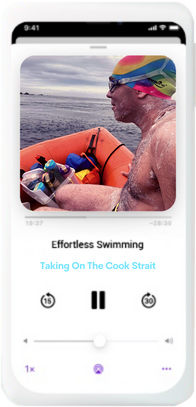
I’ve got John Hancock to join me again on the podcast. He recently returned from having a successful crossing of the Cook Straight and is here today to share his experience and some of the preparations he did for the swim.
00:57 Where did this goal come from?
04:28 What are the preparation that you did?
09:33 17 hours of swimming in one week
12:46 How many Ks a week were you doing?
12:33 It’s a very tidal crossing
17:59 Grateful to have a team of people supporting you
19:51 Covering yourself with grease
21:40 “If the swells on your side then surf across”
26:24 Was there anything that surprised you about the swim?
28:35 All about preparation and execution.
29:10 Surround yourself with people who want you to be successful
29:54 Do you feel like your achievement changed you as a person?
34:14 What’s next for John?
Cook Strait Swim:
https://cookstraitswim.org.nz/
Related Content:
40km Across Lake Taupo with John Hancock
English Channel and Cook Strait Legend Philip Rush
What It Takes To Be Successful In Marathon Swimming with Phil Rush
Simple Changes, Big Results with Gary Hurring
What To Do If You Can’t Get Under 1:45/100m with Gary Hurring
Form Goggles:
http://formswim.com/effortless
Watch the episode on YouTube:
Transcript
Read the full transcript
Welcome to the Effortless Swimming podcast to show that help swimmers and triathletes love the water, become a better swimmer and live a better life. Here’s your host, Brenton Ford.
Welcome to episode number 270 of the Effortless Swimming podcast. Today we’re talking about taking on the Cook Strait, the North South Island crossing in New Zealand. And I’ve got a repeat guest. I’ve got John Hancock to join me on the podcast. Welcome, John. Kia ora, Brenton. How’s it going? Very well, thank you. Look, you’ve just returned from having a successful crossing of the Cook Strait. And this has been something that’s been a long time in the making. And podcast lists might remember you from, I think it was last year or the year before that, had you on talking about your crossing of Lake Taupo. And that successful crossing at that, which is about a 40 kilometer swim in the lake there in New Zealand. And even though the Cook Strait’s a bit shorter, 22 to 23 K, from point to point, it’s actually a more challenging swim. So we’ll talk a little bit about that on today’s podcast. But I just want to talk about the challenge
that you set yourself, having a successful crossing and what goes into it. Because I know there’s a lot of people listening to this podcast who are into cold water swimming, or they’re looking for their next challenge, maybe they’ve done triathlon for a couple of years, and they’re looking for something else to take on. And I think something like the Cook Strait is certainly a big challenge that you can set yourself. And it takes a lot of preparation, takes a lot of good team members and support to help you do that. So I’d love to dig into that, that today. So first of all, congratulations on the on the crossing. And where did it all originate for you? Where did this, this goal come from? Yeah, no, it’s a good question, Brenton. I think I’m an anyone who’s sad enough to have listened to my last outing on effortless swimming, I told the story about swimming across Lake Taupo. So Lake Taupo is the, it’s the sort of hole in
the doughnut that’s the North Island of New Zealand. So it’s it’s an old volcano crater. And as you say, it’s about a 40 kilometer diameter. And the reason I did that was just lockdown, you know, COVID meant that New Zealand’s borders were closed really firmly for a very long time. And coach, Phil Rush, who you’ve had on the podcast a few times, turned up to squad and he said, right, the borders are closed, so I’m going to have absolutely no international swimmers to work with this year. So if anyone wants to do any big swims, this is the year. So that was a project. And we talked about that before. But I lived in Wellington. So Wellington’s at the very southern tip of the North Island of New Zealand. And the crossing from the North Island to the South Island is the Cook Strait. And that’s one of the, the seven great ocean swims of the world. There’s a series called the Ocean Seven. So that’s the English Channel Cook Strait
Catanelida Island to Long Beach in California between two of the islands in Japan. I can’t remember all the other ones are, but there’s a bit of a movement around this now. So it has quite a bit of international celebrity, if you like. And that’s completely unappealing as a project, frankly. But obviously, for me, swimming Cook Straits quite quite an exciting prospect, because that’s where I live. So and Phil’s sort of a system with people who aren’t super experienced swimmers is particularly, you know, New Zealand swimmers, he gets them to swim like Topor one year. That gives you a sort of use to what it what it takes to get ready for something like that. And also the actual execution. So Lake Topor took me 14 and a bit hours. It’s a very long time to be wrapped up in your own head. But if that goes well, then he’s prepared to sort of try and help you get across Cook Strait. So that was the plan. And then of course, we had a second year
with closed borders. So I thought, well, that’s fine, we’ll do that. So I trained up and did all the stuff. And the weather didn’t behave at all. So we were ready and waiting. And then the tide window came and went and that happened three times. So by the time we couldn’t go on the third tide window, it was it was so late in the season, the sea was really starting to get quite cold. So that was the point where we pulled the pin and thought, okay, well, better have another go. So I had a third season trying to prepare myself for that. So that was this year. And, you know, I think with hindsight, it was probably quite a good thing that I didn’t go last year. I was quite a lot better prepared, both physically and mentally and in terms sort of dealing with the things that are different about doing a big ocean crossing rather than just swimming in a nice warm lake. Let’s talk about some of those things that you did
to get prepared. First of all, the cold adaptation. How much better do you think you were with it this year compared to last year? And what what were some of those things that you did consistently to just become more comfortable in the cold? Yeah, yeah. So I mean, when I swam Lake Topor, it was actually slightly warmer than 20 degrees to most of it. So that’s absolutely fine. You can stop to feed, to tread water for, you know, several minutes, chat to people and you don’t really cool down at all. Whereas Cookstra even in the middle of summer can be sort of 16 odd degrees. So that’s cold enough that as soon as you stop moving, you start cooling down almost straight away. So one of the things we had to work on was feeding. So you want to try to feed as fast as possible, spend as little time as possible stationary. Because obviously when you’re when you’re swimming, you’re keeping yourself warm. You’ve got this sort of
heat pump system that your body’s operating. And so the main change I made there was to just get rid of all solid food and just just rely on liquids for the entire day. And that’s quite a fun thing. So everybody’s got advice for you when you do something like this, you know, so you’ve got to use this sort of electrolyte or that sort of sports drink and one of my friends who’s Irish, she’s really big on leek and potato soup. That’s what you need to use. And I’ve tried all these different things and I said to Phil. So what’s the, you know, what’s the strategy? And he said, well, I don’t know if they still make it, but when I was swimming competitively, this is like mid 1980s. I used this stuff called Complan. And I went, OK, so talking to one of my friends who’s a doctor and she said, Oh, yes, I know about Complan. It’s what I give all of my 85 year old patients who can’t eat. So it’s like a sort of food supplement for
geriatrics. So that’s what I trained with. I took my Complan all around the country on training courses and it’s a sort of complete nutrition system. And yeah, so I’ve had about 100 doses of Complan to take me across the strait. I think I worked out that I had more Complan than a geriatric would eat in over a week in one day.
So that was the first thing. And then the second thing is the is just getting used to being cold. So when we got to the end of last season without having tried it, Phil said, you’ll be fine, but I need you to keep swimming without a wetsuit in the harbor right the way through the winter. And that’s that’s quite ambitious in Wellington, Wellington weather. It’s a lovely city, but the weather is not that great and the harbors like maybe nine degrees. It’s sort of late July, early August, which is the middle of winter for us in the Southern Hemisphere. So, you know, the instructions were, you know, burn your wetsuit, swim in the harbor maybe three times a week, every single week right the way through winter. And, you know, the theory is the, you know, the frog in the the pound of water that’s being boiled. So in theory, you don’t really notice that it’s getting colder and colder and colder. And of course, this is complete rubbish because you really
do because it’s really cold in the middle of winter. But but I think part of the point of this is psychological that, you know, you do get used to the fact that you’re swimming in water that’s far colder than I certainly ever managed before, even even with a wetsuit on. And then you go through the middle of winter. And then, of course, it starts warming up. And at that point, you have a lot more self confidence, you know, it may be a bit uncomfortable and everything, but you know, you’re going to be absolutely fine. And there was one point where Phil said to me, well, you know, the main purpose of this is what we’re trying to do is get you used to what it’s like to be mildly hypothermic and to understand that that’s absolutely fine, which is an extraordinary thing to actually want to do to yourself voluntarily. But I think again, what he’s getting at is, you know, the body is an amazing thing. And if you’ve prepared,
practiced, you know what you’re dealing with and you know that you can you can manage yourself through these situations. Yeah, so it’s quite a quite a funny old winter, really. Just every time we had swim squad leaping in the harbor, swimming around the fountain. Did it did it ever become enjoyable? Did you ever look forward to look forward to the cold water? It’s fun with other people, right? I mean, that’s that’s the bit that I tried to make the whole thing a fun project, you know, because I think you can sort of think yourself into a bit of a black hole when you’re doing something like that, because it is a bit intimidating. And I just thought it’s such a ridiculous proposition that was how we were going to do this. We’re just going to make a bit of a joke of the whole thing. And my mates locally have been brilliant, you know, sort of jumping in and doing stuff like that with me. Yeah, so it’s made it quite fun. I think it makes a huge
difference if you can make swimming by something like that that’s a bit more of a team sport. You’ve got other people involved. It is it can be so much more enjoyable and so that you organise a couple of training camps and you lead up to it as well. We happen to run into each other up at NUSA. I was running some some clinics and yourself and a couple of other swimmers that arrived for a week long training camp, get some caves under the belt to get some sunshine in NUSA, which you couldn’t get much of a better place to do that. And you also did a training camp in in New Zealand. How did they help in the lead up to this? Yeah, no, I mean, I think taking time out to do sort of intensive swim caps is it’s almost essential. It’s I’m sure some people managed to do it, but the amount of swimming you have to do to get ready for something like this is quite extraordinary. So Phil, he was a simple old school swim coach in some ways.
You know, his rule is I want you doing 50 K a week for three weeks and then you’ll be ready. So do the maths. You know, if you swim at three kilometers an hour, including breaks and stuff like that, that’s 17 hours. So 17 hours swimming in one week with a break. I mean, that’s an awful lot of swimming each day, every single day for a week. But of course, if you go away with a bunch of people, obviously, you’re not working and you’re not thinking about domestic things. But just the change of scene just makes it that much easier. One of the things I did this year, which was a bit different from the last two years though, was I had to start much earlier than normal. So the last couple of seasons, I’ve really left my build until the end of the Christmas holidays. So for us in the Southern Hemisphere, the Christmas holidays are the main some holidays. So obviously that’s family and friends and you want to be vaguely present for some of that.
So there I was sort of targeting a March swim. So starting swimming in January, whereas this year, Phil wanted me swimming at the end of January, because that’s when the straight said it’s absolute warmest. So that meant I had to get started at the beginning of November to be ready for that. And Wellington Harbour is still quite chilly early November. So that was one of the reasons we thought we’d go to Noosa in Queensland and Australia is a beautiful place, lovely conditions. And that was a brilliant way of kickstarting my whole program as well, you know, to have a whole week just to focus on swimming. I was quite surprised at how how I cope with that much volume. And I think that’s this thing I was talking about that, you know, because it was my third season, even though I hadn’t swam an enormous amount during the winter, because we were focusing on the cold adaptation. I still had quite good endurance just from the previous two seasons.
And then built off that. Then I did a cold water swim camp in the South Island in one of the one of the lakes in the Southern Alps, which, you know, again, that’s got a slightly different focus. And then we finished the season swimming in Lake Topo, actually, which is where the New Zealand open water swim champs are. So we sort of tacked on four days, just a bunch of us all swimming in the lake together. And again, you know, a mixture of open water, some pool work. But it’s the people that make it, right? But even though it’s the same people somehow going to a different place, it just sort of makes it slightly more interesting. And actually, some of the lakes swimming in New Zealand is great for training, because the visibility is really good. You know, in some parts of the world, lakes are quite murky. A lot of sea swimming in places can be quite sort of quite limited because you can’t see much. Whereas Lake Wanaka in the South Island where
spend my Christmas holidays, that’s got lovely shallow waters and there’s bags to look at. Lake Topo’s got a very, very interesting coastline, which we discovered new bits of. So yeah, you just sort of mix it up to keep the keep the variety.
And I’m sure someone listening, this is probably thinking, oh, how how much is a lot of swimming? So you talked about the three lots of 50 k weeks. But what about the 12 weeks leading into the swim? How many days a week are you doing? I tried to do my classic periodization. So I sort of, you know, building it up, sort of adding 5 k a week in a sort of sawtooth, giving myself every fourth week off. So, you know, I would have started sort of about 30 k a week. So that’s about 10 hours and then building it up sort of by adding an hour and a half every week up to the 17 hours a week to get to 50 k. I don’t think I was quite as good at actually managing 50 k. I think if you look at my records, there might be a might be a bit short, but then the swim’s a bit shorter. So probably dodged my way through it. Now, let’s talk about the day itself. So it can be a very things can change very quickly in terms of weather conditions. Sometimes the water movement
is different than what’s expected. There’s a lot that goes on in that swim and the amount of stories I’ve heard of people getting within 100 meters of the coast and they just can not get there because of the tide. Like those stories are really fresh in my mind because it’s such a huge thing to undertake and then to get so close, but you just can’t physically get there because of the tide. You know, those those are the ones that sort of stand out to me. So take me through the day. This episode of the podcast is proudly brought to you by our sponsor, Form Goggles. They’re more than a pair of Goggles meet the world’s most powerful swim platform. See yourself improve with Form Smart Swim Goggles, including a free one year membership when you purchase your Goggles for only two hundred and twenty eight US dollars. Now, they’ve currently changed up the offer where you can now get the Goggles and you have that one year membership included for free.
And then if you’d like to continue with the membership going forward, it’s only 15 US dollars a month where you get access to their workouts, training plans and their custom workout builder. But you’ll always have access to the real time data of the Goggles, so you’ll never lose access to that. So if you’d like to swim without stopping to look at a pace clock or your watch and get live metrics right inside your Goggles, including your time, distance, pace, they are right there in your Goggles with Form Goggles. I’ve used these for over 12 months now and I’m a huge fan of these goggles and use them for a majority of my sessions and find them very helpful, especially for gauging my time, my effort and my pace. And I think it’s a very helpful tool for the majority of swimmers that I would normally work with to get your pair of Form Goggles and save 15 percent off. Use our link form swim dot com forward slash effortless or use a coupon effortless at
checkout. And that will get you 15 percent off your pair of Form Goggles using our special link form swim dot com forward slash effortless or use the coupon code effortless at checkout. Yeah, I mean, you’re right that
it’s so different from even a lake swim in as much as you you have absolutely no idea when you’re going to be swimming and the best analogy anyone’s ever given me for it’s a bit like you hear about these people who go climbing in the Himalayas and they’ll trek into a base camp and then they just wait for the weather, you know, and they can be there for weeks because there’s only like one or two days a year where the weather’s good enough to try and do whatever they’re trying to do. So the thing with the Cook Strait is it’s a very tidal crossing. So it’s physically impossible to swim it no matter how good you are anything other than within a couple of days of low tide. And that’s because when the tide turns against you, the current would be so strong it would just wash you straight back way beyond where you started. So you’d never make any forward progress. So the years sort of chopped up into these tide windows around low tide sort of four to
six day intervals and Phil gets his calendar out and marks out when the tide windows are and he can take multiple swimmers at the same time with dedicated teams. But at the end of the day, you know, that’s what you’re aiming for. You can build and taper your way into the tide window, but you still got absolutely no idea which day you’re going to be going on if at all. And of course, what happened to me last year is the weather was absolutely rubbish for not one, not two, but three tide windows. And so I was sort of ready to go stood down and this whole cycle repeated itself for six weeks. And then I still didn’t didn’t get to go. So mentally, you have to be quite sort of ready for that whole sort of we’re ready. Oh, no, we’re not. So this year, obviously, we were talking about it the week beforehand. And the first day was a Sunday. Phil said, yeah, we’re looking pretty good. Looks like the weather is going to be quite good on Sunday.
And then we got a tropical cyclone came through. And I think the story is actually got one happening right now outside the window. Our second one of the season, Auckland actually got as much rain in one day as it normally gets in a whole year. Now, we didn’t get all of that, but it messed up all the weather in the straight. And that was at less than a day’s notice on the forecast. So stand the team down, ready and waiting and whatever. Nothing happened on the Monday, but Phil said the Tuesday is looking quite good. So again, you need to get everyone organised or your gear ready. And it was only, I think seven o’clock night before the swim that he said, yeah, forecast is stable. I’ve checked it with a bunch of other sources. I’ll see you seven o’clock in the morning tomorrow. And then you turn up at the marina, hop on the on the boat and you’re good to go. So I mean, the way it works is you have a small village with you. So people often say,
you know, did you do it with other people? I mean, you don’t you don’t have other swimmers swimming with you, but you have a huge team of people supporting you. So there’s a there’s a launch, you know, big boat, which takes you and your support crew and a little inflatable rubber boat to the start point and then you hop out of the launch and get into the rubber boat with Phil, the coach and then a friend who’s in charge of feeding. So you feed every every 30 minutes.
And then the system is the launch sort of stays with you. They may rotate the feeders if the conditions are good. And then when you get to the other side, then everybody hops back on the launch and you go straight back to the marina where you started. So in a way, it doesn’t really matter whether you’re going north to south or south to north, you know, as far as you’re concerned, you start in the marina and you finish in the marina because that’s that’s the loop that you do. Yeah, so there’s quite a lot of build up. So plenty of time to get really nervous, I found, you know, so you turn up cool as a cucumber, but then it’s about an hour in the launch to get to the start point. So the way the tides worked for my swim, it made more sense to swim from the North Island to the South Island. And that’s just because the top of the tide in the morning was on the North Island. So that was the way we decided to go. But some people, the
timing is different. So you do it the other way. And so you make your way out there, you know, you put your final sunblock application on and then this famous process that I’m sure people have read about where you cover yourself in Greece. So back in the day, people used to sort of smother themselves in whale blubber to keep their keep their organs warm. So this is this is English channel rules. So you’re only allowed to wear a pair of togs, pair of gobbles and one swim cap. So having grease around your vital organs is just a way of trying to help yourself stay a little bit warmer. So you look extremely unattractive when you’ve got all this stuff on. But I suppose that’s the last thing in your mind. But it’s quite a big build up. And then when you get to the right point in the tide, then you literally jump in the IRB take the IRB takes you out just offshore. And then Phil goes, OK, good to go. So I need you to jump in the
water, swim to that rock over there, touch the rock and then and then swim. And and the day itself, I think when when we talked last about swimming Lake Topor, I mean, the thing that’s so hard about that is every half hour is almost exactly the same because you’re swimming in a lake and you choose a day when there’s no wind. So, you know, sure, the sun comes up and the sun goes down and everything. But there’s a lot of time where it’s just the same. You can’t see land you’re too far away from it. Whereas I found this swim because its title was it’s much more structured and in a way that was quite interesting. So to start with, you’ve got the you’ve got the tide behind you. So you’re going on an outgoing tide. So you’re moving incredibly quickly. Most people do five kilometers an hour, maybe even more than that. So I think my first hour I did nearly six K in the in the first hour and then even the hour after that, you still got the
tide helping you through. And there was a slight tailwind as well. And it was sort of butting up against the tide. So we had this sort of rolling swell. And that meant I was sort of able to sort of surf over the top. I talked about sort of a fantastic little message of good luck I got from a friend in Wellington, Casey Glover. So Casey is quite famous in the open water swimming world because he’s the record holder for swimming Cook Strait and did this crossing, which is about 22 kilometers point to point in I think it’s about four hours and 40 minutes. So that’s an average speed of over five kilometers an hour for the entire crossing. It was amazing. So and he sent me this note and it was very cryptic and he said the swells on your side then surf across. And I wasn’t quite sure what this meant. So I talked to my mates on the boat and they said, Oh, well, you know, what he means is it’s like surf life saving. You know, you sort
of need to come up out of the water and get on top of it. And of course, when I last saw you Brenton, we were in Noosa and the beaches in Noosa are very surfy. So my mate Sarah had shown me how you because I said, How do you do all this really cool surf swimming? So we’d actually practiced this. That was quite, quite nice. And so the first two hours of my swim on Cook Straight, I was really thinking about, you know, trying to sort of stay up out of the water and trying to use the trying to use the swell to sort of give me a little bit of extra, extra help and get my lift to work with the surf. And then sort of middle section of the swim, you sort of comes a point where actually you’re hardly moving at all because the tide turns against you. You can’t really tell because you can’t see any land. So I don’t know. It’s just water and that section three hours or so. That’s that’s more like lake swimming. And that’s where you’re really looking forward to
each feed you feed every half an hour. And, you know, a lot of the focus is on swimming, swimming correctly. So I was thinking, well, I was being told to think a lot about my technique by Phil, who was sitting in the IRB barking instructions at me every every 30 minutes about engaging my catch and making sure I kept my stroke rate up and stuff. But then Brenton, as you say, the sort of business end of the swim is the last two to three hours. So as you approach the South Island, in my case, people had warned me that there’s a complex network of undersea caverns, caverns, channels at the bottom of Cook Strait. And in some places, the water from the bottom of the strait comes up to the surface. It’s called an upwelling. And so you’ll suddenly hit water that’s maybe three or four degrees colder than it was even 20, 30 meters behind you. And that’s quite a big surprise if you’re not ready for it. And it’s that temperature for the whole of
the rest of the swim. So my friend said to me, he said, I just thought of it as being very refreshing. It’s more than refreshing. It’s really quite a shock. But it was it was great because I’d trained the cold water. I wasn’t spooked by it. I knew I was going to be OK. But the other thing, which you mentioned in your question, is about this offshore current. So you’ve got, you know, it’s not super strong, but it’s a it’s definitely something you’ve got to work against. So and this is the thing that prevents some people from succeeding even when they’re really quite close to shore. As you say, there’s countless examples of people who are maybe even 200 meters from shore. And they spend one or two hours trying to get over the very last bit of offshore current and never quite make it. And with the cold water and increasing fatigue, there comes a point where you just start slipping and then you slip and slip and slip and then you run
out of land and then, you know, the swim’s over. So the the secret weapon I had there was was Phil in the boat telling me when I’d been swimming for five and a half hours that I had to pick my stroke, rake up, engage my catch and swim as though my life was depended on it for two more hours. So that was that was pretty hard. And he told me afterwards that he was obviously a bit worried about my my core temperature. He didn’t want me getting cold given that, you know, I’ve struggled with it and worked with it all season. When I stopped for a feed, he lent me just to touch me at the top of my head. And he said, God, he’s absolutely boiling. I don’t think we’re going to have any problem with him getting too cold because I was working so hard. Apparently I had a face like a beetroot. So yeah, so that works. Yeah, my friend, Sarah, I remember she was looking at the I’ll be and she’s up there doing this, telling me to kick my legs.
That’s like, main, give me a break. This is this is really hard. So you I mean, I think I said in my my ride up, you know, I mean, at one level, it’s quite an easy day because I just had to do what I was told. You know, I had, you know, Phil Rush, Master Marathon swimmer, my training buddy, Sarah, both of them just telling me, eat this, swallow this, do this with your hands, do this with your arms, whatever. But then, you know, you can only really execute if you’ve done the training. Yeah, yeah, exactly right. Was there was anything that surprised you about the swim that you weren’t expecting? The thing that surprised me about this one actually is how the time went. I mean, I found the Topol swim, you know, that’s a hell of a long time to be inside your own head. But this one, as I say, because there was so much going on, you know, I was actually, you know, mentally quite busy the whole thing. I didn’t really get too bored at any point at all.
And that was great. I mean, the other thing that quite surprised me is the fact I managed to do it because it’s, you know, it’s a pretty amazing achievement, which isn’t bigging myself up. I mean, it’s picking up my team. But it’s extraordinary that somebody like me and I’m not a great swimmer, as you know, do something like that with, you know, with the right focus, preparation and execution. Yeah. Well, like in your write-up, you said it’s something that’s been really in the pipeline for about 10 years, but more tangibly in the last three years, I guess. But but you said, as a kid, you weren’t that much of a sportsman and but you’ve done a lot of a lot of big things in terms of you’ve done quite a lot of triathlons, Ironman stuff, you’ve done a lot of swim run stuff and then the swimming stuff now as well. So to me, that’s that’s really encouraging for a lot of people who may not have been sporty as a as a kid. And then as they get later
in life, they might take on these new sports, these these new challenges. And I think it’s just that build up of belief that yeah, actually, if I apply myself and I do the right things and I find the right people to support me, then it is possible. And it’s not just reserved for those special few who are talented in whatever sport they’re they’re doing. Yeah, I think I think that’s right. And I mean, the Ironman thing I’ve talked about quite a lot and that’s sort of relevance and applicability to marathon swimming. And there have been a few times both in training and in in doing some of the big swims where, you know, I face situations and I thought, well, I know exactly what to do here because this is exactly the same as what happens at the end of the Ironman run. This is exactly the same. I understand what I need to do with my effort, my pacing, whatever, whatever, whatever. And my old triathlon coach, John Acklin used to say,
and it’s obvious until you realize you’ve never thought of it. But, you know, Ironman is isn’t about how fast you go. It’s about how much you slow down. And that’s all about preparation and execution, but it’s exactly the same in marathon swimming. You know, you don’t need to be Casey Glover. You just need to be able to maintain your pace. And if you can keep three kilometers an hour going as the conditions change, then, you know, you’ll make it. And it’s something that that anyone with the right approach, I think, you know, can be successful out if I can. And there have been some really, really good swimmers who haven’t managed to get across cook straight, you know. But in many cases, that’s because they were brilliant pool swimmers, you know, and they haven’t had much experience of cold water, nutrition, effort, conservation, pacing, all that sort of stuff. But it does speak volumes to the team that you surround yourself with.
And I talk a lot about how I mean, my experience is stuff like this. It’s about support, surrounding yourself with people who want you to be successful. It’s the most important thing. It keeps it fun, which we’ve talked about. But also the, you know, sort of it’s not just the technical expertise. It’s the self-belief, as you say, that comes from the emotional support that you get from people who really believe in you. And then amazing things are possible. Yeah, absolutely right. Before the call, we were talking about what have you done since the swim? What have you, you know, how you’re feeling all of that? And you said you’ve been quite, quite tired. You’re still feeling that fatigue because the swim wasn’t that that long ago really. And you mentioned catching up on work and those kinds of things. But with the achievements that you’ve done over the last couple of years, and I guess over the last 10 years or so as well with triathlon and
swim run, do you feel like that has changed you as a person in everything outside of sport? Has that had a flow and effect to your confidence or the way you go about things? Wow, deep question, Branson. You go deep. Yeah, go deep on it. It’s the Joe Rogan of swimming podcasts. Yeah, definitely. I mean, at one level, I think again, because I wasn’t a super sporty kid, I think one of the things I’ve really got a lot of pleasure from is understanding a lot more about high performance sport. I think through triathlon and New Zealand is a wonderful country for stuff like this because it’s so small. So if you’re into anything, you will meet the New Zealanders who are the best just because it’s tiny. So you meet all these people who are world-class and you get to hang out with them and you get this amazing insight into what it’s like to be the best in the world. And that makes following sports so much more enjoyable, I find. And then, of course,
training super seriously, you get a bit of an insight into what it takes. And I think that, again, it’s given me enormous sort of pleasure following sport far more than I did before. But I think the other thing is the sort of not much obvious, isn’t it? The pleasure that comes in spending time with people who like doing things that you like doing and doing things together is a great way of making great friendships. And, you know, I’ve had loads of wonderful sort of new friendships that have all come through triathlon, swim run and now swimming. It’s been it’s been incredibly enriching. Yeah. I mean, I don’t know that it’s changed me at work. I think I’ve managed to take some of the things that I had in my kit bag for work and apply them to sport. I think I’ve always been quite organized, I’ve been quite disciplined, all that sort of stuff, quite sort of hungry to learn about things. And, you know, I’ve used that in the in the swimming
and being a bit surprised at how effective it’s been when I’m not naturally very talented. Yeah. So that’s a message for all the non-sporty kids out there that you can apply other things. One thing I’ve noticed over my time as a swimmer is you often form very deep friendships and deep connections with people who you go through hard things with. Like the channel and obviously you’re not outside of the straight and you’re obviously not swimming together, but they’re part of your support team. But you’re probably doing a lot of training with those people as well. And there’s something about doing those those hard and challenging times where you just form this bond that is often quite different to the connections that you may have with friends outside of the sporting arena. And I think back to some of my friends who I made as teenagers and we’re training eight times a week together, going through these hard sessions where everyone’s sweating.
They want to quit but you keep persisting together. Yeah, it’s a different sort of relationship that I think you can form. Yeah, because you had a friend when you were doing all your prep for Rotnest, who you trained with heaps and you had her on the podcast, didn’t you? Is it Italian or something? Yeah, I mean, say LaSanna. Yeah, yeah, we were doing a lot of our longer swims together. And so I don’t live as close anymore, but we see each other at some different swims. I mean, I actually just did a swim on the weekend called the Rip Swim across the the heads here in Melbourne. And it’s yeah, and it’s just it’s great to catch up. And it’s just I hadn’t seen her for a couple of months and then you catch up. It’s like you’ve caught up yesterday. So I really I really enjoy those those types of friendships. And I think that’s a big appeal of of swimming or swimming with other people in a squad. It’s just like, yeah, you always look forward
to catching up with them. Yeah, no, I completely agree. And I mean, I’m sure we’re lucky in this part of the world. You know, there’s some really great open water swimming communities as well. So the diversity of it helps as well. You know, like in Wellington, there’s almost always people to go swimming with. But as you say, I’m and I’ve got some really great friendships out of this, which has been just brilliant, right? You know, it’s just really quite life enhancing. And it helps you get through other stuff as well. You know, like when works a bit slow or something like that, it’s quite nice to have that to look forward to to sort of get you through the week. Yeah, yeah, absolutely. Well, John, I don’t know if I want to ask you what’s what’s next because it’s only been what a week or so since the swim. I’m sure you’ve got something in the back of your mind or are you you just going to let yourself take a break
and then see where the wind takes you? Definitely having a break. No, we start classes from my today I’m Maori this month. So that’s that’s even harder than marathon swimming because I’m absolutely rubbish at languages. So that’s my swimming. Sounds good. You deserve a break. Well, John, I really appreciate you being on the podcast and I’ll provide links to some of the people that you’ve mentioned, like Phil Rush and some other episodes that we’ve had with yourself and some of the other coaches who have helped you on your way. So I really appreciate you being on congratulations once again and just really impressed with what you’ve achieved over the last couple of years since I met you all those years ago. First first ever hell week comfort and you’re poor. That was the work again. Yes, and we were joking before the podcast started to I said you’re the you’re actually the brains behind effortless swimming because you’ve introduced me to Phil Rush
and Gary Haring who come along to most of the camps that I run and said there’s probably there wouldn’t be a Maldives camp there might not be a hell week camp. None of these things would have happened without you, John. So you’re you deserve all the credit and I’m just happy to be the fun. It’s just execution. That’s easy.
No, I appreciate that a lot, John. Thanks again for being on the podcast. Great to see you, Brandon. Cheers. Thanks for listening to the Effortless Swimming Podcast. If you’d like us to help you become a faster, more efficient swimmer, go to www.effortlesswimming.com.